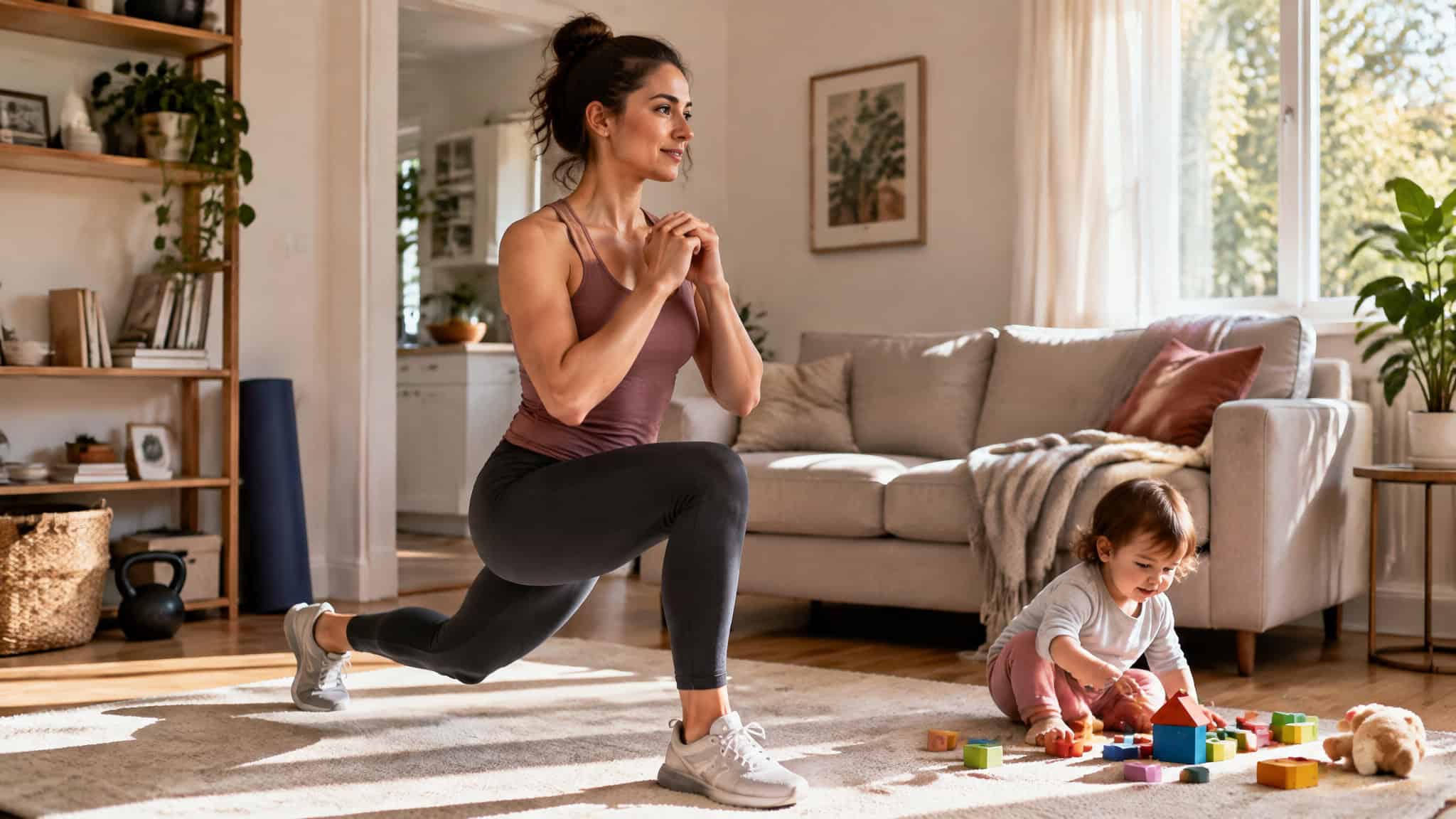
A friend mentioned reformer Pilates at school pickup, and I spent the evening doing math on when I’d actually go. Between dinner, homework, and the fact that my only free hour is also the only quiet hour in the house, the math didn’t work. That gap, between hearing about a trending workout and figuring out where it fits in a real week, is why this roundup exists.
The good news for October 2026: the workouts with actual momentum are the ones built for lives like ours.Hybrid programming, low-impact movement, longevity, and fitness folded into ordinary days are where the energy sits, which is roughly what a parent’s fitness has to look like anyway. The short list of what’s trending: Pilates, yoga, functional strength training, HIIT, Couch to 5K, spin, cold water swimming, HYROX, and hybrid training, plus the layer around the workout itself: wearables, walking pads, at-home setups, assisted stretching, and recovery nutrition. You’re in company there, too. YouGov found 23% of British resolution-makers promised to get fit or exercise more in 2026.
Two datasets anchor everything here: ClassPass bookings and Fresha searches, plus year-over-year search growth, rather than vibes. One honest limit: micro-workouts (exercise snacks) and LISS circulate in search interest but aren’t backed by this piece’s evidence, so they’re named as unverified, not recommended. The well-known ACSM annual trends survey isn’t covered by our sources either. This is the hub; each trend routes to a deeper guide.
Key Takeaways
Pilates was the most-booked workout globally in 2025, the second year running, per ClassPass, while yoga topped Fresha’s exercise searches this past January.
HYROX is the fastest riser: search interest up 266% year over year, with more than 1.3 million people expected across 100+ events in the 2025/26 season.
Two zero-cost ways to start this week: the free NHS Couch to 5K app, or a 15-minute bodyweight circuit of 40 seconds work and 20 seconds rest.
Table of Contents
Pilates: the most-booked workout in the world
Pilates was the most-booked workout in the world in 2025, the second consecutive year it held the top spot per ClassPass booking data. It’s a low-impact practice, meaning it’s kind to your joints, that trains the whole body through core strength, posture, balance, and stability. If you’re a beginner chasing core strength and weighing it against yoga, the short version is this: Pilates handles the targeted core, posture, and stability work, while yoga leans toward stress reduction, flexibility, and body awareness.
The origin story is better than it has any right to be.Joseph Pilates, a German boxer, circus performer, and personal trainer, developed the method in the early 1900s and originally called it Contrology. He refined the method while held as a prisoner of war on the Isle of Man during World War I, which means the class your friend won’t stop talking about was partly invented behind barbed wire. He was, by all accounts, doing fine.
Mat or reformer: the beginner’s first decision
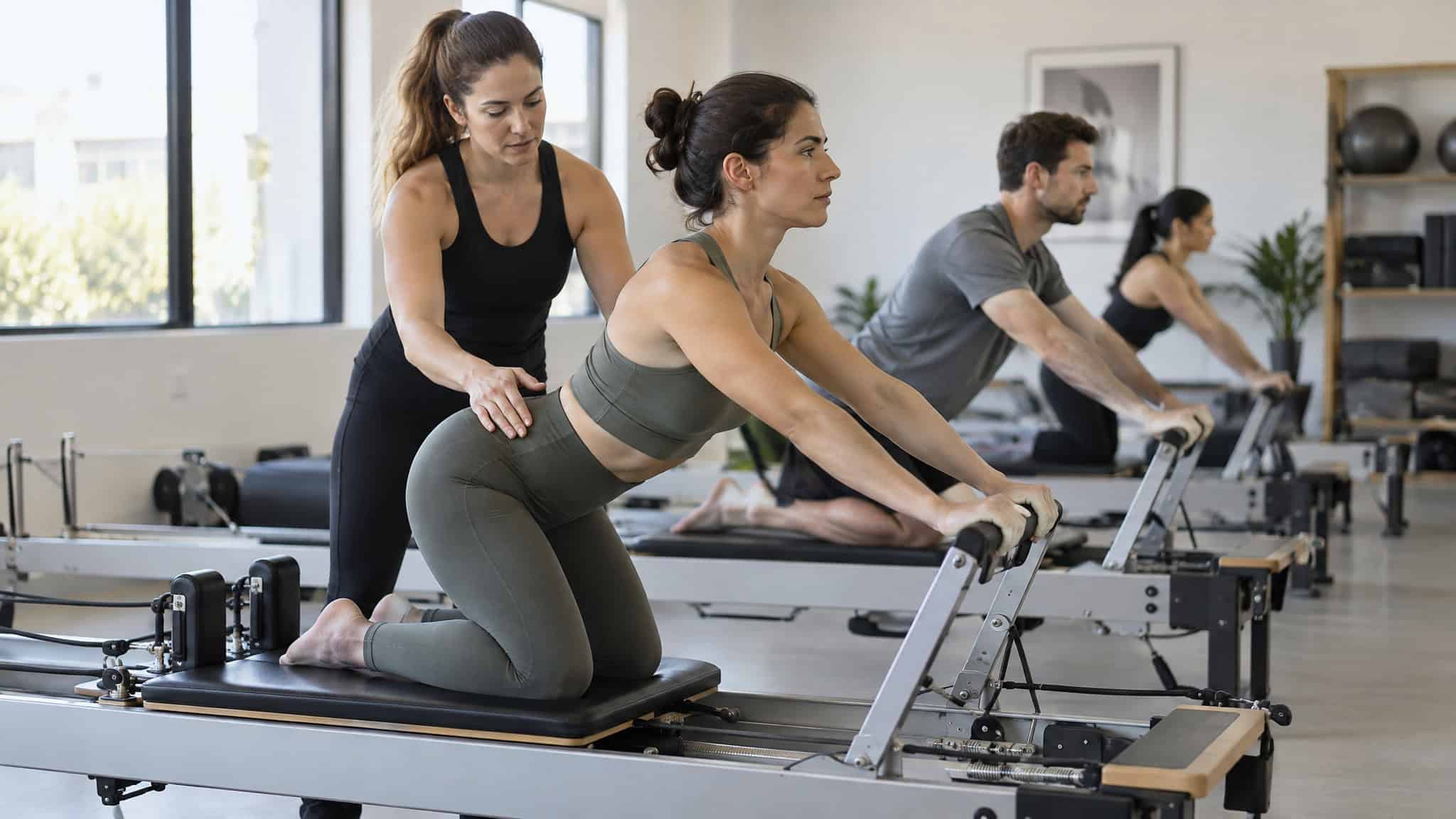
Before booking anything, pick your format.Mat-based Pilates is floor work on a yoga mat, needs almost no equipment, and works at home. Reformer Pilates uses a bed-like machine with springs and pulleys, usually in a studio, and that’s the version with the membership attached. For a first taste, mat is the cheaper, easier door.
Pilates vs yoga for core strength beginners
Here’s where the two datasets disagree in a useful way.ClassPass bookings, which measure what people actually do, favor Pilates. Fresha searches, which measure what people look for, favor yoga. Both numbers are real; they measure different kinds of intent.
Bookings tell you where people show up, searches tell you where they’re curious, and for core strength, Pilates is the more targeted tool while yoga brings the stress relief.Neither is wrong. They’re answering different questions. Pilates is also one of the formats resonating most with women right now, and our guide to workout styles resonating with women covers starting around a family schedule.
Yoga: the most-searched exercise right now
Yoga was the most-searched exercise type this past January, per Fresha search data.Its roots are in Indian philosophy, where spiritual and physical practice were never separate things, and it deserves that description rather than “stretching class with candles.” In plain terms, regular practice tends to mean less stress, better balance and strength, more flexibility, and knowing your own body better.
The practical fork for beginners is hatha versus vinyasa. Hatha is the slower, foundational style: static poses, breathwork, meditation.Vinyasa is the flowing one, where poses link together like one long sentence. Which loops back to the Pilates numbers: people book Pilates and search for yoga. That bookings-versus-curiosity split is worth remembering whenever a trend’s popularity gets quoted at you.
Functional strength training for everyday life
Functional strength training trains movement patterns, lifting, twisting, reaching, balancing, rather than isolating individual muscles, which is exactly why it transfers to everyday life.Parents do these movements hourly, usually while carrying something and someone. The tools are refreshingly low-fuss: bodyweight, kettlebells, resistance bands, compound lifts. Any exercise working against an opposing force counts as strength training, your own body weight included, so nobody gets gatekept out by equipment.
The moment it clicks: multi-directional lunges literally mimic vacuuming and raking leaves.All those years of lunging around furniture and you could have been training.
Two audiences are driving the trend: older adults staying capable, and younger people trying to avoid injury. The payoff has real evidence behind it. A British Journal of Sports Medicine study found people who combine aerobic and muscle-strengthening exercise are more likely to live longer than people who do only one.Strength work also fights sarcopenia, the age-related muscle loss that quietly erodes balance, and less muscle loss means fewer falls and more years living independently.
HIIT: big results in 15 minutes
HIIT stands for high-intensity interval training, and the first thing to know is that it’s a format, not a specific exercise: short hard bursts followed by recovery, applied to almost any movement. Yes, including movements that aren’t burpees.
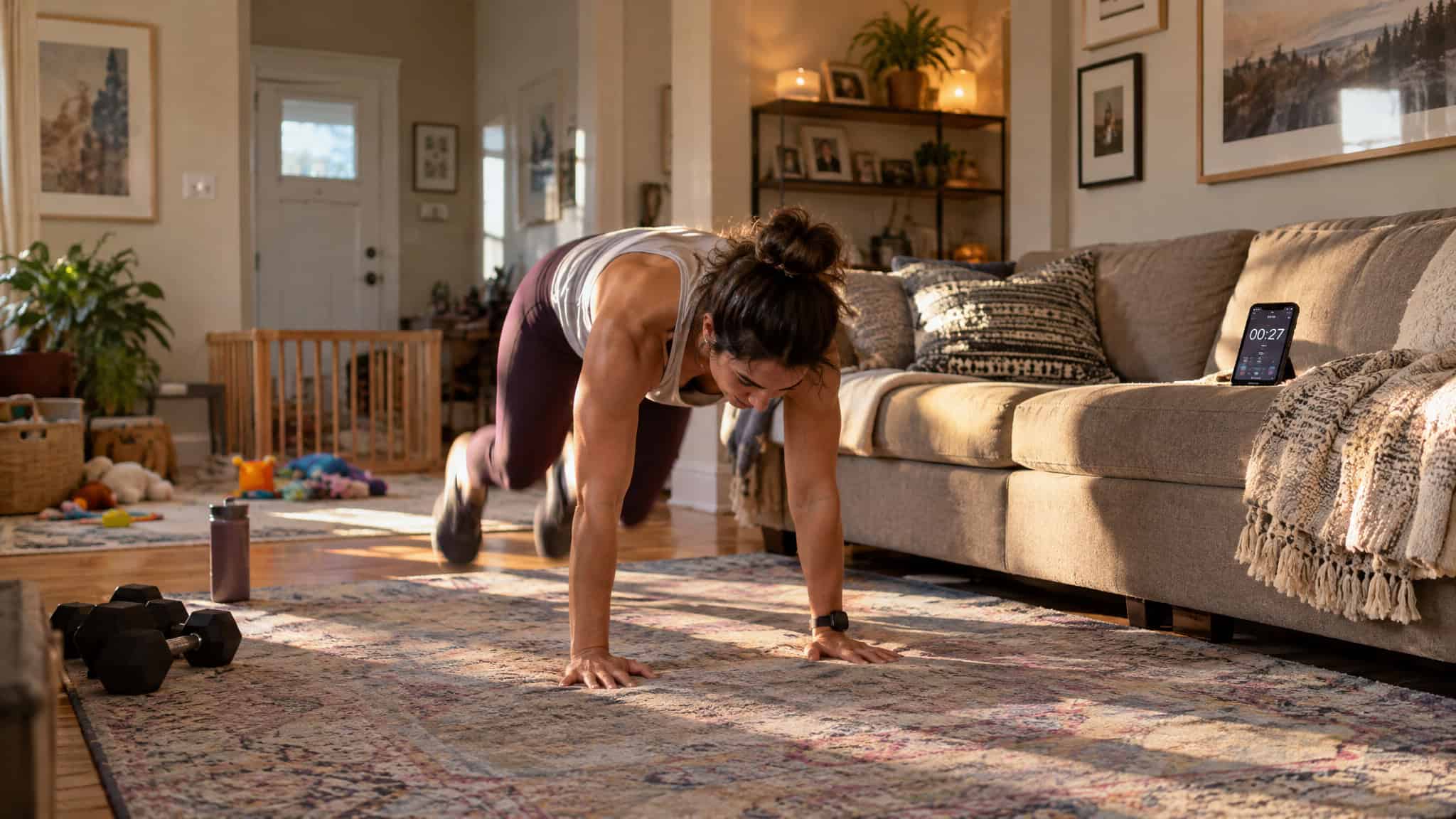
PureGym’s example session is copyable as-is.Set a timer for 40 seconds of work and 20 seconds of rest, and cycle through:
- Burpees
- Squats
- Running on the spot
- Jumping jacks
- Lunges
Repeat the whole thing three more times. Four rounds, 15 minutes, zero equipment. The mechanism, kept casual: those high-intensity bursts keep your metabolic rate raised for hours after you stop, the afterburn, which is why research shows better fat burning than steady cardio. The real hook for this audience is that sessions are generally shorter.
The whole thing fits inside a nap, assuming the nap cooperates, which is a caveat no study covers. If you’re wondering how late is too late to train, our guide to workout timing and sleep covers what the research says.
Bodyweight exercises: the no-equipment backbone
Bodyweight exercises are the free alternative to weights and machines, and they’re the most parent-feasible option in this entire article. You could start tonight with lunges, squats, inchworms, and mountain climbers, none of which require buying anything or leaving the living room.
The flexible part is how you string them together. The same moves can skew HIIT, cardio, or strength depending on pacing and rest, and along the way they build endurance, agility, and strength. These are also the raw material for everything else here: the HIIT circuit above is bodyweight moves on a timer, and the home-gym progression below starts exactly here. If our piece on the ten foundational exercises that outlast any trend is right about anything, it’s that these moves never go out of style.
Couch to 5K: the trend with a finish line
The way to start running as a complete beginner is the NHS Couch to 5K app. It’s free, which matters more than any feature, and it turns non-runners into confident runners in nine weeks. The program launched in 2016 and works by alternating running and walking, with trainer-guided audio through the free NHS app, building gradually until you’re running 30 minutes without stopping. Finish, and it unlocks Beyond Couch to 5K, which handles the awkward “now what.”
Running earns its spot on merit: heart, lung, and bone health, weight management, and the runner’s high, which sounds like a myth until it isn’t. Fresha’s data shows searches for the NHS Couch to 5K program rose this past January, so plenty of people were googling it between resolutions. Nine weeks sounds long until you notice it’s nine weeks of very short sessions, not nine weeks of transformation montage.
Spin class: the 1980s trend that won’t die
Spin classes are stationary bikes with an instructor simulating outdoor terrain, hills, sprints, flat stretches, and they’ve outlived every fitness trend cycle since the 1980s.The origin: South African cyclist Johnny Goldberg invented indoor cycling in the 1980s after nearly being hit by a car on a road ride, which is a very specific way to invent an industry.
Calorie burn honestly ranges from roughly 400 to 600 per hour depending on your weight and the class type. Cardio-wise, one study found indoor cycling beat outdoor cycling for cardiovascular health, and you’re getting core and leg work too. For parents, the case is simple: it’s easy on the joints, and the dark room and loud music genuinely motivate.Some people find actual friends in there. Forty years is a long time for anything to survive, and this one did it while being, essentially, riding a bike indoors.
Cold water swimming: benefits and honest caveats
Cold water swimming can be worth it for mood, soreness, and the simple appeal of moving outdoors, but the research is limited and open-water swimming in low temperatures carries real dangers, so check RNLI safety advice first. The Royal National Lifeboat Institution publishes exactly that guidance, and it exists for a reason.
The hedged claims stay hedged: cold immersion may reduce post-exercise muscle soreness, may ease symptoms of depression, and may boost immunity.Beyond that, people report better circulation, deeper sleep, higher energy, and reduced inflammation, which is anecdote, not evidence. Swimming’s baseline case is solid regardless: full-body, heart-friendly, muscle-building, easy on the joints, especially good for older adults. There’s also the nature bonus: time in natural spaces is linked to lower stress and anxiety, better heart health, and sharper cognition. Go curious, go prepared, and go with the safety advice in your pocket.
HYROX: inside the fastest-growing fitness race
HYROX is an indoor race created in 2017 that pairs running with functional fitness, and it’s the fastest-growing trend in this roundup: search interest is up 266% year over year. The scale is not niche anymore. Per Sky Sports, more than 1.3 million people are expected to take part across 100-plus events worldwide in the 2025/26 season, and they show up at all ages and abilities. So when someone calls HYROX the new workout craze, this is the thing they mean.
The eight HYROX stations, leg by leg
Each of the eight legs pairs a 1km run with one functional station:
- 1km Ski Erg
- 50m sled push
- 50m sled pull
- 80m burpee broad jumps
- 1km indoor rowing
- 200m farmer’s carry
- 100m sandbag lunges
- 100 wall balls
Two of those deserve translation. A farmer’s carry is exactly what it sounds like: picking up heavy weights and carrying them at your sides, which every parent has done with groceries and a child simultaneously. Wall balls are a squat plus a throw, hitting a target high on the wall and catching it on the way down. Most coverage just name-drops the race; the actual experience is eight rounds of running somewhere hard, then doing something heavy when you arrive.
Starting HYROX training as a beginner
The appeal is that HYROX rewards all-around athleticism over pure speed. It’s more accessible than an ultra-marathon or an Ironman, and it’s still hard; both things are true. Joining functions less like signing up for a race and more like joining a club. There’s a scene, and the scene is welcoming.
Beginners start by building a running base plus functional strength, which conveniently is the exact combination this article keeps circling. Quick refresher if you’re new here: HYROX is an indoor race created in 2017 with eight legs, each pairing a one-kilometre run with a functional fitness exercise. Ski Erg, sled push and pull, burpee broad jumps, indoor rowing, farmer’s carry, sandbag lunges, and wall balls. Our beginner guide to the HYROX workout covers how it differs from CrossFit and what a first training week can look like, including no-equipment options.
The human beat: Heather found HYROX later in life and qualified for the 2024 World Championships. The race doesn’t check your age at the door, and it doesn’t check your starting point either.
Gravel races and Backyard Ultra: beyond the marathon
HYROX sits inside a broader wave of endurance events redefining competition beyond the marathon. Gravel races, up 24% in search interest year over year, take cyclists off-road for punishing multi-hour treks. Backyard Ultra, up 36%, pushes ultra-running somewhere even stranger. The shared pattern: these events reward all-around athleticism and grit rather than pure speed or distance, they’re more accessible than ultras or Ironmans, and participation works like subculture membership.
People don’t just enter the race, they join the scene, the same way parents find their people through any activity that gets them out of the house. Nobody’s pretending these are easy. The point is that “race” no longer automatically means marathon-shaped.
Hybrid training: a philosophy, not a workout
Hybrid training combines strength, cardio, and mobility in one program, and the important part is that it’s a way of choosing, not a specific activity or a program you buy.Rest Less lists it as trend #10 for 2026. In practice it looks like pairings: powerlifting with cycling, HIIT with yoga, callisthenics with cycling, long-distance running with weight lifting. GQ has even shown how to hybridise a single workout, for people who want the concept compressed into an hour.
For anyone who hates picking a lane, this is the reassuring one.You pick two things you already enjoy and pair them, and it works whether you’re casual or competitive. The built-in variety is what keeps people showing up past the February dropout, when novelty dies and boredom gets honest. There’s a quieter appeal too: the “still want to be moving at 70” feeling. Hybrid training is longevity framing without the anti-aging marketing, which is about as grounded as fitness philosophy gets.
At-home fitness and the rise of gym anxiety
You can get real results without a gym membership, and rising gym anxiety, not just leftover pandemic habit, is a genuine driver of at-home fitness demand.Bodyweight-and-bands training at home delivers, and there’s no judgment attached to preferring your own floor to a mirrored room.
The “homifying” progression, amplified by TikTok, goes like this: one piece of equipment, then compact weights and resistance bands, then eventually recovery items like sauna blankets. Searches for Home Sauna are up 32% year over year, and Sauna Blanket is up 4%, a small number carrying a large amount of comedy. The realistic image is a basement corner, a childhood bedroom, or a living room that hosts squats between episodes.Nobody has a home gym studio.
Why home workouts outlasted the pandemic
Per Fresha search data, home workouts persisted because they’re convenient, skip the pricey membership, and give beginners privacy to build confidence without an audience. That last one deserves the emphasis. YouTube alone covers most of it for free, and the drift from one mat to a full routine is a common path, not a personality type.
Walking pads: fitness woven into the workday
If you work from home and want the movement you’d otherwise lose to the workday, a walking pad is worth it. It’s a small treadmill that fits under a standing desk, which means you can log thousands of steps during email or Zoom calls, camera off, presumably.
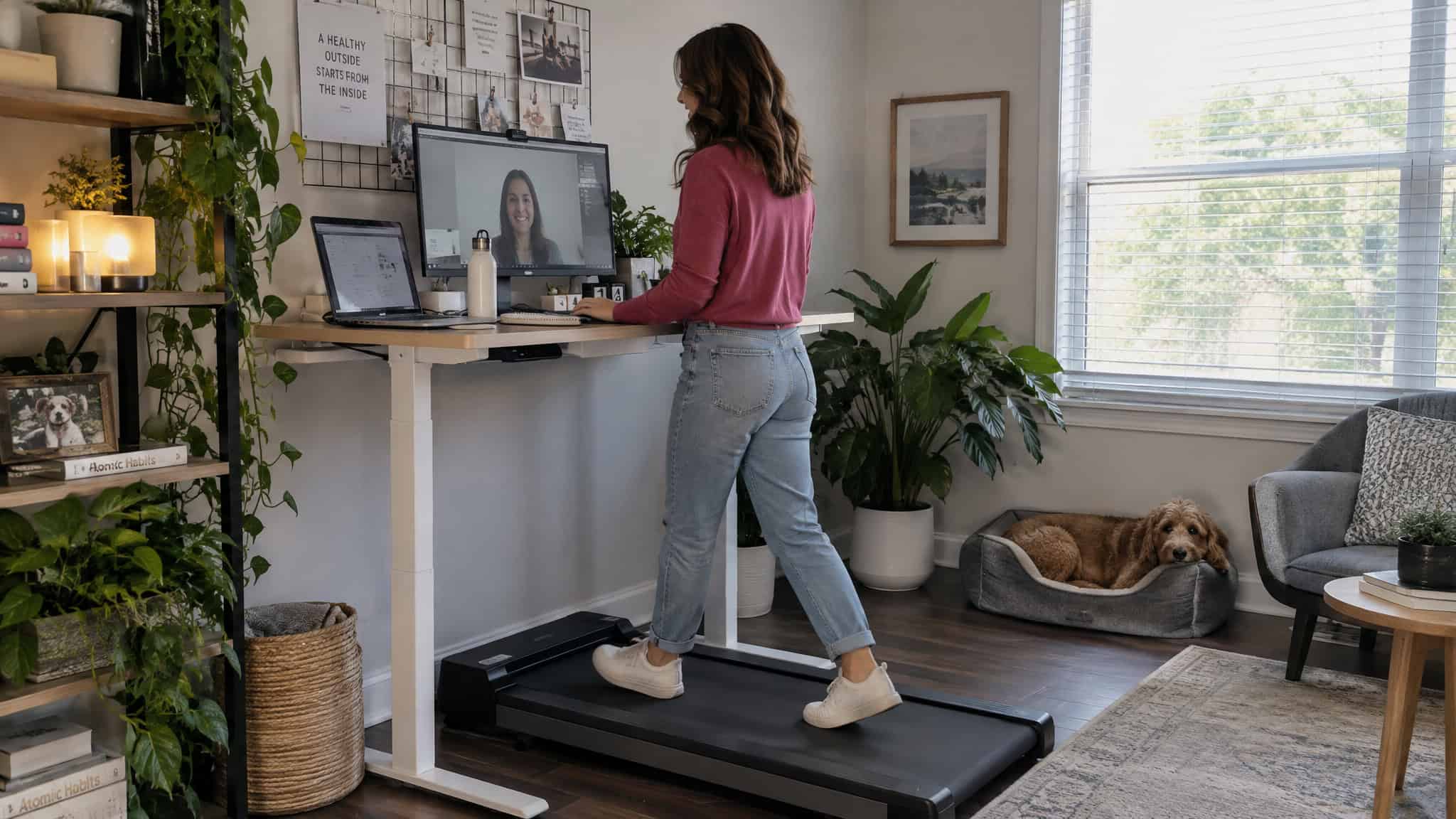
Walking pads went from quirky productivity hack to normal workplace equipment, and under-desk bikes, compact weights, and resistance bands followed them into the desk-fitness club. The honest caveat, framed as the typical pattern: pads that stick get treated as step accumulation during work, not a replacement workout, and usage often drops once the novelty fades or the desk setup proves awkward.That’s still a win for the hours it covers. The bigger point is that fitness is now woven into how people live and work, not a separate errand, and for parents with no separate time, that’s the entire appeal.
Wearables: how fitness trackers change behavior
Fitness trackers and smartwatches help you work out more by actively shaping behavior, through goals, reminders, and gamification, not by passively counting steps. You know exactly what this is: closing Apple Watch rings, joining Fitbit challenges, checking WHOOP recovery scores.The ring closing works on us, and pretending otherwise is silly.
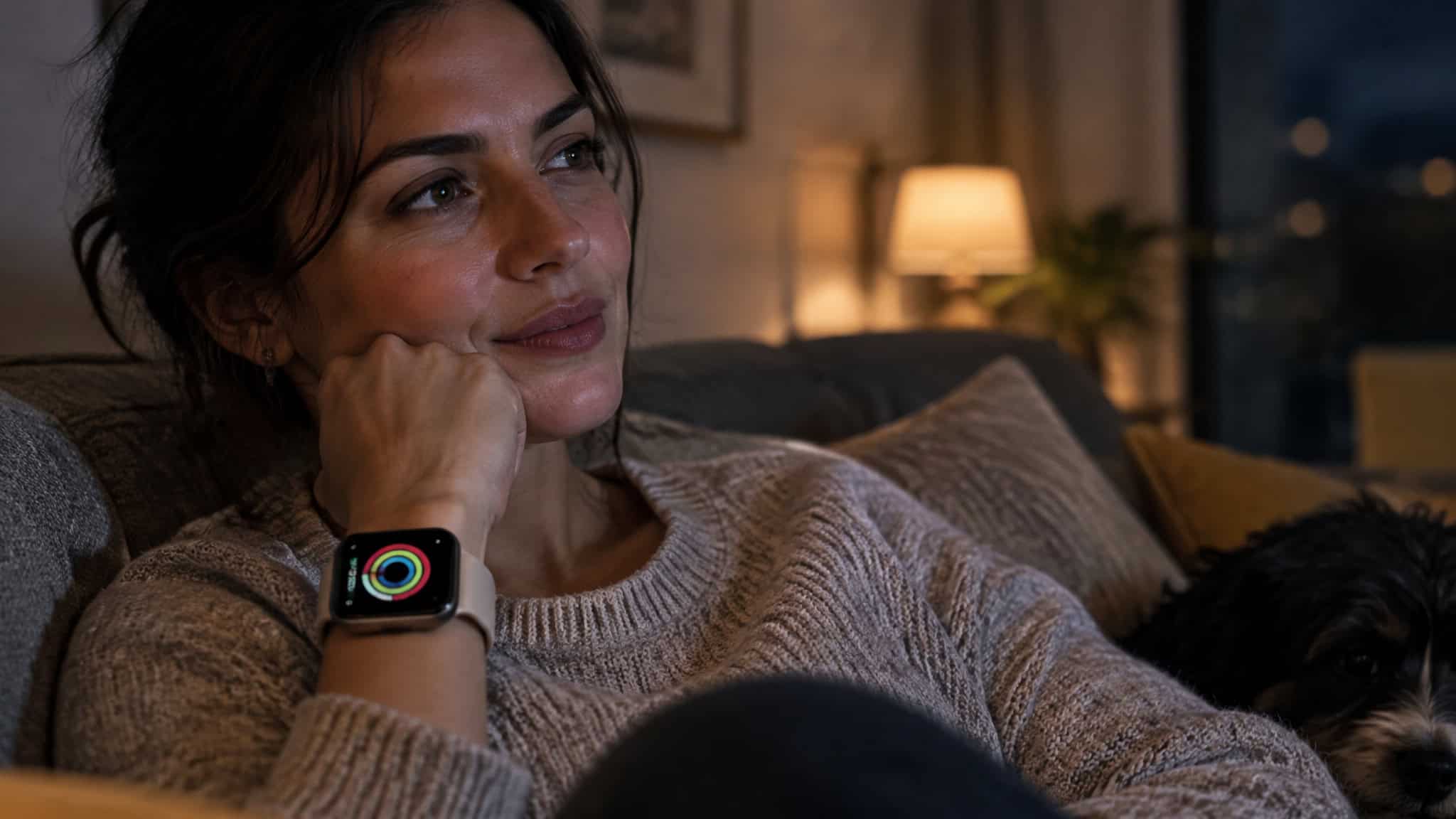
The genuinely useful part for tired parents is that these devices increasingly guide sleep and recovery, which means data that tells you to rest. Nobody argues with that data. There’s also the integration trend: health apps, stress tracking, AI-driven personalized coaching, all of which is plain-English for the watch does more of the thinking now. Then the skeptical counterpoint, because it’s a real failure pattern: new users often train to satisfy the metric, pushing to close rings even when their own recovery data says back off.The trend’s biggest fans can be its biggest misusers. Within the bigger longevity-and-performance picture, wearables are less about step-count calorie math and more about knowing when to push and when to stop.
Connected fitness: streaming, tech, virtual trainers
Peloton’s 2020 trend list predicted the most virtually-focused year yet, and those bets matured into today’s standard infrastructure, which is live evidence for the fad-versus-durable question later.
On-the-go fitness: a workout ready and waiting
Streaming apps, including the Peloton app, put a workout anywhere: late work nights, carpooling weekends, the twenty minutes you didn’t plan for.As Peloton puts it, “On the Peloton App, there’s always a workout ready and waiting for you.” The comforting part is no decision fatigue at 9pm.
Tech-focused classes: Peloton Treads and Bikes
Connected equipment like Peloton Treads and Bikes live-streams classes into your home and pairs with your phone. The class comes to you, on your schedule.Wearables plus smartphones have made fitness more accessible and cheaper to reach, which is the quiet democratizing point.
Virtual trainers: form cues without the price
Apps and streamable workouts stand in for a private trainer or group class, and some services actually check your form and offer modifications, the part skeptics assume apps can’t do. This opens coaching to people who couldn’t afford a trainer, said plainly, without commentary.
Guided meditation at the end of a workout
Eye-roll acknowledged.The concrete version: 10 to 15 minutes of meditation tacked onto the end of a class, helping you focus on breathing through hard efforts instead of counting pain. It’s the cooldown your brain also needed.
Assisted stretching: recovery as proactive health
Assisted stretching, where a trained professional helps you stretch more deeply and safely than you would alone, often blending massage and physical-therapy-style elements, looks worth it for desk workers and athletes undoing stiffness. The honest answer on cost: this article’s sources contain no pricing data, so check local studio pricing yourself before committing.
The studios are spreading regardless. StretchLab, with search interest up 18% year over year, and LYMBR keep opening locations across the U.S., and their client lists run from athletes to desk workers who sit for a living. What changed is the framing. Mobility is increasingly treated as a marker of how long you stay capable, which repositions stretching from spa splurge to proactive health.For anyone who felt weird paying someone to stretch them, the culture finally caught up.
Recovery supplements and high-protein snacks
The workout is no longer the whole product. The around-the-workout stuff, recovering and refueling, is where the growth is happening.
Recovery supplements: protein and electrolytes
Straight shooting, for the supplement-skeptical: recovery supplements are designed to help your body bounce back faster after workouts.Reading the label with a friend: protein repairs muscle, electrolytes rehydrate, and other ingredients ease soreness and replenish energy. There’s a real tradeoff in spending money on a maybe, and there’s also a genuinely validating idea underneath it: recovery counts as training. Resting is part of the work, no guilt required.
High-protein snacks and the Quest Chips effect
The honest bit said plainly: protein powder is popular but fits how most people actually eat poorly, which is why high-protein snacks and desserts, Quest Chips included, are among the fastest-growing nutrition trends.The future is protein chips, apparently. People want snacks that do something, and the snack aisle finally obliged.
Community-driven classes and the 95% effect
A study in the Journal of Consulting and Clinical Psychology found that 95% of people who began a fitness program alongside friends stuck with it, compared with 76% going it alone. Huh.That tracks. One citation, immediately translated: drag a friend, it literally works. Just know it’s a single study, cited via Peloton’s blog, not a universal law.
Anyone who’s exercised near another human knows the mechanism anyway.Working out beside other people quietly makes you try harder and last longer, and group classes are as social as they are beneficial. Here’s the contrarian reframe, said warmly: popularity is a feature, not a red flag. Picking a popular workout buys you into an existing support system, with classes, apps, workout buddies, mentors, and advice everywhere.
Popular things are popular for a reason, so the odds you’ll actually enjoy one are decent.No bandwagon pressure attached.
Exercise as wellness, not weight loss
Exercise is increasingly framed as self-care rather than calorie math or punishment for what you ate. The ripple is real: when movement feels like looking after yourself, sleep and eating habits tend to shift too, and people land on activities they genuinely enjoy and communities they actually like. That’s the whole shift, and it’s a good one.
Which trending workouts last, and which fade
The useful question isn’t “is this trendy?” but “does this trend solve a real life constraint?” The pattern has receipts: Jane Fonda-style jazzercise rode 1980s novelty and faded, Tae Bo tapes did the same in the early 1990s, while 2020’s virtual-fitness predictions matured into today’s hybrid, longevity-focused, lifestyle-integrated mainstream. Spin has spent four decades on the survivor side. Our timeline of fitness crazes over the years shows the cycle repeating every decade.Trajectory, not permanence, is the honest call.
How busy parents fit workouts into packed weeks
The way to fit workouts into a packed parent week is to match the trend to your actual constraint, not the most hyped one, then start one of two zero-cost options this week: the free NHS Couch to 5K app, or the 15-minute 40/20 bodyweight circuit. Neither needs a membership or equipment.
The constraint-to-trend mapping, quickly:
- Nap-time windows: the HIIT circuit at home
- No-gym budget: bodyweight basics and resistance bands
- Privacy and confidence: home workouts
- Desk time and errand-walking: walking pads as step accumulation
- Wanting a dated free plan: Couch to 5K
- Already having hobbies: hybrid pairing of two things you enjoy
That’s the fad test from earlier, applied: a trend survives in your house only if it solves a constraint you actually have.This piece is the hub, and each trend above routes to a deeper guide on the site. One last honest flag: micro-workouts (exercise snacks) and LISS circulate in search interest but aren’t backed by this article’s evidence, so they’re named as unverified rather than recommended. This piece evaluates the options through a parent’s schedule, it’s not a diary of having done them.
Frequently Asked Questions
What is the new workout craze?
HYROX is the one people mean. It’s an indoor race created in 2017 that pairs running with functional fitness across eight stations — Ski Erg, sled push and pull, burpee broad jumps, rowing, farmer’s carry, sandbag lunges, and wall balls, each preceded by a 1km run. More than 1.3 million people are expected across 100-plus events worldwide in the 2025/26 season, and search interest is up 266% year over year.
What are some trending exercises?
Specific exercises with traction include bodyweight basics like squats, lunges, inchworms, and mountain climbers; functional strength moves like multi-directional lunges, kettlebell work, and compound lifts; and HYROX stations like sled pushes, farmer’s carries, and wall balls. A 15-minute bodyweight circuit of 40 seconds work and 20 seconds rest is a zero-cost way to try the interval format this week.
Pilates vs yoga: which is better for beginners building core strength?
For targeted core strength, Pilates is the more direct tool — it trains core, posture, balance, and stability through low-impact, whole-body work. Yoga leans toward stress reduction, flexibility, and body awareness. Neither is wrong; they answer different questions, so pick based on whether your priority is core strength or stress relief.
What is hybrid training and how do I combine strength and cardio in one program?
Hybrid training combines strength, cardio, and mobility in one program, and it’s a decision framework rather than a specific activity you buy. In practice you pick two things you already enjoy and pair them — powerlifting with cycling, HIIT with yoga, long-distance running with weight lifting. The built-in variety is what keeps people showing up past the February dropout, and it works whether you’re casual or competitive.