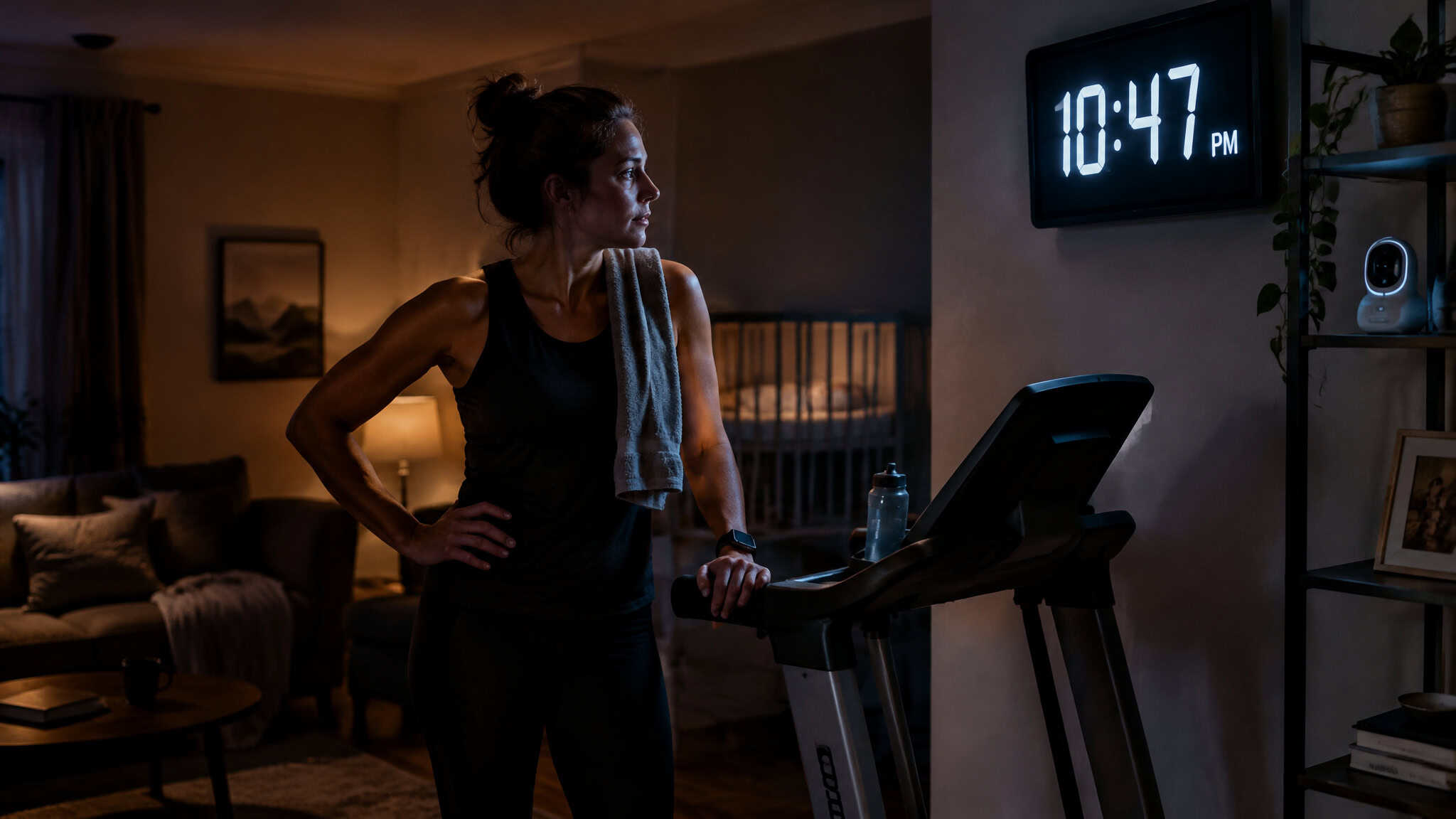
It’s 9:40 on a weeknight and I’m three minutes into the treadmill, doing math I didn’t used to do. If I finish at ten and I’m usually asleep by eleven, is this hour going to cost me the night? The baby monitor is crackling on the shelf next to my water bottle, and somewhere between mile one and the cooldown I’m wondering whether I’m about to pay for this at 11pm, or whether I’ve been worrying about nothing.
Key Takeaways
Finish hard workouts at least 4 hours before your usual bedtime. A 2025 study of 14,689 adults found high-strain sessions closer than that were consistently linked to worse sleep.
Total strain (intensity multiplied by duration) matters more than the clock. A 45-minute moderate session can load your body more than 20 hard minutes, and the less runway before bed, the more that load counts.
A late workout still beats skipping movement. In the UT Austin research, just 10 minutes of daily moderate activity improved sleep, and even light movement like walking counted.
Table of Contents
How late is too late: the short answer
Finish anything high-strain at least 4 hours before you usually fall asleep, and you’re on solid ground. Light or moderate sessions closer to bed are generally fine. That’s the short version, and it comes from a 2025 study in Nature Communications led by Josh Leota, which tracked 14,689 physically active adults over a full year. That added up to more than 4 million person-nights of wearable sleep data.
Not a sleep lab with a dozen college students for one night. Real nights, real people, a whole year of them.
Two honest qualifications before you write “4 hours” on the fridge.
First, this is a practical guideline drawn from observational data, not a biological cutoff somebody found under a microscope. It’s the line where the pattern became visible in a huge dataset, which is useful, but it isn’t a law of physics.
Second, the clock that matters is yours. The study measured everything against habitual sleep onset, meaning the time you normally drift off, not some universal bedtime. Four hours before your usual 11pm is a different target than four hours before a night-shift partner’s 1am.
Worth knowing where this came from: a major 2021 review led by Christopher Kline and colleagues had concluded that evening exercise within 3 hours of bed was generally fine, with the caveat of high-strain sessions wrapping up within an hour of sleep. The new study doesn’t overturn that, but it widens the caution zone: high-strain workouts anywhere inside the 4-hour window before your usual bedtime were consistently linked with poorer sleep, while anything ending at least 4 hours out looked fine regardless of strain. That addition is the whole story.
What the research actually measured: strain, not just the clock
The study tracked total cardiovascular strain, which is intensity multiplied by duration, read from heart rate data, and strain interacts with timing: the closer a workout sits to sleep, the more its total load matters. This is the reframe that changes how you plan an evening. A 45-minute moderate session at 9pm can carry more total strain than a 20-minute all-out interval at 9:30pm. The question isn’t “is evening exercise bad?” It’s “how much strain, and how late?”
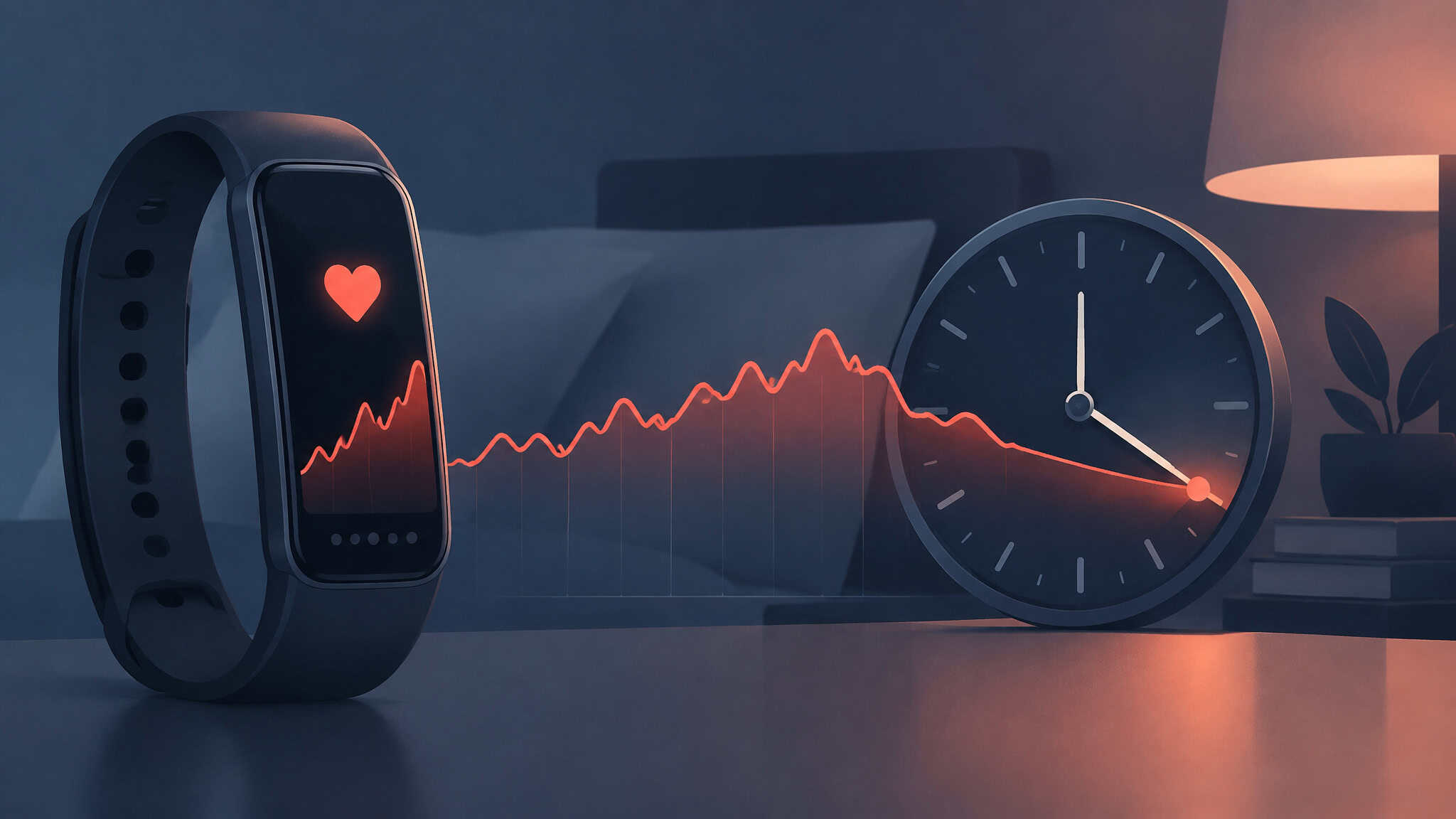
The dose-response pattern, translated: the later and harder the workout, the worse the sleep. At the 2-hour mark, where the comparison between maximal and light strain showed the biggest gaps, hard sessions were associated with falling asleep 36 minutes later, sleeping 22.2 minutes less, a nocturnal resting heart rate 3.9 bpm higher, and heart rate variability 14.1% lower. That last term deserves a translation: heart rate variability is the variation in time between heartbeats, and it’s a marker of how well your nervous system has downshifted into recovery mode. Higher heart rate plus lower variability together point the same direction. The body hadn’t fully wound down.
The worst cases in the dataset were workouts ending two hours after the person’s usual bedtime, which is a real reality for people with late shifts, and those nights saw sleep onset delayed by up to 80 minutes, sleep duration cut by up to 13.9%, and sleep quality reduced by up to 5.6%. Every one of those is an “up to,” a ceiling, not a typical Tuesday. But 80 minutes is the number that makes a parent wince, and 13.9% is a real chunk of a night.
One caveat the study’s own authors flagged, and it matters if you lift: because strain was measured through heart rate, brief high-effort work like heavy lifting may register as easier than it actually is. Short sets don’t spike heart rate the way a long run does, even though they demand plenty from your body. If your app says “low strain” after a heavy session, don’t fully trust that reading.
Now, the contradiction you’ve probably noticed between articles. A 2021 umbrella review led by Céline Gagnon… no, scratch that, by Christopher Kline and colleagues pulled together more than 30 systematic reviews covering nearly 300 studies and found that evening exercise within 3 hours of bed generally wasn’t harmful, apart from high-strain sessions that wrapped up within an hour of sleep. The 2025 study didn’t reverse that finding. It added a variable the older model didn’t have.
Total strain stretches the risk window from 1 hour to 4, because a big workout takes longer to recover from than a short sharp one. “The science is contradictory” is the common misreading. It’s really one model being extended.
The newer data also deserves weight for a simple reason: a full year of wearable data captures how people actually live, while much of the earlier research came from shorter, lab-based studies that observed people for a night or two. And there’s a pattern wearable users often notice that fits all of this. Someone finishes a workout feeling fine, goes to bed right on schedule, and only sees the cost the next morning: an elevated resting heart rate, a rough sleep score, before they ever feel anything subjectively. The data says the price got charged overnight even when the receipt didn’t arrive until morning.
Why a late hard workout can keep you wired
The likely explanation is that your body needs time to downshift. After hard exercise, your heart rate and core temperature stay elevated, and the “rest and digest” branch of your nervous system, the parasympathetic system, which handles calm and recovery, arrives late. That delayed downshift can get in the way of falling asleep. To be clear, this is the study’s hypothesized mechanism.
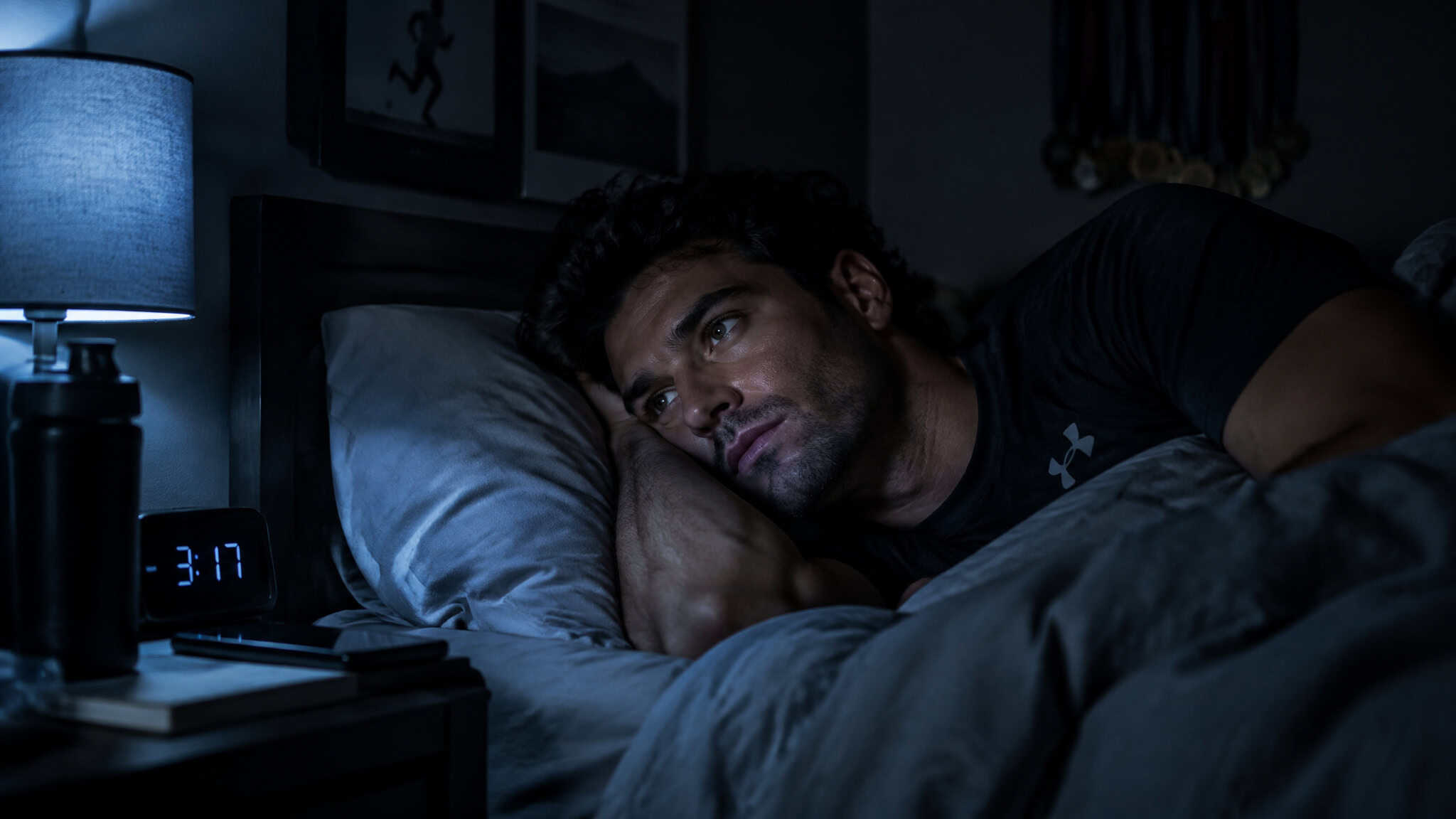
An observational study can’t confirm it. Scientists think this might be why; the honest answer is that they’re still proving it. If you want a picture of the hardest version of this conflict, consider professional athletes who regularly play night games: their work schedules collide head-on with the recovery window, though that application is inferred from this research, not directly tested in it.
What they can see is the measurable signature. Reduced nighttime heart rate variability after late high-strain sessions suggests the recovery downshift really is delayed, not just imagined.
A couple of things stack on top. Artificial light at night can delay melatonin, the hormone that tells your body it’s nighttime, so a bright living room at 10pm is already working against you. And a post-workout coffee or energy drink adds more stimulation to a system that’s trying to power down.
Here’s why the 4-hour rule protects something real rather than enforcing an arbitrary line. The deep, restorative non-REM sleep, the heavy sleep that comes early in the night, is when much of your physical and mental recovery happens, and the UT Austin research tied more of it to better next-day mood and energy. As Chris Corral, who co-led that research, put it, sleep is the window when your brain files away memories, flushes out waste, and resets itself. Sharper sleep, in turn, supports brain health and may help lower the odds of chronic disease and depression.
You’re not obeying a rule. You’re protecting the repair shift.
When late is your only window
If 9pm is your only realistic hour, you can still train. Cut the total strain, pick recovery-focused work when you’re close to bed, and treat one slightly shorter night as an acceptable trade for not skipping movement altogether.
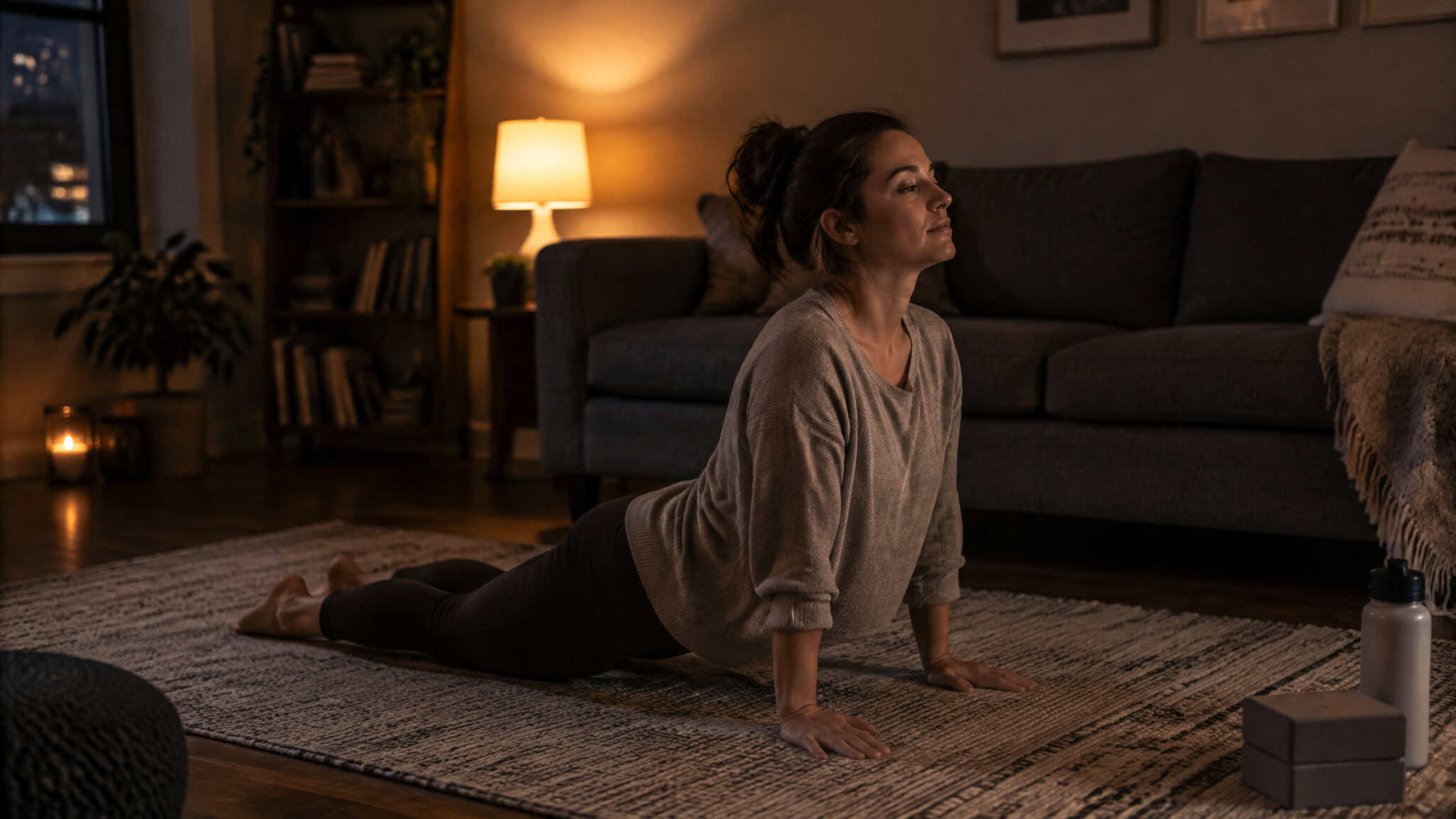
If training has to happen within 4 hours of sleep, cutting total cardiovascular strain may limit the disruption. The less runway you give your body, the more the size of the workout counts, so a big session at 9pm costs more than a small one. Very close to bedtime, low-strain or recovery-focused exercise is the better choice.
The practical playbook, for the nights when late is the slot:
- Cool down gradually. A few minutes of easy stretching or slow walking helps kick on the rest-and-digest mode that supports falling asleep.
- Skip post-workout caffeine and energy drinks. That’s the whole tip, and it’s an easy win.
- Don’t overdo fluids right before bed. Hydration matters; you just don’t want the 2am hallway trip undoing the math.
- Dim the evening lights. Bright light delays melatonin and makes sleep harder to start, so lower the room along with your heart rate.
- Watch your own response after late sessions. Everyone’s recovery pattern differs, and what works for one person flops for another. Find your sweet spot rather than obeying the average.
If you happen to have flexibility, morning workouts help set your internal clock and boost daytime alertness, and afternoon sessions can burn off the day’s accumulated stress. Those are options, not assignments.
Now the part I actually care about, because I think it’s the reason most of us hesitate. In my house, the realistic window is often after the kids are down, and a lot of parents I know default to full intensity in that slot because that’s the workout, the only one on the board today. And the research has something kind to say about it.
A separate group at UT Austin looked at this differently. Benjamin Baird, a research assistant professor of psychology, and Chris Corral, who had just finished his master’s in health behavior and health education, co-led a study published in the Journal of Physical Activity & Health, announced by UT News on July 14, 2025. Students wore Fitbits for several months, and what mattered turned out to be frequency, not total exercise time. As little as 10 minutes a day of moderate-to-vigorous activity made a measurable difference in sleep.
Moderate-to-vigorous meant about a 6 on a 1-to-10 effort scale: breathing raised, but you can still hold a conversation. Even light movement, things like regular walks or standing breaks, came with better sleep and better next-day mood. More deep non-REM sleep was tied to better next-day mood and energy. The researchers themselves called the 10-minute result surprising.
What Baird wanted to test was the weekend-warrior pattern: cramming everything into one or two days versus spreading it out, and the answer was that for sleep health, frequency seems to matter. Daily movement may beat weekend-cramming. That’s an interesting finding partly because the CDC and WHO recommend 150 minutes a week without saying anything about how to spread it, and Baird has argued that current guidelines don’t reflect the importance of frequency for sleep health. Whether that changes depends on whether the findings hold, and the team is testing that across broader populations through a five-year research effort. Stay tuned.
A late workout that slightly shortens one night’s sleep can still net out positive, given that even 10 minutes of daily movement measurably improves deep sleep. But that depends on the strain and on you, so I won’t claim late exercise is always a win. What the research actually says is moderation of timing and strain, not fear of evening exercise.
Corral’s version of this is the exhale: you don’t need to run marathons. A little movement each day helps, light activity counts, and doing something is better than doing nothing.
The at-home version fits this naturally, too. Late home workouts already come with noise limits and no gym commute, which pairs well with lower-strain sessions. If you’re figuring out what to actually do in that window, the roundup of workouts actually trending right now is a decent place to browse for something that fits a quiet living room.
Low-strain vs. high-strain: what actually counts
Strain is intensity multiplied by duration, so the activity type matters less than how long and hard the session is. That said, some activities are reliably low-strain and safe closer to bed, and some reliably aren’t.
Aerobic work like walking, running, cycling, and swimming, at 30 minutes a day, helps regulate your circadian rhythms, the internal clock that decides when you feel awake and when you feel sleepy. Research links aerobic exercise to reduced severity of insomnia and obstructive sleep apnea, which is breathing that repeatedly stops and starts during sleep; in some studies of people with those conditions, moderate activity reduced sleep disturbance severity by 28-32%. Resistance training did just as well as aerobic activity for sleep quality in the 2021 review, with resistance leaning slightly toward sleep quality and aerobic toward sleep duration and falling-asleep speed. A 2021 study in Sports Medicine found that people who strength trained at least three times a week reported better sleep quality and fewer nighttime awakenings, though that’s self-reported data.
Yoga’s breathing and relaxation techniques lower cortisol, the stress hormone, and it’s particularly helpful for stress-induced insomnia specifically, not insomnia in general. Tai chi and Pilates offer relaxation, flexibility, and lower stress, and they’re particularly helpful for older adults’ sleep onset and duration.
The dose finding is quietly liberating: longer sessions yielded greater benefits, and intensity mattered less unless it was paired with bad timing. And the strongest therapeutic number in this pile: moderate activity reduced sleep disturbance severity by 28-32% in some studies of people with insomnia or sleep apnea. Every qualifier stays, because they’re doing real work. One more, lightly attributed: in a 2020 Sleep Foundation study, people who exercised at least 30 minutes a day reported a 65% improvement in sleep quality within six weeks. Self-reported, not lab-verified, but encouraging.
| Exercise type | Typical strain | How close to bed it’s reasonable |
|---|---|---|
| Easy walking, gentle stretching | Low | Fine close to bed, even within an hour or two |
| Yoga, tai chi, Pilates | Low | Reasonable close to bed; the relaxation is the point |
| Moderate cycling or swimming, 30-45 minutes | Moderate | Fine 4+ hours out; keep it shorter and easier closer in |
| Running or hard intervals | High | Finish at least 4 hours before your usual sleep time |
| Heavy lifting | High, though heart rate may understate it | Treat it like high strain; finish 4 hours out |
One caveat from earlier is worth repeating here: strain was read from heart rate, so brief maximal lifts can look easier than they are. If you want form basics for any of these, the ten foundational exercises that outlast every trend is a solid companion piece.
Reading this evidence honestly
The 4-hour rule is a well-supported practical guideline, not proven biology, and the honest reading starts there. The study is observational, so it shows a strong, repeated association rather than proven cause and effect. It relies on wearable estimates rather than lab-grade measurement. It studied already-active adults, so results may not map onto everyone.
Everyday variables like caffeine, food, alcohol, and light exposure weren’t fully controlled, because real life has too many moving parts for one study to pin down. Small recovery effects may occur even when sleep looks unaffected on the surface, and the mechanism remains a hypothesis.
One question this evidence can’t answer, said plainly: there’s no fat-loss timing cutoff here. Readers searching for the latest workout time for weight loss won’t find that answer in these studies, because they cover sleep timing, not fat-loss timing, and I’m not going to invent a metabolic window. What is supported: sleep quality itself affects weight-related health, exercise helps regulate the hormones that run your sleep-wake rhythm, and a healthy weight reduces sleep apnea risk. Protecting your sleep is itself a weight-management lever, which is a more useful sentence than a fake fat-burning deadline.
And the standard check-in, warm version: worth a conversation with your doctor before significant changes, especially if you’re already being treated for something. That’s it. Not a warning, just good practice.
The last word belongs to the study’s own message, which is more forgiving than most headlines: get the hard stuff done 4 hours out, keep the late sessions light when late is all you’ve got, and remember that progress beats perfection. The best strategy is the one you’ll actually keep doing, monitor crackling or not.
Frequently Asked Questions
Is it okay to exercise 3 hours before bed?
Yes, as long as the session isn’t high-strain. A 2025 study of 14,689 adults found that hard workouts ending within 4 hours of your usual bedtime were consistently linked to worse sleep, while light or moderate sessions closer to bed were generally fine. So a 3-hour gap works for easy walking, yoga, or a short moderate session — just not for hard intervals or heavy lifting.
Is it bad to work out at night?
Not inherently — it depends on the strain and the timing. A 2021 review of nearly 300 studies found evening exercise within 3 hours of bed generally wasn’t harmful, and a 2025 study only extended the caution to high-strain sessions within 4 hours. A late workout still beats skipping movement entirely: even 10 minutes of daily moderate activity measurably improved sleep in UT Austin research.
Does high intensity exercise close to bedtime delay sleep onset?
It can, noticeably. In the 2025 study, hard sessions ending 2 hours before usual bedtime were associated with falling asleep 36 minutes later, and workouts ending 2 hours after usual bedtime delayed sleep onset by up to 80 minutes. The likely mechanism is a delayed downshift — heart rate and core temperature stay elevated and the parasympathetic recovery system arrives late.
What’s the latest you should workout for weight loss?
There’s no evidence-based fat-loss cutoff — the exercise-timing studies cover sleep, not fat-burning windows, so any specific deadline would be invented. What’s supported is indirect: exercise helps regulate the hormones that run your sleep-wake rhythm, and better sleep supports weight-related health. Pick the workout time you’ll actually keep doing.
What is total strain and why does it matter more than workout timing?
Total cardiovascular strain is intensity multiplied by duration, read from heart rate data. It matters because the closer a workout sits to bedtime, the more its total load counts: a 45-minute moderate session at 9pm can carry more strain than a 20-minute all-out interval at 9:30pm. This is what stretched the old 1-hour caution for intense exercise into a 4-hour window.
What should I do if a late workout is my only option?
Cut the total strain and pick recovery-focused work — easy walking, gentle stretching, yoga, or tai chi are all reasonable close to bed. Then stack the basics: cool down gradually, skip post-workout caffeine, don’t overdo fluids, and dim the lights since bright light delays melatonin. A slightly shorter night is an acceptable trade for not skipping movement altogether.