The dress shows up in the mail. Right color, right style, and it will not close across the chest. The waist is fine. The chest is nowhere close. If you’ve already lived a version of this, you know the particular sting of a package that fits nobody.
If you haven’t, good, that’s what this is for. This piece exists because our explainer of what a sissy husband actually is covers the what, and the what leaves you standing in front of a size chart with no plan. This is the plan: sissy husband clothing, what to buy first and how to size it, in one sequenced pass. It’s built around the two fears that make first wardrobes go sideways, wasting money on clothes that don’t fit and being exposed before you’re ready.
So the order matters. Measure first, match your numbers to the chart that actually governs the garment, convert chest and waist per garment type, and buy in budget order so early mistakes stay cheap. One flag before we start: every worked number below is UK sizing. UK, not US. Write that on the same note as your measurements.
Key Takeaways
Measure four things in inches before you buy anything: waist at the belly button, bust at nipple height, chest 2 to 3 inches below the nipple, and hips.
On Amazon, ignore the default size chart under the price. The manufacturer’s chart, tucked in the alternate product views, is usually the accurate one, and the reviews are the real fit reports.
In UK sizing, a 38-inch chest maps to a UK 14 and a 32-inch waist to a UK 12, so a dress gets bought in the larger size, the UK 14.
Table of contents
Table of Contents
Step 1: Take your measurements before you shop
Before a single thing goes in a cart, you need four numbers, and where the tape sits matters more than the tape itself. Use a soft ribbon measuring tape, the kind from a sewing kit, not the metal one from the toolbox. The metal one doesn’t bend, and bending is the entire job. Write each number down in inches as you go, on your phone, before you forget which one was which.
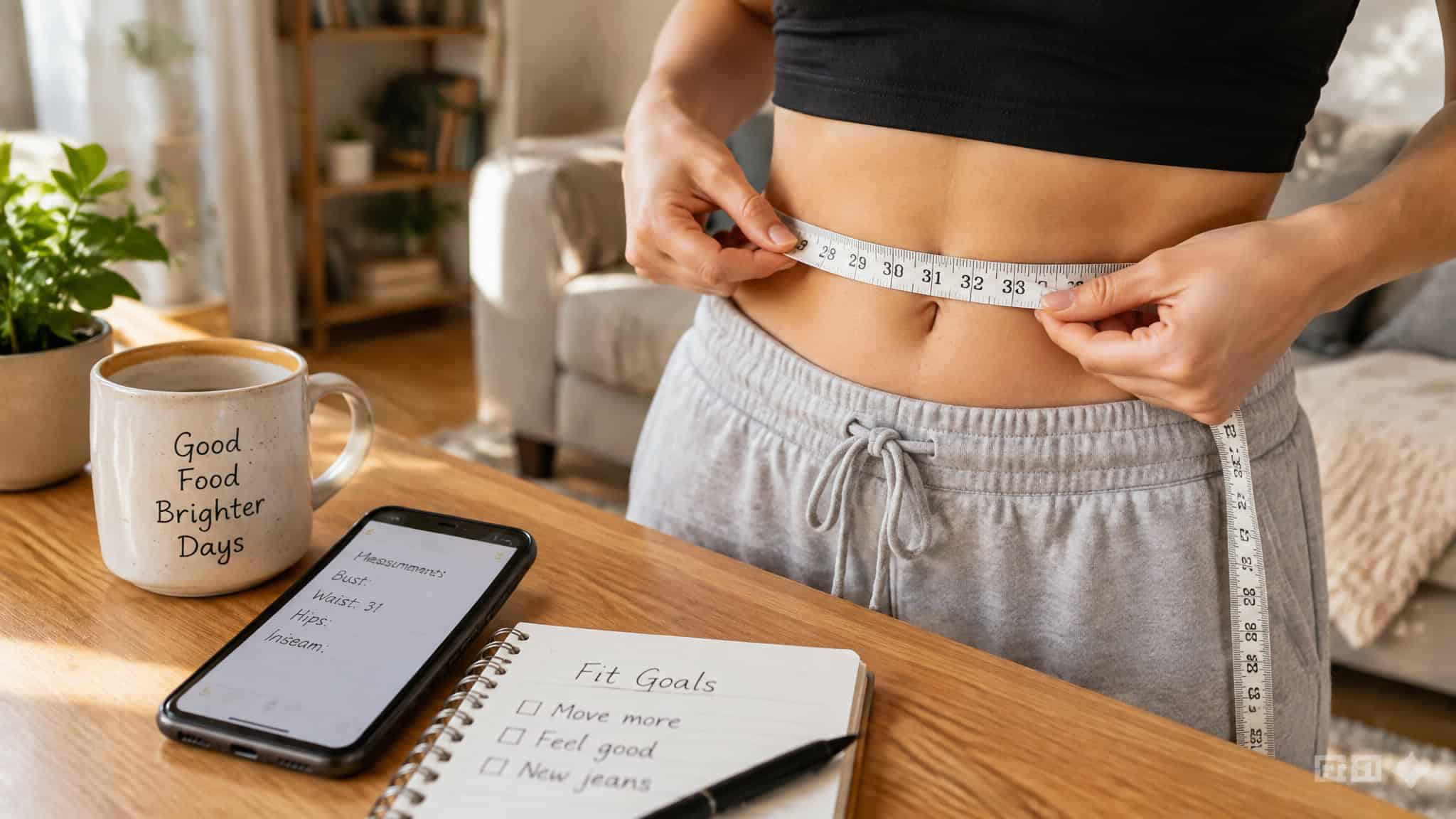
If you’re doing this for your husband rather than yourself, same list, same spots. The tape doesn’t care who’s holding it.
- Waist, at the belly button. Not where your belt sits. Men’s trousers ride lower than the natural waist, so the waist that matters for women’s clothes lives higher than the waistband you’ve trusted your whole life.
- Bust, at nipple height. With forms or padding if you’ll be wearing them, without if you won’t. Match whatever you’ll actually have on under the garment.
- Chest, 2 to 3 inches below the nipple, just under the pectoral muscle. Yes, that’s a different number from the bust, and yes, you need both.
- Hips, around the fullest part.
Why measure chest and waist separately? Because on typical male bodies they diverge sharply, and you can’t infer one from the other. Guessing the chest from the waist is exactly how dresses end up zipping at the waist and stalling at the sternum. Four numbers, five minutes, done.
Why tag sizes lie (and which size chart to trust on Amazon)
The tag in a women’s dress means almost nothing. Every designer and every store defines sizes their own way, and men’s and women’s sizing aren’t two ends of one scale. They’re two different systems entirely. A 12 in one brand fits like a 16 in another. That’s not your body failing a test. That’s the test being written in a different language every time you shop.
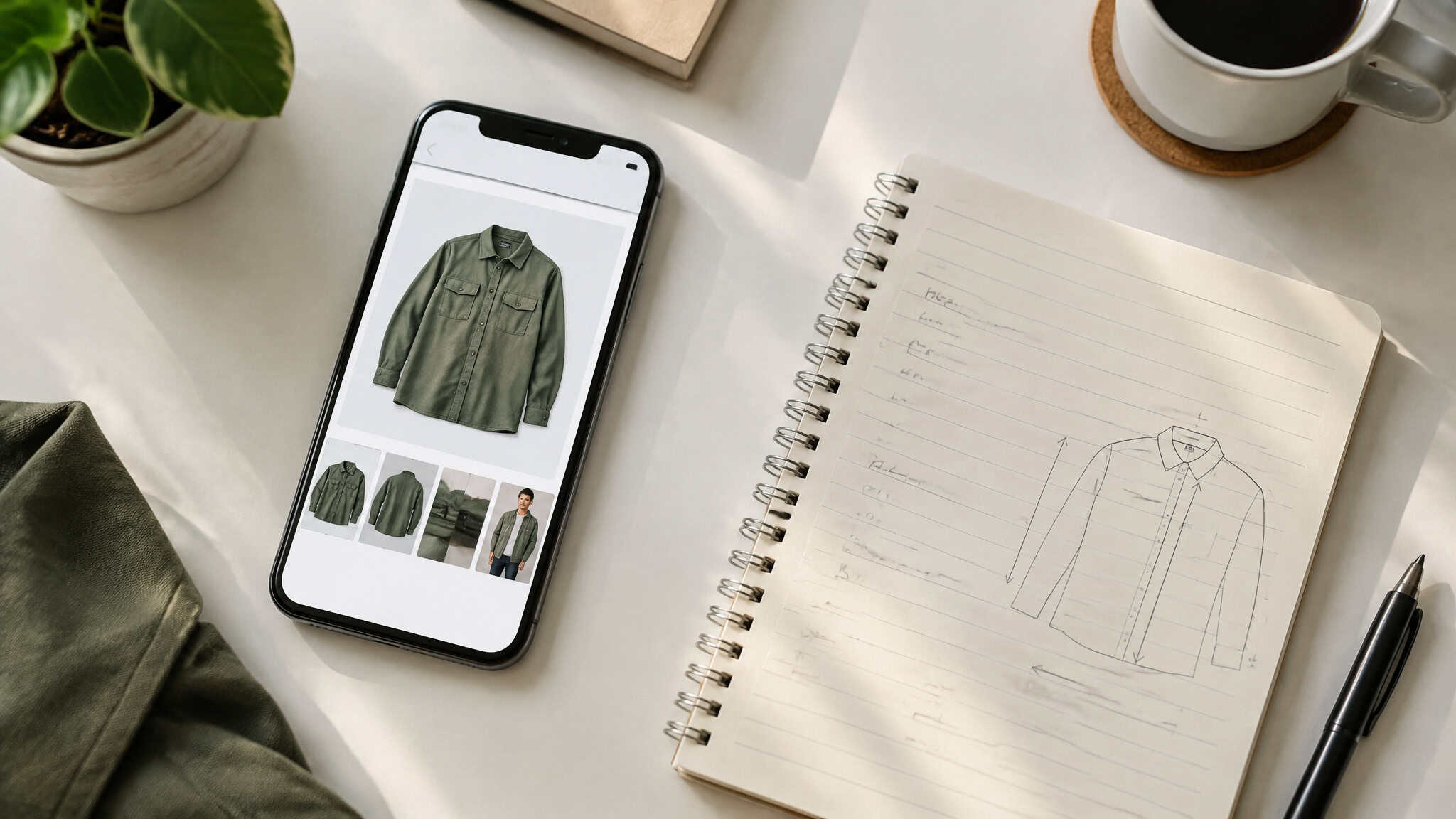
Amazon is the example here because it’s where most first orders happen, but the pattern below is what you’re looking for anywhere you shop.
Ignore the default size chart under the price
The size chart that sits right under the price, the default one every listing gets, is almost never the one that matters. The chart worth trusting is the manufacturer’s own, and it usually hides among the alternate product photos, a thumbnail or two over from the model shots. Click through the images until you find it. Then know this: it changes dress to dress, even within the same store.
The chart that worked for the last thing you bought may be wrong for the next one. Check every listing like it’s your first.
Read customer questions and reviews for fit signals
Then scroll all the way down the page. The customer questions and reviews are other shoppers’ fit reports for that exact garment, in real bodies, which is more than any chart can tell you. Crossdresser Hannah McKnight wrote about exactly this on her blog, hannahmcknight.org: she normally wears a 12 or a large, a 10 when the fabric is stretchy, and Amazon’s default chart puts her at an XL. She’s been burned enough times that checking the chart is pure habit now, and the chart still tried to hand her two extra sizes. That gap between what someone actually wears and what the default chart claims is the same gap behind the classic first-order mistake: buy your usual letter size, receive something two sizes off. It’s usually the chart’s fault, not yours, and it’s why the manufacturer’s own chart, not Amazon’s default one, is the one worth trusting.
Quick test: Before checkout, open the manufacturer’s chart in the product photos and scan the reviews for fit notes on that exact garment.
The good news is that buying online makes returns convenient. Ill-fitting stuff goes back. That’s the safety net, not the sizing plan, but it does mean a wrong guess costs a trip to the post office rather than a wardrobe.
Convert chest and waist to your dress size (worked example)
Once you have a chest number and a waist number, converting them is two separate lookups in the store’s own tables, then one decision. The worked example here comes from the Crossdressing Lifestyle YouTube channel, and all the numbers are UK sizes.
Say your chest measures 38 inches. Run that through the store’s chest table and it maps to a UK 14. Now the waist: 32 inches maps to a UK 12. Two measurements, two sizes. Which one do you buy?
The larger-of-two rule for dresses
For a dress, buy the larger, so the UK 14. The reason is shape. Male bodies tend toward an inverted pyramid, chest bigger relative to waist, so the chest usually calls the shots. The classic first-dress failure goes like this: you convert from the waist alone, the dress zips fine at the waist, and then it won’t close across the chest. Take the larger size and the fabric has somewhere to go. Your numbers will be your own, but the three moves stay the same: convert chest, convert waist, take the larger for a dress.
Skirts, jeans, and trousers: buy by waist alone
Bottoms are the relief round. Skirts, jeans, trousers: the waist measurement decides, full stop. Just your waist number against the brand’s chart.
Blouses and breast forms: the C-cup compatibility check
Blouses bring one extra check, and it’s about what’s filling them. As long as your breast forms or padding are no bigger than a C cup, a UK 14 blouse should fit. That’s a link the conversion tables never make for you: the size of your forms and the size of your clothes are the same decision. Pick the forms with the blouse in mind and both purchases get easier.
Shoe and bra size conversion: what to know before you buy
Here’s the honest limit, said once so we can move on: there is no universal men’s-to-women’s shoe conversion, and no universal bra conversion either. Anyone handing you one tidy number is guessing. Check each brand’s chart, every time, the same way you do for dresses. What you can plan around: heels change your posture and give you a more feminine hip sway, and anything under 3 inches is much kinder to untrained ankles.
Shoe sizing and the beginner heel rule
What is knowable: heels under 3 inches are much easier to walk in when you’re starting out. Treat that as a physics fact about untrained ankles, not a style rule. You can care about height later. On a budget, basic black or nude pumps go with everything, so one sensible pair covers every outfit you own.
And heels are worth the learning curve at all because they change more than your feet. They shift your posture and produce a more feminine hip sway, which is a lot of effect from a shoe.
Bra and form sizing without a conversion chart
Bras run on the same per-brand discipline, band size included. The same compatibility rule applies: forms or padding up to a C cup fit a UK 14 blouse. So whatever band size your brand’s chart gives you, keep the cup side of the equation talking to the forms you actually own.
What to buy first: the budget-sequenced starter list
A first wardrobe is a ladder, not a shopping list. The logic is simple: wrong-size purchases get replaced, and replacing is what makes early mistakes expensive. So the cheap stuff comes first, and the expensive stuff waits until you know your actual sizes.
Buy now: budget forms, thrifted pieces, and clothes you actually like
Start with inexpensive breast forms, proportionate to your body, from Amazon or eBay. Not too big, not too small, and gentle honesty: resist the temptation to overdo it. Premium silicone forms can run to hundreds of dollars, and that’s a real number to hit before you know what size you actually wear. Budget pairs let you learn cheap.
Thrift stores, consignment shops, and eBay are the other low-cost playgrounds. And buy clothes that appeal to you, not the boring “should wear” items. Don’t overspend while you’re still figuring out your sizes and your style. That’s just arithmetic.
If privacy is part of the picture, and for a lot of people it is, thrift stores double as low-exposure first-purchase venues, and plenty of women’s pieces pass as unisex in guy mode: basic tees, button-downs, jeans, pants, even suits. Accessories bridge the gap too. Women’s boots work as boots, and a tote bag does believable laptop-bag duty. Online ordering with easy returns also means you can do most of this without ever setting foot in a store.
None of that is a prescription. It depends entirely on your situation and who knows what.
The prep layer: wig, makeup basics, and a clean shave
Lucille Sorella’s 10 tips for beginner crossdressers, from her Femme Secrets channel, put a quality wig first, in a color and style that flatter you, because it transforms your appearance instantly. Then basic makeup: lipstick, eyeshadow, mascara. False eyelashes and contouring can wait. Tutorials for all of it are everywhere online when you want them. And get a clean shave right before dressing, face and body, because clothes genuinely feel softer on smooth skin.
Buy later: pads, a cincher, and premium silicone
Hip and butt pads, a waist cincher, premium silicone forms: all useful, none urgent. They’re upgrades for a wardrobe that already fits, not day-one purchases.
Check the fabric label before you checkout
One glance at the fabric label predicts whether your calculated size will actually work, which makes it the cheapest fit test in this whole guide. Around 5% elastane means the garment will stretch to fit, so size as calculated, and possibly down; the same creator who wears a UK 12 wears a UK 10 in stretchy fabric. Rigid fabric may need you to size up, and a cheap zipper is a warning sign that travels with it. Treat 5% as an example threshold, not a guaranteed rule.
The Crossdressing Lifestyle sizing video that makes this point is handing you a habit, not a formula, and the habit is the point. Every label you read at checkout is a return-and-replace cost you just didn’t pay, which is the same budget logic the starter list runs on.
Shapewear and silhouette
The question with waist shaping isn’t which tool is stronger. It’s which one you’ll keep wearing, because shaping only works on the days you actually put it on.
Waist cincher vs steel-boned corset for beginners
| Steel-boned corset | Waist cincher | |
|---|---|---|
| Waist reduction | Up to 6 inches | 1 to 4 inches |
| Comfortable under most clothes | No (stiff and bulky) | Yes (you can move and breathe) |
| Boning for maximum shaping | Yes (steel bones) | Yes (boned styles shape most) |
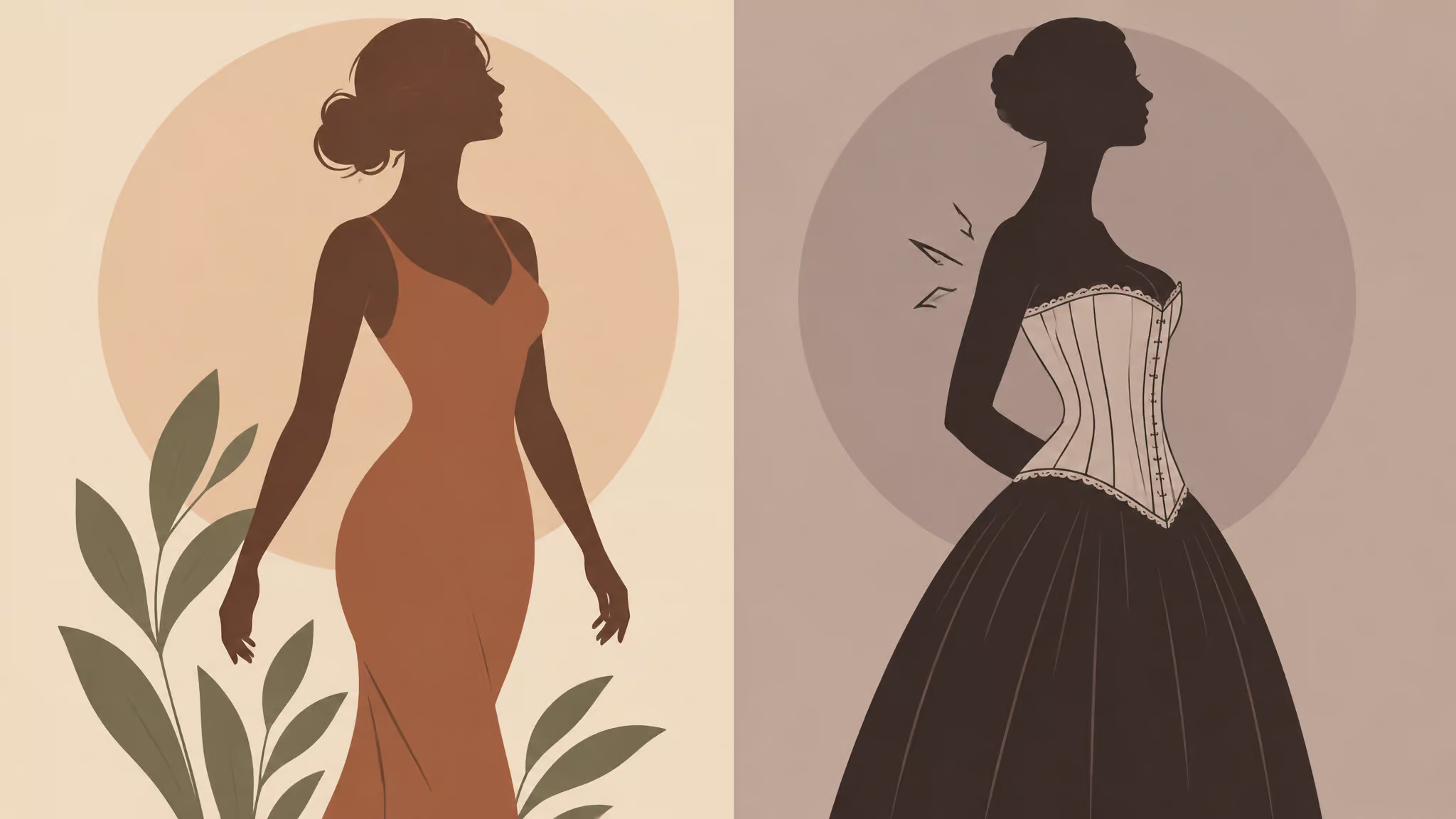
A quality steel-boned corset can take up to six inches off the waist, which sounds great until you meet the garment: stiff, bulky, and uncomfortable under most clothes. Wear-time starts at 1 to 2 hours a day and builds gradually from there. Any claim about semi-permanent waist reduction belongs to waist-training protocols that pair a tightly laced corset with diet and exercise over long stretches, and that’s one creator’s own protocol, not an established outcome. A cincher takes 1 to 4 inches off while letting you move and breathe, pulls the stomach in and the spine straight enough to improve posture, and comes in different styles and compression levels, with boned versions shaping most. For most beginners, that trade is the right one.
Posture and stomach vacuums: the zero-purchase waist tools
Posture is the free upgrade. Stomach in, chest lifted, shoulders back can read about 10 pounds lighter around the middle, instantly, for zero dollars. Stomach vacuums are the slow version, and yes, they sound odd. The counterintuitive bit: crunches and sit-ups can overdevelop the abs and widen the waist, while vacuums tone the transverse abdominis, which is the deep muscle that holds your stomach in. Think of it as a built-in corset, done consistently over time, the source claims 2 to 4 inches are possible.
Your built-in corset, basically. The source claims 2 to 4 inches are possible over time; take that as one person’s opinion and a slow, quiet practice, not a hack.
The routine:
- Exhale all the air out.
- Expand the chest.
- Suck the stomach in.
- Imagine the belly button touching your spine.
- Hold 5 to 15 seconds.
- Relax, and repeat for 3 to 5 minutes daily.
Hips: padding, gathering, and peplum
The traditional hourglass reference point is hips roughly 10 inches larger than the waist. Hold that lightly. It’s context, not a goalpost. Padded panties add volume lower down, skirts and dresses with gathering at the hips create the illusion of fuller hips, and a peplum, a ruffle or overskirt attached at the waistline, adds hip volume instantly. Which is the quiet insight of this whole section: garment cut can do work compression can’t.
When you’re ready to go out, go where people get it: a cross-dressing Meetup or an LGBTQ friendly bar, optionally with a friend or spouse along for support. If the conversation with a spouse hasn’t happened yet, there’s a separate guide on how to tell your wife you want to be a sissy husband. On passing, one longtime creator’s honest take is that it’s impractical for most people, and the real goal is feeling comfortable in your own skin. Everyone’s early attempts at hair, makeup, and outfits are rough.
It gets better with practice. That part isn’t a pep talk. It’s just how learning anything works.
Frequently Asked Questions
How to start dressing like a femboy?
Start with measurements, not purchases. Take four numbers in inches — waist at the belly button, bust at nipple height, chest just under the pectoral, and hips — then match them to each brand’s own size chart. Buy in budget order: inexpensive breast forms, thrifted pieces, and unisex-passing basics like tees, button-downs, and jeans come first, while pricier items wait until you know your actual sizes.
What clothing should a beginner crossdresser buy first on a budget?
Cheap stuff first, expensive stuff later. Start with inexpensive breast forms proportionate to your body from Amazon or eBay, thrifted or consignment pieces, and clothes you actually like rather than boring ‘should wear’ items. Hip pads, a waist cincher, and premium silicone forms are upgrades for a wardrobe that already fits — none of them are day-one purchases.
Waist cincher vs steel-boned corset: which is better for a beginner crossdresser?
For most beginners, the cincher. A quality steel-boned corset can take up to six inches off the waist, but it’s stiff, bulky, and uncomfortable under most clothes, with wear-time starting at 1 to 2 hours a day. A cincher takes 1 to 4 inches off while letting you move and breathe, improves posture, and comes in different compression levels — and the real question is which tool you’ll actually keep wearing, because shaping only works on the days you put it on.