Every January the same ritual plays out: a dozen fitness trend lists land within the same week, each one confident, and none of them showing you the rank data that would tell you which shifts are durable before you commit a year of already-scarce workout windows to one. So this year we flipped it. Instead of adding another prediction to the pile, we went back through fitness trends 2025 with the industry’s actual benchmark in hand, the American College of Sports Medicine’s Worldwide Fitness Trends survey, and judged every trend by its multi-year rank trajectory instead of its hype. Wearables and strength stuck, home gyms and workplace wellness faded, and a few newcomers are genuinely too early to call. When your training time gets carved out of a household schedule, that distinction is the whole game.
Key Takeaways
Wearable technology has ranked #1 in the ACSM survey every year since 2016 except 2018 (#3) and 2021 (#2), and it held the top spot again in 2025.
Mobile exercise apps made the sharpest climb in the survey, from #20 in 2023 to #7 in 2024 to #2 in 2025. Home gyms went the other way, collapsing from #2 in 2022 to #13 in 2023.
Under 30% of U.S. adults hit the muscle-strengthening guidelines (at least 2 days a week, all major muscle groups), which makes strength training unmet demand rather than a crowded trend.
Table of Contents
How the 2025 rankings were built, and how far to trust them
The worldwide survey of fitness trends for 2025 is the American College of Sports Medicine’s annual ranking of what credentialed exercise professionals expect to shape the industry, published in ACSM’s Health & Fitness Journal by a research team that includes A’Naja M. Newsome, PhD, Peter Ronai, and Paul Branks. It isn’t a vibe check on social media. Researchers assemble a structured ballot in Qualtrics XM, send it to a large pool of practitioners, and publish the results with the methodology attached. For the 2025 edition, the build looked like this:
- 45 possible trends across seven categories, each rated on a 10-point scale, with explicit definitions separating a trend (a sustained pattern with measurable engagement) from a fad (brief enthusiasm)
- Fielded April 2 to June 2, 2024
- 30,394 people invited; 2,083 valid responses came back, about a 7% response rate, with 1,745 fully completed
- Who answered: 60% women, average age 41.6, more than half with 10+ years in the field, about a quarter working in hospital or medical fitness settings, and 64.3% ACSM-certified
That last bullet is the one to remember. These are practitioners, not influencers: people who program workouts for a living and watch what actually gets used.
The authors disclose the limits themselves, which is exactly why the list is worth weighing rather than worshipping. The response rate sits below the ~20% typical of survey research, the sample skews toward ACSM-certified professionals, and regional methodology and translation differences exist. Read every rank that follows as a strong signal, not a perfect one. And hold onto one distinction, because it explains most of the surprises later: the survey measures credentialed professionals’ perception, not consumer behavior. What pros think will matter and what people actually do sometimes diverge, and both halves are interesting.
The 2026 edition, the survey’s 20th annual, drew about 2,000 clinicians, researchers, and exercise professionals, and it added a practical application for each trend along with curated peer-reviewed journal articles. Two decades of asking the same question, and the research finally got translated into “okay, but what do I do?”
The 2025 top 20 at a glance
Momentum only shows up when you put the years side by side, so here are the headline ranks with their 2024 positions where the data supports the comparison.
| 2025 rank | Trend | 2024 position |
|---|---|---|
| #1 | Wearable technology | #1 (top spot every year since 2016 except 2018 and 2021) |
| #2 | Mobile exercise apps | #7 |
| #3 | Fitness programs for older adults | Top 10 every year except 2017 and 2022 |
| #4 | Exercise for weight loss | #4 |
| #5 | Traditional strength training | #17 |
| #8 | Exercise for mental health | #8 |
Also in the 2025 top 10: HIIT at #6, data-driven training technology at #7, health/wellness coaching at #10, and youth athletic development at #11. The biggest risers were the apps and the iron. For a longer arc, 2023’s top five were wearables, free-weight strength, body weight training, older-adult programs, and functional fitness, which tells you the top of this list doesn’t reshuffle so much as it slowly settles.
Wearable technology: a decade at #1
Yes, fitness trackers are accurate enough for core metrics like heart rate and steps, but the flashier numbers deserve skepticism. Researchers like Sarah M. Camhi, PhD, FACSM, have validated the basics repeatedly; the newer features are another story, because evaluation guidelines exist and innovation still keeps outrunning validation. A watch can get an update before anyone has properly checked whether the new number means anything.
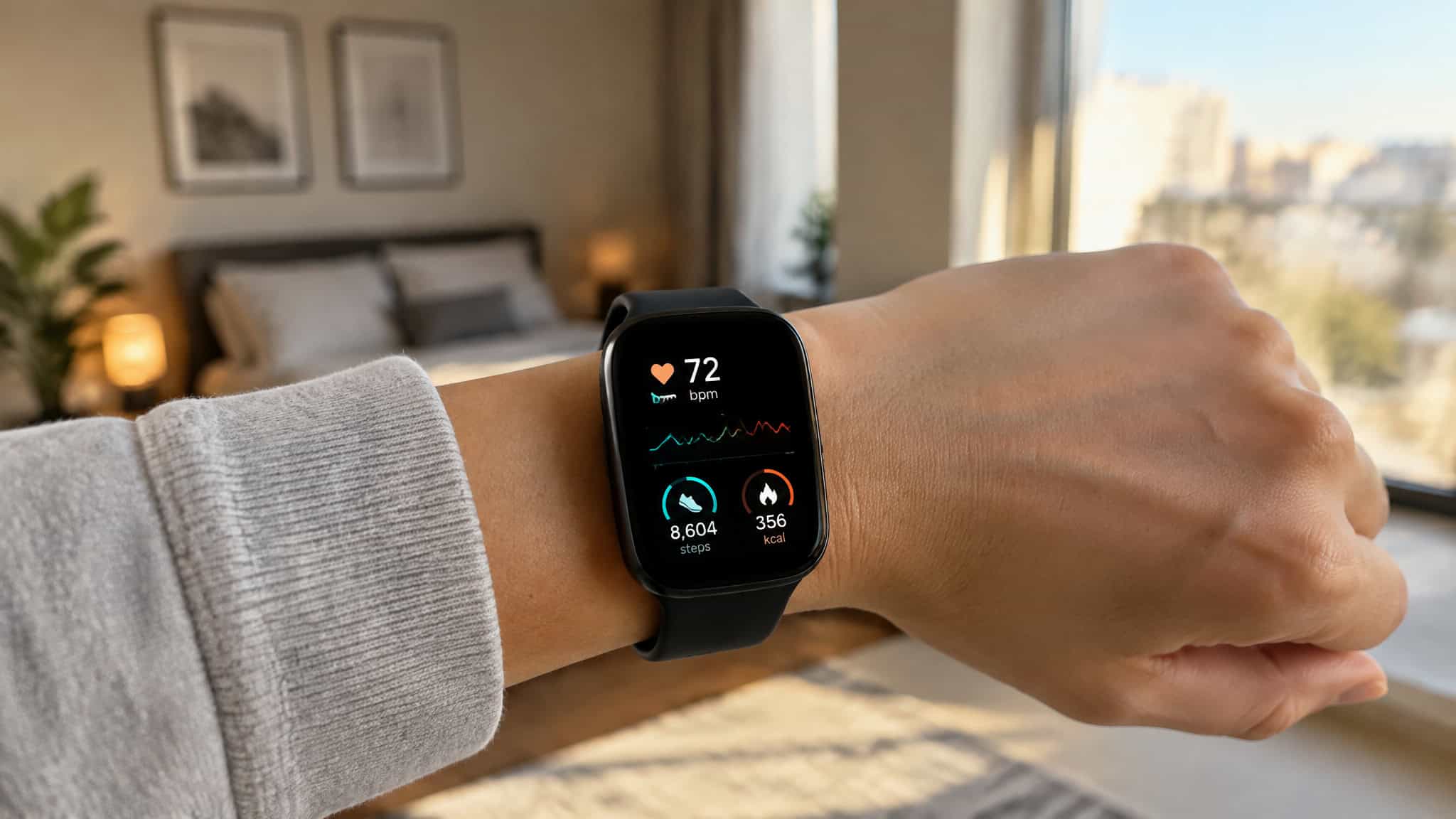
First, what “wearables” actually covers, since plenty of people own one without calling it that: fitness trackers, smartwatches, heart rate monitors, GPS devices. In the ACSM survey, wearable technology has ranked #1 every year since 2016 except 2018 (#3) and 2021 (#2), and it finished top three across nearly every profession and age group the survey covers. That’s not a fad. That’s just how fitness works now.
What the devices capture has outgrown step counting, and each feature maps to a real moment. Fall and crash detection means a watch can call for help when someone goes down on an icy driveway and can’t reach their phone. Heart rhythm monitoring is the territory where an Apple Watch feature spotted an abnormal heart rate and called 911, the difference between a bad afternoon and a much worse one. Blood pressure, blood glucose, and skin temperature tracking keep moving onto the wrist, turning numbers that used to require a clinic visit into something you glance at while the coffee brews.
Wearable technology has been the #1 fitness trend every year since 2016, except for 2018 (#3) and 2021 (#2). Ownership is basically settled: between 36% and 44% of adults own a wearable depending on which estimate you trust, and nearly half of U.S. adults own a fitness tracker or smartwatch. The global market is projected to reach $186 billion by 2030, so none of this is going anywhere.
The caveats are where your attention belongs. The tech moves faster than the science, some metrics are experimental or just not reliable, and validity, reliability, and data privacy are real concerns, especially in healthcare settings and for older adults. Cayla McAvoy’s point, paraphrased: with nearly half of U.S. adults owning one, the ownership question is answered, and the real work now is teaching people to use the data in ways that support their health.
Which leads to the failure pattern that shows up among first-time wearable owners: the device quietly collects a rich picture of sleep, strain, and recovery, and the owner checks steps and ignores everything else. The watch only helps if it changes what you actually do. If your workout windows are carved out of a household schedule, that’s the entire value proposition right there.
Data-driven training technology: from tracking data to training decisions
Data-driven training technology is about using your numbers to decide whether today should be hard or easy. The survey ranks it separately from wearables (#7 in 2025, #8 in 2026), splitting the sensor from the interpretation. The inputs are real-time heart rate variability (the beat-to-beat signal that reflects recovery readiness), VO2 max (your aerobic capacity), sleep, and glucose data, all used to individualize programming. More than 70% of wearable users apply their data to exercise or recovery decisions, so people aren’t just collecting numbers.
And a 2023 study found HRV-guided training improved performance and reduced injuries compared with fixed plans, which is a plain-English result: listening to your body’s data beats a rigid schedule. For anyone training on four hours of sleep, having a number tell you to go easy instead of hard is genuinely useful.
Fitness programs for older adults: the longevity economy
What works for adults over 65 is resistance training, balance and mobility work aimed at fall risk, and low-impact cardio. That’s the short list you could send to your mom, and it’s aimed at what actually ages us: balance means not falling, muscle means getting off the floor, mobility means still moving well. The demand is demographic math rather than wellness fashion: the baby boomer generation, 73 million strong, all over 65 by 2030. The surprise-your-friends fact is that per a 2023 IHRSA report, adults 65+ visit gyms and studios more than any other age group. The trend has been top 10 every year except 2017 and 2022.
The physiology, translated: muscle power declines faster than strength with age, so power training (moving with speed, not just force) is the key to fall prevention and staying antifrail. The point is being strong fast enough to catch yourself. Sarcopenia, the age-related muscle loss piece, has had its definitions updated through recent expert consensus. And one human detail from a 2024 industry report: classes labeled “low intensity,” “functional,” or “active aging” draw more people than identical ones called “senior fitness.”
Nobody wants to feel labeled old, so part of the barrier is marketing, not physiology. It’s a pattern operators report over and over.
Exercise for weight management in the GLP-1 era
GLP-1 receptor agonists, the injectable weight-loss drugs, do not replace exercise. People who exercised while on the medication kept more of the fat loss and more muscle after stopping than those who didn’t, an association worth taking seriously even though it isn’t a guarantee for every person on the medication. If this is you, you’re in very large company: 42.4% of U.S. adults have obesity, and about half are actively trying to manage their weight. No judgment in any direction here; bodies, not before-and-afters.
The trend climbed from #8 in 2023 to #4 in 2024 and 2025, and hit its highest position yet in 2026, after the year this article covers. The survey also renamed it from “Exercise for Weight Loss” to “Weight Management” because the category now covers losing, maintaining, and gaining. Per the survey commentary from Alexios Batrakoulis, exercise is a fundamental part of weight treatment, not an optional add-on. The meds changed the conversation; movement is still non-negotiable.
Mobile exercise apps: the most volatile rank in the survey
The decisive difference between an app and a trainer is interpretation and accountability. Apps excel at access and habit scaffolding, a credentialed human adds the judgment layer, and the strongest model combines both. The ranks tell their own story: apps jumped from #20 in 2023 to #7 in 2024 to #2 in 2025, the sharpest swing of any trend. Apps track the app economy, not exercise science.
The scale is enormous: more than 345 million users and 850+ million downloads in 2024, on top of 2023’s roughly 850 million downloads by about 370 million users. The honest beat is that usage peaked in 2021 and 2022 while subscription revenue kept climbing, which means a lot of us pay for apps we barely open. The caveat: free apps aren’t all built on solid exercise science, and researchers have validated scoring tools for checking app quality, so free doesn’t always mean good. Users skew younger, female, college-educated, and urban, though there’s no wrong way to be the person squeezing a workout between school pickup and dinner. If you want the broader picture of what’s worth trying, our roundup of the trending workout formats covers who each one suits.
Traditional strength training: the rebound that was never a decline
Strength training’s dip to #17 in 2024 was a one-year anomaly, not a demise. It rebounded to #5 in 2025 and has finished top 10 in 17 of the past 20 years, which makes it the boring-but-reliable friend of fitness trends. And the reason parents need it isn’t aesthetic: it’s car seats, groceries, and the kid who suddenly wants to be carried across the parking lot.
The gap is the story. Under 30% of U.S. adults hit the muscle-strengthening guidelines, which per the 2018 Physical Activity Guidelines means strength work at least 2 days a week covering all major muscle groups. Two days. Two decades of persistence plus sub-30% compliance means strength is unmet demand, not a saturated trend, the opposite of how a mature trend usually looks. Most of us are in that boat, and the bar is lower than it feels.
Bottom line: Strength training is the rare trend with two decades of staying power and less than 30% participation — the demand is real and the bar is low.
HIIT: precise dosing, not a year-round default
HIIT still works; the real 2025 story is that intensity is being scheduled, not abandoned. The parameters, translated: near-maximal effort (above 85% of your max heart rate) with rest periods below 65%. Work hard, rest, repeat. It’s effective across demographics, including people with cardiometabolic disease and cancer, which makes it powerful but not a universal prescription, so it deserves care rather than enthusiasm.
The honest caveat: it should be periodized, not done year-round. You need easy weeks too, and nobody sprints through life constantly, especially on four hours of sleep. Meanwhile the counter-trend is real: ClassPass low-impact training bookings grew 110% in 2025, though that’s one platform’s bookings, not the whole market. The synthesis neither camp usually admits is that HIIT survives as a scheduled tool inside programs built on low-impact bases. It’s a complement, not a rival you have to choose between.
Exercise for mental health: adjunct, not replacement
Moving your body helps your head, and the survey itself is precise about where the help ends. The trend sat at #8 in 2024 and 2025 and rose to #6 in 2026, rising and staying. The relatable heart of it: 78% of exercisers say mental and emotional well-being is their top reason for working out. Most of us aren’t chasing PRs; we’re chasing sanity. And more than 1 in 5 U.S. adults report mental illness each year, which is worth saying gently, as context for why this trend matters rather than as an alarm.
The honesty that earns trust: exercise is preventive and adjunctive to clinical treatment like cognitive behavioral therapy, explicitly not a replacement. A walk helps, and so does your therapist, and those aren’t competing. Both cardio and strength reduce depressive symptoms, most clearly in mild-to-moderate cases, so moving helps especially when things are hard but not clinical. The industry is taking it seriously too: the first mental well-being certification for fitness pros launched via the J.W. Brick Mental Health Foundation.
Balance, flow, and core strength: the mind-body convergence
The low-impact, feel-better-later formats are the group fitness story of 2025, and the booking data says they’re staying. The category covers yoga, Pilates, and barre, plainly named, and it’s the workout that fits into naptime windows without leaving you wrecked for the playground. Participation in these classes rose 27% between 2022 and 2024, and ClassPass Pilates reservations grew 66% in 2025, making it the platform’s most-booked category for the third straight year (that’s ClassPass bookings, not the whole market). The mechanism behind the staying power: these formats build posture, mobility, and core control, which makes your strength and cardio work safer, and the movement-control and injury-prevention benefits matter most as you age. The broader framing is fitness and wellness blending, with appeal across generations. Worth planting here: Pilates is the survey’s own case study of a suspected fad that became infrastructure, which is a point the fade ledger picks up later.
Adult recreation and sport clubs: belonging as the product
The workout is almost an excuse to see other adults. This trend is new to the top 10 in 2026 at #9, driven by pickleball, running, cycling, and a plain hunger for social connection, and honestly, well, look who showed up. Doing a sport with other adults is rare and precious once you have kids, and there’s no need for a loneliness-epidemic essay to say that out loud.
The operators see it too. Life Time ended 2025 with 800+ dedicated pickleball courts and 5.9 million participation instances, plus personal training sessions up 18% and stretching up 34%. ClassPass racquet sports bookings rose 111% in 2025. As Jennifer Turpin Stanfield, MA, ACSM-EP, put it, “Pickleball, running clubs and adult leagues are bringing people back to exercise in fun, social ways. These activities are about connection as much as they are about fitness.” The point is retention, not novelty: pickleball pulls in new members and keeps them, and belonging retains people in ways class schedules don’t.
Functional fitness training: the quiet survivor
Functional fitness means training for your actual Tuesday, not for the gym, and it has never topped the list yet never left the top 20 since 2007. That mid-tier stability is itself the durability signal. Concretely, it’s practicing for the moment you’re carrying a toddler, a diaper bag, and a coffee: compound, multiplanar movements like squats, lunges, and carries that transfer to daily life.
The ranks per the 2026 report’s retrospective: #14 in 2024, #12 in 2025, #10 in 2026. A NASM roundtable separately placed it #9 for 2025, but that’s commentary rather than the published number, so the retrospective stands. Notice the logic here is the same logic powering the older-adult boom: train the movements life actually demands, and the payoff shows up outside the gym.
The 2025 debutantes: hot and cold therapies, influencer-led programs, and what’s too early to call
The honest answer on the next big thing is that 2025’s newcomers, influencer/ambassador-led programs at #12, hot and cold therapies at #20, and exercise in cancer treatment at #29, are the candidates, and one year of rank data isn’t enough to judge any of them. The hot and cold category deserves the closest look: cryotherapy is linked to reduced inflammation and sauna bathing to recovery and less soreness, “linked to” being the operative phrase rather than “proven to.” Clinical exercise physiologists ranked the trend lower, suggesting the field hasn’t settled on best practices, so the pros are still figuring this one out too. Real products exist, like the Hyperice X wrap-around knee device and Therabody infrared heat, as examples of portable recovery gear rather than endorsements. And ClassPass recovery services bookings grew 155% in 2025; people are paying to rest, which is its own kind of telling.
On the influencer-led programs, said casually: just because someone has a million followers doesn’t mean they’re right about the science. Our breakdown of fitness trends on TikTok gets into how to safety-check the viral stuff before trying it. Lifestyle medicine, #19 in 2025, deserves one line as the unglamorous fundamentals bundle: movement, plant-forward eating, real sleep, stress management, social connection. So the honest call on all the debutantes is the same: too early to judge, worth watching, and the tell will be whether best practices actually settle. The 2026 list is already out if you want a forward look at fitness trends.
What faded in 2025: the trend-versus-fad ledger
A trend, per ACSM, is a sustained pattern with measurable engagement or long-term impact; a fad is brief enthusiasm. The gut-check translation for your own calendar: will you still be doing this in a year? The fade evidence, all from published rank movements:
- Home gyms were #2 in 2022 and fell to #13 in 2023 as people went back in person
- Online training was #1 in 2021
- Worksite health promotion was #2 in 2024 and then vanished from the 2025 top 20
- Body weight training fell out of the top 20 in 2024 for the first time
- Personal training slid to #16 in 2025 after being top 10 since 2007
The pattern: convenience-only formats fade when their original constraint disappears. The humility check is that Zumba and Pilates were both suspected fads that became established trends, so we’re bad at predicting what lasts. Pandemic-era outdoor boot camps are leveling out, a moment rather than a movement. Personal training’s fall looks alarming until you see what actually happened to it, which the last section resolves. And the 2025 debutantes stay explicitly unjudgeable for now.

Why “worldwide” trends aren’t: the eight-region split
The survey’s “worldwide” label flattens real differences. Wearables are #1 in the U.S. but crack the top 10 in only three of eight regions (Australia #6, Brazil #10, Turkey #8), mobile apps make the top 10 only in Spain (#8), and exercise for weight loss is top 5 everywhere except Australia (#7). Eight regions have been compared since 2021, with Iran and Turkey new for 2025. The grounding detail: in Iran, cost constraints push demand toward affordable gyms and traditional strength training, a reminder that fitness trends depend on what people can actually pay.
What the 2025 ranks mean for money, jobs, and the gym floor
Yes, gym-going hit record popularity in 2025: the U.S. industry ended the year with a record 81 million members, up 5.2%, reaching 26.1% of the population aged six and up. Personal training fell to #16 in the ranks, yet demand for credentialed exercise professionals is projected to grow 10-14% by 2032, because the one-on-one model is being absorbed into bundled offers. Wendy Batts’ example is the concrete version of the case Marty Miller and others make: paying for an app clients could use free, plus check-ins, wellness coaching, and reassessment, packaged as one all-inclusive service. The humans and the apps work better together. Exercise is Medicine, meanwhile, has held steady in the top 20 since 2017, pushing for physical activity to be treated as a vital sign with health-data standards like HL7 interoperability behind it, so your doctor should ask about your movement the way they check your blood pressure.
Frequently Asked Questions
How did fitness trend rankings change from 2024 to 2025 in the ACSM survey?
The biggest movers were mobile exercise apps, which jumped from #7 in 2024 to #2 in 2025 after sitting at #20 in 2023, and traditional strength training, which rebounded from #17 to #5 after a one-year anomaly. Wearable technology held #1, exercise for weight loss stayed at #4, and exercise for mental health held #8. Meanwhile, worksite health promotion — #2 in 2024 — vanished from the 2025 top 20 entirely.
Are fitness trackers and wearables actually accurate enough to guide training?
For core metrics like heart rate and steps, yes — researchers have validated the basics repeatedly. The flashier newer features deserve skepticism, because innovation keeps outrunning validation and a watch can get an update before anyone has checked whether the new number means anything. More than 70% of wearable users apply their data to exercise or recovery decisions, so the bigger failure mode isn’t accuracy — it’s owners who check steps and ignore everything else the device collects.
What is the new fitness craze?
The loudest 2025 story is the low-impact, mind-body boom: participation in yoga, Pilates, and barre classes rose 27% between 2022 and 2024, and ClassPass Pilates reservations grew 66% in 2025, making it the platform’s most-booked category for the third straight year. Recovery is the other newcomer — ClassPass recovery services bookings grew 155% in 2025, meaning people are literally paying to rest. Whether the debutantes like hot and cold therapies last is still too early to call.