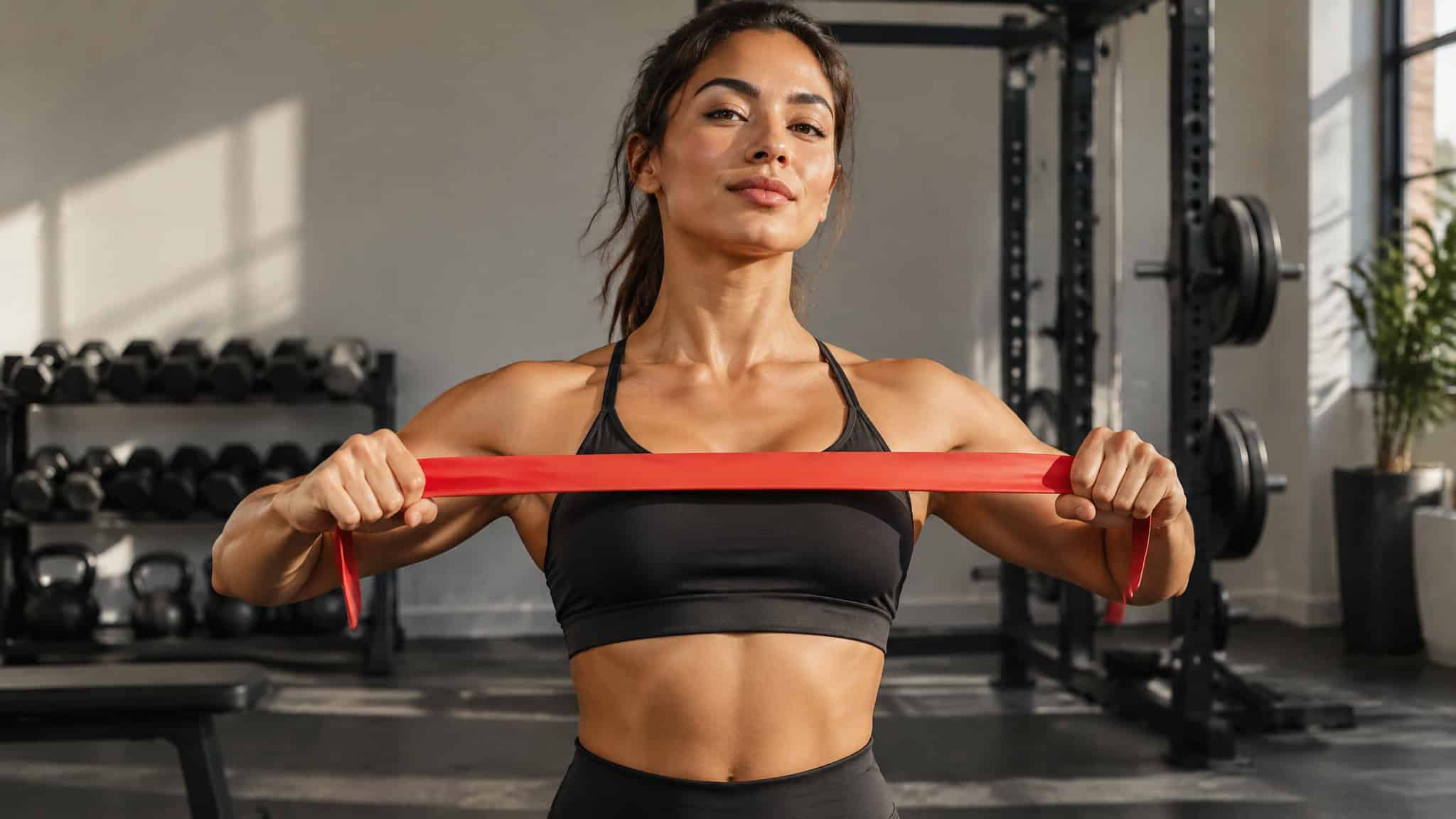
At some point, most of us have stood in a sporting goods store holding a resistance band with the quiet confidence of someone about to completely change their life. Three weeks later, the band lives in a junk drawer and the workout plan lives in a notes app we never open. It’s not because exercise doesn’t work. It’s because nobody tells you where to actually start, so you start with whatever some video said was hot that month, it’s too fiddly to learn, and you quit before you’re strong enough for any of it to feel worth it.
In 2022, a team of researchers did the unglamorous thing: they asked actual experts which exercises a beginner should genuinely start with. Not which ones trend hardest. Which ones work. The answer they landed on is refreshingly boring, and boring is exactly what you want in week one.
Key Takeaways
A 2022 study in the American Journal of Lifestyle Medicine had 17 experts rate 77 exercises for technical difficulty, then a second panel of 8 experts voted on which ones suit beginners. 41 exercises made the cut.
We picked our top 10 from those 41 by looking at which movement patterns they cover and how kind they are to your joints: squat, hinge, row, push-up, lat pulldown, overhead press, lunge, walking, swimming, and rowing (the machine, not the band row above).
The study’s own starter numbers: pick 8 to 10 exercises, train 2 to 3 days a week, 1 to 2 sets of 8 to 14 reps. Adding weight to a simple move is real progress. You don’t need fancier exercises.
Table of Contents
The top 10 exercises at a glance
Here are the ten, and then I’ll explain where they came from, because that part actually matters.
- Squat (goblet squat to start)
- Hinge (hip bridges and Romanian deadlifts)
- Row (seated band row or chest-supported row)
- Push-up (wall or knee versions to start)
- Lat pulldown (the on-ramp to pull-ups)
- Overhead press (machine version first)
- Lunge (the simple, supported kind)
- Walking (yes, really)
- Swimming
- Rowing
The candidate pool comes from a study published July 18, 2022, by researchers Justin Kompf, Ryan Rhodes, and Sohee Lee. Seventeen experts rated 77 exercises for how technically tricky each one is. Then a second panel, 8 experts with at least ten years of experience each, voted yes or no on which of those a healthy beginner should actually start with. An exercise needed 70% agreement to pass. Forty-one did.
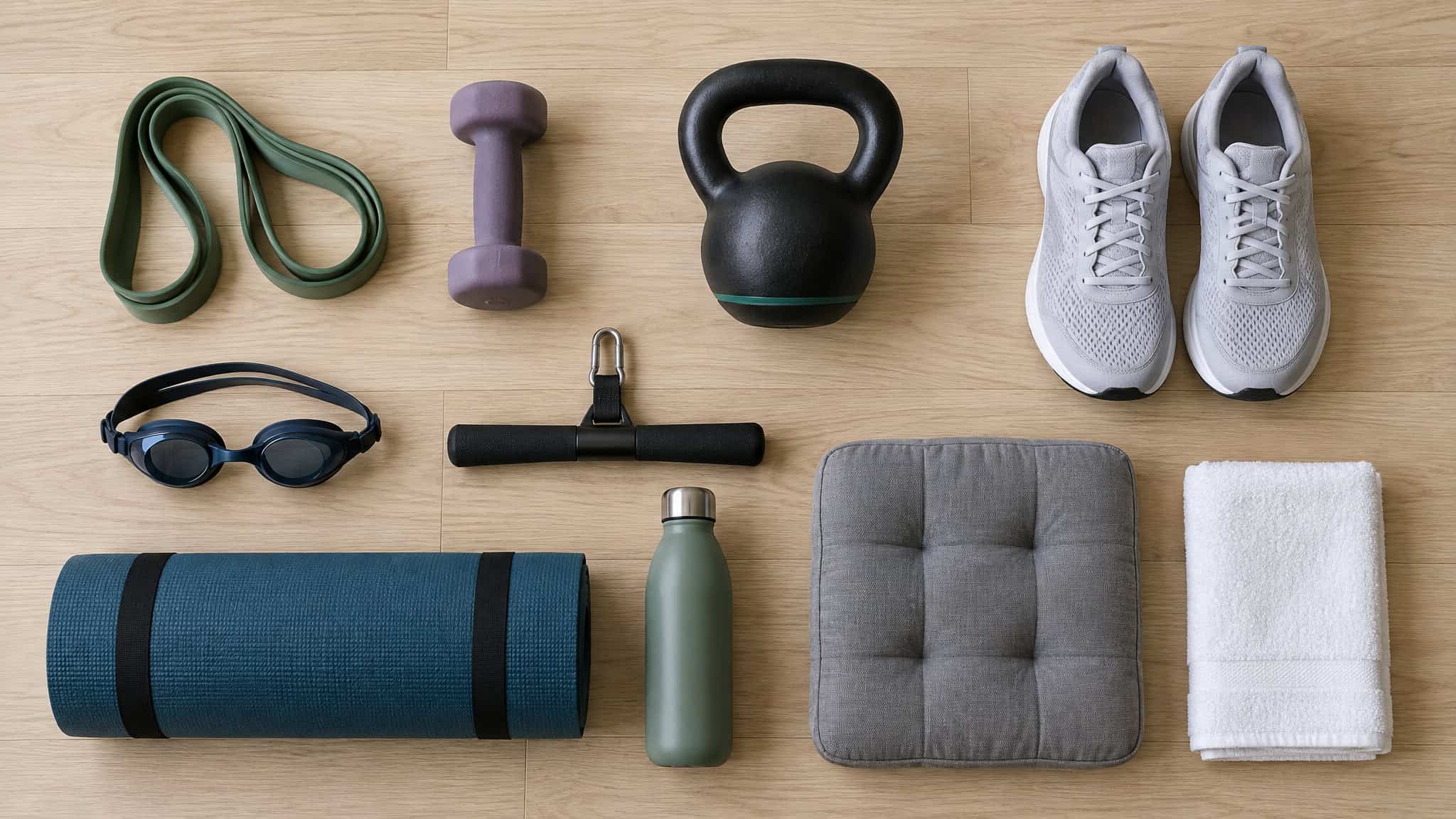
Our ten are filtered from that list of 41 by two things: covering the major movement patterns, and passing a joint-safety check (keeps your joints stable, doesn’t add pointless pounding, can be modified for your body, and won’t wreck you so badly you stop showing up). The study itself produced an unranked list of 41. The ranking here is our editorial call, built on the study’s data, not the study’s opinion.
How experts decided which exercises make the list
The method is called a Delphi study, which sounds fancy but just means experts went back and forth over three rounds of surveys until they agreed. The researchers, based at Brandeis University, the University of Victoria, and Auckland University of Technology, ran the surveys through Qualtrics under Institutional Review Board Protocol #22163R-E. Round one: 17 experts scored all 77 exercises on a 0 to 10 scale for technical complexity. Most landed in the middle, 48 moderate, with 28 rated low and only 3 rated genuinely wild. One fun detail: the leg extension, that machine you’ve probably seen someone half-asleep on, was the only exercise every single expert called low-complexity, scoring 1.71 out of 10.
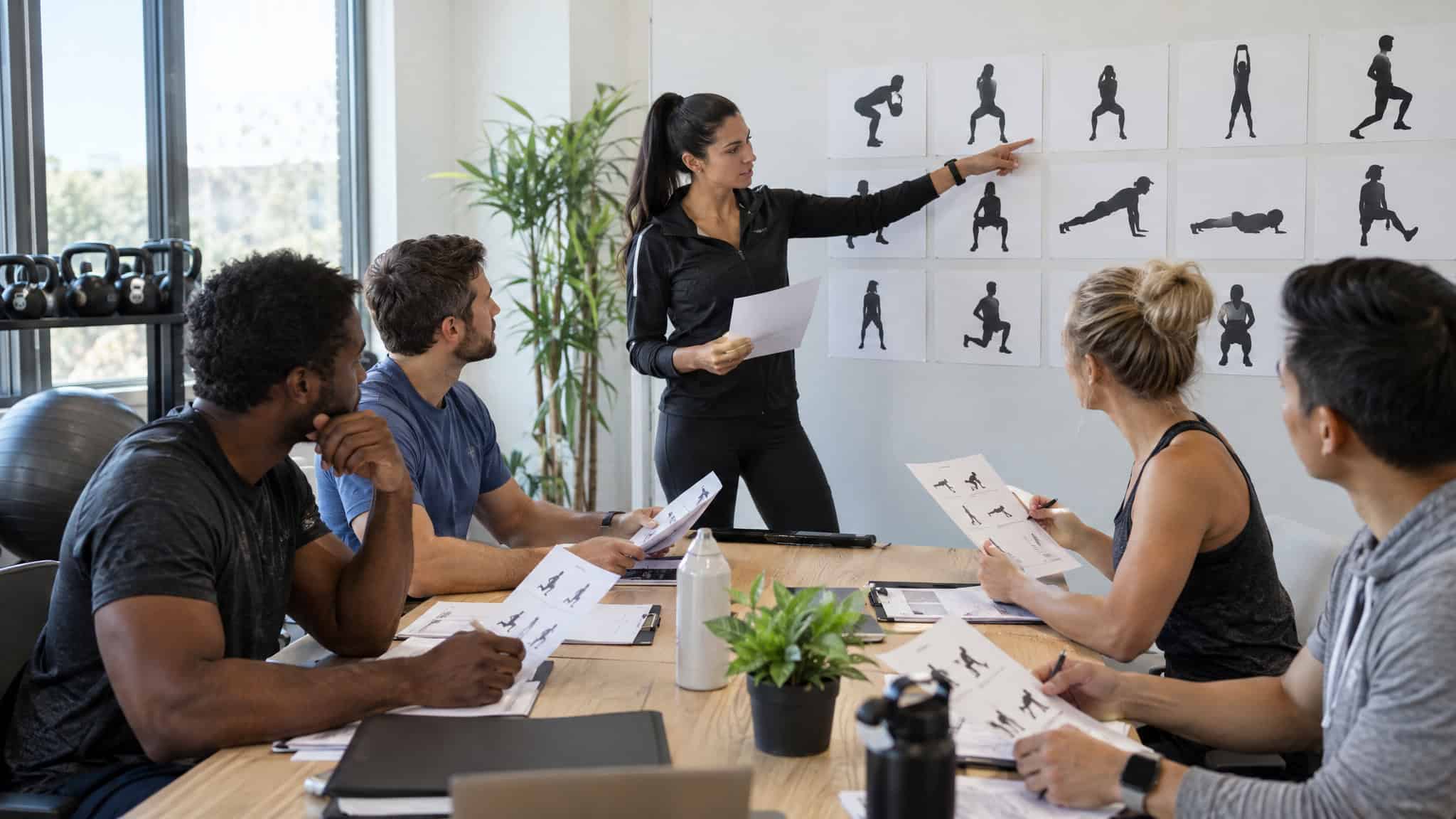
Then came the surprise. When experts averaged difficulty by equipment type, machines came out easiest at 3.7, bodyweight 4.0, bands 4.1. Dumbbells scored 6.5, the hardest of the four. The equipment everyone assumes is beginner-friendly is objectively the most technical.
So if you’re building a home routine, bodyweight and band exercises aren’t the consolation prize. They’re the ones the experts found easiest to learn.
Quick test: Before buying equipment for a home routine, remember the experts rated dumbbells hardest to learn and machines and bands easiest.
Why these exercises outlast every fitness trend
We’ve covered a lot of workout trends on this site, and the same handful of movements keeps showing up underneath all of them. The branded class changes. The six things your body actually needs to do don’t.
Those six things are called movement patterns: squat, hinge, horizontal push, horizontal pull, vertical push, and vertical pull. Plain-English version: you squat down, hinge at the hips, push stuff away, and pull stuff toward you, in both the directions your arms can go. Push-ups are a horizontal push. Rows are a horizontal pull.
Overhead presses are a vertical push. Pull-ups are a vertical pull. Hip bridges and Romanian deadlifts are hinges.
Every new workout format, whatever it’s called and whatever it’s selling, still has to deliver those same six patterns under new branding. Decades of resistance-training literature. Westcott, Hulteen, Bennie, Deci and Ryan, Garber, Kraemer and Ratamess, Fetherman, Plotnikoff, Millen and Bray, Neupert, Ott, and Winett, keeps circling the same simple movements. That’s why the ten below keep reappearing.
If you want to see what’s currently wearing a costume over them, we keep a roundup of the workouts actually trending right now, and a look at fitness trends over the years makes the pattern almost funny. The movements never leave. The marketing around them just changes outfits.
The 10 exercises, one at a time
The experts measured two kinds of difficulty. There’s how tricky a move is on paper, no matter who’s doing it, and there’s how tricky it is for you. A back squat is easy for a seasoned lifter and genuinely advanced for someone on week two. Neither person is doing it wrong. What makes moves harder on paper: doing one side at a time, going faster, and asking more of your balance.
Squat
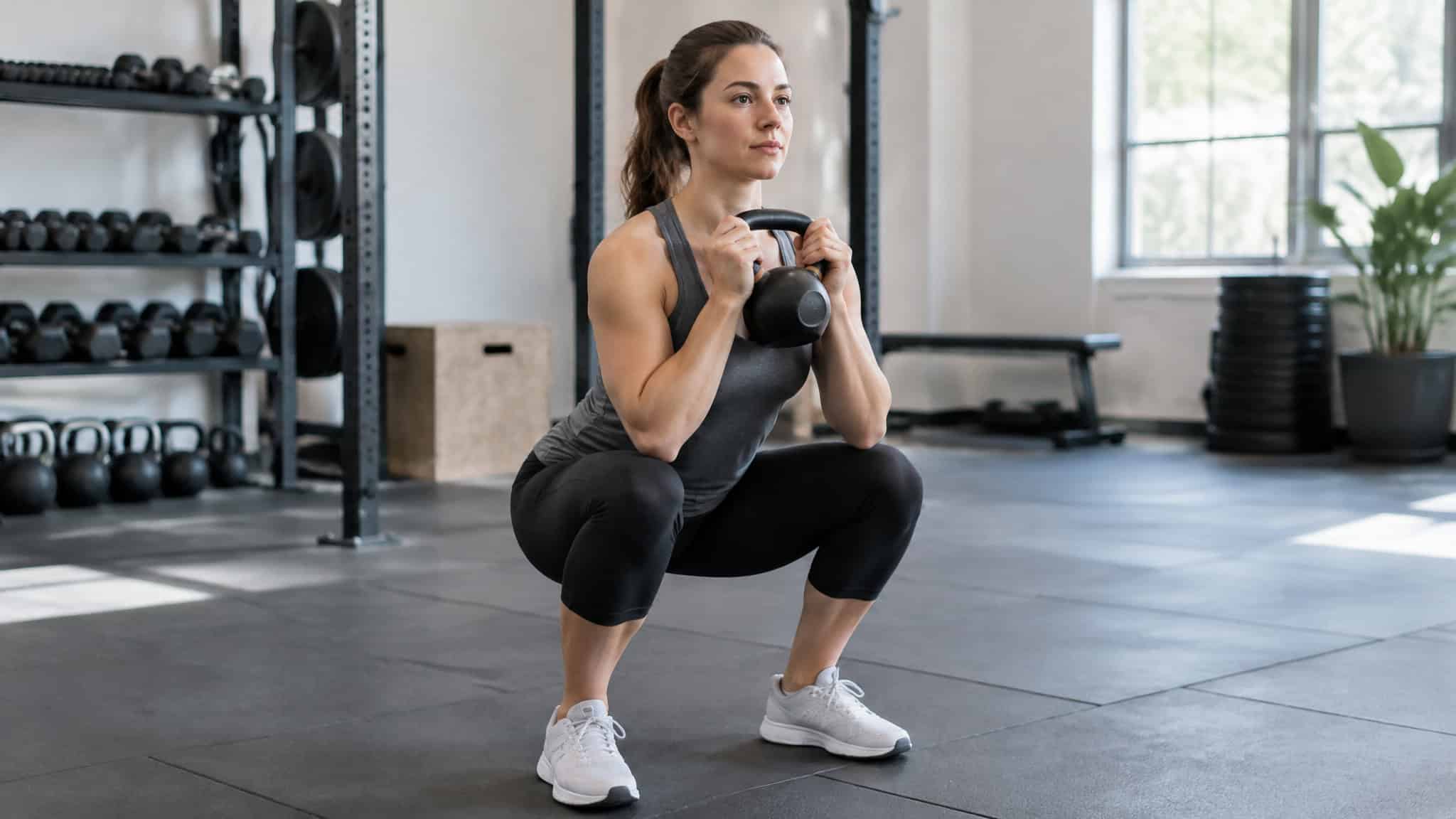
The squat pattern is sitting down and standing up, which you already do all day. The experts rated the goblet squat, where you hold a weight at your chest, at 6.12 out of 10 for complexity, which is moderate. What makes the squat family useful is that it’s the same movement at four difficulty levels: leg press, then bodyweight squat, then band-resisted squat, then barbell back squat. Same pattern, escalating complexity.
Start wherever you are. If your knees complain about depth, a leg press (rated 2.88, very learnable) or a squat to a chair keeps the pattern while your joints stay happy.
Hinge
Hinging means bending at the hips with a mostly flat back, like picking up a laundry basket. Hip bridges are the gentle entry, lying on your back and driving your hips up. Romanian deadlifts are the standing version. One warning from the data: the single-leg Romanian deadlift was the highest-rated dumbbell exercise in the whole study at 8.29 out of 10, with most experts calling it high complexity.
Two feet on the floor, always. The two-legged version gives you the pattern without the tightrope act.
Red flag: If a version has you balancing on one leg while holding weight, save it for later. Two feet on the floor gives you the same pattern first.
Row
Rows are a horizontal pull, the counterweight to all the pushing in your life. A seated row using a band is one of the friendliest versions going, and the dumbbell row works too, though the experts were warier of the version where you brace a knee and hand on a bench, which requires more balance and positioning than it looks like on video. A chest-supported row, where a pad holds your torso, takes the balance question off the table entirely.
Push-up
Here’s where I have to be honest with you. The push-up scored 5.47 out of 10, solidly moderate, but no bodyweight push exercise actually made the expert list. Partly that’s because the easier versions, knee push-ups and wall push-ups, weren’t included in the rating pool at all. So the push-up is on this list on our recommendation, not the panel’s vote, and the honest starting point is the wall or your knees. Lower the difficulty until the movement is yours, then earn your way down the ladder.
Lat pulldown
The vertical pull, done seated at a machine. It matters because the pull-up, the famous version of this pattern, was the only bodyweight exercise the experts rated high complexity, 6.53, with zero low-complexity votes. Nobody’s doing strict pull-ups in week two, and that’s fine. The pulldown trains the same motion while the machine handles the balance and the body weight. It sat comfortably on the easy end of the machine list, and machines as a category did well with the experts.
Overhead press
Pressing something up over your head is the vertical push. Start with the machine version, which scored 3.65, among the easier ratings in the study. Worth knowing: the seated overhead press with dumbbells failed the expert vote for adults over 60, mostly because holding weights overhead while seated asks a lot of your shoulders. The machine guides the path for you, which is exactly what a beginner wants from this pattern.
Lunge
The lunge is the squat pattern with one leg doing more of the work, which is why it’s here and why it’s ranked seventh instead of second. Going unilateral, one side at a time, is one of the main dials that turns complexity up, along with speed and balance demands. Keep your version boring: a static split stance, a hand on the counter if you need it. You’re borrowing the benefit of single-leg work without the wobble.
Walking
The most underrated exercise on this list, and the one with the lowest joint cost of any cardio going. It’s low impact, works for nearly every fitness level, and counts as real exercise when you do it briskly and consistently. If jogging is on your mind, here’s the swap worth knowing: jogging adds impact that may not suit cranky knees, hips, or old lower-body injuries, but brisk or interval walking delivers similar cardiovascular benefit with a lot less joint stress.
Swimming
Swimming might be the most joint-friendly exercise there is. The water holds you up, so your joints get a break while your muscles still work against resistance, and it hits nearly every muscle group while building cardiovascular endurance. If your knees or hips have opinions, this is the cardio that listens.
Rowing
Rowing, on a machine or water, works your upper and lower body together and builds endurance and strength with low impact on your joints. The one catch: sloppy technique can strain your lower back. Good posture and driving with your legs spreads the force out more evenly, and that’s most of what you need to know.
Burpees and HIIT: when intensity earns its place
You probably have feelings about burpees. Fair. A burpee crams a squat, a plank, a push-up, and a jump into one movement, which is why they’re everywhere and why they’re efficient: legs, core, chest, shoulders, heart rate, no equipment. The honest catch is that the jump loads your knees and ankles, and the floor positions load your wrists and shoulders. You can build an easier burpee: step back instead of jumping, drop the push-up, or skip the jump entirely.
HIIT, high-intensity interval training, is short bursts of hard effort alternating with rest. It’s efficient, and it’s not a day-one thing. Injury risk climbs as fatigue wrecks your form, so it suits people who already have a base. Cycling or rowing intervals give you similar benefits with less pounding.
The big 5 barbell lifts: destination, not starting line
The big 5 are the famous five: barbell squat, deadlift, bench press, pull-up or chin-up, and standing overhead press. They’re excellent, and they’re the advanced end of the same six patterns, not the starting line. Same movement, higher complexity. Expert-easy, novice-advanced. One gap to know about: there’s no horizontal pull in the five, that’s the rows slot, the one pattern you’ll want to add separately.
When you do get there, here are the form standards from one strength-coaching perspective, the Transform into Fitness channel on YouTube. These are one coach’s standards, not expert consensus, but they’re checkable:
- Squat: bar high on the traps or low on the rear delts, hips below parallel, drive through the heels, spine neutral.
- Deadlift: feet hip-width, bar over midfoot, hinge at the hips, back straight, finish by standing tall.
- Bench press: eyes under the bar, grip slightly wider than your shoulders, lower to the sternum.
- Pull-up: controlled tempo, full range, all the way down. Rushing is the common mistake.
- Overhead press: bar path slightly behind the head, finish locked out with your biceps by your ears.
What the experts left out, and why
For beginners over 60, nine exercises failed the 70% agreement vote: mini-band lateral walks, band chest flyes, dumbbell kickbacks, dumbbell rows with knee and hand on a bench, incline press, seated overhead presses with dumbbells, sit-ups, ab bikes, and planks. Group them by what got them cut and it makes sense: moves that ask a lot of your balance, moves that put you overhead, and moves that round your spine repeatedly. Thirty-two exercises still passed for that age group, so this is expert caution for one population, not proof any of these are bad moves for everyone.
The study’s own fine print, told to you straight: no bodyweight push exercise made the list, the easier push-up versions were never rated, hamstring curls were missing entirely, the results skew upper-body, and the list wasn’t designed for people managing chronic conditions or functional limitations. One thing in its favor: the authors declared no conflicts of interest and took no funding. Nobody was paid to say squats are fine.
Your first week with the top 10
The study’s prescription for novices, in their own numbers:
- Train 2 to 3 days a week, hitting the major muscle groups.
- Do 1 to 2 sets per exercise.
- Do 8 to 14 reps per set.
- Work at 60 to 70% of your one-rep max, which means the most weight you could lift once, and nobody’s testing that in week two. If you’ve been sedentary, start at 40 to 50%, which translates to: lighter than feels impressive.
- Pick 8 to 10 exercises from the list. The study frames its list as a framework, not doctrine.
For adults over 60, it’s even simpler: one set of 10 to 15 reps at whatever resistance you tolerate, at least two nonconsecutive days a week. Less is genuinely okay.
Now the most useful non-obvious thing in this whole article. Load and complexity are two separate dials. You can turn one without the other. The study’s own example is a seated row with a band going from 20 pounds to 30 pounds, movement unchanged.
That’s real strength progress with nothing new to learn. “Feels harder” is not the same as “better exercise,” and chasing the fanciest variation when your technique is shaky is a skill mismatch, not extra effort.
There’s a behavioral reason this matters. Feeling competent is what keeps people training, and only somewhere between 6% and 35% of US adults do any resistance training at all. Overly technical exercises are one reason people quit before strength arrives. Earlier behavioral research quietly used these same simple exercises in unsupervised programs for years, one study with a machine-heavy list, another with simple diagonal band movements, which is quiet evidence they work without a coach hovering.
These are general guidelines for healthy adults, not personalized medical advice. If you’re managing a condition, that’s a conversation for your doctor. For trustworthy background reading, the National Institute of Arthritis and Musculoskeletal and Skin Diseases (NIAMS) is a good starting point.
FAQs on the top 10 exercises
Quick answers to the questions we hear most about these exercises, grounded in the expert list and the movement patterns covered above.
What are the most effective exercises overall?
There’s no single one, because the six movement patterns require different joint actions and no exercise covers them all. A well-rounded routine touches every pattern, plus some cardio and mobility work. Consistency matters more than intensity, which is annoying but true.
What are the big 5 exercises?
Barbell squat, deadlift, bench press, pull-up or chin-up, and standing overhead press. They’re the advanced end of the six movement patterns, not a beginner list, and the form basics are in the section above.
Is there one exercise that works everything?
No, honestly. Swimming comes closest, working nearly every muscle group while sparing your joints, and burpees cram four patterns into one move. Both still leave patterns undertrained. The routine is the unit that works, not the exercise.
What are the top 10 exercises for men?
The evidence doesn’t support sex-specific lists. Foundational movement patterns apply broadly, and any article claiming a male-specific top 10 is inventing a distinction the research doesn’t make. The list at the top of this article is the list.
Should I do exercises every day?
The consensus supports 2 to 3 strength days a week with rest days between. No source defines a daily-movement list, so be suspicious of anyone selling one. Walking daily? Sure.
Heavy squats daily? Your joints will file complaints.
What’s the best exercise for overall health?
The one you’ll do consistently, that your joints tolerate, and that can be modified as needed. Walking, swimming, and basic strength work with bodyweight or bands are among the safest starting points, and walking alone counts as real exercise when done briskly and regularly. That’s permission, not a caveat.
When should I see a professional?
Stop googling and call someone if you have:
- Pain that persists or worsens with activity
- Joint pain that rest doesn’t fix
- Swelling, instability, or reduced range of motion
- Weakness, or trouble getting back to your normal activity
Calm list, practical threshold. Most starting-out aches are just starting-out aches. These are the ones that aren’t.
Frequently Asked Questions
What are the 7 most effective exercises?
There’s no official seven, but a well-rounded beginner routine covers the six movement patterns — squat, hinge, horizontal push, horizontal pull, vertical push, and vertical pull — plus some cardio. A squat, hip bridge, push-up, row, lat pulldown, overhead press, and brisk walking would cover all of it. No single exercise covers every pattern, so the routine matters more than any one move.
What are the top 5 best exercises?
If you’re trimming the expert-backed top 10 down, the five that cover the most ground are the squat, hinge (hip bridges or Romanian deadlifts), row, push-up, and lat pulldown. That hits every major movement pattern. Add walking or swimming for cardio and you have a complete beginner program.
Are squats or deadlifts better for beginners with back issues?
Start with the easiest version of the pattern, not the barbell version. For squatting, a leg press (rated 2.88 out of 10 for complexity) or a squat to a chair keeps the movement while your joints stay happy. For hinging, hip bridges done lying on your back are the gentle entry — and skip any single-leg Romanian deadlift, which experts rated the most complex dumbbell exercise in the study at 8.29 out of 10. If you’re managing a back condition, that’s a conversation for your doctor.
When should you skip burpees or high intensity exercises?
Skip them on day one. HIIT injury risk climbs as fatigue wrecks your form, so it suits people who already have a training base, and burpees load your knees, ankles, wrists, and shoulders. If you want the benefits sooner, cycling or rowing intervals deliver similar results with less pounding, and you can build an easier burpee by stepping back instead of jumping and dropping the push-up.
How many days a week should a beginner strength train?
The study’s prescription is 2 to 3 days a week hitting the major muscle groups, with 1 to 2 sets of 8 to 14 reps per exercise. Work at 60 to 70% of your one-rep max, or 40 to 50% if you’ve been sedentary — lighter than feels impressive. For adults over 60, one set of 10 to 15 reps at least two nonconsecutive days a week is enough.
Why didn’t push-ups make the expert list if they’re a top 10 exercise?
No bodyweight push exercise made the expert list, partly because the easier versions — knee push-ups and wall push-ups — were never included in the rating pool at all. The standard push-up scored a moderate 5.47 out of 10, so it’s on the list on editorial recommendation, not the panel’s vote. Start against a wall or on your knees and earn your way down the ladder.