Scroll long enough and you’ll find it: a workout billed as revolutionary, unlike anything you’ve ever tried, guaranteed to change everything. And if you’ve been paying attention for a couple of decades, you already know how this movie ends. The revolutionary class becomes your mom’s old workout in new leggings. Jazzercise becomes Zumba.
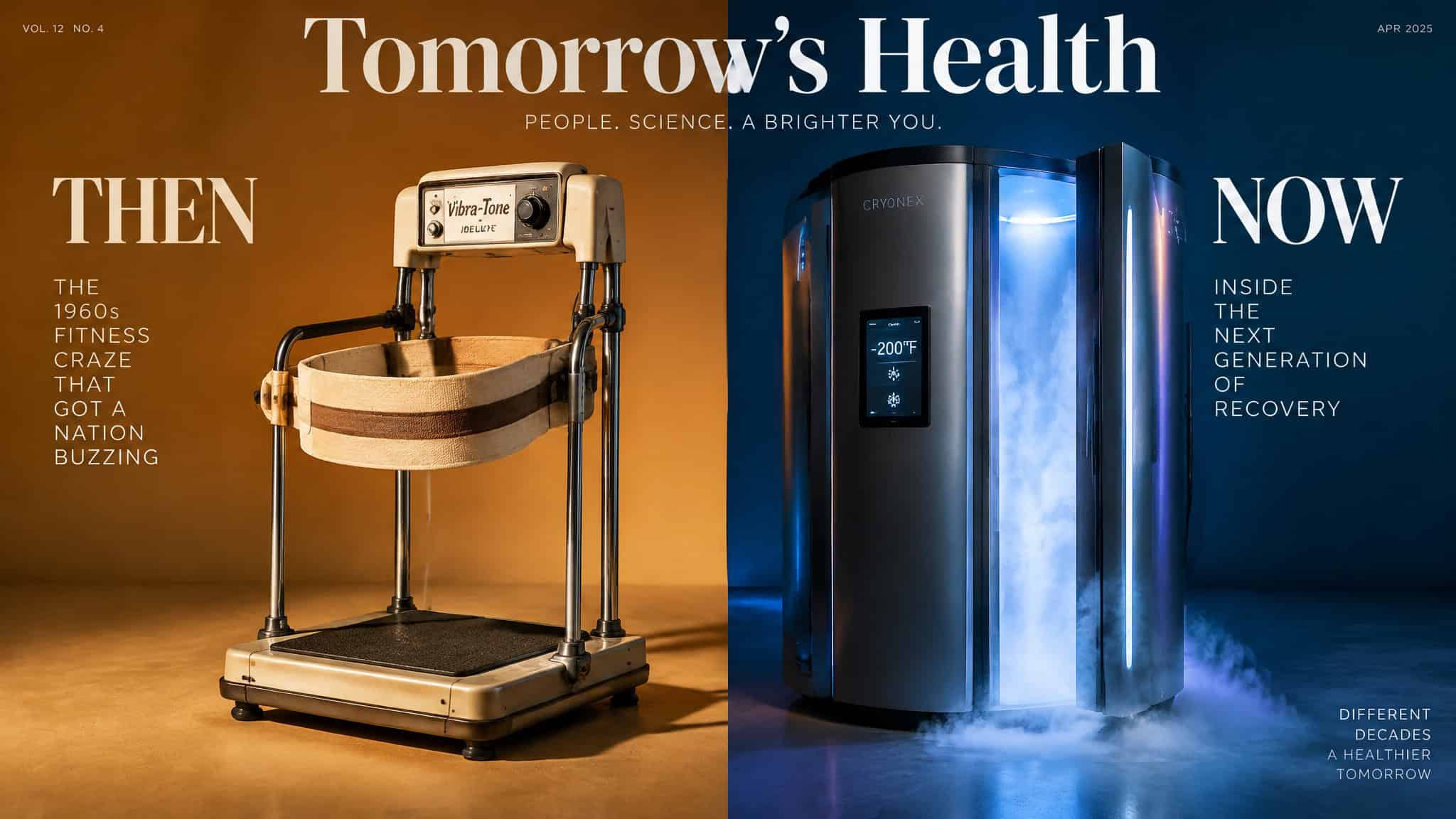
Tae Bo becomes cardio boxing. The vibrating belt your grandmother stood on while it jiggled everything for her is back as a $40 recovery chamber, minus the jiggling, plus liquid nitrogen.
That’s the genuinely fun part of looking at fitness trends over the years: the packaging changes constantly and the product barely does. Underneath every decade’s “new” thing are the same two ideas, workouts that feel like a party and workouts that save you time. Once you see them, you can’t unsee them. Which is useful, because your feed is going to keep selling you the packaging.
Key Takeaways
Aerobics started as medicine, not marketing: Kenneth Cooper coined the word in the late 1960s for a program to prevent coronary artery disease, and “aerobic” literally just means “with oxygen.”
The 1990s accidentally ran an experiment in which fads survive: spinning stuck because it mapped onto an existing habit (cycling), while Tae Bo, the era’s biggest infomercial hit, faded when the infomercials did.
The benefit claims for sweat lodges and cryotherapy (calorie burning, better sleep) aren’t FDA-verified, and the writer who tried five New York boutique trends in five days noticed minimal effects; what kept customers coming back was the community.
Table of Contents
Before the trends: where fitness trends over the years really began
Organized exercise is far older than the commercial gym, and the modern gym is older than most people guess. The ancient Greeks tied physical fitness to survival and took it seriously, and their gymnasiums weren’t just workout halls; they were schools where philosophers like Plato and Socrates taught. Mind and body in one building, which is more than most gyms manage today.

The beats after that come fast. Dr. Luther Gulick, an advocate for physical education, established the first gymnasium in the United States in 1886. At the dawn of the 20th century, Eugen Sandow rose to fame as the father of modern bodybuilding. In the 1950s, Jack LaLanne, the “Godfather of Fitness,” put fitness shows on television, and home workout equipment followed, making him the great-grandparent of every living-room workout you’ve ever done.
Then came the fad era: hula hoops and vibrating belts in the 1950s and 60s, promising results without the annoying step of exercising. People’s core goals back then (health, fitness, appearance) are the same ones on your New Year’s list. The decade-by-decade history below leans on an overview by Cedric X. Bryant, ACE’s president and chief science officer, so the dates are as solid as fitness history gets.
The 1970s: aerobics is born in a cardiology lab
Aerobics didn’t come from marketing. It came from medicine. Kenneth Cooper coined the word “aerobics” in the late 1960s to describe a program he created to help prevent coronary artery disease, which means the most famous word in fitness started life as a heart-health protocol. And “aerobic” isn’t jargon; it literally means “with oxygen,” the walking, running, and cycling category where you’re breathing harder and your heart rate is up. Cooper was onto something, too: it’s widely accepted now that regular aerobic exercise lowers cardiovascular risk and helps with longevity.
Just before the decade even started, Judi Sheppard Missett introduced Jazzercise, a hybrid of jazz dance, kickboxing, ballet, Pilates, and yoga, all choreographed and set to music. I will admit the name sounds dated. The formula doesn’t. Every boutique studio that’s ever claimed to invent the “fusion workout” was decades behind her.
Aerobics went on to spawn dance classes, step classes, and water-based formats, the whole family tree of classes your parents would recognize. And Arnold Schwarzenegger gave the era its muscle icon.
The 1980s: the gym goes mainstream, and gets professional
The most durable trend of the 80s wasn’t a workout. It was paperwork.
The fun part first. Jane Fonda launched her first exercise video in 1982, riding the late-70s aerobics boom into a global craze, and she and Richard Simmons became the faces of fitness, building on the popularity Jazzercise had already created. Nautilus variable-resistance machines (weight equipment that adjusts the load as you move through each rep) and the growth of corporate gym chains made going to the gym a normal thing to do instead of a bodybuilder thing. Home exercise equipment entered the marketplace too, adding resistance training to living-room routines, the ancestor of every dumbbell rack gathering dust politely in a spare bedroom.
Then the unglamorous layer. The industry professionalized through certification organizations, and the American Council on Exercise was founded in 1985, among the first to certify exercise professionals. That’s the reason your trainer has a credential. By ACE’s own count, there are now more than 90,000 active certified professionals worldwide, though that’s the organization’s self-reported figure, not an independent audit.
Certification, not leg warmers, is what made gym culture credible. (Nobody paid anyone to mention these brands, by the way. They’re just examples.)
The 1990s: infomercials and indoor cycling
The 90s accidentally ran an experiment in which fads survive, and the results are genuinely useful.
The decade belonged to late-night infomercials, and Billy Blanks’ Tae Bo was perhaps the most successful infomercial fitness product of the era: high-intensity cardio fused with martial arts and hip hop. It dominated the infomercial cycle, and then it faded with it. The product and the advertising slot had the same lifespan.
Meanwhile, spinning launched a cycling revolution in the mid-1990s that continues to this day. That’s the rare outcome, and the difference between the two stories is the lesson. The fads that lasted were the ones that mapped onto an existing habit. Spinning mapped onto cycling, something people already did and already understood.
Tae Bo’s moves echoed martial arts, but as an infomercial product it was selling novelty, and novelty dies when the ads stop running. If a workout needs a 2 a.m. TV slot to exist, that’s a clue.
The 2000s: Zumba and CrossFit refine the two old levers
Neither 2000s “revolution” was actually new. Zumba’s Latin dance workouts dominated the turn of the millennium, and CrossFit brought high-intensity competition and community to functional training. But Zumba is essentially the dance-to-music formula Jazzercise built decades earlier, rebranded for a new generation, and CrossFit’s real innovation wasn’t the exercises. It was industrializing the community and camaraderie lever, turning a workout into a team.
Two names, two vibes, no ranking between them. If the CrossFit itch is real but the intensity gives you pause, HYROX is a related but different animal, and there’s a beginner-friendly HYROX explainer that covers how it differs and how to structure a first training week.
The 2010s: boutique gimmicks and the five-trends experiment
The boutique decade put increasingly elaborate gimmicks on top of the same old levers, and one Business Insider writer ran the perfect field test. The writer, who self-describes as not a fitness or trends person (someone who walks and uses a punching bag), tried five New York fitness trends in five days: an urban sweat lodge, circus-inspired aerial yoga, nightclub HIIT, prison-style workouts, and whole-body cryotherapy. Every detail below is from that writer’s account. I was not at any of these studios, and neither were you.
Shape House, which has locations in New York and Los Angeles, sells 55-minute sweat-bed sessions. The waiver flags open wounds and pregnancy as unsafe, so if that’s you, skip this one. First-timers got free loaner sweat clothes (loose cotton pajamas and thick wool socks, normally a $2 rental), and the bed came with water, headphones, a smart TV, a call button, and machine-regulated temperature. The writer’s timeline: nausea around 15 minutes, sweat by 20, a racing heart at 23, the urge to leave at 27, a numb hand at 35, deep breathing by 40.
Afterward, no shower for at least an hour, tea on offer, heart still racing 10 minutes later, and about 30 minutes for body temperature to normalize. A staffer named Kathleen sweats twice a week on top of her regular workouts, which is somehow the most normalizing detail of the whole stop. The writer watched a Seinfeld episode about 600-degree pizza ovens mid-sweat and emerged feeling like Frodo being carried off by the eagles, smelling like a perm. (Prices here and below are as reported in the writer’s 2020 experiment; they’ve likely changed.)
Om Factory in Manhattan, with sister studios in Taiwan, Vietnam, Thailand, and Malaysia, staffs instructors from aerial circus and yoga backgrounds. An instructor named Cassandra traces aerial yoga to circus performers looking for better conditioning and flexibility. If your inner voice is saying “I will fall,” the hammocks are structurally solid, unlike traditional aerial silks that you wrap around yourself. Class moved from stretches into poses and inversions, and ended with cocooning in the hammocks. The writer compared it to being a flexible zen caterpillar and said it brought back playground joy.
The writer’s inner punk hated having a great time at a place called Om Factory. The great time won.
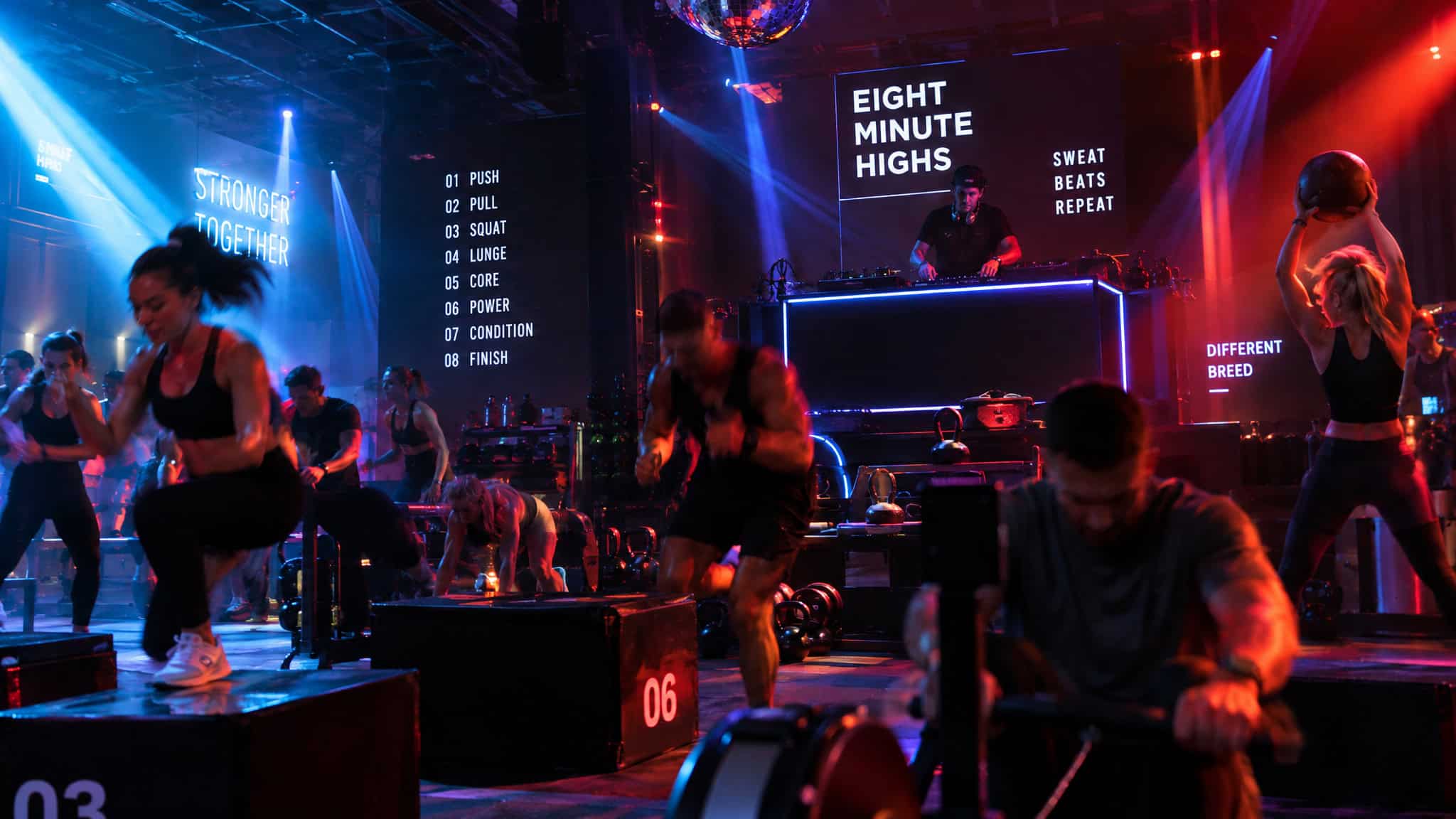
Beast Fitness in Brooklyn was founded by a DJ, a fitness instructor, and their schoolmate, all New York City natives. Cofounder Kristie Alicea describes the vibe as a SoulCycle-like energy, releasing inhibitions and having fun. The room has nightclub lighting, a mixing booth with a live DJ, and murals by local artist Ian Sullivan with hidden Brooklyn neighborhood names tucked in. The structure: eight-minute blocks at three stations, six exercises per station, 18-plus transitions, at your own pace.
Conbody is the opposite temperament wearing the same decade. Founder Coss Marte developed the bodyweight routine while in prison and lost 70 pounds with it, a person’s story told with respect, not a before-and-after billboard. All 40 employees are previously incarcerated individuals, and per Marte none has been reincarcerated after joining, though that’s his self-reported figure. The studio’s stated mission is bridging the gap between young professionals and previously incarcerated people and raising awareness of systemic inequalities affecting Black and Latino incarceration rates.
The class itself: jumping jacks, then repeated rounds of mountain climbers, push-ups, and bicycle crunches, with no breaks except 10 seconds for water at the halfway point. That 10-second break says everything.
Both are bodyweight-and-intensity formats from the same HIIT era, but they’re built for opposite experiences:
| Beast Fitness | Conbody | |
|---|---|---|
| Structure | 8-minute blocks, 3 stations, 6 exercises each, 18+ transitions | Jumping jacks, then repeated rounds of mountain climbers, push-ups, and bicycle crunches |
| Breaks | Go at your own pace | None except 10 seconds of water at the halfway point |
| Atmosphere | Nightclub lighting and a live DJ | No-frills bodyweight work with a social mission |
Same decade, incompatible philosophies. “The trend” is never one thing.
Cryotherapy was the last stop. It emerged as an elite-athlete recovery method about four years before going mainstream in 2017. The setup: you stand mostly nude for two to five minutes in a chamber cooled by liquid nitrogen to between -100 and -150 degrees Celsius. The writer’s first-timer session was 3 minutes at -120 degrees Celsius, $39 on Groupon versus the $50 regular price.
The writer felt refreshed and slightly less sore afterward, basically like taking a cold shower. A staffer named Anya found cryotherapy after breaking her leg getting out of an Uber and says weekly sessions eliminated her leg pain, which is one person’s experience, not proof.
Field note: A first cryotherapy session runs about 3 minutes at roughly -120 degrees Celsius. Expect to feel refreshed, not transformed.
The gimmicks got weirder across the decade. The levers underneath them never moved.
Fad vs. trend: what the gimmicks actually sell
Mostly gimmick: the claims are unverified by the FDA. Proponents of sweating and cryotherapy promise calorie burning, toning, pain and muscle-stiffness relief, more energy, and better sleep, and none of those claims have been verified by the FDA, which in plain words means the folks selling it say these things happen and nobody’s officially checked. The writer who tried them noticed minimal personal effects and came away skeptical of cure-all marketing; what the studios were really selling was community and getting stronger, not a body type. Honestly, that’s a healthy place to land.
You’re allowed to be skeptical too. What I’m not saying is that sweat lodges or cryotherapy don’t work. The supported position is smaller and more useful: the claims are unverified, and one fairly skeptical firsthand tester didn’t notice much.
Red flag: Calorie-burning, toning, and sleep claims for sweat lodges and cryotherapy haven’t been verified by the FDA. Skepticism is the right default.
What actually kept customers coming back wasn’t the gimmick. It was community, self-improvement, and getting stronger rather than thinner. That last part matters quietly: today’s classes are about getting stronger, not thinner, which is a good thing if you have kids watching how you talk about your body.
The historical baseline backs this up. Hula hoops and vibrating belts promised passive results, and they faded. The goals underneath (health, fitness, appearance) never changed. And across the gimmick-forward studios, the same pattern shows up: the marketing leads with dramatic-sounding claims, while the thing that brings people back a second time is how the session felt and who they saw there.
The gimmick is the marketing. The product is the community.
The 2010s and beyond: the technology layer
Connected fitness didn’t replace the old levers. It digitized them. HIIT (high-intensity interval training, short bursts of hard effort with rest in between), Peloton, MIRROR, and Apple Fitness+ all aim to maximize the exerciser’s time and workout benefits, which is the same pitch every decade has made. The lineage is easy to trace once you look.
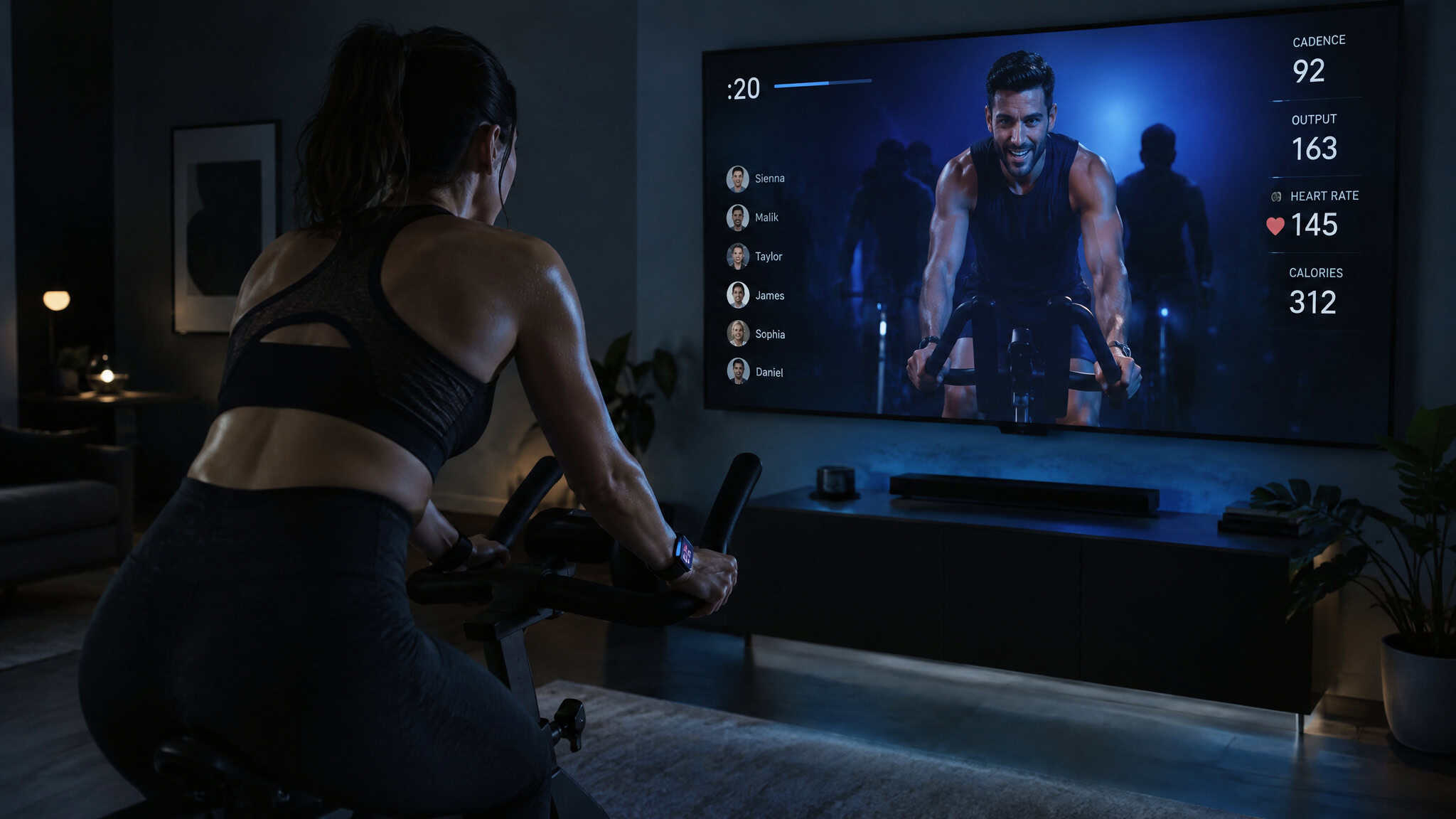
Peloton is spinning plus community software. MIRROR, an interactive home gym with instructor-led workouts on a large screen, and Apple Fitness+, the Apple Watch-based service with instructor-led workout formats, are the 1980s home workout video plus interactivity.
Wearables like the Apple Watch and Fitbit count steps, monitor heart rate, count calories burned, and measure sleep quality, and trackers have made health monitoring genuinely accurate instead of a guessing game. But their real trick is the social-support network they enable: cheering each other on toward goals is the group-class camaraderie lever, digitized. Fitness apps, virtual coaching, and online classes exploded during the COVID-19 pandemic and are here to stay as convenient, effective options. Social media plays an expanding role too, with online challenges bringing people together around shared goals and fitness influencers now a permanent fixture. Virtual and augmented reality are making workouts more interactive and immersive, and the problem they’re actually solving is an old one: exercise is boring.
The adoption pattern is the same one every decade produced. People buy the hardware for the novelty. Whether they stick depends on the community and scheduling layer, the same two levers every prior decade used.
The pattern (and what it predicts)
Across every decade, the same two foundations keep reappearing: fun, exciting aerobic workouts that build community and camaraderie, and making cardio and strength training as time-efficient and convenient as possible, at home or in the gym. That’s the whole game. Everything else is set dressing.
So here’s the filter, in plain language. When the next thing takes over your feed, ask what it’s actually combining. If it puts together fun, community, and time efficiency, it has trend DNA like spinning and CrossFit, and it might be around in twenty years. If it sells only a gimmick or promises results while you stand still, it’s this decade’s vibrating belt. The core goals haven’t moved since the vibrating-belt era: health, fitness, appearance. Only the packaging changes.
If you’re starting after years away, the boring answer still holds: the durable stuff is the fun stuff you’ll actually repeat, and the foundational movements that outlast every trend haven’t changed either. There’s a rundown of the top 10 exercises that keep showing up in every new format, and if you’d rather see what’s current, there’s a roundup of trending workouts with an honest note on who each one suits.
The industry is trend-driven on the surface and built on the quest for fun, effective, time-efficient workouts underneath. What comes next is genuinely open. It probably already has a hashtag.
Frequently Asked Questions
What is a 1990s fitness fad?
The era’s biggest one was Tae Bo, Billy Blanks’ high-intensity cardio fused with martial arts and hip hop, which dominated late-night infomercials. It’s the textbook fad because it sold novelty through advertising, and when the infomercials stopped, so did the product. Spinning, by contrast, launched in the mid-1990s and stuck because it mapped onto an existing habit: cycling.
What fitness matters most for longevity?
Regular aerobic exercise — the walking, running, and cycling category where you’re breathing harder and your heart rate is up — is widely accepted to lower cardiovascular risk and help with longevity. It’s the same category Kenneth Cooper formalized in the late 1960s, when he coined the word ‘aerobics’ for a program designed to prevent coronary artery disease. ‘Aerobic’ literally just means ‘with oxygen.’
How to start exercising after many years?
The boring answer holds: pick the fun stuff you’ll actually repeat, and lean on foundational movements that have outlasted every trend. The two levers that keep every workout alive are fun-with-community and time efficiency, so choose something that combines them rather than chasing novelty. If a workout needs constant hype to exist, it’s this decade’s vibrating belt.
What’s the latest fitness trend?
The current layer is technology: connected fitness like Peloton, MIRROR, and Apple Fitness+, plus wearables, fitness apps, and virtual and augmented reality workouts. But none of it is actually new underneath — Peloton is spinning plus community software, and MIRROR and Apple Fitness+ are the 1980s home workout video plus interactivity. People buy the hardware for the novelty; whether they stick depends on community and scheduling.
Do cryotherapy and sweat lodges actually burn calories and improve sleep?
Those claims — calorie burning, toning, pain relief, better sleep — haven’t been verified by the FDA, which means the sellers say it happens and nobody’s officially checked. One skeptical writer who tried five New York boutique trends in five days noticed minimal personal effects, describing cryotherapy as basically like taking a cold shower. Skepticism is the right default, though the honest position is ‘unverified,’ not ‘doesn’t work.’
When did fitness trends start?
Organized exercise goes back to the ancient Greeks, whose gymnasiums doubled as schools where Plato and Socrates taught. The modern timeline runs through the first US gymnasium in 1886, Eugen Sandow as the father of modern bodybuilding, Jack LaLanne’s TV fitness shows in the 1950s, and then the fad era of hula hoops and vibrating belts. The core goals — health, fitness, appearance — haven’t changed since.