
Typing “what is the value of family” into a search bar can land you on a political manifesto, a marriage sermon, or a nostalgia piece about the 1950s — none of which is probably what you were looking for.talgia piece about the 1950s. None of which is probably what you were looking for.
The problem is that “the value of family” is two questions wearing the same coat. The first question is about worth: Why does family matter? What’s the measurable benefit of having one? The second question is about principles: What values should a family live by? What are the rules, the habits, the beliefs that make a family work?
These two meanings get tangled up constantly. You search for “why family is important” and the algorithm serves you content about “what families should believe.” The word “family” comes from the Latin famulus—meaning servant or household—while “value” traces back to valere, meaning to be worth. Even the roots point in different directions: one toward structure, the other toward importance.
So let’s untangle them, without the politics, the guilt, or the pretense that there’s only one right way.
Key Takeaways
The phrase “the value of family” actually contains two distinct meanings: the emotional and practical importance of family relationships, and the specific ethical principles a family lives by — and confusing these two leads to a lot of unhelpful search results
The Kids Mental Health Foundation notes that shared values and goals build connections and a sense of belonging that supports everyone’s mental health, reducing the risk of depression and anxiety
The “caught not taught” principle means children absorb values through watching what parents do in unscripted moments — a parent returning to a store to pay for an accidentally uncharted item teaches honesty more effectively than any lecture about honesty
Table of Contents
Why Family Value Matters for Your Family’s Well-Being
So let’s start with the first question: does having a family with shared values make a difference? The Kids Mental Health Foundation notes that shared values and goals build connections and a sense of belonging that supports everyone’s mental health.

Defining family values helps children feel secure. The Kids Mental Health Foundation notes that shared values and goals build connections and a sense of belonging that supports everyone’s mental health. It’s a protective factor — kids who grow up with clear family values have a lower risk of depression and anxiety. Values provide guidance for handling life situations, making decisions, and forming healthy relationships.
In 1980, 61% of U.S. children lived in a traditional first-marriage family. By 2014, that number had dropped to 46%. Nontraditional families — single-parent households, blended families, multigenerational homes, same-sex parents, are now the majority. As of 2016, about 65% of children lived with two married parents total, including remarriages.
The key takeaway here: you don’t need a “traditional family” to give your kids the security that comes from shared values. The structure matters less than the intention.
The Truth About Teaching Values — You Can’t Lecture Your Way There
Values are “caught, not taught.”
The parent who returns to a store to pay for an accidentally uncharted item teaches honesty more effectively than any lecture about honesty. Children learn by watching what parents do in those messy, unscripted moments when nobody’s performing.ly than any lecture about honesty. That same child later has a basis for deciding not to shoplift with a friend — not because they were told not to, but because they watched someone do the right thing when no one would have known.

The modeling goes both ways. If parents claim honesty is a value but cheat on taxes, children learn the modeled behavior. In a three-generation household, grandparents might prioritize work ethic through chores while parents prioritize athletics for responsibility — and kids absorb both messages, even when they conflict.
This is why the how-to section that follows has to start with “check in with yourself.” You can’t model what you haven’t clarified for yourself.
How to Define Your Family’s Values — A Step-by-Step Guide
Most guides jump straight to “sit down with the family and brainstorm.” But that skips the most important step. Here’s a better approach, synthesized from two compatible frameworks.
Step 1: Check in with yourself before you include anyone else
You can’t lead a conversation about family values until you know your own. Do this in private, not in the family meeting. If you have a partner, do it separately, then compare notes.
Ask yourself these four questions:
- What kind of person do I want to be?
- What kind of parent or caregiver do I want to be?
- What future do I want for my children?
- How do I want to spend my time?
These aren’t easy questions. They force you to admit what you prioritize versus what you wish you prioritized. The parent who says “family time is everything” but works 70-hour weeks has some reflecting to do. That’s not judgment — it’s clarity. And you need that clarity before you can lead anyone else.

Step 2: Gather family input with the right questions
Once you’ve done your own reflecting, bring the family in. The conversation should feel like a discussion, not a lecture. Use prompts like these to explore the family values Orthodox meaning together.
- What do we care about as a family?
- What is our family “about”?
- What are we good at?
- What do we like doing together?
- What are we working to improve?
- What are our family’s cultural traditions?
For younger children, try different angles. Ask them what made them smile recently — that can reveal values like togetherness, humor, or feeling safe. Talk about role models. (Yes, Bluey counts.) Use proud moments like watching a kid stand up for a friend to spotlight courage or kindness, and for more concrete illustration, reference real-world family values examples from everyday parenting.
Step 3: Turn values into goals using the SMART framework
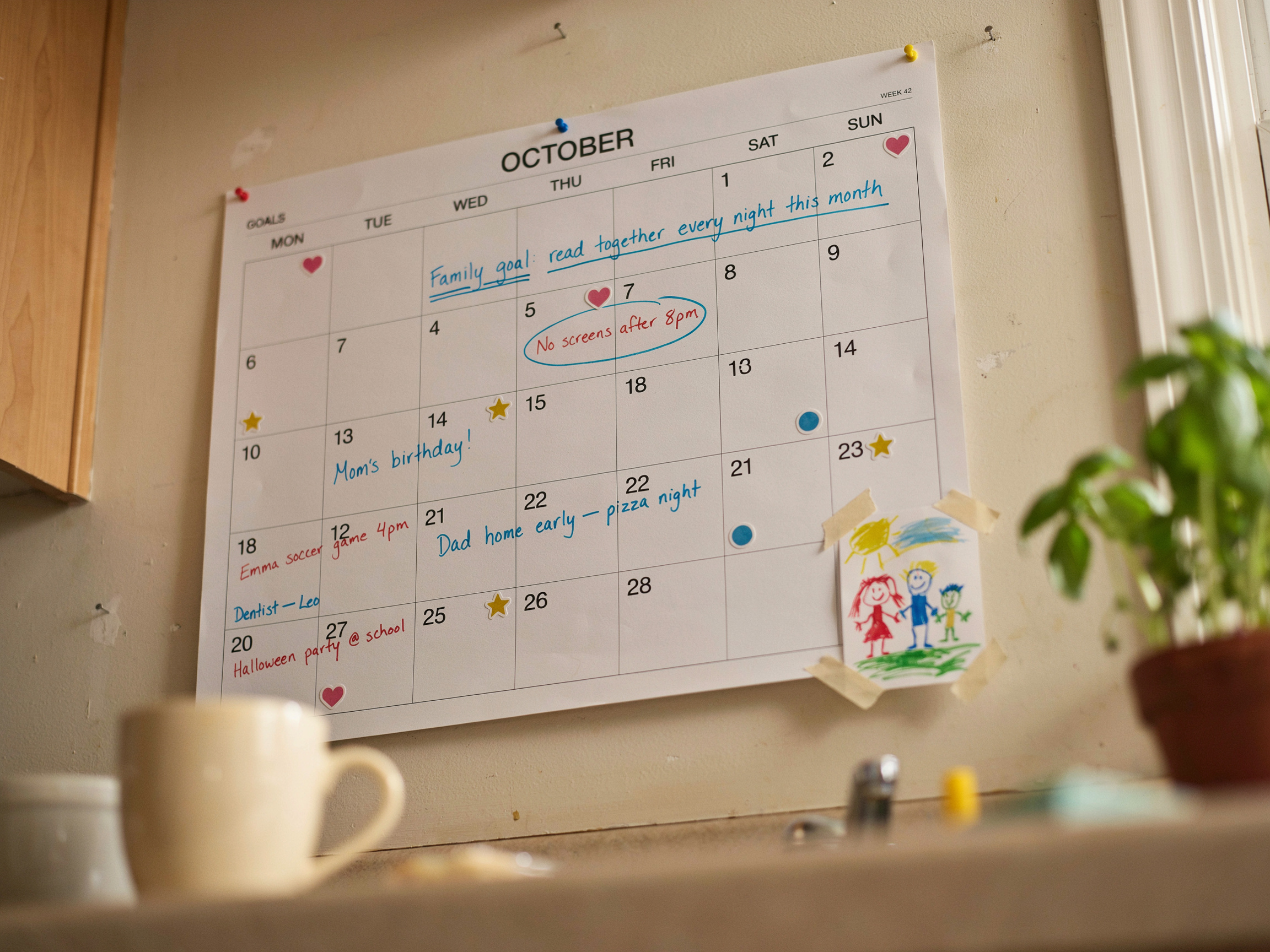
This is where most families fall apart. They pick “togetherness” as a value but never define what that looks like on a Thursday evening when soccer practice and work deadlines hit. Abstract values don’t change behavior. Concrete goals do.
The SMART framework works for families too:
- Specific – Not “spend more time together” but “have dinner together as a family”
- Measurable – You can count it
- Attainable – Realistic for your schedule
- Relevant – Connected to your chosen value
- Timely – Has a timeline
Example 1: Value “Strong Family” Spend quality time as a family twice a week for at least an hour on Friday nights and Sunday mornings for a month, and explore what is the value of family in sociology to understand its deeper role in socialization and support. Everyone takes turns picking the activities.
Example 2: Value “Prioritizing Education” Sit at the dining room table after dinner every school night to do homework, learn something new, or read a book.
Notice the difference between “education is important” and we sit at the table after dinner every school night. One is a sentiment. The other is a schedule.
Steps 4-5: Give values meaning and make them visible
A value is just a word until you connect it to a feeling and a behavior. Here’s a formula that works:
Value X means we care about [emotion], and [specific behavior] is one way we show it.
For example: Respect means we care about how others feel, and listening is one way we show it. Other examples include ‘Honesty always’ — meaning we tell the truth even when it’s hard, and ‘Joyful Connection’, meaning we prioritize laughter and quality time together.
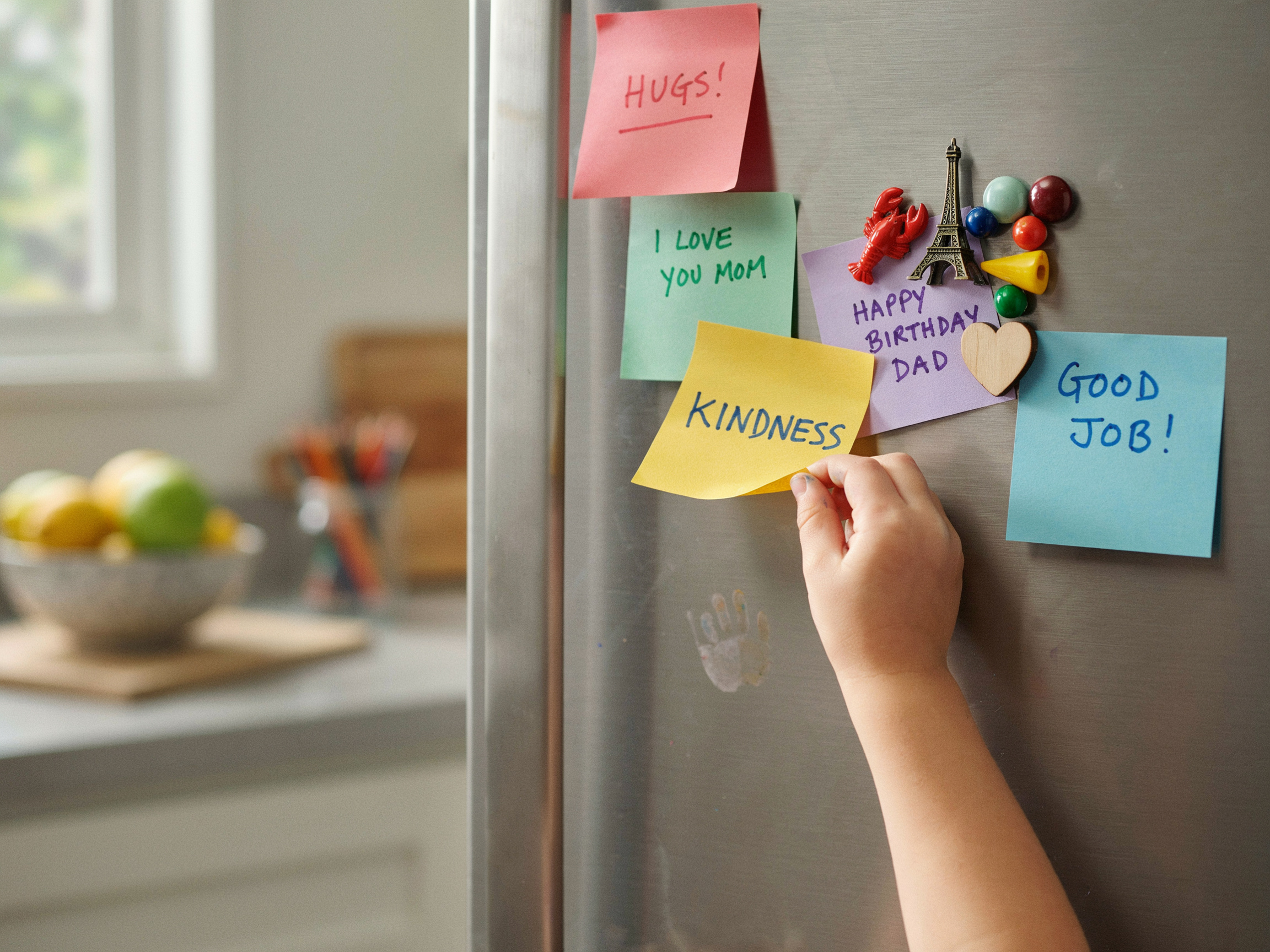
Make your values visible. A values board on the wall. A sticky note on the fridge. Involve the kids in creating it. A list of 60 value words across six core areas — from adventure to generosity to patience, can help you find the right language.
What If the Old Values Don’t Fit? Becoming a Cycle Breaker
Sometimes the values you grew up with were wrong for you. Or they were enforced through guilt, shame, or punishment. Or they were — let’s be honest, not great.

There’s a term for what happens next: cycle breakers. These are younger family members who consciously instill different values in their children to avoid negative experiences from their own upbringing. They might reject values enforced through physical punishment, guilt, or shame. They might walk away from unattainable standards — perfect grades, being the best player, “good child” performance that came at the cost of their mental health.
Some cycle breakers replace “obedience first” with “mutual respect.” That can create real tension during visits with their own parents. It’s a choice that comes with consequences, and it’s not easy.
Cycle breaking isn’t about rejecting everything your parents taught you. It’s about consciously choosing which values to keep and which to redesign. It transforms I don’t want to be like my parents from guilt into intentional design. If you and your partner have fundamentally different value systems, start by finding the overlap. You don’t need to agree on everything—you need to agree on the top 3-5 values that will guide your household.
A Short History — Where “Family Values” Came From and Why It’s So Complicated
If you felt uneasy reading the phrase “family values” earlier, you’re not alone. That unease has a history.
The political baggage: 1992 to today
The phrase “family values” as a political term has a specific origin: the 1992 Republican National Convention’s “Family Values Night,” featuring Barbara Bush. In the United States and the United Kingdom, it’s been used by rightward coalitions to oppose abortion, LGBTQ rights, and secularism ever since.

Five organizations associated with the term — the American Family Association, Family Research Council, Focus on the Family, Traditional Values Coalition, and World Congress of Families, are listed as hate groups by the Southern Poverty Law Center due to their anti-LGBT activism. That’s not a judgment call; it’s a documented designation.
Social psychologists note the core problem: assuming that private values should govern all public behavior. The phrase was initially panned when it debuted, but its staying power was underestimated.
What “family” means in different cultural contexts
The word “family” itself isn’t universal. Family values stem from religious or secular ideologies that shape what each culture prioritizes. In Saudi and Muslim culture, marriage unites two families, not just individuals. Extended family provides identity. Elder care is a family duty.
Parents are regarded with high respect. In Japanese culture, the “good wife and wise mother” ideal replaced earlier Confucian values, shaping gender roles that persist in expectations for women to marry, have children, and care for the home.
The point isn’t that any one of these is right or wrong. It’s that “family” changes across cultures. Which means you have to define it for your own context.

How to Keep Your Values Alive as Your Family Changes
Here’s the problem most guides ignore: the values you set when your kids are 4 and 7 will feel wrong when they’re 14 and 17.
Values centered on protection, obedience, and parental authority may need to evolve into trust, independence, and mutual respect as children become teenagers. That’s not failure — that’s development. The values that work for a family with toddlers (safety, routine, consistency) become counterproductive for teenagers (autonomy, critical thinking, trust).
Revisit and revise your values every few months. Discuss them openly. Hear everyone out. Use a simple trigger question: “Should this be a value?” If something happens in your family’s life — a move, a loss, a new sibling, a new stage, ask whether that change should become a value.
Values are a living, breathing thing. The check-ins create opportunities for compromise across different ages, cultural backgrounds, and personalities. Your family isn’t the same group of people it was three years ago. Your values shouldn’t be either.
The Value of Family Is What You Make It
The value of family isn’t one thing. It’s two interlocking ideas: how much family matters to you, and what principles your family lives by.
Both are measured not by what you say but by what you do. The time you actually schedule. The habits you model when no one’s watching. The conversations you have — and the ones you’re willing to have again. The willingness to redesign values that no longer serve your family.
Building on strong traditions or deliberately breaking cycles from your past both require the same work: reflection, conversation, intention, and revision. The value of family isn’t a static ideal to be preserved. It’s a living practice to be created and recreated as your family grows and changes.
You get to decide what it means. That’s the whole point.