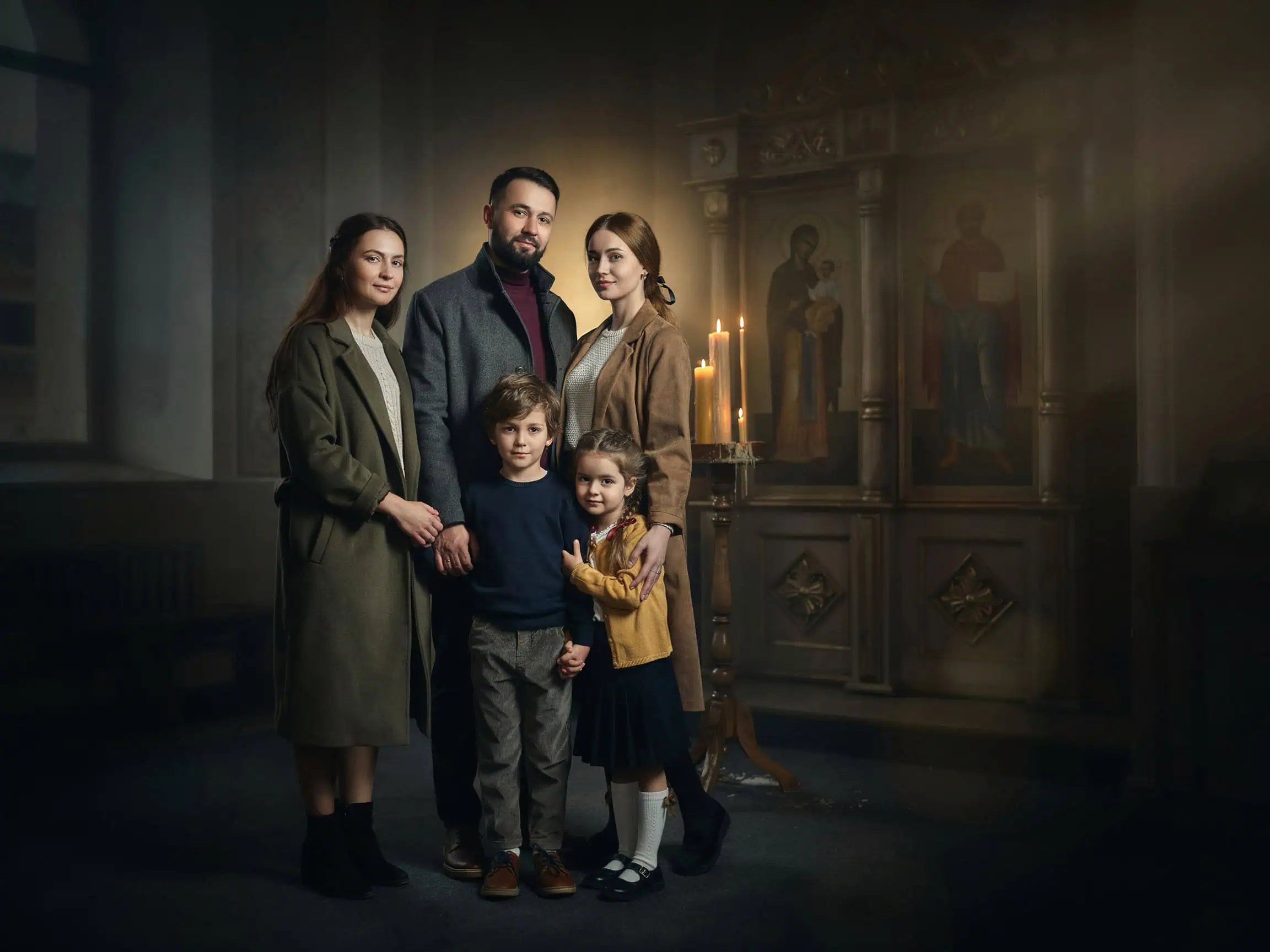
You’ve probably heard the phrase “family values” batted around in political arguments, church announcements, and maybe a few awkward holiday dinners. Everyone seems to mean something different by it. For some it’s about staying married. For others it’s about how you raise your kids. And for a lot of people it’s a vague feeling that the world is doing the whole family thing wrong.
When I started looking into what Orthodox Christianity teaches about family, I expected a list of rules or maybe a warm fuzzy affirmation that family is everything. What I found was challenging and freeing. The Orthodox view doesn’t treat your family as the most important thing in the universe. It treats your family as a spiritual unit – an icon of the Church itself. That changes everything.
Key Takeaways
The Orthodox family is defined as a spiritual unit and icon of the Church, not by blood, economics, or social status. Your first loyalty, as a Christian, is to God – not to your household.
“Family” in Orthodoxy is a group that embraces and passes on a common story – the Gospel – rather than just a genetic or legal contract. This opens the door to monastic communities, brotherhoods, and even adoptive rites.
Monasticism is celebrated as the highest expression of family values, not a rejection of them, because it demonstrates selfless love without the reinforcement of family ties.
Table of Contents
What Are Orthodox Family Values?
Archbishop Chrysostomos puts it simply: The Orthodox Christian family is a spiritual unit. That sounds nice, but let’s be clear about what it doesn’t mean. It doesn’t mean your family is defined by blood ties, by how much money you make together, by the Christmas card photo, or by being the most important thing in your life. A family that’s just a biological or economic unit – using relationships to get ahead – that’s not an Orthodox family.
And if the family itself becomes the most important thing, like a little idol? That’s not Orthodox either.
The Church actually talks about itself using family language – God is our Father, we’re brothers and sisters, the Church is the Bride of Christ. So your family is supposed to be a kind of living icon of that larger reality. It’s where your soul gets its shape. It’s the place where faith gets its first real chance to grow, like yeast in dough.
But here’s the hard part: your first loyalty, if you’re a Christian, is to God. Not to your spouse, not to your kids, not to your parents. The source I’ve been reading puts it in strong terms: Anyone who places family priorities before the Church and Commandments is a cultist. That’s a sharp word, but it makes the point – family can become a closed-off unit that actually blocks you from loving God and neighbor. A true Christian family, by contrast, is an icon of the Church and the brotherhood of all mankind. It doesn’t keep its love inside the front door.
Field note: If your family life leaves no room for hospitality, outreach, or sacrifice for strangers, it may have become an idol rather than an icon.
The Family as Tradition-Bearer: Embracing and Passing On the Gospel Story
So if it’s not about blood or money, what is the family? Fr. Andrew Jarmus gives a definition: Family is defined as a group of people who embrace and pass on a common story, called their tradition. That story isn’t just grandma’s recipe for pierogi – it’s the Gospel, the whole narrative of who God is and who we are in relation to Him.
The word “tradition” itself comes from the Latin traditio, meaning “to hand over.” In Greek it’s paradosis, in Slavonic peredania – all of them meaning “to pass on.” In the Western way of thinking, tradition often feels like something fixed and old, a noun. In the Eastern Orthodox view, it’s alive, responsive, a verb. You don’t just have a tradition; you do it, you pass it on.
What does it mean to be a tradition-bearer?
You’re somebody who holds the story – the Creed, the liturgy, the feasts, the fasts – and makes it your own. You don’t have to understand it all intellectually. You just have to be open to it, like a child. The story tells you who you are, how you got here, where you’re going, and how to get there.
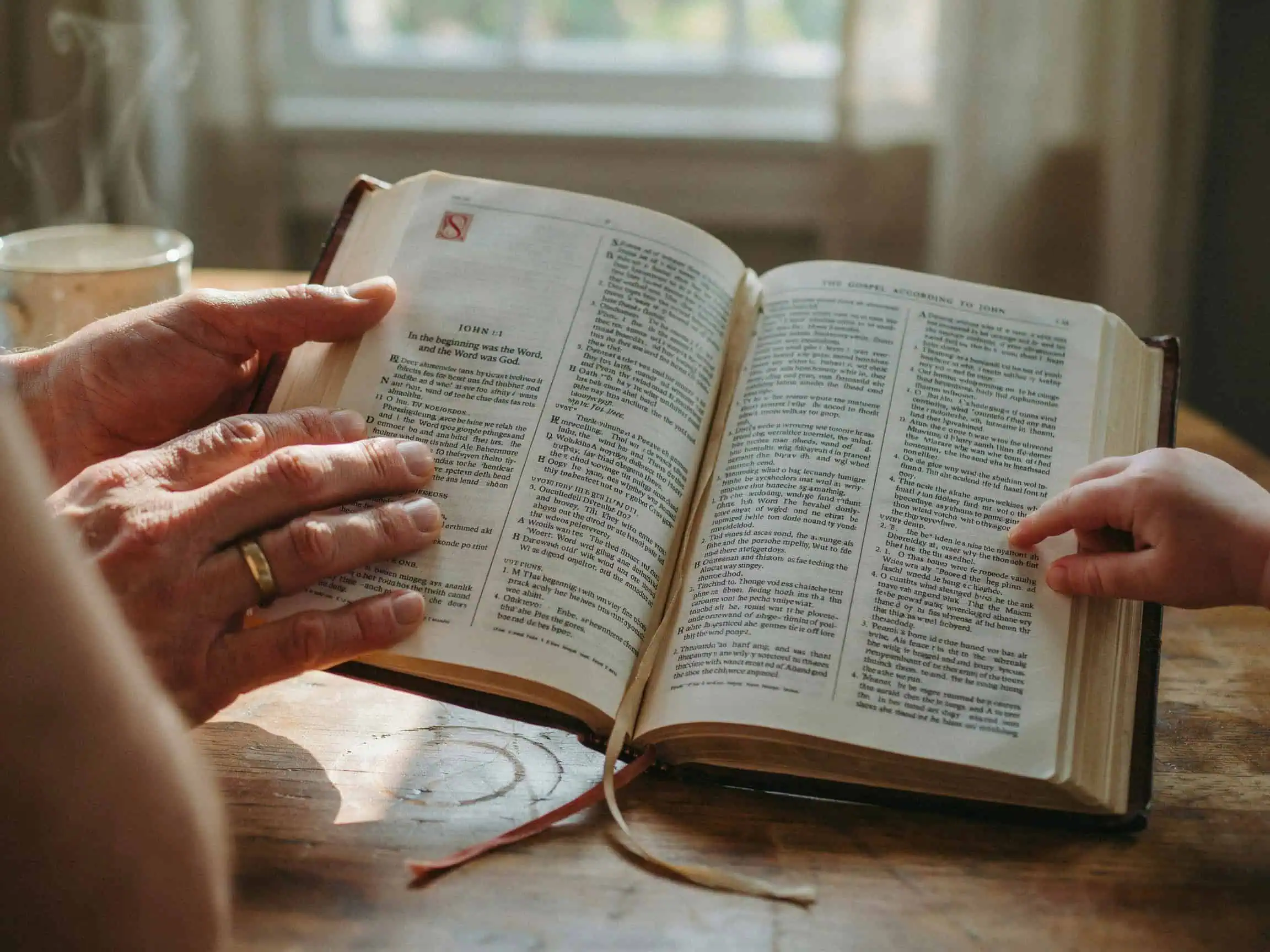
The two marks of a true family
The first mark is embracing that common story. That’s identity, purpose, goals. St. Paul says it plainly says that Stand fast and hold the traditions which you were taught (2 Thess. 2:15). The second mark is passing it on.
Jesus said, “Freely you have received, freely give” (Matt. 10:8). A family that doesn’t pass on the story isn’t really a family in the Orthodox sense – it’s more like a consumer club.
The Creed is what identifies us as the family of God. You say it at every Baptism – it’s the family’s identity document. The Old Testament equivalent is the Shema (Deuteronomy 6:4-9), where Israel’s families were told to teach God’s commands to their children, talking about them at home and on the road.
How the Orthodox view of tradition differs from the Western view
In the West, tradition tends to be seen as a collection of authoritative but static teachings. In the East, it’s a living stream – the same Holy Spirit that inspired the Scriptures is still active in the Church. That difference matters for how you raise your kids. You’re not just passing down a rulebook; you’re passing down a relationship with the living God.
How Orthodox Family Values Differ from Secular and Protestant Models
You can’t talk about Orthodox family values without honestly looking at the alternatives.
The secular family: turned in on itself
Archbishop Chrysostomos writes. The secular family, he says, is selfish, materialistic, turned in on itself. Think about Christmas – families ignore the poor, get annoyed if friends drop by, and go through the motions at a perfunctory church service. The old tradition of visiting sick or lonely people on holidays?
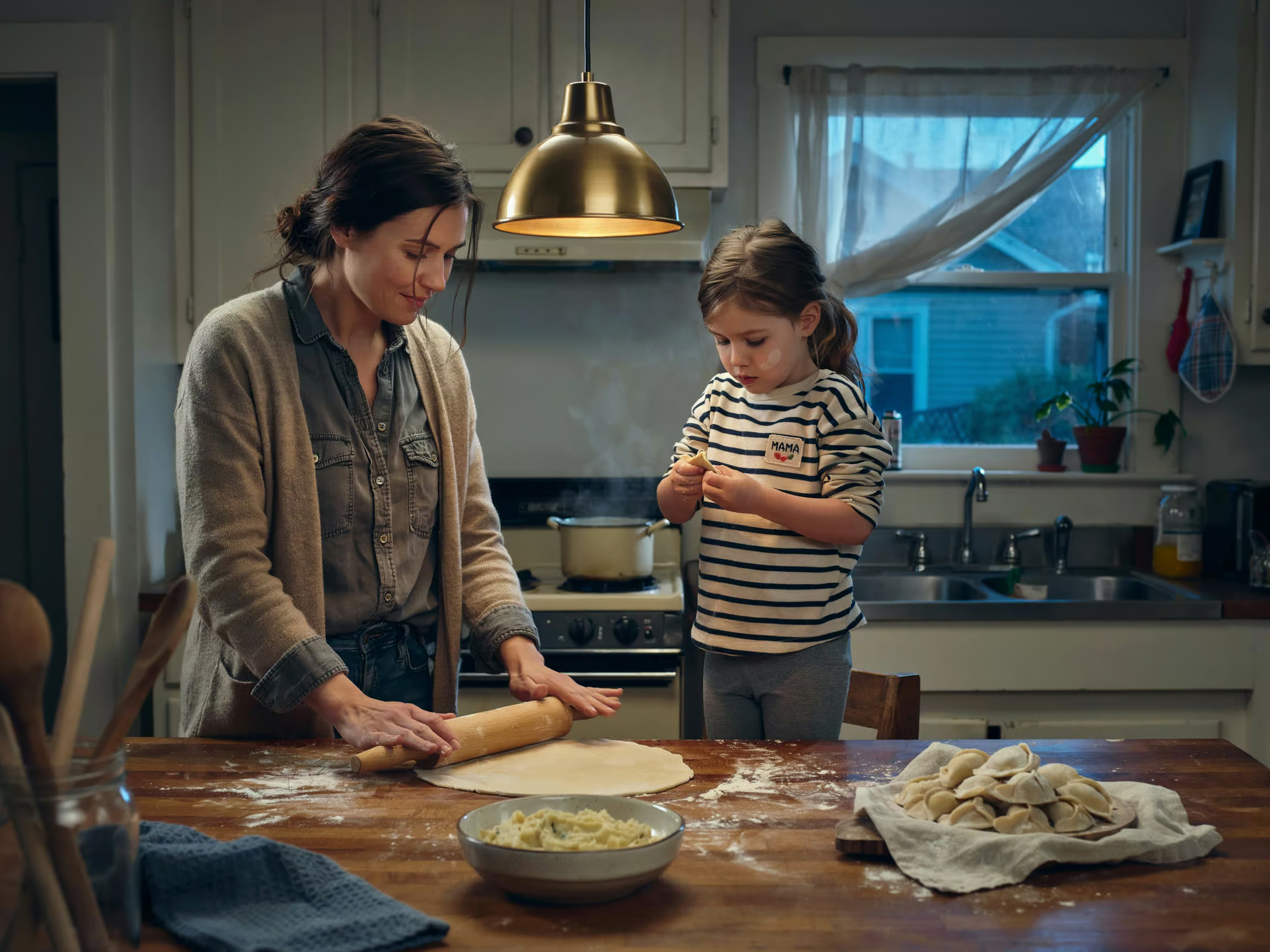
Gone. That selfishness doesn’t show up at holidays; it spreads through the whole year. The “model” American family is beset by addiction, money obsession, divorce, suicide. That’s the picture all around us.
The secular world condones everything – no right or wrong, no sin, no morality, no God. That worldview is hostile to the idea of a family rooted in faith.
The Protestant evangelical model: Focus on the Family as a comparison
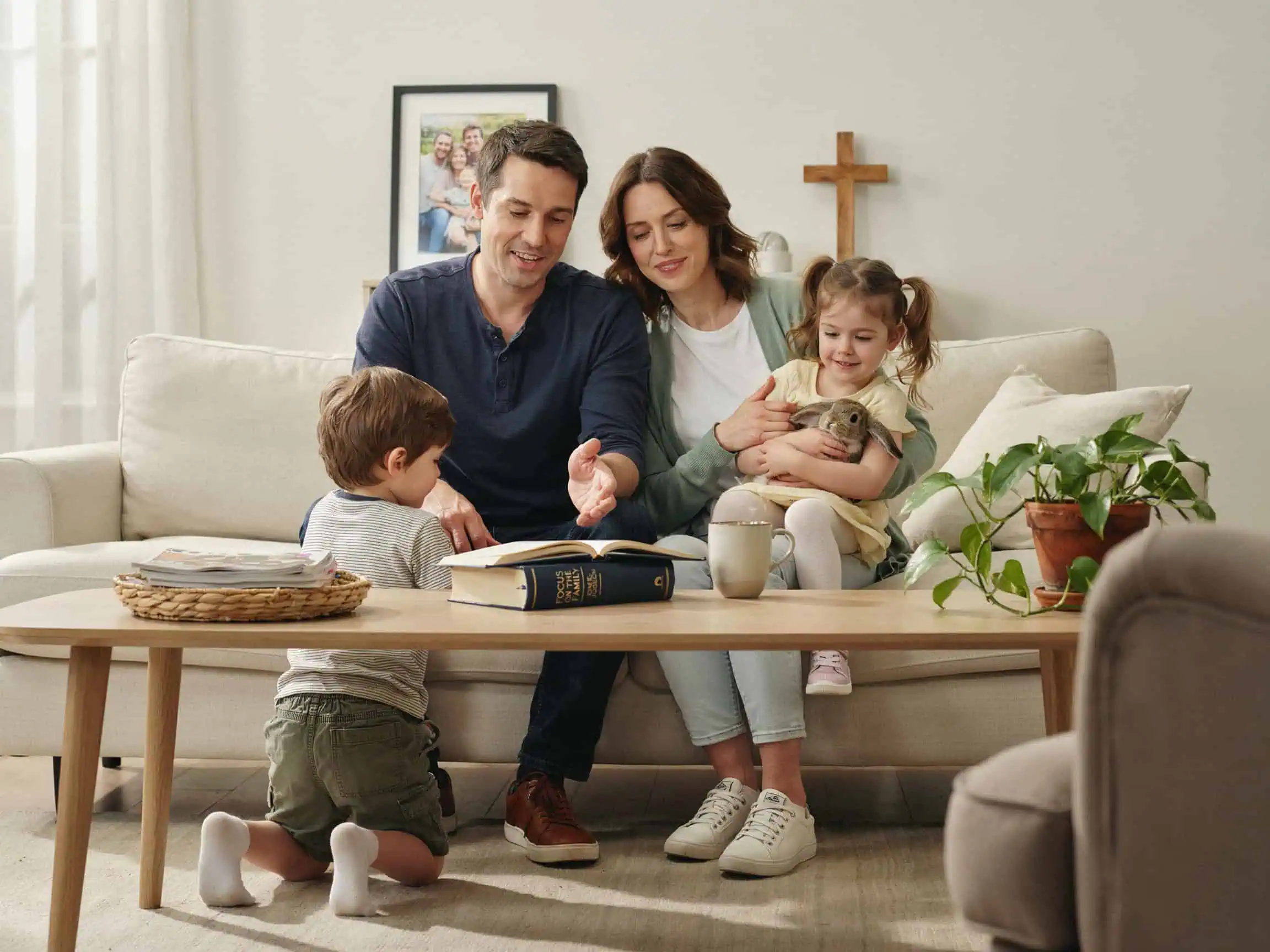
Focus on the Family is a Protestant ministry that lays out six guiding pillars drawn from the Bible and Judeo-Christian ethic:
- Preeminence of Evangelism
- Permanence of Marriage
- Value of Children
- Sanctity of Human Life
- Importance of Social Responsibility
- Value of Male and Female
Orthodoxy shares many of these commitments – the permanence of marriage, the sacredness of children, the sanctity of life from conception. But it parts ways in ways. For one, Orthodoxy sees tradition as dynamic, not static. For another, it celebrates monasticism as a higher calling, which Protestant evangelicalism often doesn’t know what to do with. Focus on the Family aims to safeguard its legacy and uphold fidelity and faithfulness to its mission and biblical principles, even under pressure to compromise.
And the Orthodox critique isn’t just of the secular left – it also pushes back against the right’s tendency to idealize the “traditional” family into a rigid, unrealistic picture. The Orthodox view doesn’t fit neatly into either political box. Christian confessions that allowed secular intrusion have suffered greatly, as the world’s values erode their foundations.
Monasticism: The Unexpected Fulfillment of Family Values
This one stopped me. If family is central, why does the Church honor monks and nuns so highly? It seems like a contradiction.
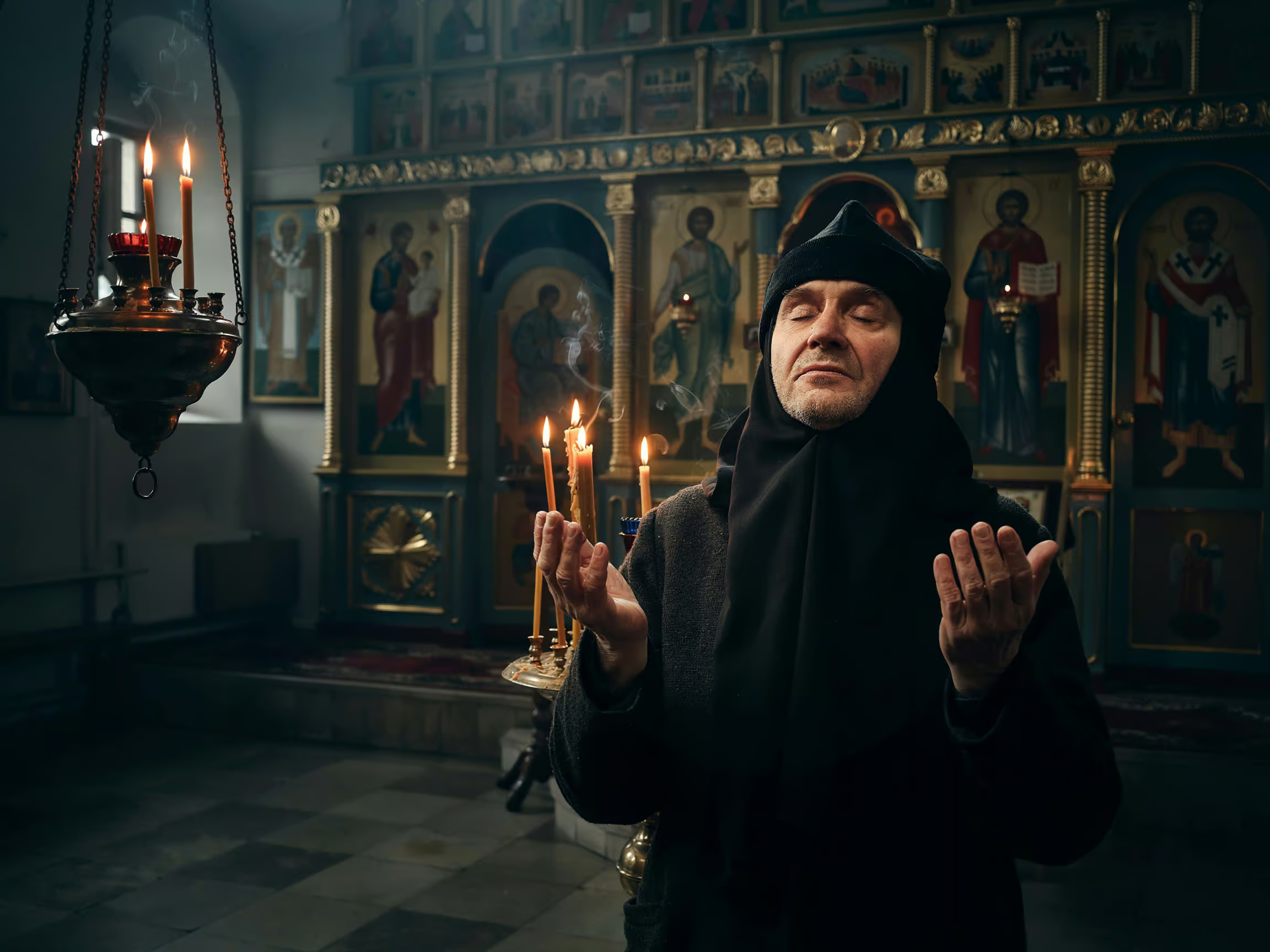
But Archbishop Chrysostomos explains that the Church reserves the greatest praise for someone who embraces monastic life because that person can love and give without the reinforcement of family ties. That’s a deal. A monk or nun living in poverty can have a rich soul. Even separated from their own blood relatives, they can show more love in their prayers than people who are physically present.
In traditional Orthodox Christian societies, a monastic or priestly vocation was cause for merriment and rejoicing. The family celebrated. In modern America, it’s often a source of shame and embarrassment. We celebrate kids who succeed in the material world but pull back support from those pursuing a spiritual vocation. That contrast says a lot about what our culture values.
So monasticism isn’t a rejection of family values. It’s the ultimate expression of selfless love, spiritual fruitfulness, and intercessory prayer for the family left behind—a living answer to what is the value of family?

The Liturgical Life of the Orthodox Family
This answers the question I hear a lot: “What does the Bible say about family values in Orthodox Christianity?” The answer isn’t a proof-text; it’s the whole worship life of the Church.
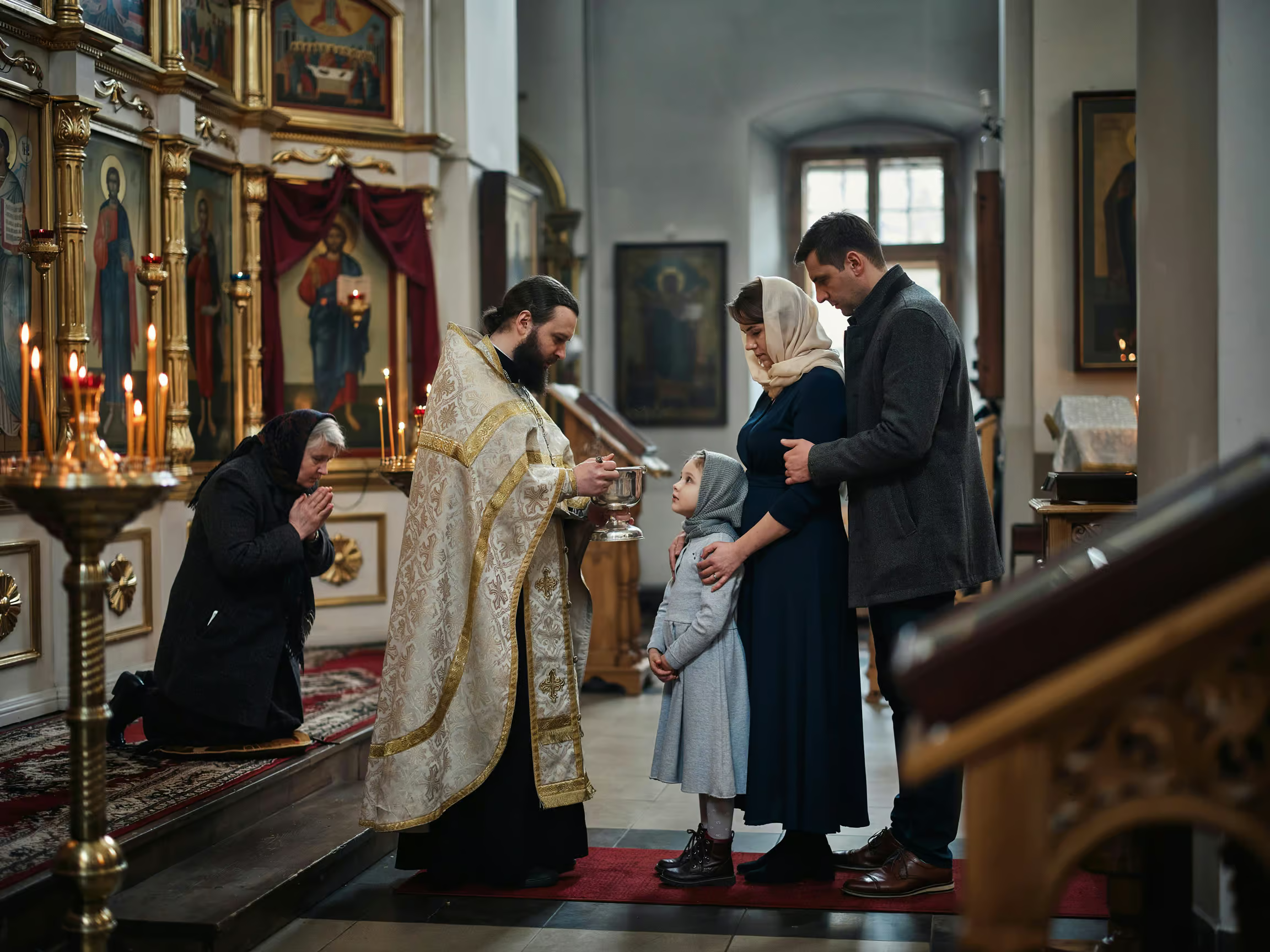
The Eucharist is the ultimate proclamation of who you are. Every Sunday, the family of God gathers, and the gifts are offered “on behalf of all and for all” – that line from the Eucharistic Prayer of St. Basil the Great says everything. You’re not just a collection of individuals; you’re a family united in Christ, reaching out to the whole world.
The Creed, which you recite at every Baptism, identifies you as part of God’s family. The Rite of Adoption asks that what’s been done legally also be blessed spiritually. These aren’t just ceremonies. They’re how the family’s identity is formed and renewed. Psalms and Proverbs envision households shaped by wisdom, integrity, and generational faithfulness, reminding us that the liturgical life of the family is rooted in the same Scriptures that call parents to train up their children in the way they should go.
Fruitfulness Beyond Biology – Who Counts as Family in Orthodoxy?
Here’s where things get interesting. St. John of Damascus taught that the command “Be fruitful and multiply” (Genesis 1:28) refers to spiritual multiplication through fear and love for God. He wrote that this multiplication is accomplished by a spiritual seed and conception in the spiritual womb through fear and love for God, laboring and delivering a spirit of salvation. It’s not just about having babies.
True fruitfulness is about how faithfully you pass on the tradition. That means “fatherhood” and “motherhood” refer to those who faithfully pass on the tradition, not biological states.
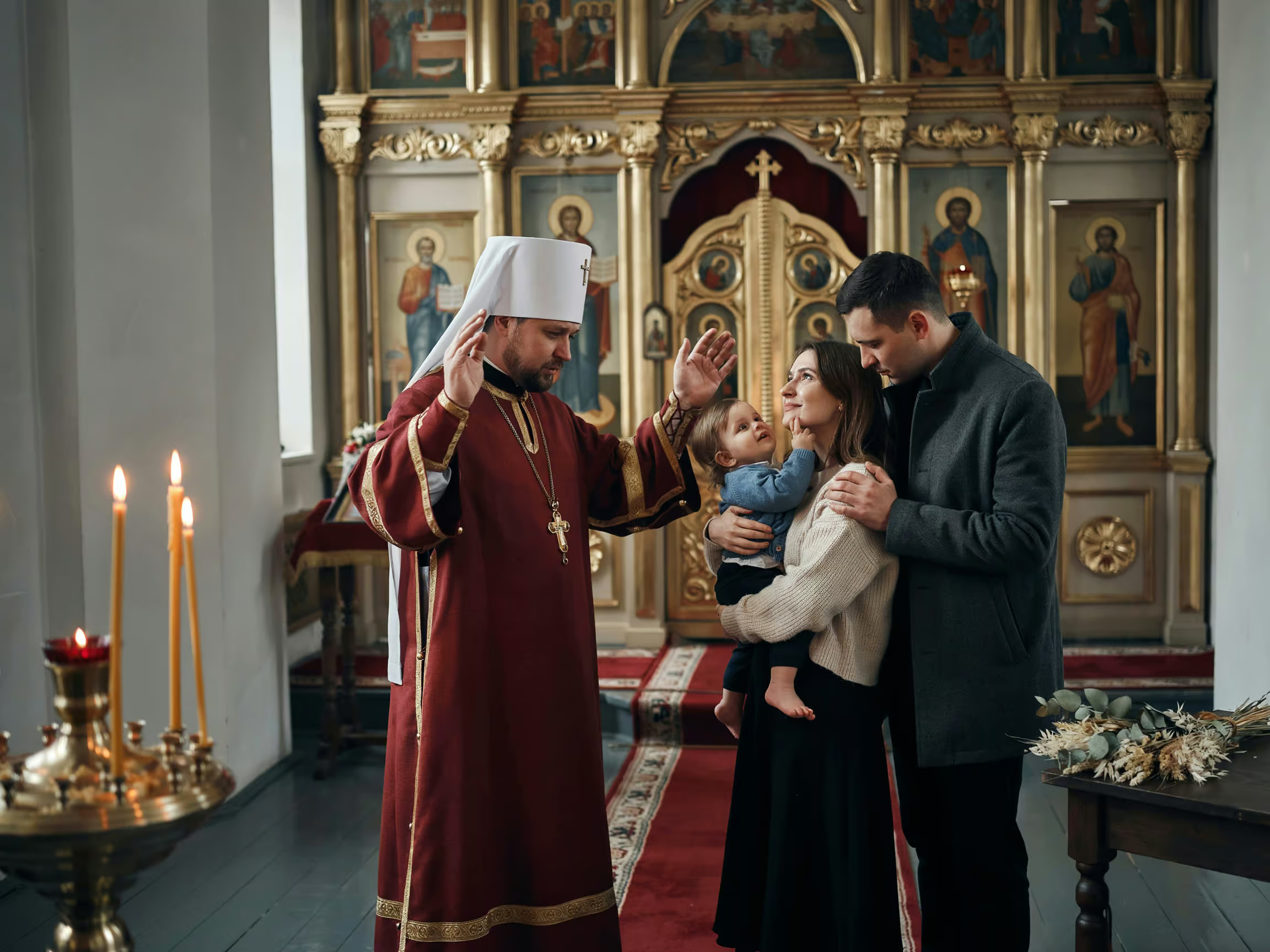
That means “fatherhood” and “motherhood” aren’t limited to biological or legal parents. Priests are called “father.” Saints are called “our holy fathers and mothers.” Your “children” are all the people who receive the story from you and make it their own. So a family can be any group that shares and passes on a common story – the most familiar version is mom, dad, and kids, but it’s bigger than that, and you can start teaching that story with family values for kids.
St. John of Damascus on spiritual fruitfulness
He said the command to multiply refers to a spiritual seed and conception in the spiritual womb through fear and love for God, laboring and delivering a spirit of salvation.
Spiritual fatherhood and motherhood
In Orthodoxy, you can be a spiritual parent without having biological children. That’s why we call saints and priests by those names.
Monastic communities, brotherhoods, and the Bratotvorennya rite
Monastic communities are considered families – they use the same words: father, mother, brother, sister. In 17th–18th century Ukraine, married people formed “Brotherhoods” to support the Church with money, help, and charity. And there’s a historical rite called Bratotvorennya that makes two men or two women “family” as brothers or sisters – not spouses. Some scholars, like John Boswell, argued this was a same-sex marriage service.
The Orthodox position is clear: the rite lacks Betrothal and Crowning, which are essential to Orthodox marriage. It creates sibling bonds, not spousal bonds.
The Rite of Adoption as a sacramental family bond
You can find this in some English-language Orthodox service books – a prayer asking that what’s been done legally through adoption also be blessed spiritually. It’s a reminder that family in Orthodoxy isn’t about blood.
Practical Ways Orthodox Families Bear the Tradition
Okay, so what does all this theology look like on a Tuesday night?
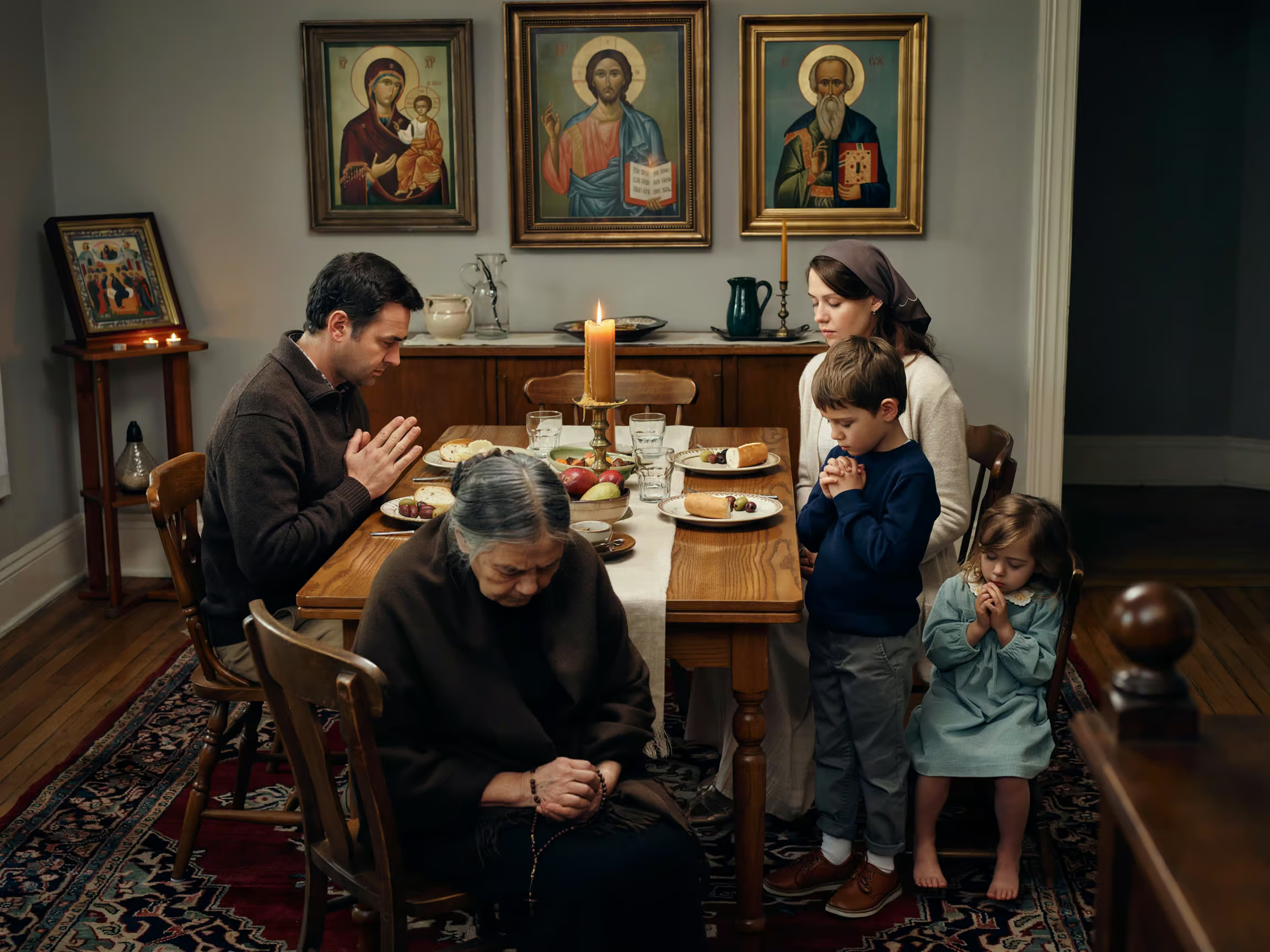
General means: worship, prayer, fasting, feasting
Going to church together. Having a family prayer rule – even just a few minutes before dinner or bedtime. Keeping the fasts (Lent, Advent, Wednesday/Friday) and celebrating the feasts (Pascha, Theophany, the Theotokos feasts). These aren’t religious activities; they’re the rhythm of the year that tells your kids “this is who we are.”
Cultural expressions and unique family rituals
Making Paschal eggs at Easter. Serving at a soup kitchen every Thanksgiving. Whatever helps the story come alive in your home. Modern psychology agrees that rituals increase family cohesion – a stronger sense of “we.”
The crucial role of consistency between church and home
A seminarian once told a young priest that the most important thing for a priest’s family is that his preaching matches his home behavior. If there’s inconsistency – if Dad talks about forgiveness at church but yells at the kids all week – then the kids learn that church life and life are separate. The tradition gets hollowed out.
The whole point is to embrace Holy Tradition unconditionally, without compromise. If you treat parts of the faith as negotiable, you teach your kids that all of it is. Orthodox Christians must be obedient to holy traditions, canons, and discipline, for these are the living boundaries that keep the family rooted in the faith and protected from the world’s distortions.
Quick test: Ask your kids what your family’s main priorities are. If faith practices don’t make the list, your home life may be teaching a different story than your church life.
The One True Family – How All Families Point Beyond Themselves
Here’s the final piece that makes sense of everything. Orthodox teaching says there’s only one true family – the family of God, the House of Israel. All human families are iconic representations of that divine family. They’re good, they’re God-given, but they’re not ultimate.
This lets you love even your enemies and call them brother – like we sing during Paschal Matins. It means your family isn’t supposed to be a closed circle. The love you develop, cultivate, and refine inside your home is supposed to flow outward to neighbors, strangers, and even people who hate you.
Your family gives your kids spiritual armor to face temptation and battle sin. It teaches them to love. And then it sends them out to share that love with everyone. That’s the core value of an Orthodox Christian family: it’s a school of love that points beyond itself to the one true family of God.
Frequently Asked Questions
What are 5 family values?
In Orthodox Christianity, family values center on embracing and passing on the Gospel story, prioritizing loyalty to God over blood ties, practicing selfless love, maintaining a liturgical life of worship and fasting, and extending hospitality and love beyond the household. These values treat the family as a spiritual unit and icon of the Church, not a closed-off consumer club.
What is the meaning of family values?
Family values in Orthodox Christianity mean treating your household as a spiritual unit that embodies the Church’s love and tradition, not as an idol or economic arrangement. Your first loyalty is to God, and your family is meant to be a living icon that shapes your soul and sends love outward to neighbors and strangers.
What are Orthodox values?
Orthodox values include seeing the family as a tradition-bearer that embraces and passes on the Gospel, celebrating monasticism as the highest expression of selfless love, and prioritizing spiritual fruitfulness over biological reproduction. The family’s purpose is to form souls through worship, prayer, fasting, and feasting, pointing beyond itself to the family of God.
How do you define your family values?
You define your family values by asking whether your household embraces and passes on a common story—the Gospel—and whether your first loyalty is to God, not to your spouse or kids. A true Orthodox family is an icon of the Church, not a closed circle, and its love flows outward to strangers and even enemies.
Why does Orthodox Christianity celebrate monasticism as part of family values?
Monasticism is seen as the ultimate expression of family values because a monk or nun demonstrates selfless love without the reinforcement of family ties. The Church honors this as a higher calling, showing that spiritual fruitfulness through prayer and intercession is just as valuable as biological parenthood.
What’s the difference between Orthodox family values and secular family values?
Secular family values are often selfish, materialistic, and turned inward, treating the family as a closed consumer unit. Orthodox family values see the family as a spiritual icon of the Church, with loyalty to God first and a mission to pass on the Gospel story through hospitality, outreach, and sacrifice for strangers.
Can a family without children be considered a true family in Orthodoxy?
Yes, because fruitfulness in Orthodoxy isn’t limited to biology—it’s about spiritual multiplication through passing on the faith. Spiritual fatherhood and motherhood, monastic communities, brotherhoods, and adoptive rites all show that any group sharing and passing on the Gospel story can be a family.