
I was standing in the kitchen the other night, listening to my kids argue over who got the last cookie. The normal stuff. But instead of saying “share it” and moving on, I stopped. Because we’d been talking about generosity at dinner, but it hadn’t clicked yet.
That’s the thing about family values — they don’t stick because you say them once. They stick because you live them, mess up, and try again.
We’re not perfect at this. Some days we nail it. Other days I’m trying to get everyone out the door without a meltdown. But over the years, I’ve learned that having a few clear values — written down, talked about, referenced in the middle of a cookie war, makes everything a little easier.
Not smoother. Easier in the sense that you know what you’re aiming for.
This article is full of family value examples you can use. Not the vague kind that sound nice on a poster. The kind you can try tonight.
Key Takeaways
The most effective family values are behavior-based: instead of “we value honesty,” try “we tell the truth even when it’s uncomfortable.”
Start with 5–7 core values, then set one SMART goal per value — like spending quality time together twice a week for an hour, on Friday nights and Sunday mornings.
Values grow with your kids; rules get outgrown. A value like “family time” adapts as your children get older, but a rule like “no phones at dinner” becomes outdated.
Table of Contents
What Family Values Are and Why They Matter
Family values are the shared principles that guide how your family makes decisions, treats each other, and handles hard stuff. They’re not mission statements. They’re the unwritten (or written) rules of the house that help you say “this is who we are.”
Basketball legend Dikembe Mutombo put it this way: I come from a large family, but I was not raised with a fortune. Something more was left me, and that was family values. That’s the legacy part. But values aren’t for the future — they help right now.
When everyone knows what the family stands for, decisions get easier. Kids feel more secure. And you have a North Star for moments like “should I allow my 10-year-old to walk to school on his own?”
There’s no single right set of values. What works for your family might look totally different from your neighbor’s, and that’s fine. The key is choosing what actually matters to you — not what you think you should value.
By the way, family values aren’t for traditional two-parent households. In 2022, about one in four Americans lived in a multigenerational home, according to Pew Research. Values like respect, communication, and shared purpose can work in any structure — blended, cohabiting, child-free, you name it.
So, what do these values look like in real life? Here are 25 examples, grouped by type, with something you can try tonight.
Family Value Examples with Things You Can Actually Try
I’ve organized these into four groups: foundational values (the bedrock), relationship-building values (how you treat each other), character-building values (who you’re becoming), and lifestyle values (how you spend your time). Each one includes a behavior-based description and a practical “try this” — no abstract fluff.
Foundational Values: Love, Respect, Honesty, Trust, Integrity
Love
This is the bedrock. It’s not just saying “I love you” — it’s showing up. Small things: a note in a lunchbox, a hug after a hard day, a surprise treat when someone’s struggling. Love is the stuff that holds your family together when everything else is chaotic.

Try this: Leave a sticky note on your kid’s pillow tonight. Just “I’m glad you’re mine.” No big speech.
Respect
Respect goes beyond honoring elders. It means valuing everyone’s beliefs, choices, and boundaries. In practice: no mocking, listen fully, repair after a conflict. Model it by saying please, not interrupting, and apologizing when you mess up.
Try this: Set a family rule — We let each other finish speaking before responding. Then actually do it, especially when you’re tired.
Honesty
This is the uncomfortable one. Telling the truth even when it’s hard. Teach it by giving consequences for lies, not punishing kids for telling the truth. If your kid admits to breaking something, thank them for their honesty first. Then deal with the broken thing.
Try this: Frame it as “We tell the truth, even when it’s uncomfortable.” That’s stronger than “We value authenticity.”
Trust
Trust is built on honesty and reliability. It’s knowing you have each other’s backs. Give kids age-appropriate responsibilities and resist the urge to step in. Trust takes time — built by keeping promises about the small stuff.
Try this: Give your child one small responsibility this week (setting the table, feeding the dog) and don’t remind them. Let them own it.

Integrity
Doing the right thing when no one’s watching. Being the same person at home and out in the world. Share a story of a family member who chose the harder right instead of the easier wrong.
Try this: Tell your kids about a time you had to make a tough ethical choice. Keep it real — they’ll remember it.
Relationship-Building Values: Communication, Empathy, Compassion, Kindness, Generosity, Forgiveness, Loyalty
Communication
Not just talking — hearing each other. Active listening, expressing emotions openly, resolving conflicts without destroying the relationship. Put phones away during family conversations. When your kid is upset, listen without planning your response.
Try this: When your kid is melting down, try saying “That’s hard” instead of “Stop crying.” Then ask follow-up questions.
Empathy
Feeling with someone, not just feeling sorry for them. Acknowledge emotions, offer support without judgment. When your kid says something hurtf says that how do you think that made them feel?
Try this: Before bedtime, ask each person to share one emotion they felt today and why.
Compassion
Empathy plus action. Showing up when someone’s having a rough time. Volunteering, charitable acts, sitting with a sad kid instead of trying to fix it.
Try this: Next time someone in the family is struggling, don’t offer solutions — just say “I’m here.”
Kindness
Small stuff, not grand gestures. Holding the door, sharing a snack, a text that says “thinking of you.” Start at home with “please” and “thank you.”
Try this: Start a kindness check-in at dinner — each person mentions a single kind act they performed or witnessed that day.
Generosity
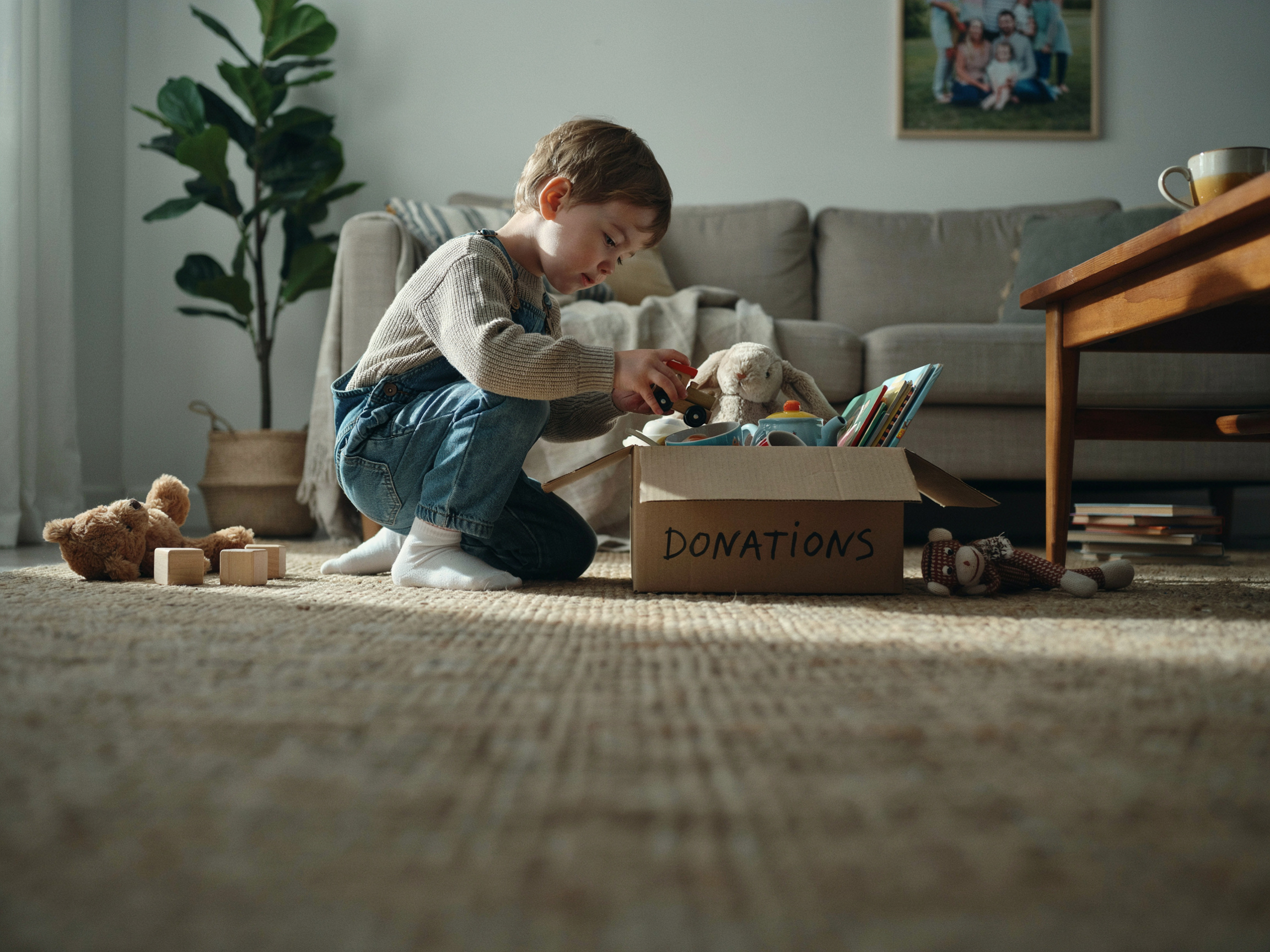
Time and attention, not just money. Giving without expectation. When you share, you’re saying “We’re in this together.” Have kids pick a toy to donate before holidays or birthdays.
Try this: Let your child choose a small gift to give to a friend, just because.

Forgiveness
Not forgetting — choosing to move forward. Letting go of resentments, understanding mistakes, offering second chances. Model apologies in your own relationships. Say “I’m sorry” and mean it.
Then let it go. Try this: If you lose your temper, apologize to your kids. Show them that repair is part of love.
Loyalty
Having each other’s backs. Not intentionally harming each other. Not trash-talking a sibling behind their back. Encourage sharing feelings openly, avoid shaming for mistakes, make caring for family a priority.
Try this: When a sibling is being teased elsewhere, be the one who defends them.
Character-Building Values: Responsibility, Perseverance, Patience, Adaptability, Independence, Optimism, Joy
Responsibility
Owning your stuff — for parents and kids alike. Increases with age. Create chore charts. Let kids be responsible for one thing and don’t step in.
Model it by owning up to your own mistakes. Try this: Have each family member pick one weekly chore. No reminders. See what happens.
Perseverance
Sticking with it when you want to quit. Confronting obstacles with courage. Teach that failing is part of learning. Share stories of times you stuck with something even when it was hard.
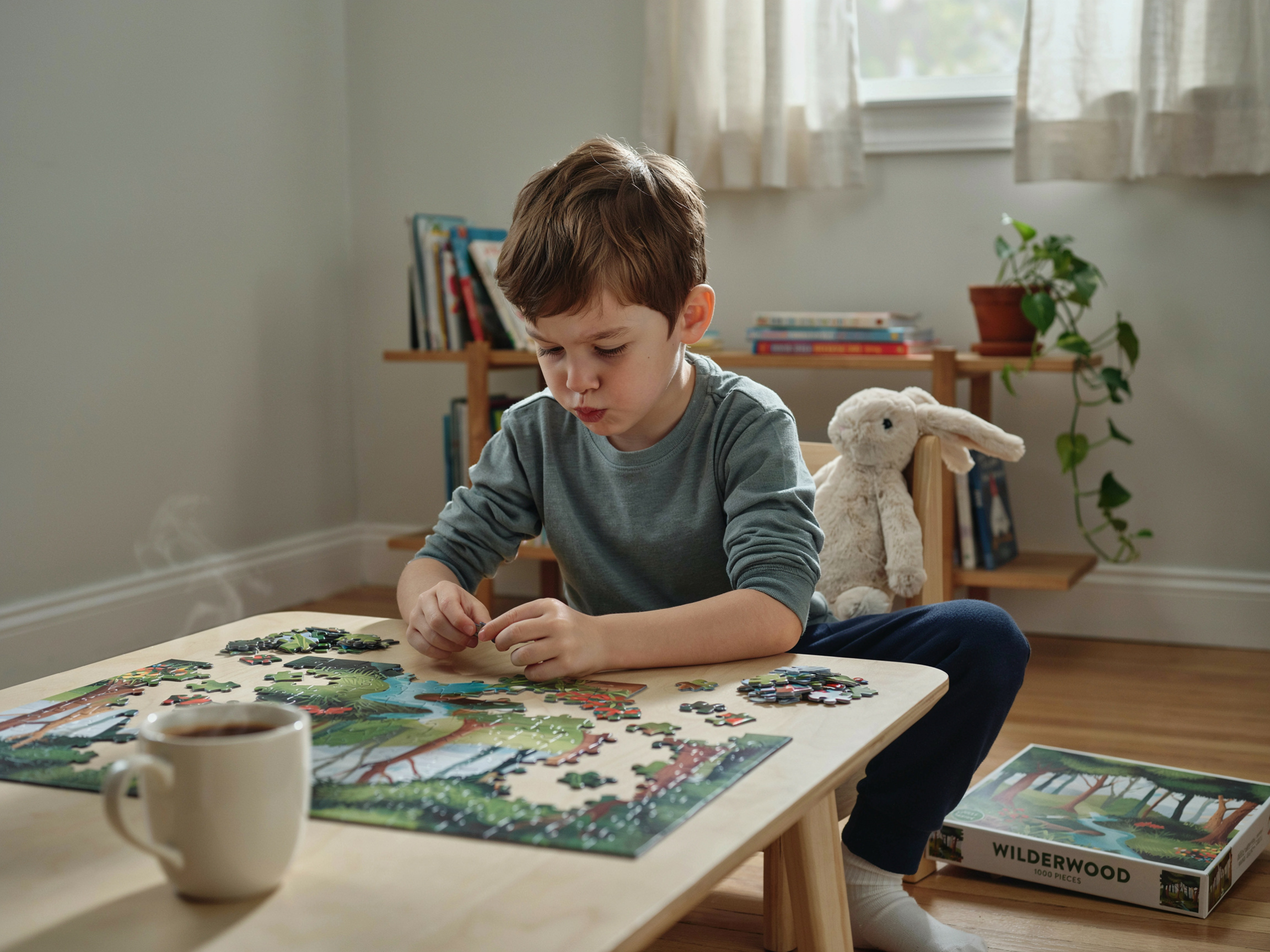
Try this: When a kid wants to give up on a puzzle or homework, don’t fix it for them. Say “I know you can figure it out.”
Patience
Pausing before responding. Listening carefully while keeping frustrations in check. A swear jar works (not as punishment, but to notice your words). A calm-down corner can help.
Try this: Next time you’re about to yell, pause and take three slow breaths. It sounds simple, but it changes the moment.
Adaptability
Rolling with the punches because plans change. When your toddler decides to hate the car seat, adaptability is your friend. Discuss major transitions as a family and identify what stays the same.
Try this: When a plan falls through, say “Okay, new plan!” instead of sighing.
Independence
Letting go little by little. Gradually increasing autonomy. I read about a mother who let her son walk to school alone around age 10 to foster independence. It felt risky, but it communicated “I trust you.”
Try this: Give your child one age-appropriate responsibility they’ve never done before (making their own breakfast, crossing the street alone).
Optimism
Believing things will get better — and helping your kids believe it too. Not toxic positivity, but genuine hope. Start dinner with “What went well today?” Even on bad days, find one thing.
Try this: When your kid is upset, help them think of one small thing that could be better tomorrow.
Joy
The laugh that catches you off guard. Celebrating moments of happiness and togetherness. Don’t wait for big events — find joy in the messy moments.
Try this: Saturday morning pancakes, after-dinner walks. Simple rituals that make room for joy.
Lifestyle Values: Family Time, Gratitude, Tradition, Well-Being, Community Engagement, Friendships
Family Time
Being together, not just in the same room. Put family first above work and school. Make it concrete: spend quality time twice a week for at least an hour, on Friday nights and Sunday mornings. Take turns picking activities.
Do it for a month. Specify days and times so it actually happens. Try this: This Friday, put phones in a basket and play a board game together.
Gratitude
Noticing the good stuff even on hard days. Expressing thanks for support, love, and opportunities. Create a gratitude jar — family members drop in notes about what they’re thankful for; read them together at the end of the week.
Try this: At dinner, everyone shares one good thing they’re grateful for.
Tradition
The rituals that connect generations. Sunday suppers, holiday traditions, cultural celebrations. They don’t have to be elaborate — they just have to be yours.
Try this: Pick one small weekly tradition (movie night, pizza Friday) and commit to it for a month.
Well-Being
Taking care of your whole family’s health — physical and mental. Model healthy habits: after-dinner walks, cooking a meal with veggies together, five minutes of one-on-one time before bed.
Try this: Go for a walk after dinner tonight, even if it’s just around the block. No screens.
Community Engagement
Showing kids they’re part of something bigger. Civic participation like voting, volunteering, advocating for social causes.
Try this: Take your kids to vote. Let them see you volunteer at a local food bank.
Friendships
Family you choose. Nurturing relationships outside the family circle. Let your kids see you make time for your friends. It teaches them the value of connection, and if you ever wonder what is the value of family, this is one of its deepest lessons.
Try this: Invite a friend over for coffee while your kids play. Show them that friendships need tending.

How to Actually Figure Out Your Family’s Values (Without Overwhelm)
If you’re reading this and thinking “that’s great, but how do we pick?” — I get it. The process can feel like another thing on the to-do list. But it doesn’t have to be heavy. Here’s a simple three-step process that works for us.
Bottom line: The goal isn’t a perfect list. It’s 5–7 values your family actually uses to make decisions this week.
Step 1: Check in with Yourself
Before you talk to anyone else, get quiet and think. Ask yourself:
- What kind of person do I want to be?
- What kind of parent do I want to be?
- What future do I want for my children?
- How do I want to spend my time?
- What do I actually care about and why?
If you have a partner, each of you reflect separately. Then discuss overlapping values. You can use journal prompt cards or even a motivation assessment to uncover what drives you.
Step 2: Family Input
Gather everyone — even the little ones. Make it a conversation, not a lecture. Try questions like:
- What do we really care about as a family?
- What’s our family “about”?
- What are we good at?
- What do we like doing together?
- What are we working to improve?
Come up with phrases or sentences that sum up what everyone agrees is important. Aim for 5–7 core values. If someone disagrees, talk it through openly.
Step 3: Set SMART Goals
After you’ve agreed on your values, turn them into action. Use the SMART framework (Specific, Measurable, Attainable, Relevant, Timely). For example:
- Strong Family value: Spend quality time together twice a week for at least an hour, on Friday nights and Sunday mornings, all take turns picking activities, do for a month.
- Prioritizing Education value: Sit at the dining room table after dinner every school night to do homework; if no homework, learn something new or read a book.
Ask kids if they have goals connected to the family values. A kid might propose inviting a different friend each week to practice the value of hospitality; you can find a curated list of 10 family values—like respect, responsibility, and gratitude—with practical tips for teaching them to kids at different ages.
How to Write a Family Values Statement (With Templates You Can Steal)
Once you’ve picked your values, write them down. A written statement makes values visible and actionable, and it must identify unique family values that guide financial decisions and reinforce family identity, such as how to protect your wealth for your children. It’s a living document, not a plaque. Keep it concise—5 to 7 values—and display it on the refrigerator.
Here are three formats that work:
Short list format (most actionable): We are a family that chooses honesty, kindness, responsibility, and courage. We tell the truth, repair after mistakes, help before being asked, and stay close during hard seasons.

Narrative format (more poetic but still grounded): Our family is committed to love that is active, respect that is visible, and growth that is shared.
Behavior-based format (clearest for kids): In this family, respect means listening fully. Responsibility means doing what we said we would do. To help your child practice standing up for these values, try teaching kids to speak up during regular family talks about making decisions together.
Whichever format you choose, keep a copy on the fridge and a digital copy. It could become a family heirloom.
Teaching Family Values Without Sounding Like a Lecture
The most effective value teaching happens in the gaps between formal lessons — a quiet comment, a shared story in the car, a routine like the gratitude jar. Kids are most receptive between ages 6 and 12, but it’s never too early or too late.
Start Early and Lead by Example
Kids learn by watching you from day one. The best way to teach honesty is to be honest yourself. Use age-appropriate discussions and role-playing instead of lectures. In the younger years, just show them.
Use Honest Family Stories, Not Lectures
Honest stories about family members who struggled but still showed up, or who chose the harder right instead of the easier wrong, transmit values more effectively than direct instruction. A “quiet comment” like “I noticed what you did there. That took real courage” can be more powerful than a formal lesson. Catch them doing it right and point it out.
Create Family Rituals That Embed Values
Rituals make values visible and repeatable. Some we’ve tried:
- Sunday suppers (reinforces togetherness)
- Chore charts (reinforces responsibility)
- Swear jar (reinforces respectful language)
- Gratitude jar (drop in notes, read them at week’s end)
- Kindness check-in at dinner (each person shares one kind thing)
- Saturday morning pancakes (low-key tradition)
- After-dinner walks (movement + conversation)
- Five minutes of one-on-one time before bed (strengthens individual bonds)
Adapt as Kids Grow and Address Outside Influences
As kids get older, encourage critical thinking and create a safe space for open discussions. Peers and media may push different messages — you can’t shield them from everything, but you can be a steady, consistent voice. Bridge generational gaps through respectful discussion. Talk about why things are different now and find common ground.

Keeping Your Family Values Alive (Because They Can’t Just Be a Poster on the Wall)
Values won’t stick if you set them once and forget them. They need maintenance — like a garden, not a plaque.
When to Review and What to Ask
Review at least once a year. Also after major changes: a move, a birth, a separation, illness, a caregiving shift. Use a monthly check-in with simple questions:
- Which family value showed up well this month?
- Where did we fall short?
- What needs repair?
- What do we want to practice next month?
This framework acknowledges that values will be violated sometimes. Repair is part of the value system, not a failure.
Preserving Your Values Statement for Future Generations
Keep the statement in multiple formats: physical (on the fridge, framed) and digital (photo, document). That way it endures. Your values statement could be something your grandchildren see one day.
Adapting Family Values for Modern Family Structures
Most family values content assumes a two-parent nuclear family with children. That’s no longer the majority. Values like respect, communication, and shared purpose apply to any structure.
The Data Behind Modern Family Diversity
Family structures are shifting fast. According to Pew Research:
- 59% of American adults ages 18 to 44 have cohabited without being married (as of 2019).
- 57% of adults under 50 said in 2023 they’re unlikely to have children — up 10% from 2019.
- 25% of Americans lived in multigenerational households in 2022.
These numbers show that “family” looks different for a lot of people, and that’s okay.
Values Across Cultures and Structures
Different cultures express the same value in different ways. For many Filipino families, multigenerational living is common, and children are expected to care for aging parents and grandparents under the same roof. In Christian families, values like forgiveness, compassion, and service to others play a central role. American families often emphasize independence.
Even pop culture reflects this. The sitcom Modern Family depicts diverse family structures — blended, same-sex, multigenerational, while still teaching kindness and teamwork.
Why Values Beat Rules Every Time
Here’s the thing: rules are brittle. A rule like “no phone at dinner” works until your kid is 15 and has a legitimate reason to take a call. A value of “family time” adapts. It says “we prioritize being present with each other,” and you can figure out how that looks at different ages.
A rule enforces the what. A value explains the why. Kids outgrow rules; values grow with them. When you rely on values, you’re building an internal moral compass. When you rely on rules, you’re just chasing compliance.
Think about it this way: instead of asking “What rules do we need?”, ask “What challenges do we keep facing?” If siblings are always arguing, the values that help are respect, empathy, and forgiveness. If no one helps around the house, the values are responsibility, teamwork, and respect. Mapping values to real problems makes them feel necessary, not theoretical.
Snowplow parenting — clearing every obstacle, undermines the values parents want to instill: resilience, independence, responsibility. Values give kids a framework to handle hard stuff on their own.
So, where do you start? Pick one value from the list that feels urgent. Maybe it’s patience or kindness or family time. Try one “try this” tonight.
Not all 25. Just one. Then see what happens.
Because in our house, we’ve learned that values aren’t something you achieve. They’re something you practice — imperfectly, consistently, together.
And that’s the whole point.
Frequently Asked Questions
What are the 10 family values?
There isn’t one universal list, but common family values include love, respect, honesty, trust, integrity, responsibility, perseverance, patience, kindness, and gratitude. The most effective families pick 5–7 values that actually guide their daily decisions rather than trying to cover everything.
What are the five family values?
A strong five-value starter set is honesty, respect, responsibility, kindness, and family time. These cover how you treat each other, how you handle your obligations, and how you prioritize being together — and each one can be turned into a specific behavior your family practices.
What are 5 positive family traits?
Five positive family traits that show up in strong families are open communication, mutual respect, shared responsibility, emotional support, and adaptability. These aren’t just nice ideas — they’re observable behaviors like listening without interrupting, owning your mistakes, and rolling with changed plans.
What are my family values?
Your family values are the principles that actually guide how your household makes decisions, handles conflict, and spends time — not what you think you should value. To find them, ask yourself what kind of person you want to be, what you want your kids to remember, and what problems keep showing up in your home.
How many family values should you have?
Aim for 5–7 core values. Any fewer and you miss important ground; any more and nobody remembers them. The goal isn’t a perfect list — it’s a short set your family actually uses to make decisions this week, displayed on the fridge and referenced when someone needs a reminder of who you are.