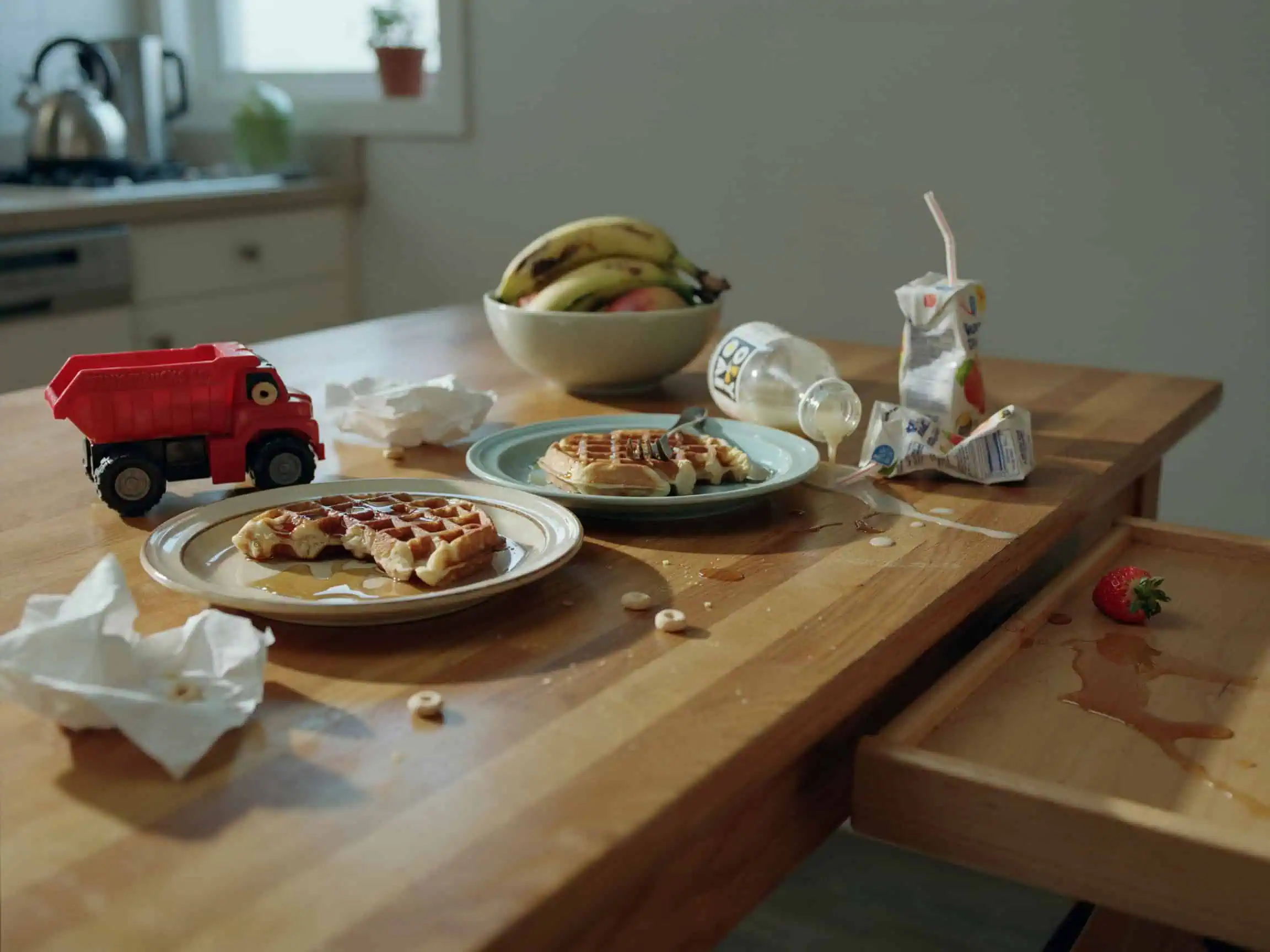
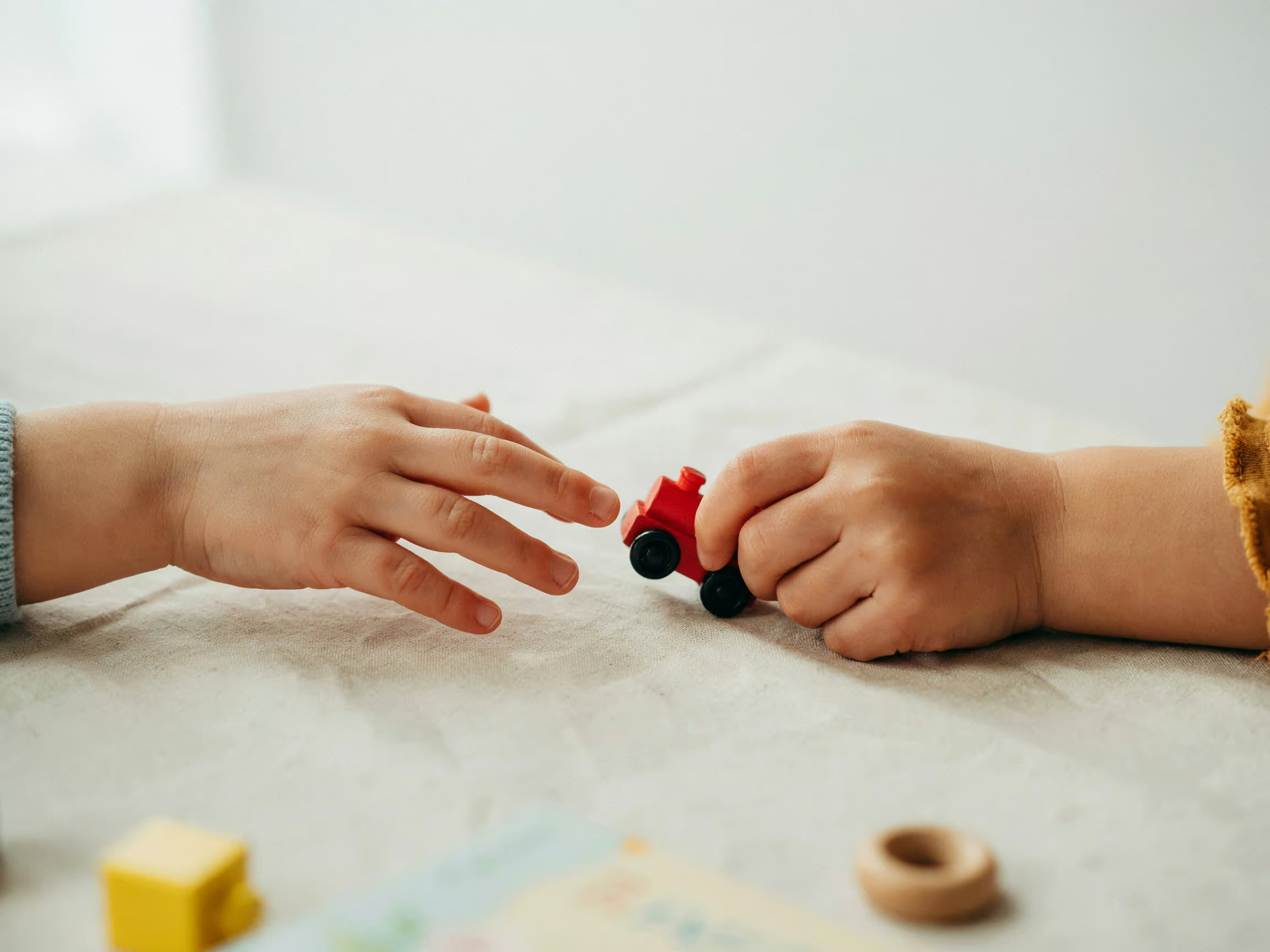
I was three sips into my coffee when the kindness experiment imploded. My five-year-old had just yanked a toy from his little sister, and when I crouched down to deliver the gentle “how would you feel if someone did that to you?” empathy speech, he looked me dead in the eye and said, “She started it.” It was 7:12 a.m. on a Wednesday, and our family value of the week — kindness, had already evaporated before the waffles were done.
I spent months trying to turn our family into a values-driven operation, and I made every mistake in the book. I made a list that was too long. I tried to drag everyone into a “family meeting” that felt like a hostage negotiation. I printed a beautiful poster that nobody looked at after day two.
But eventually, after enough failures, I found a process that works with young kids. It’s not fancy. It’s not a 10-step program. It’s a living, breathing thing that changes as your kids grow — and as you learn what you care about.
Key Takeaways
Family values work best when you define them through a four-step process: self-reflection, family input, SMART goals, and revisiting every few months — a method from UPMC Children’s Community Pediatrics that keeps values from becoming a one-time poster.
Your family is valid regardless of its structure: 59% of adults 18-44 have lived with a partner without marriage, 25% of Americans live in multigenerational households, and the average family now has 1.94 kids — down from 2.33 in the 1960s.
The most effective teaching happens through everyday moments — kindness calendars, chore charts, shared hobbies, and a willingness to revisit and revise when the first attempt flops.
Table of Contents
Why family values matter for kids (and every kind of family)
Family values are the shared beliefs and priorities that create a framework for how your family operates. They give kids a sense of security and belonging, and multiple sources agree they support mental health. When kids know what their family stands for, they have a built-in compass for making ethical decisions and coping with outside pressures — peer pressure, social media, all of it.

The picture-perfect 1950s nuclear family was never as universal as we remember, and it’s even less so now. The numbers back this up — According to a 2019 Pew survey, 59% of adults ages 18 to 44 have cohabited with a partner outside of marriage. A quarter of Americans lived in multigenerational households in 2022. And a 2023 Pew survey found that 57% of adults under 50 say they likely won’t have children, up from 47% in 2019. The average number of children per family is 1.94, down from 2.33 in the 1960s.
Single-parent, blended, multigenerational, same-sex parents, child-free by choice — the process works the same. If grandma’s upstairs, she’s part of the conversation. If it’s just you and your kid, that’s enough.
How to define your family’s values — a step-by-step guide
The method I landed on comes from UPMC Children’s Community Pediatrics. Four steps, no lecture required.
Start with yourself (self-reflection)
Before you drag everyone into a family meeting, take a beat. I did this over a cup of coffee, not a therapy session, and I asked myself four questions:
- Who do I want to be? (Not the Instagram version, the real one.)
- What sort of parent do I want to be?
- What future do I want for my children?
- How do I actually want to spend my time? Because actions speak louder than words — if you say “family is everything” but you’re always working late, that’s a signal.
If you have a partner, compare notes. You might not agree on everything, but find the overlap. That’s your starting point.
Bring the family in (collaborative input)
I asked these five questions over dinner:
- What do we care about as a family? (Not what we should care about.)
- What is our family about? What makes us “us”?
- What are our strengths? What activities do we enjoy as a family?
- What are some things we’re working to improve?
- What cultural traditions does our family have, and how should we preserve or adjust them?
Even little kids have opinions about what matters. My youngest once said the most important thing was “that we have snacks.” Which, honestly, isn’t wrong. Once you’ve talked it out, boil it down to a few simple phrases that capture what everyone agrees is important. Keep it simple.
Make it real with SMART goals
Values are nice on paper, but they need to show up in real life. That’s where goals come in. SMART goals — Specific, Measurable, Attainable, Relevant, Timely, aren’t just for work. They work for family stuff too, and they can help you explore what is the value of family in a deeper, more intentional way.
Here are the two examples that clicked for us:
- Value: Strong Family → SMART goal: Spend quality time together twice weekly for at least an hour on Friday nights and Sunday mornings, taking turns picking activities, for a month.
- Value: Prioritizing Education → SMART goal: Do homework at the dining room table after dinner each school night. If no homework, read a book or learn something new.
The key is to let kids suggest their own goals tied to the values. If you’re unsure which values to start with, focus on what are the 5 most important family values; for example, if “welcoming house” is a value, a kid might set a goal to invite a new friend over each week. Let them own it.
Revisit and revise (every few months)
A one-and-done exercise causes values to fade. You make a beautiful list, put it on the fridge, and three months later it’s just another piece of paper covered in fingerprints.

Set a calendar reminder for every few months. Just ask: how’s it going? Talk openly and actually listen. Values can shift as kids get older.
Goals might flop. That’s okay. Compromise keeps everyone on board. The families that revisit every few months find the values stay alive through different developmental stages.
family values every kid should know (and how to teach them)
Empathy
Treat others with compassion. Involve your child in solving a real problem — bring water to a sick sibling, ask how a parent is feeling, make a handmade present to cheer someone up. Encourage your child to befriend peers of different abilities and talk about differences openly to build empathy and reduce bias.
Honesty
Telling the truth, even when it’s hard. Model truth-telling yourself. Don’t punish honesty; use consequences for lies.

Respect
Setting boundaries and valuing others. Teach specific polite manners — please, thank you. Discourage disrespectful language.
Responsibility
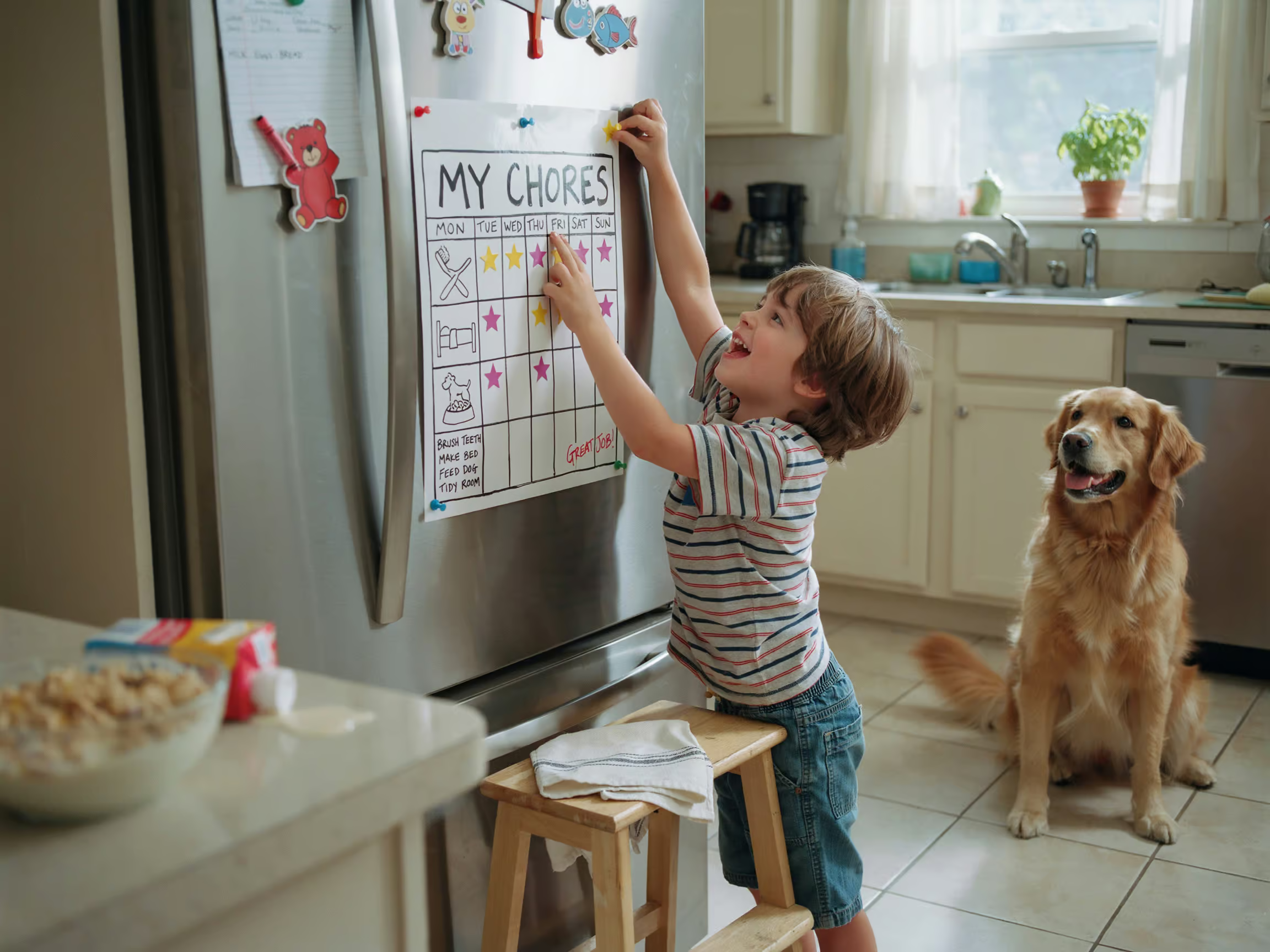
Owning your actions and contributions. Use chore charts — visual and fun, not a punishment. Involve kids in helping other family members.
Teamwork
Cooperating and finding win-win solutions. Engage in a shared project — planting a garden, building a tree-house. Make it something you do together.
Love
Deep affection and connection. Show it. Say “I love you.” Give hugs. Demonstrate care through small, consistent actions.
Loyalty
Having each other’s backs. Support each other during tough times. Attend each other’s events. Stand up for family members.
Perseverance
Sticking with things when they get hard. Praise effort, not just results. Share stories of your own challenges.
Good manners
The social glue that makes life easier. Teach and practice specific phrases — thank you, please, help yourself. Let older kids help younger siblings; let younger ones respect elders.
Sharing common experiences
The memories that bind you. Create a weekly tradition or a shared hobby — a funny Friday night pizza tradition, a family dog you train together.

simple ways to teach family values every day
- Be a positive role model. Kids watch what you do more than they hear what you say. Live the values.
- Create a family values list and display it. On the fridge, on a wall. A constant visual reminder.
- Discuss why values are important. Don’t just list them. Talk about why honesty or kindness matters in a specific situation.
- Point out examples in media. “See how the character in Modern Family showed teamwork there?” Use TV, movies, and books as conversation starters.
- Praise your child when they demonstrate a value. I really saw empathy there when you shared your toy. Be specific.
- Show affection through words and actions. Say “I love you.” Hugs. A special wink. It models the value of love.
- Talk about difficult situations in the news. “How would our family’s value of empathy guide us in this situation?”
- Empower children to make their own decisions. Give age-appropriate choices that let them practice values.
- Volunteer as a family. Puts values like generosity and community into action.
- Acknowledge tension and find common ground. When values clash, don’t avoid it. Talk about your own journey. Create a family mission statement together.
Fun activities to teach family values (games, chores, and more)
Kindness Adventure Calendar: A calendar with one small act of kindness per day. Makes good deeds a habit. Draw a picture for grandma. Share your snack. It’s simple and effective.

Chore Charts: Visual tracking — stickers, magnets, teaches responsibility and teamwork. Turns a chore into a game. My kids fought over who got to add the sticker.
Shared Hobbies & Projects: Plant a garden. Build a tree-house. Go hiking. Adopt and train a family dog. The shared effort builds teamwork and common experience.
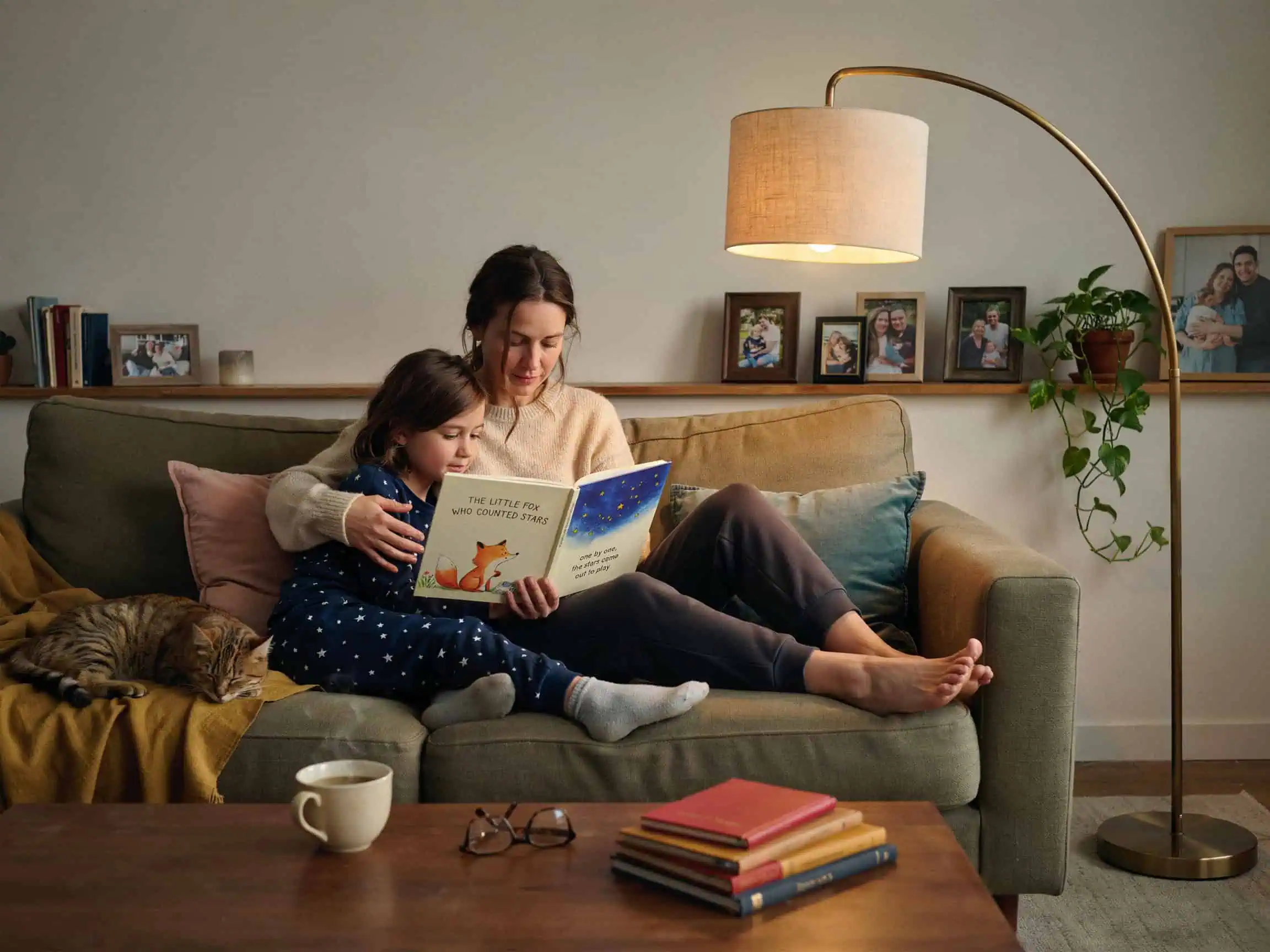
Reading Together: Read books that illustrate values. Match the book to your child’s personality — adventure stories for energetic kids, quiet emotional books for thoughtful ones. It makes reading engaging instead of a chore.
Create Funny Family Traditions: Treat mishaps — like a water bottle breaking in a supermarket, as funny. Laugh about it. These become the stories that bind you.
Use Daily Problem-Solving: “My throat hurts.” “Can you bring me some water?” That little act is a lesson in empathy.
Give Them Space: Let them go to summer camp or take a school trip. The time apart can actually strengthen the relationship and make your time together more meaningful.
Family values for every kind of family (yes, yours too)
Think about baby boomers whose parents lived through the Great Depression. That shaped their focus on thrift and hard work. Baby boomers whose parents lived through the Great Depression often inherited values of thrift and hard work — this is how values are passed down and shaped by culture and media. The same process applies to your family today.
The UPMC stepwise process works for any family structure. Single-parent, blended, multigenerational, same-sex parents, child-free. The numbers we talked about earlier — 59% cohabitation, 25% multigenerational, 57% unlikely to have kids, show that “family” is broad and valid. If grandma lives with you, the same process works. If it’s just you and your kid, it works.

What if my kids resist? Handling challenges with family values
Acknowledge the tension between independence and interdependence. Share your own stories of how your values changed as you grew up. It makes the conversation feel less like a lecture and more like a shared journey.
Create a family mission statement together — a sentence or two that sums up what you’re about. Let them suggest the goals. If they feel ownership, they’re less likely to resist.
How online tools and printables can help
A kindness adventure calendar is a great printable model. Simple chore charts you can find online. A printable family values chart that you can fill in together and put on the fridge. These turn an abstract concept into something you can touch and see.
The bottom line: family values are a living practice, not a one-time poster
Use the UPMC stepwise process. Treat it as a living document. The one-and-done poster fades. The family that revisits every few months keeps the values alive.
Your family structure is valid. The first attempt might fail — that’s normal. The key is to just keep coming back to it. Because the goal isn’t a perfect family. It’s a family that knows what it stands for, even when the kindness experiment implodes before 7:15 a.m. on a Wednesday.