
You’ve Seen the Lists. Here’s What the Research Actually Says.
If you’ve typed what are the 5 most important family values into a search bar, you know what happens next. You get lists with many values each, all claiming to be the answer. Honesty, respect, responsibility, kindness, gratitude, patience, forgiveness, integrity, loyalty, perseverance — the scroll goes on until your brain turns to mush.
At Tidbits of Experience, we’ve been there. You don’t have time to sort through a hundred Pinterest pins. You need a starting point backed by something more solid than one blogger’s opinion.
So I dug into the actual research — family science studies with real numbers, samples, and peer review. Here’s what I found: there isn’t one list of five values, but there is research that tells us which values matter most for healthy families, and, more importantly — why most of our attempts to pass values down to our kids fall flat.
Key Takeaways
Family values ranked 7th out of 56 traits of a healthy family in Curran’s foundational study, and positive values show up as assets 26–31 out of 40 in the Benson developmental assets framework (based on 89,000 young people across 26 states).
The biggest barrier to kids adopting family values isn’t peer pressure or screen time — it’s that 58.6% of children say their family never explained the “why” behind a value, and 55.7% say their parents don’t practice what they preach.
A 2024 study found the family’s role in teaching social values is “moderate” at about 62% — meaning most families are underperforming without realizing it, and the gaps are driven by family disputes (48.3% barrier), lack of explanation, and poor modeling.
Table of Contents
What We Mean by the “Most Important” Family Values
Family values are the shared beliefs, ethics, and worldviews that give your family an identity and a moral compass. They’re not a set of rules you post on the fridge and ignore. They’re the stuff that guides how you treat each other, how you make decisions, and what you stand for when things get hard.
But here’s the problem: when you search for “family values,” you get many suggestions. Everyone has an opinion. So how do you know which ones actually matter?
Two studies give us an anchor. First, in the 1980s, family science researcher Dolores Curran surveyed families and ranked 56 characteristics of a healthy family. Values and morals came in 7th. That’s not #1, but it is up there — alongside communication, appreciation, and spending time together.
Second, the Search Institute’s developmental assets research — based on 89,000 young people across 26 states, found that positive values (caring, equality, justice, integrity, honesty, responsibility, and restraint) rank as assets 26 through 31 out of 40. The more of these assets kids have, the less likely they are to engage in risky behaviors. In other words, values are not nice ideas. They protect your kids.
So which five should you focus on? I’ll give you the ones that show up in nearly every major study, plus the research-backed reason why these five make the cut — and why trying to do many at once usually backfires.
Why Five? The Research-Backed Rationale for Quality Over Quantity
A 2024 study published in Heliyon by researcher Walaa Elsayed looked at what determines whether kids internalize social values like giving, volunteering, and helping others. The headline number: the family’s role is “moderate” — about 62% of the influence. That means many families are underperforming without knowing it.
But the finding is why families underperform. The study asked children directly about the barriers they faced. The answers were:
- 58.6% said their family didn’t explain the “nature and mechanism” of the value — nobody told them why it mattered or how to practice it.
- 55.7% said their parents showed little interest in practicing those values — they preached but didn’t model.
- 48.3% said frequent family disputes prevented them from engaging in things like volunteering.
Here’s the takeaway: the threat to passing on values isn’t the outside world. It’s that we don’t explain them deeply, we don’t model them consistently, and we let family conflict get in the way.
That’s why five well-chosen, well-explained, well-modeled values beat many vague ones every time. You can’t explain many values deeply. You can’t model many values without burning out. But five? That’s a number you can live.
So here are the five I’m recommending, based on the research and on the messy experience of trying to raise decent humans while also keeping your sanity.

Value #1 — Honesty (The Foundation of Trust)
Every parent has faced the “harmless lie” moment. The ice cream truck plays music when it is out of ice cream, right? Or Grandma’s sweater is perfect even though it is the wrong size and the wrong color. These moments feel small, but they create cracks in the foundation.

Honesty is the cornerstone of trust and integrity. Dr. Chloe Massey, a child development expert, puts it simply: kids learn values from watching parents, especially in “messy and in-between moments.” When you tell a lie — even a small one, your kid notices. And when you tell the truth, they also notice.
But here’s the thing: honesty for a 5-year-old looks different than honesty for a 15-year-old. Younger kids need honesty wrapped in protection and obedience — “don’t lie to Mommy.” Older kids need honesty that builds trust and independence, I need to know I can trust you to make good choices when I’m not around. That shift trips a lot of families up.
What this looks like in practice:
- When you mess up, apologize. Say I shouldn’t have said that, I was tired and frustrated. I’m sorry. That’s modeling honesty.
- Don’t punish your kid for telling the truth. If they confess to breaking a lamp, thank them for being honest before you deal with the broken lamp.
- Explain why honesty matters, not that it’s a rule. When we’re honest with each other, we can trust what the other person says. Trust makes our home feel safe.
Value #2 — Respect (Beyond “Honor Your Elders”)
Respect gets boiled down to “yes ma’am” way too often. I found a definition from a family values source that spells it out for kids: We show we care about how others feel by listening. The same source gives a concrete example: not hiding your sister’s favorite stuffy to be funny.
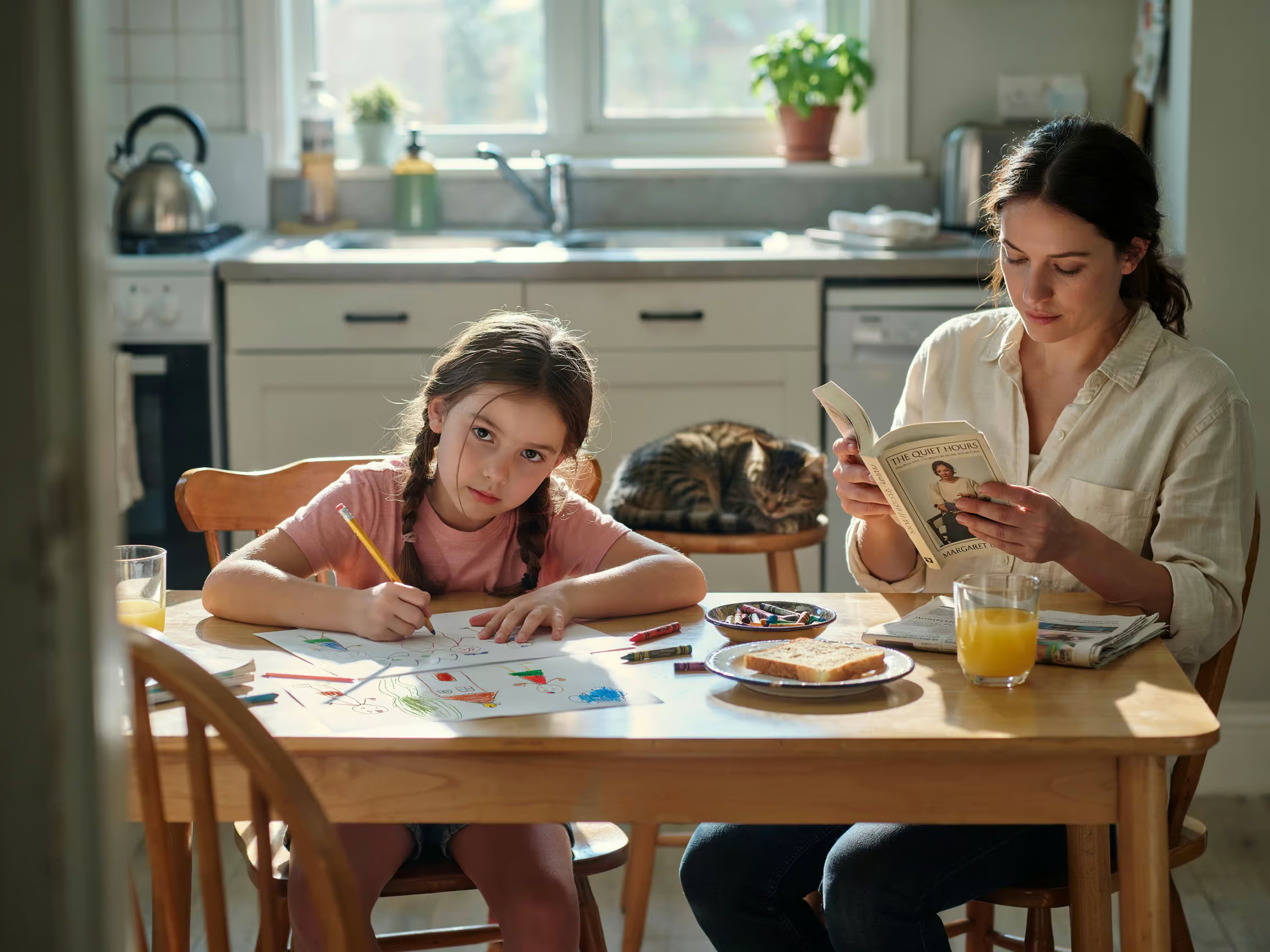
Respect means treating everyone in the family — including the kids, like their thoughts and feelings matter. It means honoring that your partner might need space, that your kid might have a different opinion, and that everyone gets to have boundaries.
The research shows that respect awareness varies depending on a family’s cultural level (the Elsayed study found F = 5.46, meaning it is not universal). Your background shapes how you define respect. In some families, respect looks like not interrupting adults. In others, it looks like asking before using someone’s things. Both are valid — the thing is that you define it clearly for your own crew.
How to teach it:
- Don’t let disrespect slide. If your kid rolls their eyes or talks back, address it calmly: I don’t like how you said that. We can disagree, but we don’t use that tone.
- Model polite manners even when you’re exhausted. Say please and thank you to your partner and your kids.
- Talk about boundaries. Your brother doesn’t want to be tickled right now. We stop when someone says stop.
Value #3 — Responsibility (Age-Appropriate Ownership)
If you have ever expected your 7-year-old to manage their own homework schedule and then wondered why you ended up screaming about a missing worksheet at 9 PM — you are not alone. Responsibility is a developmental ladder, not a fixed standard.
The Elsayed study included kids ages 6 to 14, and it found age-related differences in how kids understand values (F = 3.95). What “responsible” means for a 7-year-old is different from what it means for a 14-year-old. That is not a sign you are doing it wrong — it is how human development works.

At 6–8, responsibility might mean putting your shoes in the cubby when you walk in the door. At 9–11, it might mean feeding the dog without being reminded. At 12–14, it is starting your homework before you are told and owning the consequences if you do not.
How to teach it:
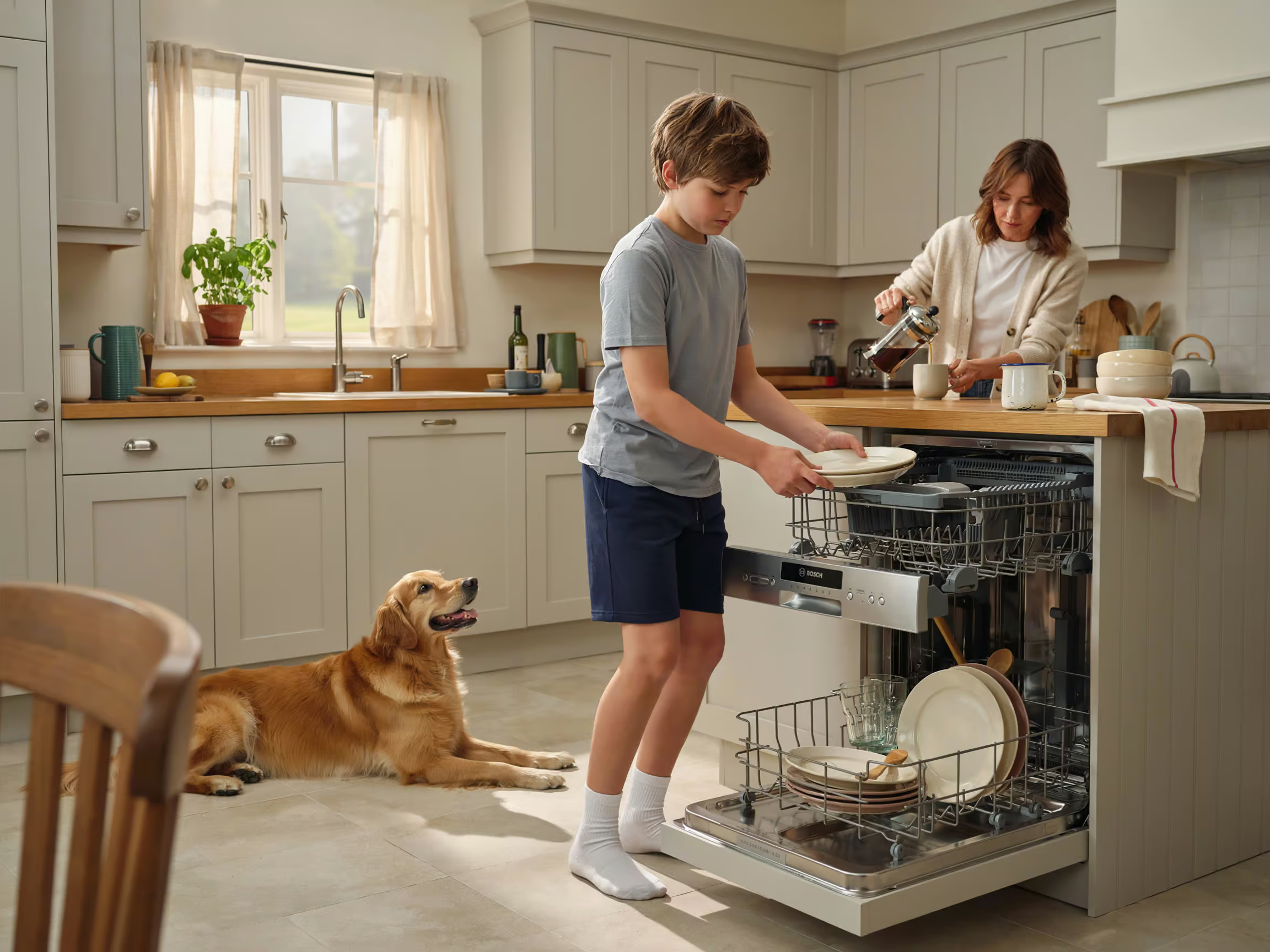
- Give age-appropriate jobs. A 6-year-old can set the table. A 10-year-old can load the dishwasher. A 14-year-old can plan and cook one dinner a week.
- Model responsibility yourself. When you forget to do something you said you’d do, own it: “I messed up. I’ll do it now.”
- Don’t rescue. If your kid forgets their lunch, it hurts to let them deal with the hungry afternoon, but that’s how they learn. For a fuller picture of how to instill responsibility alongside other core traits, see our 10 family values.
Value #4 — Compassion/Kindness (Moving From Feeling to Action)
Here’s a tough pill: compassion is a taught behavior, not an innate trait. We assume kids are naturally kind and need to be reminded to share. But the research tells a different story.
Remember that 55.7% statistic — parents who show little interest in practicing human services? That is the modeling mirror. If you want kind kids, you have to let them see you being kind. Not talking about being kind, but doing it.
Compassion is empathy in action. It is the thing that makes you care about someone else’s pain or joy, even when it is inconvenient. And kids learn it by watching you.
How to teach it:
- Let your kids see you helping. Volunteer together, even if it’s bringing cookies to a neighbor or helping a friend move.
- Talk about other people’s feelings. “Why do you think Sam was sad at school today? What could we do to help?”
- Small moments count. Compassion isn’t about big service projects. It’s about saying “it’s okay, let’s find your toy” instead of “that’s your problem.”
Value #5 — Perseverance (Resilience in the Face of Difficulty)
We tend to think of perseverance as individual grit — the kid who keeps trying after failing a math test. But the research shows that resilience is a family-level trait. And it is undermined by something many of us do not consider: family conflict.
The Elsayed study found that 48.3% of children said family disputes prevented them from practicing positive values like volunteering. When parents are constantly fighting, kids tune out from the values you’re trying to teach. They do not have the emotional safety to practice perseverance when the home environment feels unstable.
Perseverance means not giving up when things get hard — and that is a lesson kids learn best when they see parents return to their values after conflict. When you have a fight with your partner and then work through it, apologize, and move forward, you are teaching perseverance. When you stick with a difficult project or keep showing up for a challenging relationship, they absorb that.

How to teach it:
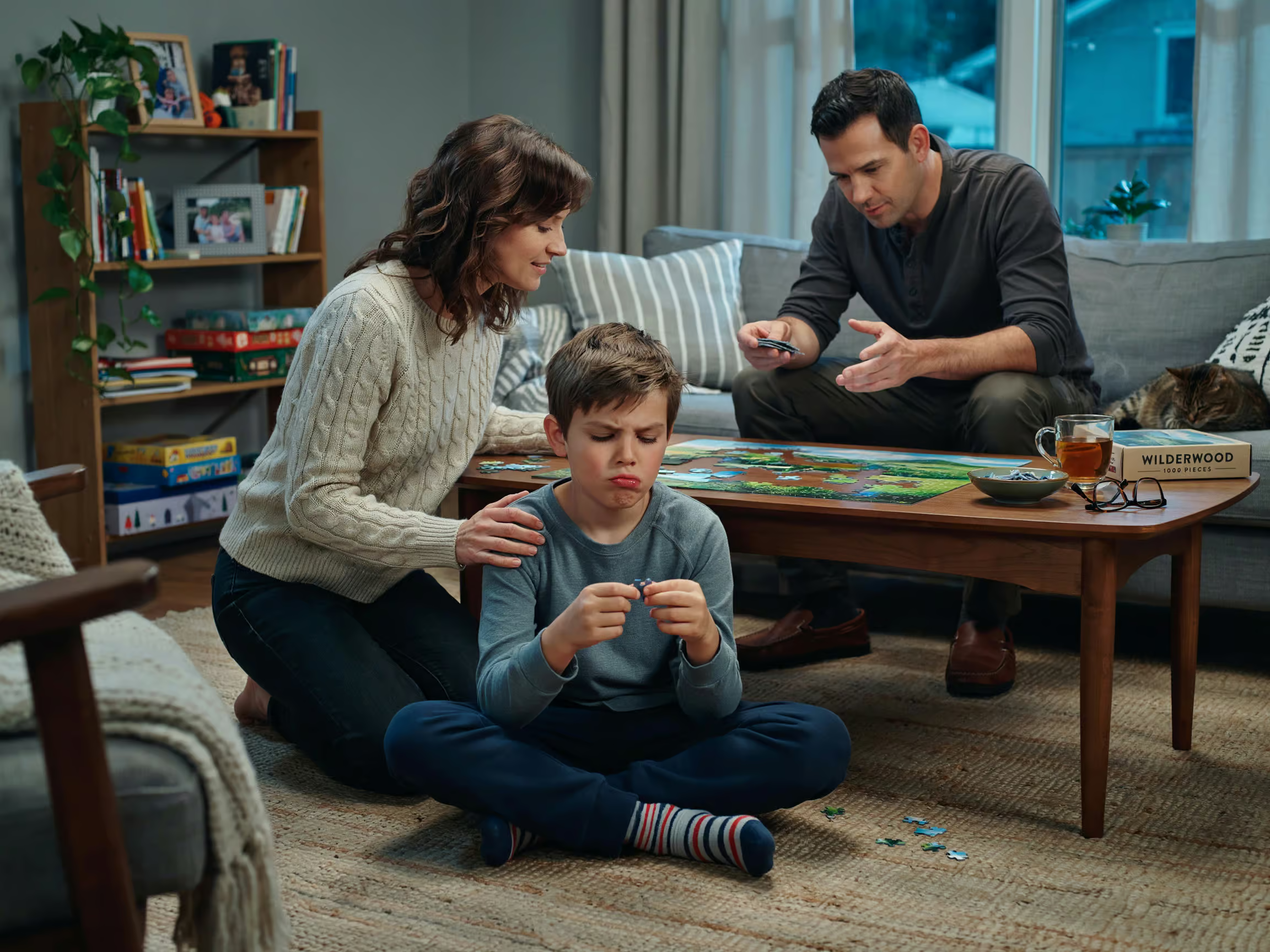
- Work through problems as a family. Set a shared goal — like finishing a puzzle or saving for a family trip, and talk about how you’ll handle setbacks.
- Practice self-care as a family. Resilience isn’t about grinding until you break. It’s about knowing when to rest and try again.
- Don’t hide all your struggles. Kids need to see that adults also have hard days and keep going.
The Three Biggest Barriers to Value Transmission (and What to Do About Them)
Elsayed’s research points to three barriers, and they all blame the same thing: the family — not peer pressure, not social media, not the school system.
Barrier 1: Family disputes (48.3%)
Explain that disagreements happen, but you still love each other. Show them that conflict does not mean the end of the family.
Barrier 2: The explanation gap (58.6%)
This is the biggest one. Many families assume that mentioning a value once is enough. But kids need to understand the “nature and mechanism” — not what to do, but why and how. For example, instead of saying “be honest,” say “When you tell the truth, I can trust you.
Trust makes our home feel safe, and it helps us solve problems together. If you break something and tell me, we can fix it. If you lie, we have a bigger problem.”
Barrier 3: The modeling mirror (55.7%)
You cannot teach a value you do not practice. This is the hardest one because it requires self-reflection. Are you kind to the grocery store cashier? Do you keep your promises?

Do you show up for your friends? Your kids are watching.
Three diagnostic questions for your family:
- Are frequent disputes undermining our efforts?
- Have we explained the “why” behind each value, not the rule?
- Are we modeling these values ourselves, or talking about them?
Simple Strategies to Weave These Values Into Daily Life
Okay, you have the values. Now how do you live them without turning your home into a lecture hall?
The Faith 5 mealtime ritual. This is a five-step format from an organization called Faith Inkubator. During dinner, you do this: Share (something about your day), Read (a short passage or quote related to a value), Talk (discuss how it applies to your family), Pray (or reflect), and Bless (say one encouraging thing to each person). It takes five minutes and it turns mealtime into a values discussion without being preachy.
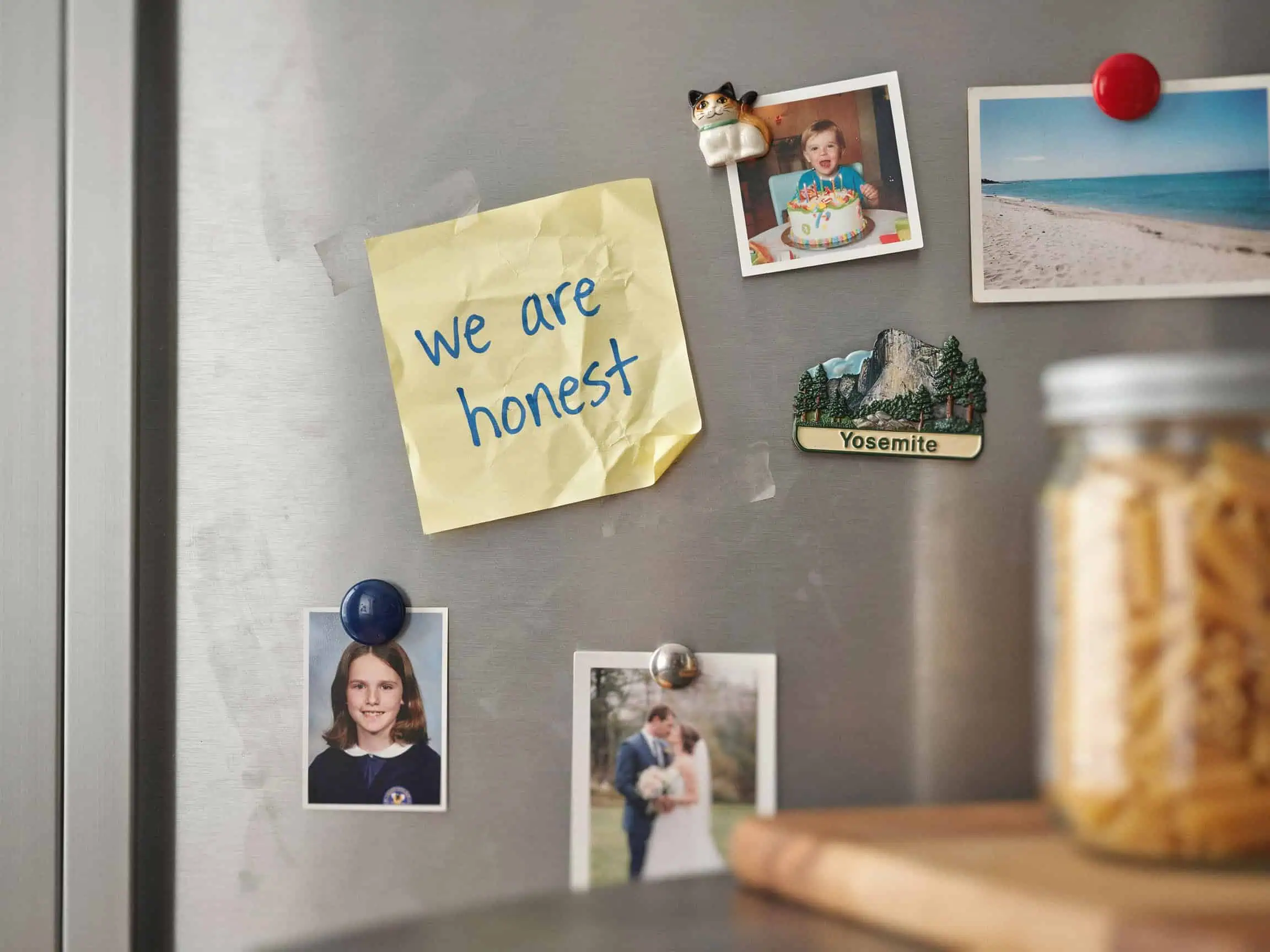
Create a family mission statement. Sit down together and write a sentence or two that captures what your family stands for. Something like The Johnson family values honesty, kindness, and sticking together even when it’s hard. Post it on the fridge. When you face a decision, ask “Does this fit our mission?”
Use SMART goals to turn values into actions. For example: As a family, we will spend quality time together twice a week for at least one hour, for the next month. That’s specific, measurable, attainable, relevant, and time-bound. It turns “we value family time” into something you can do.
Other everyday moves:
- Apologize when you mess up — it teaches honesty and forgiveness.
- Point out examples in media: See how that character was honest even though it was hard? That is what we are talking about.
- Volunteer together, even for an hour a month. Let them see you helping others.
- Use journal prompt cards as a daily ritual — ask “What did you do today that showed kindness?”
For deeper reading, check out Fed up with Frenzy by Susan Sachs Lipman (ideas for slowing down and connecting), The Intentional Family by Dr. William Doherty (using everyday rituals to strengthen communication), and What Kids Need to Succeed by Benson, Galbraith, and Espeland (the full 40-asset framework).
A Living Value System — Revisiting and Adapting Over Time
Here’s the part nobody tells you: your family values should change. What worked when your kid was 3 — “we don’t hit, we use our words”, isn’t the same thing as what you need when they’re 13, “we respect each other’s privacy and trust each other to make good choices.”
That move from protecting to trusting is real. The Elsayed study found differences by age (F = 3.95) — what a 7-year-old needs from family values is different from what a 14-year-old needs. That’s not failure. That’s growth.
So set a yearly check-in. Maybe on New Year’s Day or the first day of summer. Together, ask: “Do our values still fit us? Should anything change?” One prompt: Does this go against one of our core values? when you are faced with a new situation.
Your values aren’t a tattoo. They’re a living document. When your family grows, when you move, when your kids become teenagers, your values can evolve with you. That’s not inconsistency — that’s wisdom.
And if you are still feeling overwhelmed, start with one. Pick the value that feels most urgent in your house right now. Focus on that for a month. Explain it, model it, talk about it at dinner. Then add another.
You don’t have to get it perfect. You just have to start.
Frequently Asked Questions
What are the 5 family values?
Based on research into healthy families, the five core values that show up most consistently are honesty, respect, responsibility, compassion/kindness, and perseverance. These aren’t random picks — they’re the ones backed by studies like Curran’s healthy family traits and the Search Institute’s developmental assets framework, which found that positive values protect kids from risky behaviors.
What are the 5 main core values?
The five main core values that research points to for strong families are honesty (foundation of trust), respect (beyond just obeying elders), responsibility (age-appropriate ownership), compassion/kindness (empathy in action), and perseverance (resilience as a family trait). These five were chosen because trying to teach too many values at once usually backfires — you can’t explain or model a dozen values deeply without burning out.
Which child is usually the father’s favorite?
Research doesn’t support a universal rule about which child is the father’s favorite — it varies by family dynamics, personality, and circumstances. What the studies do show is that family disputes are a major barrier to passing on values, with 48.3% of children saying frequent family conflict prevented them from practicing positive values. The focus should be on consistent modeling and explanation of values for all children rather than worrying about favoritism.
Why do most families fail to pass on values to their kids?
The biggest barriers aren’t peer pressure or screen time — they’re internal family issues. A 2024 study found that 58.6% of children say their family never explained the ‘why’ behind a value, 55.7% say parents don’t model the values they preach, and 48.3% say family disputes get in the way. The fix isn’t more rules; it’s explaining the purpose behind each value, modeling it consistently, and reducing family conflict.
How do you teach family values without lecturing?
The most effective approach is modeling values in everyday moments and explaining the ‘why’ behind them rather than just stating rules. Simple strategies include using a mealtime ritual like Faith 5 (share, read, talk, reflect, bless), creating a family mission statement together, and pointing out examples of values in media or real life. The research is clear: kids learn values by watching parents in ‘messy and in-between moments,’ not from lectures.
Should family values change as kids get older?
Yes — family values should evolve as children grow, and that’s a sign of wisdom, not inconsistency. Research shows that what a 7-year-old needs from family values is different from what a 14-year-old needs, with age-related differences in how kids understand values. The recommendation is to do a yearly check-in as a family to ask whether your values still fit and adjust them as your kids move from needing protection to needing trust.