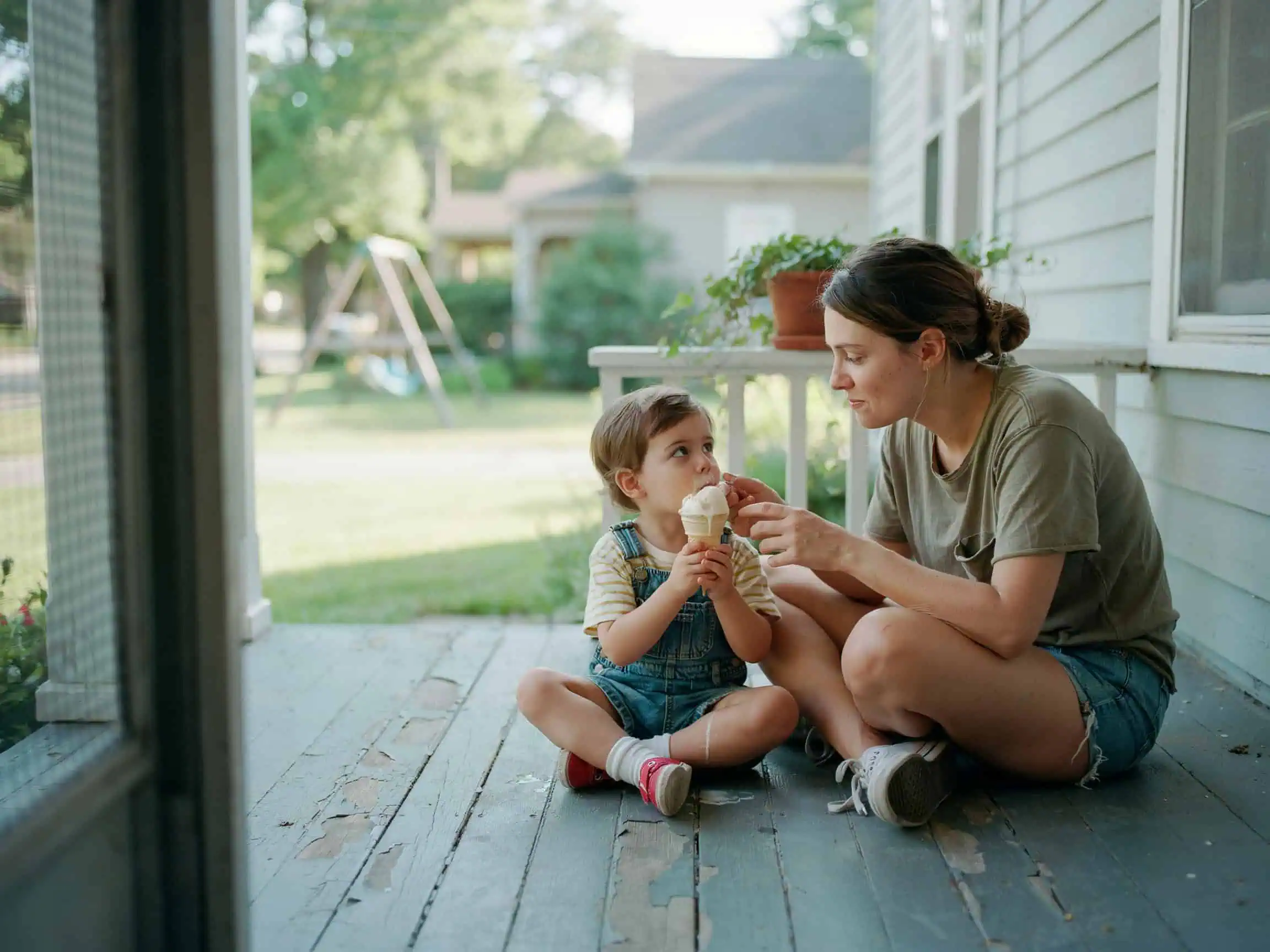
It’s a hot summer afternoon. Your kid hears the ice cream truck jingle from three blocks away and immediately starts the classic can we go, can we go, can we go dance. You’re exhausted. You don’t have cash.
You don’t want to deal with it. So you say it: “Oh honey, that truck only plays music when it’s out of ice cream.”
Harmless white lie? Except your kid is smart, and five minutes later they see another kid walking back with a dripping cone. Now you’ve taught a lesson, all right—just not the one you intended.
Family values matter. Not because you’ll ever get them perfectly right. But because they get tested in the small, messy moments, not the lesson plans. The ice cream truck lie, the snap after a long day, the time you said “we don’t tattle” when really you just didn’t want to deal with it—those are the moments that shape what your kids actually learn.
Family values are the shared beliefs, ethics, priorities, and worldviews your family agrees on. Nothing fancy. When they’re clear, you get stronger bonds, kids who can navigate peer pressure, and a moral compass that works when you’re not there. The payoff?
Less reactive parenting. When you know what matters, you don’t have to debate every decision from scratch.
Family looks different now than it did a generation ago. In 2022, about 25% of Americans lived in multigenerational households—grandparents under the same roof as grandkids. Fifty-seven percent of adults under 50 say they probably won’t have children at all, a number that jumped 10% between 2019 and 2023. And 59% of adults 18-44 have lived with a partner without getting married.
The nuclear family isn’t the only show in town anymore. But values? Those still matter, no matter who’s sitting around your table.
Bottom line: Clear values reduce reactive parenting—when you know what matters, you stop debating every decision from scratch.
Key Takeaways
A WinShape Camps PDF listing 100 commonly held values shows how many options exist—curating a focused list of 10 makes them usable for real families
Concrete SMART goals turn abstract values into habits: Spend quality time as a family twice a week for at least an hour, on Friday nights and Sunday mornings, for a month or Sit at the dining table after dinner every school night to do homework or read
Kids learn values from what parents do in the messy, in-between moments (the ice cream truck lie teaches the opposite of honesty), and values need to shift from protection and obedience toward trust and independence as children grow
Table of Contents
How we chose these 10
There’s a PDF floating around from WinShape Camps that lists 100 commonly held values. That many options can feel overwhelming. You could spend a month deciding what to focus on.
So we filtered. The 10 values here show up across multiple lists—WebMD‘s 7, Marlee‘s 24, the Fickle Father‘s 10. They’re teachable across ages: you can talk about kindness with a young child and a teenager, just differently. And they work across cultures, which matters more than ever.
Caveat: there’s no perfect list. These are a practical starting point, not a prescription. Your family’s values should feel true to your home. If you want to go deeper, there’s a 60-value cheat sheet organized into six core areas, and a whole list of 24 from the Kids Mental Health Foundation. Use what fits. Leave the rest.
The power of imperfect modeling
If honesty is a value you’re trying to teach, and your kid catches you saying the ice cream truck plays music only when it’s out of ice cream—well, that’s the lesson right there.

Dr. Chloe Massey put it simply: Kids don’t just learn values from what we say—they learn from what we do, especially in those messy and in-between moments. You’re not raising robots. You’re raising humans. The goal isn’t perfect compliance—it’s showing them how values guide decisions, especially when it’s hard.
Apologizing when you mess up is more powerful than getting it right every time. Hey, I shouldn’t have lied about the ice cream truck. That wasn’t honest, and I’m sorry. That models the repair. That’s the lesson that sticks.
Love
Love is the big one. The foundation. It’s the “we’ve got you” feeling that holds everything together.

It doesn’t have to be a big production. Small stuff counts: random hugs, a note in a lunchbox, saying “I love you” out loud. That “we’re in this together” feeling is what keeps families from falling apart when things get hard.
- For young kids: Lots of physical affection and verbal reassurance. They can’t hear “I love you” too many times.
- For school-age: Show up for their stuff. Games, concerts, that weird art project they’re weirdly proud of.
- For teens: Love through respecting their autonomy. Actually listen. Don’t just wait for your turn to talk.
Respect
Respect is a two-way street. It’s not “kids respect parents”—it’s everyone treating everyone like a person.
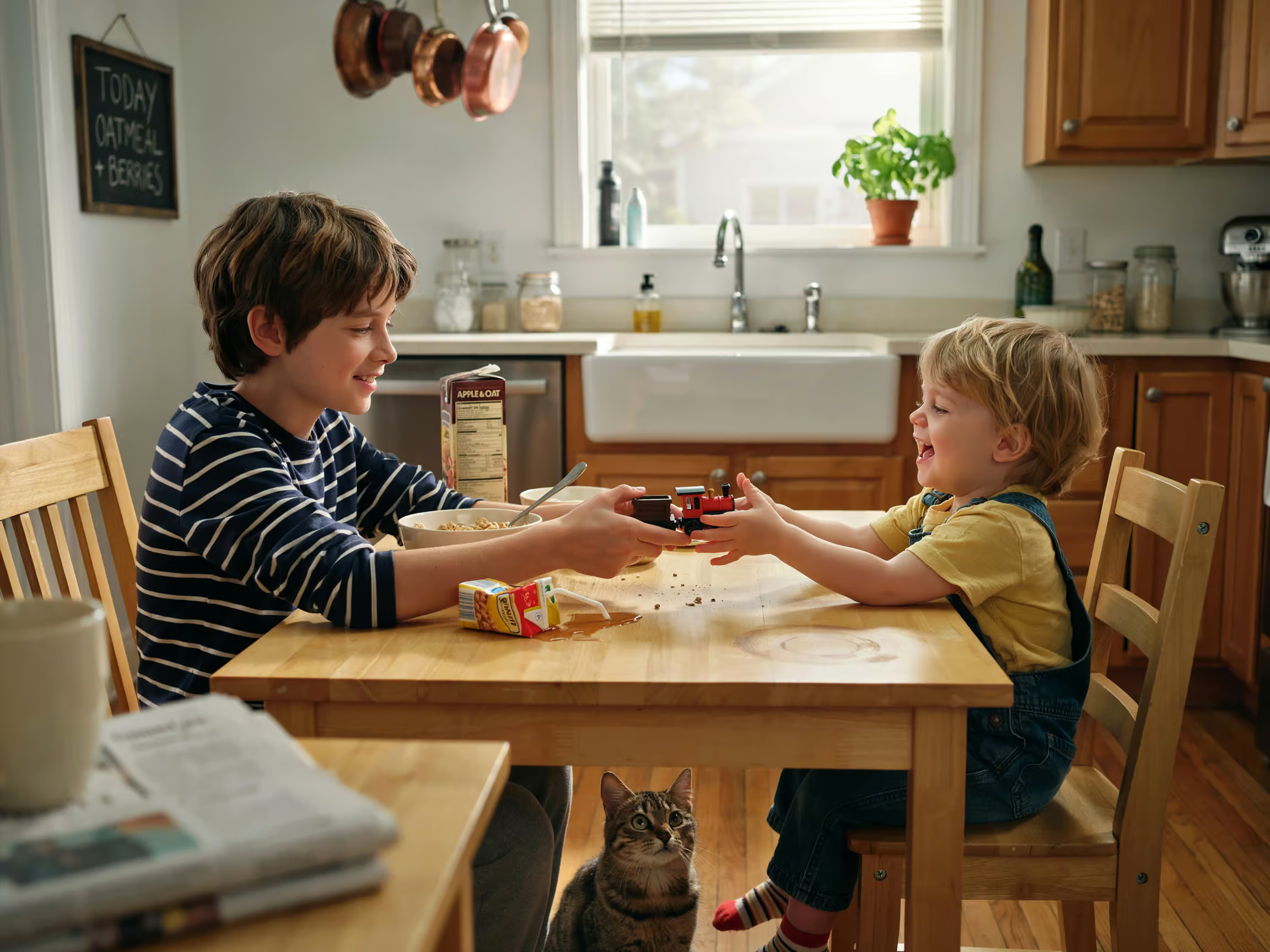
Connect it to feelings. Respect means we care about how others feel, and listening is one way we show it. It’s the basics: say please, say thank you, don’t interrupt. But it’s also bigger—it’s about valuing someone’s beliefs, their choices, their “no.”
- For young kids: Concrete examples. “Not hiding your sister’s favorite stuffy” is respect. “Waiting your turn to talk” is respect.
- For school-age: Call out disrespect clearly. We don’t talk to each other that way in this house. Set boundaries. Model polite behavior.
- For teens: Respect their differing opinions and boundaries. Let them have their own takes on things. Don’t force agreement—force respectful disagreement.
Empathy
Empathy is the “how would you feel if…” muscle. It’s what stops a kid from yanking the cat’s tail—and later, what makes them a decent human being.
It’s about being kind to people, animals, everyone. Even when they’re annoying. You practice empathy by asking “how do you think that made them feel?” and trying to understand their side.
- For toddlers: Talk about feelings. “You took his toy. How do you think he feels?” Model sharing. Point out feelings in books and shows.
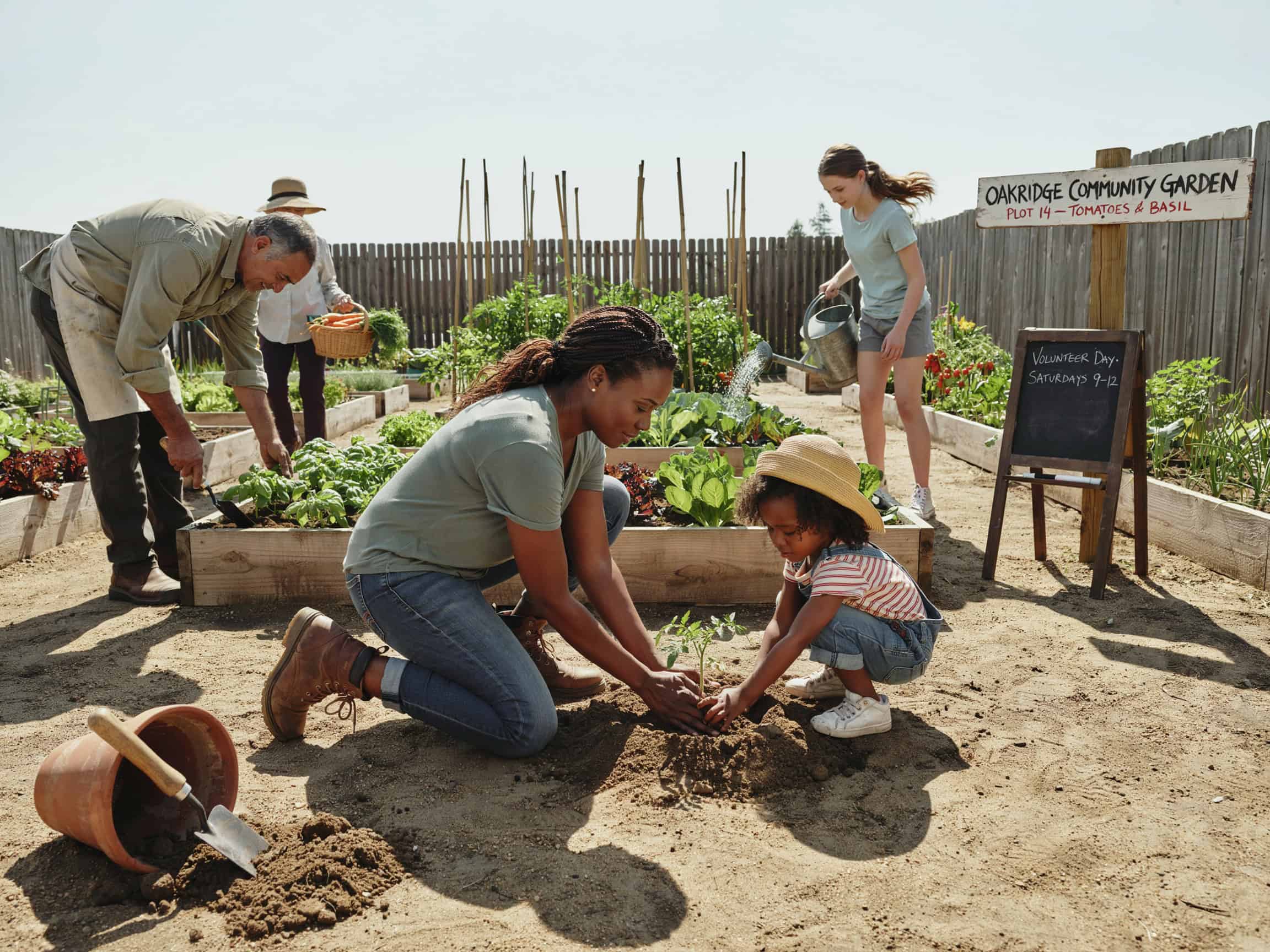
- For school-age: Volunteer together. It’s hard to stay self-centered when you’re helping someone else.
- For teens: Discuss difficult news stories. Ask how they’d respond if they were in that situation. Listen without jumping to fix things. Sometimes empathy just means “that sucks, I’m here.”
Honesty
Honesty is the foundation of trust. If you can’t tell the truth, you can’t have a relationship.

That ice cream truck lie? It shows how easy it is to undermine your own values. The goal isn’t to never slip up—it’s to notice when you do and course-correct.
- For young kids: Model honesty in small things. Don’t lie about their age to get the cheaper ticket. Don’t say “I’ll be right back” when you won’t. They notice.
- For school-age: The big one: don’t punish them for telling the truth. If they confess to breaking something, handle the broken thing, not the confession. If you punish honesty, you teach them to lie better.
- For teens: Discuss real-world dilemmas where honesty conflicts with social convenience. “Your friend asks if you liked their terrible haircut—what do you say?” Let them wrestle with it.
Family Time
Quality time is the “doing life together” part. It’s not always a planned activity—sometimes it’s being in the same room. But shared activities build bonds. It’s the “we did that together” feeling.
And it matters. Spending time together as a family is linked to better mental health in kids—less depression, less anxiety.
- For everyone: It can be cooking, hiking, a movie night, or a big family reunion. The activity doesn’t matter. Being together does.
- Make it concrete: A SMART goal example from the source material: Spend quality time as a family twice a week for at least an hour, on Friday nights and Sunday mornings, for a month. That’s not vague—that’s a plan.
- Tradition example: Some families do Family Home Evening every Monday. A simple, consistent ritual that says “this is when we’re together.”
- For teens: Quality time might mean watching a show they pick. Or sitting in the same room while they scroll and you read. Presence counts.
Perseverance
Perseverance is the “keep going” value. Families hit rough patches—this is what gets you through.
It’s about facing obstacles with courage and optimism, and creating a home where it’s okay to struggle and keep trying. That resilience? It prepares kids for the real world—work, money, life. It’s a long-term investment.
- For young kids: Praise effort, not just results. “You worked so hard on that puzzle” beats “you’re so smart.”
- For school-age: Let them struggle a little before jumping in to help. The satisfaction of figuring it out is the reward.
- For teens: Discuss long-term goals and the setbacks along the way. Share your own failures. I didn’t get that job I wanted, and here’s what I learned.
Responsibility
Responsibility grows with age. You don’t expect a toddler to have the same responsibility as a teenager.
Chores teach responsibility, but modeling—owning your mistakes, taking care of your stuff—teaches it even more. Kids learn responsibility by seeing you say I messed up, and here’s how I’ll fix it.
- For young kids: Simple chores. Put toys in the bin. Put dirty clothes in the hamper. Small wins build the habit.
- For school-age: Give them actual responsibilities. Feeding a pet. Setting the table. Let them feel the weight of something that matters.
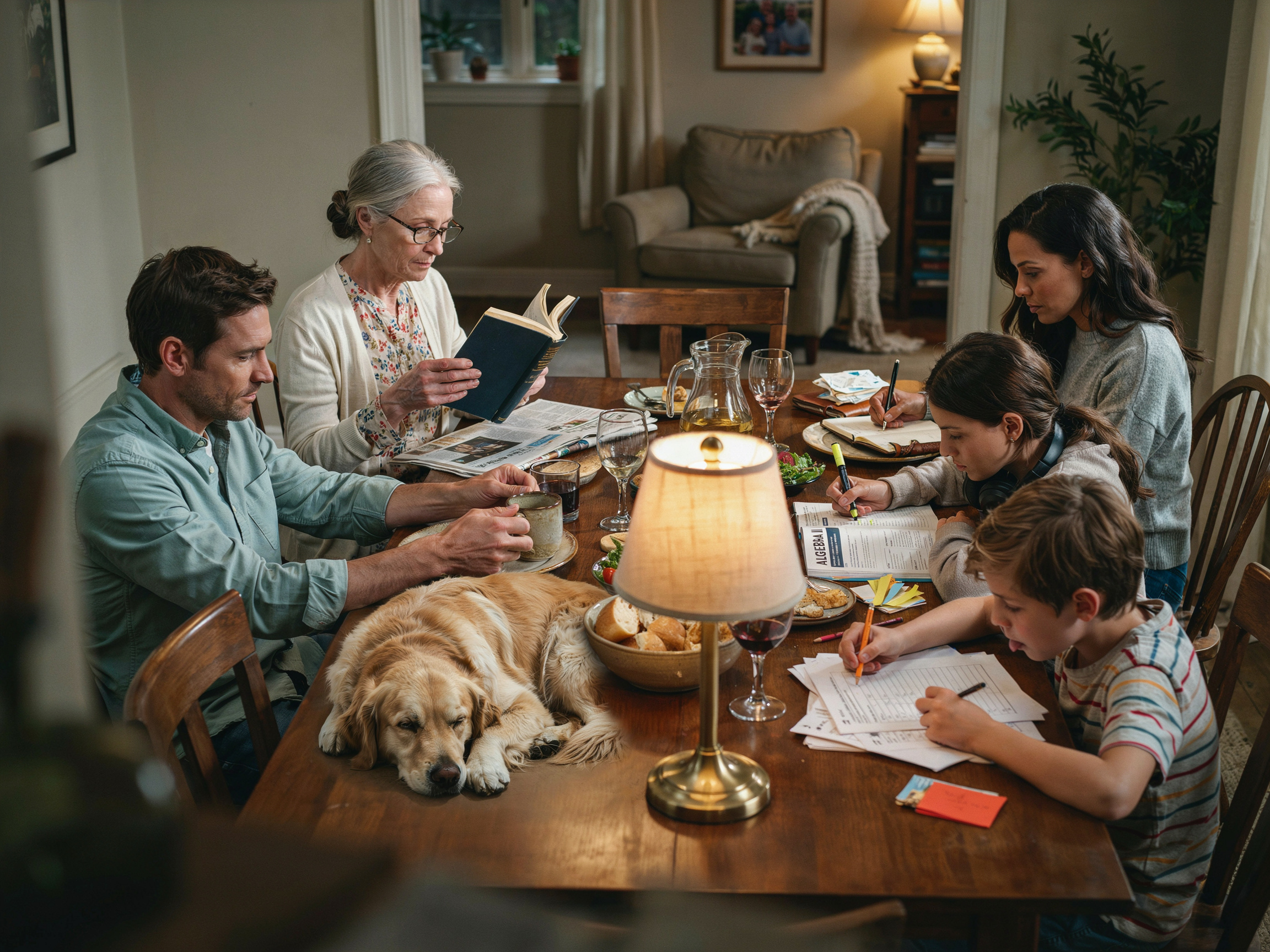
- SMART goal example: As a family, sit at the dining table after dinner every school night to do homework or read. That’s a shared responsibility ritual.
- For teens: Let them own bigger things. Their homework schedule. Getting themselves up in the morning. Let them fail sometimes—better now than later.
Kindness
Kindness is simple but not always easy. Be nice to your sister. Share your toys. It’s the daily grind of it.
Treating others with care. Offering help when someone needs it. Most parents teach this by saying it over and over, because it takes that long to sink in.
- For young kids: Praise specific acts of sharing. I saw you give him half your snack. That was really kind.
- For school-age: Call out kindness you see in the world. Shows like Modern Family depict diverse family structures while still teaching kindness and teamwork—use what they watch as a conversation starter.
- For teens: Discuss the impact of kindness in social situations and online. “How did that comment make them feel?” “What would it look like to be kind in this situation?”
Gratitude
Gratitude is the “notice the good stuff” value. It’s about appreciating what you have, not what you don’t.
It helps you see the good in your family—the support, the love, the little things. Saying “thank you” for the small stuff and the big stuff builds a culture of positivity and humility.
- For young kids: Model saying thank you. Point out everyday blessings. “Isn’t it nice that we have warm socks today?”
- For school-age: Create a dinner ritual where everyone shares one thing they’re grateful for. Keep it quick, keep it real.
- For teens: Encourage gratitude journaling if they’re into that. Or just ask “what was good today?” at dinner. Some days the answer will be “nothing,” and that’s okay.
Loyalty
Loyalty is “I’ve got your back.” Show up for each other, especially when it’s hard.
Foster it by letting people share feelings without shame, and making family a priority. It’s a safe space that helps you appreciate what is the value of family.
- For young kids: Consistency builds loyalty. Show up when you say you will. Be predictable.
- For all ages: Don’t shame feelings. “You’re being dramatic” shuts down loyalty. “I can see you’re really upset” keeps the door open.
- Cultural example: A Filipino multigenerational household demonstrates loyalty through elder care. The same value can look different across cultures. Respect for elders might mean living with them, calling weekly, or just listening to their stories. Find what fits your family.
- For teens: Loyalty means not talking about them behind their back. If you have a concern, address it with them, not about them.
Additional values worth considering
These 10 are worth knowing about, even if they don’t make your family’s final cut. Each gets a definition and one age-specific tip.
Communication
Active listening, open expression, constructive conflict resolution. For teens: model the “we can talk about anything” feeling by not overreacting when they share something hard.
Compassion
Kindness, understanding, support. Volunteering together teaches this better than any lecture. For school-age: pick one cause a year and do something concrete.
Trust
Built on honesty and reliability. Creates security. For young kids: keep your promises, even small ones. If you say “we’ll go to the park after lunch,” go to the park after lunch.
Integrity
Doing the right thing even when no one’s watching. For teens: discuss ethical dilemmas where no one would know. “What would you do if you found a wallet with cash?”
Generosity
Sharing time, attention, affection—not just stuff. For young kids: “Can I have a turn?” is a generosity lesson in miniature.
Independence
Letting go slowly. The example of letting a child walk to school alone captures it perfectly. It’s a small step toward independence that feels huge. For school-age: find their version of that walk.
Tradition
Honoring heritage. Family Home Evening every Monday is one example. For all ages: pick one tradition that matters and protect it, even when life gets chaotic.
Optimism
The “we’ll figure it out” attitude. For young kids: when something goes wrong, say “okay, what’s our plan B?” instead of getting frustrated.
Well-being
Modeling healthy habits—eating, sleeping, moving, managing stress. For all ages: do it together rather than preaching. “Let’s go for a walk” beats “you need more exercise.”

Community engagement
Voting, volunteering, advocating. Showing kids they can make a difference. For teens: take them with you to vote. Explain why it matters.
Adapting values as children grow: from obedience to independence
Most parenting advice misses: values centered on protection and obedience need to evolve into trust, independence, and mutual respect as kids get older.
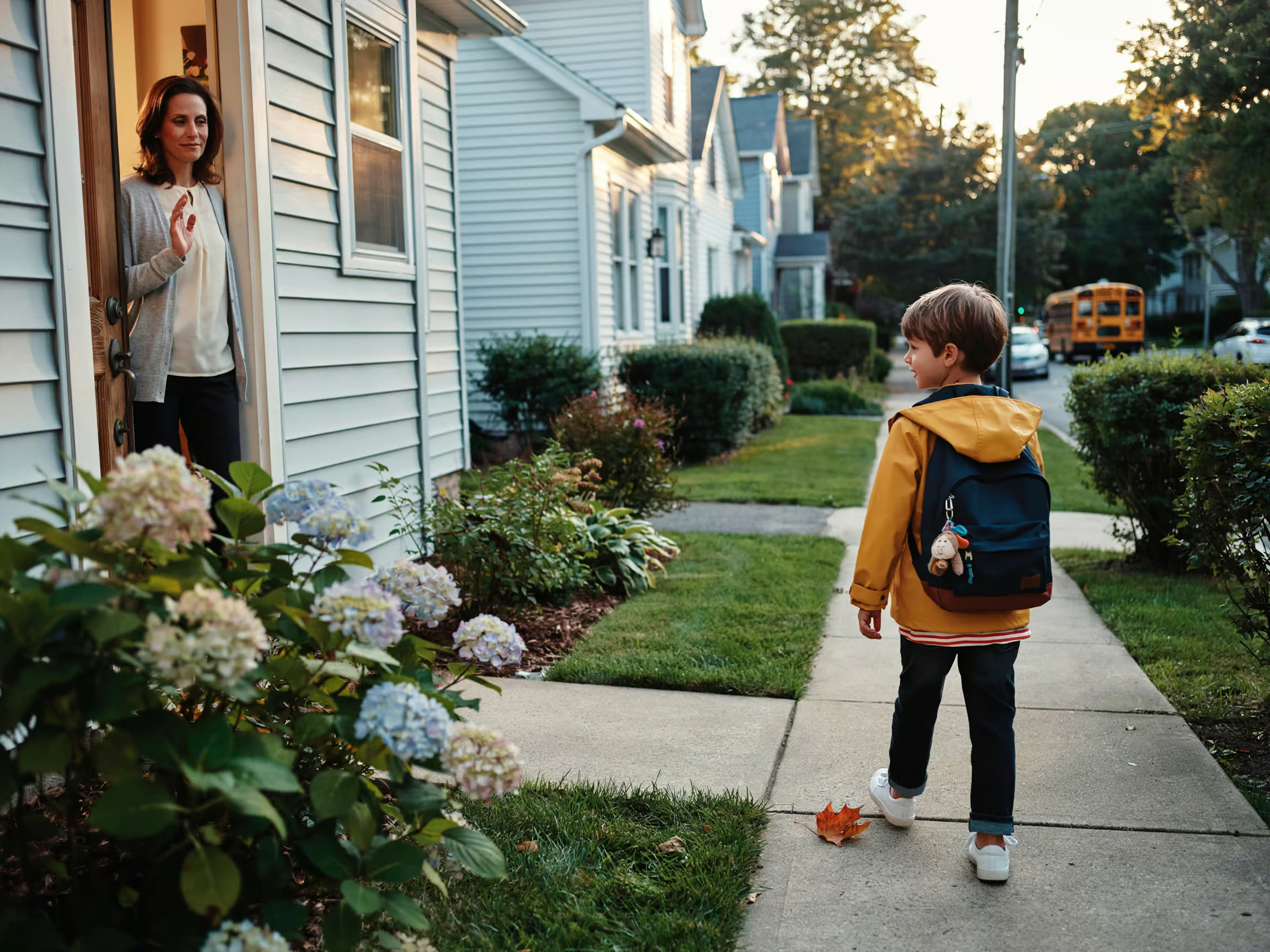
Think about the mother letting her child walk to school alone. That’s the shift—from “I protect you” to “I trust you.” It’s hard. It’s scary. It’s necessary.
What works for a young child won’t work for a teenager. With young kids, use concrete examples and clear boundaries. “We don’t hit because hitting hurts people.” Simple.
Direct. Done. With teens, it’s different. You need discussion, negotiation, and room for them to question. Let older kids question values—that’s how they make them their own.
There are no exact ages for these transitions. Every kid is different. But the pattern holds: you start with rules and examples, and you gradually shift to conversation and autonomy.
Making values stick: traditions, goals, and visual reminders
Abstract values are nice. Concrete habits are better.
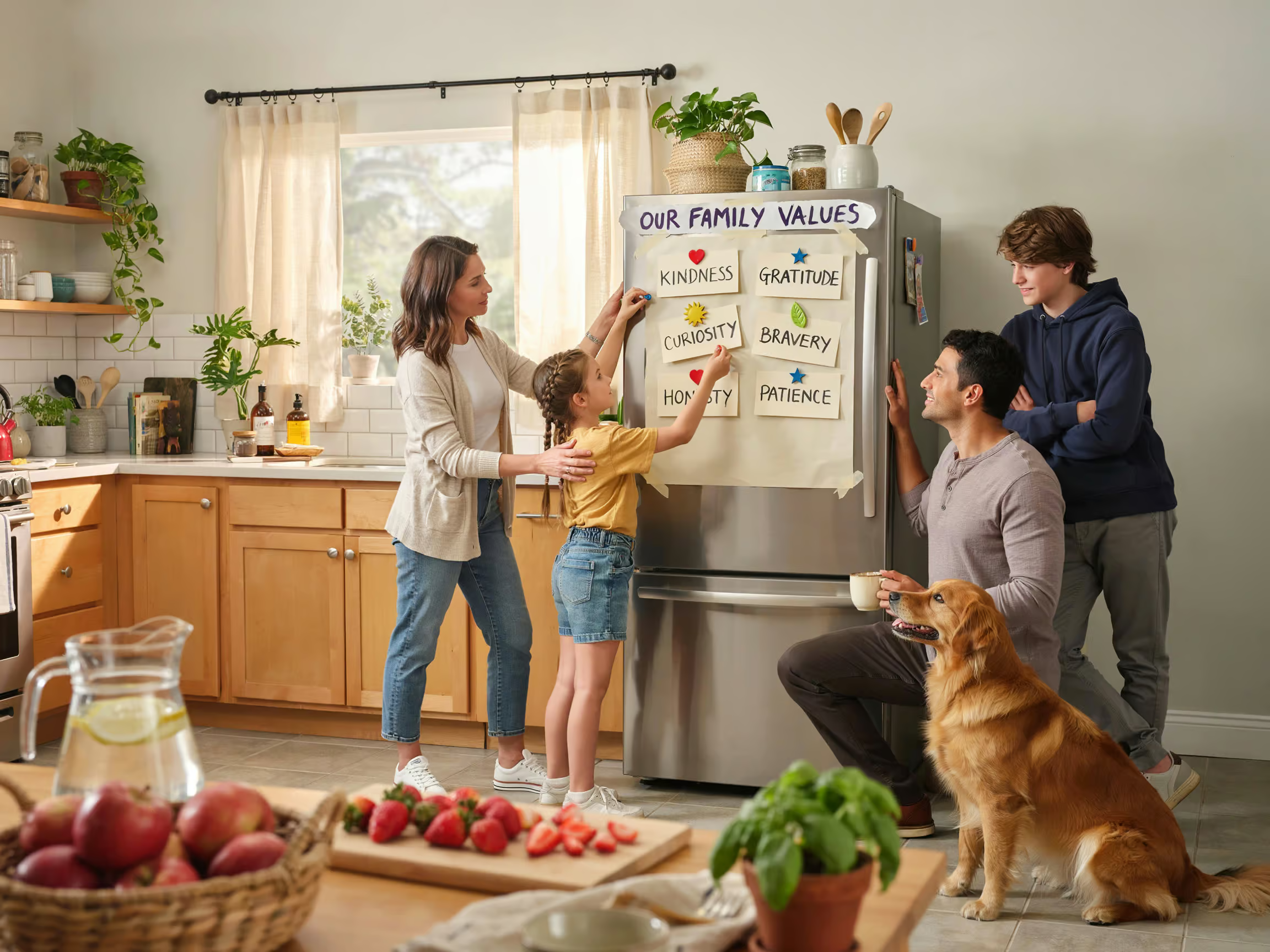
SMART goals turn values into something you can do. Here’s the example from the source material:
- Value: Strong Family. Goal: Spend quality time as a family twice a week for at least an hour, on Friday nights and Sunday mornings, for a month.
- Value: Prioritizing Education. Goal: Sit at the dining table after dinner every school night to do homework or read.
That’s not vague. That’s a plan.
Traditions reinforce values. Family Home Evening every Monday. Shared mealtimes. Game nights.
Volunteering together. The specific tradition matters less than the consistency.
Create a visual values board or a family mission statement. Put it somewhere people see it daily—on the fridge, in the hallway, as a screensaver. And check in every few months. Are the values still working?
Do the goals need adjusting? Values aren’t set in stone. They’re living things.
Quick test: If a value doesn’t translate into a concrete habit you can do this week, it’s still an aspiration—not a practice.
Navigating value conflicts: culture, disagreement, and generational gaps
Most articles stop here, but the messy reality begins.
Cultural differences. A Filipino family and an American family might both value respect for elders, but it looks different in practice. In one, it might mean living in a multigenerational home and caring for aging parents. In another, it might mean a weekly phone call and remembering birthdays.
Neither is wrong. The value is the same; the expression adapts to culture and context.
Parent disagreement. What happens when you and your partner don’t agree on values? Open discussion. Compromise.
Revisit the list. Focus on the shared core principles and let the rest be flexible. Marriage is long. You won’t agree on everything.
Teen rejection. What if your teen rejects the values entirely? That’s normal. It doesn’t mean you failed.
Don’t force it. Let them question. Keep the conversation open. Sometimes the kid who rejects everything at 16 quietly adopts it all at 22.
Generational gaps. What mattered to you may not matter the same way to your kid. That’s okay. Values evolve. The ones that are genuinely important will survive the generational translation.
Start where you are
You’re not raising robots. You’re raising humans. The goal isn’t perfect compliance—it’s showing them how values guide real decisions, especially when it’s hard.
Some families prefer a single motto over a long list. “Commitment to Excellence.” “The World is our Campus.” A single phrase can be more powerful than ten bullet points.
Start with one value, not ten. The one that feels most urgent, most missing, most true to your home. Involve the whole family. Make it a conversation, not a decree.
“Hey, I’ve been thinking about what matters to us as a family. What do you think?”
There’s no perfect list. Just the ones that feel true to your home. Start small. Start messy. Start now.
Frequently Asked Questions
What are 5 family values?
Common family values include love, respect, honesty, responsibility, and kindness. These are foundational because they’re teachable across ages and work across different cultures. The specific values your family chooses should feel true to your home, not like a generic checklist.
What are 10 examples of values?
Ten examples of family values are love, respect, empathy, honesty, family time, perseverance, responsibility, kindness, gratitude, and loyalty. These values show up across multiple parenting and psychology lists and can be adapted for kids of any age. The key is turning them into concrete habits, not just abstract ideals.
What are 10 moral values?
Ten moral values that work for families include honesty, kindness, empathy, responsibility, respect, gratitude, loyalty, perseverance, compassion, and integrity. These aren’t just for kids—they guide how everyone in the household treats each other. The real test isn’t whether you can name them, but whether you model them in the messy, everyday moments.
What are the 10 core values of life?
Core values that many families choose to prioritize include love, respect, empathy, honesty, family time, perseverance, responsibility, kindness, gratitude, and loyalty. These values are meant to be a practical starting point, not a rigid prescription. What matters most is that they translate into real habits and guide how your family actually lives together.
What’s the difference between family values and rules?
Family values are the shared beliefs and priorities that guide your family’s decisions, while rules are specific behaviors you enforce. Values answer the ‘why’ behind the rules. When values are clear, you don’t have to debate every decision from scratch—you can ask whether a choice aligns with what you’ve agreed matters most.