
So you booked a session at the infrared spa. Or maybe a sauna blanket has been sitting in your closet since before the baby came, and you’re finally wondering if tonight’s the night. Then you Google “who shouldn’t use an infrared sauna,” and you get the same generic list everyone gets: pregnant women, people with heart conditions, talk to your doctor. Helpful.
But you’re three weeks postpartum, you’re nursing, you’re on a prescription, and last Tuesday you spent a miserable evening wondering if that ache was mastitis. Does any of that apply to you? The list isn’t saying.
Here’s the quick version of how these saunas actually work, because it matters later. A traditional sauna heats the air, usually somewhere between 176 and 212°F (80 to 100°C). An infrared sauna skips the air and warms your body directly with lamps, at a milder 113 to 140°F (45 to 60°C). Cooler air, same sweat.
The far-infrared claims you’ve probably seen, about metabolism, circulation, muscle relaxation, stress relief, are claims, and we’ll get honest about those later. But cooler air doesn’t mean cooler you: infrared still raises your core body temperature. That’s the whole point, and it’s also why the caution list exists.
We’ve sorted every contraindication into three buckets here: hard stops (never without a doctor’s clearance), check-first situations, and timed re-entry once you’re cleared. By the end of this, you’ll know which bucket you’re in.
Key Takeaways
Pregnancy is a hard stop per ACOG, because core body temperature above 102.2°F (reachable in 10 to 20 minutes of hot immersion) is linked to complications like neural tube defects.
Breastfeeding moms can generally use an infrared sauna, but hydration is the real risk: no evidence shows saunas directly reduce milk supply, yet heat-driven fluid loss stacks on top of lactation’s already-elevated water needs.
Postpartum clearance isn’t about hitting six weeks, it’s about what your body is still recovering from: bleeding, blood pressure, medications, and cardiovascular load.
Table of Contents
Who can’t use one at all, and who just needs precautions
Infrared sauna hard stops are fever or active infection, impaired-sweating conditions, heat insensitivity, bleeding disorders or a bleeding predisposition, pregnancy, and alcohol intoxication. Everything else on the list is a check-first, not a never. Here’s the scannable version, with the new-mom relevance flagged:
- Fever or active infection (including mastitis, which often comes with fever). Hard stop, full stop.
- Impaired sweating conditions (anhidrosis, MS, CNS tumors, diabetes with neuropathy). If your body can’t cool itself, don’t add heat.
- Heat insensitivity. Can’t feel how hot you’re getting? That’s how burns happen.
- Bleeding predisposition (including lochia, normal postpartum bleeding). Heat increases circulation. Heavy bleeding means wait.
- Pregnancy. The one rule with zero ambiguity.
- Alcohol intoxication. Not a “be careful.” A no.
- Medications (includes common postpartum prescriptions). Check first, one phone call.
- Cardiovascular conditions. Check first, and this one genuinely matters.
- Implants and devices. Mostly reassuring news, with one real exception (pacemakers).
- Recent surgery or wounds, including C-section incisions. Wait until fully healed, with your doctor’s okay.
- Older adults. Dry heat hits harder; start shorter and cooler.
- Breastfeeding with low supply. Not a hard stop, but be the most conservative version of yourself.
And for the honest severity picture: a 2018 systematic review found the downsides of sauna use are mostly mild to moderate, things like heat discomfort, low blood pressure, light-headedness, leg pain, airway irritation, and claustrophobia. Medical reports have noted burns, fainting, and falls, and serious complications are believed rare. So this isn’t a horror list. It’s a sorting list.
Pregnancy and the postpartum window
Postpartum infrared sauna clearance depends on what your body is still recovering from, not on weeks since birth. That’s the reframe this whole section exists for.
Pregnant? This one’s a hard stop
ACOG, the American College of Obstetricians and Gynecologists, advises skipping the sauna and the hot tub during pregnancy. This is the official word, not internet folklore. The reasoning: raising your core body temperature past 102.2°F, something that can happen within 10 to 20 minutes of hot immersion, is linked to possible complications like neural tube defects. Certain elevated body temps can affect a developing baby. That’s the whole sentence, and it’s the one place where the answer isn’t nuanced.
The silver lining, practically speaking: don’t buy sessions you can’t use yet. The wait until after delivery, with your doctor’s okay, is the move that saves money and regret.
Postpartum: the wrong question and the right one
The trap is the calendar. Everyone asks “am I six weeks out yet?” as if the body runs on a timer. The better question is “what is my body still recovering from?” The temperature logic that mattered during pregnancy shifts after delivery: the risk moves from the fetus to your own recovery.
Here’s what that actually means:
- Lochia. That’s the medical name for postpartum bleeding, and it’s the concrete instance of the bleeding-prone contraindication. Heat increases circulation, so if bleeding is still heavy, wait.
- Delivery type. A C-section incision needs to be fully healed before heat goes anywhere near it.
- Blood pressure. Pregnancy changed your blood volume, and it takes time to settle back.
- Medications. Whatever you’re currently taking gets a heat check (more on that below).
Spa policies back this up. Perspire Sauna Studio requires postpartum medical clearance before any of their services, infrared sauna, SNØ contrast therapy, red light therapy, or halotherapy. And once you’re cleared, all of it goes back on the table. The wait is temporary, not forever.
Real talk: the waiting genuinely sucks, and there’s no hack for it. There just isn’t. But a body that’s done recovering enjoys the sauna more than a body that’s white-knuckling through one.
Breastfeeding, milk supply, and the hydration math
Yes, breastfeeding moms can generally use an infrared sauna when hydration is managed. That’s the honest answer, and here’s the honest limit attached to it: breastfeeding-specific safety evidence is limited, so this is reasoning from physiology rather than a stack of lactation studies.
First, what the evidence doesn’t say: no source establishes that saunas directly reduce milk supply. The risk is hydration-dependent, and here’s the mechanism. Heat-driven sweating stacks fluid loss on top of lactation’s already-elevated hydration needs. You’re making milk all day, which uses water, and then you sit in a box that makes you sweat. That math has to balance.
The pattern lactation-adjacent providers commonly flag, and this is a composite, not one specific mom: nursing moms treat a 10 or 15 minute session like ordinary exercise, don’t adjust their water intake, then notice intense thirst or a supply dip afterward. If you’re already working with low supply, be the most conservative version of yourself here.
The practical version:
- Drink water before and after, and during if the facility allows. Hydration is part of the session, not an afterthought.
- Keep early sessions short.
- Treat unusual thirst or a supply dip as a stop signal and a reason to call your doctor.
There’s more depth on this in our guide to using infrared saunas while breastfeeding, including where the evidence currently stands.
Medications: the OTC blind spot
Medications that make infrared sauna use unsafe or risky include diuretics, barbiturates, beta-blockers, and antihistamines, unless a doctor or pharmacist has cleared you. The plain-English why: the first three can impair your body’s natural heat-loss mechanisms, meaning it’s harder for you to cool yourself off. Antihistamines can bump heat stroke risk.

The broader point is that medications can affect your sweat rate, body temperature, blood pressure, and heart rate, basically the list of things a sauna messes with. And that raises a related practical question: can you wear boxers in a sauna? In short, yes, though proper sauna attire matters, especially in public saunas.
Now the counterintuitive part, and it’s a pattern pharmacists see all the time: people check their prescriptions and skip the over-the-counter stuff. The sleep aid you took last night? The allergy pill you take daily? Antihistamines are the most-missed heat-stroke risk item here, and postpartum readers use plenty of them, prescription and over-the-counter. Half of us take an antihistamine daily and never think of it as relevant to a sauna.
So normalize the phone call. A quick call to your doctor or pharmacist beats guessing, and it’s the lowest-effort item on this entire list. It’s the kind of thing nobody mentions at checkout.
Quick test: If you’ve taken any pill in the last 24 hours, prescription or over-the-counter, ask a pharmacist whether it mixes with heat before you book.
The 30-beat math: cardiovascular load
No, not without a doctor’s clearance, if you’re dealing with unstable coronary artery disease, ischemic heart failure, orthostatic hypotension, or heart valve disease. And yeah, this one actually matters, so let’s translate.
The number you’ll see: heart rate can rise roughly 30 beats per minute for every 1°C increase in core body temperature. What that means for a real body is simple: heat makes your heart work noticeably harder. It’s quietly doing a workout while you sit there thinking you’re relaxing.
In everyday language:
- Unstable coronary artery disease: the arteries feeding your heart aren’t reliably delivering enough blood, and stress makes that worse.
- Ischemic heart failure: the heart is already struggling to pump well, partly because blood flow to it is reduced.
- Orthostatic hypotension: your blood pressure drops when you stand, so the sauna’s own blood pressure effects stack on top.
- Heart valve disease: the heart’s plumbing has a known problem, and added cardiac load tests it.
Dr. Ashish Sharma’s point, put casually: if you have a heart rhythm issue like atrial fibrillation (afib, which means the heart beats irregularly), sauna heat can raise your heart rate and trigger problems, so talk to your doctor first.
And the postpartum tie-in: pregnancy leaves residual blood-volume changes even after delivery, so cardiac load is relevant for a recovering postpartum heart even without any diagnosis. That’s exactly why weeks-since-birth isn’t the metric.
Fever, mastitis, and why “sweating it out” is always wrong
Fever is an absolute stop, and the rule is so simple everyone gets it: your body is already hot and fighting something. Don’t add heat. Enclosed infections, meaning infections walled off in a specific spot like a tooth, a joint, or other tissues, also mean vigorous heating is a hard no. No hedging there.
Now mastitis, because this is the one generic lists never mention. Mastitis is a lactation infection, and it typically comes with fever, flu-like misery, and a hot, tender area on the breast. Here’s the trap: heat feels tempting when you’re that sick and that sore. But “sweating it out” is exactly the wrong move, because it’s the standard fever-and-infection rule wearing a lactation name tag. If you suspect mastitis, the move is seeing your doctor, not the sauna. What we’re not claiming is that sauna use makes mastitis outcomes worse; what we are claiming is that the fever rule applies to you like it applies to everyone, and mastitis needs medical care.
Red flag: Fever, flu-like aches, and a hot, tender spot on the breast? That’s a call to your doctor, not a spa booking.
And the same fallacy follows you out of the sickbed. Sweating out a hangover? Sweating out that cold? Alcohol deserves its own blunt paragraph: if you’ve been drinking, you won’t notice the warning signs your body is sending.
That’s the whole problem. Alcohol also raises your heart rate on its own, heat raises it more, together they stack, and alcohol dehydrates you on top of everything. Downstream risks include dehydration, low blood pressure, injury, and heart problems. So sauna while drunk or otherwise impaired isn’t a “be careful.” It’s a no. Said like a friend, not a PSA. And hey, we get the sick-day desperation, the fantasy of sweating the plague out of your body in one hot hour. It’s just not a thing.
Bleeding, healing wounds, implants, and devices
Two of the items here are squarely in new-mom territory: bleeding and healing incisions. The good news is the rules are concrete rather than vague, and one of them, lochia, is something you can simply observe your own body about. The implants part is mostly reassurance, with one real exception at the end.
Bleeding and lochia
Hemophiliacs and anyone prone to bleeding should avoid infrared saunas. If you have hemophilia, that one’s a hard no, said like a friend flagging it, not a form disclaimer. But here’s why this isn’t a rare-disease footnote for new moms: lochia, your postpartum bleeding, makes this the most directly applicable rule on the list for freshly postpartum readers. Heat increases circulation. If you’re still bleeding heavily, that’s your body telling you to wait.
Wounds and incisions
Open wounds and surgical areas, including C-section incisions, need to be fully healed, with your doctor’s permission, before heat enters the picture. Your skin is doing a job right now; let it finish. And if you twisted a knee or a wrist in the sudden chaos of new parenthood: no heat on fresh joint injuries for the first 48 hours, or until the hot and swollen feeling calms down. It’s the same instinct as icing a sprained ankle, which every parent has done at least once. Joints that run chronically hot and swollen tend to hate vigorous heat too, so listen to your body there.
Implants and devices
Mostly reassuring news. Metal reflects far-infrared waves, so a metal implant isn’t directly heated by the lamps. Run it by your surgeon anyway, it’s a two-minute call. And the simple rule that always applies: if it hurts near an implant, stop. Your body’s opinion counts.
Silicone, for anyone with breast implants: it absorbs infrared and warms a bit, but it doesn’t melt until 392°F, which is way hotter than any sauna gets. Check with your surgeon or even the implant maker if you want peace of mind; it’s a phone call, not a hurdle.
Pacemakers and defibrillators are the genuine talk-to-your-doctor-first category, no wiggle room. The reason is a device issue, not a heat issue: saunas use magnets in their construction, and those can interfere with these devices. Doctor first, sauna second.
When your body can’t regulate heat
Sweating is how you cool down, so anything that blocks sweating matters a lot here.
Impaired sweating. Anhidrosis means your body can’t sweat. Multiple sclerosis affects the nervous system’s temperature control. CNS tumors, tumors in the central nervous system, can disrupt the same wiring.
Diabetes with neuropathy, nerve damage from diabetes, can blunt sweating and temperature signals. If any of these is you, sauna isn’t your thing. No hedging, no guilt, just a clean answer.
Heat insensitivity. If you can’t feel heat, you can’t tell when to get out, and that’s how burns happen. Dr. Fran Cook-Bolden has made this point about neurological conditions that blunt heat sensation: you lose the signal that’s supposed to tell you it’s time to leave. Sauna’s off the table, plain and kind.
Dehydration-risk conditions. Low blood pressure, kidney disease, and medications like diuretics, blood pressure drugs, or dizziness-causing drugs all make it harder to handle heat. And breastfeeding dehydration stacks on top of any trouble you already have cooling off, which is one more reason the nursing moms belong in the hydration-is-part-of-the-session camp.
Menstruation, handled like a group text. Heating your low back during your period may temporarily increase flow. That’s it, that’s the fact. Some people use sauna heat for cramps and accept the tradeoff; others skip that week.
Both are fine, no judgment. You can adjust the heat through frequency, temperature, and duration. Your temperature regulation shifts across your cycle, so it’s fair to tweak how hot, how long, and how often.
Kids, older relatives, immunity, and bundled spa treatments
Even once you’re cleared, the people you bring with you, or the treatments you bundle with a session, each come with their own rules. Kids and older relatives heat up differently, immunocompromised users need two quick steps, and that add-on scrub or salt session isn’t automatically sauna-compatible. Here’s the rundown.

Children and teens
Kids heat up faster than adults because their temperature regulation is still figuring itself out. That’s why the age rules exist, not because spas are being fussy. Perspire Sauna Studio prohibits sauna use at 15 and under, and teens 16 to 17 can go only with an adult, max 15 minutes at a lower temperature. If you’re wondering whether a session makes sense for your kid, that’s a pediatrician question, and parents ask pediatricians stuff constantly anyway. Ask the question, skip the guesswork.
Older adults and immunocompromised users
Think of your own parents here. Dry heat hits older adults harder: dehydration, dizziness, falls. The why is a pile-up of ordinary things: circulation changes, medications, chronic conditions, fitness level. If an older adult you love gets cleared, the move is start short and cooler, then build up, the same advice you’d give anyone starting something new.
If you’re immunocompromised, two steps: ask the facility how they clean and whether it meets industry standards, then get your doctor’s okay. That’s the whole checklist.
Bundled services
Your esthetician and your sauna have a scheduling conflict. No sauna right before or after waxing, dermaplaning, or chemical peels. Freshly exfoliated or waxed skin plus heat equals irritation, the obvious thing once you hear it.
Contrast therapy, the hot-then-cold thing, is off the table if you have heart or circulatory conditions, are pregnant, have Raynaud’s (a condition where cold triggers blood vessel spasms in fingers and toes), or have type 2 diabetes. Rapid hot-cold swings are a lot for those bodies.
Salt therapy, halotherapy, sounds gentle because it is salt air, but certain rashes and skin conditions can get worse with it, and asthma, COPD, and other serious respiratory conditions need a doctor’s nod first.
One practical tip if you’re spa-shopping: NineStones Spa offers sauna only to clients receiving a service, no memberships or drop-ins, and you can reach them at (207) 772-8480 or contact@ninestonesspa.com. Good to know before you plan a visit.
Detox marketing vs. what the evidence actually says
No cancer link from infrared saunas is established in the available research. That’s the flat answer to the fear question, and here’s the context that keeps it honest: severe complications have been reported among frequent users but are believed rare, per the 2018 systematic review we mentioned earlier.
The claims, honestly weighed
Detox-via-sweating and calorie-burn claims don’t have research support. Sweat is predominantly water. There’s a video floating around claiming traditional sweat is about 3% toxins versus 20% in infrared sweat, comparing 40-minute infrared sessions to cardio, and sauna blanket marketing (CurrentBody’s, specifically) touts up to 600 calories burned per hour. Those figures have no studies behind them, and they contradict how sweat actually works. If it sounds too good, it’s marketing.
And that marketing lands hardest on postpartum readers. “Sweat out the baby weight” is aimed squarely at you, and it’s selling you a session, not a result. What does have support: some studies suggest regular sauna use may help with heart disease, dementia, and some skin and lung conditions. Some studies suggest is the honest ceiling, and it’s worth holding everyone, including us, to it.
Fertility, briefly
If you and a partner are trying to conceive: a small 2013 study, not infrared-specific, found that two 15-minute sauna sessions a week for three months was associated with a temporary dip in sperm count and motility. The effects were temporary, but if you’re actively trying, pausing the sauna habit costs you nothing now and protects the timeline that actually matters. Evidence on female fertility and saunas is lacking, so there’s no claim to make there either way.
The genuinely good news at the end
Here’s the most useful thing in this whole section: sauna benefits come mainly from sweating and an elevated heart rate, which is basically moderate exercise while sitting. So if you can’t sauna, cardio and strength training deliver similar or greater benefit. For postpartum readers especially, that’s relief, not a consolation prize. A brisk walk with the stroller is doing more for you than the marketing claims ever would.
Your safe re-entry checklist once you’re cleared
Once your doctor has given you the green light, the start-slow version looks like this. It’s a conservative adaptation of existing guidance for higher-risk users, not a protocol medically validated specifically for postpartum women, so keep your own provider in the loop.
- Medical clearance first, especially with any health condition. The 10-minute phone call that’s always worth it.
- Start shorter and cooler than you think. If you’re in a higher-risk group, 5 to 10 minutes at a lower temperature. Healthy adults: 10 to 15 minutes. Blanket beginners, same range: 10 to 15 minutes, 2 to 3 sessions per week, building gradually.
- Hydrate before, after, and during if permitted. The unglamorous thing that actually matters, especially while nursing. If you want the practical details, our safe sauna practices for breastfeeding moms checklist covers temperature, timing, and prep.
- No alcohol beforehand. See the whole section above for why, but the short version is it’s not a “be careful,” it’s a no.
- Let irritated skin calm down first. An eczema flare needs to recover before heat exposure. Parents dealing with eczema know the drill.
Stop signals. Dizzy or light-headed means out now. If symptoms persist, get medical help. Dr. Sharma puts it plainly: dry infrared heat can overheat you, and long sessions risk dehydration, heat exhaustion, or heat stroke. It’s the same clear instruction you’ve read a dozen times in car-seat manuals, and it works because it doesn’t hedge.
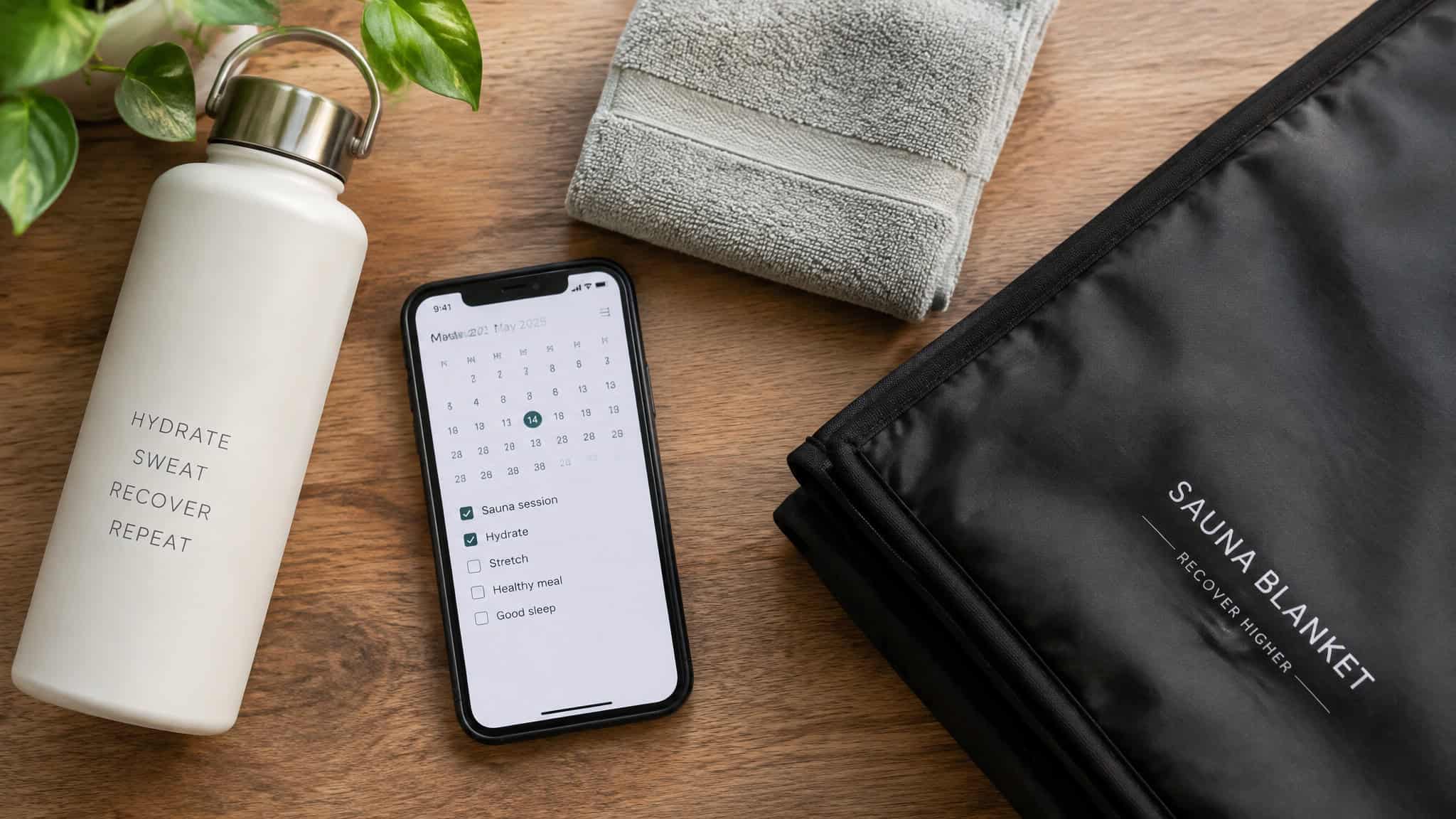
About that blanket in your closet. Sauna blankets are the same contraindications in a cozier package: not recommended during pregnancy or with heart conditions, and improper use carries risks of overheating, dehydration, or low blood pressure. They’re also not a replacement for medical treatment. If you do shop for one, the savvy-parent-friend list: low verified EMF (Dr. Davis has noted high EMF exposure has been associated with headaches, fatigue, and sleep issues), ETL or CE certification, VOC testing, non-toxic waterproof materials, washable inserts, multiple settings, double-stitched seams, and a longer warranty. Longer warranty, because these things get wrapped around a sweaty body regularly and deserve the coverage.
If red light therapy is also on your list, our piece on whether red light therapy affects breastfeeding covers how it differs from infrared heat.
What you bring to the OB or the pharmacist is one question, and it’s the one this whole article has been circling: what is my body still recovering from? Bleeding. Cardiovascular load. Medications, prescription and the allergy pill you forgot counts.
Hydration, especially if you’re nursing. That question replaces the six-weeks countdown, and it’s the one your providers can actually answer. And if the answer turns out to be “not you, not now,” the honest alternative is right there: moderate exercise is genuinely good for you, not a handout. The sauna will still be there when your body’s ready. Tonight, the blanket can stay in the closet.
Frequently Asked Questions
When to avoid infrared sauna?
Avoid it when you have a fever or active infection (including mastitis), when bleeding is still heavy, when you’ve been drinking, when a wound or incision hasn’t fully healed, and when you’re pregnant. Also skip it if you’ve taken any medication in the last 24 hours without checking with a pharmacist first — antihistamines are the most-missed heat-stroke risk item.
How long after giving birth can I safely use an infrared sauna?
It’s not about hitting six weeks — it’s about what your body is still recovering from. Wait until heavy postpartum bleeding (lochia) has eased, any C-section incision is fully healed with your doctor’s okay, and your blood pressure and medications have been checked. Some spas, like Perspire Sauna Studio, require postpartum medical clearance before any services.
Which medications make infrared sauna use unsafe, like beta-blockers or antihistamines?
Diuretics, barbiturates, beta-blockers, and antihistamines are the flagged ones unless a doctor or pharmacist clears you. The first three can impair your body’s heat-loss mechanisms, and antihistamines can bump heat stroke risk. The counterintuitive part: people check prescriptions but skip the over-the-counter stuff — the daily allergy pill counts too.
Is an infrared sauna blanket safe while pregnant or postpartum?
Not during pregnancy — that’s a hard stop, same as a sauna. Postpartum, blankets carry the same contraindications in a cozier package: wait for medical clearance, and improper use risks overheating, dehydration, or low blood pressure. If you shop for one later, look for low verified EMF, ETL or CE certification, and a longer warranty.
Does infrared sauna reduce milk supply?
No source establishes that saunas directly reduce milk supply. The risk is hydration-dependent: sweating stacks fluid loss on top of the water lactation already demands. The common pattern is nursing moms treating a short session like ordinary exercise, not adjusting water intake, then noticing intense thirst or a supply dip — so hydrate like it’s part of the session, and be extra conservative if you’re already working with low supply.