
Imagine standing in your driveway, watching your kids ride their bikes, when you realize that the massive, multi-hundred-pound metal slab hanging over your garage opening is the heaviest piece of moving industrial machinery in your entire home.
According to data from the U.S. Consumer Product Safety Commission (CPSC), garage doors cause roughly 30,000 injuries annually in the U.S. While thankfully rare, the CPSC has recorded 36 childhood entrapment deaths (for children aged 2 to 14) since 1982. These risks are the reason our community stresses the importance of concrete safety checks. By taking a few minutes to audit your hardware, you can make sure this everyday gateway remains a safe space for your family.
Key Takeaways
Residential garage doors weigh between 150 and 400 pounds, requiring a monthly 2×4 auto-reverse test to ensure they immediately head back up within 2 seconds of making contact with an obstacle.
Standard wall buttons must be mounted at least 60 inches (5 feet) high and shielded with a physical lock box to prevent toddlers from using toys or step stools to reach them.
Garage door openers manufactured before 1993 lack modern photoelectric sensors and depend entirely on obsolete mechanical safety clutches, making opener replacement a safety necessity.
Table of Contents
Garage Door Machinery: Why Weight Equals Hazard
Your garage door is a moving wall.
The Crushing Physics of 150-to-400-Pound Panels
A typical residential garage door weighs anywhere from 150 to 400 pounds. This heavy weight is suspended overhead, relying on a system of high-tension steel springs to balance it. If your door opener’s auto-reverse system fails to detect an obstruction, gravity and the motor’s downward drive turn those metal or wood panels into a crushing hazard.
Overcoming the Seasonal Pinch Hazard
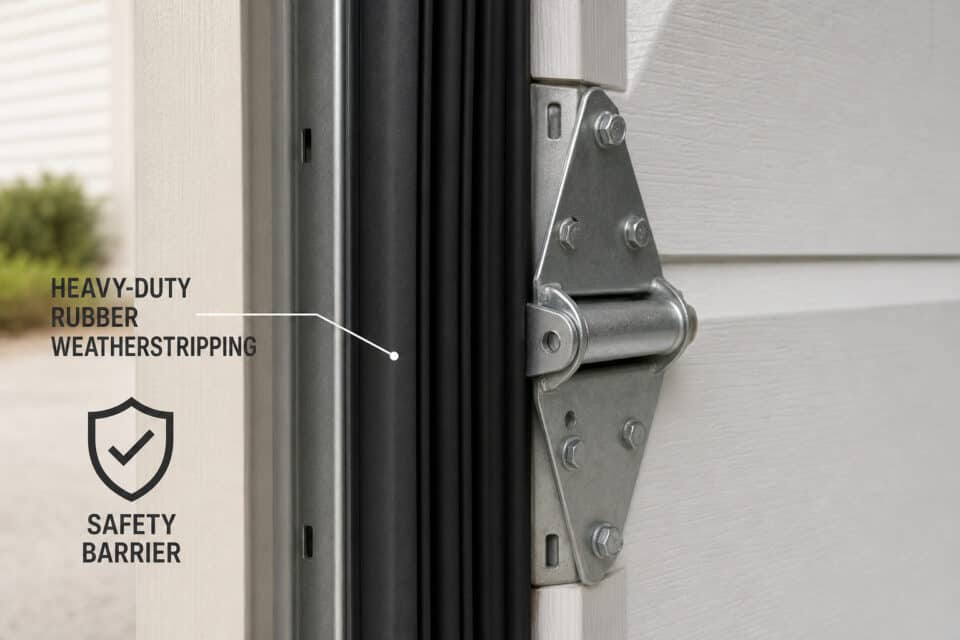
Extreme seasonal temperature swings cause metal and wood to swell or shrink, which degrades rubber weatherstripping and reduces panel gap flexibility. This makes the physical hinges where panels meet a real pinch hazard as the door moves. panel gap flexibility. When this happens, those gaps turn into pinch points that can easily grab a child’s fingers. You can solve this by sealing these panel gaps with foam insulation inserts or heavy-duty rubber weatherstripping. It is a weekend childproofing project that acts as a physical barrier to keep tiny hands safe from panel joint pinches.
Wall Button Height: Why Standard Rules Fail
Designing defenses requires anticipating how mobile children interact with garage hardware.
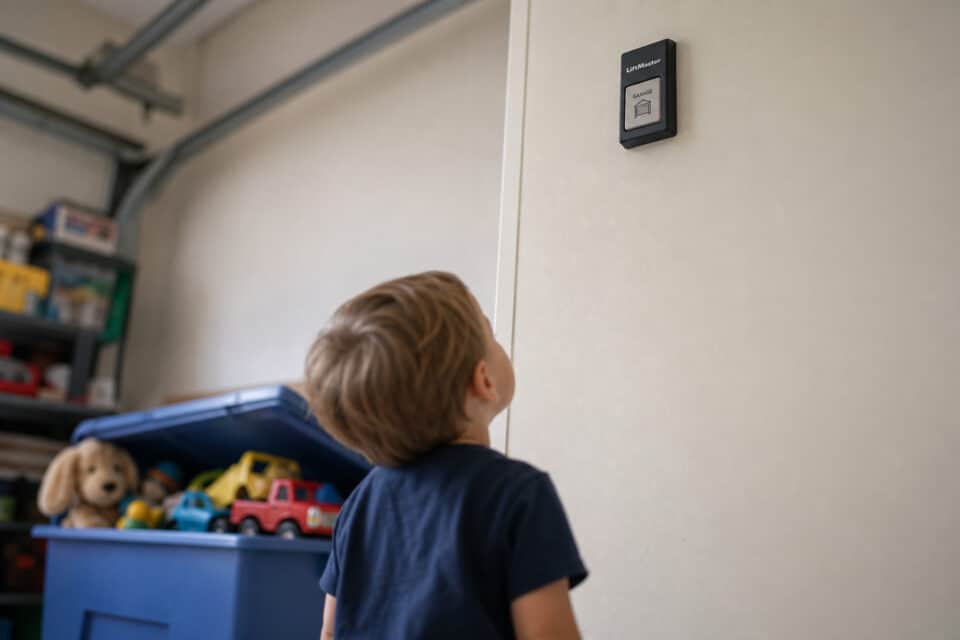
The building standard for childproofing insists that wall-mounted buttons must be installed at least 60 inches (5 feet) above the floor. In a perfect world, this height keeps the opener out of reach. But in the real world of parenting, we know about “climb-mapping.” I once walked into the garage to find my three-year-old dragging a plastic tractor and a storage bin over to the wall so they could climb up and press that big blinking button. A height rule fails the moment your child figures out how to construct a makeshift step ladder out of lawn chairs or toys.
Physical Button Covers: Designing Custom Shields
To prevent unauthorized access when children use stools or toys to reach higher, install a physical barrier over the wall switch.
The Slide-n-Lock Physical Guard
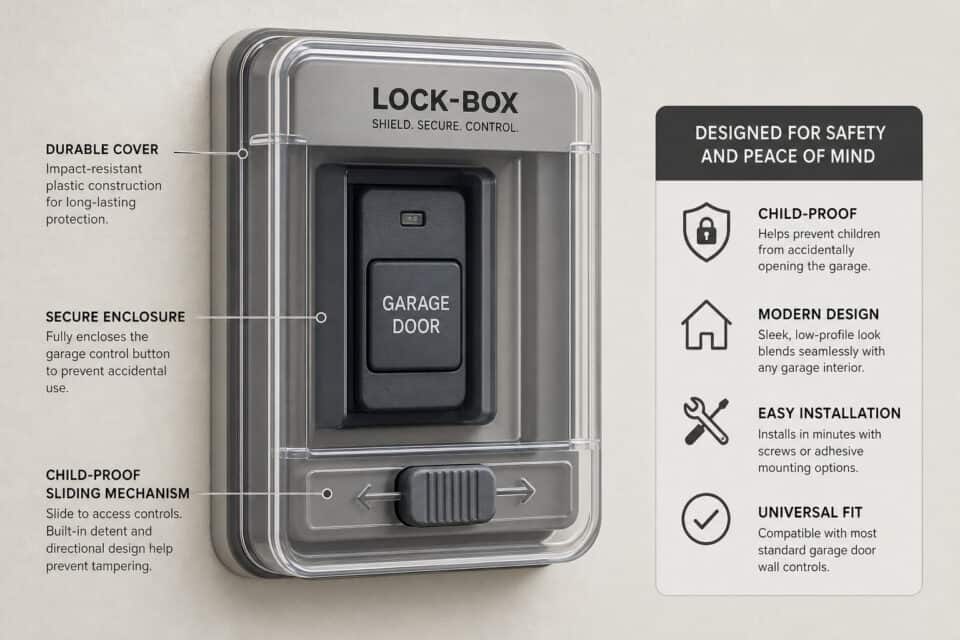
You can install a physical lock or cover over your garage door wall switch to block access. Many parents in our community use plastic covers, like a Slide-n-Lock Starter Box. This plastic housing slips directly over the button plate, creating a sliding, dual-action mechanism that hides the button from sight and physically blocks curious fingers from pressing it.
Open-Source Modeling with Fusion 360 and OpenSCAD
If you have an odd-sized electrical utility box or a non-standard wall button, you can custom-build your own guard. Using open-source CAD modeling software like Fusion 360 or Linux-friendly OpenSCAD, you can design and 3D-print a custom button cover shell that mounts directly over your existing hardware. If you go this route, remember that while these 3D-printed plastic cases make excellent physical blocks, they do not carry official UL safety ratings. They are a smart, homemade analog child lock to keep kids’ fingers away, but they do not replace standard system safety checks.
The 2×4 Board Auto-Reverse Test Step-by-Step
Alongside other routine chores like backyard childproofing and escape prevention, testing your garage door’s safety systems should be a regular, monthly routine. It takes less than two minutes, and you can knock it out while waiting for a load of laundry to spin.
Laying the Benchmark: The Flat Wood Test
- Find a solid, standard 2×4 wood board.
- Lay the 2×4 board completely flat on the concrete floor, centering it directly under the path of the garage door.
- Step back and press your wall button to close the door.
The 2-Second Reversal Requirement
According to the federal UL 325 auto-reverse mechanism standards, your door opener must react to physical contact. When the bottom panel of the door strikes the flat wood block, the door must automatically stop and reverse back to the fully open position within a 2-second reaction time target.
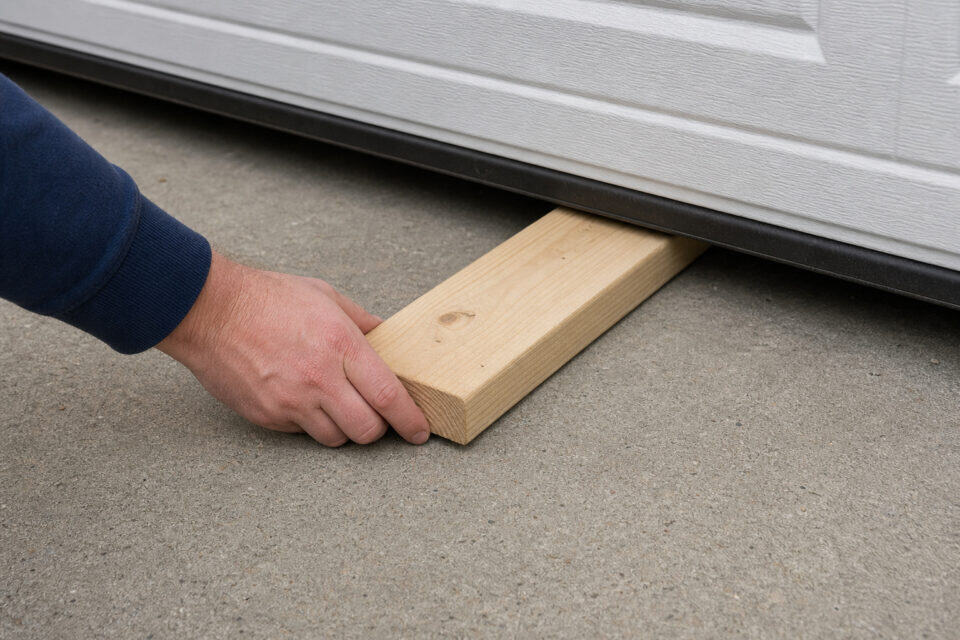
If your door hits the block and struggles, pauses, or continues to press down for more than 2 seconds before reversing, your motor’s safety logic is failing. This usually means the internal gears are worn down or the physical clutch is slipping. If your door fails the 2×4 board test, keep the door disconnected from the opener and call a professional technician to adjust the limits.
Garage Door Photoelectric Sensor Alignment Indicators
Whether adjusted during a standard garage door repair in San Antonio or set up during initial installation, every modern garage door relies on non-contact infrared safety eyes to detect anything in the door’s path. These photoelectric sensors must be mounted on the steel tracks between 4 to 6 inches above the garage floor.
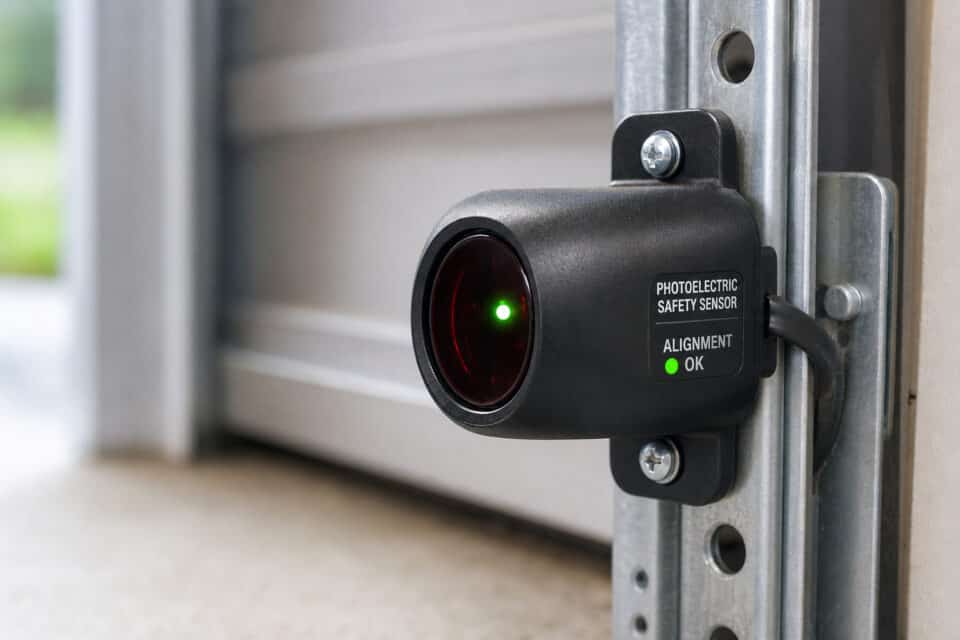
Because these sensors hover just inches from the ground, they are highly vulnerable to getting bumped by strollers, coated in lawn clippings, or wrapped in cobwebs. If your photo-eyes are out of alignment or dirty, you will notice distinct troubleshooting warning signs:
- The small LED lights on the sensor housing are blinking rapidly instead of glowing solid green or amber.
- The door refuses to close at specific times of the day, which usually happens when direct morning or afternoon sun blinds the receiving infrared lens.
- The mounting brackets on the steel frame are loose or rattling, causing the sensors to shake out of alignment whenever the door operates.
Using a soft microfiber cloth to clean the lenses and tightening the bracket screws by hand is all it takes to keep these safety beams aligned and working perfectly.
Replacing Pre-1993 Openers Without Safety Features
If you recently moved into an older home, you need to verify exactly when your garage door opener was made. Go out to your garage, set up a step ladder, and check the manufacturer’s label on the ceiling motor unit today.
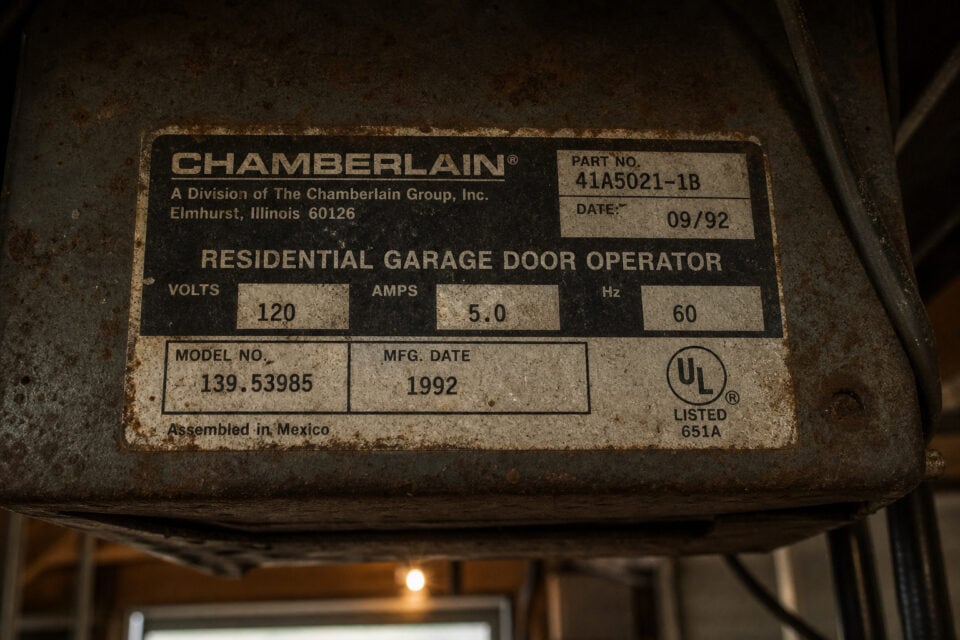
Openers manufactured before 1993 do not have the modern photoelectric safety eyes we expect today. These legacy systems rely solely on mechanical friction clutches to stop when they strike an object. Over decades of use in unconditioned garages, these old mechanical friction components rust, stiffen, and fail to slip. This creates a severe entrapment hazard, as the door will continue to force itself downward even when blocked.
If your ceiling motor unit was built before 1993, there is no safe way to DIY retrofit safety sensors onto it. For your family’s safety, the entire opener unit must be completely replaced with a modern, UL 325-compliant system.
Smart Garage Controls vs. Low-Tech Analog Shields
Digital garage controls provide convenience, but they should not serve as your primary child lock due to potential connectivity gaps like network failure or power loss.

The Vulnerability of Cloud-Based Safety Systems
These systems rely on a continuous connection, which means they aren’t foolproof. While apps let you check cameras, receive real-time alerts, and lock out your outdoor keypad, they can freeze during a Wi-Fi drop or power flicker.n. If your home Wi-Fi drops, your router power flickers during a storm, or your cell signal lags, these digital locks can reset or freeze. In those moments of network failure, your physical wall button is left completely live and unsecured. For peace of mind, treat digital controls as a secondary alert network, while using a physical button cover block as your primary line of defense.
Securing the Remote Controls in Your Vehicle
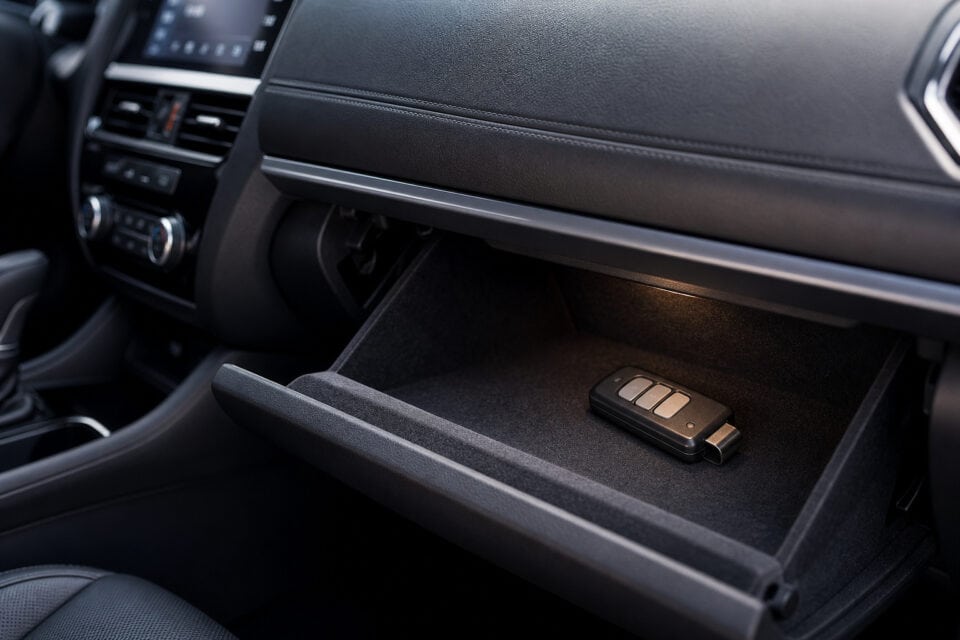
We also have to think about the physical remotes left in our cars. Never leave your remote control clipped to the sun visor if your car is parked in an unlocked driveway or street. Treat car remotes like spare front-door keys. Lock them safely inside your glove box, or bring them inside the house and set them on a high shelf out of your kids’ reach. Additionally, when setting up your outdoor keyless entry pad, choose a unique PIN. Avoid easy-to-guess, sequential patterns like “1-2-3-4” that older kids can figure out or watch you enter.
Childhood Behavior: Stopping the Garage Door Game
Beyond mechanical safeguards, parents must actively manage how children interact with the opener.

Correcting the Playground Mentality
Children often attempt the “garage door game,” where they trigger the opener and sprint underneath the descending door before it hits the concrete. Directly instruct children on the risks of the garage door:
“This garage door is a massive, heavy machine, not a toy. Running under it while it is moving is incredibly dangerous. It can crush or hurt you badly, and the game is strictly off-limits.”
Isolating Auxiliary Garage Hazards
You can visually reinforce safety by establishing a clear “5-foot stand-back safety zone” near the door. Use bright painters tape or concrete floor paint to draw a line on your garage floor. Teach your kids that whenever the door is in motion, they must stand behind this line.
Professional Safety Audits: Cables and Tension Springs
Do not attempt to maintain high-tension garage door components yourself.
You should regularly look over your hardware for frayed cables, rusted brackets, or unevenly hanging doors. But if you see any of these signs, do not grab your wrench. The heavy steel torsion springs mounted above your door hold tightly wound kinetic energy. An accidental slip or a sudden tension break can cause severe impact injuries.
To keep your system running safely, schedule a professional garage door inspection at least once a year. A trained technician can safely adjust the spring tension, replace aging cables, and verify that the heavy mechanical parts of your door are perfectly balanced and secure.
Frequently Asked Questions
What snap on door lock kids can’t reach?
A physical slide-and-lock guard is the most effective solution for wall buttons. This plastic housing fits over the existing switch, requiring a dual-action motion to operate, which acts as a barrier against curious fingers and prevents children from accidentally triggering the opener.
How to prevent kids from opening the garage door?
Beyond mounting the wall button at least 60 inches high, install a physical security cover to block access. You should also secure remote controls inside a locked glove box and teach children that the door is heavy industrial machinery rather than a toy, establishing a clear safety zone on the floor.
How does the 2×4 auto-reverse test work?
Place a standard 2×4 board flat on the center of the garage floor and initiate the door to close. The system should detect the board and automatically reverse direction within two seconds; if the door continues to press down or struggles, the internal safety logic or mechanical clutch is likely failing.
Why should I replace garage door openers from before 1993?
Openers manufactured before 1993 lack modern infrared photoelectric safety sensors, relying instead on obsolete mechanical friction clutches. Over time, these friction components rust and stiffen, which can cause the heavy door to ignore obstructions and continue closing, creating a significant entrapment hazard.
Are smart home garage controls enough to keep kids safe?
No, digital and cloud-based controls should only be considered secondary alert systems. Because features like remote lock-outs can fail during Wi-Fi outages or power flickers, you must always rely on physical button covers as your primary line of defense.
What is the danger of garage door panel gaps?
Seasonal temperature changes cause wood or metal panels to shrink and swell, which creates gaps that can pinch fingers as the door operates. You can mitigate this risk by installing foam insulation inserts or heavy-duty rubber weatherstripping to seal these dangerous pinch points.