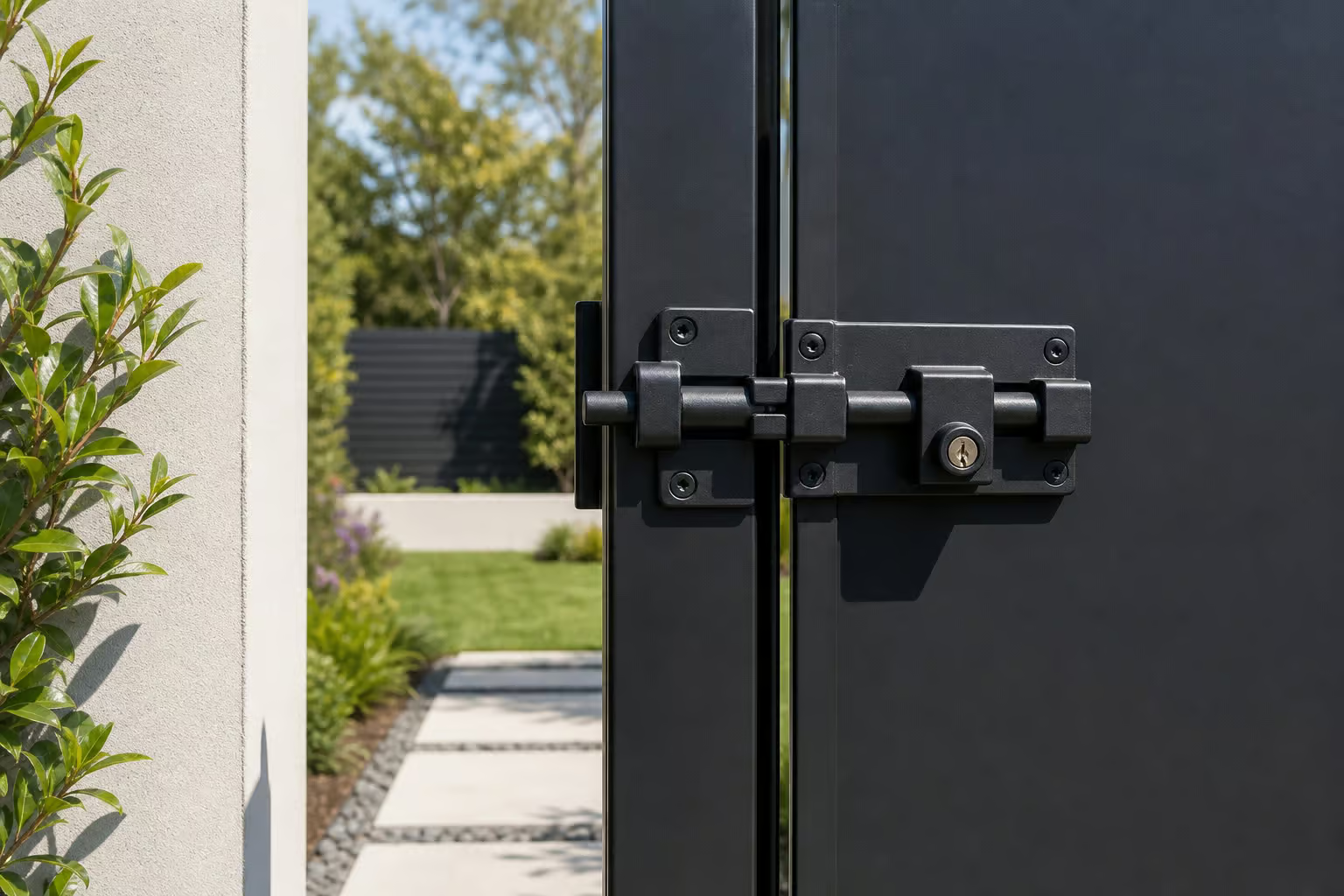
Here are the structural adjustments that will stop your agile toddler from escaping the backyard or scaling the patio deck. Childproofing your yard isn’t just about having the best fence company in Dallas Fort Worth build an impenetrable fortress around your property line; it’s about engineering physical delays that buy you crucial reaction time.
Toddlers move faster than the standard adult reaction time of 200–250 milliseconds, rendering the advice to “supervise them constantly” exhausting and impractical. To protect your kids out back, you need to shift your focus away from the backyard fence and toward a layered strategy of egress delay.
Key Takeaways
The most crucial vulnerability isn’t your perimeter fencing; it’s door latches positioned at 6 feet, which children bypass using furniture.
Structural modifications like turning handrails and 45-degree inward fence extenders actively disrupt a toddler’s upward climbing momentum.
Common landscaping relies heavily on toxic ingestion hazards, such as Oleander, which cause cardiac glycoside toxicity, and must be cross-referenced and gated using childproofing barriers.
Active supervision as the primary safety layer remains the essential foundation, as all hardware acts only as a temporary delay mechanism.
Table of Contents
Secure the Primary Access Lines and Harden Egress Doors
Focusing on exterior railings ignores the starting point of any toddler escape: the fridge, garage entry, or patio door.
Overcoming the 6-foot Latch Limitation
Standard safety hardware is notoriously vulnerable to a determined kid. You might feel safe relying on the standard 6-foot latch limit, but an agile toddler will build a step-stool ecosystem out of kitchen chairs or adjacent patio furniture to reach it. One parent on Reddit illustrated this perfectly, describing an unsupervised 5-year-old child using a chair to bypass a high latch (6 ft) to access a dangerous secondary area for a midnight bike ride. To harden the door, install secondary interior latches at heights unreachable by children, recognizing that height alone is a flimsy defense.
Electronic Monitoring and Auto-closing Systems
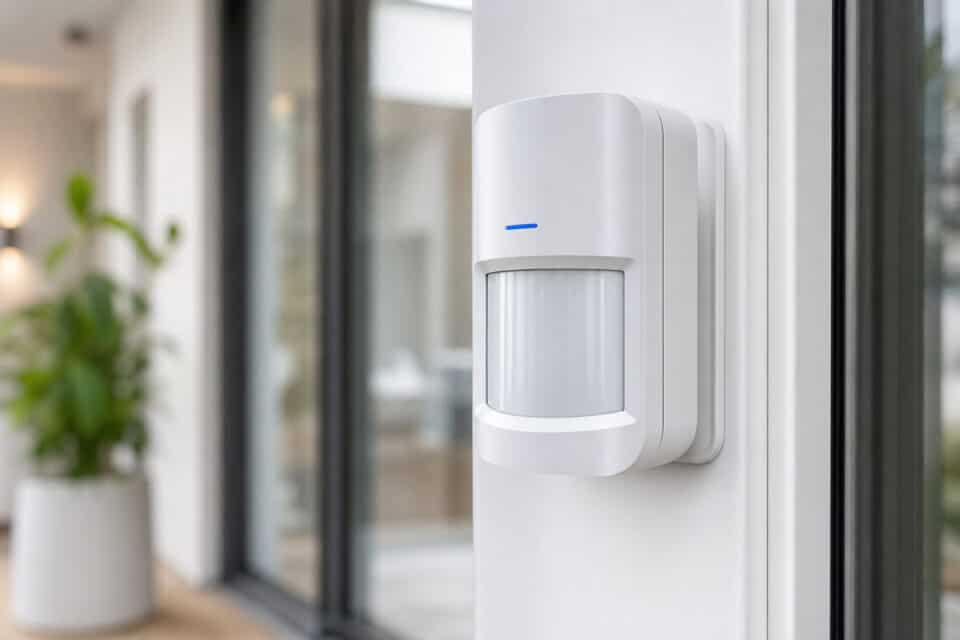
Because physical latches fail, you need to back them up with technology. Combine auto-closing and automatic latching door systems with localized entry sensors. Installing a device like the Secrui Door Alarm creates immediate access denial because you receive a loud auditory alert the second a child opens the door. Using these sensors to alert parents—even if they are occupied or sleeping at night—ensures you can intervene before the yard is breached.
Establish Semi-permanent Yard Boundaries and Street Containment
Securing your yard shouldn’t be guesswork; utilizing concrete solutions like modular Zippidy Fences or a $134 driveway net provides an immediate, verifiable perimeter. Once you’ve layered your doors, look at where your property meets the road. Transitioning from the house to the outdoor borders requires physical friction between the play zone and traffic.
Containing Driveway and Street Breaches
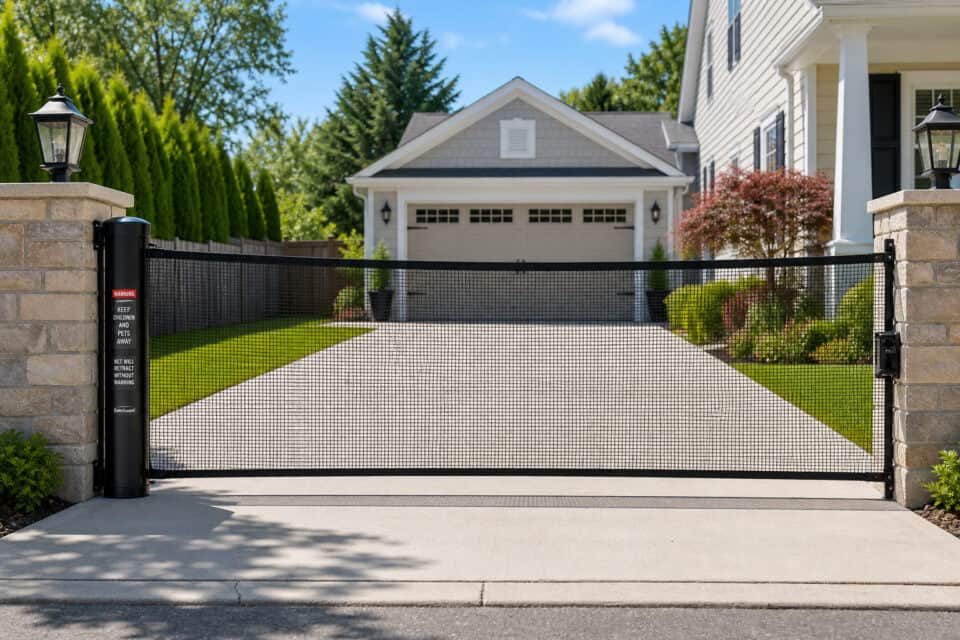
Driveways represent the highest risk environment for a street egress breach, especially when a child is chasing a stray ball out of an open garage or riding a toy. You can seal off this vulnerability by deploying a 25-foot Retractable Driveway Net across the concrete during play times. At a cost of roughly $134, this net provides a heavy-duty physical barricade that explicitly defines the boundary line and keeps kids from slipping into active traffic.
Sectioning the Yard With Semi-permanent Fences
Traditional wooden privacy fences aren’t the only way to manage a yard, especially when you need specific, separate zones. High-utility products like Zippidy Fences offer a semi-permanent boundary that provides easy-to-install containment without forcing you to pour concrete or wait months for HOA approval. Alternatively, you can use oversized pet and baby gates to heavily section off verified child-safe play zones, keeping toddlers away from garden tools or rocky terrain.
Neutralize Climbing Hazards Near Ledges and Rails
Before you attach anything to your actual fence, evaluate your yard’s layout to identify anything that extends a toddler’s vertical reach. Your landscape design and terrace layout might be inadvertently providing them with a ladder. Clear the terrace and decks of pots, heavy chairs, or decorative furniture that can easily be used as footholds.
Toddlers move faster than the standard adult reaction time, whether they are darting through the living room or abruptly sprinting across your PVC or composite decking, rendering the advice to supervise them constantly exhausting and impractical. Using active supervision as the primary safety layer allows you to catch these lightning-fast movements before they reach structural railings.
Removing climbable objects severs the vertical bridge between the floor and the rail ledge. If there is a decorative planter or cabinet taller than 12 inches located within 24 inches of a deck edge, move it immediately so that such backyard improvements do not inadvertently create climbing hazards.
Modify Balustrades and Fences to Disrupt Climbing Leverage
After you remove nearby stepping stones, you need to modify the structural safety of the railings themselves. The goal here is to disrupt the grip and footing a toddler uses to hoist themselves over.
Disrupting Grip Với Turning Handrails
A child needs a solid, static anchor point to pull their body weight upward. By installing turning handrails, you stop them from getting a solid handhold; because the rail rolls upon contact, a toddler cannot establish a stable grip, which effectively eliminates their ability to climb.
Using 45-degree Extenders to Halt Ascension
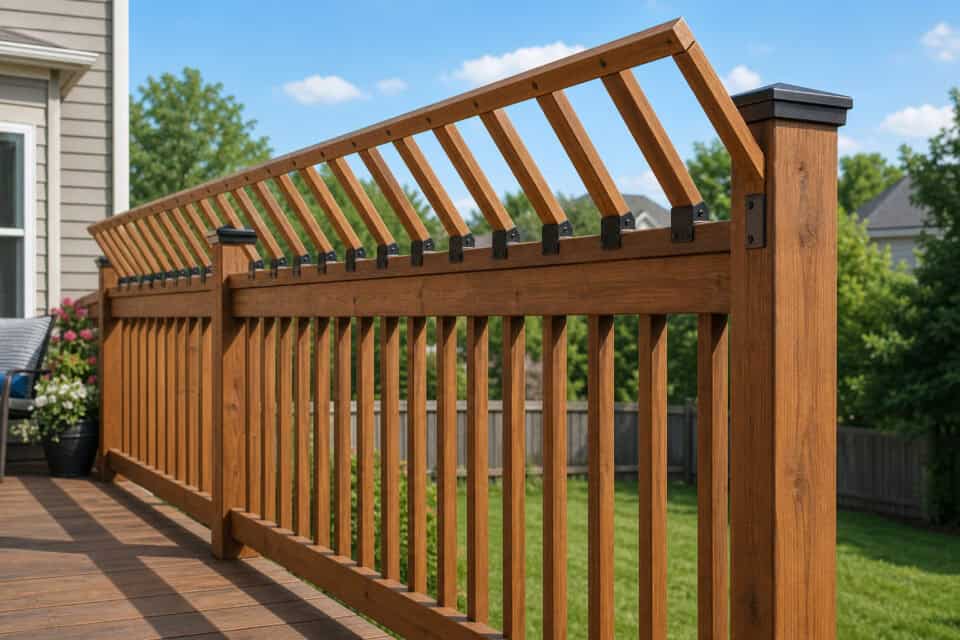
Sometimes the most effective toddler deterrent is repurposed animal containment tech. By installing 45-degree extenders, you create an aggressive inward overhang that mechanically inhibits climbing behavior by removing all climbing leverage, forcing the child to lean backward against gravity—a physical puzzle they simply cannot solve.
The Hidden Structural Limits of Glass Railings and Mesh
If you live in a modern home with open sightlines, modifying your barriers requires caution. Expert consensus on terrace and balcony safety warns that modern glass railings suffer from structural instability if you try to bolt or strap heavy childproofing hardware directly onto them, creating catastrophic risk. Instead, you can use clear balcony shields, but note that they may perform poorly in high wind. An alternative is bridging gaps with fabric guards like KidKusion deck protectors or using temporary mesh wire fencing.
However, be aware that materials like YARDGARD mesh wire fencing suffer from severe elemental degradation. UV radiation and moisture degrade YARDGARD mesh wire fencing brittle within 12 to 18 months, reducing its structural load capacity.
Audit Landscaping for Biological Hazards and Toxic Botanicals
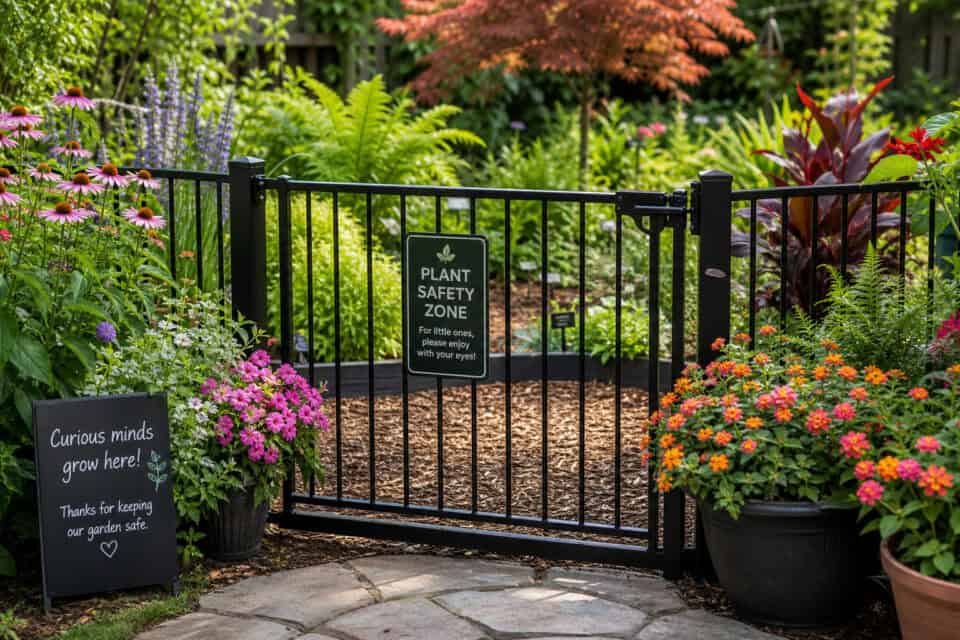
Childproofing isn’t just about stopping physical falls or street escapes; it requires auditing the garden greenery itself. The dirt, shrubs, and flowers in your yard can hide lethal ingestion hazards.
Identifying and Auditing Poisonous Plants
Toddlers explore the world by eating dirt and chewing on leaves, making toxic botanicals a blind spot that you must evaluate against the Poison Control Center image database. The excellent Lucie’s List garden safety guide points out just how pervasive these threats are. Common garden toxins include daffodils, rhododendron, azalea, hydrangea, water hemlock, holly, nightshade, foxglove, and Oleander. If you decide to dig up these hazards, replace them with safe, non-toxic alternatives like marigolds, snapdragons, or sunflowers.
Creating Botanical Containment Zones
If you rent your home or simply don’t want to dig up mature, toxic bushes like a sprawling azalea or Oleander, you have to separate your child from the soil. Set up simple mesh borders or use heavy-duty pet gates to block access to the landscaping. A $34 gate halts the toddler habit of foraging and keeps them entirely removed from the botanical danger zones.
Maintain Active Supervision as the Unbreachable Safety Layer
The “2-second rule” of childproofing dictates that a single moment of distraction—like grabbing an item from an outdoor fridge—is all it takes for an agile toddler to bypass a latch and access danger.
Instead of relying on supplemental devices as a standalone babysitter, structure childhood outdoor autonomy around the “9-minute rule.” This approach allows for independent play while ensuring you visually check in every nine minutes to monitor their behavioral thresholds. Every net, latch, and angled barrier you install is part of a broader layered safety strategy that exists only to delay the child long enough for your active supervision to intercept them.
Frequently Asked Questions
How to childproof a backyard?
Effective backyard childproofing follows a layered strategy focused on egress delay rather than just perimeter fencing. You should secure all exterior door latches with secondary locks above reach, install auto-closing hardware, use motion sensors to track exits, and eliminate climbing hazards like furniture placed near railings.
How to keep kids from playing in your yard?
To restrict access to specific areas, use semi-permanent boundaries like oversized baby gates or modular fencing systems that don’t require pouring concrete. These barriers can effectively section off hazardous tools, rocky terrain, or toxic garden zones, keeping children within a designated safe play area.
What can I put in my yard to keep kids out?
You can install heavy-duty barriers like retractable driveway nets to prevent street breaches and 45-degree inward fence extenders to physically stop climbing. For garden areas, simple mesh borders or temporary gates serve as effective physical friction that stops toddlers from accessing restricted or dangerous sections.
Why does a 6-foot door latch fail to stop toddlers?
Height alone is a flimsy defense because toddlers are adept at building ‘step-stool ecosystems’ using kitchen chairs, patio furniture, or other nearby objects. By using these items as platforms, a child can easily reach handles that are otherwise well outside their natural standing height.
How does a turning handrail prevent a child from climbing?
A turning handrail is designed to roll when grasped, which prevents a climbing child from establishing the stable, static anchor point they need to hoist their body weight. By eliminating a secure grip, the railing effectively neutralizes the child’s ability to exert upward force.
Is 45-degree inward fencing an effective deterrent for kids?
Yes, 45-degree fence extenders are highly effective because they create an inward overhang that forces a climber to lean backward against gravity. This physical puzzle removes the necessary leverage for ascension, making it mechanically impossible for a child to scale the barrier.
What is the best way to handle toxic plants in a backyard?
If you cannot remove toxic plants like Oleander or azaleas, you must create botanical containment zones using mesh borders or heavy-duty pet gates. The goal is to physically remove the child’s access to the soil and foliage, as toddlers frequently explore by chewing on leaves or eating dirt.
Can I use standard mesh wire fencing for long-term child safety?
It is generally not recommended for permanent protection because common materials like YARDGARD mesh suffer from rapid elemental degradation. UV radiation and moisture cause the material to become brittle within 12 to 18 months, which drastically reduces its structural load capacity and reliability.