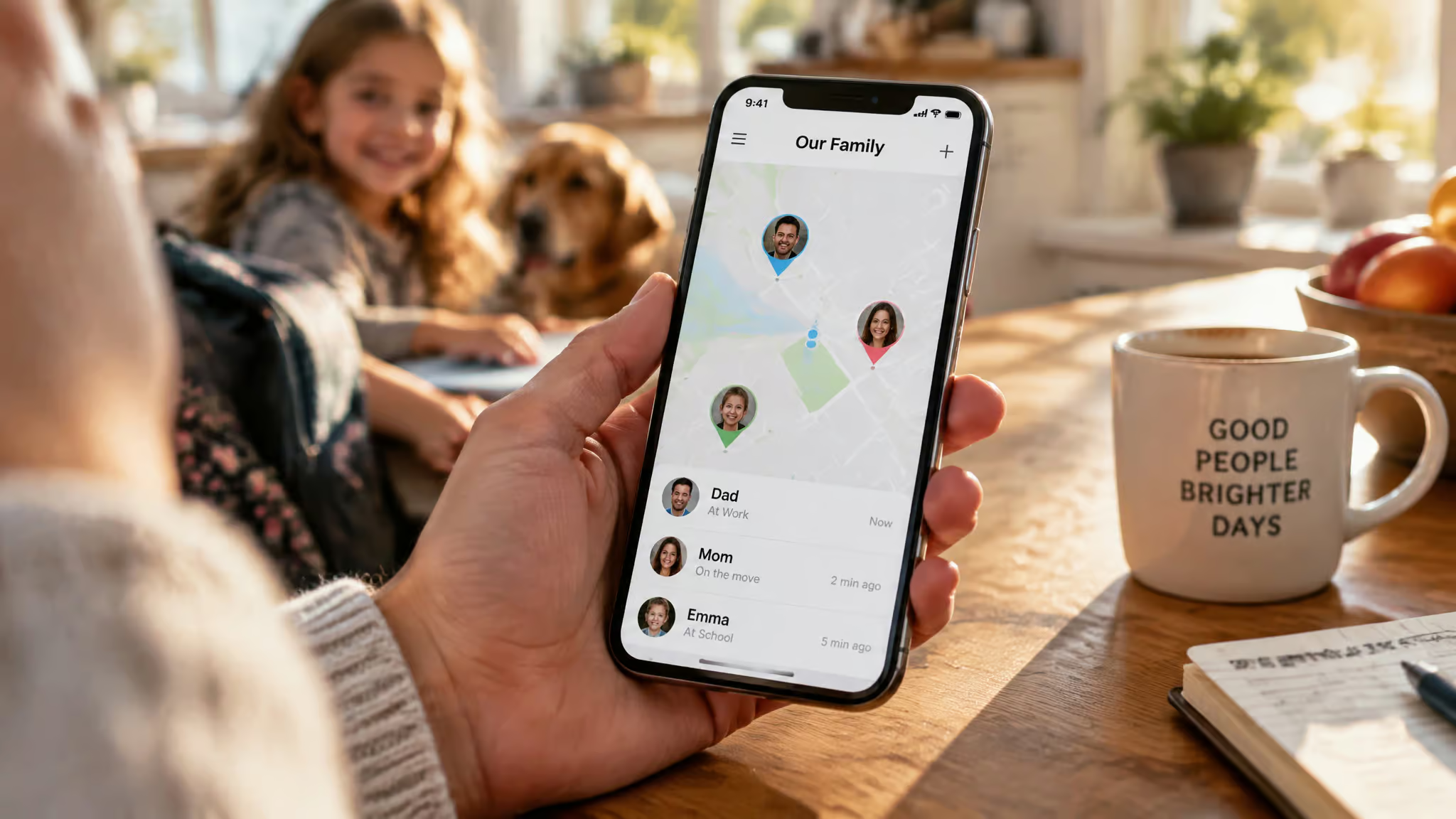
A location app’s entire pitch is knowing where your family is at every moment, which is exactly why “is it legit?” should be your first question, not your last. Here’s the short answer: the supporting review concludes HeyPolo is a legitimate, long-running service that privacy-conscious families can rely on, scoring it 8.1/10 for ease of use and privacy focus.
Key Takeaways
HeyPolo is a consent-based family location app built by the team behind Surfshark, rated 4.9 stars on both the App Store and Google Play, with one subscription covering unlimited family members and a 30-day money-back guarantee.
The no-data-selling promise, the 4 million-plus user count, and the Tomsguide recommendation are all company claims, not independently verified facts.
Real gaps exist: no public info on the company’s founding or headquarters, support only via live chat, email, and social media, and an unresolved HeyPolo/HeyLocate naming question in the source material.
Table of Contents
What is HeyPolo and who makes it?
HeyPolo is a consent-based family safety and location-sharing app. It offers real-time location sharing and alerts, and it’s positioned against the invasive, constant-tracking style of alternatives. The headline trust signal: it was built by the team behind Surfshark, a company known for privacy-centric technology, including a well-known VPN. That pedigree is trust by association rather than proof of the app itself, though it’s backed up by a Tomsguide recommendation and a claimed user base of over 4 million.
Is that Surfshark connection a real reason to trust it? Yes, with a condition. It’s trust by association, not proof. A privacy-focused pedigree is the strongest single signal in the sources, but it tells you about the people, not the app itself.
There are two honest counterweights. First, there’s limited public information about the company’s founding and headquarters. For an app holding your family’s whereabouts, that’s a genuine gap, not a footnote. Second, a naming question: the source material alternates between “HeyPolo” and “HeyLocate” with identical attributes (same Surfshark origin, same single plan, same 5-second updates, same 7-day history) without ever stating outright that they are the same product.
I’m not suggesting anything sinister here. It’s just that when you’re vetting any app, consistent naming across its own materials is a basic check, and this one doesn’t fully resolve. Verify you’re downloading the app you actually researched.
HeyPolo features and how it works day to day
Setup is straightforward: download the app, create an account with a one-time login code, then invite family through a generated link. The reviewer created a group in about 2 minutes. Once everyone’s in, the shared map updates location every 5 seconds, which means it’s genuinely live, not a snapshot refreshed every few minutes.

The core features cover the real-life stuff: arrival alerts (the kid-gets-home-from-school ping), low battery alerts (which explains a travel buddy’s two hours of silence), one-tap SOS that sends your exact location to everyone, and speed monitoring for teen drivers. Sharing settings are per member: all-the-time, repeating periods, or one-time. Private mode temporarily hides your location, and you get seven days of group trip history. The reviewer actually used that on vacation to retrace a friend’s hiked trail.
The honest catch on that 2-minute figure: it assumes everyone accepts the invite link and grants the permissions. In practice, a single outdated phone or one wary relative can stall the whole setup. That’s a typical adoption pattern for any family app, not a flaw specific to this one.
On battery: like many location apps, it can keep using location in the background while closed (that’s a standard platform disclosure), and the reviewer kept it installed for months and found consumption varied but was never excessive. The interface is clean and modern; the reviewer’s quip was that the interface is tidy enough that even a cat could manage it, if cats had thumbs. There’s also an emergency contacts feature, which is useful for older family members who need a hand from you, not paramedics.
Does HeyPolo sell your location data? Privacy claims examined
According to the company, HeyPolo does not sell location data, and it does not track family members without consent, every member controls what they share and with whom, and can turn sharing off at will. That’s the direct answer, and the decisive caveat comes with it: the no-selling part is a company claim, not an independently verified fact. The stated logic is that subscription fees fund the service, so there’s no need to monetize your family’s location. What you can check on paper: location data is encrypted in transit, firewalls block unauthorized access, and security audits are cited. There’s also private mode and time-limited sharing, so you decide who sees you, when, and how accurately. That’s their argument, and it’s a reasonable one, but it’s still theirs.
What you can verify on paper: location data is encrypted in transit, meaning intercepted data can’t be read. Firewalls block unauthorized access, and security audits are cited. Each family member controls what they share and with whom, and can turn it off at will. Private mode and time-limited sharing are there too. The 7-day trip history is the one concrete retention number, so that’s the app’s actual data footprint.
The consent model is where this app either earns its positioning or doesn’t. The common friction with family apps: during setup, sharing gets flipped to all-the-time, and months later someone wants it down to one-time or scheduled sharing. The tell of a genuinely consent-based app is whether those controls exist and are easy to find. HeyPolo’s per-member settings (all-the-time, repeating, one-time) pass that test on paper. Real-world ease is what the 30-day guarantee is for.
What is the price of HeyPolo? One plan, no tiers
HeyPolo uses a single subscription covering unlimited family members. No per-person fees, no tiers, no hidden charges. One member buys, everyone else uses it free, and there’s no cap on the number of groups, but is HeyPolo worth it for a family? That depends on how well it holds up in day-to-day use.
That structure matters more than it looks. Per-seat pricing quietly punishes bigger families, and tiered plans split a family across feature levels, which defeats the point of a shared app. A single plan removes the upsell pressure entirely. Nobody in your house is on the “basic” version while someone else gets the real features. When a company makes money one way (one flat subscription) instead of nickel-and-diming across tiers, the incentive structure is simpler to trust, a clear pricing breakdown makes that contrast obvious at a glance.
Here’s the honest gap: the source states no exact dollar figure, and I’m not going to invent one. Prices may vary, so check heypolo.com and the app stores for current pricing before you subscribe.
Cost check: No dollar figure appears in the source, so confirm current pricing on heypolo.com and the app stores before subscribing.
A few things to know before you tap subscribe:
- Trial fine print: if you buy a subscription during a free trial, the unused portion of that trial is forfeited. Standard app-store boilerplate, but worth knowing.
- Device requirement: one subscription sounds simple, but each family member must have a compatible smartphone running the app, tied to an active subscription. If someone in your house is on a basic phone, this won’t work for your family as configured.
- Risk reversal: HeyPolo offers a 30-day money-back guarantee on subscriptions, with no stated exclusions and no restocking or extra fees. Request the refund within 30 days and that’s the whole process. That guarantee is your low-risk trial window, so use it.
HeyPolo red flags: what’s missing and what to watch for
The documented downsides are threefold: the device requirement (everyone needs a compatible smartphone), limited corporate transparency (no public founding or headquarters details), and support that runs through live chat, email, the support page, and social media only. No phone number, no physical contact.

To calibrate what “not legit” actually looks like, consider EveryDoggy, a subscription app whose App Store reviews allege auto-renewal without notice, charges after users deleted the app, and a cancellation button that failed to function. The developer acknowledged that removing the app leaves the subscription active, and its privacy disclosure shows identifiers and usage data collected and linked to identity for tracking across other companies’ apps. That’s the benchmark.
Score HeyPolo against that rubric and it looks decent: a 30-day guarantee, a single transparent plan, and no documented billing complaints in the sources. That’s not immunity, and I wouldn’t treat it as such. But the general lesson from EveryDoggy applies to every subscription app you’ll ever download: removing the app leaves the subscription running. Check the cancellation flow before you need it.
Red flag: Uninstalling any subscription app leaves the subscription active — check the cancellation flow before you ever need it.
Who this is a bad fit for: families without smartphones for every member, and families who want guaranteed visibility even when someone disables sharing. Consent-based means consent actually governs. If your kid turns sharing off, the app respects that.
Is HeyPolo legit for iPhone and Android?
HeyPolo is available worldwide on both iPhone and Android, rated 4.9 stars on both the App Store and Google Play. But what is HeyPolo? It’s the same app on both platforms, with the same ratings and the same per-member sharing controls working across devices. The device requirement applies in platform terms too: every family member needs a compatible smartphone with the app installed.
The honest limit on social proof: there are no substantial Reddit threads or independent community discussions of HeyPolo in the sources, and no bug reports or performance gaps specific to either platform were documented. I won’t manufacture forum sentiment that doesn’t exist. What you can actually verify: the store ratings, which you can check yourself on your own platform in about a minute, and the reviewer’s hands-on account. Between those and the 30-day guarantee, the practical risk of trying it on either platform is about as low as it gets.
HeyPolo vs Life360: the consent-vs-surveillance tradeoff
For privacy, the decisive difference between HeyPolo and Life360 comes down to one question: who controls sharing, and what happens to the data. That’s the axis this comparison actually turns on, not a feature-by-feature checklist.
HeyPolo sets itself apart from invasive, always-tracking alternatives, and the source contrasts it with AirTag-style trackers too. A tracker in a backpack doesn’t ask the kid’s permission. HeyPolo’s model does. Its stated differentiator is the no-data-selling promise, which I’ll keep attributing as a company claim rather than a verified fact.
Here’s the honest limitation: the source contains no Life360-specific pricing or feature data, so this comparison stays at the model level. I’m not going to invent a head-to-head feature matrix. What I can give you is the model-level framing:
| Question | HeyPolo |
|---|---|
| Who controls sharing? | Yes, per-member consent controls (all-the-time, repeating, one-time) |
| Can a member opt out? | Yes, at will, including private mode |
| What happens to data when someone opts out? | Partial, per company claims: consent-based sharing governs, but independent verification is limited |
Life360’s column would require facts the source doesn’t supply, so I’ll leave it to you to check their current terms directly rather than guess.
The tradeoff, stated plainly: a consent-based model means less visibility whenever someone turns sharing off. For some families, that’s the entire point, because it treats kids as people with a say. For others, it’s a dealbreaker, because the whole reason they wanted the app was visibility that doesn’t depend on cooperation.
“Safest tracking app” depends on what your family actually wants. If it’s consent-based visibility with a safety layer (SOS, arrival alerts, teen driver speed monitoring), HeyPolo’s model fits. If it’s constant monitoring regardless of consent, that’s a different category of app. And to be clear, this rests on a single review, not a market survey.
Refunds, guarantees, and buying HeyPolo safely
Yes, HeyPolo offers a 30-day money-back guarantee on subscriptions with no stated exclusions. Request the refund within 30 days, and there are no restocking or additional fees.
Delivery is digital through the App Store and Google Play: immediate access, no shipping, available worldwide. Buy through official channels, meaning heypolo.com and the major app stores, where you get dependable account management, clear policies, and live chat support. Third-party marketplace sellers’ reliability varies, and a sketchy seller can affect the whole experience.
One bias flag that many reviews leave out: the source reviewer shared a discount through a link and QR code, which points to an affiliate incentive behind the positive review. Keep that in mind when weighing the review’s enthusiasm. It doesn’t invalidate the hands-on details, but it belongs in your trust math.
The verdict on HeyPolo, and how to verify it yourself
Legit by evidence: store presence, 4.9 ratings on both stores, the Surfshark pedigree, a 30-day guarantee, and live chat plus a help center for support. Claimed but unverified: the 4 million-plus users, the Tomsguide recommendation, and the no-data-selling promise, all company claims. Open questions: founding and headquarters opacity, and the HeyPolo/HeyLocate naming.
Your verification checklist: check the app-store listing on your own platform, test the support page’s responsiveness before buying, buy via official channels, and use the 30-day guarantee as a low-risk trial.
Frequently Asked Questions
What is the safest tracking app?
It depends on what your family wants. If consent-based visibility with a safety layer — SOS, arrival alerts, teen driver speed monitoring — is the goal, HeyPolo’s model fits, and a supporting review scored it 8.1/10 for ease of use and privacy focus. Just remember that verdict rests on a single review, not a market survey, so weigh it against your own family’s needs.
What is HeyPolo?
HeyPolo is a consent-based family location app offering real-time location sharing and alerts, positioned against invasive, constant-tracking alternatives. It’s built by the team behind Surfshark, works on both iPhone and Android worldwide, and one subscription covers unlimited family members.
What is HeyPolo and who makes it?
HeyPolo is a consent-based family location app with real-time sharing, alerts, and per-member sharing controls. It’s built by the team behind Surfshark, which is the strongest trust signal on paper — though that’s trust by association, not proof, since public information about the company’s founding and headquarters is limited.
What is the price of HeyPolo and is one subscription enough for the whole family?
One subscription covers the whole family: a single flat plan with no tiers or per-person fees, one member buys, everyone else uses it free, and there’s no cap on groups. The catch is that every family member needs a compatible smartphone running the app tied to the active subscription. No exact dollar figure is stated, so confirm current pricing on heypolo.com and the app stores.
Does HeyPolo sell your location data or track family members without consent?
The company says HeyPolo does not sell location data, but that’s a company claim, not an independently verified fact. What you can verify on paper: location data is encrypted in transit, and each family member controls what they share and with whom, with the ability to turn it off at will. Consent actually governs — if someone disables sharing, visibility stops.
What are the red flags or downsides of the HeyPolo app?
The main gaps: no public information on the company’s founding or headquarters, support only via live chat, email, and social media (no phone number), and an unresolved HeyPolo/HeyLocate naming inconsistency in its materials — so verify you’re downloading the app you actually researched. It’s also a bad fit for families without smartphones for every member, and consent-based means you lose visibility whenever someone turns sharing off. Also note the positive review carried an affiliate discount link, a bias flag worth weighing.
Is HeyPolo worth it for a family?
It can be, if your family values consent-based sharing over guaranteed visibility. The flat one-plan pricing avoids the per-seat fees and tier splits that punish bigger families, and the 30-day money-back guarantee makes trying it low-risk. The practical test is day-to-day adoption — one outdated phone or one wary relative can stall setup, which is typical for any family app.
How does HeyPolo compare to Life360?
The decisive difference comes down to one question: who controls sharing, and what happens to the data. HeyPolo offers per-member consent controls (all-the-time, repeating, one-time) and a stated no-data-selling promise — though that promise is a company claim, not independently verified. There’s no detailed Life360 feature or pricing comparison available here, so check Life360’s current terms directly rather than relying on a head-to-head matrix.