When my kids started walking to school on their own, I did what most parents do: I looked at family location apps, winced at the subscription prices, and wondered why something so simple costs so much. So when I came across HeyPolo, a family location-sharing app from Surfshark, the company better known for its VPN, the price caught my attention immediately. The question wasn’t just “is it cheap?” It was “why is it cheap, and what’s the catch?”
Here’s what I found when I dug into the pricing, the policy pages, and the third-party coverage.
Key Takeaways
One plan covers the whole family, not one seat per person. On the yearly rate, a family of four is closer to 50 cents each per month. Confirm the live price on the official page.
No free tier. The subscription is the product: no ads, and the company says it does not sell location data. Try it with the 7-day trial, then the 30-day money-back guarantee if you subscribe.
Sharing is by consent. Each person picks when they share and how precise it is. Find My is free but Apple-only. Life360 costs more and tracks all-or-nothing. This is not a screen-time app.
Table of Contents
HeyPolo pricing at a glance
The headline is simple: one subscription covers your whole family. You don’t pay per person, and there are no add-on fees for extra kids, grandparents, or a second parent. One member pays, and everyone you invite joins free, which means the per-person cost ends up being a fraction of the sticker price. If the yearly plan works out to around $1.99 a month, a family of four is effectively paying about 50 cents per person, per month. That’s the math that actually matters when you’re comparing it against per-seat pricing elsewhere.
One caveat before you take any number from me (or anyone else) as gospel: pricing changes, and what I saw when researching this isn’t a guarantee of what you’ll see today. Check the official pricing page before you commit, it takes two minutes and it’s the only source that’s actually current.
The other thing worth knowing upfront: there’s no free tier. HeyPolo is subscription-only, and that’s not an oversight, it’s the whole business model, which I’ll get into below. But there are two ways to try it without risk, and between them, you can realistically test the app for over a month before any money is truly spent.
What one plan actually includes
The core feature is location sharing, but the design detail that stood out to me is consent. Each family member controls when they share and at what precision. A teenager can share their exact location during the school run and dial it back afterward, rather than being tracked at full resolution around the clock. That’s a meaningful difference from apps where it’s all-or-nothing.
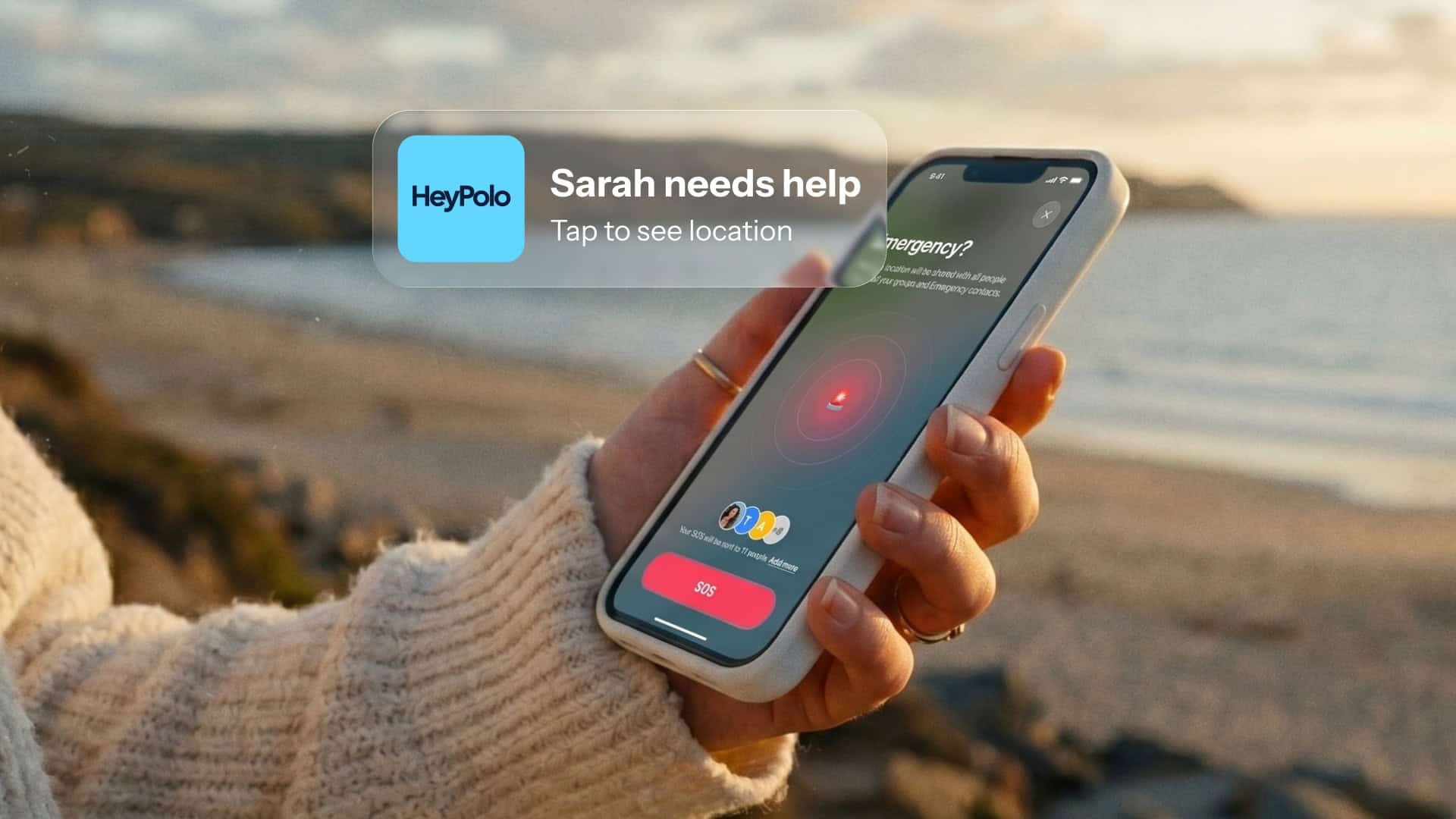
Beyond the map, the app includes low battery alerts, which sounds minor until you’ve panicked over why someone’s location dot went dark. (Spoiler: the phone died. It’s always the phone.) There are also driving safety features, including SOS and crash alerts, though some of these are still rolling out, so check what’s live in your version before counting on them.
And the thing you won’t get: ads. None in the app, ever.
Is there a free version of HeyPolo?
No, and I’d rather tell you that straight than bury it. HeyPolo has no permanent free tier, unlike some rivals that let you use a stripped-down version forever and upsell you constantly, and if you’d rather first get a read on whether HeyPolo is actually legit, that’s worth asking too.
But here’s the risk-free way in:
- Start with the 7-day free trial. No payment needed to see whether the app actually fits how your family moves through a week.
- If you subscribe, use the 30-day money-back guarantee. That gives you roughly five weeks of real use, and if it’s not working for your household, you get your money back.
Between the trial and the guarantee, you can genuinely test this with your own kids’ routines, the school run, the weekend sleepover, the “where are you” texts, before it becomes a line item in your budget.
Why no free tier? It’s not stinginess, it’s logic. HeyPolo’s only revenue is the subscription. There are no ads in the app and the company states it doesn’t sell your data. A free tier in that model means the company pays to serve you and gets nothing back, so it can’t exist. The subscription is the deal.
Why HeyPolo can charge less than rivals
This is the part I found genuinely reassuring, because “why so cheap?” usually has an ugly answer. Here, it has a structural one.
Most “free” or cheap family apps make money somewhere you can’t see: ads, or selling location data to brokers and advertisers. HeyPolo doesn’t have that revenue, so it doesn’t need to design the product around harvesting your data, it needs the subscription to be worth paying for. The company says this subscription-funded model is the plan going forward, not a launch-phase gimmick, and for a fuller picture of what HeyPolo is and how it works, the details back that up.
That’s also why there are no hidden costs to hunt for. No ad upgrades, no “premium data” tiers, no per-member fees. What you see on the pricing page is the whole picture. The practical implication for you as a parent: your family’s location data isn’t the product being resold, because there’s no one to sell it to.
HeyPolo vs Life360 vs Find My: what the price difference buys
Find My is free, and that’s a real advantage, but it’s Apple-only, so it’s useless if your family has a mixed bag of phones (mine does). It also caps location sharing at one hour or until end of day, and it has no SOS or crash alerts. Fine for “find my lost iPad,” less fine as a family safety app.
Life360 is the obvious paid rival, and it’s the one most parents have heard of. But it’s more expensive, it starts at $6.66/month, with no money-back guarantee, it shares user data, and its location sharing is all-or-nothing, no precision control, no time-limited sharing. Our side-by-side HeyPolo vs Life360 comparison breaks down which is better for different family types, but the short version is that HeyPolo is cheaper ($5.99/month, or $1.99/month on the yearly plan) and built around consent: each person decides when and how precisely they share.
Some of the coverage of HeyPolo you’ll find online includes a sponsored piece on PCMag (3 Reasons Why Parents Are Switching to HeyPolo, by PCMag BrandX). That’s sponsored content, not independent evidence, and I’m treating it that way. There’s also been independent coverage. HuffPost UK wrote it up as a family safety app from Surfshark, which is useful for confirming what the product is, but I wouldn’t mistake press coverage for a lab test either. For what it’s worth, a survey cited via Maclean’s and AllAboutCookies found roughly 75% of Gen Z are comfortable sharing their location with family, which suggests the consent conversation is less of a battle than parents fear.
If your actual need is content monitoring or screen-time management, HeyPolo isn’t your app, look at Bark, Aura, or Qustodio instead. No discount makes a location app the right tool for that job.
Privacy: what happens to your data
According to the app’s own policy, all data is encrypted in transit, end-to-end between phones and servers, and the company states it never sells, shares, or monetizes user location data, including coordinates and trip history. Those are the app’s policy claims, not something independently audited, so I’m reporting them as what HeyPolo says rather than verified fact. But the business model backs them up: with no ad revenue and no data sales, there’s no financial reason to break that promise.
So, is it worth it?
If you want location sharing with consent controls, on both iOS and Android, without ads or data resale, and you’d rather pay 50 cents per person per month than wonder how a “free” app is paying for itself, HeyPolo is a genuinely good fit. Start with the trial, use the guarantee if it doesn’t click, and check the current pricing on the official page before you decide.
(One transparency note: this site runs affiliate links, which means I may earn a commission if you subscribe, it doesn’t change what I found, but you deserve to know.)
Frequently Asked Questions
Is there a free version or free trial of HeyPolo?
There’s no permanent free tier — HeyPolo is subscription-only because the subscription is its only revenue, with no ads and no data sales to subsidize a free version. You can try it risk-free two ways: a 7-day free trial that requires no payment, and a 30-day money-back guarantee if you subscribe. Between the two, you can realistically test it for over a month.
What do you get for the money with a HeyPolo subscription?
You get consent-based location sharing on both iOS and Android, with each family member controlling when and at what precision they share. The plan also includes low battery alerts and driving safety features like SOS and crash alerts, though some are still rolling out. There are no ads in the app, ever.
Why is HeyPolo so much cheaper than other family location apps?
The low price is structural, not a gimmick. Most free or cheap family apps make money from ads or selling location data to brokers and advertisers; HeyPolo has none of that revenue, so it doesn’t need to design the product around harvesting your data. The company says the subscription-funded model is the plan going forward, not a launch-phase promotion.