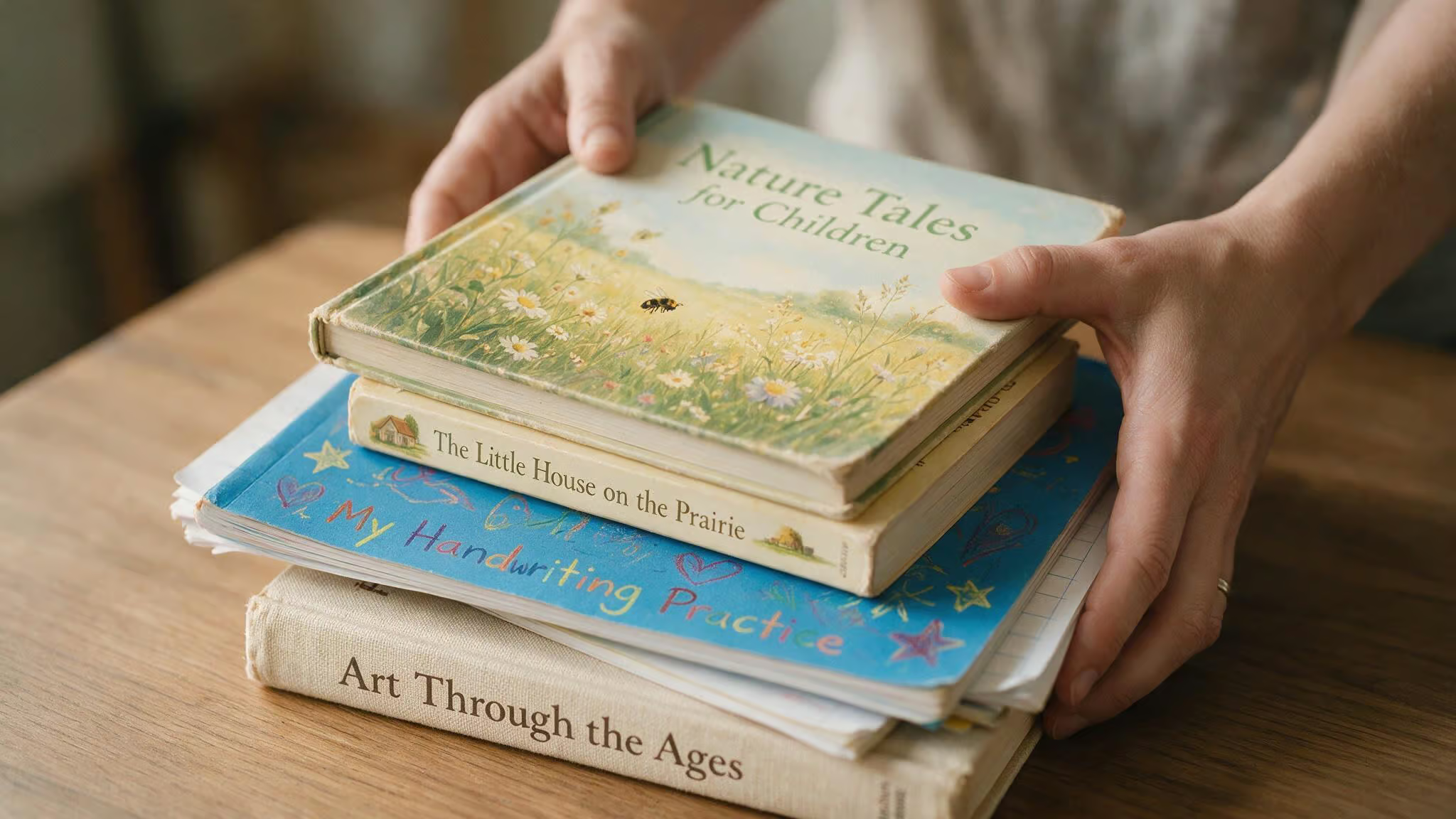
Buying new homeschool curriculum is expensive. You drop $200–$300 on a full set, the kid finishes it in three months, and now you’ve got a shelf full of workbooks with four pages written in. The alternative—piecing together a “potpourri library” from local sources—takes more effort, but it’s how you build a collection without emptying your wallet.
I’ve made every mistake: driving to a thrift store that had nothing but old romance novels, overpaying for a used set that arrived with half the pages torn out, and showing up to a resale event that ended two hours earlier than the website said. But I’ve also figured out what works. Here’s the playbook.
Key Takeaways
A true homeschool consignment store like Learning Cycle in Greenville, SC, offers services you won’t find online: a watchlist that calls you when a specific book comes in, a play area for children while you browse, and the option to hold items while you decide.
Large resale events like the Homeschool Idaho Curriculum Resale Event (cash-only, $10 selling space, open-air) and the CHEC Used Curriculum Sale in Colorado ($25 grab bag, donation items must be 5 years or newer) have strict, non-negotiable rules—knowing them ahead of time turns chaos into a smooth shopping trip.
If you have more time than money, swap communities like Paperback Swap (1.17 million books, free tier at $0.49 per swap or $20/year unlimited) and the Homeschool Curriculum Free for Shipping Facebook group let you get books for just the cost of media mail shipping.
Table of Contents
How to Find a Homeschool Consignment Store Near You (And Why It’s Worth the Trip)
The first time I searched “homeschool consignment store near me,” I got a list of generic thrift shops and a closed store that Google Maps still showed as open.
Start with Google Maps. Type in “homeschool consignment” and see what comes up. Then check Facebook—if the store’s page hasn’t posted anything in the last 30 days, it’s probably not active. Call ahead and ask a few questions: Do they have a watchlist?
Can they hold items? Do they post new stock on Facebook? A store that does all three is worth the trip.
Why go local instead of buying online? Because you can inspect the condition yourself. You can see whether the workbook is actually unused or if someone just erased the pencil marks. And local stores offer things no website can match.
Take Learning Cycle in Greenville, SC. It opened in 2013, moved to a bigger spot at 1208 Laurens Road in March 2025, and it’s run by Billy and Caroline—homeschool parents themselves. They have a watchlist service where they call you when a requested book comes in. They’ll hold items for you. They post new stock on Facebook.
And there’s a play area with a table and chairs so your kids can occupy themselves while you browse. They also have a meeting room for co-ops or events.
When you’re looking at a place near you, ask yourself: does the owner understand what a homeschool parent actually needs? If they don’t, you’re probably better off at a generic used bookstore and filling the gaps online.
Local Consignment Stores — More Than Just a Bookstore
Not every local store is created equal. Dedicated homeschool consignment stores are your best bet for curriculum. They carry the stuff you need: ABeka, BJU, Sonlight, Usborne, plus classic novels, board books, and learning resources. They also buy used items, so you can sell back what your kids outgrew.
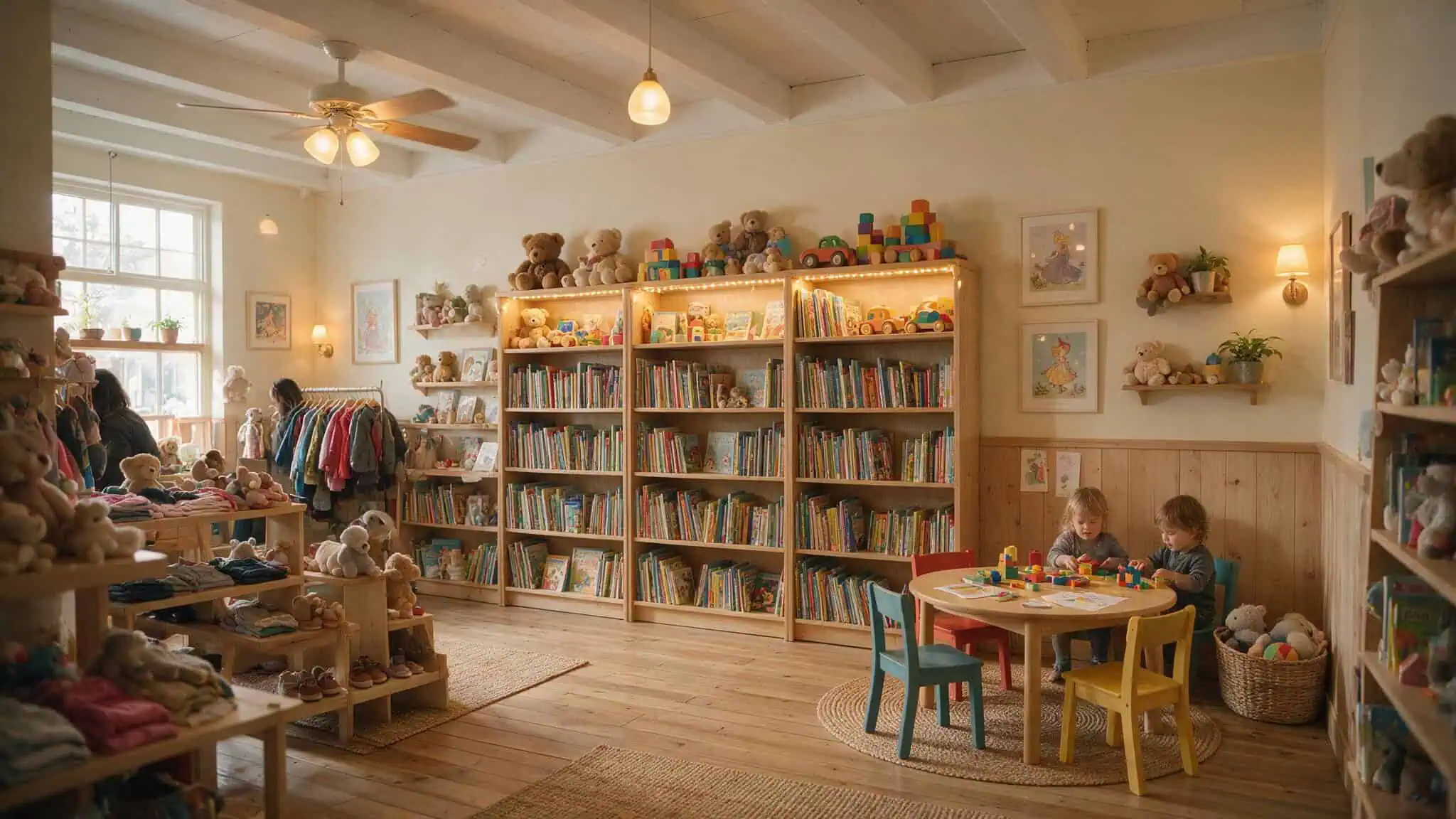
If you don’t have a dedicated homeschool store nearby, Half Price Books is a decent fallback. They have over 120 locations across the country, and they carry used homeschool curriculum brands like ABeka, Usborne, BJU, and Sonlight alongside regular books. The selection varies by store, but it’s worth checking if you’ve got one close.
Generic thrift shops? They’re hit or miss. If you live in an area with lots of homeschooling families, you might find occasional gems. If not, you’ll waste gas for nothing. Used book stores are great for literature and novels—you can build up your home library with picture books and chapter books—but you probably won’t find full curriculum sets there.
The key is knowing what each type of store is good for and matching it to your current need.
Homeschool Curriculum Resale Events — Your Treasure Map
Resale events are a different animal. They’re temporary, usually once a year, but the volume and community make them worth the planning. The catch: every event has its own set of rigid rules. Miss one and your day is ruined. Here are two examples to show what I mean.
Homeschool Idaho Curriculum Resale Event
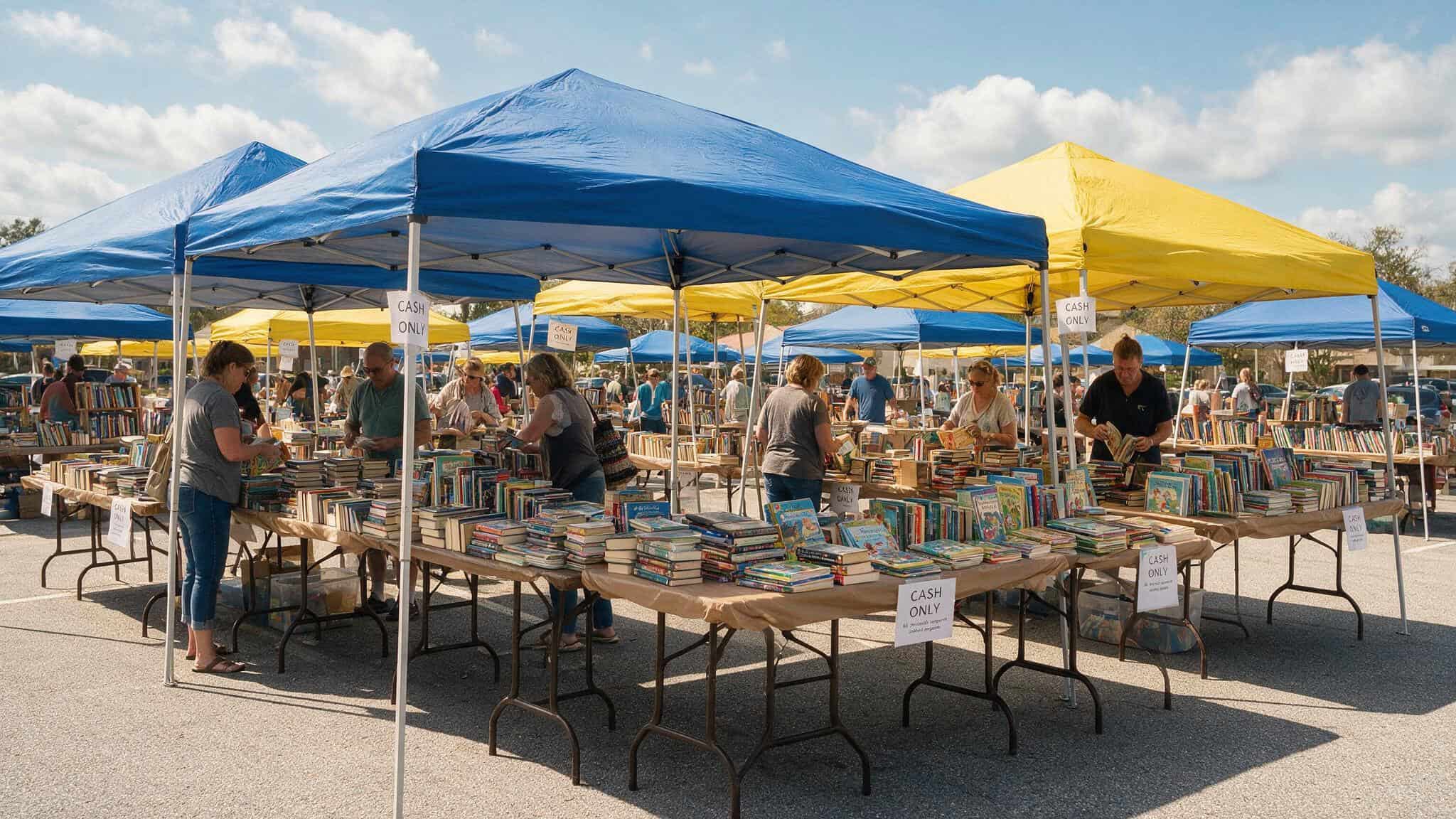
This one happens on Thursday, June 4, 2026, from 10 AM to 1 PM at Treasure Valley Baptist Church, located at 1300 S Teare Ave in Meridian, ID. It’s open-air and cash-only. Admission is free.
If you’re selling: a space costs $10 and gives you a 4′ x 10′ area behind your vehicle. You can rent a limited number of 8′ x 2′ tables for $12 each, but they must be reserved ahead of time. All sellers must arrive and park before 9 AM. No vehicles can move in the selling area after that—you’re stuck until 1 PM. And here’s the kicker: they won’t accept any unsold items at the end. Whatever you don’t sell, you take back home. Sellers get a 1-hour presale before the public.
Bring your own tables and chairs, a pop-up awning if you have one, and plenty of cash for change.
CHEC Used Curriculum Sale (Colorado)
This is a two-day event on Wednesday and Thursday, June 10-11, 2026, at Reformation Church (489 Rocky Cliff, Elizabeth, CO). It runs alongside the Rocky Mountain Homeschool Conference.
The rules here are different. If you’re donating items for the sale, they have to be 5 years old or newer and barcoded only. They provide a tax receipt. You can drop off donations at the CHEC office by appointment, or contact regional drop-off coordinators (there are lists for Greeley, Denver/Aurora, Fort Collins, Pueblo, Littleton, etc.).
If you’re selling, you register by June 8 and drop off your items on June 10 between 7 and 10:45 AM. About 6-8 weeks after the event, they mail you a check for what sold. Unsold items can be picked up on June 11 from 4-5 PM at the church, or on June 12 from 9 AM to 1 PM at the Denver Marriott Tech Center. If you don’t pick them up, they become property of CHEC.
They also have a Grab Bag Sale on Thursday from 2:30-4 PM—$25 for a bag you fill with unsold items. Rainbow Resources donates the bags. Volunteers get early shopping on Wednesday from 11 AM to 12 PM. And there’s a single-parent shopping voucher available if you need it.
The lesson: read the rules before you go. Know your drop-off times, pickup windows, and whether you need cash or a check.
Online Marketplaces — The Convenience Trade-Off
Local is best, but sometimes you need something specific and can’t find it nearby. Online marketplaces fill that gap.
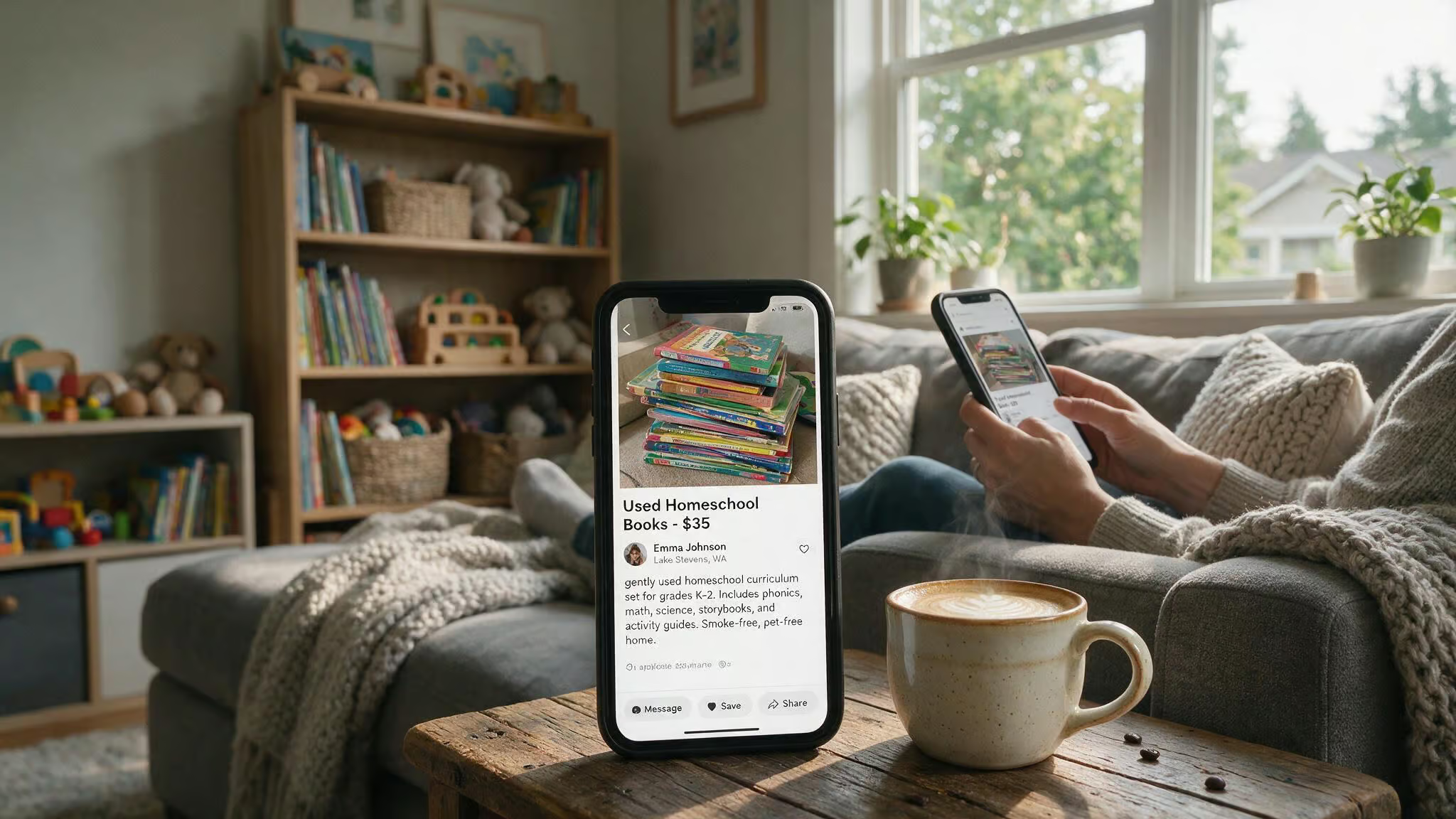
Here’s what I use, in order of preference:
- Homeschool Classifieds – The largest dedicated site for used homeschool materials. It’s basically Craigslist for homeschoolers. You can also find local groups and events listed there.
- Amazon Used – Search for a specific item, then click “New & Used from $x.xx” to see third-party sellers. Some items qualify for free Prime shipping. I’ve ordered used items this way and been satisfied with the condition.
- eBay – Familiar, easy to set up saved searches for specific titles. Set an alert and wait for a deal.
- Facebook Marketplace – Filter by location to find people near you selling homeschool books. Meet in a public place.
- Chegg – Known for college textbooks, but worth checking for homeschool material. You can rent textbooks with a 21-day guarantee and save versus buying.
- Library sales and giveaways – Don’t overlook your public library. Lots sell or give away books they’re weeding out. I’ve found some of my kids’ favorite books in the give-away pile. Libraries also offer interlibrary loan, story time, STEM programs, book clubs, and museum passes you can check out.
Specialized Online Stores — For the Exact Title You Need
When local stores don’t carry a specific brand or edition, these online stores are your best bet. Inventory changes constantly, so check back often.
- Second Harvest Curriculum – Family-run, carries BJU Press, Heart of Dakota, Life of Fred, and Math U See. Good prices, and you can sell your used stuff to them too.
- Good and Acceptable – Online storefront that also lets you sell. They resell products from Silk Road Books. I bought used items from them on Amazon and they were in good condition.
- The Backpack – Specializes in older and out-of-print textbooks from ABeka, BJU, Harcourt. You can call to order or use their sister site, Used Textbooks Online.
- Thrift Books – Over 160 million used books in stock. Prices average about $4 per book, and shipping is free over $10. I’ve found Usborne and DK here.
- AbeBooks – Connects you with independent sellers worldwide. There’s no free shipping, but the selection is large and prices are often low even with shipping.
- Goodwill Books – Online store from Goodwill. Free shipping on everything, no minimum. Your money supports their mission.
- Swap.com – Online consignment and thrift shop. They started with clothes but now sell kids’ books too. Prices are lower than Thrift Books, so it’s worth checking.
- Academic Superstore – Listed as another resource for used homeschool curriculum.
Bookmark the ones that carry your curriculum brands. When you need a specific title, these are the first places to look, especially if you’re seeking the best homeschooling books for parents.
Swap Communities — Nearly Free, But Not Instant
If you have more time than money, swap communities are the way to go. You only pay shipping, but you need patience.
Paperback Swap (PBS) – You list books you’re done with. When someone requests one, you mail it. You earn a credit and can request any book from the 1.17 million available. Your only cost is the postage to send a book out.
Membership tiers: free (but $0.49 per swap), $12 for 30 free swaps, or $20/year for unlimited free swaps. The math works if you swap frequently. I’ve found Dr. Seuss, Mercy Watson, Magic Tree House, Narnia, and even curriculum brands like BJU, ABeka, and Usborne here, and for more on organizing your homeschool curriculum and selling used curricula, check out this collection of tips and resources.
Homeschool Curriculum Free for Shipping Facebook group – People give away curriculum for free—you pay shipping. It’s like Freecycle mixed with Paperback Swap but only for homeschool stuff. Many of the posts are links to free downloadable resources, so scroll through. Media mail is cheap but slow; it’ll take a few extra days.
This works best for families who plan ahead. Don’t count on it for next week’s lesson.
Facebook Groups — The Fastest Way to Score a Deal
Facebook groups move fast. The best finds are gone within hours. Join the largest groups, turn on notifications, and be ready to purchase when you see something good.
- Homeschool Buy Sell Trade – Large group, strict sales/trades only. No discussion, just listings.
- Homeschoolers Curriculum Swap – Members post resources for sale.
- Homeschool Curriculum Sale or Trade – I’ve seen a full set of Beatrix Potter books priced at $20 here, plus kids’ history books and Saxon Math.
- Homeschool Used Curriculum Swap – Books and resource books pop up frequently.
Most items are reasonably priced, and you can ship via media mail to keep costs down. Just remember: media mail is cheap but slow.
Free and Donated Resources — The Hidden Rules
Free sounds easy, but it comes with strings. Co-ops often have a free table where families leave things they don’t need. I’ve found the Sequence for Kids! board game, ABeka books, and teacher-created resources that way. You take what you want, leave what you don’t.
Donating to resale events isn’t as simple as dropping off a box. CHEC, for example, only accepts items that are 5 years old or newer. They must be barcoded. They provide a tax receipt, but you need to contact regional drop-off coordinators and make appointments. If you show up with a box of stuff that’s out of date, you’ll be turned away.
Library give-away piles are another free source. I’ve found some of my favorite books sitting in a box marked “free.” Public libraries also let you request materials from other libraries through interlibrary loan—a free loan.
Selling Strategies — Turn Used Curriculum into Cash
The goal isn’t to buy cheap—it’s to keep the cycle going. Sell what you no longer need and use the money for next year’s curriculum.
Preparing items: If a workbook is written in pencil, erase the writing and sell it as gently used. That’s an easy upgrade. If it’s written in pen, be honest about how many pages are filled in and price it lower. Nobody likes surprises.
Selling at events: Follow the rules exactly. At Homeschool Idaho, sellers must arrive before 9 AM, and no vehicles move until 1 PM. You only get the 4′ x 10′ space behind your car—no extra room. Bring your own tables and chairs, and have plenty of cash for change. Unsold items are your problem; the event won’t take them.
At CHEC, you register by June 8, drop off items June 10, and get a check 6-8 weeks later. Unsold items need to be picked up during designated windows. If you don’t, they’re donated.
Selling at consignment stores: This is ongoing, not a one-day event. Ask about their consignment split. Learning Cycle buys used items outright too, so you can walk out with cash same-day.
Preparation is everything. How you present the items matters.
Building Your Potpourri Library — A Local-First Strategy
No single source covers everything. That’s the point of a potpourri library. You piece it together from local consignment stores, resale events, online marketplaces, swaps, Facebook groups, free tables, and library sales.
Start local. Visit the homeschool consignment stores in your area. Check their Facebook pages for new stock. Call ahead to ask about watchlists and hold policies.
Go to the resale events with a plan and a stack of cash. Use online sources for the specific titles you can’t find nearby. Sell back what your kids outgrow to recoup costs.
One homeschool parent named B.R.T. put it well after attending a used curriculum sale: they found deals on quality items that were organized and easy to browse. It benefited their homeschool by helping them create a rich, varied learning environment—the very essence of Homeschool Potpourri.
If you’re in Texas, the Texas Homeschool Coalition (THSC) offers coaches and practical resources to help you along the way. And remember: the best resource is other homeschool parents. Ask around. Someone in your local group probably knows about a store or event you haven’t discovered yet.
Start with that search for “homeschool consignment store near me.”
Frequently Asked Questions
What to do with used homeschool curriculum?
You can sell it at a consignment store or resale event, donate it to a co-op or library, or swap it through communities like Paperback Swap or the Homeschool Curriculum Free for Shipping Facebook group. If the workbooks are only written in pencil, erase the marks and sell them as gently used to get a better price. The goal is to keep the cycle going — sell what you outgrew and use the money for next year’s materials.
What’s the difference between a homeschool consignment store and a resale event?
A consignment store is open year-round, lets you sell or buy anytime, and often offers extras like a watchlist service or a play area for kids. Resale events are temporary, usually once a year, with massive inventory but rigid rules — cash-only, strict drop-off times, and you must take unsold items home. Consignment stores are better for ongoing needs; events are better for scoring volume deals if you prepare.