Textbook math in the morning, unschooling science in the afternoon. Living books for history, a documentary for geography. Book smart doesn’t mean rigid. It means intentional.
I’ve homeschooled for 15 years, tried every major method, and none of the homeschooling methods I tried harmed my children. It’s about knowing when to lean into a textbook, a workbook, or a memory program, and when to let your kid chase a rabbit trail.
This article is about how to do that balance — without guilt, without overplanning, and without pretending one method is the only way.
Key Takeaways
Skill-based subjects like math, grammar, and phonics benefit from a structured, textbook-heavy approach, while content subjects like science and history can be taught through hands-on projects, living books, and child-led exploration.
Experimenting with different methods (unit studies, Classical, Charlotte Mason, unschooling) is normal and helpful — think Goldilocks, not failure.
The author’s 15 years of trial and error, including a season of single parenting while pregnant with #4, showed that flexibility is the real superpower: you can switch methods when life changes, and your kids will be fine.
Table of Contents
The Goldilocks principle: why experimenting is part of the process
I started with unit studies. Loved them. We did literature, field trips, and adventures. Then their dad left and I was pregnant with #4, and I had to back off of that mommy-intensive method.

I switched to Classical. Then we moved to a new town and I needed income, so I left Classical Conversations and found something else. Later I tried Charlotte Mason, unschooling, even a traditional textbook year. None of the homeschooling methods I tried harmed my children. It just taught me what worked for each season.
That’s the Goldilocks principle. You try the too-hot porridge, the too-cold porridge, the just-right porridge. You don’t have to stick with the first one. In fact, you shouldn’t.
As John Taylor Gatto observed, there is no proven method for mass education; every child requires a tailored approach. Custom takes trial and error.
Field note: Don’t commit to a method until you’ve tested it in your actual home rhythm for at least two weeks.
Some homeschool philosophy groups claim one must be a purist — that you’re either a Charlotte Mason homeschooler or you’re doing it wrong. Ignore them. You can draw from the best parts of each method. That’s the whole point of eclectic homeschooling, which involves selecting and combining elements from different homeschooling methods to create a customized fit for each child and family.
When to go book smart: skill-based subjects that benefit from structure
Here’s a framework I’ve landed on after years of mixing: skill-based subjects need structure. Math, grammar, phonics, foreign language — these are cumulative. You need to master one step before the next. A textbook or workbook that builds sequentially is a good tool for that.
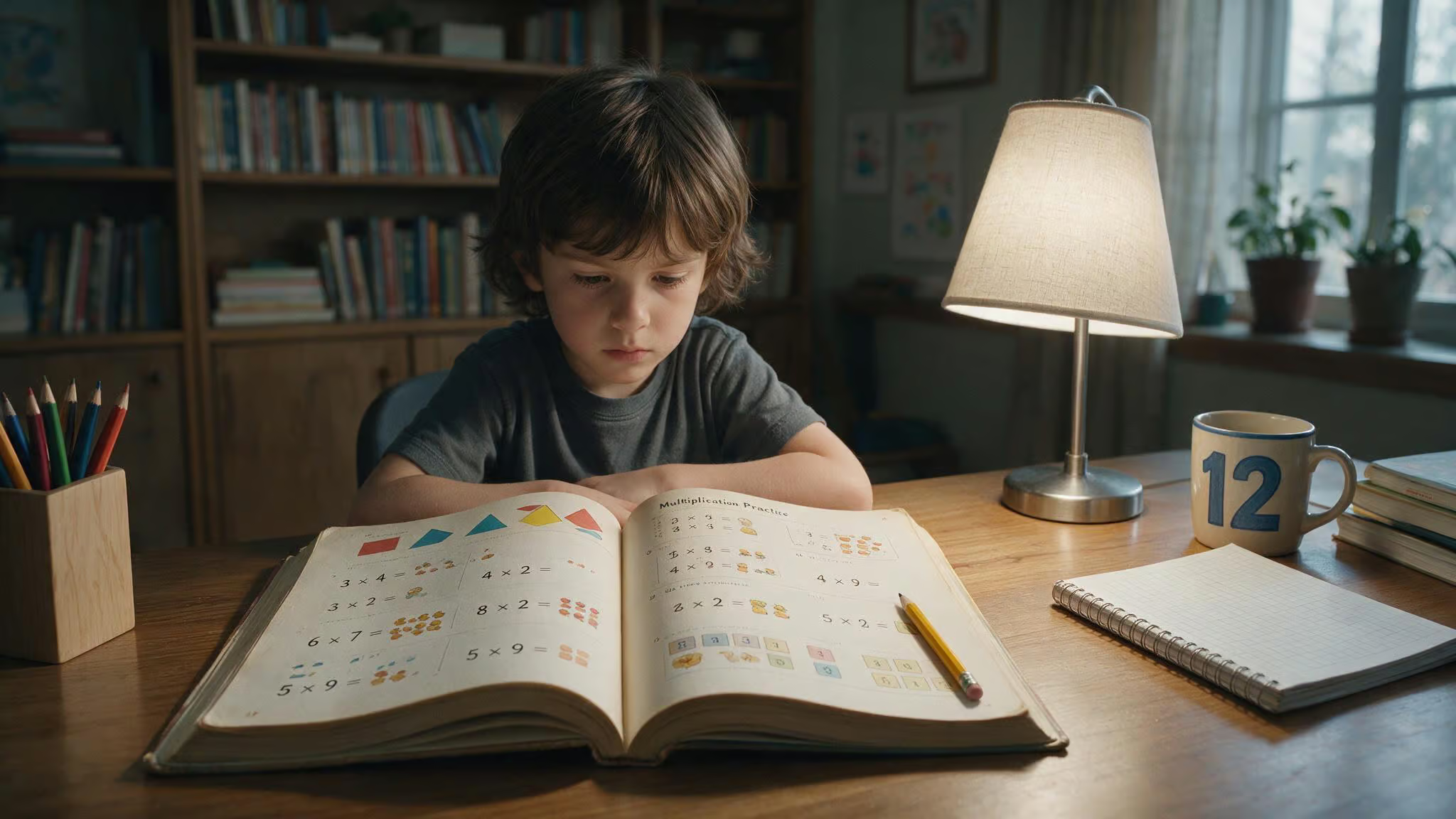
For example, my sample 4th grader’s curriculum looked like this:
- Language Arts with living books (Charlotte Mason style)
- History memory work with a Classical Conversations CD (Cycle 1)
- Science with Apologia’s Flying Creatures and its journal
- Math with Teaching Textbooks on the computer
That’s the structured, “book smart” part of the day. It took about three hours. After that, the afternoon was wide open for exploration.
Some kids are natural textbook lovers. My oldest daughter has been that way since she was four — she thrives on reading and busywork. Another kid of mine loves grammar workbooks but does math with beans and blocks, unschools science, and uses Charlotte Mason for fine arts. Same day, different mix. The key is to match the tool to the subject and the child, and the best homeschooling books for parents offer crucial guidance and practical strategies to help tailor that mix.
When to go potpourri: hands-on, interest-led learning
This is where content subjects live: science, history, art, music. You can go outside at night, sketch the moon, memorize the planet names, and watch a documentary. For a collection of tips, tricks, and resources on organizing curricula or exploring virtual programs, that’s classical memory work plus Charlotte Mason nature study — all in one evening.
My oldest boy unschooled for kindergarten and most of first grade. Then we moved to Charlotte Mason. Now he’s above the curve for middle school. The switch didn’t hurt him. It helped.
You can do a theme-based learning unit on Ancient Egypt using classical memory work, Charlotte Mason living books, a unit study lapbook, and a field trip to the museum. Or do literature-based learning on Shakespeare by reading the play, watching a performance, and building a model of the Globe.
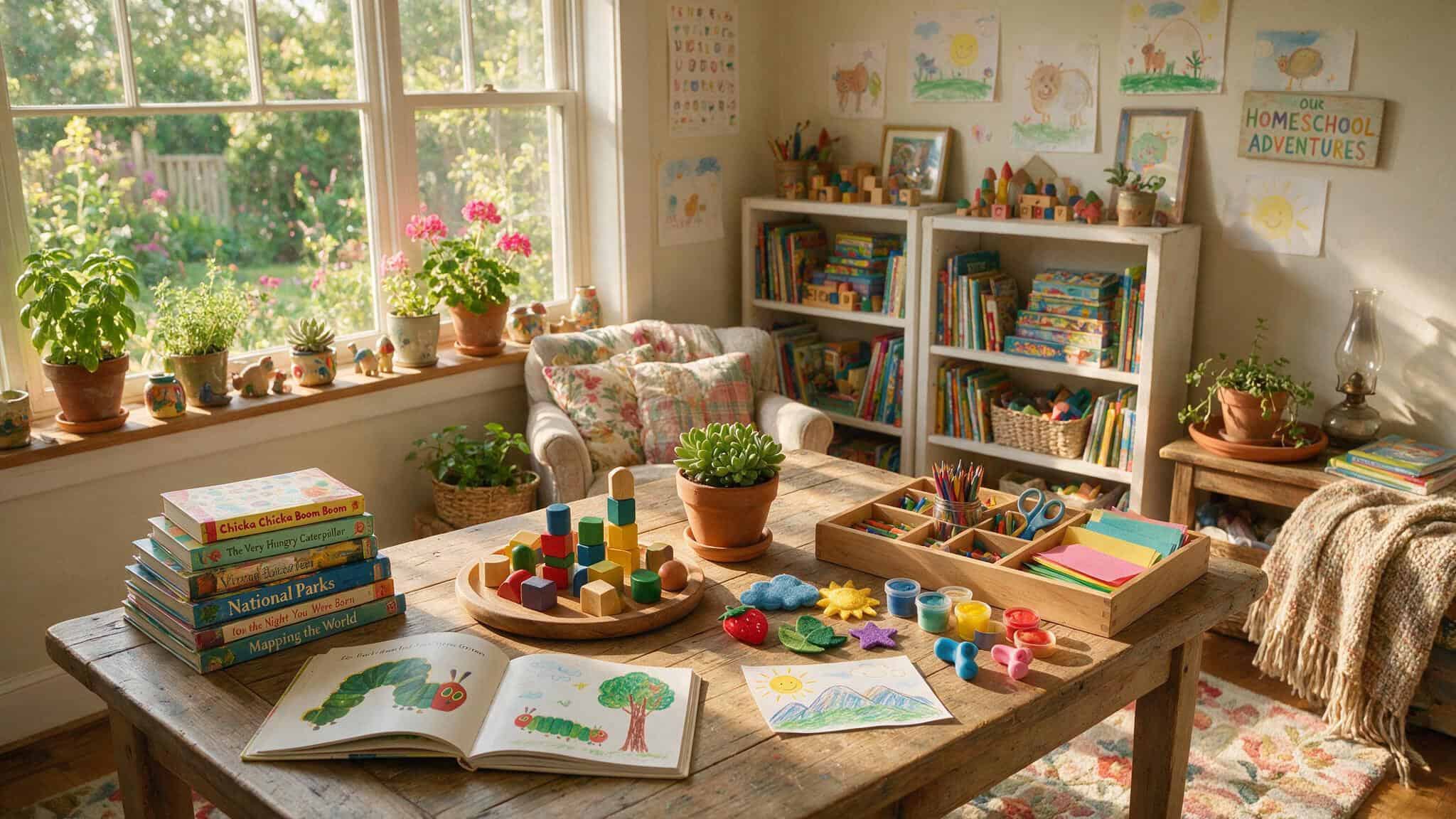
Co-ops are a winning strategy in Eclectic homeschooling. We’ve done cooking, sewing, art, Scouts, sports, a Trivia Team — all through co-ops. For visual inspiration, check out these Homeschool potpourri photos of eclectic learning spaces, mixed curriculum stacks, and hands-on activities.
Seasons of life: when and why to shift your balance
Life changes. Your approach should too. When my husband left and I was pregnant with #4, I had to pivot from unit studies to something less intense. That’s when I switched to Classical — it was more structured, less prep for me. Later, after a move and a need for income, I left Classical Conversations and had to rebuild from scratch.
Each season got a different balance. Some years were heavy on book smart because I needed the kids to be independent. Other years were light because we were in survival mode. That’s not failure. That’s flexibility.
Bottom line: When life gets hard, drop the extras first — you can always add textbooks back later without guilt.
If you’re in a high-stress season — new baby, job change, health issue, it’s okay to drop the structured stuff and just do living books and field trips. You can always add the textbooks back later.
Practical planning: avoiding overplanning and research fatigue
For a comprehensive guide to the mixed-bag approach, Homeschool Potpourri covers curriculum blends, local resources, and real-mom tips for creating a varied learning environment. I’ve been there.
Here’s what I do now to keep it manageable.
Organization strategies that actually work
- Digital folders per subject on my computer — one for math printables, one for science videos, etc.
- Color-coded bins for physical materials — grab and go.
- A master schedule that’s a big-picture view of the week, not a minute-by-minute plan.
- Weekly planning sessions — about an hour on Sunday to review what we did and prep what’s coming.
- A filing system for completed work — portfolios, tests, art projects.
Scheduling techniques: finding the right daily rhythm
Try these:
- Block scheduling: 2–3 hour focused sessions for deep work.
- Time-boxed activities: 30–45 minute segments for shorter attention spans.
- Subject-based rotations: different subjects on different days — Monday math and science, Tuesday history and writing.
- Interest-led learning periods: let your kid’s curiosity drive the day for a while.
A typical day might have 3–4 hours of core learning (structured), then projects, reading, physical activity, and creative time. That’s enough.
The “sample, don’t marry” approach to curriculum selection
I learned the hard way: don’t buy the whole curriculum before you try it. Now I narrow my choices to two or three, let my kids look at online samples, and commit to a trial period — usually two weeks. If it works, great. If not, I try something else. That saves money and sanity.
The big picture: why “booksmart” matters (and why it’s okay to want it)
Then I read about two cultural frameworks for education. The Western “mind model” sees learning as curiosity-driven — understanding the world. The East Asian “virtue model” sees learning as a moral imperative, a duty to family and society. Dr. Jin Li’s book Cultural Foundations of Learning explains this.
Neither is wrong. Both can coexist in an eclectic homeschool. A “book smart” foundation doesn’t have to kill curiosity. It can be the ground that curiosity grows from.
Memorizing dates isn’t the point — having a general chronological framework and understanding the “whys” of history is. But some core knowledge is culturally important. You can teach it with structure, then let your child’s passions fill in the rest.
So if you want academic rigor, don’t feel bad. You’re not being a tiger mom. You’re giving your kid a solid foundation. Just make sure there’s room for the potpourri too.
Adapting for neurodivergent learners: when “book smart” needs modification
For neurodivergent learners — dyslexia, ADHD, ASD, dysgraphia, the same academic rigor can be delivered through different tools.
- Audiobooks from Bookshare or the National Library Service for blind/low-vision kids.
- Dictation and Grammarly for dysgraphia.
- Socratic discussion for comprehension — talk through the material instead of writing it.
- Manipulatives for math — beans, blocks, online interactive programs.
My high-functioning autistic son flourished in music and speech but lacked in other areas. We adapted. He didn’t need a workbook for history; he needed a documentary and a conversation.
The goal is the same. The pathway is different. Eclectic homeschooling, which allows extensive individualization by combining resources and methods, makes that possible.
You don’t have to pick one method and stick with it forever. You can mix textbook math with unschooling science, Classical memory work with Charlotte Mason living books, and a co-op for art. You can switch when life changes. You can give your kid a book smart foundation without killing their love of learning.
That’s the potpourri approach. That’s what works.
Frequently Asked Questions
How do I become book smart?
In a homeschool context, being book smart means building a structured academic foundation in skill-based subjects like math, grammar, and phonics using sequential tools like textbooks or workbooks. It’s about intentional, focused learning in those areas, not about drilling kids until they hate it.
What is a booksmart?
Book smart refers to a structured, academically rigorous approach to learning—emphasizing core knowledge, memorization, and sequential mastery in subjects like math and grammar. When balanced with hands-on, interest-led exploration, it builds a solid foundation without killing curiosity.
Where is the best place to sell used homeschool curriculum?
Online marketplaces, local homeschool co-op swap boards, and Facebook groups dedicated to curriculum resale are common options. The key is to try before you buy so you don’t end up reselling something that didn’t work for your family in the first place.
What subjects need a textbook-heavy approach versus hands-on learning?
Skill-based subjects like math, grammar, phonics, and foreign language benefit from structured, sequential textbooks because they build cumulatively. Content subjects like science, history, art, and music work well with hands-on projects, living books, documentaries, and child-led exploration.