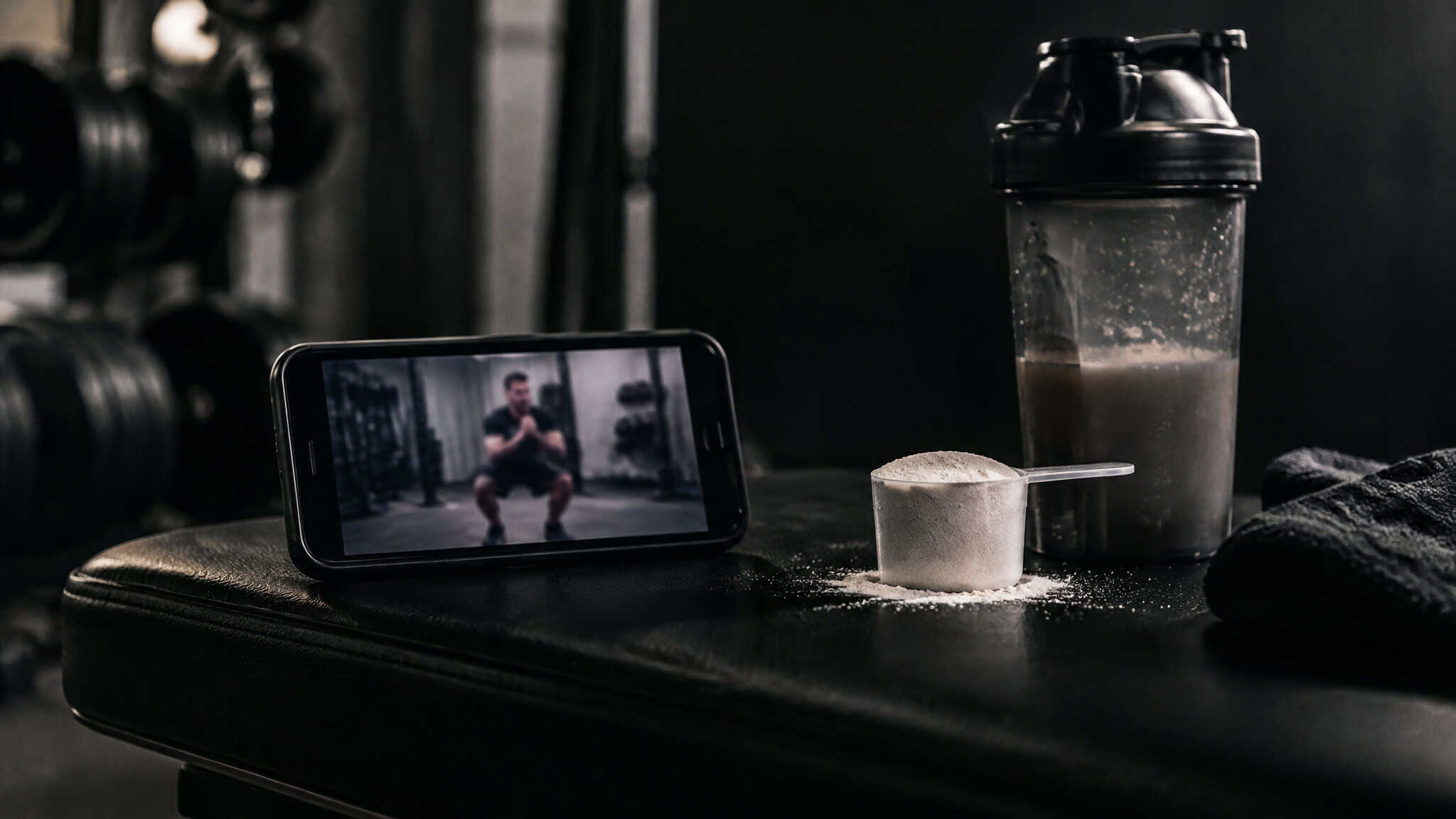
A few weeks ago my phone served me a video of a man tipping a scoop of pre-workout powder straight onto his tongue. It arrived between the school car-line schedule and a reminder about picture day, which is to say: I did not ask for it, I did not want it, and I watched the whole thing anyway. That’s how the fitness trends TikTok keeps finding all of us. They slot into the feed uninvited, usually at the exact moment you’re too tired to argue with a stranger promising a smaller waist by Friday.
Some of what’s in there is genuinely fine. Some is selling you a body part you never asked to feel bad about. And a couple of things can actually hurt you. Here’s the honest triage, plus the 60-second check I now run before anything gets tried at home.
Key Takeaways
12-3-30, walking at 3 mph on a 12% incline for 30 minutes, is the rare viral workout trainers rate, as long as you let go of the treadmill handles.
Dry scooping pre-workout powder is dangerous and possibly deadly: dry powder in the lungs causes inflammation and can trigger respiratory or cardiovascular distress.
The 60-second check works in the order the video shows you things: hedged wording, findable credentials, affiliate links, scope, then a professional’s confirmation.
Table of Contents
Why your feed is full of workouts you didn’t ask for
The fitness trends TikTok picked for you weren’t picked by anyone who knows your body, and most of the people making them have no training. That’s not a hunch. The platform’s fitness corner, FitTok, has racked up a reported 300 billion views, and survey data shows about 4 in 10 U.S. adults now get health information from social media or podcasts. For adults under 50 it’s about half, and two-thirds of people stumble onto this content without ever looking for it.
It finds you. No shame in that; for a lot of people, this is simply where health information lives now.
The credibility problem is the math. Researchers analyzed 6,828 health and wellness influencers with 100,000-plus followers and found only about 4 in 10 list a health professional background. About a third call themselves coaches, 3 in 10 call themselves entrepreneurs, and 1 in 10 point to life experience. “Coach” is a job title you give yourself.
Separately, research cited by ShinyShiny in partnership with Cavendish Online found that 1 in 4 TikTok fitness influencers give wrong advice.
To be fair, it’s a mixed bag, not a wasteland. About half of people who consume influencer health content say it helps them understand their health, a third say it makes no difference, and 1 in 10 say it left them more confused.
So here’s the promise of this piece: three buckets, one verdict per trend, and a safety check you can run in a minute.
| Trend | What it promises | Verdict | The catch |
|---|---|---|---|
| 12-3-30 | Real cardio results from just walking | Legit with caveats | Gripping the handles strains the lower back, and the 12% incline can pressure joints |
| Weighted hula hoop | A flatter stomach and slimmer waist | Hype | Spot reduction isn’t real, so it won’t directly slim your waist |
| Ab-shred and “Mom Pouch” content | A six-pack from one daily exercise | Hype | Abdominal definition depends mostly on low body fat, not targeted moves |
| 600 Calories in 60 Minutes | A workout’s worth measured in calories | Hype | Calorie burn isn’t how workout quality is measured, and trackers overestimate it |
| Proffee | Faster recovery and better fat burning | Hype | Coffee after a workout delays recovery and raises cortisol |
| 75 Hard | A total life overhaul in 75 days | Dangerous | Two 45-minute daily workouts overtax the nervous system and raise injury risk |
| Dry scooping | A turbocharged workout via faster caffeine absorption | Dangerous | Dry powder in the lungs causes inflammation and can trigger respiratory or cardiovascular distress |
One caveat: the view counts here come from earlier coverage, so treat them as snapshots, not live numbers.
The rare viral workout trainers actually like
Yes, 12-3-30 works, with a couple of conditions, and it’s the rare viral workout trainers actually rate. The name is the whole protocol: walk at 3 miles per hour, on a 12% incline, for 30 minutes. The #12330challenge hashtag pulled a reported 1.5 million views, which is small by FitTok standards and probably a good thing.
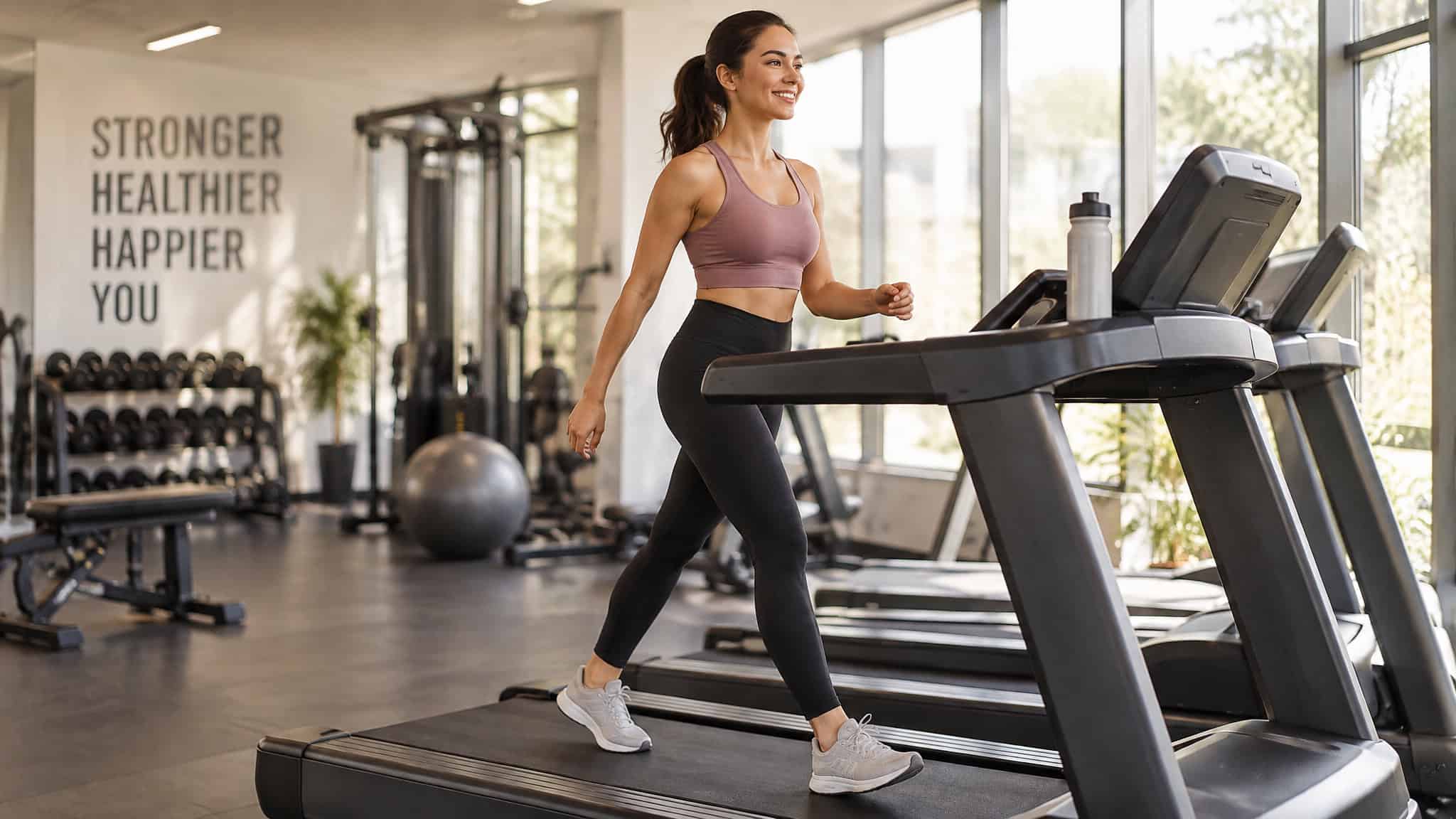
Trainers Monica Jones and Jess Brown judge it the rare fad worth keeping. It’s accessible, it’s lower-impact cardio, and it’s genuinely good for beginners. If you want the broader menu of what’s circulating, the trending workout roundup breaks down what each format involves and who it suits.
The caveats are what make the yes honest. Gripping the treadmill handles stops your abs from bracing and shifts the strain into your lower back. A 12% incline can pressure joints, especially when you’re new to it. And as a fat-loss tool, it ranks low in the toolbox. If you’re wondering whether 12-3-30 beats regular incline walking for fat loss, it doesn’t, because it is regular incline walking. That’s not a knock on the workout itself, it’s a genuinely useful, lower-impact way to move; it just isn’t the fat-loss shortcut the name implies.
The catchy name is the innovation. While we’re here: that sweat-soaked hoodie proves nothing. Sweat reflects thermogenesis, your body regulating its temperature, not workout intensity.
The deeper issue is that viral workouts are generalized. Jones and Brown both point out that a trending video doesn’t account for your health, your family history, your flexibility, or your range of motion. Trainers describe the same pattern: someone sees a trending workout, tries it the same day with no warm-up and no equipment check, and only later discovers the movement assumed mobility or base strength they didn’t have. The tell is soreness in the wrong place.
Lower back instead of abs. Shoulders instead of chest.
Not everything viral is a scam. Weighted hula hooping and walking challenges are fine as activity boosters, and roundups that treat everything on the platform as a scam overcorrect.
The trends selling you a body part
Any trend that measures success by a body part or a calorie number is selling to insecurity, because those are the easiest metrics to promise and the hardest to verify. The exercises underneath often aren’t even bad. The metrics are.
Weighted hula hoops and ab-shred challenges: the body-targeting hype category
No, a weighted hula hoop won’t directly slim your waist, and neither will any ab challenge. The weighted hula hoop trend, with a reported 69.6 million views, promises a flatter stomach and a slimmer waist. As a way to add some daily activity, it’s fine. It is not the reason anyone’s body actually changes.
Ab-shred and “Mom Pouch” content works differently: it targets a body part you may already feel sensitive about, then sells the fix. Brown is blunt about the business model, saying body-part targeting exploits insecurities as click-bait to attract money. And the fix doesn’t work. “We’ve proven again and again that spot reduction isn’t a thing,” she says. Abdominal definition depends primarily on low body fat, and abs are among the hardest places to lose it because of the fat receptors concentrated there.
The timeline promises are the same story. Jones points out that challenges guaranteeing results in days or weeks are unrealistic; fitness is a lifelong thing, not a 10-to-90-day project. Bodies don’t work on content schedules.
‘600 Calories in 60 Minutes’ and proffee: when the metric itself is wrong
The proffee trend gets the ingredient right and the timing wrong. Coffee is a legitimately potent pre-workout: it helps with fat burning, motivation, and work capacity. But the trend, with a reported 146.8 thousand views, has you drinking it after the workout, which delays recovery and raises cortisol, the stress hormone, right when your body should be clearing it. A real ingredient, misapplied.
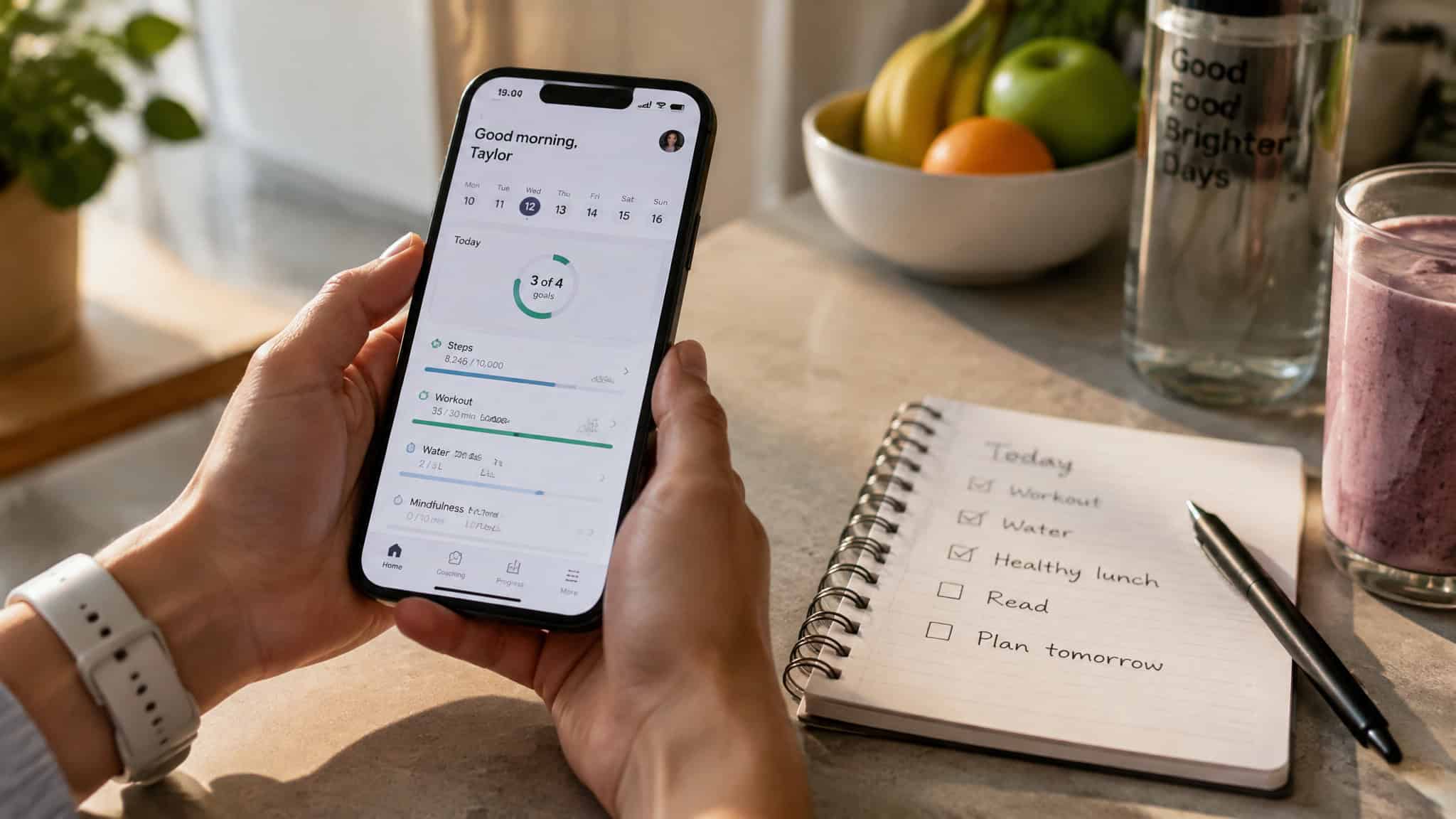
The 600 Calories in 60 Minutes challenge, a reported 540.9 thousand views, is actually a Jeanette Jenkins workout that’s over two years old, recycled content getting new life. The problem is the scoreboard. Workout quality is intensity combined with training volume relative to your body and your goals, not calories burned or minutes spent. Sleep, recovery, and food intake shape how a workout lands too. And most fitness trackers overestimate calorie burn anyway, so the number on your wrist is a rough guess wearing a confident face.
The ones that can actually hurt you
Some of these aren’t just a waste of time. Dry scooping and 75 Hard can genuinely hurt people, in two different ways: one mechanical, one psychological. It’s worth separating them, because vague danger-talk is exactly what you’ve already learned to tune out.
Dry scooping pre-workout powder: the trend that can genuinely hurt you
Yes, dry scooping is dangerous, and possibly deadly. The trend involves tossing a scoop of pre-workout powder straight into your mouth, supposedly to turbocharge your workout through faster caffeine absorption. Jones calls it dangerous: dry powder that hits your lungs causes inflammation and can trigger respiratory or cardiovascular distress. That’s a real problem if cardio is the goal, because inflamed lungs are a terrible training partner.
She sees it as instant-gratification culture in supplement form, which tracks. Coverage reported the trend as blocked from the platform, though I’d treat that as a report, not a guarantee the videos are gone.
Red flag: Any trend that sends dry powder into your lungs is trading your airway for a caffeine buzz. Skip it entirely.
Hard: where extreme challenges break, mechanically and psychologically
No, 75 Hard isn’t safe for most people, and it’s especially wrong for anyone who hasn’t trained in years. Andy Frisella created the challenge, and its hashtag pulled a reported 127.9 million views, so you’ve probably seen a friend post about it. Joe Mitton of MittFit calls it among the most extreme things he has encountered, and there’s no science behind it. The two 45-minute daily workouts are highly taxing on the central nervous system, which is the wiring that runs everything, and they drastically raise injury risk for untrained people.
The intense daily body scrutiny could contribute to eating disorders or body dysmorphia. And the no-cheat-meal rule is unnecessary when meals are built around your body, goals, and lifestyle.
The appeal is real, and it’s worth saying so kindly. A challenge with hard rules feels simpler than figuring out your own plan. Here’s the cycle experts describe: someone goes hard on a challenge for a week or two, breaks the all-or-nothing streak once, and then quits training altogether, because the frame never left a middle ground to land in. That’s the psychological failure mode.
The mechanical one is powder in the lungs. Both start with a video.
Vibration plates, GLP-1 Daily, and creatine: the gadget-and-supplement hype layer
Vibration plates won’t help you lose weight; the only benefit that’s been clinically proven and replicated is increased flexibility while you’re on the plate. That’s the whole list. The viral protocol calls for at least 20 minutes of calf raises on one, which quietly assumes you own a machine that actually does anything.
GLP-1 Daily is a cleaner example of the hype layer, because the name is the pitch. The supplement contains no GLP-1, costs about $72 a month on sale, isn’t third-party tested, and its own materials suggest results may take six months. A name promising what the bottle doesn’t contain is the tell.
Creatine is the honest middle ground: real benefits, none of them dramatic. It recycles ATP, your muscles’ energy currency, so you can lift a bit more and progress. It needs daily intake and can cause water-retention bloating. If you don’t have at least three years of consistent workouts, nutrition, and sleep behind you, creatine isn’t the priority. Foundations first, optimization later.
Visualization, fructose panic, and the nicotine-caffeine hack: pseudo-science that fails the mechanism test
No, visualization can’t replace a workout. The viral claim, which cites Dr. Joe Dispenza’s Becoming Supernatural, is that visualizing exercise can substitute for doing it. Visualization does activate neural pathways, which makes it decent mental prep for a skill. It doesn’t build muscle or burn fat; the muscle-rebuilding process never gets switched on.
Your brain can’t do your reps. The famous piano study showed visualization helping people improve a skill, which is a real finding with a narrow scope: skills, not body transformation.
The fructose panic fails a simpler test: internal logic. Claiming fructose is poison while insisting the body handles sucrose just fine falls apart immediately, because sucrose is glucose plus fructose. The same section of the feed serves up animal-based diet testimonials, like one from a person who lost 8 lbs since June and claims roughly 5 hours of satiety after meals. A testimonial is a story, not a mechanism, and it fails the same test.
And the nicotine-caffeine fat loss hack, 2 mg of nicotine plus 100 mg of caffeine three times a day for appetite suppression, is coffee and cigarettes with a wellness coat of paint. That experiment already ran, decades ago, and it wasn’t wellness then either.
The 60-second safety check
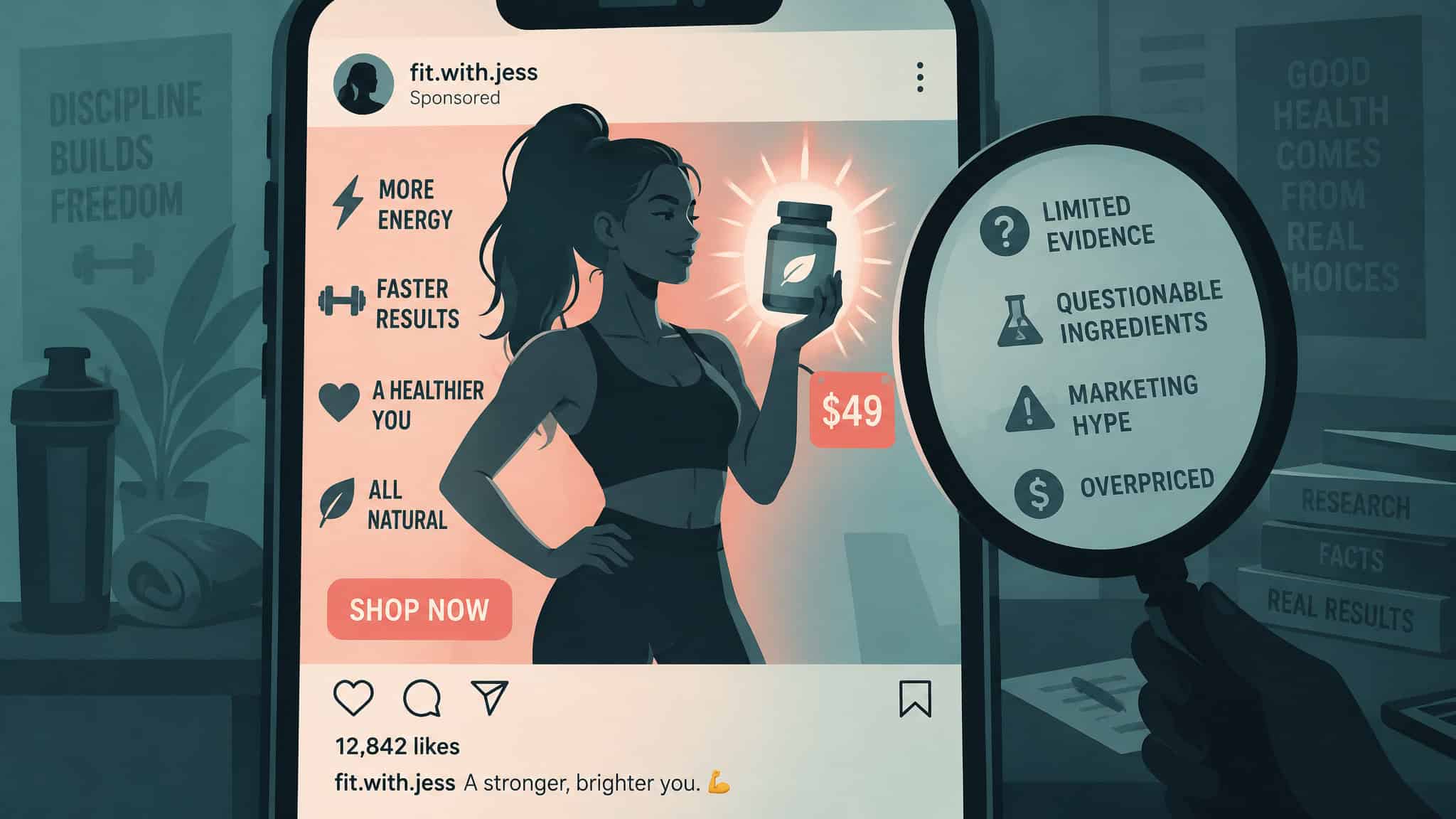
None of this is medical advice. These are expert-sourced habits for judging a video, not a screening tool. The order follows what the video shows you first, so you can disqualify most hype before the opening hook finishes. Experts describe the same tell for hype: the opening line. Confident delivery reads as expertise, but confidence that arrives before any credential or mechanism is the opposite of a credential.
- Listen to the first ten seconds. Definitive or exaggerated claims right out of the gate (“melt,” “shrink,” results “in X days”) are a warning sign. Credible health communicators don’t incite fear or surprise; if a video makes your heart race, that’s a clue, not information. Hedged wording (“maybe,” “sometimes,” “perhaps”) is actually a good sign, says therapist Nedra Glover Tawwab. Uncertainty is honest.
- Look for credentials. Courtney Babilya, a certified medical exercise specialist, says credentials that are easy to find on the profile are the biggest green flag. Babilya notes that calling yourself a coach requires no training at all, in her words, having a baby can be enough to start billing as a pregnancy coach. What good looks like: a certified professional with experience working with actual people, who emphasizes strength and cardiovascular health over body type and takes a balanced approach that includes mental well-being. That description is also your answer to which creators are worth following.
- Follow the money. Check for affiliate links and ask who profits if you buy. Dr. Fatima Daoud Yilmaz, an OB-GYN at Stony Brook Medicine, says influencers have a financial incentive to push information, so take claims with a grain of salt. The incentive is structural, not proof of bad faith: Babilya labels her ads transparently and still works.
- Check the scope. Is the creator speaking outside what they actually know? Does the claim line up with scientific consensus? Even genuine expertise doesn’t transfer across topics automatically.
- Confirm with a professional. A trusted health professional is ethically and legally liable for your care. An influencer is not. That liability gap is the final backstop.
Why the fitness trends TikTok pushes win (and how to push back)
Making questionable claims and pushing products pays better than mythbusting. An NBC News analysis featuring personal trainer Ben Carpenter put it plainly: lies are sexy and novel information is sexier, which means at any given moment, most of the popular trending fitness videos likely contain more misinformation than accurate information. Meanwhile, the most broadly beneficial advice, exercise more, eat more fruits and vegetables, fewer ultra-processed foods, is basic, free, and unmarketable. Nobody in the feed has an incentive to promote it, so it loses not because it’s wrong but because it’s free.
There’s a counter-trend: de-influencing, where creators tell audiences to buy fewer products. It exists. It’s outnumbered.
Practically, you can push back. TikTok’s “Not Interested” and Instagram’s “Hidden Words” can filter content, but controlling your feed takes ongoing effort because the algorithm is designed for passive consumption, as Ash Milton of the University of Minnesota puts it. This isn’t one-and-done. Your own reaction is the barometer: is this actually applicable and helpful to you, or just relatable? And if you’d rather see where training is genuinely heading, the fitness trends 2026 guide covers the emerging formats worth watching.
What trend culture costs (and the honest upside)
Comparing your real body to an influencer’s is a measurement error, not a motivation failure, because you’re measuring against genetics and, in some cases, chemistry. The research backs the unease. A PLOS One study examining 1,000 TikTok posts on food, nutrition, and weight loss found weight-normative content, including glorification of weight loss. A 2023 study in BMC Public Health found nearly two-thirds of top Instagram “fitspiration” accounts didn’t contain credible information.
Consuming fitspiration leads to body dissatisfaction, comparison, and worse moods, especially in young people. How bodies respond to exercise is mostly genetic. Influencer-level results aren’t replicable for most people.
One study found 83% of young male gym users used some form of supplement, and a substantial number also used steroids; image-centric social media consumption is linked to increases in both. It’s one study, so hold it lightly. But the Liver King claimed raw-meat “ancestral tenets” built his physique, then admitted steroid use, and Carpenter’s broader point stands: some influencers secretly use performance-enhancing drugs while claiming natural results, then sell you the products. Carpenter has also dieted to very low body fat for photo shoots, collected the compliments, and felt terrible: insatiable appetite, irritability, lowered sex drive. A good-looking body is not the same as a healthy body, and hunger is a natural cue, not something to suppress.
The honest upside: a 2022 review in Frontiers in Public Health found fitness influencers can genuinely encourage physical activity. The problem is content quality and accuracy, not the existence of the genre. The boring, free advice was the good advice all along.
Frequently Asked Questions
What are the most popular fitness hashtags on TikTok?
FitTok is the umbrella corner of the platform, with a reported 300 billion views. Within it, hashtags like #12330challenge (a reported 1.5 million views) and the 75 Hard hashtag (a reported 127.9 million views) have pulled big numbers. View counts are reported figures from earlier coverage, not current numbers.
Is dry scooping pre-workout powder dangerous?
Yes, and possibly deadly. Dry powder that hits your lungs causes inflammation and can trigger respiratory or cardiovascular distress — a real problem when cardio is the goal. The claimed benefit, faster caffeine absorption, isn’t worth trading your airway for; skip it entirely.
How can I tell if a TikTok fitness influencer is actually qualified?
Look for credentials that are easy to find on the profile — ‘coach’ is a job title anyone can give themselves. A good sign is a certified professional with experience working with real people who emphasizes strength and cardiovascular health over body type. Then check whether they’re speaking within their actual scope and whether they profit from what they’re pushing.
What are red flags that a viral workout trend is hype?
Listen to the first ten seconds: definitive or exaggerated claims (‘melt,’ ‘shrink,’ results ‘in X days’) right out of the gate are a warning sign, and if a video makes your heart race, that’s a clue, not information. Hedged wording like ‘maybe’ and ‘sometimes’ is actually a good sign. Also check for affiliate links, out-of-scope claims, and promises tied to a body part or a deadline.
Why does my feed keep showing me workouts I never searched for?
Two-thirds of people stumble onto fitness content without looking for it — the algorithm is designed for passive consumption, so it slots trends in uninvited. You can push back with TikTok’s ‘Not Interested’ and Instagram’s ‘Hidden Words’ filters, but it takes ongoing effort, not a one-and-done fix. Your own reaction is the barometer: is this actually helpful to you, or just relatable?