Three different people in my group chat asked me this week whether they should buy a smart ring, and all three had seen a different “top fitness trends” list telling them something different. That’s the problem with most trend coverage: half of it is marketing wearing a lab coat. So every year I go find the one list that isn’t. The American College of Sports Medicine published its 20th annual Worldwide Fitness Trends survey on November 14, 2025, and this one isn’t a vibe.
Two thousand clinicians, researchers, and exercise professionals, people who do this for a living, ranked what’s actually happening in fitness. The answer, for what it’s worth: Wearable Technology is #1 again, a spot it has claimed in almost every annual survey for the last ten years. Of course it is. Below, the full ranked top 10, why each one ranks where it does, and which ones are worth trying early versus which deserve a slower look.
Key Takeaways
Wearable Technology is the #1 fitness trend for 2026, per the ACSM survey of 2,000 professionals, a rank it has claimed in almost every annual survey for the last ten years.
Fitness Programs for Older Adults climbed from No. 3 to No. 2, and adults 65 and older already visit gyms more than any other age group.
Strength training and functional fitness carry the strongest evidence per participant, making them the safest early bets, while wearables and apps are worth adopting with a plan for interpreting the data.
Table of Contents
How the 2026 fitness trends list was built
The top fitness trends for 2026, according to the ACSM Worldwide Fitness Trends survey, are: Wearable Technology, Fitness Programs for Older Adults, Exercise for Weight Management, Mobile Exercise Apps, Balance, Flow and Core Strength, Exercise for Mental Health, Traditional Strength Training, Data-Driven Technology, Adult Recreation and Sport Clubs, and Functional Fitness Training, in that order.
Here’s what’s behind that list. The American College of Sports Medicine has run this forecast for 20 years now, and the 2026 edition, published November 14, 2025 in ACSM’s Health & Fitness Journal, drew responses from 2,000 clinicians, researchers, and exercise professionals. Not influencers. Not brands with a wearable to move. People who program exercise for a living, study it for a living, or coach it for a living.
Lead author Cayla R. McAvoy, PhD, and her coauthors compile the rankings from those responses, and the full list runs 20 trends deep. We’re covering the ranked top 10 here, because that’s where the signal is.
The 20th-anniversary edition also did something the earlier ones didn’t: it added practical applications for every trend on the list, covering practice, programming, and policy. Translation: for the first time, the report doesn’t just tell gym owners what’s coming, it sketches what to actually do about it. That’s the bridge this article keeps using, from “the industry says this is big” to “here’s what it means for your Tuesday.”
One more thing worth knowing: the survey is also built to help professionals and gym owners interpret the findings for their own settings, which is why you’ll see it quoted in industry newsletters and studio scheduling meetings alike. Coverage has run through Newswise and Athletech News, with Ani Freedman among the writers picking it up, so if your gym suddenly rebrands its Tuesday class, this list is probably why.
Trend vs. fad: what 20 years of ACSM data shows
So what separates a trend from a fad? Per the report, a fitness trend is a pattern that’s widely adopted and sticks around, whether that shows up in participation, professional practice, or what the industry offers, and it persists past the initial enthusiasm with measurable engagement, market presence, or long-term impact. A fad fades when the enthusiasm does. Here’s how you know it’s not just a TikTok moment: ask whether it shows sustained, measurable adoption. If you’re staring at a viral workout right now, we’ve got a whole piece on which TikTok fitness trends are legit and how to safety-check one before trying it.
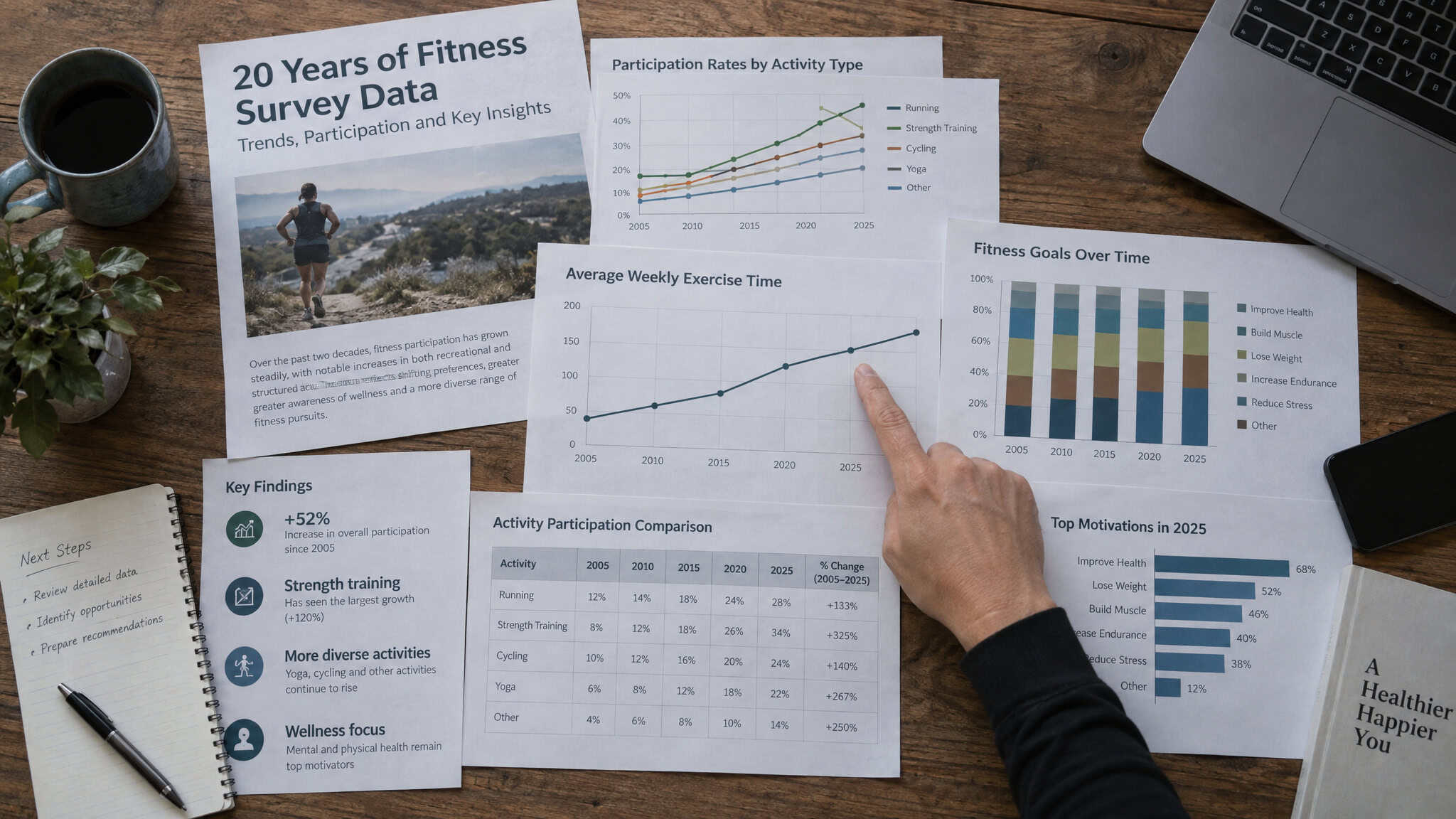
Twenty years of survey data also show which trends lasted. McAvoy’s retrospective names childhood obesity, online training during the COVID pandemic, mental health, fitness technology, medically integrated programs, and active aging, several of which are still on the 2026 list. “We’ve seen dramatic changes in fitness trends over the last two decades, and this milestone gives us a long-term perspective of how the field has evolved and impacted health and fitness,” she notes. If you want the full arc, ACSM published a resource page, a 20-year video, an infographic, a comparison table covering 2007 to 2026, and an Employer Perspective supplemental article alongside the report, and we tracked what stuck and what faded in our own look back at 2025 fitness trends.
Wearable technology: still the No. 1 trend for 2026
Yes, Wearable Technology is still the #1 fitness trend for 2026, and at this point the survey would feel wrong without it. It has held the top spot nearly every year for the past decade, and this year it ranked in the top three across nearly every profession and age group surveyed. This isn’t a niche thing anymore: nearly half of U.S. adults own a fitness tracker or smartwatch. Look around at school pickup. Half those wrists have one.
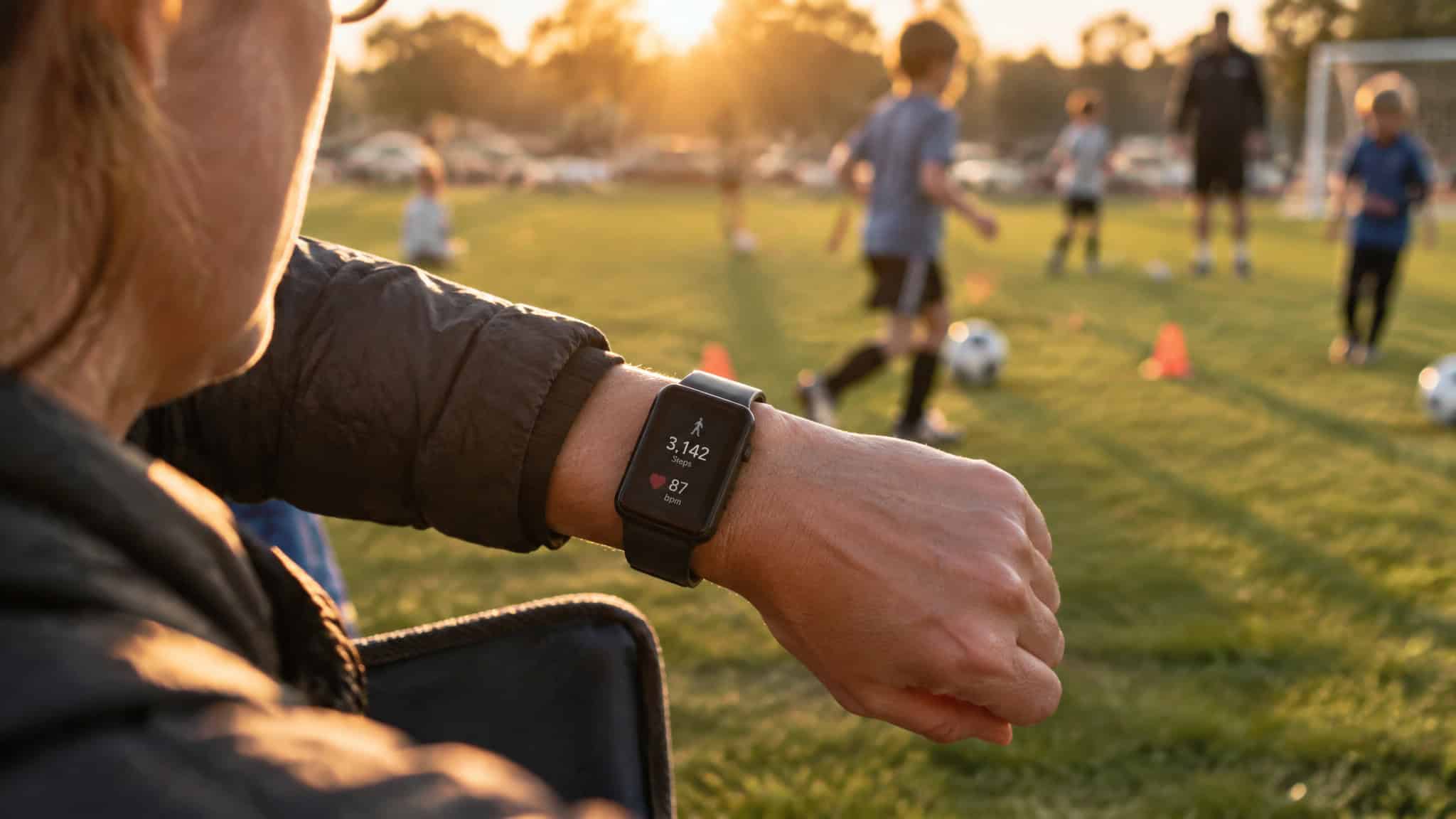
McAvoy’s framing is the thesis of this whole section: the debate has moved past whether people will use wearables; the open issue is how to use them to support health and behavior change. Adoption is settled. Interpretation is the open question.
What these things actually do now
The biosensor list, biosensors being the sensors that read your body’s signals continuously, reads like science fiction if you haven’t checked in a while. Fall and crash detection, which means the watch can call for help when you can’t. Heart rhythm tracking, which can surface things worth mentioning at your next checkup. Blood pressure.
Blood glucose, the blood sugar number people with diabetes watch closely. Skin temperature. Each of these used to require a clinic visit or a separate gadget. Now it’s on the wrist of someone watching soccer practice.
And this isn’t just for athletes. Rehab patients get something here, beginners get something here, grandparents get something here. The why underneath is simple: tracking yourself helps you stay honest and keep going. Accountability works.
It’s the same reason you finally started flossing. Something was paying attention.
The accuracy catch
Yes, but with caveats: fitness trackers and smartwatches are genuinely useful for tracking patterns over time, though their accuracy varies, a lot. Device accuracy and user experience differ widely from one device to the next, and new features ship faster than anyone has checked them, even though evaluation guidelines exist. Camhi’s caution, in plain speech: some metrics are experimental or unreliable, and the data is most useful for tracking patterns or changes over time, not absolute values. A certified exercise professional can help you interpret what your numbers actually mean.
Quick test: Trust the trend line, not the single number. If a metric can’t be verified, use it to track changes over time, not absolutes.
You see the failure mode in the wild, and exercise professionals report the same pattern: someone collecting a daily readiness or recovery score they can’t fully explain, then training hard on a day their own device flagged low recovery. Trust the trend and trust every metric are two different claims. Patterns beat point readings.
Fitness programs for older adults rise to No. 2
Fitness Programs for Older Adults rose from No. 3 in 2025 to No. 2 in 2026, and the reason is math. The baby boomer generation numbers 73 million, and by 2030 all of them will be over 65. Gyms have noticed.
Here’s the part that flips assumptions: per a 2023 IHRSA/Health & Fitness Association consumer report, adults 65 and older already visit gyms and studios more than any other age group. Active aging isn’t a niche program tucked into the Tuesday morning slot. It’s the industry’s core growth market.
What ACSM says actually helps older adults is refreshingly unglamorous: resistance training to preserve strength, balance and mobility work to reduce fall risk, and low-impact cardio for heart health. Paul M. Gallo, EdD, FACSM’s point, quietly: the largest older-adult population in U.S. history is coming, and it will need qualified exercise professionals. This is real, not a fad.
The words on the schedule matter
A 2024 industry report found that programs labeled “low intensity,” “functional,” or “active aging” consistently attract more participants than those called “senior fitness.” Which tracks, because nobody wants to sign up for a class with that label. Same programming, same instructor, same room: what’s printed on the schedule fills it or empties it. Operators see this constantly.
Exercise for weight management in the GLP-1 era
Exercise for Weight Management sits at #3, its highest rank since the report began in 2006, and it got renamed. It used to be “Exercise for Weight Loss.” Now it’s “weight management,” covering losing, maintaining, and gaining, which feels like the field finally catching up to real bodies. Part of the rise is the GLP-1 medications everyone’s talking about, the weight and diabetes drugs that come up at every appointment lately.
No side-taking here, just context: obesity affects 42.4% of U.S. adults, and roughly half of those report actively trying to manage their weight. These are neighbors, not data points. If this one’s personal for you, there’s no shame anywhere in this section.
Should you exercise during GLP-1 treatment?
Yes. People who keep exercising during GLP-1 weight treatment lose more fat and hold on to more lean mass, that’s muscle, once they stop the medication, compared with medication alone. In human terms: these drugs can reduce muscle, and exercise may preserve it, build strength, and improve physical function. Research is ongoing, and this isn’t medical advice, so loop in your clinician. But Batrakoulis and Camhi’s consensus is warm and firm: exercise belongs in any weight-management plan, period.
The common misread goes the other way: people starting weight-loss medication assume exercise is now optional, when the research points the opposite direction. The typical setup is someone restarting resistance training after a clinician flags muscle-loss risk. The drugs make exercise more important, not less.
Mobile exercise apps: big adoption, unproven outcomes
More than 345 million people used fitness apps in 2024, so odds are good you have one on your phone that you have a complicated relationship with. The appeal, if you’re a busy parent, is obvious: workouts on demand, scheduled, live, or recorded, whenever your day actually allows. That’s the whole sell.
Worth knowing who gets left out: users skew younger, female, college-educated, and urban, with lower adoption among older adults and anyone without digital comfort. Apps aren’t built for everybody.
What keeps people using them is goal-setting, progress tracking, reminders, rewards, and social features. The streak feature is doing exactly what it was designed to do. And here’s the honest verdict, from someone who has tried three of them: short-term activity improvements are demonstrated, but long-term outcomes need more research, and effectiveness depends on user engagement and program quality. Stanfield’s practical point: apps work as a supplement for people who like flexibility and tech.
A tool, not a trainer replacement. Judge an app by its engagement structure, not its download count.
Balance, flow and core strength rebound
Balance, Flow and Core Strength, trend #5, is a recovery story, not a new discovery. These formats, think Pilates, yoga, barre, and core work, dipped during the pandemic when group classes shut down, and they’ve regained momentum as interest in holistic health and mind-body integration climbs. The reframe worth keeping: this isn’t an add-on to your “real” workouts, it’s part of a balanced routine. No incense required.
Reed’s point is the practical appeal: the rise tracks Pilates and barre popularity, and these formats give you near one-on-one attention inside a group class. That’s the actual sell, someone watching your form for less than private-training money. McAvoy adds that Pilates, yoga, and core work resonate across generations, part of the bigger shift toward playing the long game with your body. It’s one of the few things your mom and your teen might both be into.
What it buys you, translated: better posture, mobility, core control, fewer injuries, especially as we age. Getting off the floor without sound effects territory.
Exercise for mental health climbs the list
Exercise for Mental Health climbed two spots this year, and I want to state the context gently: more than one in five U.S. adults report experiencing a mental health condition each year. That’s you, or your partner, or honestly the person writing this.
Here’s the finding that should make people feel less alone: in one national survey, 78% of exercisers named mental or emotional well-being as their main motivation for working out, ranking it above physical fitness or appearance. If you’ve ever laced up shoes mostly to clear your head, you’re in the large majority. Which makes the odd gap stranger: many gyms and studios don’t explicitly promote mental health outcomes, even though that’s why people show up. Someone should fix that.
The evidence, translated: lifting helps with depressive symptoms, and gentle mindful formats like yoga help with stress. Newsome’s point, handled with care: exercise’s impact could rival some traditional clinical interventions, including for pregnant women, youth, and older adults. That’s a reason to move, not a reason to skip your doctor.
Traditional strength training: proven, underdone
Traditional Strength Training is #7, and it’s the unglamorous thing that keeps working. Under 30% of U.S. adults get the recommended amount of muscle-strengthening activity, and yeah, most of us aren’t doing this. That’s not a failure, it’s just the room.
The thing itself is simple, described like your garage setup: barbells, dumbbells, kettlebells, used for strength, endurance, and everyday function. It’s also thoroughly researched, effective, and safe, per Batrakoulis, and it works for every age and level, so you can relax about it. The long-game payoff: bone density, metabolic health, staying mobile as you age. Future you says thanks.
So why does the most evidence-backed trend on the list rank only #7? Because the barrier is psychological, not scientific. What closes the gap: messaging built on long-term health and function rather than looks or performance, and de-intimidating delivery, group classes, low-cost programs, hybrid formats. If the squat rack has ever intimidated you out of a workout, the fix isn’t willpower. It’s a room that doesn’t feel like that.
Data-driven technology: from numbers to programming
Data-Driven Technology lands at #8, and more than 70% of wearable users apply their data to exercise or recovery decisions. The catch: the numbers only pay off when someone translates them into “do this today.” One grounding detail: a 2023 study found athletes using HRV-guided training, that’s heart-rate variability, the spacing between heartbeats, a read on recovery, improved performance and reduced injuries compared with fixed programming. Exercise professionals like Jessica Sansone, PhD, ACSM-EP, EIM, use the same biofeedback to tune intensity, check readiness, and cut overtraining risk, because the real skill is turning raw numbers into clear guidance. Your coach can see your rough night before you say anything.
Adult recreation and sport clubs debut at No. 9
Adult Recreation and Sport Clubs debut at #9, the first time this format has made the top trends list in the survey’s 20-year history. Welcome to the party.
Blame, or credit, pickleball, and the fact that adults are starved for friendship. The examples tell the story: pickleball, padel, run clubs, lower-key leagues. It’s the workout with a social life attached. McAvoy’s line in spirit: these activities are as much about connection as they are about fitness.
Why it sticks: fun and camaraderie make you actually keep showing up. This is the workout you don’t cancel, because people are waiting for you. Group formats work especially well for adults who’ve been inactive but are motivated by connection or casual competition, which is a kinder entry point than most. If you want the wider view of workouts actually trending right now, we keep a running roundup of that too.
If you’re an exercise professional reading this: integrate recreation programs, lead community groups, partner with local leagues. Everyone else, just find the league.
Functional fitness training: fitness as function
Functional Fitness Training rounds out the top 10 at #10, and it’s exactly what it sounds like: training for life, not just the gym. Think strength, power, mobility, and endurance movements aimed at real-world performance. The grounding detail: squats, lunges, and carries that carry over straight into daily life and sport, the grocery-bag-and-car-seat moves, and that transfer work is what improves joint stability, mobility, and sport-specific performance. It suits youth, adults, older adults, and athletic populations, and the evidence in athletes shows gains in strength, speed, power, and balance. The priority is movement efficiency and functional capacity, not aesthetics or training volume. It can be delivered with or without equipment, solo, in a group, or hybrid.
Which 2026 fitness trends are worth trying early
Here’s the distinction that makes this list usable: rank signals industry momentum, not personal fit. A #1 trend with a validation gap can rank below a #7 trend with stronger evidence. The survey’s new practical-applications sections translate professional guidance into consumer decisions for the first time, which is what makes this verdict layer possible. Everything below is my reading of the report’s stated caveats, not personal testing and not clinical advice.
Worth trying now
Strength training and functional fitness carry the strongest evidence per participant, so start here if the goal is proven results. Adult recreation and sport clubs are a low-risk early adopt for anyone motivated by connection. Around here, we keep coming back to the same test: does it show sustained, measurable adoption, and does it fit a household with 20 fragmented minutes and a carpool? Popular and proven are different questions.
Proceed informed
Wearables are worth adopting with interpretation support: track patterns over time, and get professional help with metrics that may be unreliable. Apps work with an engagement plan, goals, tracking, reminders, but lack long-term outcome data. GLP-1-adjacent training warrants professional involvement given the ongoing research. Older-adult programming should match the ACSM pillars: resistance, balance and mobility, low-impact cardio.
That’s the filter, applied: match adoption to your goals and the evidence, and run the trend-versus-fad question on anything marketed as the next big thing. At Tidbits of Experience, separating lasting patterns from passing enthusiasm is the whole lens, and it applies to fitness the same way it applies everywhere else.
Frequently Asked Questions
Is wearable technology still the number one fitness trend in 2026?
Yes. Wearable Technology took the top spot again, ranking in the top three across nearly every profession and age group surveyed, and it has held #1 nearly every year for the past decade. Nearly half of U.S. adults now own a fitness tracker or smartwatch, so adoption is settled — the open question is how to interpret the data.
Why was exercise for weight loss renamed exercise for weight management?
The rename reflects a broader scope: the trend now covers losing, maintaining, and gaining weight rather than just shedding pounds. It sits at No. 3 in 2026, its highest rank since the survey began in 2006, partly driven by the rise of GLP-1 medications.