
We had one checking account in my husband’s name only—because he set it up before we got married and it was easier. When I needed something for myself, I had to ask. He always said yes, but the asking itself felt wrong. That uneasy feeling has a name, and a community of stay-at-home moms online will tell you: an allowance is something you give to a child or a sugar baby, not to your partner.
This article is for the mom who’s tired of feeling like a dependent in her own marriage. I’ve spent time in the threads where real women hash out the uncomfortable parts of this conversation, and I’ve read the expert advice that backs it up. Here’s what I’ve seen work, what doesn’t, and how to set up a system that treats you like the full-time working parent you actually are.
Key Takeaways
The only setup that reliably works long-term is one joint account with two debit cards—no permission needed for everyday spending, and a heads-up (not a request) for large purchases. One mom has done it this way for 25 years.
Calling your personal money an “allowance” is widely rejected by stay-at-home parents because it signals a power imbalance. Better labels: “personal spending” in the budget or a “wage” for the SAHP.
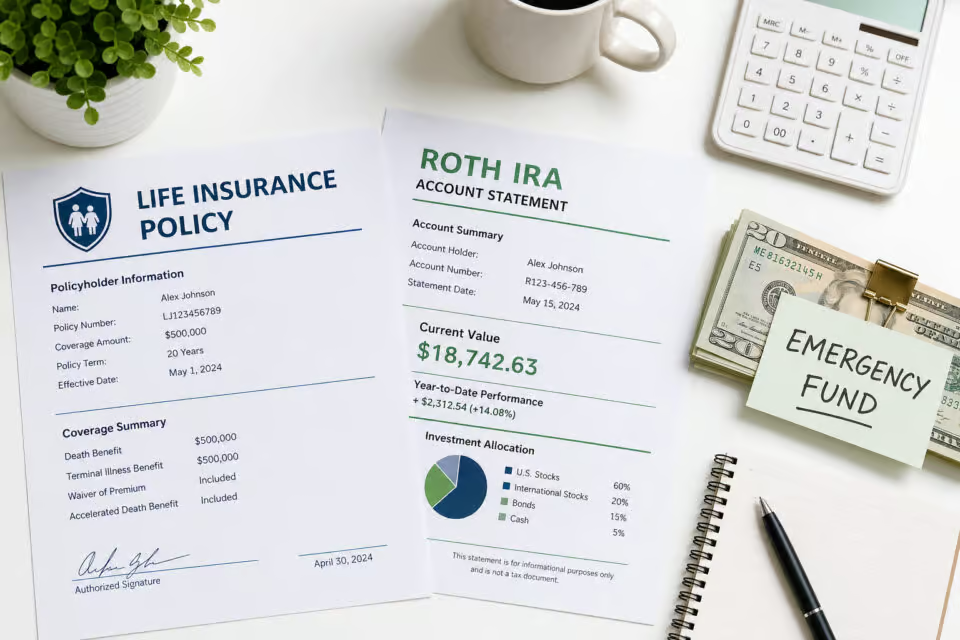
Concrete protections matter: a term-life policy covering 8–10 times household income, a spousal Roth IRA (up to $6,000/year if combined MAGI is under $183,000), and a 6-month emergency fund.
Table of Contents
The Foundation: One Joint Account, Two Debit Cards
They share a joint bank account. Each spouse has their own debit card. No one’s asking permission for groceries, a Target run, or a coffee.

One mom described her system of 25 years: one account, her own debit card, and she’s never once asked for permission to spend. The only check-in is for purchases over a couple hundred dollars, travel, or pricier items like purses—and even that is a courtesy heads-up, not a request. Another user, RedRose_812, put it simply: combined account, her debit card, every household purchase flows through it. When you need something big, you say “hey, I’m planning to spend this” not “can I have this?”
This isn’t only about convenience—it’s about legal protection. Cameron Huddleston, who wrote about this for The Washington Post, points out a practical reason: if your spouse dies and the money is only in their name, you may have to go through probate court to access it—unless you’re listed as a payable-on-death beneficiary or have set up a power of attorney for elderly parents while they are still competent. A joint account avoids that mess entirely.
The key difference between a healthy setup and an uncomfortable one is simple: are you both making money decisions together, or is one person handing out funds? If it feels like the latter, it’s time to change the system.
The Language of Money: Why “Allowance” Hurts
“Demoralizing,” said one Reddit user. Another said she’d be insulted if someone suggested it. The most memorable line came from a user who said an allowance is something you give to a child or a sugar baby. Ouch.

As one commenter put it, “Language shapes our perspective.” When you call it an allowance, you’re framing yourself as someone who receives—not someone who earns.

So what do you call it instead? The same user who ranted against the allowance language proposed two alternatives: “personal spending” as a line item in the family budget, or a “wage” for the stay-at-home parent. The wage framing especially drives home that you’re not staying home for fun—you’re working.
Even the word “allowance” can be okay if you’re the one assigning it to yourself. One mom gives herself an “allowance” in her own spreadsheet for personal spending, but she set the terms. That’s the difference: it’s self-chosen, not handed down from someone else.
A structural fix that comes up again and again: equal fun money for both partners. Not just for the SAHM—for both. One user as a SAHM had a budget where each spouse got the same monthly “fun money” amount. No gatekeeping, no resentment.
The Purpose of Spousal Payment: Exit Strategy vs. Household Fund
There are two very different views on what that money from your spouse is actually for.

One view: it’s so you have your own money if you decide to leave the relationship. The user dear-mycologistical said the purpose of being paid by your spouse is to have an exit fund. It’s a protective, practical stance—because being a stay-at-home parent leaves you vulnerable if you need to walk away.

The other view: it’s so you have money to run the household day-to-day. RainInTheWoods disagreed with the exit-fund framing, saying the purpose is simply to keep the family running. That’s a more collaborative, trust-based perspective.
Neither is wrong. Which camp you fall into probably depends on your relationship history, your risk tolerance, and how much you’ve seen go wrong. But it’s worth knowing the question exists, because how you answer it shapes how you set up your money. If you lean toward the exit-fund view, you might want separate retirement accounts and a prenup.
If you lean toward the household-fund view, a joint account with equal access might feel sufficient. Keep in mind that hidden costs can also lurk in past financial decisions, such as auto loans where undisclosed commission arrangements may have inflated interest rates — a possibility that has led some to seek PCP compensation. Similarly, poor investment choices can stall your IRA growth, so it’s worth asking why is my IRA not growing to ensure your retirement funds are properly diversified.
Recognizing Financial Control and Abuse
The joint account model only works if both partners treat the money as family money. When the income earner “lords over” the money—deciding what’s allowed, making the SAHP justify every purchase—that’s a red flag.
As user RedRose_812 put it, lording over money is financial abuse — or at least a slippery slope toward it. She warned about situations where stay-at-home parents are forbidden to spend money at all, or can’t buy small things for themselves. That’s not a disagreement about budgeting; if you have a terrible track record of making ill-advised, emotional decisions with your money, you might wonder how to develop financial self-control, but that’s control.
A healthy financial setup is built on shared access and mutual respect. If you have to ask for a few dollars for a coffee run, something is off—and it’s worth addressing directly or by proactively teaching kids financial independence with a trusted professional.
The Inner Hurdle: Overcoming Guilt About Spending
Your partner may say “go ahead, spend whatever,” but that old voice in your head doesn’t shut up.

One user, iBewafa, described exactly this: she feels guilty asking permission for Amazon purchases even though her spouse doesn’t care. She traced it back to growing up with an authoritarian father who controlled the money, much like the hidden control many drivers faced when unknowingly paying inflated interest due to PCP mis selling. That guilt isn’t coming from her current relationship—it’s an old pattern she learned watching a parent ask for money.
Naming that pattern doesn’t solve it overnight, but it helps to know the guilt is about your upbringing, not your marriage. Your partner may not even know you feel this way. Talking about it—maybe even showing them this article—can be a first step.
Protecting Your Future: Insurance, Retirement, and Emergency Savings
You deserve specific protections, and the numbers are straightforward.

Life insurance. Yes, the stay-at-home parent needs life insurance too. If you die, your family will need money to cover childcare. Huddleston recommends a term-life policy worth 8 to 10 times your total household income.
Let’s say your family earns $100,000 a year—a $100,000 policy isn’t enough. Aim for $800,000 to $1 million. And make sure your spouse’s policy is large enough too; you both need coverage.
Retirement savings. You can save for retirement even without earned income. The easiest option is a spousal Roth IRA. Your spouse can contribute up to $6,000 per year on your behalf, as long as your combined modified adjusted gross income is under $183,000 (contributions phase out between $193,000 and $203,000). Open it at Vanguard or Fidelity. If you have earned income over $6,000—from freelance work, for example—you can contribute to a SEP IRA or solo 401(k) with higher limits.
Emergency fund. The classic advice holds: six months of expenses. Build it however you can, even if it means using tax refunds or cutting small costs.
And don’t stop at savings. A UBS study found that women in couples tend to take a less active role in investing. Huddleston advises that you know what accounts you have, how to access them, and discuss long-term goals together. You’re not just along for the ride—this is your future too.
Legal Safeguards: Prenups, Postnups, and the Role of Marriage
A deleted user in the Reddit thread recommended having a prenup or postnup that guarantees a 50% split of assets in a divorce. That may sound unromantic, but it protects the parent who sacrificed years of career earnings to raise kids.

Another user, RedRose_812, said she wouldn’t advise anyone to be a stay-at-home parent without the legal protection of marriage. It’s not about expecting divorce; it’s about acknowledging that being a SAHP is financially vulnerable. The legal framework of marriage gives you some default protections, and a prenup or postnup can fine-tune them.
That said, not everyone needs to go that far. Some couples keep separate retirement accounts alongside joint bank accounts—each person has their own 401(k) and their own credit cards, but everything else is shared. That hybrid model works too.
The Bigger Picture: Your Work Is a Full-Time Job
One commenter put it bluntly: She’s not staying home like it’s a vacation. It’s a full-time job.
When you see your role that way, the entire financial picture shifts. You’re not receiving a gift when you have access to family money—you’re being compensated for labor. You’re not lucky to have a retirement account funded by your spouse; you earned it by managing the household, raising the children, and enabling your partner’s career.
This reframe justifies equal access, life insurance, retirement contributions, and legal protections. Not as charity, but as earned partnership. So if you’ve ever felt small asking for money or guilty spending a little on yourself, come back to this: you work a full-time job, and the family finances are yours, too.
Frequently Asked Questions
Is there any financial help for stay at home moms?
Yes, but it’s not a government handout — it’s the financial infrastructure you build inside your marriage. A spousal Roth IRA lets your partner contribute up to $6,000 per year toward your retirement, and a term-life policy worth 8–10 times household income protects everyone if something happens to you. The real ‘help’ comes from setting up a joint account with equal access so you’re not asking permission to spend.
How to financially afford being a stay at home mom?
You afford it by restructuring how money moves in your household, not by cutting your personal spending to zero. Open a joint checking account with two debit cards so neither partner asks permission for everyday purchases. Budget equal ‘fun money’ for both spouses, and build a 6-month emergency fund using tax refunds or small cost cuts. The math works when you treat your labor as a full-time job that earns family income, not as a favor.
Why is calling it an ‘allowance’ so harmful for stay-at-home moms?
Because an allowance is something you give to a child or a sugar baby — not to your equal partner. Language shapes how you see yourself: ‘allowance’ frames you as someone who receives instead of someone who earns. Stay-at-home parents who use terms like ‘personal spending’ or ‘wage’ report feeling less resentment and more agency over their own money.
How does a joint checking account protect a stay-at-home mom legally and financially?
A joint account with two debit cards eliminates the need to ask permission for everyday spending, which removes the power imbalance. It also protects you legally: if your spouse dies and the money is only in their name, you could face probate court to access it. Joint ownership means the money is yours without a court battle, and the only check-in should be a heads-up for large purchases — not a request.
How can a stay-at-home mom save for retirement without earned income?
Through a spousal Roth IRA — your partner can contribute up to $6,000 per year on your behalf as long as your combined modified adjusted gross income is under $183,000. Open it at a brokerage like Vanguard or Fidelity. If you do have freelance income over $6,000, you can contribute to a SEP IRA or solo 401(k) with higher limits instead.