You know the scenario. You’ve been avoiding the bathroom all week because the ring around the tub has gone from “I’ll deal with it” to “I might need a chisel.” Your knees ache just thinking about it, and the idea of getting down on the floor with a scrub brush feels like a personal punishment.
Here’s the thing nobody tells you: scrubbing is optional.
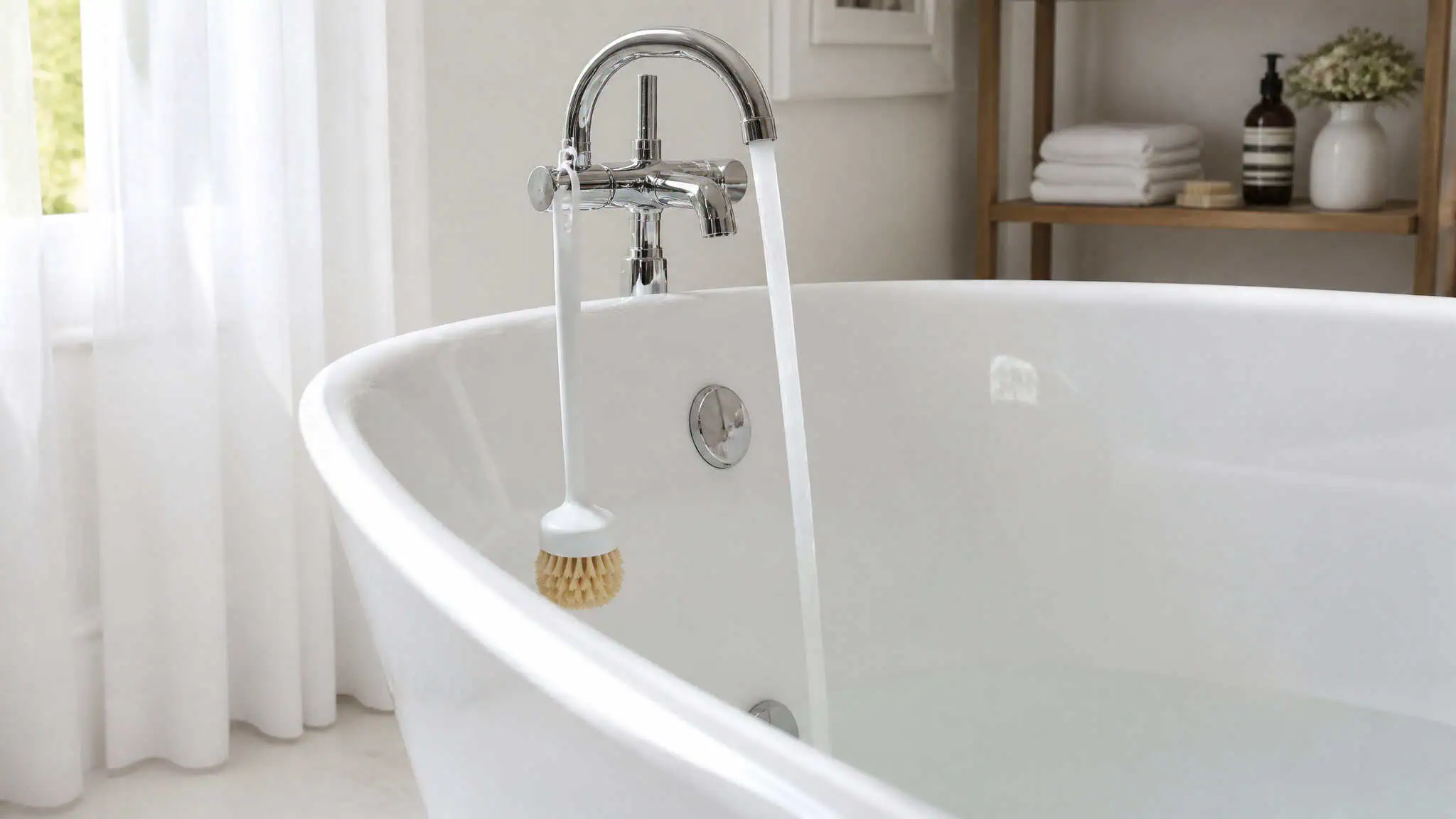
My grandmother kept a porcelain tub so spotless it looked brand-new in the 1960s, and her secret wasn’t a magic product or back-breaking effort. her tool of choice was a long-handled toilet brush and warm water. That’s it. The brush never touched the toilet, it hung from the faucet, separate and clearly labeled, and it reached every corner of the tub without her ever bending down.
The truth about no-scrub cleaning is that there’s more than one route, and the right one depends on your tub’s material and what kind of grime you’re fighting. Whether you need a daily habit, a deep-soak recipe, or a chemical intervention for stubborn hard-water stains, the key is letting time and chemistry do the work instead of your arms.
Key Takeaways
Using a toilet brush solely for the tub, along with warm water and regular use, keeps a tub sparkling daily without products or bending, and no cleaning supplies are needed for routine maintenance.
The best pantry soak combines equal parts dish soap and vinegar warmed in the microwave for 30 seconds, left on the tub for 30 minutes to an hour, then rinsed; the dwell time substitutes for scrubbing.
In a comparative test on glass shower doors, Pine-Sol scored 5/5 for hard-water stains, while the natural dish soap-vinegar-water mix scored 1/5; natural methods suit maintenance, but tough stains may require chemicals.
Table of Contents
The dedicated toilet brush method: your grandmother’s secret
I’ll admit it: the first time this idea came up, I had questions. A toilet brush for the tub? But the more I thought about it, the more sense it made. The tool has everything a good tub cleaner needs: a long handle to save your back, a shape that fits the tub’s curves, and bristles soft enough not to scratch.
The rules are simple. This brush is for the tub only, never the toilet. Hang it from the faucet when you’re done, and there’s never any confusion about which is which.
Here’s the method:
- Drain the tub completely
- Run warm-to-hot water
- Use the brush to loosen the soap scum ring, just swish it around
- Let the water carry the scum toward the drain as the tub empties
- Repeat once or twice until the water runs clear
That’s it. No products, no crouching, no scrubbing. Just warm water and a few minutes.
Southern Living writer Rebecca Jones described this exact method, noting that her grandmother’s tub was “kept sparkling in between uses” with a quick wash after each bath. Occasionally she’d use a bit of cleaner for stuck-on soap scum, but the daily swish was what kept things from ever building up in the first place.
The brilliance here is that you’re not scrubbing, you’re swishing. The water does the work, and the long handle means you can reach the far corners and tub floor while standing completely upright. Fast, free, and genuinely effective.
No-scrub soaking methods with pantry ingredients
When buildup wins, and let’s be honest, sometimes it does, soaking is your friend. The mechanism is simple: dwell time plus mild chemistry dissolves the grime so a rinse does the work. This is where precise timing becomes everything. Vague “let it sit” advice fails because these methods need a specific soak window. Give them the time, and they deliver.
These pantry recipes are also the gentler default. Commercial supermarket chemicals can be too harsh for fiberglass, acrylic, and ceramic tubs, especially if you’re cleaning regularly. Why risk it when you’ve got everything you need in your kitchen cabinets?
Dish soap and white vinegar solution
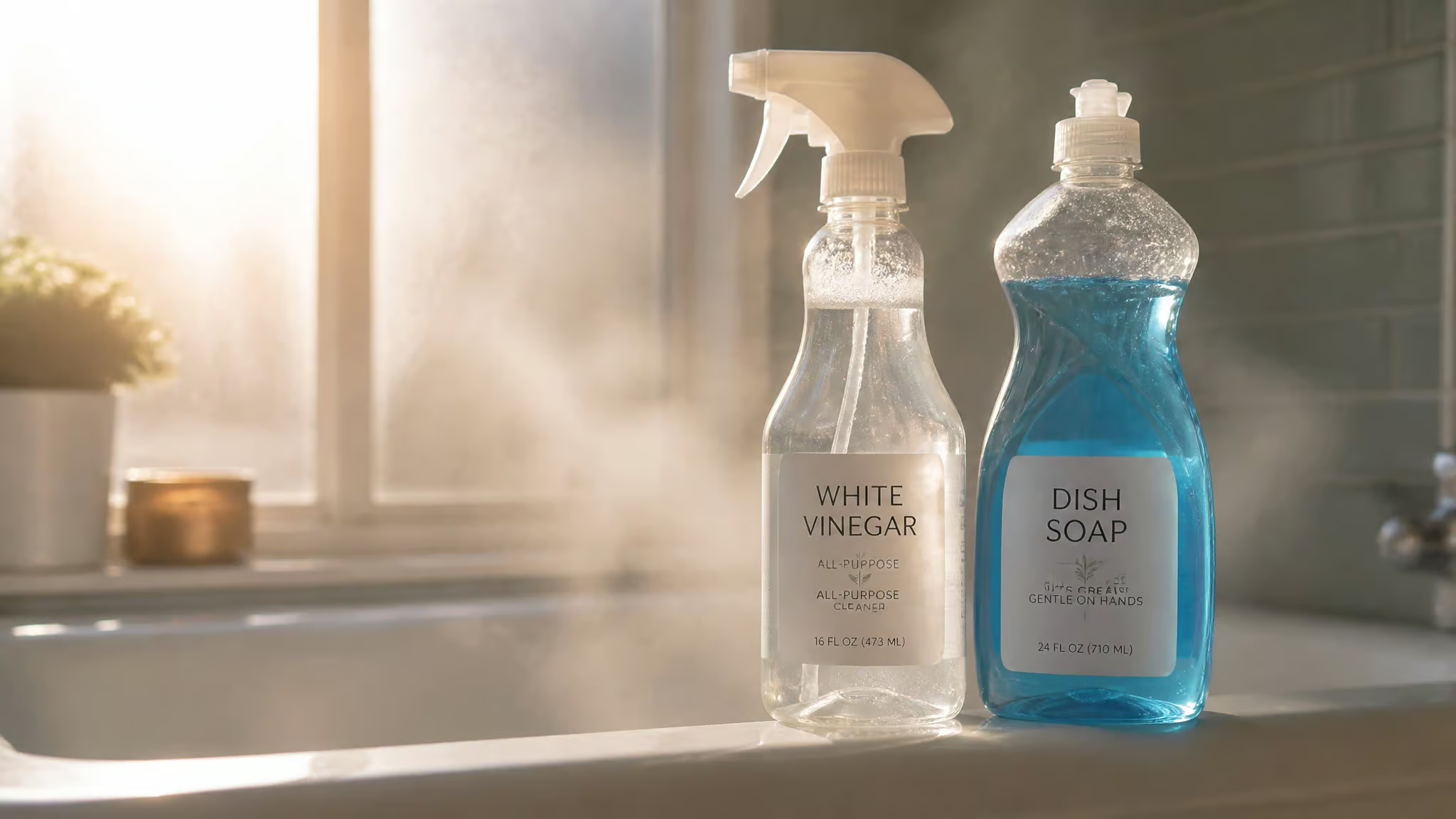
This is my go-to for regular buildup. Combine equal parts dish soap and white vinegar, warm them in the microwave for about 30 seconds, then spray the mixture liberally over the tub. Let it sit 30 minutes to an hour, then rinse with warm water. The vinegar’s acidity dissolves soap scum and mineral deposits while the dish soap cuts through the surface grime.
For lighter weekly upkeep, spray it on, leave it 15-30 minutes, and wipe down. Repetition keeps things gentle and manageable. Cleaning expert Ashley Kidder, founder of Dashing Maids, recommends this as a solid no-scrub approach.
Baking soda and hydrogen peroxide method
If you want disinfection without bleach, this is your method. Sprinkle baking soda across the tub, spray with 3% hydrogen peroxide until the surface is damp, and let it sit 30 minutes to an hour before rinsing. The peroxide handles bacteria while the baking soda provides mild abrasion that lifts stains without scratching.
Dish soap overnight soak
This is the honest “lazy method.” Plug the drain, fill the tub, add some dish soap, and allow it to soak for a few hours or overnight. In the morning, drain and rinse. The grime has loosened enough that a quick wipe handles it, minimal effort, impressive results. Recommended by Ashley Kidder for those weeks when you just can’t.
Baking soda and vinegar paste
Mix baking soda with a little water until it forms a paste, apply it to the tub walls and tiles, then spray with distilled white vinegar. The mixture fizzes and loosens grime, a classic combination that works fast.
An alternative ratio: half a cup of baking soda with quarter cup white vinegar, adjusted for consistency. Let it sit about 15 minutes, then rinse. For the fastest variation, spread baking soda over the tub and spray with a mix of one part vinegar, one part water, and dish soap or disinfecting solution. Let it sit an hour and rinse.
Vinegar soak for tubs
For a full tub reset, plug the drain, pour in three cups of white vinegar, fill with water, and allow it to soak for several hours. If you have a jet tub, keep the water at least three inches above the jets, run them for about 15 minutes before draining, then wipe down with a damp microfiber towel.
Vinegar is safe for acrylic and fiberglass thanks to acetic acid’s antifungal and antibacterial properties, just don’t use it on natural stone (more on that in a moment).
Spray-and-wipe products for light buildup
When you’re dealing with surface-level daily grime, a spray-sit-wipe-rinse routine handles it in minutes. This is the bridge between daily upkeep and deep-soak sessions.
Spray a multi-surface cleaner like Puracy Natural Surface Cleaner over the whole tub, wait 1-2 minutes, wipe from top to bottom with a microfiber cloth or soft sponge, then rinse with the showerhead or a bucket. Natural, non-caustic multi-surface cleaners handle non-porous surfaces without harsh fumes.
For stubborn spots, soap buildup, hard-water marks, dirt, mold, bottle rings, a natural stain remover needs at least 15 minutes of dwell time. Then work any remaining texture with a paintbrush or toothbrush, and rinse. The key number here is the dwell time: give it the full 15 minutes, and the product does the heavy lifting.
Tools that clean without bending or kneeling
Here’s the part where you can clean an entire tub from a standing position. No kneeling, no back pain, just the right tool for the job.
Cleaning experts recommend two categories:
Extendable scrubbers. Manual or electric versions let you reach the tub floor while standing. Electric spinning brushes do the work for you, just guide them along the surface. Jade Piper, operations manager at BetterCleans, prefers electric scrubbers for the combination of reach and reduced effort.
Angled tile scrubbers. Valentina Rios, a residential cleaning specialist at Oakville Maids of Burlington, recommends angled or triangular heads for reaching corners and curved tub floors. Interchangeable heads add versatility, different surfaces and stains respond better to different brush types.
Steam cleaners deserve a special mention here. They loosen grime with heat and moisture alone, genuinely no scrubbing required, and they cut through soap scum effectively. Three-in-one models from Bissell and Wagner come with extension wands and long hoses that reach tub floors and corners from a standing position.
Preventive habits that stop grime before it forms
Here’s the hard truth: prevention is exponentially easier than removal. But the good news is that prevention takes about 30 seconds a day.
The highest-leverage habit, recommended by Valentina Rios: rinse the tub for about 30 seconds with clean water after each use, using natural, eco-friendly ingredients like baking soda, vinegar, lemon, and essential oils for how to clean bathtub without chemicals. Push leftover water toward the drain with a sponge mop, and then leave the curtain open. This stops soap scum from hardening, and it’s why Rios notes that when she does her regular clean, she’s “usually just wiping away a little soap scum instead of scrubbing through thick buildup.”
Beyond the rinse:
- Daily shower sprays. Method or Mrs. Meyer’s style products coat the tub after use and stop residue from bonding. Lightly rinse after spraying, and most upkeep becomes a quick spray-and-leave step.
- Ventilation: run a fan or leave the bathroom door open to reduce moisture buildup.
- Skip the bath oils: rinse the tub immediately afterward to clear the residue.
- Keep a 1:1 vinegar-and-water mix in a spray bottle in the bathroom for regular spritzing between cleans.
As for frequency: weekly is the routine baseline. Daily-use tubs benefit from every 3-5 days. Homes with one bathroom or hard water should plan on a weekly deep clean. Less-used tubs can stretch to monthly, though for the best results it helps to follow a how to clean bathtub routine tailored to your schedule.
When natural isn’t enough: the tested cleaner comparison
I want to share something genuinely surprising. Apartment Therapy ran a comparative test of six different cleaning methods on glass shower doors, and the results were not what anyone expected.
Here’s the setup: two showers, different methods tested on each door. The tester stopped using her daily cleaner and squeegee for a week before testing to get accurate results. Then she rated each method on effectiveness, convenience, and time spent.
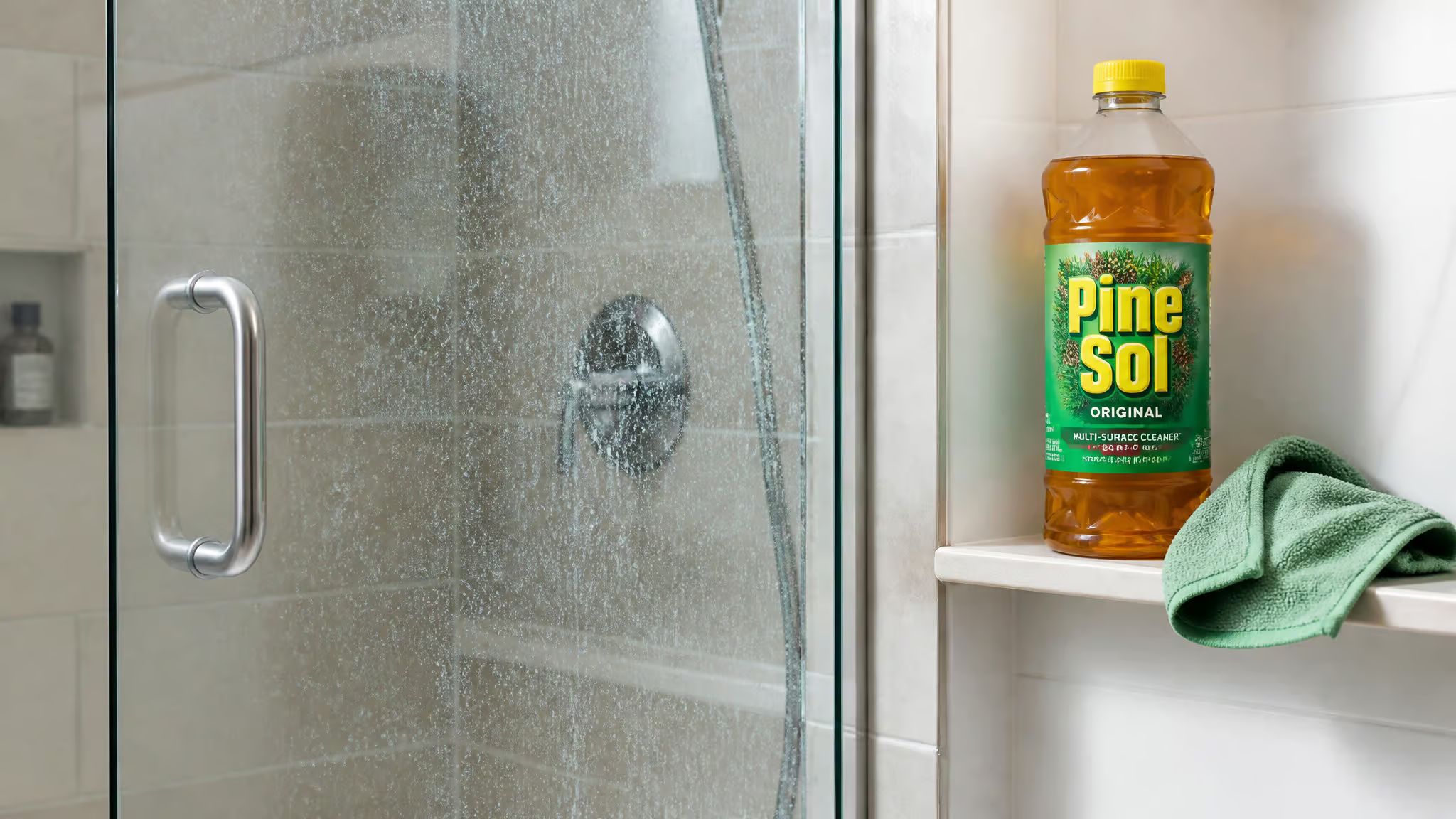
The winner wasn’t natural, wasn’t eco-friendly, and wasn’t even a bathroom cleaner. It was Pine-Sol, a floor cleaner, scoring 5/5. The natural dish soap-vinegar-water mix scored 1/5.
Full results:
| Method | Rating | Notes |
|---|---|---|
| Pine-Sol | 5/5 | Effortlessly removed hard-water stains and soap scum |
| Magic Eraser | 4/5 | Excellent but required elbow grease |
| Lime-a-way | 3.5/5 | Effective but strong chemical scent |
| Bar Keepers Friend | 3/5 | Removed most stains but grainy texture |
| Dryer sheet | 2/5 | Niche touch-up only |
| Dish soap/vinegar/water | 1/5 | Left hard-water stains visible |
Now, some important context: this test ran on glass shower doors, so it’s a signal for tubs, not a guarantee. But the tradeoff is clear: natural for regular maintenance, chemical for the hard stuff.
Pine-Sol with a microfiber cloth, the 5/5 surprise
About 2 tablespoons of Pine-Sol on a clean, damp microfiber cloth, wiped in circular motions, effortlessly removed hard-water stains and soap scum that natural methods couldn’t touch. The tester plans to dilute it in a spray bottle for future use rather than pouring concentrate on the cloth, a practical follow-up tip worth stealing.
Dish soap, vinegar, and water mix, the 1/5 disappointment
The recipe that failed: quarter cup dish soap, 1 cup distilled water, half cup distilled white vinegar, a few drops of lavender essential oil. Spray on, let sit half an hour, scrub with a brush, rinse with the showerhead. After all that waiting and effort, the hard-water stains were still visible.
It’s a frustrating contrast with the soak recipes that work. The lesson here is that dwell time and application method matter enormously, the same ingredients that fail on glass with a 30-minute wait and a brush can succeed on a tub with a multi-hour soak and no scrubbing at all, though choosing the best bathtub cleaner for your specific stain and material can make the process even easier.
Magic Eraser: the honest mid-point, 4/5
Excellent at removing hard-water stains but required more elbow grease than a strictly no-scrub approach. Soak a brand-new Magic Eraser with water, wring it out, clean in circular motions, and add water as needed. It’s a solid backup when natural methods fall short but you don’t want to go full chemical.
Bar Keepers Friend: effective but inconvenient, 3/5
Removed most stains but the strong scent and grainy texture made it awkward. About a tablespoon on a damp sponge, scrub in a circular motion, let sit a couple minutes, rinse, and wipe with a damp microfiber cloth, the same approach works for cleaning a barbecue when you need to lift stuck-on residue from grates.
Lime-a-way: works but requires breathing precautions, 3.5/5
Effective on mineral deposits, but the strong chemical scent caused coughing. The tester noted covering her face with a T-shirt, use this one with gloves and good ventilation. Spray on the door, let sit a minute, wipe with a damp microfiber cloth, rinse, and squeegee.
Dryer sheet: a niche trick, 2/5
Mostly removed hard-water stains but was inconvenient due to slipping. Gently rub stains on glass and hardware with the sheet. Realistically, this is a touch-up method for small spots, not a primary approach.
Read the stain, pick the treatment
Here’s a quick diagnostic that will save you time. Look at the stain color and you’ll know what you’re dealing with:
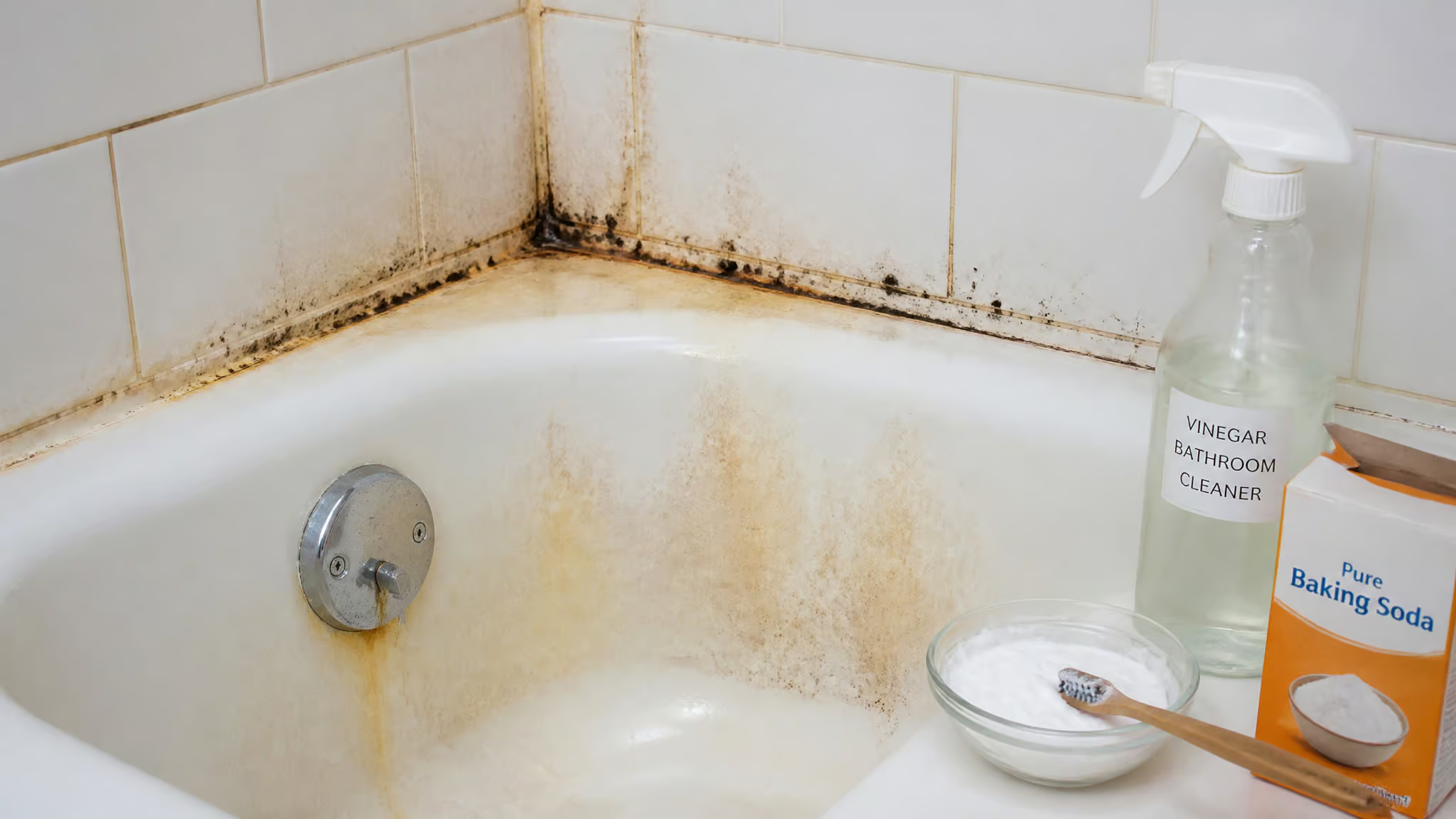
- Yellow stains: soap and shampoo scum. A soak-and-rinse method from how to clean bathtub handles this, you can also try the vinegar-dish soap mixture.
- Reddish-brownish stains: iron deposits from hard water. These are the toughest and may need the chemical approach (Pine-Sol or Lime-a-way).
- Black stains: mold. A paste of baking soda and vinegar, left at least 15 minutes, then rinsed. Auto detailing brushes are oddly great for grout and tough spots, they’re designed to reach into tight spaces.
For faucet hard-water stains, a simple solution of white distilled vinegar, water, and dish soap works well, the stains rub off easily with this mixture.
Water softeners reduce hard-water stains and improve soap lather overall, so if you’re fighting mineral buildup constantly, that might be worth considering. Showering before bathing and rinsing the tub afterward also helps prevent staining.
Drain cleaning: the maintenance that keeps the system working
A slow-draining tub is usually hair, and it’s fixable without calling a plumber. Two-stage approach:
- Mechanical removal first: unscrew the plug and pull out any hair clumps. For deeper clogs, use a deconstructed wire hanger, bend it into a hook shape and work it down the drain.
- Chemical flush: pour half a cup of baking soda and half a cup of white vinegar down the drain, followed by hot water. Alternatively, pour the mix in, wait 10 minutes, then flush with boiling water.
That’s it. No plumber needed, and the chemical step works on most common clogs.
Disinfecting a tub without bleach
Disinfecting is a different task from cleaning. Here’s a complete bleach-free sequence:
- Rinse the tub with warm water to remove debris
- Make a paste of half a cup of baking soda and a quarter cup of white vinegar
- Clean the tub, focusing on stains
- Spray with 3% hydrogen peroxide or a natural disinfectant
- Rinse thoroughly and dry
One important note: skip hydrogen peroxide on porous surfaces like soapstone, marble, and wood, it can damage them. Your regular tub is fine; natural stone is not.
Match the method to your tub material
Here’s where “natural” doesn’t automatically mean “safe.” The cleaner that works on one tub material can destroy another.
Acrylic and fiberglass: vinegar is safe and effective, thanks to acetic acid’s antifungal and antibacterial properties. Avoid harsh supermarket chemicals, they can be too strong for these surfaces.
Plastic (acrylic) tubs: these stain easily and scratch easily with harsh materials. Use a paste made from baking soda and dish soap, it’s gentle but effective. Hard water causes ring stains and stain lines on plastic tubs because of mineral deposits. For these, dilute vinegar with two parts water, let it sit for about an hour, then rinse.
Natural stone: vinegar etches marble and granite. Full stop. Avoid it on marble bathtubs, showers, vanities, and tile, use a natural surface cleaner instead.
Things to avoid across the board:
- Steel wool or rough brushes, they scratch enamel and acrylic finishes
- Ammonia mixed with bleach, releases toxic fumes
- Undiluted vinegar on natural stone, causes etching
- Harsh chemical cleaners, can corrode surfaces, harm finishes, and cause skin or respiratory irritation
- Colored cleaners, can stain light or porous tub surfaces
Bleach specifically damages wood, acrylic, and copper bathtubs. If you must use it, dilute it with water, but only as a last resort.
Finish the job: curtains, toys, loofahs, and the stuff that re-soils the tub
A clean tub in a mildewed curtain defeats the purpose, and the stuff sitting in the tub will re-soil it before you know it. Here’s the “while you’re at it” checklist:
Curtains and walls: spray with a diluted white vinegar solution, let sit a few minutes, then rinse. Wipe underneath the tub too, that’s where things get forgotten.
Bottles: wipe down the bath products before putting them back to avoid transferring bacteria and product buildup back onto the clean surface.
Children’s tub toys: clean with natural dish soap, an equal-parts vinegar and water solution, or the dishwasher if they’re heat-safe. After cleaning, air-dry them to inhibit mold growth, a well-draining toy bin helps too.
Loofahs: throw them in the dishwasher every week and replace them every month. Or switch to a washcloth, it’s easier to wash regularly and you’ll never worry about what’s growing in the sponge.
A maintenance routine that keeps scrubbing optional
Here’s the complete picture, assembled into a plan you can actually follow:
Every day (30 seconds): rinse the tub with warm water after use. Push the water toward the drain with a sponge mop. Leave the curtain open. Use a dedicated long-handled brush to swish away residue, the brush’s long handle protects your back and the daily habit means you’re never facing heavy buildup.
When buildup happens: pick a soak-and-rinse method matched to the problem. Vinegar and dish soap for soap scum, baking soda and hydrogen peroxide for disinfection, a longer vinegar soak when things have gotten out of hand.
Keep chemical backup ready: Pine-Sol and a Magic Eraser are your hard-water ring failsafes. These require actual effort, but far less than you’d need without the right products.
Weekly: clean every 3-5 days for daily-use tubs. Weekly works for most households.
No single method is universal, your tub material and the type of stains you’re dealing with should guide your choices. But the whole system is sustainable: prevent first, soak second, target chemical spot-treatment last. The point isn’t that scrubbing is somehow bad, it’s that you shouldn’t have to turn your bathroom into a workout space every week.
With the right habits and the right products, that dreaded ring around the tub becomes a non-issue. I know it sounds too good to be true, but after decades of watching my grandmother’s method work, I’m a believer. The drain pipe, the walls, the shower curtain, the loofah, they all matter, but the core habit is the one that makes everything else easier: the 30-second rinse, the quick swish, and the commitment to never letting things get to the scrubbing stage in the first place.
Your knees will thank you. Your time will thank you. And the next time someone asks how you keep your tub so clean, you can honestly say you barely have to scrub it at all.
Frequently Asked Questions
How do you clean a tub that hasn’t been cleaned in years?
For heavy buildup, use a long soak: plug the drain, add three cups of white vinegar, fill with water, and let it sit for several hours or overnight. Then drain and wipe—the grime will have loosened enough to rinse away with minimal effort.
What is a homemade cleaner that doesn’t require scrubbing?
A paste of baking soda and water, sprayed with vinegar, fizzes to lift grime—let it sit 15 minutes, then rinse. For tougher stains, a vinegar soak (three cups vinegar in a full tub of water) works overnight without any scrubbing.
How do I remove hard water stains from a bathtub without scrubbing?
For hard water stains, use a chemical cleaner like Pine-Sol or Lime-a-way—these are proven to work with minimal effort. Apply, let sit, then wipe. For a natural approach, a vinegar soak can help, but it may not be as effective on stubborn mineral deposits.
What is the best no-scrub bathtub cleaner?
Pine-Sol, a floor cleaner, scored 5/5 in a test on glass shower doors, effortlessly removing hard water stains and soap scum. Apply it with a damp microfiber cloth, let it sit, then rinse—no scrubbing needed.