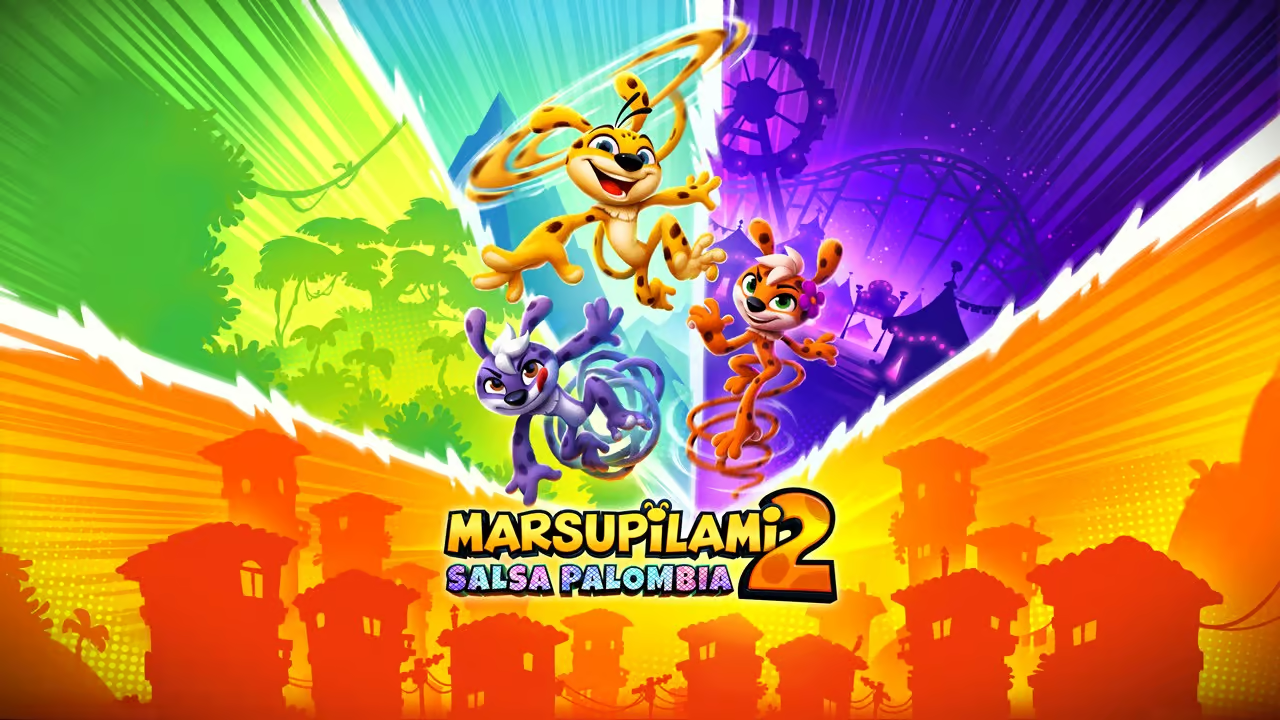
Saturday morning, coffee’s fresh, and somehow the living room went quiet. I’d downloaded a demo for a game called Marsupilami 2: Salsa Palombia, a franchise I knew nothing about until last year. Thirty minutes later, the demo ended, and the immediate reaction from the couch was a chorus of “what happens next?” That doesn’t happen by accident. And it’s why I decided to write this Marsupilami 2: Salsa Palombia review, because if you’ve got kids who love platformers, or you grew up on Donkey Kong and Rayman, this one is already earning its keep based on the demo alone.
But let me be clear about what this is and what it isn’t: I’ve played roughly 30 minutes across three levels. The demo is live on the Nintendo eShop right now. The full game doesn’t hit until September 3, 2026. So think of this as a well-played demo review with a clear-eyed look at what we know, and what we can’t judge yet.
Key Takeaways
The demo is on the Nintendo eShop right now: three levels, roughly 30 minutes of play, and it includes the city level with the chase sequence that convinced me this game is worth watching.
The full game launches September 3, 2026 on Switch, PS5, Xbox Series X|S, and PC, but price, total length, and the ESRB rating are still unannounced.
The character-swapping system is the game’s best idea: Twister dashes and glides through doors, Hope spin-jumps off enemies, and Punch bounces on spikes safely, and each stage pairs two of them, so you’re constantly switching.
Table of Contents
What Is Marsupilami 2: Salsa Palombia?
Marsupilami 2: Salsa Palombia is the sequel to Marsupilami: Hoobadventure, which came out in November 2021, and the same team is behind it: developer Ocellus Services (the folks who made the Smurfs game) with Microids publishing. If you played the first one, this is the natural next chapter: same world, same vibe, new adventure.
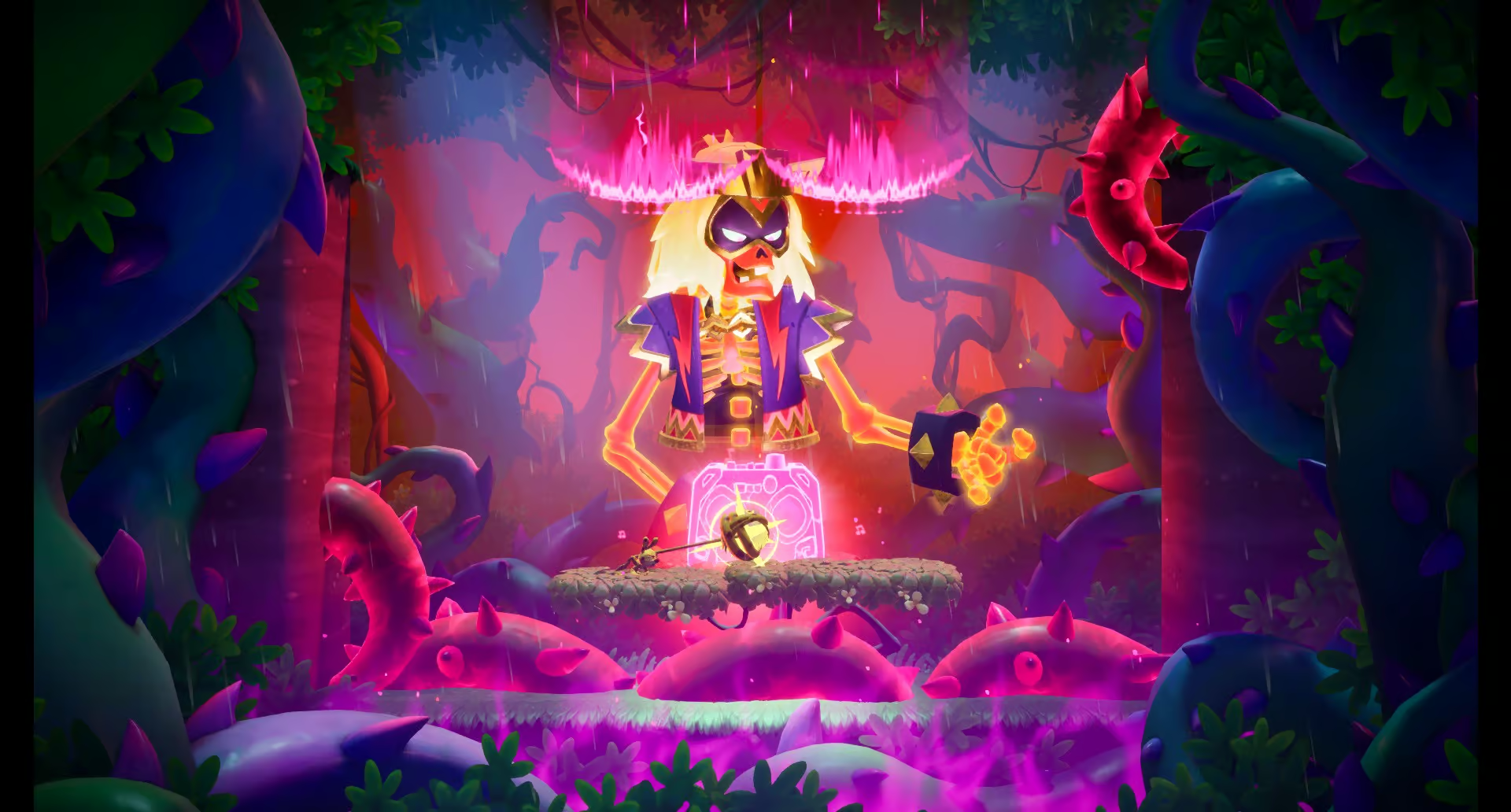
If you’ve never heard of Marsupilami at all, that was me until early last year, here’s the short version: it’s a fast-paced 2D side-scrolling platformer in the vein of the more modern Donkey Kong Country games and Rayman. The story is simple enough for a young kid to follow: the Mummy Queen is back with her minions, and she throws a cursed concert. A strange melody makes animals dance chaotically across Palombia, and it’s up to the Marsupilamis to save the day. Classic platformer setup, no homework required.
Full disclosure on my history here: I discovered Hoobadventure by accident in March 2025 and ended up completing it fully, including the Hidden World expansion, which was challenging. So I came into this demo with expectations. And based on what I played, the previews calling this one “bigger, bolder, better” feel like accurate framing rather than hype.
Gameplay: Tight Controls and Constant Forward Momentum
The core move set is what you’d expect from a modern platformer: run, jump, mid-air dash, ground-pound, and grabbing hooks to swing across gaps. The controls are tight and responsive right out of the gate, which matters more than people give it credit for, because floaty controls are the fastest way to get a frustrated kid at the TV.
What sets the feel apart is the constant forward momentum. The stages encourage you to keep moving, keep flowing, and there’s a rhythm to it that reminded me immediately of Rayman Legends, and that relentless forward pull is a big part of why Rayman Legends became iconic. Thirty minutes in, I can already feel that same design philosophy here.
Three Marsupilamis, One Clever Swapping Mechanic
The defining feature is the character-swapping system, and it’s mechanical rather than cosmetic. There are three playable Marsupilamis, each with a unique ability:
- Twister, has the Turbo Glide ability: a mid-air dash that lets you shoot through doors and gaps.
- Hope, has a Spin Jump: a double-jump spin that lets you bounce off enemies and hit higher platforms.
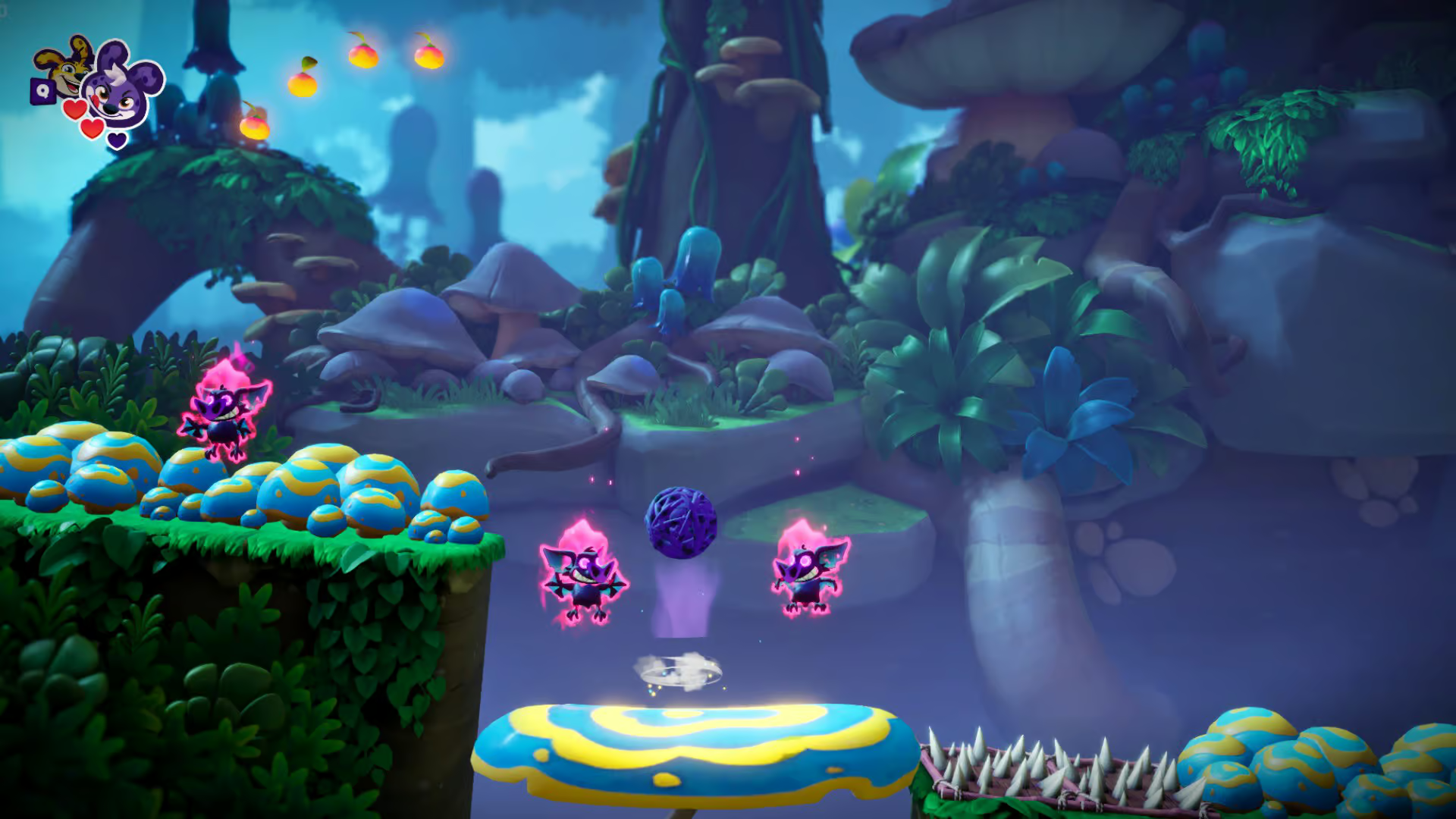
- Punch, has a Bouncy Ball ability: turning into a ball so you can bounce on spikes safely.
Each stage gives you a pair of them, and you swap on the fly, no menus, no pausing, just a button press mid-jump. That’s where the puzzle-platformer magic happens.
There was one moment in the demo that sold me on the whole concept: dashing through a door as Twister, instantly swapping to Punch, then bouncing off the doors in ball form to reach a music note perched above a spike pit. It’s the kind of moment that makes you feel clever, and it’s built on swapping that’s fast enough to keep the flow going. Stages are also littered with contraptions that require these swaps, so it never feels like a one-note mechanic.
The Characters in 30 Seconds
- Twister, your movement specialist. Dash and glide your way through doors.
- Hope, your height specialist. Spin-jump off enemies to reach upper paths.
- Punch, your hazard specialist. Turn into a ball and laugh at spike pits.
Four Worlds, Hidden Rooms, and a Chase You Won’t Forget
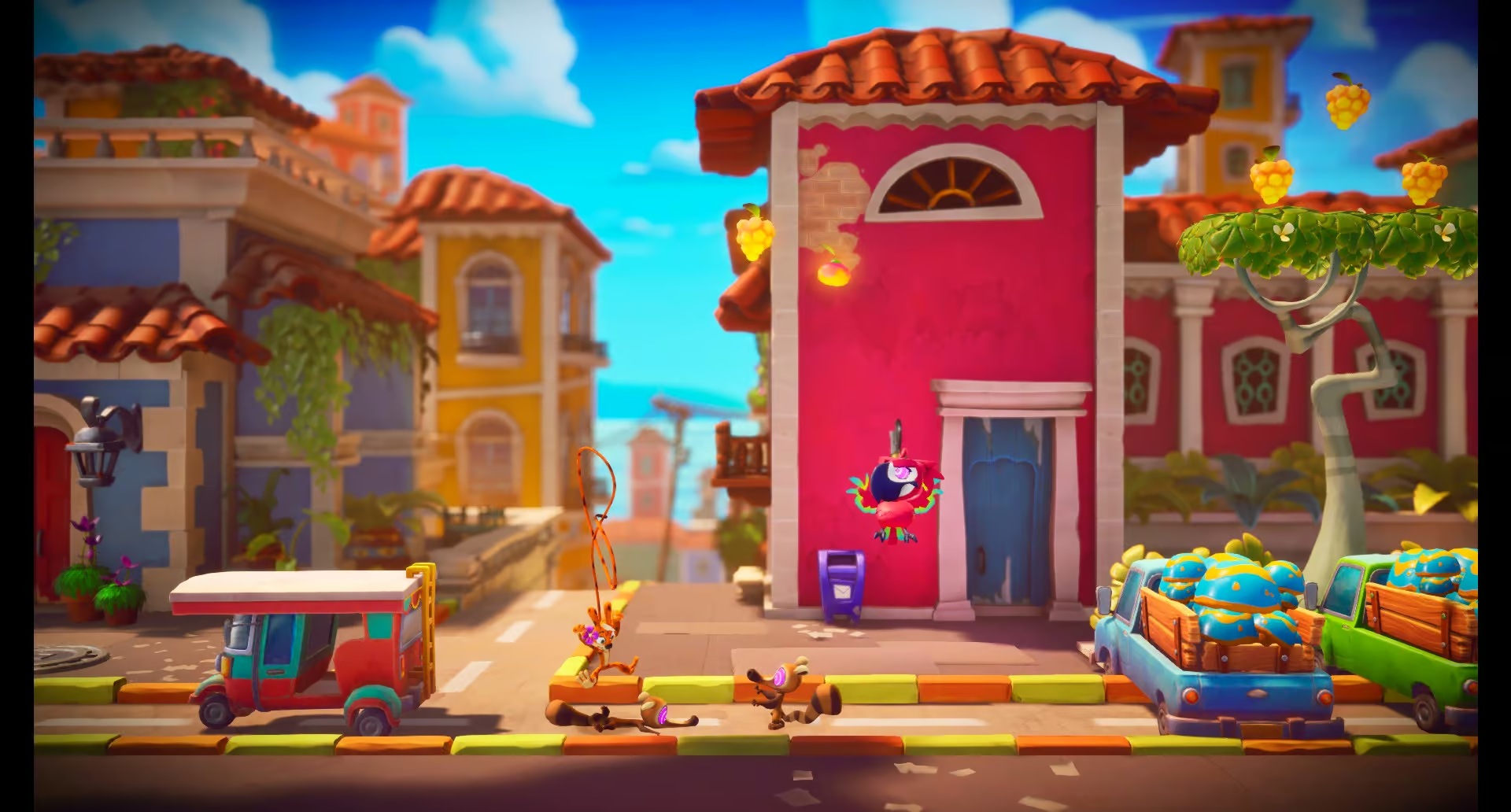
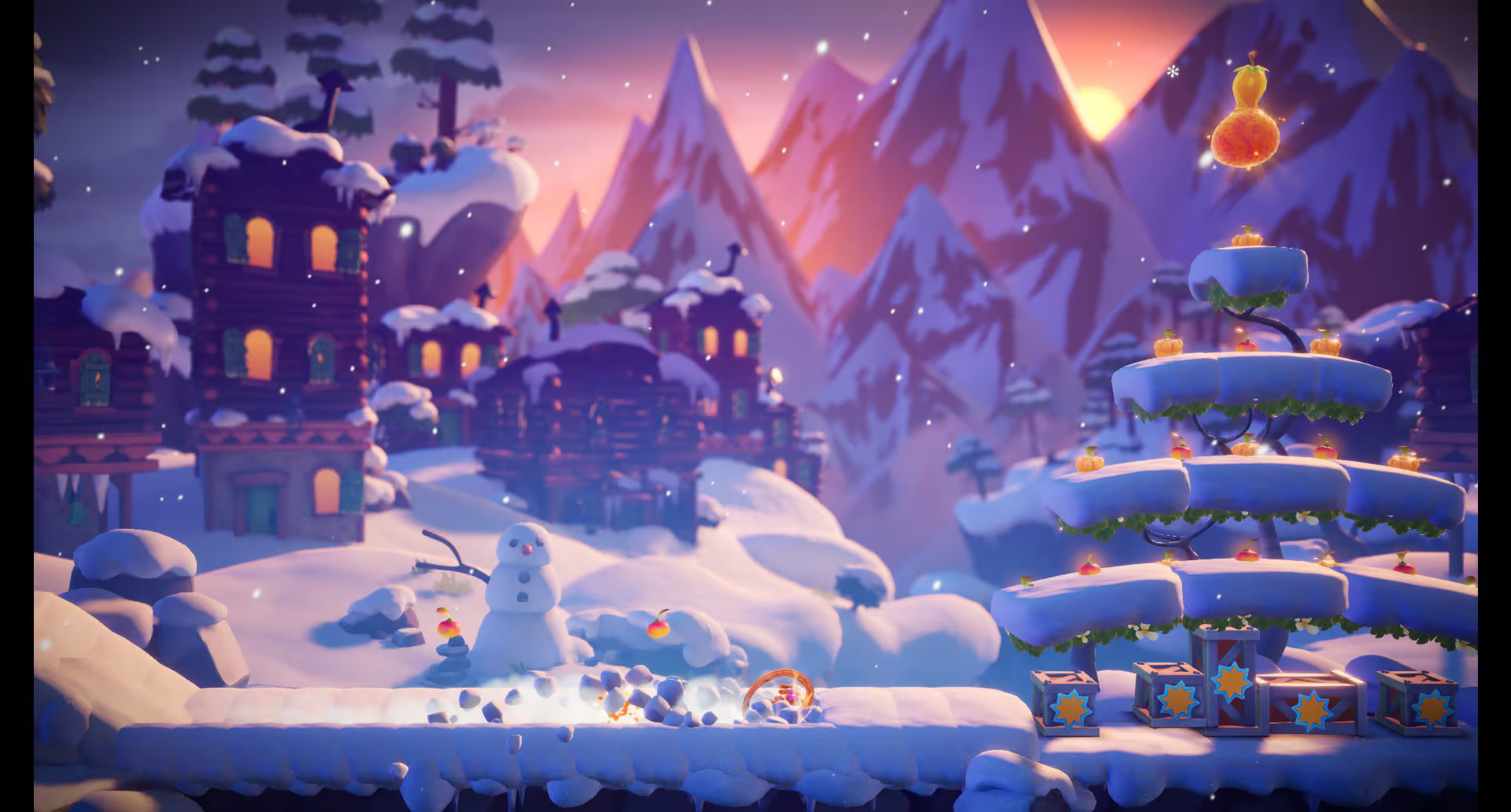
The full game is set across four vibrant worlds: a jungle, a city, a snowy mountain area, and what appears to be the Mummy Queen’s underworld. Even in the demo, the level design impressed me with its variety. Stages are generally linear, but they give you choices, there are high roads and low roads, and different characters open different paths.
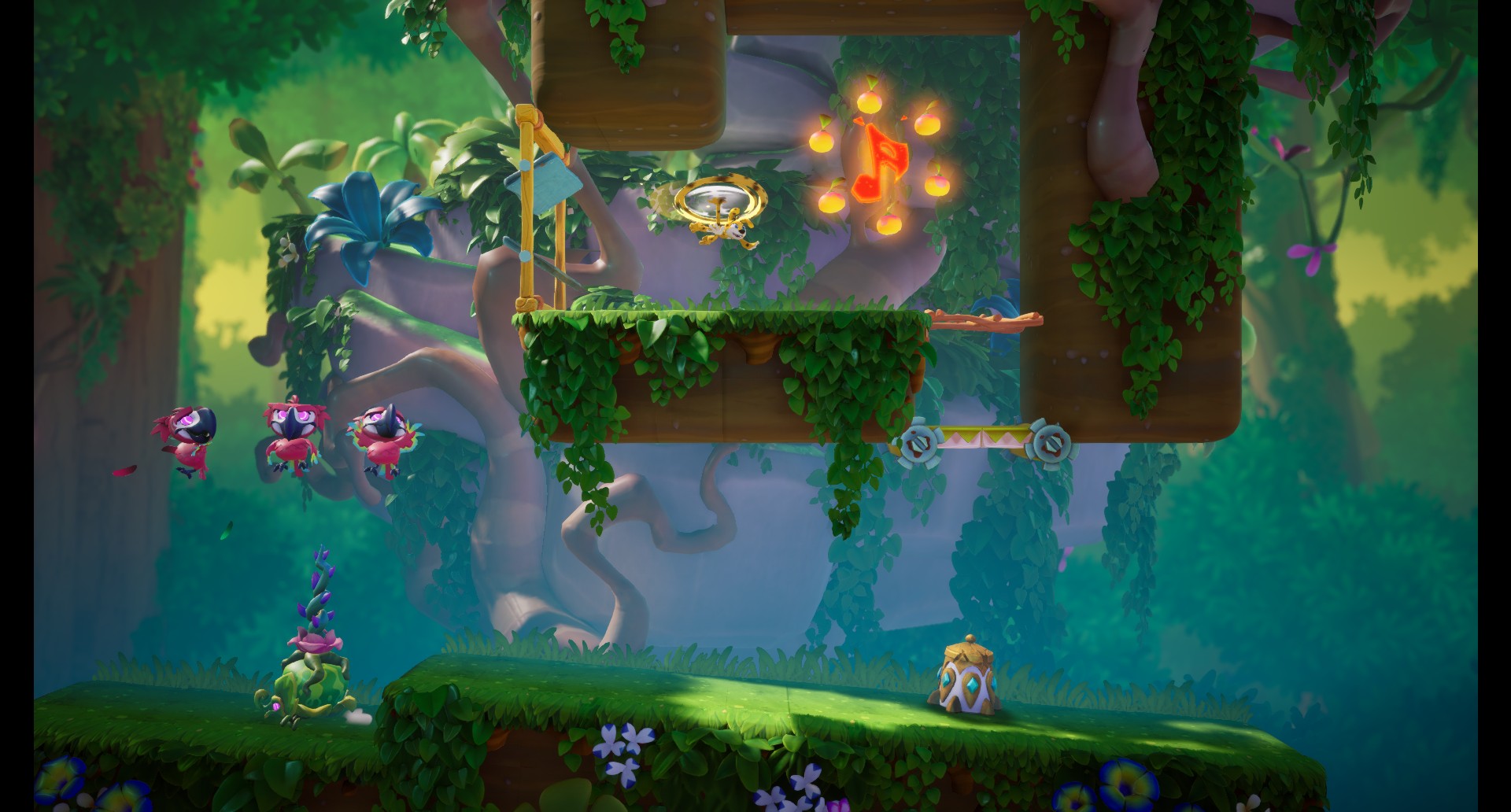
There are also hidden challenge rooms and collectibles to hunt for: music notes tend to show up at the end of trickier segments as a reward for skill, and collecting fruit fills a gauge. If you pick the right character for a level, there are even hidden levels to uncover, which adds replay value, especially for kids who like to comb through stages.
The standout moment in the demo was the city-based level, which ends with a thrilling chase sequence. I won’t spoil the details, but it’s the kind of set piece that makes a 30-minute demo feel like a 30-minute event. And there are reportedly memorable boss fights in the full game, though I obviously haven’t played those yet, so I’m taking that on faith from the official descriptions.
It Looks and Sounds Like a Nintendo-Level Platformer
Visually, this game is bright and colorful, the kind of art direction that pops on a living room TV. The previews describing it as rivaling some Nintendo platformers isn’t marketing fluff as far as I can tell from 30 minutes. The animation is lively, the characters are fun to watch, and there’s a nice visual detail where the Marsupilamis’ tails spin like a wheel when they run at full speed, which gives everything a Sonic-like energy. The soundtrack is just as fun, with catchy tunes that make the whole experience feel more playful.
One caveat: I’m judging this on a demo. A full game can have visual stumbles in later worlds, so I’ll hold the final verdict on the graphics until I’ve seen more. But the foundation is there.
Couch Co-Op and Modes Built for the Family
Player count is 1-2, and there’s local co-op, which, for parents, is the entire ballgame. No online setup, no friend codes, just a second controller and you’re playing together. The demo let me jump in alongside my kid, and that alone makes this an easy sell for our house.
Beyond the story levels, the official description mentions a few extra modes worth knowing about:
- Battle Dojos, challenge rooms for players who want to master stages.
- Competitive minigames, quick games for when someone wants a shorter session.
- Flow Mode, continuous no-death runs for the speed-run-curious.
- Time trials, race against the clock to earn unlockable cosmetics.
I can’t speak to any of these from personal experience yet, they weren’t in the demo, but Flow Mode in particular feels like a smart addition for replay value.
One standard parent note: this is a fast game with flashing patterns, so if that’s ever been an issue for your kid, a quick pediatrician check-in is worth it before long sessions.
Demo, Release Date, and What We Still Don’t Know
If the demo is available to you, I think it’s worth an afternoon. It’s on the Nintendo eShop, it’s three levels, and it takes roughly 30 minutes, which is the perfect length to build excitement without burning out your kids. If you’re not on Switch, there’s also an official 10-minute gameplay video out there that shows the game in action.
The full game releases September 3, 2026 on Nintendo Switch, PS5, Xbox Series X|S, and PC. On Switch, it’ll be available both digitally and physically, which is good news if your household runs on game carts like ours does.
What the Demo Includes
- Three levels: a jungle stage, a city stage with the chase sequence, and one more I’ll keep vague so you get the surprises.
- The full character roster. Twister, Hope, and Punch, with all three abilities in play.
- A taste of the hidden level logic, if you poke around.
Price, Length, and Rating: Still Unannounced
Here’s the honest part: the price, the total playtime, and the ESRB rating haven’t been announced yet. Given the first game in the series, I’d expect a reasonable platformer price point, but I’m not going to guess. And while the content I played felt family-friendly, there’s a certain chaotic charm to the cursed-dance story that’s more silly than scary. I can’t stamp a rating on it until ESRB weighs in.
Is It Suitable for Kids?
I’m going to lead with what matters: I played this demo with my kids over a weekend and we had a blast. Nobody was frustrated, nobody got stuck for too long, and my kid who usually bails on platformers after five minutes asked if we could “do the city one again.” The tone is cheerful, the humor is playful rather than mean-spirited, and it stays true to the Marsupilami license, it’s a whole-family game, full stop.
Two notes for parents: there are spike pits and enemies that can knock you back, but deaths are quick and forgiving, respawns are fast, no lives system that I saw in the demo, which is exactly the right call for younger players. And again, the epilepsy caution applies to any game with fast motion and flashing patterns.
Verdict: Worth Buying, With One Honest Caveat
Is Marsupilami 2: Salsa Palombia good? Based on everything I’ve played and researched: yes, this is shaping up to be a must-buy for platformer fans and families, full stop. The controls are tight, the character-swapping mechanic is clever, the city chase level is the best 30 seconds I’ve spent on a platformer in ages, and the couch co-op makes it a no-brainer for our household.
The caveat, and I want to be upfront about it: I’ve only played 30 minutes. The verdict “bigger, bolder, better” is built on a demo, a well-documented design philosophy, and a developer with a solid track record, but price and total length are still unannounced, and a full game can stretch or stumble in ways a demo can’t. If you’re on Switch, the smart play is to grab the demo and see for yourself. For PS5, Xbox, and PC owners, there’s a 10-minute gameplay video to hold you over until September 3, 2026.
This one earned a spot on my calendar. I can’t wait to play the full game. And based on the couch reaction in our living room, I’m not the only one counting down the days.
Marsupilami 2: Salsa Palombia Review Photo Gallery
Frequently Asked Questions
How does the character-swapping mechanic work in Marsupilami 2?
Each stage pairs two of the three Marsupilamis — Twister, Hope, and Punch — and you swap between them mid-jump with the press of a button. Each one has a unique ability: Twister dashes and glides through doors, Hope spin-jumps off enemies, and Punch bounces off spikes in ball form. The puzzle-platforming comes from chaining those abilities together in sequence.
Can kids play Marsupilami 2 together?
Yes. The game supports two players with local co-op, no online setup or friend codes needed — just a second controller. It’s designed for families where a parent and child, or two kids, can play side by side. The demo also included a hidden level mechanic tied to choosing the right character for each stage.
How long is the Marsupilami 2 demo, and what’s in it?
The demo on the Nintendo eShop contains three levels and runs roughly 30 minutes. It includes a jungle stage, a memorable city level with a chase sequence, and a third stage, and it gives you access to all three playable characters — Twister, Hope, and Punch — so you can test the swapping mechanic before committing to the full game.
What is the character-swapping mechanic in Marsupilami 2?
Each level pairs two of the three Marsupilamis — Twister, Hope, and Punch — and you swap between them mid-action with a button presshol the time. Twister dashes through doors and gaps, Hope spin-jumps off enemies to reach high platforms, and Punch turns into a ball that can safely bounce on spikes. The swap happens instantly, even mid-jump, which is what turns simple platforming into puzzle-solving.
How does character swapping work in Marsupilami 2?
Twister, Hope, and Punch each have a unique ability: Turbo Glide, Spin Jump, and Bouncy Ball, respectively. Levels pair you with two of the three charactersacy, and you swap between them mid-jump with a button press instead of pausing to change. The mechanic is built around using both characters’ abilities in sequence to solve the level and reach collectibles.