Saturday morning. The weekend is short, the list is long, and somewhere around item five is “clean the tub.” That ring around the edge? Yeah, that’s been there since Tuesday. You grab whatever’s under the sink, spray, scrub, spray again, and half an hour later you’ve just moved the grime around and burned a chunk of your Saturday, which is exactly why you should check out this DIY guide for beginners before tackling any more chores.
We’ve all been there. And the fix isn’t scrubbing harder, it’s picking a cleaner that actually does the job.
So here’s what real testing found. Testers ran 27 bathroom cleaning formulas through the same gauntlet: they spread a mud mask on grouted tile and let it dry into the kind of mess that makes you want to cry. Then each product got its shot, applied, left to sit, wiped down, checked for residue. Here’s what earned a spot under your sink.
Bottom line: The right cleaner saves you time and elbow grease. A few minutes of reading beats an hour of scrubbing.
Key Takeaways
Scrubbing Bubbles Bathroom Grime Fighter Spray is the best overall pick, it removed a dried-on mud mask from grouted tile after a 5-minute dwell, with no residue left behind on the paper towel check.
Clorox Bathroom Disinfecting Cleaner eliminates 99.99% of viruses and bacteria, including Salmonella and staph, but it has to sit for 10 full minutes, spray-and-wipe doesn’t actually disinfect.
Home Armor Instant Mold and Mildew Stain Remover sanitizes in 10 seconds and disinfects in 30 seconds, but it did leave a faint residue on tile in testing.
Table of Contents
How the testing actually worked
A roundup is only as good as its testing method, and this one was thorough. Testers spread a mud mask on grouted tile, a realistic, sticky mess, and let it dry. Then each cleaner got the same treatment: applied, left to sit as long as its label directed (or five minutes if no time was listed), and wiped down with water, a scrub brush, and a microfiber cloth. After two minutes of drying, another pass with a paper towel checked for streaks and leftover film.
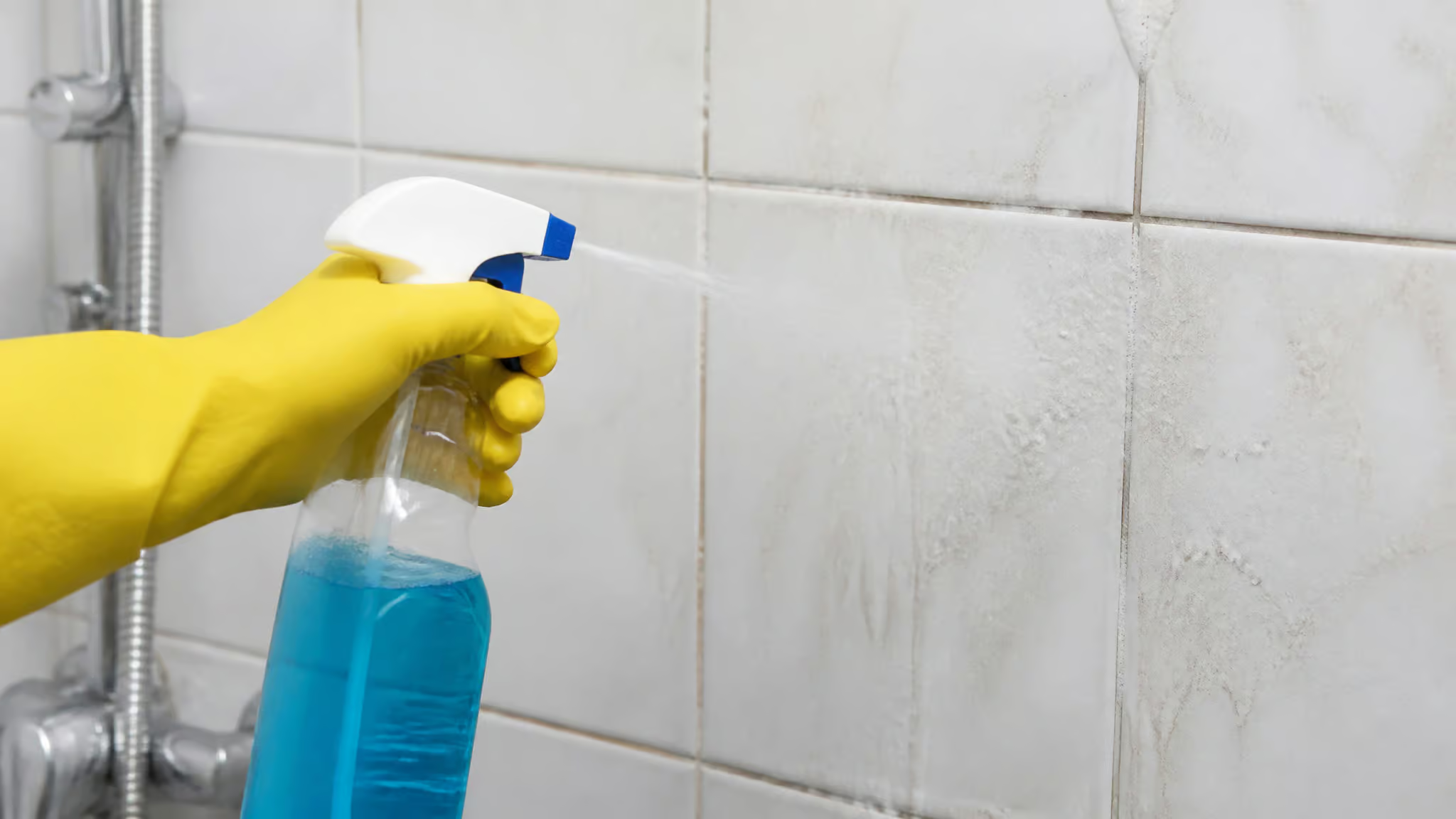
They evaluated every product on three things: performance, ease of use, and scent. They tested sprays, pastes, gels, disinfectants, and grout whiteners on soap scum, dirt, hard water, rust, mold, and mildew. They also surveyed 186 people about what they actually want in a bathroom cleaner, more on that in a minute.
The best bathtub cleaner overall: Scrubbing Bubbles Bathroom Grime Fighter Spray
If you buy one bathroom cleaner, this is the one. It wiped the dried-on mud mask off the tile completely, as clean as untouched tile, with no residue on the paper towel wipe. That kind of performance makes it an easy top pick.
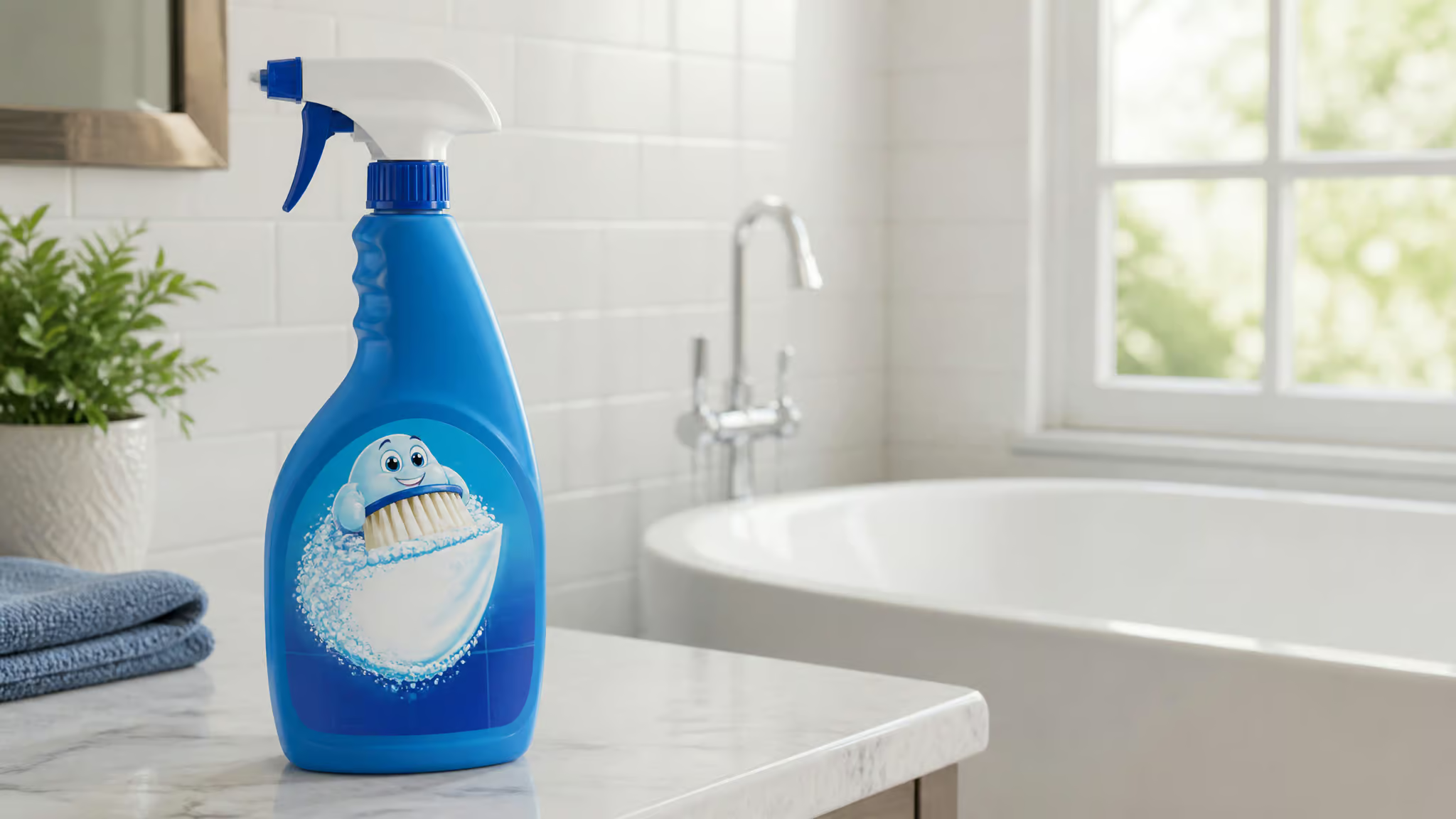
It’s also genuinely versatile. Safe on tubs, shower walls and doors, vinyl shower curtains, glazed ceramic tile, stainless steel, chrome fixtures, fiberglass, and glazed porcelain, basically everything in a standard bathroom. And it kills 99.9% of viruses and bacteria, so it pulls double duty when you need to disinfect.
One thing to know before you buy: the spray comes out as a direct stream, not a fine mist, so covering a big tub takes a little more effort. Not a dealbreaker, just don’t expect a quick fog-and-go.
The best plant-based option: Mrs. Meyer’s Clean Day Tub and Tile
If harsh chemicals aren’t your thing, this is the one to look at. It’s plant-based and it genuinely works, it cleared the mud mask in testing and left the grout visibly whiter and brighter.
The lavender scent comes from essential oils, and it’s subtle rather than in-your-face. There’s a lemon verbena version if lavender isn’t your style.
But let’s be honest about the limits:
- It’s not a disinfectant. If you need germ-killing power, grab something from the disinfectant category.
- It’s safe on most bathroom surfaces, but skip it for natural marble, brass, and wood.
- The spray comes out as a concentrated stream, and the formula turns thick and foamy as you work, expect to spread it around a bit.
The best for mold and mildew: Home Armor Instant Mold and Mildew Stain Remover
Mold is its own special kind of headache, and this is the one to grab for it. It sanitizes in 10 seconds and disinfects in 30 seconds, no standing around waiting for it to work. For actual mold stains that have settled in, let it sit about 10 minutes until the stains disappear.
Spray it and let it air-dry, that helps keep mold from coming back for up to a week. That’s a nice bonus for a bathroom that never quite dries out.
The mist spray covers a lot of area quickly, and it’s safe on sealed grout, vinyl, fiberglass, and glazed porcelain. One honest caveat: testing left a faint residue on tile, so give the surface a good rinse or extra wipe when you’re done.
The best disinfecting cleaner: Clorox Bathroom Disinfecting Cleaner
If killing germs is the whole point, someone’s been sick, or the bathroom just needs a reset, this is your pick. It eliminates 99.99% of viruses and bacteria, including Salmonella and staph.
But here’s the critical detail most people miss: it has to sit for 10 minutes to actually disinfect. Spray it, walk away, come back, then wipe. If you spray and wipe right away, you’re just moving stuff around and making the bathroom smell clean. It also handles mold and mildew, though heavy buildup might take a second application.
This one is bleach-free, a relief if you hate that chlorine smell, and it’s safe on glazed ceramic tile, stainless steel, chrome fixtures, fiberglass, vinyl, and glazed porcelain.
One caveat: it has a strong chemical smell, so crack a window while you work.
The best for hard water and rust: CLR Brilliant Bath Foaming Cleaner Spray
Hard water rings are their own special frustration, that stubborn buildup around the waterline isn’t always soap, sometimes it’s mineral scale. This one is specifically formulated for exactly that problem.
It’s also a solid pick if you’re trying to avoid harsh stuff: EPA Safer Choice-Certified and biodegradable, free of bleach, ammonia, phosphates, and alcohol.
The foaming formula clings to vertical surfaces, which matters when the gunk is on the shower walls and not just the bottom of the tub. Safe on porcelain, ceramic, glass, fiberglass, and stainless steel, but not natural stone.
Buyer rule: Match the cleaner to your specific problem. Hard water and rust need an acid-based formula, not just a general-purpose spray.
One honest warning: even under that lavender scent, it has a strong chemical smell. Keep the fan on and the window open while you use it.
The best sustainable option: Blueland Bathroom Cleaner Starter Set
If you’re trying to cut down on plastic waste, this is the pick. The starter set comes with tablets and a reusable bottle, you dissolve the eco-friendly tablets in water to make your cleaner. No shipping a giant bottle of mostly-water across the country.
Just know what you’re getting:
- It cleans effectively, it earned its spot in this list on performance.
- It does not disinfect. If you need germ-killing power, look at the Clorox or Scrubbing Bubbles picks.
- It tends to streak glass, save it for the tub and use something else for the shower door and mirror.
- Safe on porcelain, fiberglass, stainless steel, sealed ceramic, and sealed marble, check that your marble is sealed first.
Choosing the right cleaner for your tub material
Not all bathtubs are created equal, and the wrong cleaner can do real damage.
The biggest lesson: avoid harsh powdered cleansers or abrasives on fiberglass. It will scratch. Full stop. That’s direct advice from Debbie Sardone, owner of Speed Cleaning, and it’s worth taking seriously.
Beyond that, remember that no single cleaner is safe on everything. Natural stone, marble and similar materials, is especially picky, and several of the best picks in this list straight-up exclude it. When in doubt, check the label and test an inconspicuous spot before committing. If you need to go deeper on your specific tub type, our full guide to cleaning every kind of bathtub has you covered.
Disinfectants only work if you let them sit
This might be the most underrated rule in all of bathroom cleaning: spray-and-wipe doesn’t disinfect. The active ingredients need contact time to actually kill germs. The label tells you how long, and the difference between products is huge.
Clorox Bathroom Disinfecting Cleaner needs 10 minutes. Home Armor sanitizes in 10 seconds and disinfects in 30 seconds. That’s the difference between “spray, walk away, come back” and “actually wait 10 minutes.” If you’re chronically short on time, and let’s be real, who isn’t?, that’s a meaningful factor in which product fits your routine.
The DIY option: baking soda, hydrogen peroxide, and dish soap
If you’re watching your budget, there’s a homemade cleaner worth trying: baking soda, hydrogen peroxide, and dish soap. Simple ingredients you probably already have in the house.
The testers ran this DIY mix through the same mud mask gauntlet as a baseline comparison against the commercial cleaners. It’s not going to outperform the winners on this list, but for a few dollars in pantry ingredients, it’s a legit budget option that actually does something. And if you want to go fully chemical-free, we’ve got a guide for that too. Just go in with reasonable expectations, it’s a home remedy, not a miracle worker.
What 186 people told us about bathroom cleaner scents
The survey part of this testing process was just as interesting as the mud mask piles. Two clear preferences came out of it:
- People strongly preferred products that required minimal scrubbing. Shocker, right? Nobody wants to stand over a tub with a brush for 20 minutes. If you want to skip the scrubbing entirely, there are ways to do that.
- People preferred “fresh rain” or “grass” scents over chemical smells.
That second point is practical intel. If you’re sensitive to strong fragrance, or you just don’t want your bathroom to smell like a hospital supply closet, those fresher scents are worth actively looking for.
One quick word on safety
Working with strong cleaners in a small enclosed bathroom means you need to crack a window or run the exhaust fan. A few specific products need real ventilation: CLR Brilliant Bath has a strong chemical smell even under its lavender scent, and Clorox Bathroom Disinfecting Cleaner does too.
Most importantly: never mix cleaners. Bleach-based products in particular absolutely cannot be combined with anything else, that’s how you end up with toxic fumes. And follow the bottle instructions carefully, only using it where recommended. Your tub will be clean, and you’ll still have most of your Saturday left.
Frequently Asked Questions
What is the best way to clean an acrylic bathtub?
Avoid harsh powdered cleansers or abrasives on acrylic or fiberglass, as they will scratch. Use a gentle, non-abrasive spray like Scrubbing Bubbles or a plant-based option like Mrs. Meyer’s Clean Day Tub and Tile, which is safe on most surfaces. Always check the label and test an inconspicuous spot first.
What is the number one bathtub cleaner?
Scrubbing Bubbles Bathroom Grime Fighter Spray is the top pick overall, based on testing where it removed a dried-on mud mask with no residue. It’s versatile, safe on most bathroom surfaces, and kills 99.9% of viruses and bacteria. For mold, Home Armor is the best specialized choice.
Is a DIY bathtub cleaner effective?
A DIY mix of baking soda, hydrogen peroxide, and dish soap is a legit budget option that works, though it won’t outperform commercial winners. In testing, it handled the mud mask but required more effort. It’s a good choice if you want to avoid chemicals, but don’t expect miracle results on tough stains.