There’s exactly one rule in my house worth enforcing, and it’s not about the walls, those live in a permanent state of what I can only describe as #children-relative clean. The bathtub and the kitchen sink, though, those two have to be clean. Everything else can fall into disarray, but those two spots carry the week.
The catch was always the same one: a sparkling tub and a no-harsh-chemicals approach never seemed to live in the same sentence. Either I was scrubbing with something that smelled like a maintenance closet, or I was spending eleven dollars on a bottle of “natural” spray that mostly didn’t work. And here’s the sneaky part, “natural” on a label doesn’t mean much a manufacturer can’t skate around.
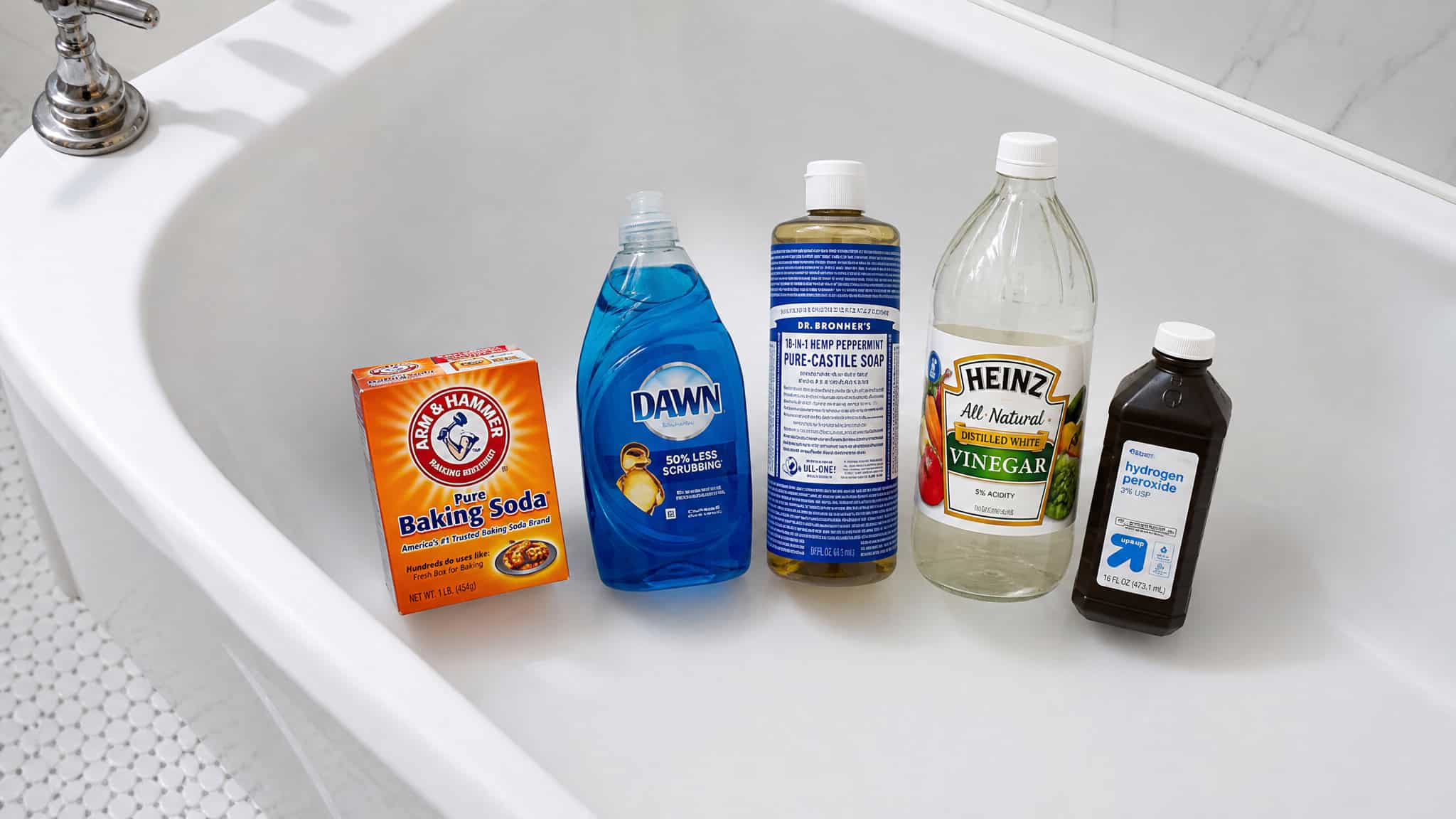
If you’ve been searching for how to clean a bathtub without chemicals, the good news is the answer was in your pantry the whole time. Baking soda, white vinegar, castile soap, hydrogen peroxide, and one bottle of blue Dawn. Five staples on one shelf, and a system that actually works.
Key Takeaways
Baking soda is the single best natural ingredient for a bathtub, it degreases, freshens, and brightens with gentle abrasion that works on most surfaces, and it works alone on light buildup.
The deep-clean paste is 1 cup baking soda, a quarter-cup of castile soap or Sal Suds, and a tablespoon of 3% hydrogen peroxide, and it only disinfects if you let it sit 10 to 20 minutes before rinsing.
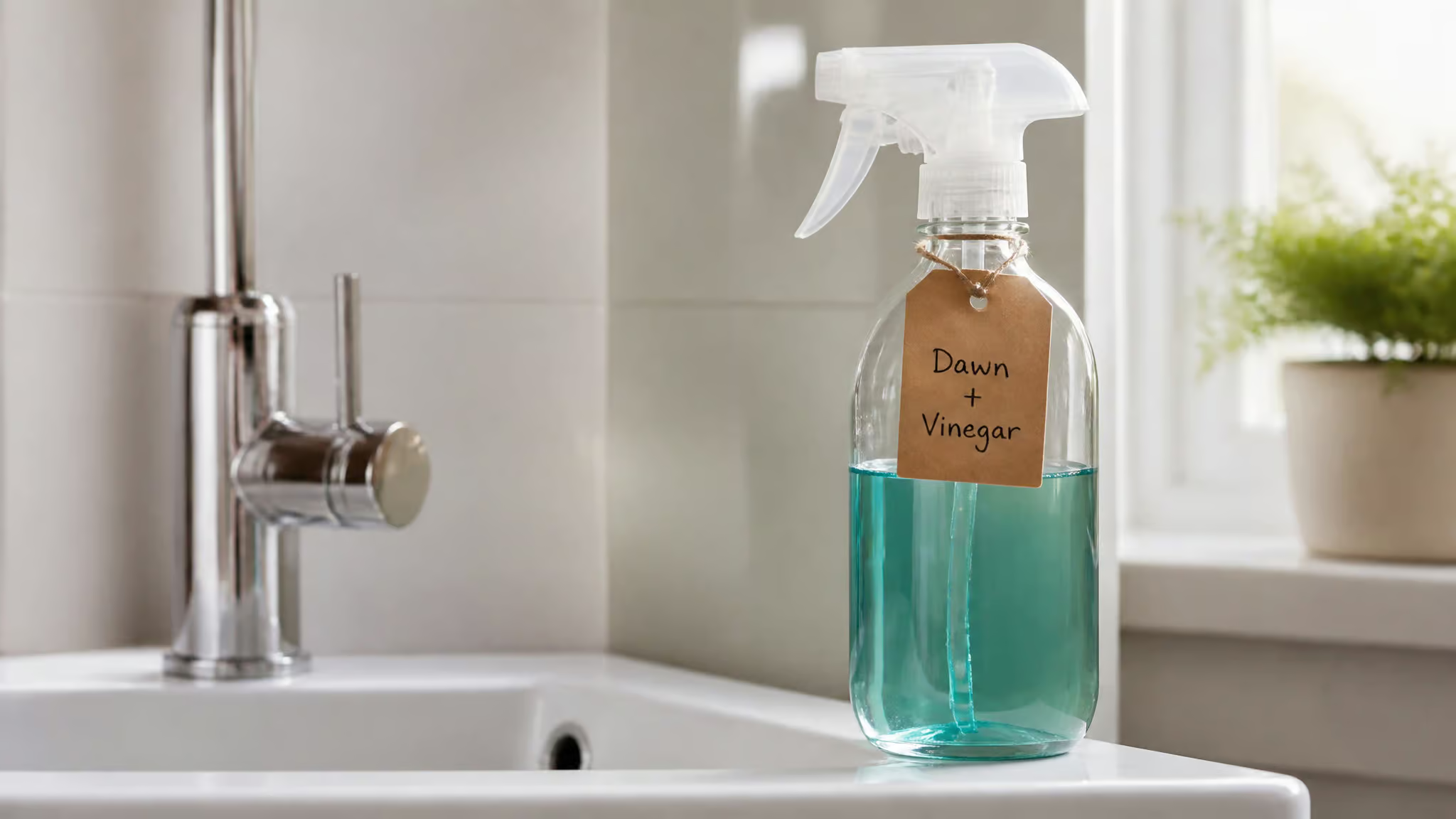
A weekly spray of 1 cup blue Dawn in a 32-ounce bottle filled with white vinegar eliminates scrubbing entirely: let it sit 30 minutes to overnight, then rinse.
Table of Contents
Why go chemical-free: the air-quality case
The best reason to skip the harsh stuff isn’t what it does to the tub. It’s what it does to the air. “Perhaps the harshest issue with non-natural-based products is the effect on air quality,” says Carol Mehas, CEO of the cleaning company arbOUR. That’s the hidden cost, the fumes hang in the bathroom long after the shine is gone.
And they matter most in the homes where the bathroom gets the most use from the smallest lungs. Fumes are particularly problematic in households with asthma or allergy sufferers, and pets and infants are especially at risk because they come into direct contact with the surfaces you’ve just sprayed. Babies touch everything. Pets drink from whatever they can reach. Toxic cleaning products can harm the gut microbiome and lead to health problems, and they can also cause skin reactions, dizziness, nausea, and long-term health issues.
Then there’s the label problem. Brands can put “natural” on a bottle without much oversight, greenwashing is real, and it’s frustrating, because you genuinely want to buy the safer thing. Dr. Cynthia Barrett, founder and CEO of Wellness Couture, advises that consumers should be able to pronounce the ingredients on cleaning product labels, and she recommends Branch Basics concentrate as a trustworthy option. One thing nobody can greenwash: a recipe where you’re the one who measured every ingredient.
The natural ingredient arsenal: what actually works
So what’s the best natural cleaner for a bathtub? Start with baking soda. It’s the workhorse of this whole system, it degreases, freshens, and brightens tubs and sinks, and because it’s gently abrasive, it scrubs without scratching the finish. On light buildup, it works completely alone: just sprinkle it on a damp cloth or sponge and go. Fragrance-free formulas reduce the risk of irritation and work well across many different cleaning tasks.
The rest of the roster:
- Castile soap, a gentle, plant-based liquid made from oils like olive and coconut. It cleans without stripping your hands, and it’s biodegradable. Unscented versions are the kinder choice for sensitive skin.
- Sal Suds, castile soap’s tougher sibling. When you need serious grease-cutting power, say, the aftermath of a kids’ bath, this is the one that steps up.
- Hydrogen peroxide (3%), the whitener and disinfectant, and a safer, more environmentally friendly option than chlorine bleach. Only catch: it needs time to work, and it needs a dark bottle.
- White vinegar, the quiet MVP of the whole shelf. “White vinegar is a natural anti-fungal, antibacterial, whitening deodorizer, making it one of the most versatile ingredients in eco-friendly cleaning products,” says Ken Doty of The Maids. Mix it with water and baking soda and it becomes stain removers, degreasers, and more. (Apple cider vinegar works in a pinch.)
- Blue Dawn dish soap, specifically blue, specifically Dawn, in the second recipe. Not a suggestion. It’s the formula.
One honest note about essential oils: they’re optional, and they’re not the cleaning power. The scent in commercial products is marketing, not efficacy. A few oils, tea tree is the classic one, do have some germ-fighting properties, but they’re not the primary ingredient. If you want grapefruit or lemon or lemongrass because it makes the bathroom smell like something that isn’t a bathroom, add it.
If you’d rather not buy extra bottles, skip it. The recipes work fine without a single drop.
Recipe 1: the baking soda paste scrub
The deep clean. This one comes from Live Simply, and it’s been circulating since 2015, essentially DIY Soft Scrub with three ingredients.
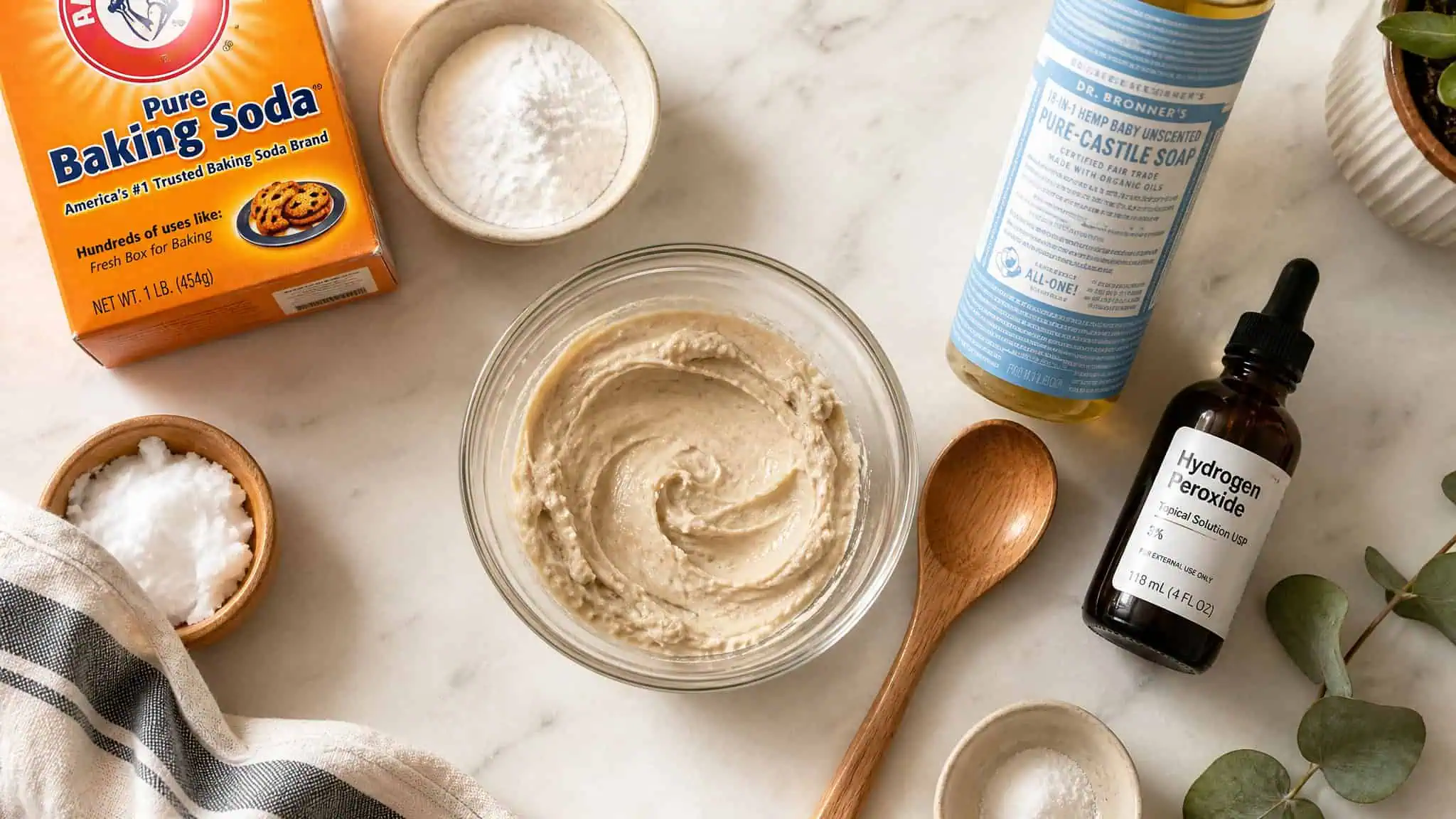
The recipe. In a small bowl, mix:
- 1 cup baking soda
- 1/4 cup castile soap or Sal Suds
- 1 tablespoon of 3% hydrogen peroxide
Stir until it becomes a thick paste. That’s the entire recipe, and it takes under five minutes.
How to use it. Apply the paste to the tub. Let it sit for 10 minutes on lightly dirty areas, 20 minutes on bigger jobs. Scrub. This recipe is a favorite of Dr. B, who recommends it for its simplicity and effectiveness.
Rinse with fresh water. Done. For a ready-made alternative, Fillaree offers a natural cleaning line that aligns with this approach, while Scrubbing Bubbles provides a commercial option if you ever need it.
The dwell-time rule you don’t skip. That sit time isn’t a suggestion, it’s the whole point. Hydrogen peroxide has antiviral and antibacterial properties, but only if you give it contact time. Scrub too fast and you’ve made a nice-smelling paste that moved the grime but skipped half the job. The waiting is what does the work for you.
Recipe 2: the no-scrub spray
For weekly maintenance, there’s a second formula, shared by a professional property manager who spent decades cleaning rental units, and published by EverydayCheapskate since 1993, with the original recipe first appearing on January 10, 1993. Millions of scrubbed tubs later, it’s still in circulation, so if you’re tackling your own fixture, start with our guide on how to clean bathtub.
The recipe. In a 32-ounce spray bottle:
- 1 cup blue Dawn
- Fill the rest with white vinegar
For the 16-ounce batch, use 1/2 cup of Dawn.
How to use it. Spray the tub, tile, and shower. Let it sit for 30 minutes, or overnight, if you remember at 9pm and the energy for scrubbing is not currently employed by this household. Scrub lightly.
Rinse. That’s it.
Used weekly, this one eliminates scrubbing entirely, the soap cuts the grime and the vinegar handles the film. It’s the laziest winning move I know in cleaning, because the wait does the work. If you want the full breakdown of no-scrub methods, this article covers the whole approach.
The fine print. This spray must be rinsed away, so don’t use it anywhere that can’t be rinsed. And never on granite, marble, or other natural stone, if you’re planning a family kitchen remodel around easy-clean materials, that’s where it pays to choose your surfaces wisely.
The rest of the bathroom: five recipes from the same staples
Once you’ve got those five ingredients, you’ve got the entire bathroom. Most DIY bathroom cleaner recipes are the same handful of things in different proportions, here are the four that cover everything else:
- All-purpose cleaner, two tablespoons of castile soap, one tablespoon of baking soda, 2 cups warm, softened, filtered water, and 20-30 drops of essential oil (optional). Spray bottle. Lasts up to a month. Fine on tile, porcelain, glass, and fixtures for daily wipe-downs.
- Toilet bowl cleaner, 1/4 cup baking soda plus 1 cup white vinegar in the bowl. Leave it 15-20 minutes. Scrub, flush.
- Glass cleaner, 1/4 cup white vinegar plus 4 cups warm, softened, filtered water. Spray and wipe with a soft cloth. Handles hard-water spots on mirrors and fixtures.
- Limescale remover, soak a cloth in white vinegar, wrap it around the faucets, showerheads, and handles, and leave it overnight. Rinse in the morning. The vinegar dissolves the mineral buildup while you sleep, which is the most efficient kind of cleaning there is.
- Bubbling cleaner, 12 ounces of heated white vinegar plus 8 ounces of dish soap in a spray bottle. Spray lightly, it foams fast, and leave overnight for stubborn, set-in grime.
One practical note: a one-gallon jug of white vinegar covers nearly all of these. You’re not buying a shelf of single-purpose bottles. You’re buying vinegar and a label you can already read.
Cleaning vs. disinfecting: why the distinction matters
They’re not the same job: cleaning removes the dirt and grime, while disinfecting kills germs. Same routine, two different steps, and a clean-looking tub isn’t automatically a disinfected one.
The paste recipe covers both if you respect the dwell time: the peroxide handles the germs, the baking soda handles the soil. The Dawn-and-vinegar spray handles the weekly grime so the tub never builds up the film that hosts germs in the first place, it cleans, it doesn’t disinfect, and that’s fine, because that’s its job.
For anyone who wants the disinfecting step without the bleach smell and without DIY measuring, hypochlorous acid has become the popular middle ground. “A powerful yet gentle formula,” says Trish Duarte of MaidPro, “ideal for sanitizing all surfaces.” It’s a natural deodorizer and non-corrosive, and it’s available ready-made. Useful option if you’d rather buy it than mix it.
Why your tub still looks dirty: the water factor
At some point you’ll do all of this right and the tub will still look like it’s winning. Usually that’s not your scrubbing. That’s your water.
Hard water contains calcium and magnesium, and those minerals leave limescale, spotting, and soap residue, on top of the fact that hard water makes your soap and detergent less effective in general. You’re not scrubbing badly. You’re scrubbing against mineral buildup that soap alone can’t fully win against.
The fix is the water, not the elbow. A water softener removes the calcium and magnesium at the source, before the water ever touches the tub, and softened water makes every homemade cleaner on this list dramatically more effective. If the tub feels permanently film-y no matter what you use, that’s the tell.
There’s also the question of what else is in the water. Iron leaves rust-colored stains around the bathroom. Copper leaves blue-green ones. Hydrogen sulfide smells like rotten eggs. A professional water test will tell you exactly what you’re dealing with, and there’s a dedicated guide for each stain type, from rust to hard water to soap scum and mildew.
Storage & shelf life: the things nobody warns you about
Three things they don’t tell you about storing these cleaners, all learned the sticky way:
1. Hydrogen peroxide is light-sensitive. It degrades in light, so store it in an amber jar or anything dark and sealed. If you’re making a batch of paste in advance and you don’t have a dark container, skip the peroxide and add it fresh right before you clean.
2. The paste hardens. If it sits exposed to air for any length of time, it turns into a brick. Keep the container sealed.
3. The paste expands. In the first 24 hours after you make it, it rises. Leave headroom at the top of the jar, or you will discover this at 7am. This is not the sort of lesson you want to learn before coffee.
How long does it keep? Live Simply says up to a month in a dark, sealed container. Going Zero Waste says use it within a day or so. Both are true, they’re different formulas.
The version with peroxide added lasts longer if it’s properly sealed and dark; if you added peroxide fresh, treat it as use-soon. And regardless of what any recipe says, if it looks off, smells off, or grew anything, pitch it. DIY cleaners don’t last forever. A Weck jar looks nice and works well, but any airtight container, a wide-mouth mason jar is the unsung everyday hero here, does the job.
Safety & surface protection: the two rules that matter
You’ll hear this one everywhere, and it’s worth repeating: vinegar-based cleaners, including the Dawn spray, the toilet bowl formula, and the bubbling cleaner, must never touch granite, marble, or other natural stone. Vinegar strips the protective sealant, which needs to be reapplied annually anyway. On natural stone, use the baking soda paste instead.
Second: spot-test anything new on an inconspicuous corner first. All of these formulas are gentle enough for most surfaces, a baking soda paste is exactly the scratch-free route for plastic tubs where you’re worried about abrading the finish. But “most” isn’t “all,” and thirty seconds of testing beats an afternoon of scrubbing out a mistake.
One more thing, and it matters: stick to the recipes. These are established, familiar mixes, and that’s a feature. Some everyday chemicals are perfectly harmless alone and genuinely dangerous when combined with the wrong things. Don’t improvise with ingredients you can’t name, and don’t stack these cleaners with commercial ones in the same pass.
Bonus: natural drain care that keeps the tub clean
A clean tub and drains go together, the tub isn’t done until the water drains away instead of pooling. Same pantry ingredients handle both.
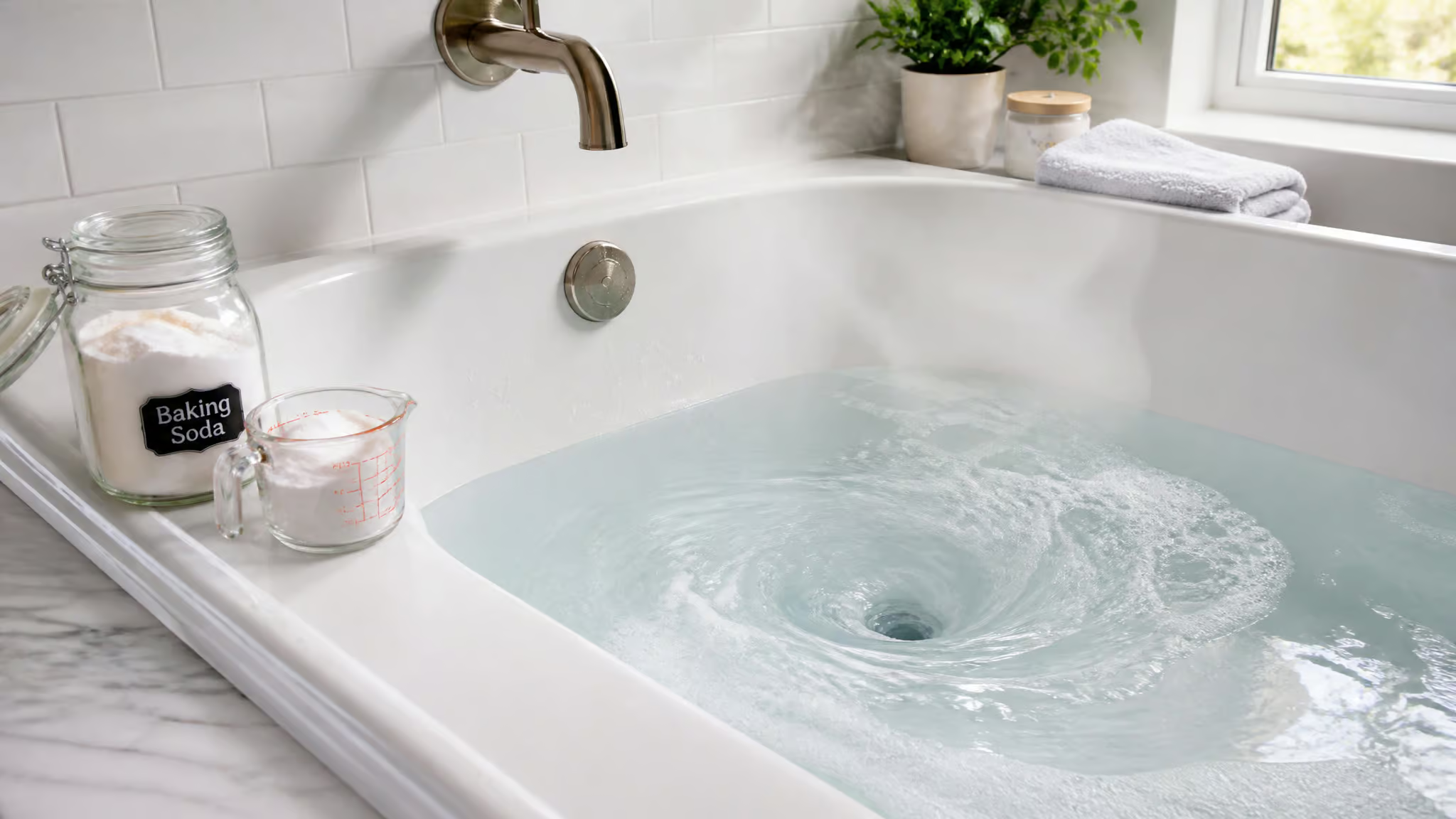
The nightly habit. The simplest thing you can do is pour hot water down the drain. Melissa Poepping of The Chemical Free Home calls it a simple step that can easily become a nightly routine, and she’s right. Most drain problems are slow accumulations of soap residue and hair, and a nightly hot-water pour keeps the pipe moving before buildup sets in.
The monthly deep-clean. When things feel sluggish:
- Remove any visible debris from the drain opening.
- Pour in 1/2 to 1 cup of baking soda.
- Follow with the same amount of white vinegar.
- Let it sit 15-30 minutes. The fizzing is normal, and it’s doing the work, it breaks down soap residue and loosens grease.
- Flush with boiling water.
The soap-and-hot-water alternative. If you’re out of vinegar or just want the simple version: 1/4 to 1/2 cup of natural liquid dish soap down the drain, follow with hot water, let it sit 15-30 minutes, flush. Alicia Sokolowski of Aspen Clean recommends this one for routine maintenance.
And if it’s genuinely clogged, water sitting there not moving, no amount of vinegar convincing it otherwise? I had a professional tell me once that “gross” wasn’t strong enough to describe what he finds in drains, and he kindly left the details to my imagination. That’s a service call, not a DIY article, and there’s no shame in making it.
The takeaway: one shelf, five ingredients, a routine that works
The internet will sell you a thousand “natural cleaning hacks,” and most of them are just these five ingredients rearranged. The system that actually works is simpler than any hack:
A paste for the deep clean, a spray for the weekly, vinegar for the limescale, and hot water for the drains.
Buy baking soda in bulk. Target or Walmart carry it cheap, and Amazon delivers it if that’s more your speed while the dishwasher runs. Keep a dark bottle for the peroxide. And accept the one thing no cleaner can fix: the tub will be re-dirtied.
Probably before dinner. That’s the job.
But here’s the part that made it click for me. When it’s all pantry ingredients, cleaning stops being a chemistry project and becomes a ten-minute routine. I know what’s in everything. I know the kids and the dog aren’t breathing the harsh stuff.
And when everything else in the house is disarray, which it will be, because that’s what having a family does to a house, the tub and the kitchen sink still carry the load. That’s the one standard I keep. And now it’s one I can actually keep. For the full guide to every tub type and every cleaning scenario, the complete guide is here.
Frequently Asked Questions
What is the best non-toxic way to clean a bathtub?
The best non-toxic way is to use a paste of baking soda, castile soap, and hydrogen peroxide for deep cleaning, and a spray of blue Dawn and white vinegar for weekly maintenance. These pantry staples are effective without harsh chemicals.
What is the safest way to clean a bathtub?
The safest way is to use natural ingredients like baking soda, white vinegar, and castile soap, which are gentle on surfaces and safe for kids and pets. Always spot-test first and avoid vinegar on natural stone like granite or marble.
How do you clean a tub that hasn’t been cleaned in years?
For a heavily soiled tub, make a paste with 1 cup baking soda, 1/4 cup castile soap, and 1 tablespoon hydrogen peroxide. Apply it, let it sit for 20 minutes, scrub, and rinse. For tough limescale, wrap vinegar-soaked cloths around fixtures overnight.
Does baking soda and vinegar disinfect a bathtub?
Baking soda and vinegar clean and deodorize, but they don’t fully disinfect. For disinfection, use hydrogen peroxide in the paste recipe and respect the dwell time—let it sit for 10-20 minutes so it can kill germs effectively.
How often should you clean a bathtub with natural cleaners?
For weekly maintenance, use the Dawn and vinegar spray to prevent buildup. For a deeper clean, use the baking soda paste once a month or as needed. This routine keeps the tub clean without harsh chemicals.
What is the difference between cleaning and disinfecting a bathtub?
Cleaning removes dirt and grime, while disinfecting kills germs. The baking soda paste with hydrogen peroxide does both if you let it sit. The Dawn and vinegar spray only cleans, which is fine for weekly upkeep to prevent germ-hosting film.