
There’s a specific kind of courage it takes to stand in your living room at 11 p.m., phone propped against a stack of books, trying to figure out what your hips are supposed to be doing while a song you’d be embarrassed to explain plays from a speaker the size of a coffee mug. If that’s you right now, you’re already further along than you think. Here’s the thing nobody says plainly: there’s no experience requirement to become a dancer, especially in club and pole work. No résumé, no certificate, no childhood of recitals.
What separates people who start from people who just think about starting is preparation, and preparation is a thing you can actually do. This guide walks the sequence I’d give any friend considering this: learn basic movement at home for free, try auditions at venues open to newcomers, find mentorship from dancers already working, and build your confidence before your first shift. Some of it will feel awkward. That’s not a sign you’re failing. That’s just Tuesday.
Key Takeaways
You don’t need experience or training to enter club dancing, but clubs want basic choreography, because pure improvising caps what you can earn.
The beginner audition pass bar is lower than you fear: walking, a pirouette, and one or two basic spins, judged mostly on confidence and eye contact.
Save roughly $200 before your first shift and keep your day job; never start out of financial desperation.
Table of Contents
Which kind of dancer are you becoming?
When people search this, they usually mean one of three things: studio or social dancing, backup or background dancing, or club and pole work. Each one asks for something different. Backup dancers are meant to be highly skilled performers who can combine the technique, stamina, and stage presence of the person they’re following, so the group looks seamless. Club and pole work is friendlier to beginners, you can reach audition-ready level with a walk, a pirouette, and one or two basic spins, though clubs still prefer basic choreography ability, since improvisation alone limits your earning potential.
| # | Step | Key detail |
|---|---|---|
| 1 | Which kind of dancer are you becoming? | Backup dancers combine technique, stamina, and stage presence, finding a group flow that looks seamless and elevates the choreography. |
| 2 | What “no experience” actually means at the door | No formal training is required to enter, but venues still expect technical skill, stage presence, and professionalism from beginners. |
| 3 | Is 20 (or 40) too late to start dancing? | Age is not a barrier, seniors ages 60 to 87 dance on The Pacemakers team, but the work strains the body, so keep improving. |
| 4 | Step 1: Learn basic movement at home, and spend nothing yet | Flashy tricks are unnecessary at the start, floor work, basic moves, and footwear comfort suffice; practice with a mirror and phone recordings. |
| 5 | Step 2: Condition like an athlete, because the job is athletic | Dance is a full-body athletic pursuit judged on core strength, stamina, and control, train 3-5 hours weekly and treat recovery and nutrition as part of the job. |
| 6 | Step 3: Choose training that fixes your actual gap | Beginners reach audition-ready level with walking, a pirouette, and basic spins; classes, fitness coaching, or workshops can help you stand out. |
| 7 | Step 4: Vet the venue before you ever audition | Check permit requirements and age limits, vet clubs via Instagram content, and go in person, front desk staff may say no even when a venue is hiring. |
| 8 | Step 5: Pass a beginner audition with beginner skills | Audition success is confidence, eye contact, and presentation, not difficulty, simple walking, a pirouette, and one or two basic spins can be enough. |
| 9 | Step 6: Your first shift, watch the money before you move | Never touch floor money ($100, $1,000) thrown in another dancer’s section; an exception is when a customer personally fetches you, in which case he should pay you separately |
| 10 | Step 7: Get a mentor inside the room, not just online | Treat the career like a business: cultivate relationships with venue owners and influencers, since referrals outearn venue shifts alone and decide longevity. |
| 11 | The money question: real pay, real costs, real cautions | Don’t dance out of desperation or quit your job, save roughly $200 for startup costs and expect inconsistent tips, since success depends on client building, not viral fame. |
| 12 | Protect the career: boundaries, privacy, and staying power | Say no without guilt, never reveal your real name, one dancer was traced online from just a first name, and keep up physical health to avoid career-cutting injuries. |
This guide focuses on home practice and entry-level club and pole work, because that’s where the concrete evidence lives. Backup and celebrity dancing are different animals entirely and need their own coverage. If hip-hop or ballet is your actual goal, the at-home practice below still applies; the club stuff doesn’t.
What “no experience” actually means at the door
A non-dancer can absolutely become a good dancer. There’s no formal education requirement and no prior-experience requirement to enter professional dancing. None. The barrier people assume exists just isn’t there, and plenty of the people working right now started from zero through club mentorship or online tutorials.
But here’s the honest catch. Clubs still look for professionalism and stage presence even from a total beginner; nobody cuts you slack because you’re new. And the detail that actually shapes your path: clubs prefer at least basic choreography, because improvising alone caps what you can earn. Winging it costs you money.
So the real milestone isn’t “getting good.” It’s shaping your home practice into one basic, repeatable set. That’s the bar.
Is 20 (or 40) too late to start dancing?
No, 20 isn’t too late, and neither is 40. There’s no prior-experience requirement, and auditions weigh confidence more than tricks, which favors adults who show up composed over teenagers who show up scared. I’ll be straight with you: the material behind this guide confirms zero-experience entry but contains no age-specific data. What I can tell you generally is that adult-beginner classes exist everywhere and are full of people who started at 30, 40, and beyond, so you won’t be the oldest person in the room.
As for when dancers quit: dancers who don’t treat the work professionally typically leave within a few years. Read that carefully, because the cause is business-related, not about age. The clock isn’t your birthday. It’s whether you show up like it’s a job.
Step 1: Learn basic movement at home, and spend nothing yet
You can become a good dancer at home without studio classes, and the loop is simpler than it looks:
- Pick music you actually love, not what you think you should dance to.
- Learn basic steps before anything else.
- Use a mirror to check your posture and lines.
- Record yourself on your phone and watch the footage back. It’s slightly horrifying and extremely effective. The phone camera is the real training method here.
- Stretch and warm up every session.
Floor work and footwork come before flashy tricks. Pole tricks and advanced skills are genuinely unnecessary at the start, so don’t let anyone sell you on them yet.
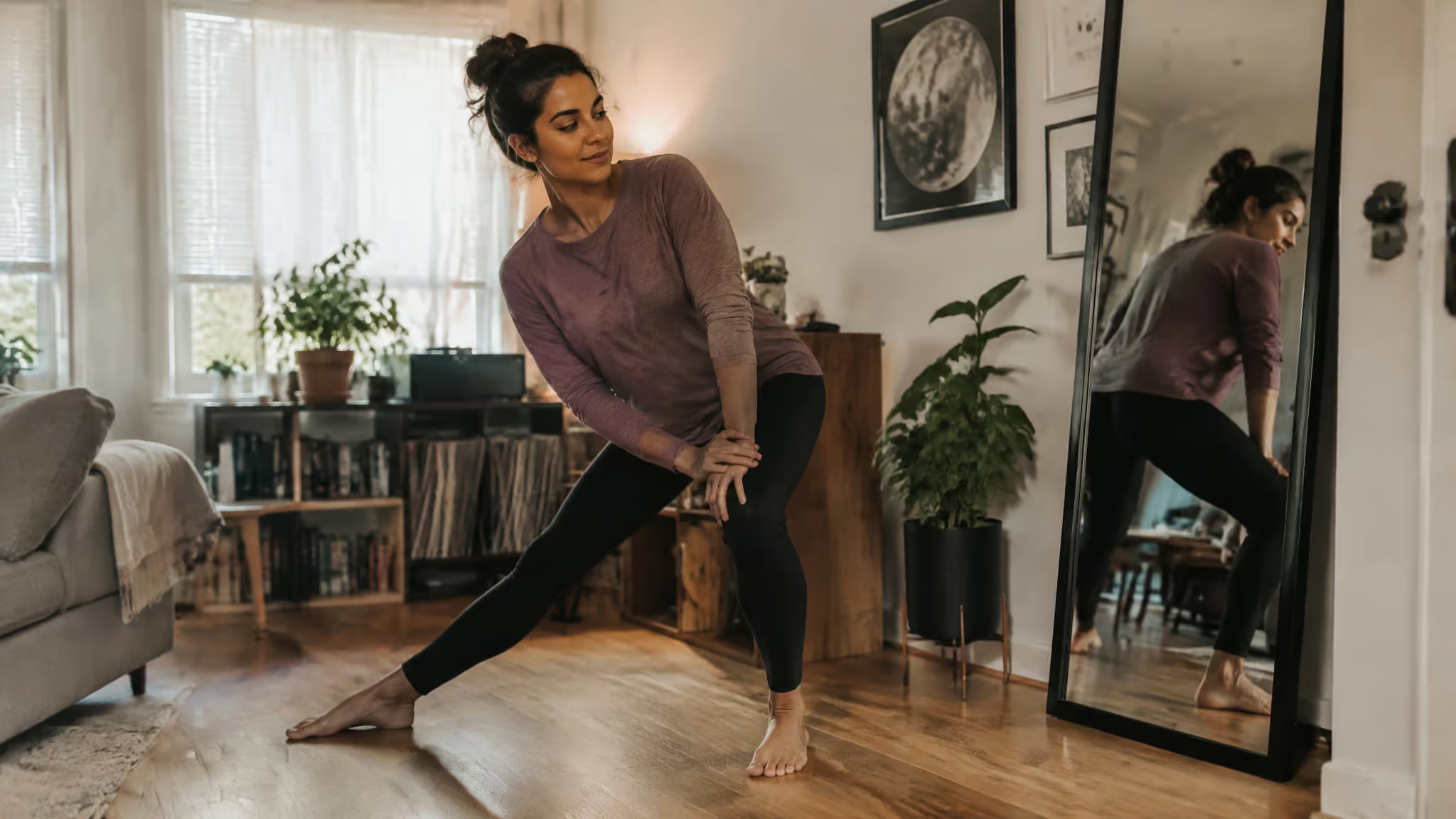
The mirror-and-phone practice loop
The loop is the whole thing: move, record, watch, adjust. What you’re building is movement vocabulary. Be honest about its ceiling, though. Home practice won’t give you stage instincts or comfort performing for strangers. Those come later, in a room, in front of people.
Why gear comes last
Kimmy Vaine bought a home pole before her first professional shift, assuming it would teach her. She couldn’t use it for a long time. Experienced dancers warn against a classic first-purchase error: buying the equipment before the skills, then watching it sit there judging you. Skills first. Gear later, if ever.
Buyer rule: Skills before equipment — a home pole can’t teach what you haven’t learned yet, so hold off on gear until the moves are solid.
Step 2: Condition like an athlete, because the job is athletic
Performing-level dancing is a full-body athletic pursuit, and the benchmark from male performer populations is 3-5 hours of dedicated training per week, up to around 10 in peak seasons. Weightlifting, Pilates, and dance-specific conditioning are about durability and injury prevention, not appearance. That’s the grounding detail: train so your body survives the job. (For the deeper money side of the work, our earnings breakdown is worth a read.)

Dancing takes a physical toll: exhaustion, soreness, slow-healing pulled muscles, and joint pain are part of the work, so recovery and nutrition aren’t optional extras, they’re the job. Hydration, stretching, vitamins, and joint care are what keep a dancing body going for the long haul. And the top priority isn’t physical at all. Mental health comes first: schedule breaks, build support systems, and remember why you started in the first place.
Step 3: Choose training that fixes your actual gap
The big choice is studio classes versus learning at home first, and it comes down to cost and structure, though it’s also worth asking can stripping be a career beyond the first few years. The free route exists: club mentorship or online tutorials, both legit. Paid training is also legit, and if you go that way, coached training runs roughly £200, £1,000 to start, an estimate attributed to UK male exotic dancers. Either way, pick the option that turns your improv into set choreography, because that’s the specific gap that caps your earning.
Hip-hop background
If you’ve got hip-hop in your past, you’ll pick this up faster. That’s the whole point.
Contemporary dance background
Same deal: a helpful head start on body awareness, not a requirement.
Pole background
Pole classes come with house rules: no lotion on grip points, stretch before you work, and practice holds in the footwear you’ll actually wear. Beginners wondering whether they should become a stripper get audition-ready with walking, a pirouette, and one or two basic spins.
Martial arts background
Balance, control, discipline. It shortens the learning curve, same as the rest.
Gymnastics background
Body awareness again. Useful, not mandatory.
Classes, coaching, and acting workshops
No credential is required, but dancers commonly invest in classes, fitness coaching, even acting workshops to sharpen presence, and the same goes for anyone researching becoming a stripper. Frame it the way you’d frame training for any new job: an investment, not a luxury.
Step 4: Vet the venue before you ever audition
To find club dancing work near you as a total beginner, check out venues on Instagram, look up your local permit and age rules, then walk in person. That’s the sequence, and the order matters. Here’s the fuller version:
- Read the Instagram, not the website. One practitioner’s rule of thumb, and I’ll frame it as exactly that rather than a sure thing: a club’s posting style tells you its format and how money moves there. Flyer-heavy accounts point to one kind of venue; accounts showing actual clientele point to another. What the posts show tells you more than what the website claims.
- Check your local rules. Requirements vary by location and change over time, so treat this as homework for your own area. For contrast: New York didn’t require a stripper permit when Kimmy Vaine danced there; Georgia currently does. Neither of those tells you anything about your own city, so check your local permit rules and age limits while you’re at it.
- Walk in, don’t call. Calling ahead is unreliable, venue staff and dancers both say front-desk staff may turn you away even when the venue is hiring. A “no” on the phone often means no roster space, not a verdict on you. Save yourself the wasted afternoon and just show up.
Job boards like Exotic Dancer Jobs and Craigslist can surface openings too, but go in careful. Scams exist, and we’ll get to the biggest red flag in a second.

Step 5: Pass a beginner audition with beginner skills
A first club audition usually comes in one of four forms, as covered in this candid beginner’s guide. That’s worth knowing upfront, because the uncertainty is worse than any of the actual outcomes:
- They tell you they’re not hiring.
- Paperwork only.
- A roughly three-song stage audition. At fully nude clubs, full nudity is expected by the third song, so know what to expect from the venue type before you walk in.
- A look-see or body check, which is common at some urban clubs. Body checks and nudity expectations belong to adult venues specifically; don’t assume every audition works this way.
The four outcomes you might walk into
Notice what’s missing from that list: a panel of judges demanding a flawless routine. The most common outcomes are paperwork. Rejection, when it happens, usually means no open spots rather than a judgment on you. Read a “no” as a capacity answer before you read it as a skill verdict.
What evaluators actually watch
Here’s the permission slip, said plainly: auditions are judged mostly on confidence, eye contact, and appearance rather than technical difficulty. Walking, a pirouette, and one or two basic spins can be enough. Nobody expects advanced tricks from a beginner, and most people assume otherwise, which is exactly why they postpone auditioning for months. Don’t.
Do work on reading the crowd, too. A rowdy party crowd and an intimate show demand different things, and reading the room is as important as technique. Both are learnable.
Two rules to carry with you. First: never pay for a “guaranteed” gig. That’s a scam, full stop, so research any venue before committing. Second, some cross-industry backup for the presence-over-tricks logic: Melissa Joan Hart refused the scripted New Kids on the Block bit at her Clarissa audition and pitched They Might Be Giants instead, and she still got the job. Different industry, same principle: presence often beats the script.
Step 6: Your first shift, watch the money before you move
On your first night, spend about 30 minutes watching how the room’s money moves before you perform. This is one working dancer’s recommended first-shift approach, not an industry rule. Watch how the hustle works in stage sets, table work, VIP, and cabaret. Be polite in the locker room, and don’t let intimidation from comparison take hold; everyone there started somewhere. Make the most of the newcomer pitch, because it lasts up to two weeks.
The unwritten money rules vary by venue: never touch floor money, which in the sourced discussion ran $100, $1,000, in another dancer’s section, and rules on approaching seated customers during someone else’s set vary by club. Watch first, then move.
Step 7: Get a mentor inside the room, not just online
The mentorship that matters happens inside the venue, and the ask is small. Take one veteran Miami dancer who started in 2019: she worked five clubs over about six years and now trains new performers. You’re not asking someone to adopt you. You’re asking a working dancer to watch one run and point out what’s leaking money or presence. That’s it.
The community on-ramps are real: dancer collectives, industry events like the Exotic Dancer Expo, collaborations, and dancer Facebook groups. And one anti-drama rule from the people who’ve been there: locker-room socializing and drama eat earning time and create social risk. Be friendly. Skip the politics.
The money question: real pay, real costs, real cautions
Before the numbers, a word of caution: the figures below come from specific dancers and specific markets, so treat them as ranges to plan around, not promises. The honest picture includes what the house takes, what you spend to start, and what can quietly eat your earnings if you’re not watching.
What dancers actually earn, with attribution
Attributed UK club figures run £20, £40 per hour for typical male performers, £50, £70 for top-tier in high-demand cities, and clubs take a 40-60% cut, which is the number that surprises people most, so I’ll say it again plainly: more than half your money may go to the house. For one US veteran, Kiana Marquez, roughly 80% of earnings came from table dances, not stage sets. Private party work runs £100, £300 per hour for male performers. The 50,000-follower threshold for premium private bookings is the exception, not the norm.
Small-venue tips are inconsistent, and most dancers combine club work, private parties, and online content. One thing to keep straight: the pound figures are UK market data, the dollar anecdotes are US, and none of these ranges apply to backup, studio, or celebrity paths, which are a separate market entirely.
Cost check: The house takes its cut off the top, so plan your budget around what’s left after the club’s share, not the headline rate.
What to save before you start
Save roughly $200 before starting; that’s Kimmy Vaine’s US figure covering shoes, outfit, hair, and nails. Never start out of financial desperation, and don’t quit your existing job. Part-time entry is possible but genuinely hard, because club shifts run evenings and weekends, exactly when 9-to-5 jobs own you, so go after the highest-value hours. The top newcomer mistake is underestimating the business side: taxes, club commissions, self-promotion, and physical health.
And the highlight-reel myth deserves a gentle correction: Instagram and TikTok show a curated version of a fragmented industry. Don’t measure your week one against someone else’s highlight.
Protect the career: boundaries, privacy, and staying power
Start with the protections: a stage name with locked-down accounts, a refusal rule you don’t apologize for, and a drink limit you set yourself. Each exists because of something real.
Don’t reveal your real name. One customer traced a dancer’s Instagram, Facebook, and YouTube from just her first name, and she gets asked her real name at least once a night. Privacy is a habit, not paranoia.
You can refuse a customer without feeling bad about it. In one documented case, a customer who got refused slapped a dancer with a stack of $100 bills and was kicked out. The no was still right.
Practitioner norms worth borrowing: limiting yourself to one drink per shift (many nights, none at all); washing your hands after counting money; treat hygiene as part of the job, not a preference.
And treat the work like a business: track your earnings, reinvest in training, keep refining, and mix live work, private events, and online content. Neglecting your health or the business side is what cuts careers short.
One human note to close on. That Miami veteran who trains new performers has said that dancing itself was never the difficult part; the difficult part was explaining the work to his family, who saw it as failure rather than a career, until they understood the discipline behind it. Whatever your version of that conversation looks like, you’re not the first to have it.
Build the career, not just the gig
What keeps dancers working after rejections is referrals and relationships, not talent alone. Remember: a “no” is often a capacity answer, so keep showing up in person rather than calling. The durable formula is stage skill, digital savvy, and old-fashioned hustle. Build a brand beyond the stage, because relationships with venue owners, clients, and industry people bring referrals that beat waiting for shifts.
Algorithms favor consistent posting, fan engagement, and keeping up with trends; treat it like a chore you can actually keep up with. Offline networking opens doors, and polished Instagram and TikTok content can attract private bookings. What kills in one room flops in another, so keep refining. The dancers who don’t treat it like a job typically leave within a few years, and that’s just what happens, not a doom prophecy.
It’s the same lesson underneath all of it, the one we keep coming back to at Tidbits of Experience: new pursuits reward practice, and the talent follows. You already know how to start. Learn at home, walk in the door, and let the rest compound.
Frequently Asked Questions
Do dancers get paid well?
It depends heavily on market and venue. Attributed UK figures run £20–£40 per hour for typical male performers and £50–£70 for top-tier in high-demand cities, with private party work at £100–£300 per hour — but clubs take a 40–60% cut, so plan around what’s left after the house’s share. Most dancers combine club work, private parties, and online content rather than relying on one income stream.
Should adult beginners take studio classes or learn to dance at home first?
Both routes are legitimate. The free path is club mentorship or online tutorials; paid coached training runs roughly £200–£1,000 to start, per an estimate from UK male exotic dancers. The deciding factor is whichever option turns your improv into set choreography, since that’s the specific gap that caps your earning.