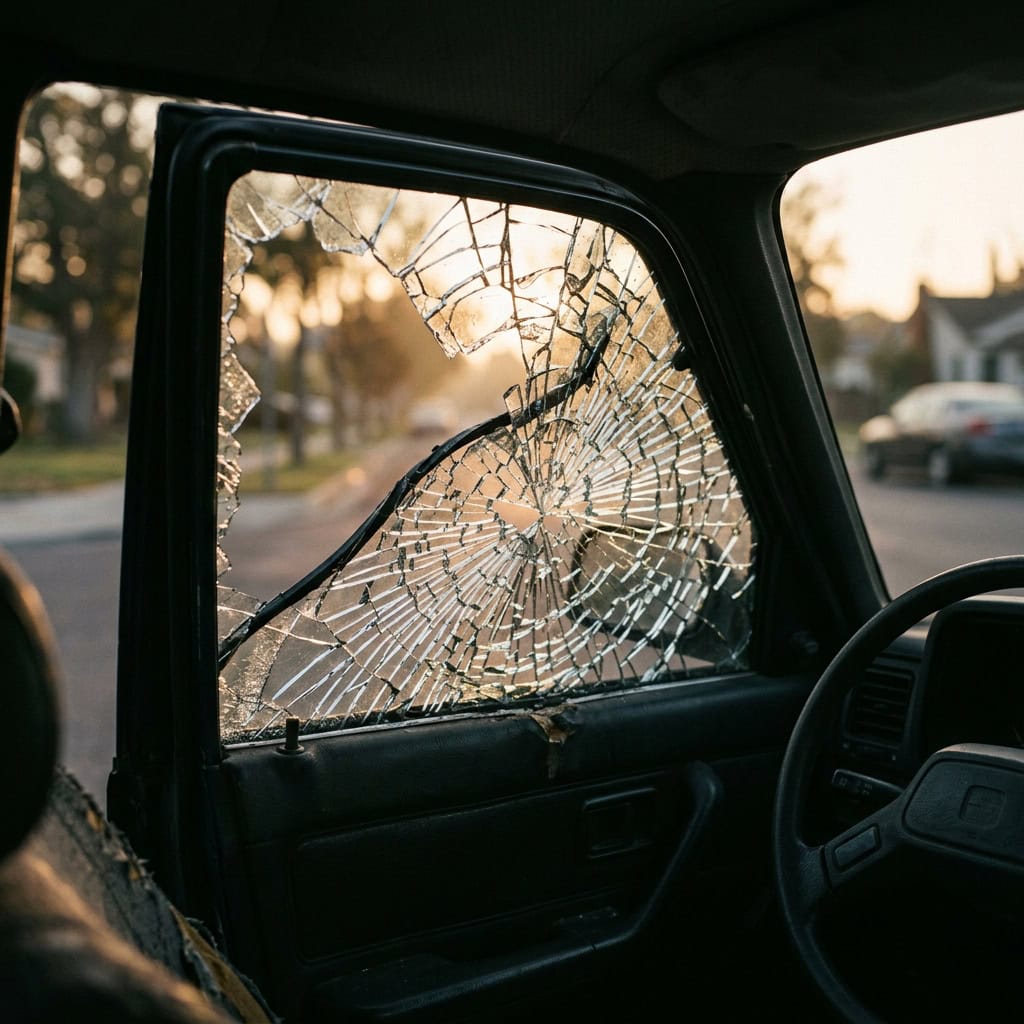
Raising kids is a masterclass in daily, agonizing loss of control. You buckle them into their car seats, hand them a snack, and hope for the best. But when the screech of tires happens out of nowhere, that illusion of safety breaks. You sit there in the aftermath, adrenaline shaking your hands, looking at the vehicle, and the questions start. Did I do something wrong?
Is God trying to tell me something? If you are spiralling right now, searching for a Denver motor vehicle accident attorney and a sense of meaning in the twisted metal, I see you.
We talk a lot on Tidbits of Experience about managing the daily 12-hour cycle of childcare and parenting responsibilities, but this is a different kind of heavy. It is normal that your first panicked instinct is to figure out whether the crash was a punishment or a targeted message.
You wonder if walking away was just a stroke of good luck, if God spared you because you are supposed to do something big, or if Jesus Christ stepped in to forgive us as sinners and give us another chance. Ultimately, the bottom line is that car accidents are rooted in physics and human free will, not divine punishment.
Key Takeaways
Attributing survival entirely to direct divine intervention can inadvertently trigger survivor’s guilt when you mathematically consider those who didn’t survive similar crashes.
A 187-point consensus in the r/Christianity community highlighted that accidents are the result of human negligence—like distracted driving—or the laws of physics, rather than a divinely organized punishment.
While figures like Joseph Prince report testimonies of miraculous protection happening just 30 minutes after reciting Psalm 91, modern survival rates also rely heavily on automotive engineering and physical safety systems.
Table of Contents
Understanding the Severe Mercy Framework
You can look at the crash through Billy Graham’s framework to see if it acts as a much-needed catalyst to refocus your family’s priorities, without viewing it as a sign of divine anger. When you survive a terrifying event, the historic evangelical response is to frame it as an urgent act of divine love.

The late Billy Graham taught that sparing a life in an accident is God’s way of highlighting how brief our time on earth is. It flips your internal narrative. Instead of thinking God almost killed my family today, you start thinking my heavenly Father granted me more time to focus on eternity. It feels like a severe mercy, a wake-up call that forces you to hug your kids tighter and pull your faith off the back burner.
“God’s power is verified by His sustained presence in the hospital waiting room, not by His micromanagement of the intersection.”
While this perspective provides a sense of purpose, other traditions prioritize the physical mechanics of the accident.
Miraculous Escapes and the Search for Narrative Control
Reciting scripture before you drive serves as a deep spiritual coping mechanism, but attributing your survival entirely to your own prayers after getting in a car accident can create heavy survivor’s guilt down the road. In charismatic circles, surviving a 65-mph highway collision without a scratch is often viewed as literal angelic intervention. This happens because psychological trauma severely alters a survivor’s need to find patterns, leading them to force theological conclusions on chaotic incidents.

Teachings by figures like Joseph Prince link this kind of physical safety directly to intentional prayer practices. He shares testimonies where believers recite Psalm 91, a prayer for protection, and then walk away from a totaled car a mere 30 minutes later alongside their kids. They shout Hallelujah, and honestly, if I pulled my screaming toddler out of a smashed minivan without a scratch, I would too. Using Psalm 91 as a preemptive proclamation functions as a protective ritual, framing the act of buckling a car seat as a spiritual safeguard.
Navigating Survivor’s Guilt Mathematically and Spiritually
Yet, relying entirely on this specific spiritual math leaves a gap that no one likes to talk about at church. If hitting the exact right prayer formula means God physically bends metal to save your family, it inadvertently implies something devastating about the other driver who didn’t survive. It forces believers to process complex grief right alongside their gratitude.
You are left wondering why your child was spared while someone else’s wasn’t. Attributing survival solely to divine intervention ignores the physical mechanics of the collision.
The Architecture of Time, Chance, and Physics
Knowing that the crash was simply the result of secular physics and other people’s bad driving relieves the guilt of thinking you were divinely punished. There is consensus among believers—including a 187-point discussion in the r/Christianity community—that accidents are accidents. They are not plotted on a heavenly calendar.

Human Negligence Vs. Divine Orchestration
God is not a microscopic chess master orchestrating who gets T-boned at a four-way stop. A crash is usually the secular fault of someone looking at their phone, running a red light, or driving tired. Mixing human negligence with the theological reality of human free will explains almost every highway collision.
People make bad choices, and we all share the same roads. This isn’t a new, modern compromise of faith, either. The ancient writers knew this intimately. Things happen because time and chance happen to us all, as written in Ecclesiastes 9:11. Releasing the burden that God organized this trauma specifically for your personal growth is freeing.
The Intersection of Engineering and Theology
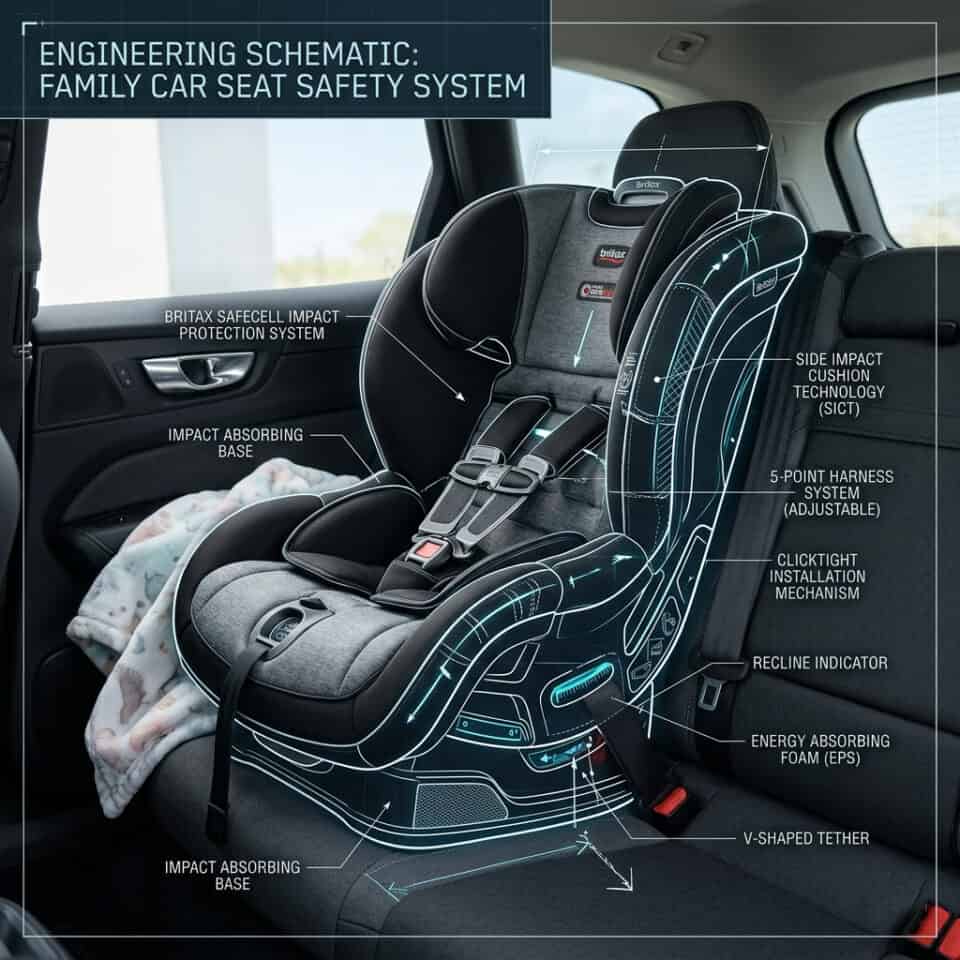
We also have to be intellectually honest about why we survived. It creates cognitive dissonance to praise God for keeping you safe while ignoring the crumple zones and side-curtain airbags wrapped around your car seats.
Modern automotive engineering is responsible for a 30% higher survival rate for frontal impacts compared to 1974 data. Ignoring the science of safety devices creates a survivor bias, skewing our perception of miracles while completely erasing the reality of how automotive engineering actually saves lives. Validating the contributions of human engineers does not limit God’s power. It matures our understanding of how grace operates on modern interstates.
Redefining True Divine Sovereignty
True sovereignty is found in God providing you with unbreakable peace whether you walk away unharmed or have to learn how to walk all over again. Demanding a neat, tidy reason for trauma is a hallmark of modern self-help theology, and this exhausting search for meaning pales in comparison to the orthodox response of peace. Reducing the Creator to an agent of car accidents is unbiblical and harms the grieving.
Instead, look to the biblical archetype of enduring suffering. The Habakkuk model demonstrates how to choose peace when physical ruin happens, culminating in the unconditional rejoicing found in Habakkuk 3. Even when the crops fail and everything is destroyed, the prophet rejoices because his salvation isn’t tied to his physical circumstances.
You do not need a perfectly orchestrated reason for the crash. Remembering that true divine sovereignty supersedes worldly chaos offers an anchor that transcends our need for answers. The chaos is awful, the wreck was terrifying, and the only meaning you need to find today is the strength to keep going.
Is it unbiblical to believe that God intervened to save me during a car accident?
Not necessarily, but attributing your safety solely to divine intervention ignores the role of physical reality and can create complex survivor’s guilt. True sovereignty is better understood as God offering peace and presence through the trauma, rather than acting as a micromanaging force at every intersection.
How does the ‘severe mercy’ framework change how I view a traumatic crash?
This framework, popularized by Billy Graham, shifts the narrative from viewing a wreck as divine anger to seeing it as a wake-up call to prioritize your faith and family. It helps you focus on the ‘extra time’ you’ve been granted rather than dwelling on the terrifying mechanics of the collision.
Can praying Psalm 91 protect my family from motor vehicle accidents?
While many believers find comfort in reciting Psalm 91 as a spiritual safeguard before driving, relying on it as a ‘formula’ for physical safety can be problematic. If you believe your specific prayer forced God to bend the laws of physics, it implies that others who didn’t survive simply didn’t pray enough, which creates an impossible theological burden.
Does acknowledging automotive safety features diminish God’s role in my survival?
Absolutely not; it actually makes you more intellectually honest. Modern engineering, such as crumple zones and side-curtain airbags, has statistically increased survival rates significantly since the 1970s. Recognizing human ingenuity serves to mature your faith rather than limit it.
If God is sovereign, why did He allow my accident to happen?
Most accidents are not divinely orchestrated but are the result of human negligence, such as distracted or tired driving. Ecclesiastes 9:11 reminds us that ‘time and chance’ happen to everyone, meaning the chaos of the road is rarely a personal message from the Creator.
Why does attributing survival to a miracle sometimes cause survivor’s guilt?
The math doesn’t always add up for others in similar, fatal accidents. If you claim a miracle saved you, you inadvertently suggest that those who died were not worthy of that same protection, which can trigger deep spiritual distress and complex grief.
How should a Christian process suffering when they don’t walk away from an accident unharmed?
The Habakkuk model suggests that true faith isn’t tied to your physical circumstances or immunity from tragedy. It teaches that you can find peace and purpose even in the midst of physical ruin, regardless of whether you experienced a ‘miracle’ or a disaster.