You typed can I afford a $300k house on a $100k salary into Google and landed here, so let’s get straight to it.
The answer is: maybe, and it depends on four things you control — your down payment, your existing debt, the interest rate you lock in, and the type of loan you choose. The same $300k house can be perfectly comfortable for one person on a $100k salary and a stretch for another. We’re gonna walk through the numbers step by step so you can figure out which camp you’re in.
We’ll start with the standard benchmark lenders use (the 28/36 rule), then look at what a $300k home actually costs each month, and finally compare two very different borrower profiles — let’s call them Alex and Sarah, to show why the same house works for one and barely works for the other.
Key Takeaways
On a $100k salary, the 28% guideline gives you about $2,333 per month for housing. That sounds like plenty — until you remember property taxes and insurance eat $388 of it before you touch the loan.
A $300k home with 20% down at today’s rates (around 7%) runs about $2,382 per month including taxes and insurance, which is $49 over that 28% target. It’s close, but small changes matter.
The two biggest levers are your down payment and your existing debt. Alex (20% down, no debt, good credit) can afford the house on an $82k salary. Sarah (FHA with 3.5% down, $600 in monthly debt) needs $108k. On $100k, Alex is fine; Sarah is borderline.
Table of Contents
The 28/36 rule — what a $100k salary really supports
Here’s where the math lands. That $2,333 isn’t all yours to spend on the mortgage.
Your gross monthly income at $100k a year is $8,333. The “front-end” 28% guideline says your total housing payment — principal, interest, taxes, insurance, and PMI if applicable, should stay under $2,333. The “back-end” 36% guideline says all your monthly debt payments combined (housing plus car loans, student loans, credit cards) should stay under $3,000.
Using typical rates — about 1.2% annual property tax and 0.35% annual insurance on a $300k home, that’s roughly $300 a month for taxes and $87.50 for insurance. Total: $387.50 gone before you even start.
That leaves you about $1,945 per month for principal and interest. That number is the real starting point.
Monthly payment breakdown for a $300k home
Let’s look at the actual numbers for a $300k house with 20% down at today’s rates. I’m using 7% as a current rate example (rates change, but this gives us a solid benchmark). On a $240,000 loan with a 30-year fixed term, the monthly principal and interest payment is about $1,995.
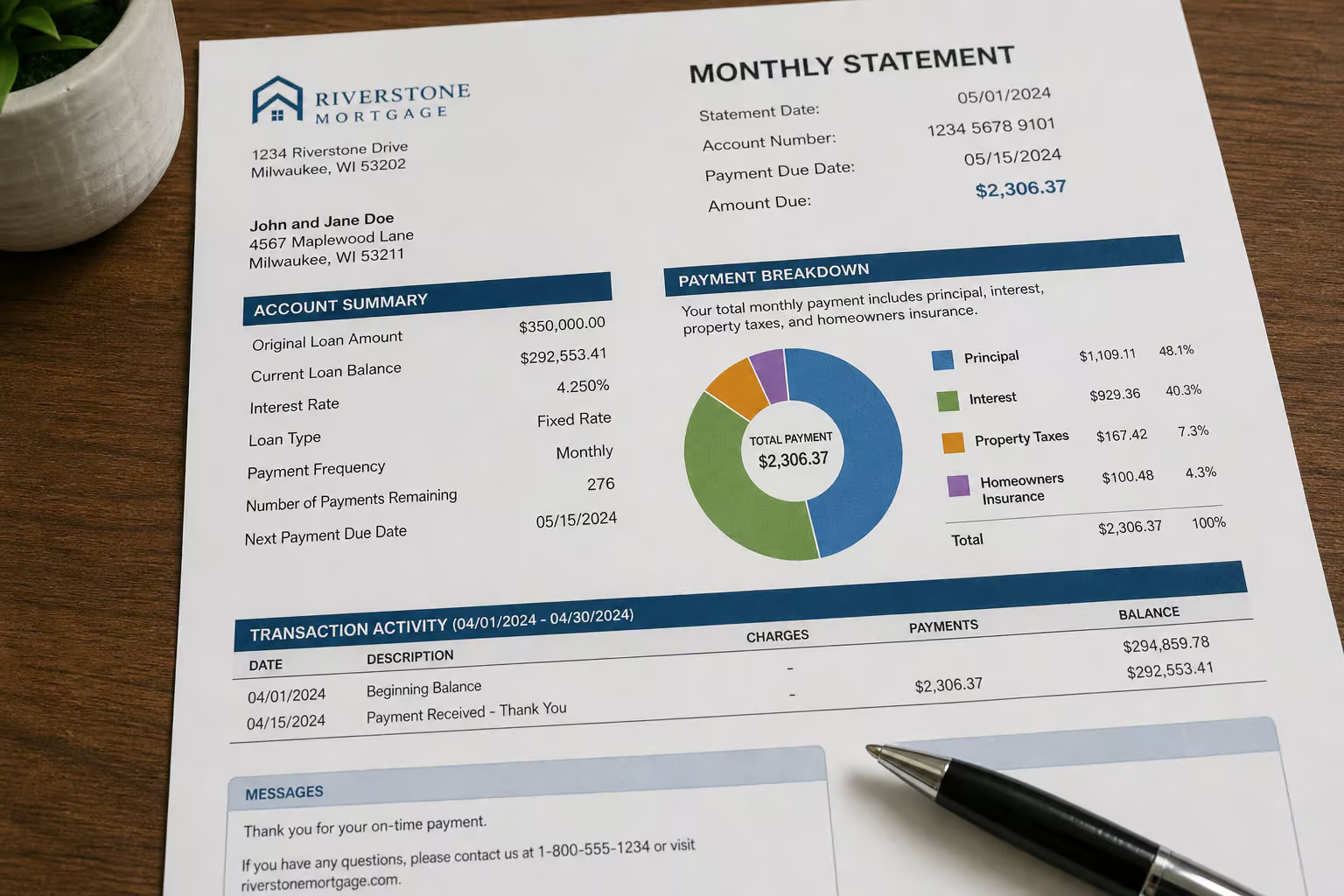
Add back the taxes and insurance we already calculated ($387.50), and your total housing payment comes to roughly $2,382. That’s $49 over the 28% guideline of $2,333.
On the other hand, a smaller down payment pushes that monthly number up fast.
At 7% with only 10% down, your principal and interest jumps to about $2,100, and total payment lands around $2,500 — well over the guideline. And remember, that’s before PMI kicks in.
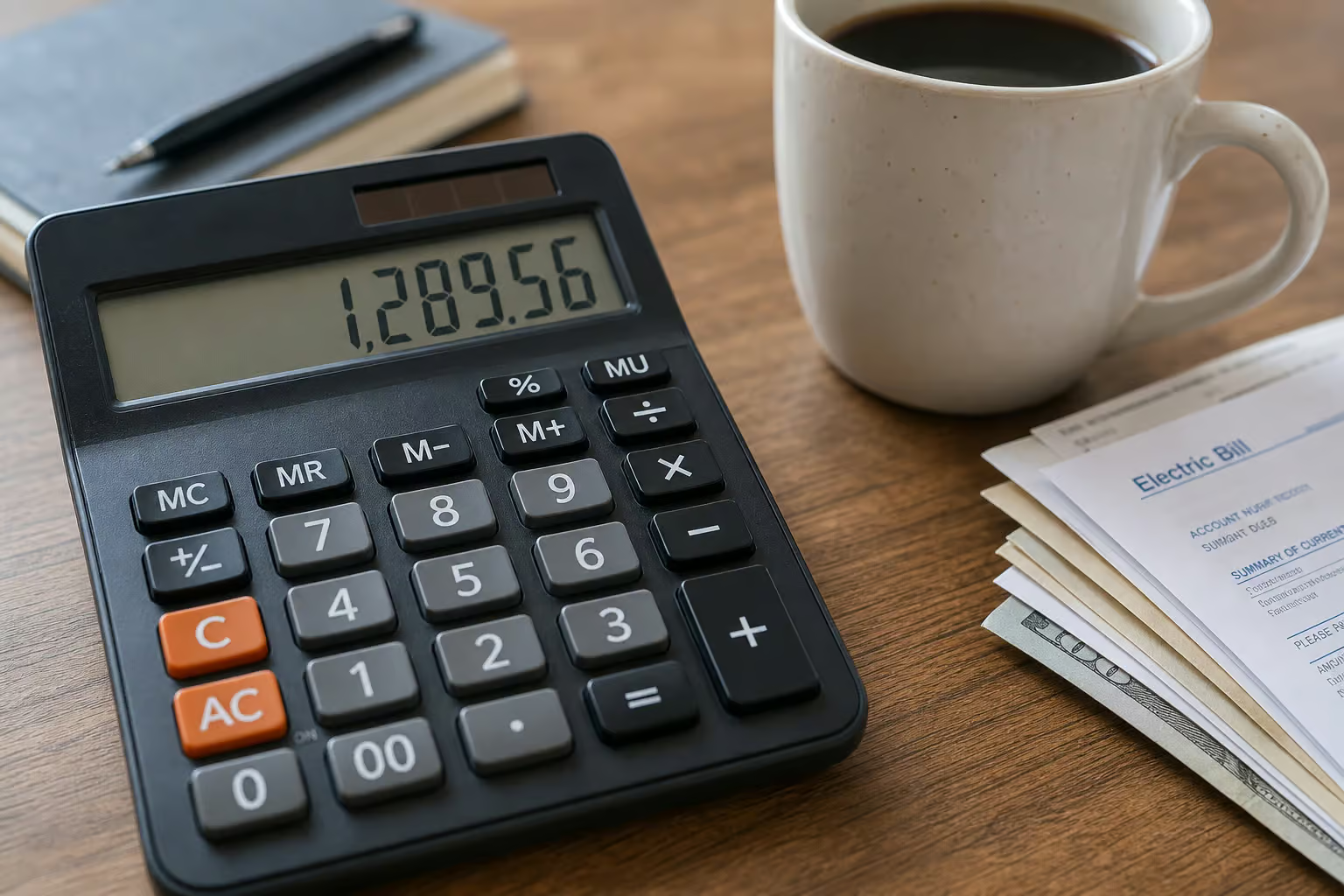
How down payment size changes the answer
Meet Alex and Sarah. Same house, same salary range, very different outcomes.
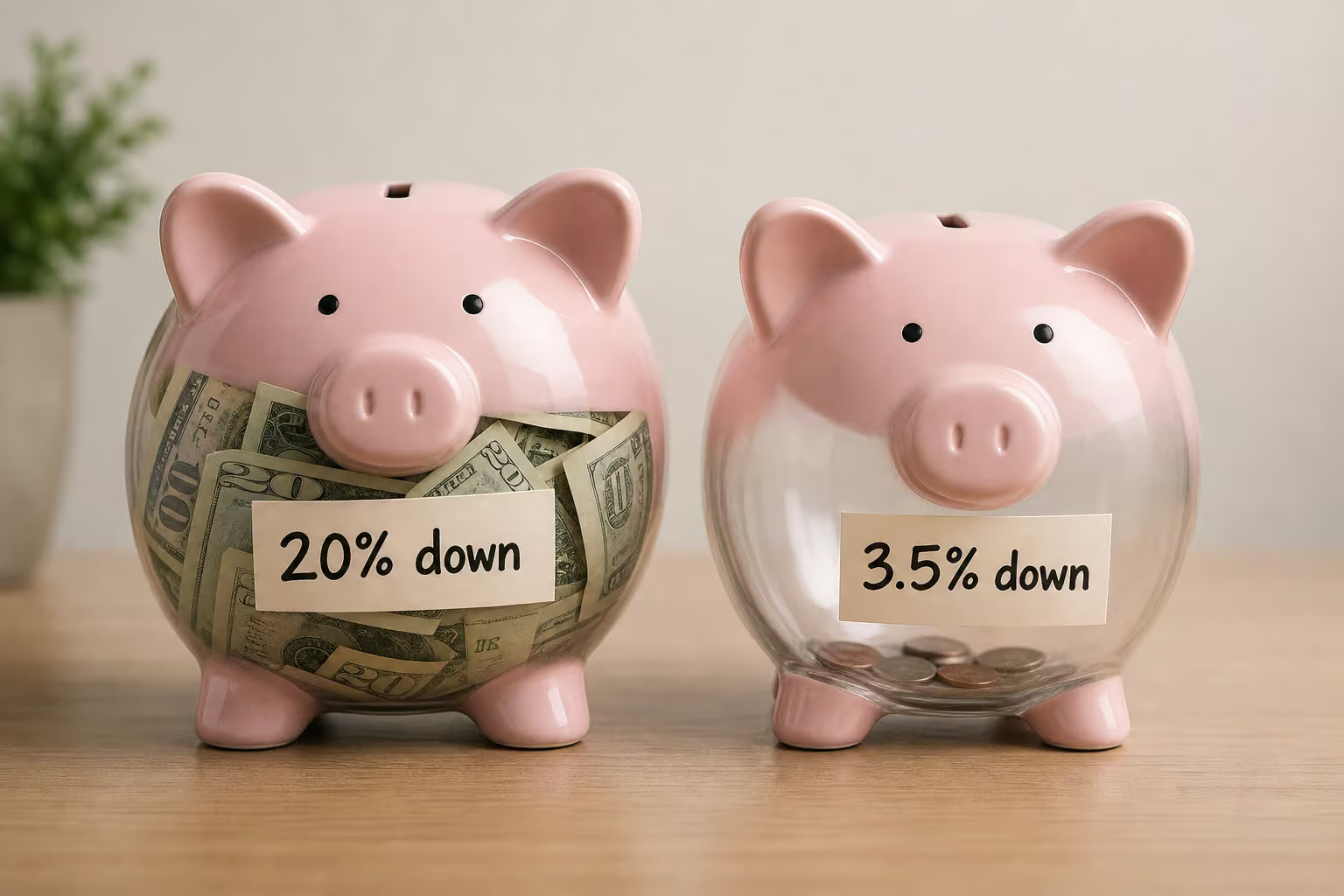
Alex (the saver) puts 20% down — $60,000 cash. He has zero other debt and a 780 credit score. He takes out a $240,000 conventional loan at 6.5%. His total monthly payment (principal, interest, taxes, insurance, no PMI) comes to about $1,900.
That’s comfortably under the 28% limit. In fact, SoFi’s model says Alex only needs an $82,000 salary to afford this house. On $100k, he’s golden.
Sarah (the first-timer) puts 3.5% down on an FHA loan — $10,500 cash. She has $600 a month in existing debt (car payment and student loans). She takes out a $289,500 loan at 6.5% plus PMI (mortgage insurance, required because her down payment is under 20%). Her total monthly payment is roughly $2,450.
That’s over the 28% guideline, and SoFi says she needs to earn $108,000 to make it work. On $100k, she’s borderline — she’d be stretching her budget and pushing her total debt-to-income ratio toward the limit.
20% down eliminates PMI and keeps monthly costs manageable. Smaller down payments (3-5%) get you in the door faster — and are totally valid, but they cost more every month.
The hidden variable — existing debt
That $400-a-month car payment you’ve been making for years? Rocket Mortgage has a concrete example: a $400/month car payment can reduce your borrowing power by roughly $50,000. That’s real money.

On a $100k salary, the back-end 36% limit gives you $3,000 a month for all debt payments. If you have $500 a month in car and student loan payments, you only have $2,500 left for housing. That’s tighter than the $2,333 28% target — you’d actually need to be under the 28% guideline to fit inside your total debt limit, so consider how much house you can afford based on your specific situation.
Pay down what you can before you apply, even if it means pushing your house hunt back a few months.
Interest rate sensitivity — a 1% change matters
A 1% rate difference may seem small. But on a $300k home, it can shift your monthly payment by $200 or more.
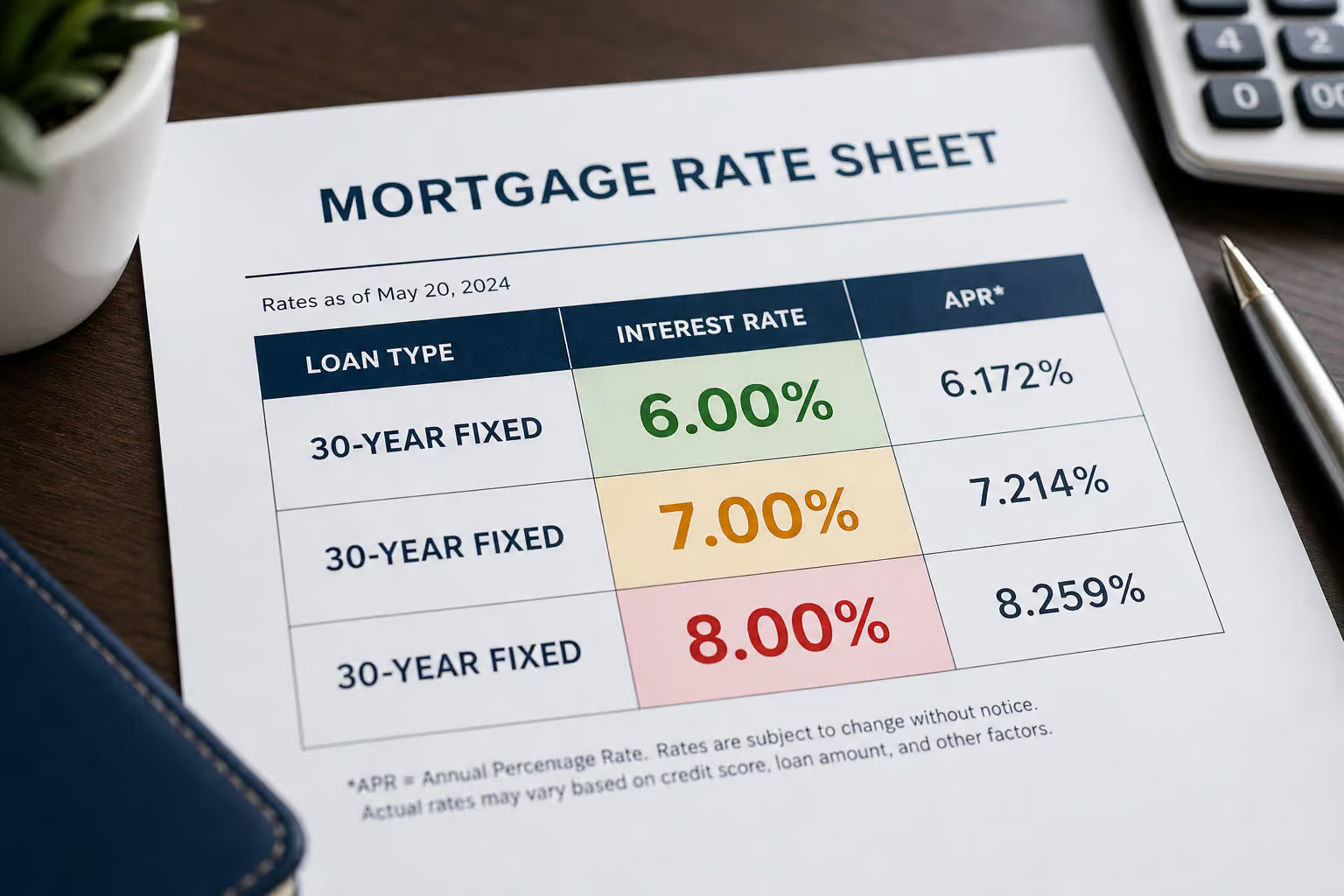
Bluerate’s data shows that a 1% increase in interest rate raises the annual income needed to afford the same $300k home by about $7,000 to $10,000.
Let’s look at the same house with 20% down at three different rates:
- At 6%: Principal and interest is roughly $1,799 per month. Total payment around $2,186. Well under the 28% limit.
- At 7%: $1,995 P&I, $2,382 total. Tight but workable.
- At 8%: $2,200 P&I, $2,587 total. Over the limit.
So the same house can be affordable or a stretch depending on what rate you lock in. That’s why rate shopping matters — it’s not just about finding the lowest rate, it’s about finding the rate that makes the math work for your specific budget.
Cash vs. mortgage — a different calculation
If you happen to have $300,000 in cash sitting in the bank (which, let’s be honest, is rare for most of us on a $100k salary), this whole question becomes trivially affordable. No mortgage payment. Just taxes (~$300/month), insurance (~$88/month), and maintenance. That’s less than $400 a month.
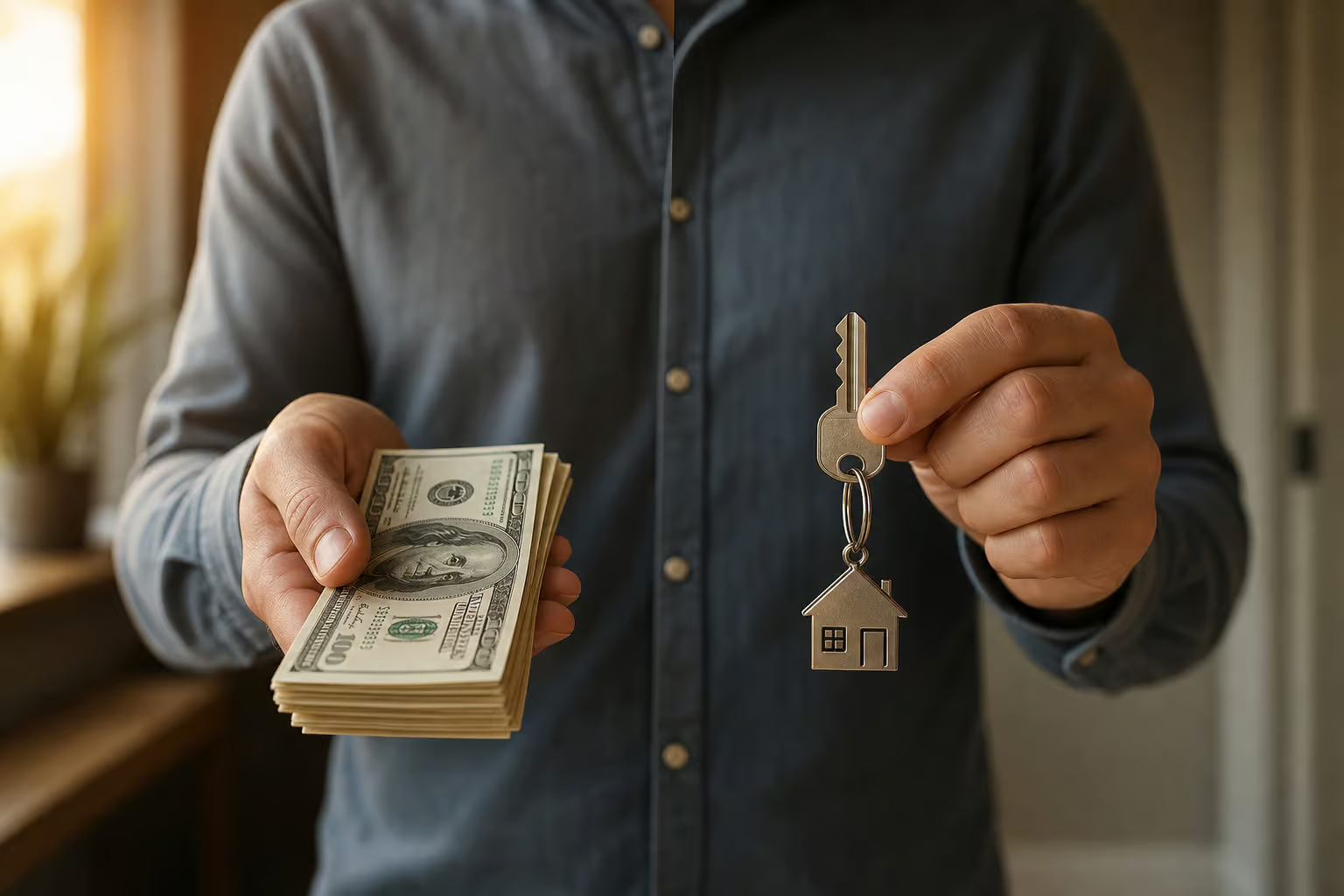
But paying cash ties up that $300,000 in a house. If you instead invested that money at a modest 7% return, you’d earn about $21,000 a year — more than you’d pay in after-tax interest on a $240,000 mortgage at 7%. Plus, a mortgage buyer with 20% down uses $60,000 to control a $300,000 asset, keeping their other cash available for emergencies or investments.
But if you’re wondering whether to drain your savings to buy in cash, the math says you’re usually better off with a mortgage and keeping your liquidity — especially with kids, where unexpected expenses (new furnace, braces, summer camp) are basically guaranteed.
Loan type options and their impact on affordability
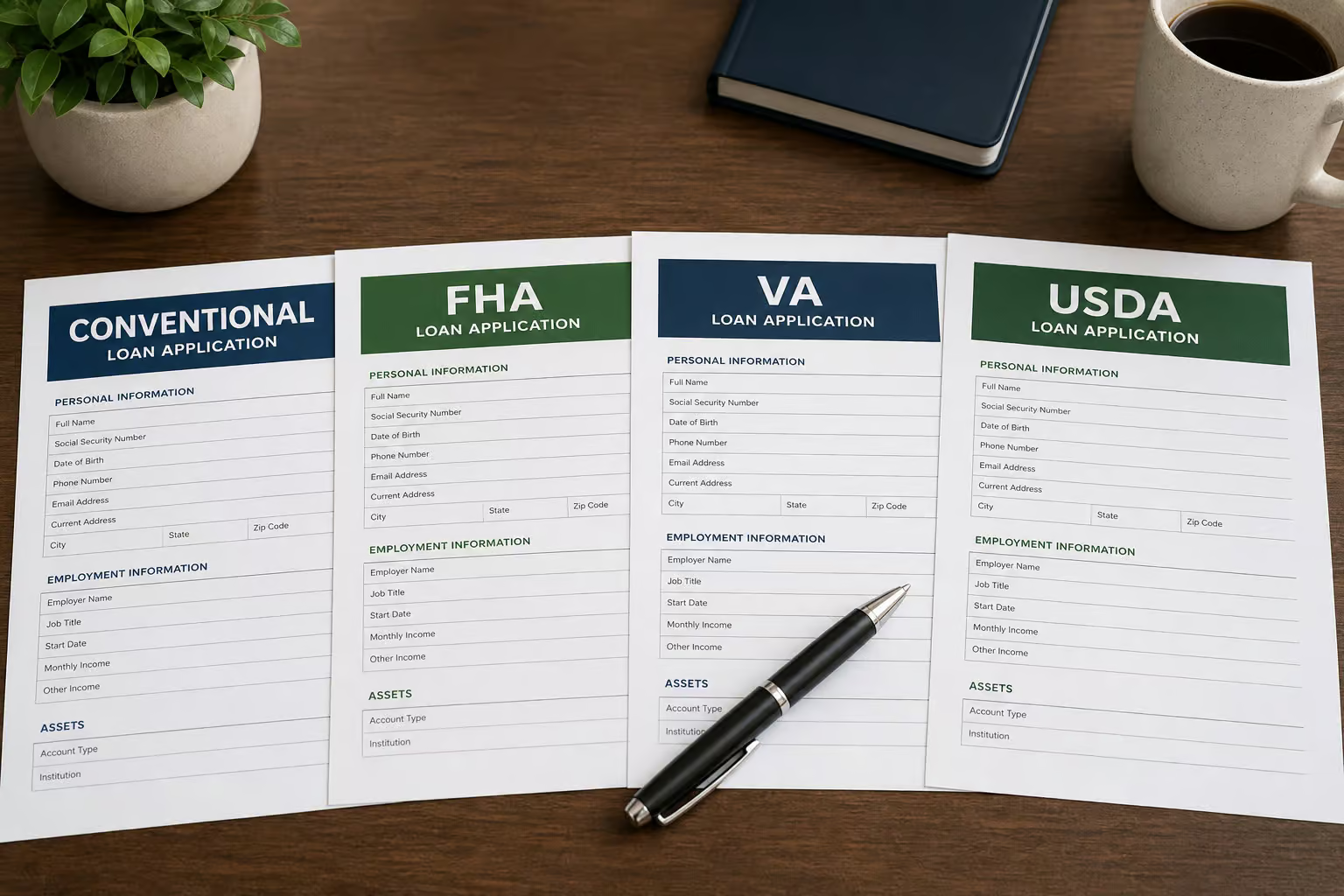
Your loan type determines your minimum down payment, your monthly cost, and what credit score you need. Here’s how the main options stack up for a $300k home on a $100k salary.
- Conventional: Minimum 3% down, 620 credit score. PMI required if down payment is under 20%. Best for buyers with decent credit and at least some savings. The 20% down option we talked about above avoids PMI and keeps the payment under control.
- FHA: 3.5% down with a 580 credit score, or 10% down with a 500 score. Comes with mortgage insurance premium (MIP) for the entire loan term if you put less than 10% down. Great for lower credit or smaller down payments, but the monthly cost creeps up.
- VA: $0 down for eligible military members and veterans, no PMI, but a funding fee applies. Possibly the best deal if you qualify.
- USDA: $0 down for eligible rural buyers, no PMI, but a guarantee fee applies. Income limits apply.
- Jumbo: For loans above the conforming limit (about $832,750 in 2026). Stricter requirements — not relevant for a $300k home, but worth knowing you won’t need one.
For most parents on a $100k salary, conventional with 20% down or FHA with 3.5% down will be the two real options.
Putting it all together — the verdict
So — can you afford a $300k house on a $100k salary? Here’s the real answer.
- Best case (Alex scenario): 20% down, zero debt, good credit, and a 6.5% rate. Your total housing payment is about $1,900. You can afford this house on $100k easily — even with some breathing room for daycare or unexpected expenses.
- Worst case (Sarah scenario): 3.5% down FHA, $600 in monthly debt, same rate. Your payment is about $2,450. You’d need closer to $108k to afford it comfortably. On $100k, you’d be stretching your budget to the max.
A 1% rate change or a $400 car payment can flip the answer. So can the size of your down payment.
Don’t borrow the max a lender approves — leave yourself breathing room.
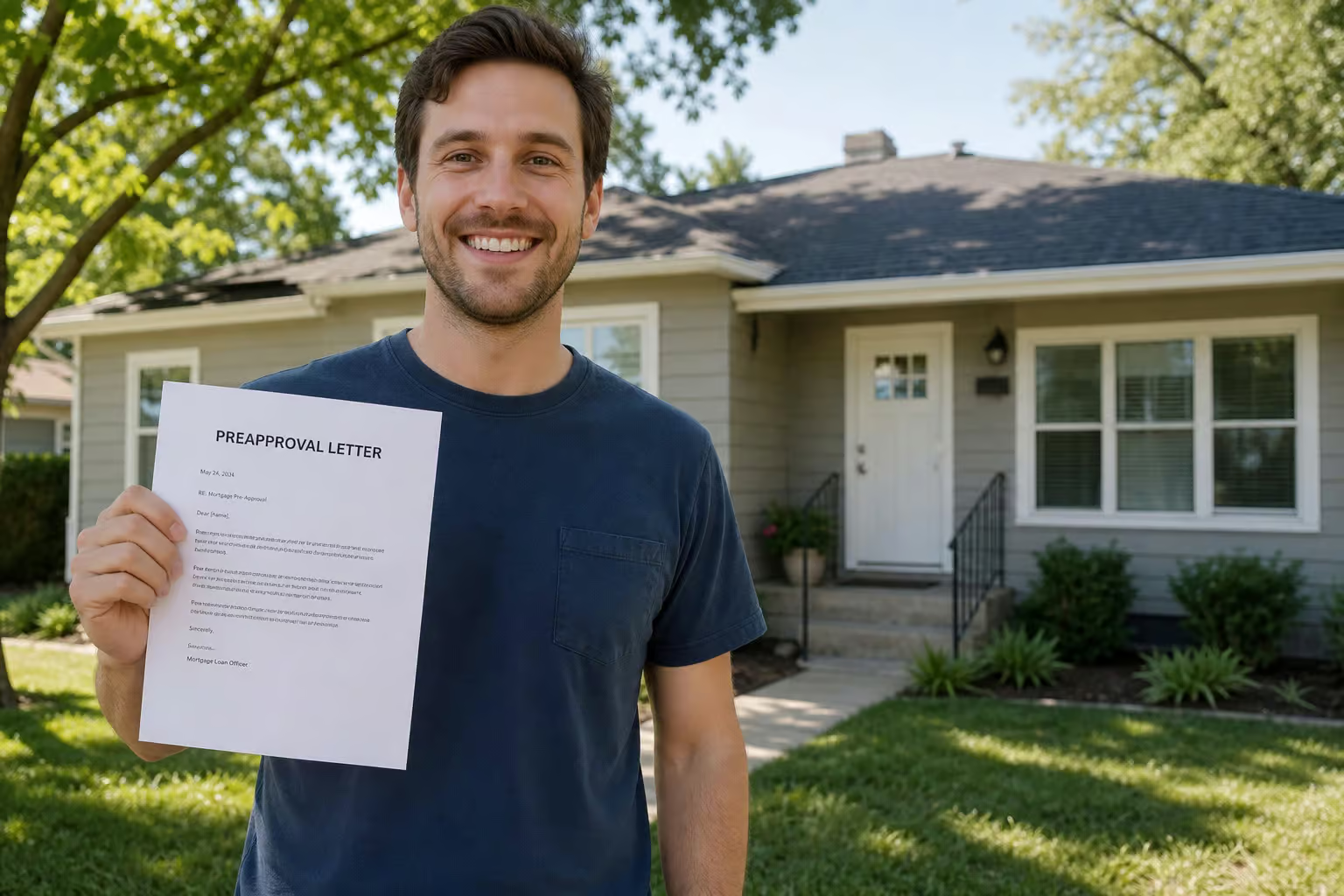
Your next step: get preapproved. It’s the only way to know your real number. And while you’re at it, play with an affordability calculator from Rocket Mortgage or SoFi. Plug in your own down payment, monthly debts, and estimated rate. You’ll know in five minutes whether that $300k house is a dream or a plan.
Frequently Asked Questions
What should my salary be to afford a $300,000 house?
It depends heavily on your down payment, existing debt, and interest rate. With 20% down, no other debt, and a 6.5% rate, you could afford it on roughly $82,000. But with a small down payment and $600 in monthly debt, you’d need closer to $108,000.
Can I buy a 300k house with 100K salary?
Yes, but it’s tight and depends on your specific financial picture. If you put 20% down and have no other debt, your monthly payment would be around $1,900 — well within the 28% guideline. But with a small down payment and existing car or student loans, you’d be stretching your budget to the limit.
How are people affording 300k houses?
Most are putting down 20% to avoid PMI and keep monthly payments lower, or they’re locking in a favorable interest rate. Others are paying down existing debt first to free up room in their debt-to-income ratio. The key levers are down payment size, interest rate, and how much other debt you’re carrying.
How much does a 1% interest rate change affect affordability?
A 1% rate difference can shift your monthly payment by $200 or more. On a $300k home with 20% down, going from 6% to 7% adds about $200 to your monthly payment, and from 7% to 8% adds another $200. That can flip a house from comfortably affordable to a stretch.