I still remember my friend Sarah texting me from a showing: “Mortgage rates are high. Should I pay cash and be done with it?” She had the money—a combo of selling her old place and some savings—but she was terrified of making a mistake.
She’s not alone. Cash home purchases hit a record high in 2024 — nearly one in three buyers paid all cash. With mortgage rates hovering around 6–7% and the median monthly payment now about $2,225 (up 20% since 2021), the idea of skipping the bank entirely sounds appealing.
But tying up that much cash isn’t just a spreadsheet decision. It’s a real-life decision: what if the roof leaks and the car breaks down in the same month? Let’s walk through the pros and cons.
Key Takeaways
On a $300,000 house with 20% down and a 5% rate, you’d save roughly $224,000 in interest over 30 years by paying cash.
Cash offers are 97% more likely to win a bidding war than financed offers, and 95%+ of cash deals close successfully.
The biggest risk: becoming house-poor. Over a third of Americans can’t cover a $400 emergency, so keep 6–12 months of living expenses before you put money toward a house.
Table of Contents
No mortgage interest payments (the big one)
This is the headline benefit: you never pay interest.
On a $300,000 house with 20% down and a 5% mortgage, you’d pay about $224,000 in interest over 30 years. Pay cash, and that $224,000 stays in your pocket. On a $450,000 house at today’s 6.3% rates, you’d save roughly $382,000 — enough to buy another house in many markets.
On a $500,000 home with a $400,000 mortgage at 6%, the total cost over 30 years is over $963,000. More than half of that is interest.
Cash buyers skip all of that. The house costs what it costs.
Lower closing costs and fewer fees
You also avoid the lender fees that come with a mortgage.
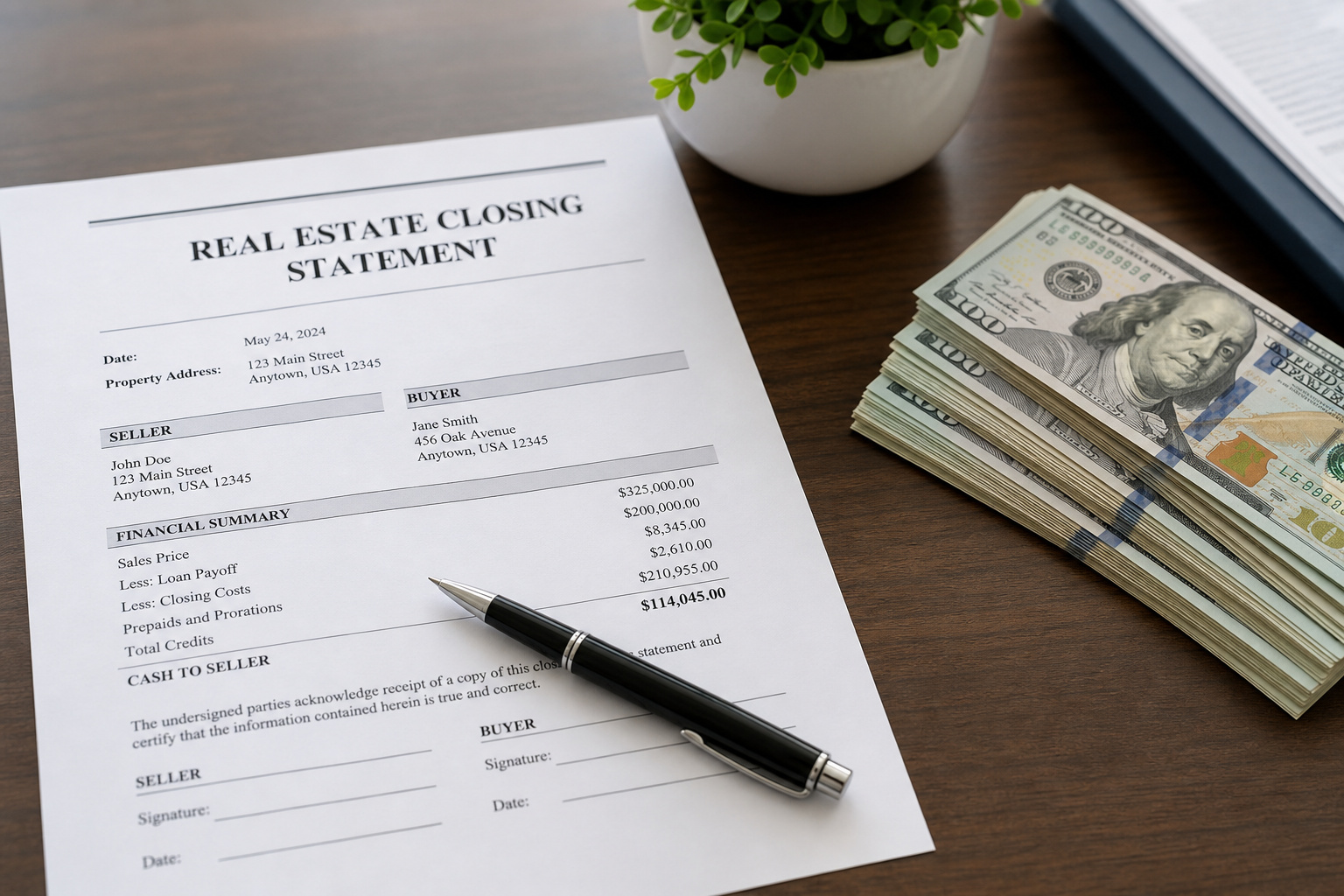
Financed buyers typically pay 3–6% of the home price in closing costs. Cash buyers? Just 1–3%. That difference can be thousands of dollars.
You skip origination charges, application fees, points, and other lender processing fees.
You still pay for title insurance, recording fees, and other basics, but without a lender, those costs are lower.
Seller preference and negotiating leverage
Sellers want simplicity. A cash offer means no waiting for the bank, no risk of financing falling through, and no appraisal contingencies that could kill the deal.
This is also why sellers in smaller markets sometimes look for buy homes for cash Madison NC options when they want a simpler transaction. A cash buyer can remove financing delays, appraisal uncertainty, and weeks of back-and-forth — but the same rule still applies on both sides of the deal: speed is useful only if the numbers make sense.
This gives you bargaining power. One buyer in Huntsville, Alabama — Matt Curtis, negotiated a $15,000 discount by offering cash. Another seller accepted a cash offer $10,000–$20,000 below higher financed offers because they’d been burned by a previous buyer’s loan denial.
According to Redfin, cash offers are 97% more likely to win a bidding war. In the luxury market, that jumps to over 400%.
Even if you don’t have the highest offer, cash can get you the house.
Faster closing process
Cash closes in one to two weeks. Financed takes 30 to 45 days. In 2023, the average financed closing was 42 days.

The closing meeting is shorter too — 45 to 90 minutes for cash versus two to three hours for a mortgage. No lender delays, no credit check hold-ups, no appraisal wait. You show up, sign a few things, get the keys.
If you’ve ever tried to line up moving trucks, school transfers, and a new job start date around a 42-day window, you know how valuable those extra weeks are.
No credit checks required
Cash buyers don’t need a credit check. No hard inquiries, no worrying about your score.
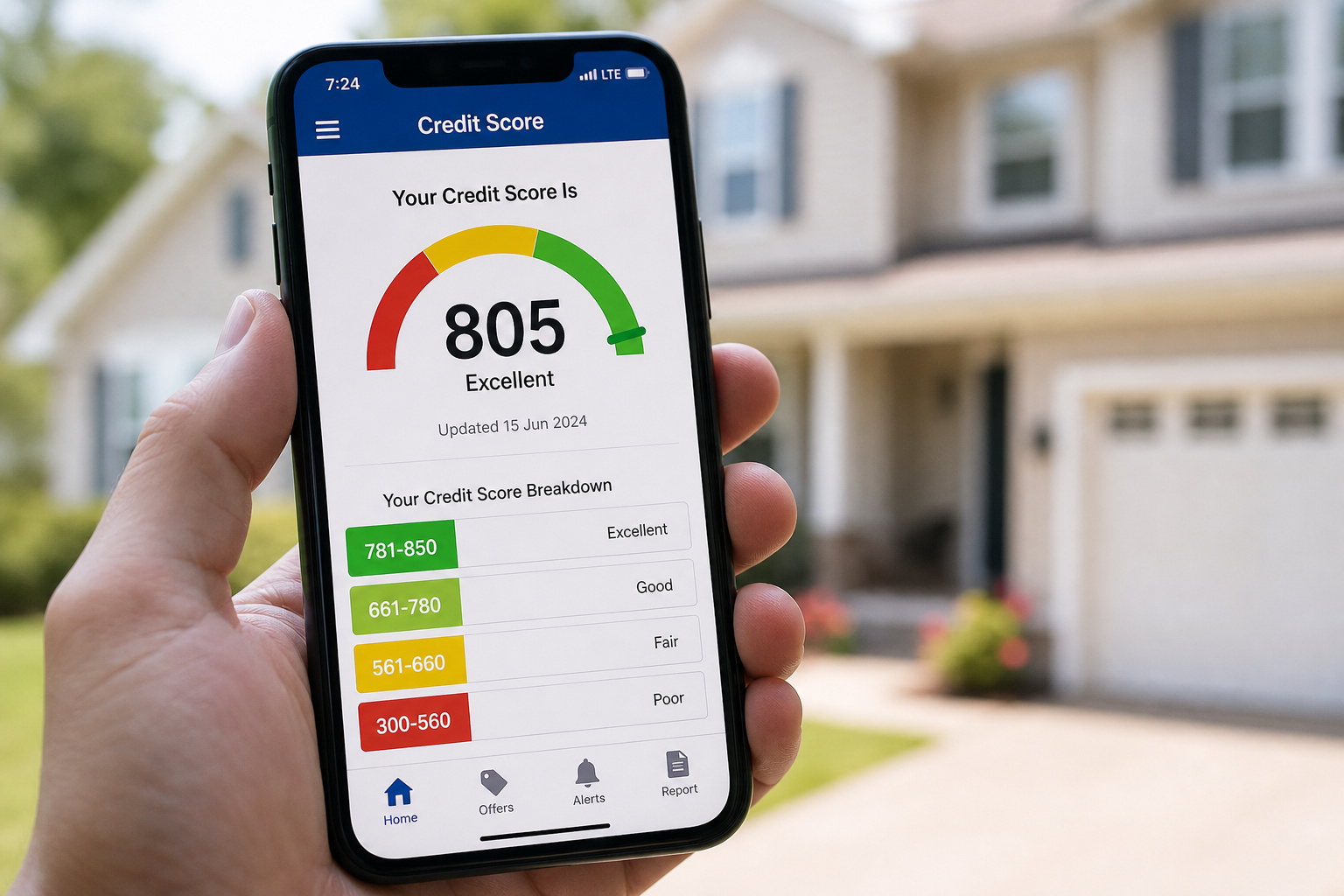
About a third of Americans have scores below 650. Sixteen percent are under 600. For them, a mortgage might be expensive or impossible. Cash opens the door.
It also helps if you have no credit history — recent immigrants, young adults, or anyone who’s avoided debt their whole life. Cash lets you buy without proving your payment history to a lender.
Immediate ownership and equity
The day you close, the house is yours. No bank has a claim on it. You own 100% of the equity from the start.

That means no monthly mortgage payment to stress over. No fear of foreclosure if you hit a rough patch. You can’t lose the house because you missed a payment — because there are no payments.
About 38% of U.S. homeowners already live this way, owning free and clear. Many downsizers who pay cash report sleeping better at night. There’s peace of mind in knowing the roof over your head is yours.
Higher closing success rate
Cash deals close. Financed deals sometimes don’t.
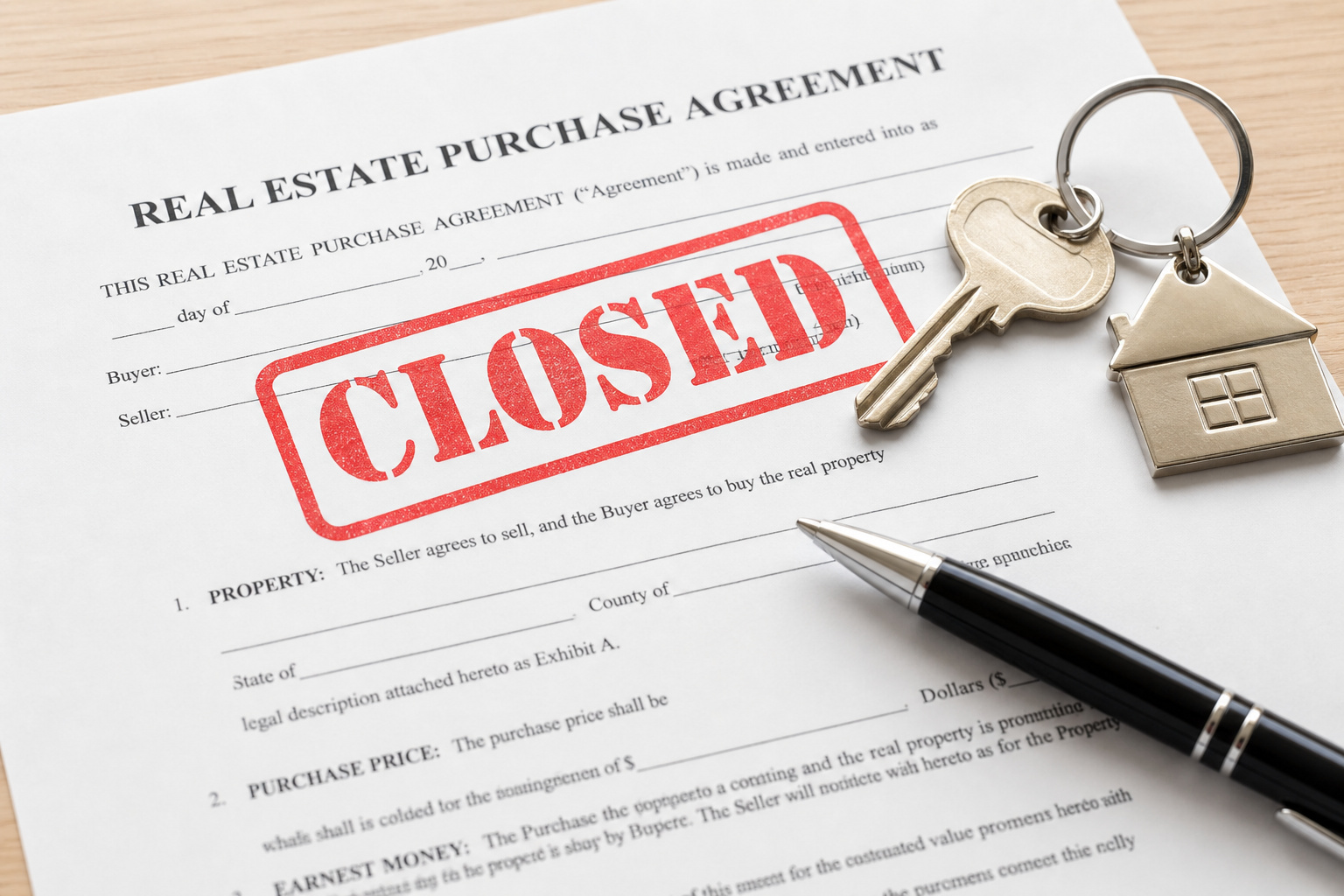
The numbers from the National Association of Realtors show cash purchases close above 95% of the time. Financed purchases close at about 87–90%. That might not sound like a big gap, but when you’ve already fallen in love with a house, a 5–10% chance of losing it is stressful.
Cash eliminates the most common deal-killers: appraisal gaps, last-minute loan denials, and underwriting delays. If you hate uncertainty, cash is the smoother path.
Now let’s talk about why you might not want to pay cash — because the risks are real, and I’ve seen families get burned.
Illiquidity risk and being house-poor
This is a downside, and it’s not theoretical.

A family I know drained their accounts to buy their dream home, then got hit with $35,000 in medical bills. No cushion. Another couple sold their starter home for $250,000, added $200,000 in savings, and bought a $450,000 house with cash. They had $5,000 left — and then faced $31,500 in unexpected expenses.
Even with a paid-off house, you have property taxes (0.5–2.5% of home value), insurance ($1,500–$6,000 a year), and maintenance (1–2% of home value annually). That’s money you need to keep flowing.
Set aside 6–12 months of living expenses in a separate emergency fund before you put cash into a house. If your monthly expenses are $5,000, that’s $30,000 to $60,000 you don’t touch for the down payment.
Don’t count retirement accounts unless you’re willing to pay the early withdrawal penalty and taxes. The 37% of Americans who can’t cover a $400 emergency — don’t become them. If you later need to tap your home equity, a cash-out refinance can provide liquidity, but it re-introduces a mortgage payment and closing costs.
Opportunity cost of not investing
The math gets interesting — and a little painful.

The money you put into the house could have been invested. Historically, the S&P 500 has averaged about 10% annual returns over the last 30 years. Home prices? About 5.4% per year.
If you take that $240,000 and invest it at a conservative 6% return for 30 years, you’d end up with over $1.4 million. At 4%, about $800,000.
Compare that to the $224,000 in interest you saved by paying cash. The potential investment gains can exceed the interest savings.
Even Mark Zuckerberg chose a mortgage — he could have paid cash but opted to keep his money invested. You don’t have to be a billionaire to think that way.
Investment returns aren’t guaranteed, and paying off your house gives you a guaranteed return equal to the interest rate you avoid. But the tradeoff is real. If you’re disciplined with investments, a mortgage might make you richer over time.
Forgoing the mortgage interest deduction
Yes, you lose the ability to deduct mortgage interest from your taxes. But only about 10% of taxpayers still itemize their deductions.
In 2023, the standard deduction stood at $13,850 for single filers and $27,700 for married couples. Unless your mortgage is huge and you have other big deductions, you’re probably better off taking the standard deduction anyway.
For most families, this “lost benefit” is a non-issue. Don’t let the tax deduction sway your decision — it rarely matters in practice.
Risk of overpaying without an appraisal
When you pay cash, there’s no lender forcing an appraisal. That can cost you.
One buyer offered $475,000 on a house that appraised for $425,000. They overpaid by $50,000 because they skipped the $500 appraisal.
Even if you pay cash, spend the $300–$500 on a professional appraisal. It’s a small cost that can prevent overpaying in a bidding war. And don’t skip the home inspection — that $300–500 investment often uncovers $5,000–$50,000 in repairs. Including an appraisal contingency in your offer gives you the right to back out or renegotiate if the appraised value comes in low.
No contribution to your credit score
Paying cash won’t hurt your credit, but it also won’t help it. On-time mortgage payments are a great way to build a positive payment history. Without that, you miss out on a credit boost.
If you already have solid credit, this doesn’t matter much. But if you’re working on rebuilding or establishing credit, a mortgage can be a useful tool. Cash buyers forgo that.
Seller may not be ready for a fast close
The speed that helps you can create friction for the seller. If they haven’t found their next home yet, a two-week closing is stressful.
It’s a minor risk, but offering a flexible closing timeline can be a good negotiating tactic. Let the seller know you can close fast or slow — whichever works for them.
Strategic alternatives: hybrid approach and delayed financing
You don’t have to go all-in either way.
A hybrid approach means putting 40–60% down and financing the rest. On a $450,000 home, a $250,000 down payment with a $200,000 mortgage works out to about $1,331 a month. You keep some cash in your pocket, lower your monthly payment, and avoid a lot of interest.
Or consider delayed financing. Buy with cash, then take out a mortgage after closing. Fannie Mae’s guidelines let you convert a cash purchase to a mortgage as soon as the deed is recorded. That gives you the competitive edge of a cash offer now, with the liquidity of a mortgage later.
Due diligence and risk mitigation for cash buyers
If you do decide to pay cash, here’s what you need to do differently — including the fact that you can still include a financing contingency if you plan to use delayed financing later:
- Proof of funds: Provide bank statements within 30–60 days of your offer. You can redact account numbers to the last four digits for security.
- Home inspection: Still get one. Costs $300–500, often saves thousands.
- Title search: Make sure there are no liens on the property. A lien could threaten your ownership.
- Appraisal: Consider one even though it’s not required. It’s cheap insurance.
- Wire fraud: This is serious. In 2023, real estate wire fraud led to $396 million in losses. Always verify wire instructions by phone directly with the title company. Never trust emailed instructions.
- Contingencies: You can still include them in your offer. Without contingencies, you could lose your earnest money (1–3% of the purchase price) if you need to back out.
- Professional representation: Hire a real estate agent who has experience with cash deals. A real estate attorney ($500–$1,500) can review paperwork for peace of mind.
How to decide: assess your finances and ask the right questions
Here’s the framework:
- Add up your liquid assets — checking, savings, money market, investments you can easily sell. Don’t count retirement accounts unless you’re willing to pay penalties and taxes.
- Subtract your emergency fund — 6–12 months of living expenses. That money is off-limits for the house.
- What’s left? That’s what you can reasonably put toward a home.
Then ask yourself:
- Will I have enough cash for real emergencies? (Most important question.)
- Would I save more in interest than I could earn by investing the cash elsewhere?
- How are my other financial goals? Retirement, debt, college savings — don’t neglect them.
- Why do I want to buy with cash? Peace of mind? Debt aversion? Be honest.
The sources of cash vary — selling a previous home, savings and investments, inheritance (7% of first-time buyers used it in 2024), gifts from family, or a large windfall. No matter where it comes from, the decision comes down to the same two things: can you afford the liquidity risk, and could the money be better deployed elsewhere?
There’s no universal right answer. But if you run the numbers and feel good about tying up the cash, you’ll sleep in a house that’s yours — and that’s worth a lot.
For more real-world stories, check out our article on real-life cash buying experiences from Reddit. If you’re in a competitive market, our California-specific guide has state-specific tips. And if you’re still on the fence, our pros and cons deep dive might help.
Frequently Asked Questions
Is it smart to purchase a home in cash?
It depends on your financial situation and goals. Paying cash saves you tens or hundreds of thousands in mortgage interest and gives you a huge edge in bidding wars, but it also ties up liquidity and carries opportunity cost if that cash could earn higher returns elsewhere. The smart move is to keep 6–12 months of living expenses in an emergency fund first, then decide if the peace of mind outweighs the potential investment gains.
Do you get a tax break for buying a house with cash?
No, because you lose the mortgage interest deduction — but that rarely matters. Only about 10% of taxpayers itemize deductions, and the standard deduction ($13,850 for single filers in 2023) is usually more valuable unless you have a massive mortgage and other big deductions. For most cash buyers, the lost tax break is a non-issue.
What are the hidden risks of paying cash for a house?
The biggest risk is illiquidity — draining your savings can leave you vulnerable to unexpected expenses like medical bills, roof repairs, or job loss. You also lose the opportunity cost of investing that cash elsewhere, and without a lender-mandated appraisal, you could overpay by tens of thousands. Always get a home inspection and appraisal even when paying cash.
Can you get a mortgage after buying a house with cash?
Yes, through a strategy called delayed financing. You buy with cash to win the bidding war, then take out a mortgage as soon as the deed is recorded — Fannie Mae allows it immediately. This gives you the competitive edge of a cash offer upfront with the liquidity of a mortgage later, though you’ll pay closing costs on the new loan.