I used to think paying cash for a house was the financial goal. No mortgage, no monthly payment, no interest — what’s not to love? Then I ran the numbers. And then I watched a friend go through the “house rich, cash poor” experience. And then I realized that the conventional wisdom around paying cash might be costing people millions.
Here at Tidbits of Experience, we’ve seen a lot of parents wrestling with this choice. It looks simple on the surface: you have the money, you buy the house, you’re done.
Let me walk you through why a mortgage can be the smarter move, even when you could pay cash.
Key Takeaways
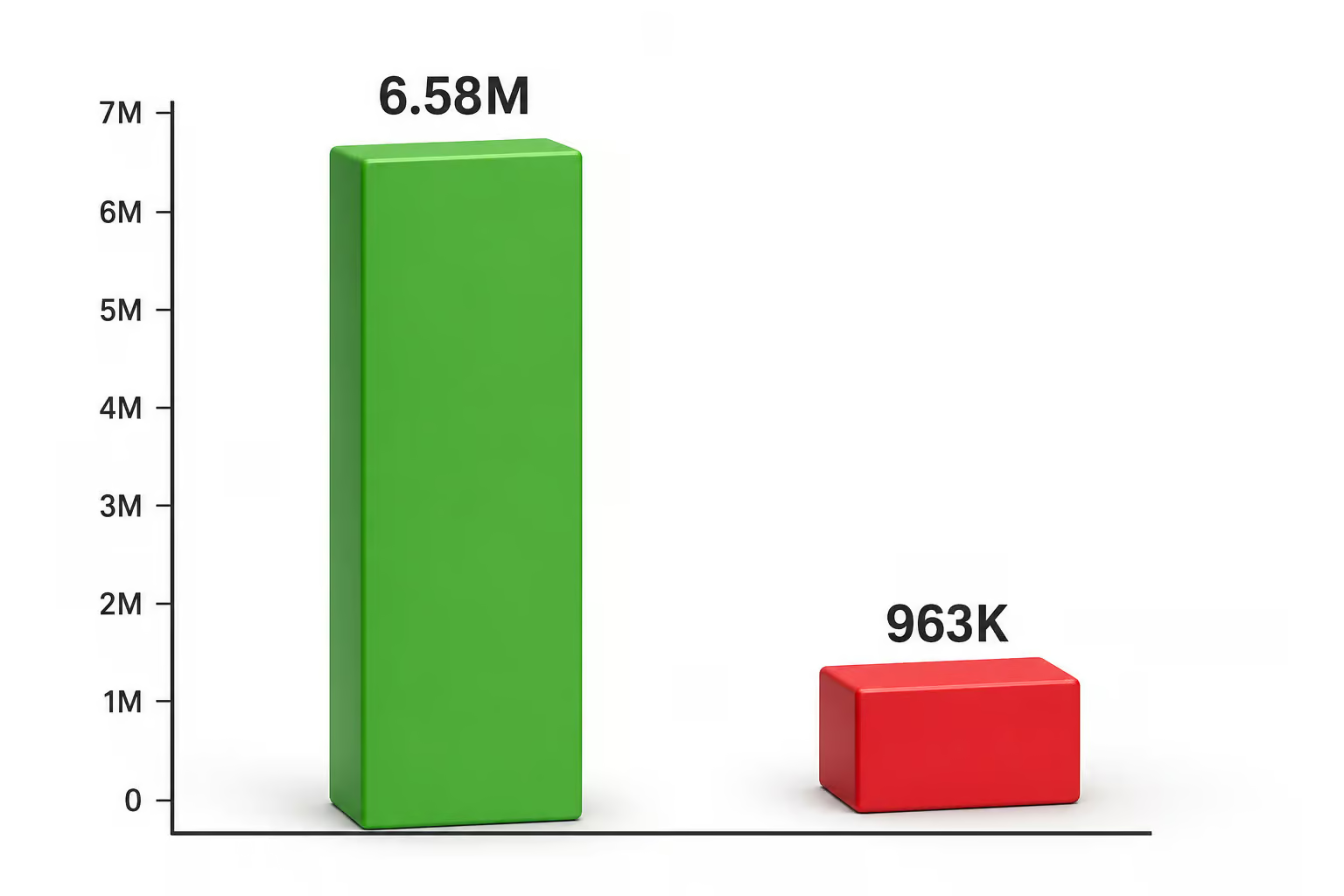
Paying $400,000 cash for a home instead of investing that money at a conservative 9% average return costs you roughly $6.58 million in potential growth over 30 years — while the mortgage on that same amount would cost about $963,000 total.
About 32% of homebuyers paid all cash in 2024, but a 2024 Zillow survey shows 70% still use a mortgage — the norm exists for a reason, and the math favors financing for most disciplined investors.
Cash buyers often face hidden costs they don’t see coming: capital gains tax on sold investments, lost mortgage interest deduction, and the very real anxiety of being house rich and cash poor for the first two years.
Table of Contents
The conventional wisdom vs. the financial reality
Paying cash feels like the smart move. No monthly payment, no interest, full ownership from day one. You look like a hero to sellers — no financing drama, no waiting for a bank to say yes. In 2024, about 32% of homebuyers went all cash, according to the National Association of Realtors statistic. So you’re not crazy for thinking about it.
And the current market makes cash even more tempting. Mortgage payments have jumped 20% since 2021 — the median monthly payment is now approximately $2,225, highest on record in more than two decades, according to the Census Bureau. That’s a number that makes the idea of writing one check and being done feel appealing.
The hidden price tag of paying cash — $6.58 million vs. $963,352.76
Let’s get specific. Say you’re looking at a $500,000 house. You’ve got the cash. You could write a check and be done. Or you could put $100,000 down (20%), take out a 30-year fixed-rate mortgage of $400,000 at 6%, and invest the remaining $400,000.
Here’s the comparison.
Option A (pay cash): You spend $500,000. No interest, no monthly payments. But that $400,000 you didn’t spend? It’s sitting in your house, not growing.
Option B (take a mortgage): You put $100,000 down. Your monthly payment is about $2,400 before insurance and taxes. You take that $400,000 you didn’t spend on the house and invest it.

If that $400,000 grows at a conservative 9% annual return — the S&P 500 has historically averaged about 10% over 30 years, so 9% is a reasonable estimate — after 30 years you’d have roughly $6.58 million before fees.
Meanwhile, the total cost of that $400,000 mortgage at 6% over 30 years? $963,352.76 — that’s $463,352.76 in interest alone, plus the $500,000 purchase price.
So the gap is about $6.58 million in potential growth versus about $963,000 in mortgage costs. That’s a difference of over $5.6 million.
Bottom line: The $400,000 you don’t spend on a house could grow to over $6.5 million in the market — while the mortgage on that same amount costs less than $1 million total.
Past performance doesn’t guarantee future results. But the point stands: when you pay cash, you’re giving up the opportunity to have that money working for you somewhere else.
Why leverage is a wealth-building tool, not a burden
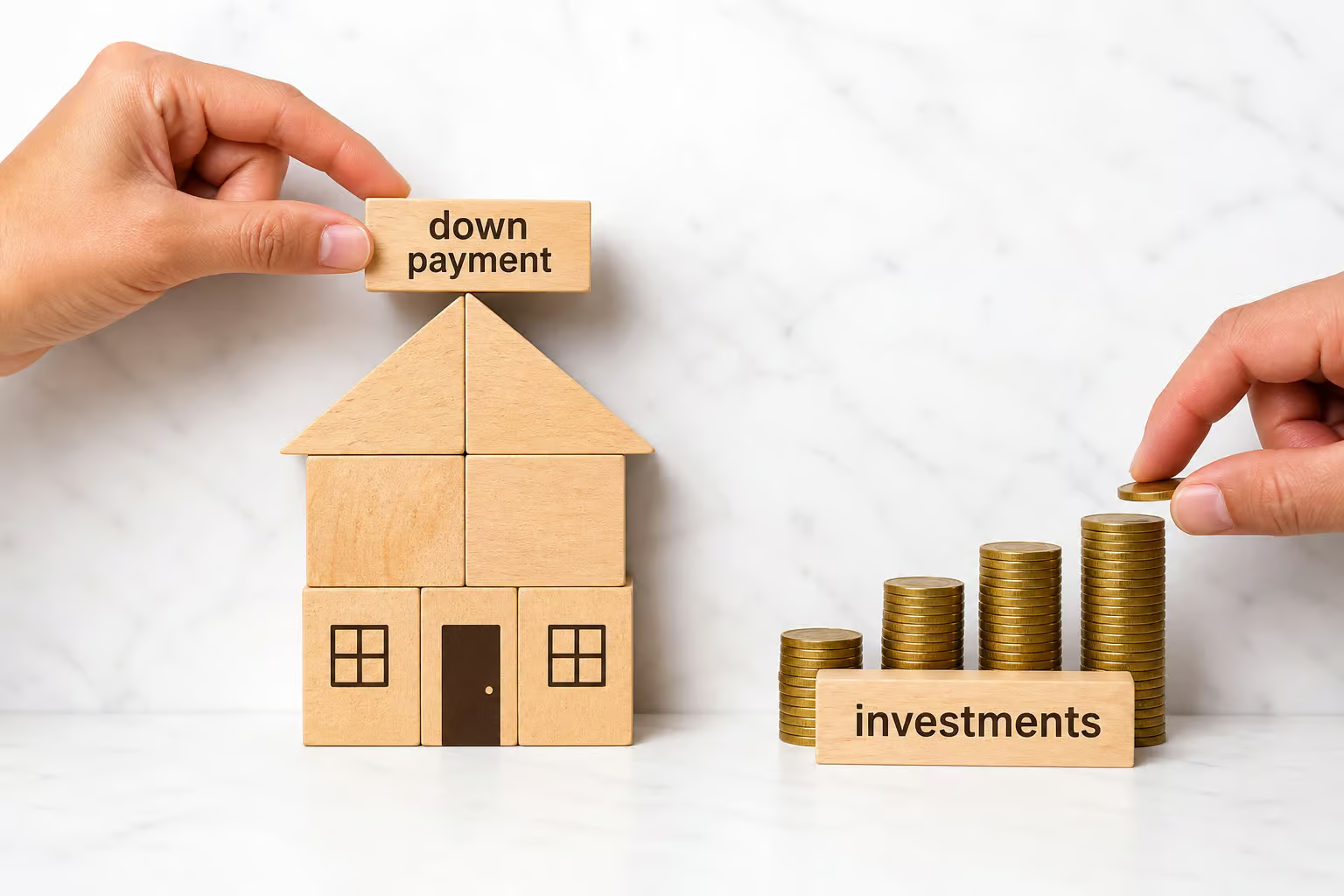
When you use a mortgage, you’re not just freeing up cash to invest — you’re also amplifying your returns on the house itself.
Let’s say the house goes up 5% in a year. That’s a $25,000 gain.
- If you paid all cash: you made $25,000 on a $500,000 investment — that’s a 5% return.
- If you put 20% down: you made $25,000 on $100,000 of your own money — that’s a 25% return.
That’s the power of leverage. It amplifies your returns on the way up. A fixed-rate mortgage also benefits from inflation: you repay your loan with dollars that are worth less over time, while the cash you might have used to buy the house outright gradually loses purchasing power when tied up in an illiquid asset.

Leverage works both ways. If the market drops, you feel it more with a mortgage. But historically, real estate trends upward — about 5.4% a year on average since 1992. And the S&P 500 historical annual return is about 10% vs. real estate historical annual return of about 4.6%. So the real wealth-building isn’t coming from the house itself anyway — it’s coming from what you do with the money you didn’t tie up in the house.
The liquidity trap — house rich, cash poor
You own the house outright, but your savings account is thin. You’re house rich and cash poor.

Let me give you a concrete example. Say you have $2 million in cash. You could put it into a 5% money market fund and earn $100,000 a year in risk-free income. Or you could buy a house with that $2 million.
If you buy the house, that $100,000 a year in passive income disappears. And now you’ve got a house that needs maintenance, property taxes, insurance — all coming out of a much thinner wallet.
In 2025, high-yield savings accounts yield about 4%. Not exciting, but safe. That $2 million in a 4% account still earns $80,000 a year. Put it into a house, and you’ve got nothing liquid.
Less cash for emergencies, medical bills, kids’ college, home repairs, job loss. The “peace of mind” of no mortgage gets replaced by the anxiety of having no liquid cash.
The hidden emotional price tag — anxiety, regret, and second-guessing
The conventional wisdom says cash = peace of mind. But many cash buyers anecdotally report experiencing something different when they consider the advantages of buying a home with cash.

The Financial Samurai, who paid cash for a home in 2019, described the first two years of ownership as a period of heightened anxiety. You wonder: “Should I have invested that money instead? What if there’s an emergency? What if I missed a better opportunity?”
That “house rich, cash poor” feeling is documented. It can make you more irritable and stressed — which isn’t great for your family either. The anxiety does fade as you rebuild cash reserves, but it persists while it lasts.
The tax hit you didn’t see coming
If you sell investments to raise cash for the house, you owe capital gains tax on the profits. You can minimize the hit by matching winners with losers in your portfolio, but it’s still a cost.
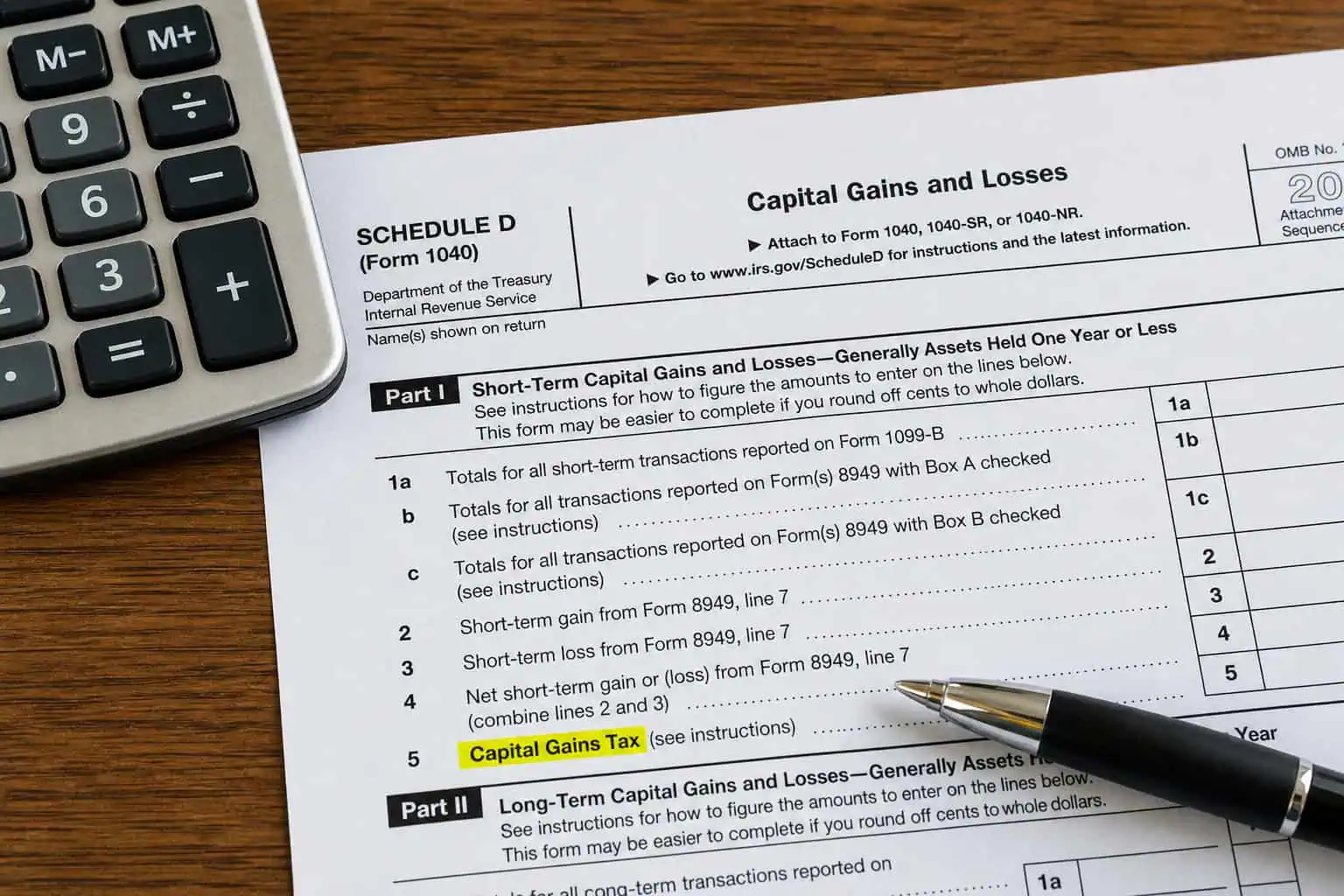
Cash buyers also lose the mortgage interest tax deduction — if you itemize, that’s a real benefit you’re giving up.
Even cash buyers still pay property taxes and homeowners insurance. You just write those checks yourself instead of through a lender escrow account. Plus, all home purchases come with additional costs — about 2% to 5% of the home’s value for taxes, closing costs, agent fees, inspection, moving. Cash buyers still pay for title, escrow, attorney fees, and transfer taxes. It’s not free.
A balanced view — when cash is the right call (and smart compromises)
Paying cash is not always the wrong move. There are situations where it makes sense:
- Competitive markets with bidding wars — cash offers can beat out financed offers, even if they’re lower.
- Older buyers downsizing — if you’re retired and have the cash, the simplicity might be worth the cost.
- Extremely high net worth — when you have so much money that the opportunity cost doesn’t matter, the convenience of paying cash is real.
But for most people, there’s a middle ground. The hybrid approach: put 50% down with a smaller mortgage. You keep some cash, you have a manageable payment, and you get some of the leverage benefits.
Another strategy: pay cash now, then do a cash-out refinance later if you change your mind. It buys you time to figure out the best use of your money.
And if you do pay cash, focus on rebuilding your cash reserves quickly. That helps the anxiety fade faster.
How to make a cash offer work for you (if you still choose to pay cash)
If you decide cash is the right move for your situation, here’s how to get the best deal — based on someone who’s actually done it.
The Financial Samurai‘s 2019 cash purchase is a masterclass in negotiation. He saved about $150,000 off market price using dual agency, love letter, fast close:
- Write a personal letter to the seller. He spent 35 minutes on one — and the seller wrote back. It’s old school, but it works.
- Consider dual agency. The listing agent represents both sides, which reduces commissions. He convinced the listing agent to cut commissions by 2.5% and give a 2.5% price discount. That’s a double win.
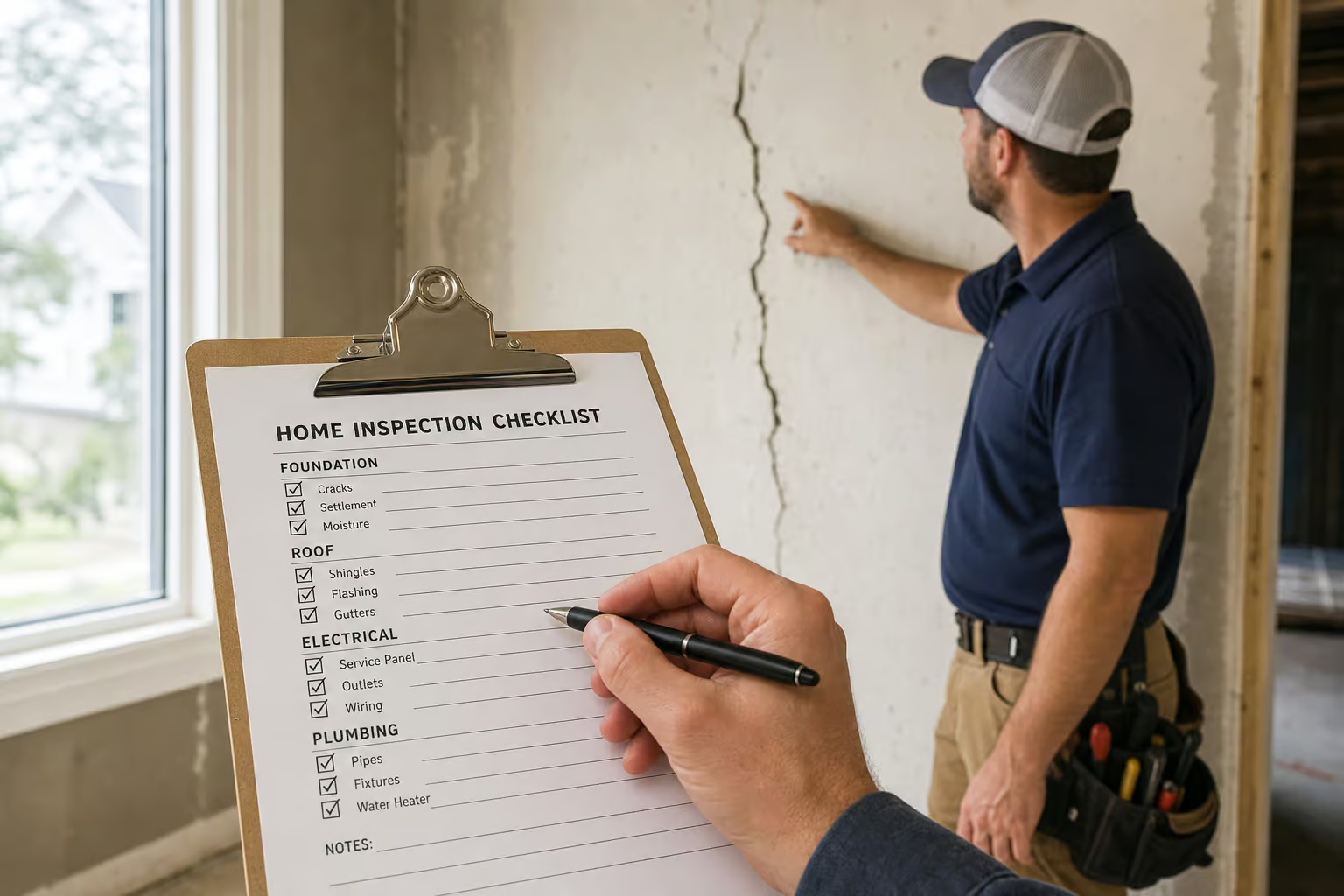
- Always include contingencies. Even with cash, don’t skip the home inspection, appraisal, or lien check. You’re paying cash, not skipping due diligence.
- Get homeowners insurance. Technically not required with cash, but one bad storm and you’re out everything. Don’t be that person.
The cash purchase process itself is simpler: assess your finances, research the property, make an offer, get an inspection, verify the appraisal, check for liens, then close. Cash is exchanged via wire transfer or cashier’s check — no briefcases of money involved.
The verdict — why a mortgage is the smarter financial move for most buyers
Revisit those numbers: $6.58 million in potential growth versus $963,000 in total mortgage cost. That’s a gap of $5.6 million.
According to a 2024 Zillow survey, 70% of homebuyers use a mortgage to finance their purchase. It’s not because they can’t afford to pay cash — it’s because they understand that leverage and liquidity are powerful tools.
If you’ve got the discipline to invest the difference, a mortgage is the smarter bet mathematically.
Before you write that big check, run the numbers. Think about what that cash could be doing for you instead of sitting in a house. And then make the choice that’s right for your family — not just the one that feels safest in the moment.
Frequently Asked Questions
Do rich people pay cash for their homes?
Some do, but many wealthy buyers still use mortgages even when they could pay cash. The reason is opportunity cost: tying up millions in a house means losing the potential growth that money could earn if invested elsewhere. Leverage through a mortgage can actually amplify returns on both the property and the invested capital.
What is a disadvantage of paying with cash?
The biggest disadvantage is the massive opportunity cost: the cash you sink into a house stops working for you in the market. For example, $400,000 invested at a conservative 9% return could grow to over $6.5 million in 30 years, while a mortgage on that same amount costs less than $1 million total. You also lose liquidity, which can leave you house rich but cash poor.
How much cheaper can you get a house if you pay cash?
Cash offers can sometimes negotiate a lower purchase price because sellers value the certainty and speed of a no-financing deal. In competitive markets, a cash offer might beat out higher financed offers. One documented cash buyer saved about $150,000 off market price by combining a personal letter, dual agency, and a fast close.
Why is paying cash for a house a bad idea financially?
Because you’re giving up the chance to invest that money for a much higher return. The math shows that taking a mortgage and investing the difference can leave you millions ahead over 30 years. You also lose liquidity, which creates risk if an emergency or big expense comes up, and you miss out on the mortgage interest tax deduction.
What is the opportunity cost of paying cash for a house?
The opportunity cost is the growth you forgo by tying up your money in an illiquid asset. For a $400,000 cash purchase, that money could have grown to roughly $6.58 million over 30 years at a 9% annual return — while the mortgage on that same amount would cost about $963,000 total. That’s a difference of over $5.6 million.
Can you pay cash for a house and then get a mortgage later?
Yes, you can pay cash upfront and then do a cash-out refinance later if you decide you want liquidity or want to invest the money. This strategy buys you time to figure out the best use of your funds while still giving you the negotiating power of a cash offer. Just be aware you’ll still owe closing costs on the new mortgage.