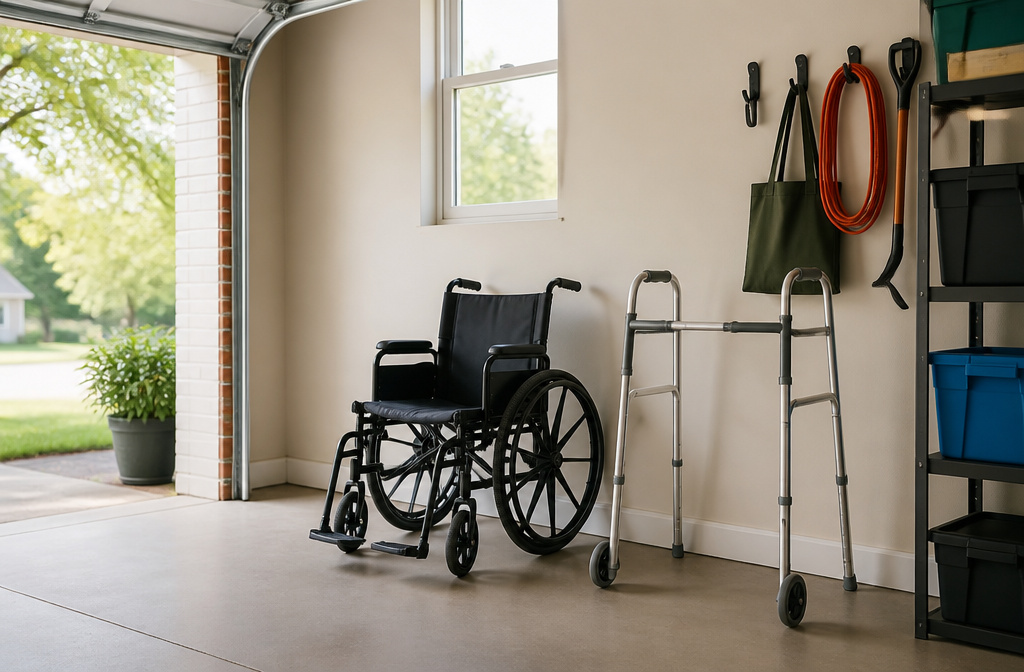
There’s a wheelchair in the corner of your garage, a shower chair by the door, and boxes of wound dressings, unopened gloves, and tube feeding formula you’re not sure what to do with.
You want these things to help another family. You also don’t want to spend your Saturday driving around to places that end up saying “sorry, we don’t take that.” I’ve been there. This guide is the research I wish I’d had — a straight-up directory of where your gear can actually go, who takes what, and who doesn’t. No fluff, no guilt, just the phone numbers and the honest caveats.
Key Takeaways
MedShare keeps millions of pounds of medical surplus out of landfills each year, sending unused supplies to clinics that lack resources in 35+ U.S. states and 120 countries.
St. Vincent de Paul in Clark County, Ohio, accepts wheelchairs, walkers, commodes, and unopened diapers — but turns away hospital beds entirely.
Animal shelters like Colony Cats and Dogs in Franklin County take surprising medical items: respiratory supplies, incubators, microscopes, and even washing machines.
Table of Contents
Why Donate? The Impact on People and the Planet
You might be wondering if your donation will actually reach someone who needs it — or just end up in a thrift shop back room. The answer is yes, it can, if you pick the right place.
Organizations like MedShare take surplus medical equipment that U.S. hospitals would otherwise trash and send it to clinics that can’t afford new gear. They’ve shipped things as small as individually packaged syringes and as large as X-ray machines. In the process, they keep millions of pounds out of landfills and incinerators. Healthcare is the second-largest source of waste in the United States, and the EPA has flagged medical waste as a serious environmental problem. So when you donate that walker instead of tossing it, you’re doing two good things at once—and if you are a professional caregiver, you might also consider home health aide insurance to protect yourself while you help others.
And it’s not just about the planet. Programs like Goodwill Easter Seals Medical Equipment Loans in Dayton and Springfield loan equipment out completely free of charge — they never sell a single donated item. One wheelchair can help multiple families over time, because people return it when they’re done. That’s real, tangible help.
Bottom line: One donation to a loan closet can help multiple families in sequence — items get returned and re-lent, not resold.
Where to Donate in Ohio (By County)
Here’s the heart of it. I’ve organized this by county so you can find the closest option. Call ahead — hours and current needs change. I’ve bolded organization names and any major restrictions you need to know.
Clark County
St. Vincent de Paul — 2425 E. High St., Springfield, OH 45503 | 937.325.9111
Accepts: wheelchairs, walkers, bedside commodes, shower chairs, scooters, unopened packages of diapers, personal care items. Does not take beds. That’s a common pattern — beds are hard to clean and come with liability issues.
Community Mercy Home Medical Equipment — 1702 N. Limestone St., Springfield, OH 45503 | 937.390.9990
Accepts: walkers, wheelchairs, CPAP and BiPAP machines — ResMed brand only for the sleep apnea stuff. Call to confirm what they’re currently taking.
Second Harvest Food Bank — 937.323.6507
Accepts: Ensure, Boost, thickening items, personal care, diapers. Great if you have unopened nutritional supplements.
Clinton County
Clinton County Veteran Services — 937.382.3233
Call and ask what they need right now — it changes.
First Christian Church — 937.382.2251
Accepts: Ensure, Boost, thickening agents, personal care items.
Franklin County
Colony Cats and Dogs — 614.570.0471 | Email donate@colonycats.org before bringing supplies
Yes, a pet organization. They accept an incredibly wide range: underdressing, respiratory supplies, diabetic supplies, needles, syringes, thermometers, saline or lactated Ringer’s solution and tubing, OTC medications, gloves, cleaning products, linens, towels, alcohol, hydrogen peroxide, q-tips, cotton rounds, paper towels, hand sanitizer, empty pill containers, sharps disposal containers, lubricant/Vaseline, medical tape, Chlorhexidine, Epsom salts, antibiotic gels, ear cleaner/treatment, Silver Sulfadiazine Cream — plus incubators, microscopes, centrifuges, fridges, microwaves, washing machines and dryers. Basically, if it’s medical and still usable, they’ll probably take it.
Helping Hands — 614.837.4568
Accepts: hospital beds, bedside commodes, transfer benches, shower chairs, canes, commode risers, walkers, commode safety rails, crutches, disposable diapers/briefs, bed pans.
Hamilton County
Matthew 25 Ministries — 513.793.6256
Accepts: wheelchairs, walkers, crutches, bedside commodes, shower chairs, Hoyer lifts, diapers (even opened packages), underpads, dressings, respiratory supplies including trach supplies and suction catheters, CPAP and BiPAP, ostomy supplies, braces and orthopedics, needles, syringes, glucometers and test strips, urinary catheters, tube feeding formula and feeding bags, personal care items, blood pressure supplies and stethoscopes, thermometers, gently used scrubs. Very flexible on opened packages — call ahead to confirm.
Licking County
Medical Loan Closet — 740.366.7438
Accepts: hospital beds, wheelchairs, bedside commodes, transfer benches, shower chairs, canes, commode risers, walkers, commode safety rails, crutches, disposable diapers/briefs, bed pans. They loan items out, so your donation keeps helping long-term.
Miami County
GIVE Medical Ministry — 937.473.5195
Accepts: hospital beds, wheelchairs, walkers, respiratory equipment, diapers (opened packages accepted), dressings, diabetic supplies, ostomy supplies, tube feeding formula and supplies, orthopedics, lift and transfer aids, bathroom safety items, OTC medications, personal care items. Very comprehensive.
New Path — 937.669.1213
Accepts: same wide range as GIVE — hospital beds, wheelchairs, walkers, respiratory equipment, diapers (opened okay), dressings, diabetic supplies, ostomy supplies, tube feeding formula and supplies, orthopedics, lift and transfer aids, bathroom safety items, OTC medications, personal care items.
Health Partners Free Clinic — 937.332.0894
Accepts: non-controlled prescription medications, OTC meds, diabetic supplies, needles, syringes, gloves, personal hygiene and care items, food.
Montgomery County
The Foodbank — 937.461.0265 ext. 18
Accepts: tube feeding formulas, baby food, nutritional supplements (Boost, Ensure).
SICSA — 937.294.6505 ext. 19
Another pet organization. Accepts: pill bottles without labels, unopened lactated ringers, exam gloves, paper towels.
Reach Out Clinic — 937.258.2000
Accepts: wheelchairs, walkers, unopened packages of diapers.
Access Center — 937.341.5202
Accepts: wheelchairs, walkers, bedside commodes, shower chairs, hospital beds, scooters, unopened packages of diapers and pull-ups.
Goodwill Easter Seals Medical Equipment Loans — 937.528.6357 (Dayton), 937.399.9013 (Springfield)
Accepts: wheelchairs, walkers, crutches, bedside commodes, nebulizers, CPAP and BiPAP, diapers (partial packages accepted). Items are loaned free of charge, not sold. The practical question is can you donate medical supplies to Goodwill? This is a loan closet, not a thrift store — your donation stays in the community.
St. Vincent de Paul (Montgomery County) — 937.222.7349
Accepts: dressings, diapers (opened packages accepted), personal care items.
Dayton Ostomy Club — Contact Tom Suman at 937.299.0143 or Betty Robinson for ostomy supplies.
Morrow County
H.E.L.P. (Healthcare Equipment Lending Program) — accepts all ostomy supplies.
Warren County
Caring Partners — 601 Shotwell Dr., Franklin, OH 45005
Accepts: dressings, personal care items, diapers (unopened preferred), ostomy supplies, respiratory supplies, CPAP and BiPAP.
Wayne County
CAMO (Central America Medical Outreach) — 322 Westwood Ave., Orrville, OH 44667 | 330.683.5956
Accepts: wound supplies, unused needles, gloves, Depends, Chux, unused Foley catheter supplies, glucose testing strips, walkers, crutches, canes, collapsible wheelchairs, prostheses, hearing aids, eyeglasses.
OneEighty — 104 Spink St., Wooster, OH 44691 | 330.263.6021
Hygiene items only. Don’t bring equipment here.
People to People Ministries — 454 E. Bowman St., Wooster, OH 44691 | 330.262.1662
Accepts: household items, food, cleaning products — not medical equipment.
Salvation Army, Wooster Corps — 437 S Market St., Wooster, OH 44691 | 330.264.4704
Accepts: food, clothing, Depends, Chux, bath and shampoo packs, blankets, linens, towels, personal hygiene items, anything in good condition.
Viola Startzman Free Clinic — 1874 Cleveland Rd., Wooster, OH 44691 | 330.262.2500
Accepts: gloves, insulin syringes, lancets, glucometers, testing strips — specific diabetic supplies.
While most organizations accept wheelchairs and walkers, hospital beds are only accepted by dedicated medical ministries like GIVE and New Path, and CPAP machines are often brand-specific (e.g., ResMed only at Community Mercy).
National & International Options: MedShare and Similar Programs
If you don’t have a local option that fits, or if you’ve got a hospital bed or imaging equipment that local thrift stores can’t handle, MedShare is a strong bet. They were founded in Atlanta in 1998 and now work in 120 countries, plus domestic clinics in 35 U.S. states — including at least 27 in Georgia alone.
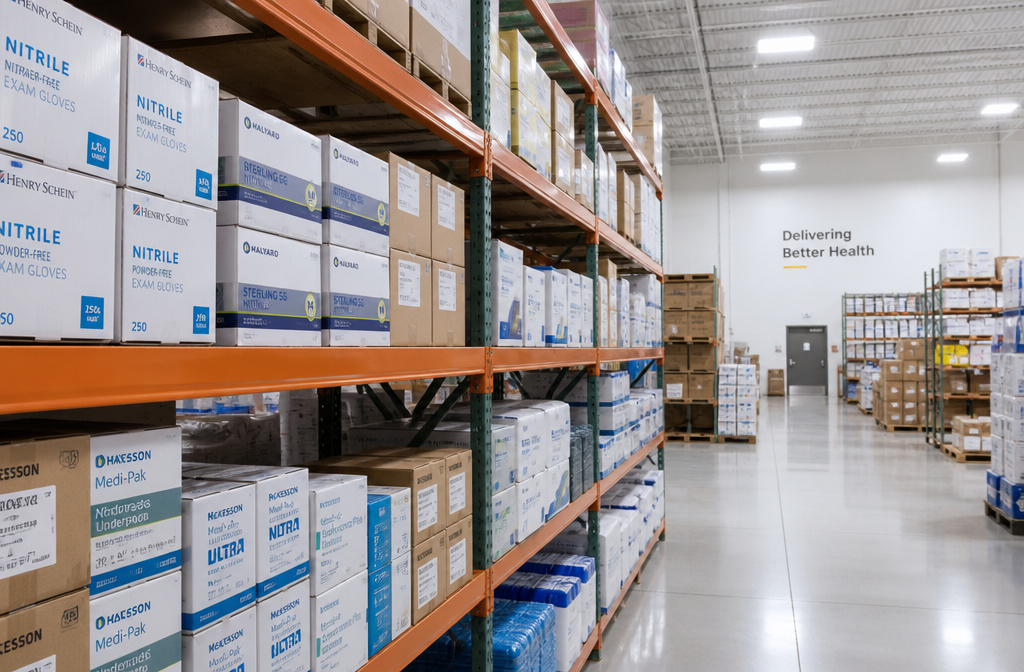
What they take: Unused, unexpired medical surplus supplies; used biomedical equipment; hospital beds; exam tables; imaging and surgical equipment; non-expired consumable medical supplies; durable medical equipment that’s new or gently used. If you’re wondering where to donate used medical equipment near me, they follow WHO and U.N. guidelines, so your stuff goes where it’s actually needed.
What they don’t take: Pharmaceuticals (hard no) and returned supplies — if you opened something and didn’t use it, they can’t accept it due to regulations.
The donation process: Check their Supplies Guidelines and Equipment Guidelines on the website, then fill out the Donation Offer Form. For families managing a loved one’s estate, a gentle guide on what to do with medical equipment when someone dies explains how to sort, clean, and donate items with dignity. Email meddonations@medshare.org with questions. It requires more steps than dropping off at a local charity, but they make it straightforward.
One cool example: MedShare got ultrasound machines from the medtech company BD — machines that were off the market because newer models had come out. They sent those ultrasounds to 30 states, trained clinic staff remotely on how to use and maintain them, and three of the machines ended up in Georgia clinics. Bethesda Community Clinic is putting one on a women’s health van that launches this spring. The Macon Volunteer Clinic uses theirs for IUD placement and checking for blood clots. That’s the kind of long-term impact a donation can have.
Only about 10% of MedShare’s resources go to U.S. clinics right now, but CEO Stacey Koehnke told Healthbeat that COVID made them realize how similar domestic and international needs are. They’ve been prioritizing U.S. work for the last 18 months and plan to grow that share. Your gear will be used — whether it ends up in rural Georgia or a hospital in Ukraine.
Field note: MedShare is one of the few options that can accept large imaging and surgical equipment — worth a call if local thrift stores turned you away, but for smaller items you can find a where to donate unused medical supplies near me free drop-off.
Hospital & Nursing Program Partnerships: A Route You Might Not Have Considered
Here’s an angle most people don’t think about: your local hospital or nursing school might want your equipment — especially if it’s the kind of stuff they use to train students.
Example that made me smile: Baxter Health Fulton County Hospital in Mountain Home, Arkansas, had an anonymous donor who gave them money for new IV pumps. So the hospital upgraded, and instead of tossing the old pumps, they donated two of them (worth about $500 each) to the ASU-Mountain Home Nursing Program and a local primary care office. Janet Caldwell, the nursing instructor, had reached out to ask if they had any pumps the students could practice on. The hospital said yes.
The hospital’s chief nursing officer, Erika Sneed, said supporting nursing education helps prepare the next generation of healthcare workers. It’s a win-win.
How to try this: Call your local hospital’s supply chain or materials management department. Or contact a nearby nursing or allied health program directly. Don’t assume they’ll say no — many programs are desperate for training equipment.
Senior Services & Free Loan Closets
If you really want your donation to go to someone who can’t afford to buy equipment, look for a loan closet. These are programs that lend items out for free — no charge, no resale.
FSL (Foundation for Senior Living) — based in Phoenix, founded in 1974. They run the Kindness Closet for medical supply donations. Call 602-406-2374 to arrange drop-off. They’re most in need of wheelchairs, shower chairs, 3-in-1 commode chairs, and walkers.
They also need transport wheelchairs, electric wheelchairs, electric scooters, hospital beds, bedside commodes, toilet seat risers, adult briefs, bed pads, slide boards, adapted equipment, wound care supplies, and blood pressure monitors. FSL also runs the ACTIVATE Program, which gives patients supplies when they leave the hospital — so your donation might help someone get home safely after a stay.
Goodwill Easter Seals Medical Equipment Loans in Dayton and Springfield — we covered them above, but it’s worth repeating: they loan everything free. Call 937.528.6357 (Dayton) or 937.399.9013 (Springfield). They take wheelchairs, walkers, crutches, bedside commodes, nebulizers, CPAP/BiPAP, and even partial diaper packages.
Patients often return items like wheelchairs when they no longer need them, so one donation can help multiple families over time. That’s a really satisfying feeling.
What They Accept (and What to Leave Out)
To save you a wasted trip, here’s a quick cheat sheet based on what I found across all these organizations.
Almost any program will take:
- Wheelchairs (manual and transport)
- Walkers
- Bedside commodes
- Shower chairs
- Scooters
- Crutches
- Canes
Needs a specific type of organization:
- Hospital beds — accepted by MedShare, GIVE, New Path, Medical Loan Closet, Helping Hands, Access Center, and FSL. Rejected by St. Vincent de Paul in Clark County and most general thrift stores.
- CPAP/BiPAP — accepted at Community Mercy (ResMed only), Goodwill Easter Seals, Matthew 25, Caring Partners, and MedShare.
- Respiratory supplies (trach supplies, suction catheters) — Matthew 25, Colony Cats, CAMO, Caring Partners.
- Ostomy supplies — Dayton Ostomy Club, H.E.L.P., Matthew 25, GIVE, New Path.
- Tube feeding formula and nutritional supplements — The Foodbank, Second Harvest, First Christian Church, GIVE, New Path, FSL.
- Opened diaper packages — Matthew 25, GIVE, New Path, St. Vincent de Paul Montgomery County accept opened; others prefer unopened.
Cannot be donated (or very few places take):
- Pharmaceuticals (exception: Health Partners Free Clinic accepts non-controlled prescriptions; MedShare refuses)
- Returned supplies (anything opened that was supposed to be sterile)
- Recalled items
- Opened sterile supplies unless explicitly stated (call ahead)
The hospital bed pattern is the biggest surprise. Many smaller charities refuse them because cleaning and liability are a pain. But dedicated medical ministries and loan closets are set up for that — always call first.
How to Prepare Your Donation
You don’t need to do anything elaborate, but a little prep makes a big difference.
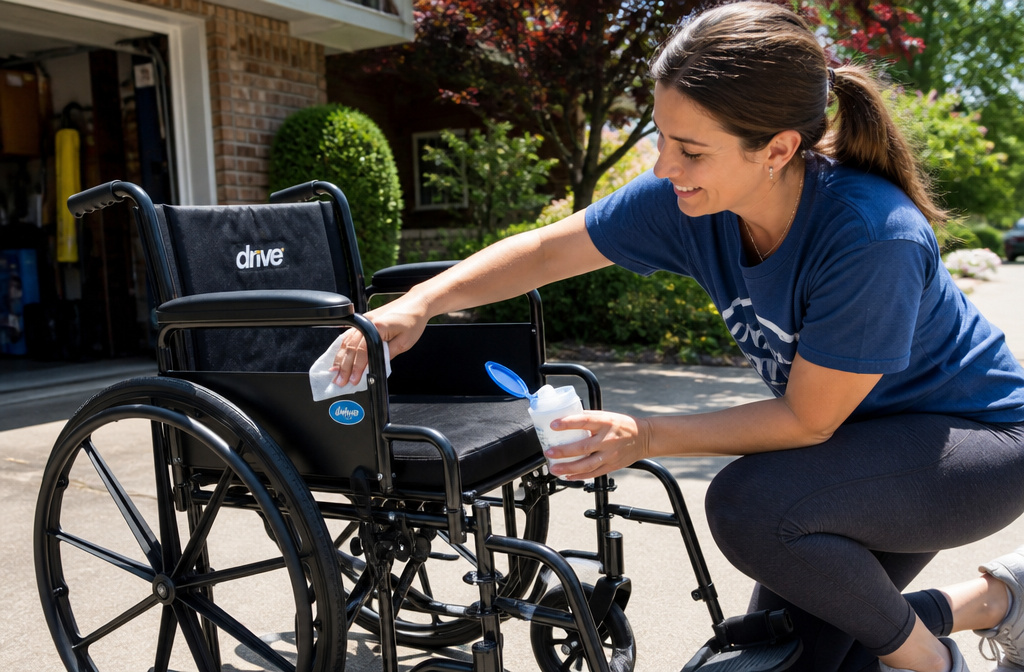
- Wipe everything down with a disinfectant. No one wants to handle someone else’s grime.
- Check that the equipment is functional and safe to use. Make sure wheelchairs roll and brakes lock. Check that batteries charge if applicable. If it’s broken, let them know — some places can repair, others can’t.
- Remove any personal information from devices like blood pressure monitors or CPAP machines before donating. Patient ID tags and stored data should be wiped clean.
- Pack securely. If you’re donating opened boxes of supplies, tape them shut so nothing spills.
- For MedShare: Review their Supplies Guidelines and Equipment Guidelines online, then fill out the Donation Offer Form. Email meddonations@medshare.org if you have questions.
- For Goodwill Easter Seals: Call the Dayton (937.528.6357) or Springfield (937.399.9013) location to arrange drop-off or ask about the loan program.
- For Colony Cats: Email donate@colonycats.org before bringing supplies — they’ll tell you what they’re currently accepting.
- For FSL’s Kindness Closet: Call 602-406-2374 to arrange drop-off.
- Always call ahead. I cannot emphasize this enough. Policies change, someone’s on vacation, the donation bin is full — a five-minute call saves you an hour drive.
And ask for a donation receipt for your taxes. I’m not an accountant, but a receipt is standard practice.
Unexpected Places That Welcome Medical Supplies
You might not think of these, but they’re genuine lifesavers for stuff that human-focused charities won’t touch.
Colony Cats and Dogs in Franklin County — we listed them above, but they deserve a spotlight. They take incubators, microscopes, centrifuges, respiratory supplies, saline and lactated Ringer’s, tubing, and pretty much any medical supply that could help a sick animal. If you’ve got boxes of wound dressings or unopened saline bags, email donate@colonycats.org.
SICSA in Montgomery County — another pet organization that takes pill bottles (labels removed), unopened lactated ringers, exam gloves, and paper towels.
The Foodbank (Montgomery County) — feeding people, yes, but also accepting tube feeding formulas, baby food, and nutritional supplements. If you have unopened Ensure or Boost, this is a great option.
Nursing programs — we talked about the ASU-Mountain Home story above. IV pumps, mannequins, exam tables, call your local community college’s nursing department and ask if they accept training equipment.
The pattern is simple: families stockpile a lot of medical supplies during a caregiving season, and then you’re left with boxes of unopened wound dressings, respiratory tubing, and saline that nobody seems to want. Animal shelters and food banks are a practical safety net most people don’t know about.
A Note on Timing and Emotion
That wheelchair meant your loved one could still get to the kitchen table. Those boxes of wound supplies were part of your daily routine for months. Sorting through the equipment can hit you harder than you expect. It’s not just stuff.
Take the time you need. There’s no rush. But I’ll say this: equipment in good condition is most useful soon after the need ends. A walker that sits in your garage for two years might still work, but the person who could have used it last year has already managed without. Consider this: Goodwill Easter Seals loans equipment free of charge, so one wheelchair can help several families over time — your donation multiplies its impact.
If the task feels too heavy, ask a friend or neighbor to help with the logistics. You don’t have to do it alone. And when you finally hand that wheelchair over to someone who will loan it to a stranger for free — that’s a pretty meaningful final act of caregiving.
Closing: One Family’s Surplus, Another’s Lifeline
A single walker can restore someone’s mobility. A box of unopened wound dressings can stock a free clinic for a month. Every item in your garage has a home somewhere — you just need to know where to look.r a month.
Start with one call. Or one email. Or just load the car and head to the nearest place on this list. The family that receives your gear won’t know your name, but they’ll feel the care behind it. That’s enough.
Frequently Asked Questions
Where can you donate unused medical equipment?
You can donate to organizations like MedShare, which sends surplus to clinics in 35+ U.S. states and 120 countries, or to local medical loan closets that lend items free of charge. Many county-based charities, animal shelters, and nursing programs also accept specific equipment — but always call ahead because policies on items like hospital beds and opened supplies vary widely.
Why won’t some charities accept hospital beds?
Hospital beds are difficult to clean thoroughly and come with liability risks, so many general thrift stores and smaller charities like St. Vincent de Paul in Clark County refuse them entirely. Dedicated medical ministries such as GIVE Medical Ministry, New Path, MedShare, and loan closets like the Medical Loan Closet in Licking County are specifically set up to handle the cleaning and liability issues, so those are your best bet.
What’s the difference between a medical loan closet and a thrift store donation?
A medical loan closet lends equipment to people in the community completely free of charge, and items get returned and re-lent to new families over time — your donation never gets resold. A thrift store donation is sold to generate revenue, which means the equipment goes to a buyer rather than directly to someone who can’t afford it.