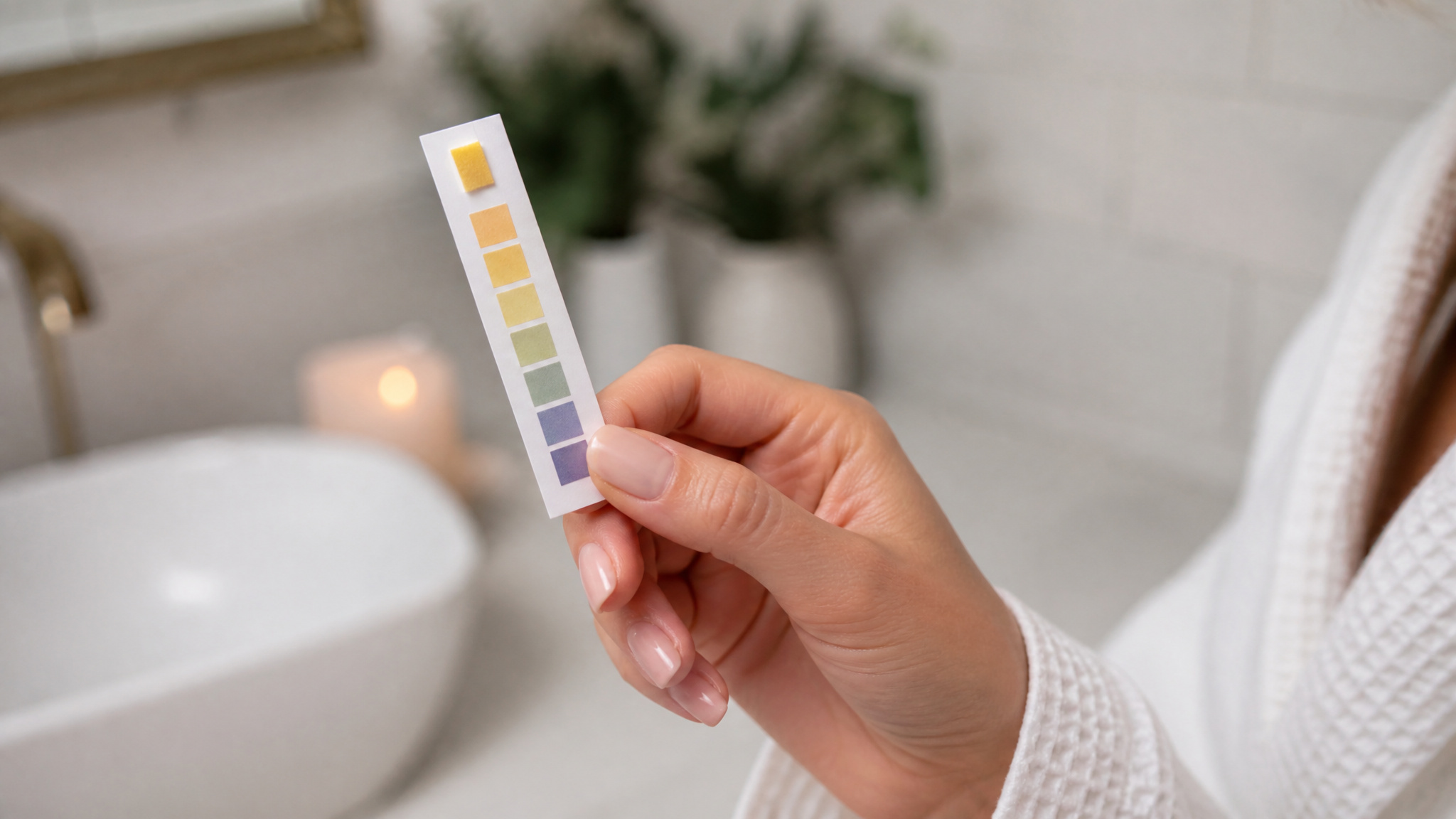
Something’s off down there. Itching, burning, a discharge that’s not quite right. You’re fairly sure it’s not an emergency, but you’re not sure enough to shrug it off, and the earliest gynaecologist appointment is two weeks out.
This is the moment a lot of women start googling “vaginal health online” at midnight, sometimes with questions they’d rather not ask out loud.
Here’s the short version: a vaginal home test is a self-administered screening tool that detects markers of vaginal infection, most commonly pH, from a sample you collect yourself. It is not a definitive diagnosis. It’s a way to get information faster and more privately than the medical system usually delivers it.
And here’s the part that makes reading this worthwhile: even trained doctors misdiagnose vaginitis 40 to 50 percent of the time. These kits fill a gap in a diagnostic landscape where misdiagnosis is common.
Key Takeaways
pH strips (like the FDA-registered Hygeia Touch kit) flag bacterial vaginosis or trichomoniasis when pH reads above 4.5, but they can’t detect yeast infections at all, because yeast doesn’t change vaginal pH. A “normal” result does not mean you’re clear.
Doctors misdiagnose vaginitis 40 to 50 percent of the time, and only 33.7 percent of people who self-treat with over-the-counter antifungals find relief. Screening at home can redirect you to the right care before you waste a week on the wrong treatment.
The three test types break down by price and precision: pH strips cost $7 to $13 and answer in 2 minutes; lab-based mail-in tests run around $159 and detect yeast plus specific pathogens in 2 to 10 days; microbiome tests like Evvy screen 700-plus microbes but aren’t FDA-approved and come with real limits.
Table of Contents
What a vaginal home test actually is
Let’s start with the burning question: can a vaginal home test detect yeast? No. At least, the most common kind can’t. That’s the most important thing to understand about these products, and it’s also the reason so many women end up confused.
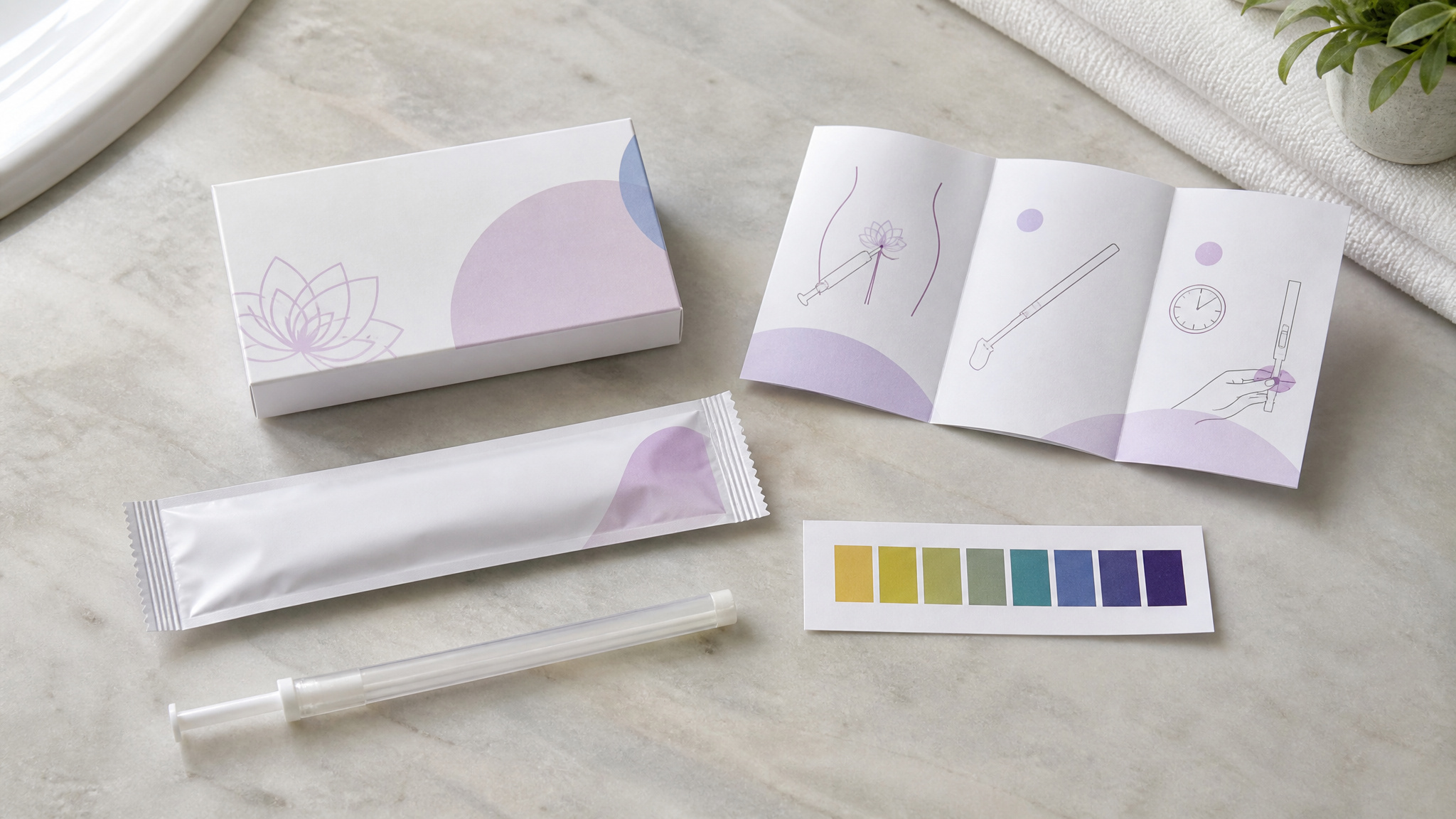
Most home tests work by measuring the acidity of your vagina. A healthy vaginal pH runs between 3.8 and 4.5. That slightly acidic environment is maintained by Lactobacillus bacteria, especially L. crispatus and L. gasseri, which produce lactic acid.
Bacterial vaginosis and trichomoniasis both push pH above 4.5. That’s the red flag a pH test is designed to catch.
But vulvovaginal candidiasis, which is the medical name for a yeast infection, produces almost no change in vaginal pH at all. A yeast infection leaves your pH sitting right around 4.0 to 4.7, usually under 4.5. So a pH test that reads “normal” can’t tell the difference between a healthy vagina and one with a yeast infection.
That’s why these tests are screening tools, not diagnostic tools. They can rule some infections in or out, but they can’t tell you exactly which one you have.
Every at-home vaginal test on the market falls into one of three categories: pH strips, lab-based mail-in tests, and microbiome DNA tests, and if you’re curious about which option best suits your needs, a vaginal home test can help clarify your unique flora. They work differently, cost differently, and tell you very different things.
pH strips: the most common type
The most accessible and affordable option is the pH strip. The mechanics are simple. You use a swab or applicator to collect a sample from the outer third of the vagina, and a color-changing indicator reacts to the acidity. That’s the whole technology.
The Hygeia Touch Self-Testing Kit is a good concrete example. It uses a vaginal applicator with a bromocresol green pH indicator embedded in a biocompatible grip. The design includes a safety petal stopper and a double-layer structure specifically to prevent you from inserting it too far. It’s registered with the US FDA, which is worth noting: registered, not approved.
It has a design patent (US D869,679S, if you’re the type who likes to verify).
Basic strips from brands like Natureland run $7 to $13 and give you a reading in about 2 minutes. The tradeoff is that you’re getting a pH number and nothing else. No pathogen identification, no confirmation, no nuance.
What the result actually tells you
Here’s the logic, and it’s worth getting clear on because it affects what you do next.
If your pH reads above 4.5, that flags bacterial vaginosis or trichomoniasis. Both of those infections raise pH past that threshold. This is the red-flag zone, and the next step is a doctor’s visit, because there are no over-the-counter treatments for either condition.
If your pH reads at or below 4.5, you’re in the ambiguous zone. That range includes a healthy vagina and a yeast infection. The test cannot tell you which one you’re looking at. As one study put it, “a healthy vaginal pH typically falls between 3.8 and 4.5,” and yeast infections don’t push it outside that window.
So the most important takeaway of this entire article: a normal pH reading does NOT rule out yeast. If you’re itchy, uncomfortable, and your test comes back looking fine, you could still have vulvovaginal candidiasis. The test just can’t see it.
Why home tests exist in the first place
To understand why these products are everywhere, you need to know about a decision the FDA made back in 1990. That was the year vaginal antifungal medications went over-the-counter. Suddenly, millions of women could self-diagnose and self-treat without ever seeing a clinician.
And that’s exactly what they did. But here’s the problem: self-diagnosis of Candida is wrong more than half the time. When women guess that their symptoms are yeast and treat accordingly, they’re frequently guessing wrong. A study by Ferris and colleagues found that only 33.7 percent of people using OTC antifungal self-treatment actually found effective relief. That means roughly two out of three women were treating something they didn’t have, or missing an infection that needed a different approach entirely.
The products are on the shelves, the symptoms are confusing and overlapping, and the clinical system isn’t always accessible or affordable. But the consequences of guessing wrong are real. Using OTC antifungal drugs for the wrong condition disrupts the normal vaginal environment, which can lead to more serious complications down the line.
This is where at-home pH testing earns its keep. A $10 test that takes two minutes can redirect you away from ineffective self-treatment and toward appropriate care. That’s public health value, even if the test itself only measures one thing.
How accurate are they, really?
It depends, and the honest answer starts with an uncomfortable truth about clinical diagnosis: it’s impossible to correctly diagnose the cause of vaginitis based solely on symptoms or the color of discharge. Even trained physicians fail to make the correct diagnosis in approximately 40 to 50 percent of patient examinations.
Doctors get this wrong half the time. It means vaginitis is hard to diagnose from the outside in.
Laboratory diagnosis is necessary for accurate identification, and yet many clinics aren’t even equipped for microscopic diagnosis. The gold standard for bacterial vaginosis involves clinical criteria (the Amsel criteria) and a Gram stain with Nugent scoring, and even those depend on who’s reading them.
This is the context for the accuracy numbers on home tests. The Hygeia Touch kit, which is one of the few with published clinical validation, performed with over 88 percent accuracy in a study at Pojen Hospital in Kaohsiung, Taiwan. The study, approved by a hospital review board, involved 50 symptomatic women aged 19 to 68 with an average age of 36, including 14 pregnant women. The results showed over 88 percent overall accuracy, 89 percent sensitivity, and 83 percent specificity, with a false negative rate of about 6.1 percent.
Let me translate those statistics: sensitivity means how often the test catches an infection that’s actually there. It catches about 9 out of 10. Specificity means how often it correctly says “no problem” when there isn’t one. It’s accurate about 8 out of 10 times. The false negative rate of 6.1 percent works out to roughly 1 in 16 real infections that the test misses entirely.
Subgroup analysis in the same study showed sensitivity of 86.7 percent and specificity of 88.6 percent. The confidence intervals were wide, which reflects the small sample size, but the numbers are respectable for a home screening tool.
A note on how the researchers evaluated it: the study only included women with symptoms, not a general population screen. That’s actually the right way to think about these tests. They’re not for random checking. They’re for when something feels off and you need a fast signal.
Satisfaction numbers were strong too. Between 96 and 100 percent of participants rated the test “high” or “extremely high” across all measures, including 100 percent for design, instructions, ease of use, and safety. The pregnant subgroup gave 100 percent positive responses across every question.
When a “normal” result isn’t an all-clear
You test, the result looks normal, you figure you’re fine, and you move on with your life. But yeast doesn’t move the pH needle, remember? Persistent symptoms with a normal pH reading can still mean vulvovaginal candidiasis.
It can also mean aerobic vaginitis, a less common condition caused by E. coli or streptococcus bacteria. A pH test can’t see any of that.
That’s why these are screening tools, not diagnostic endpoints. A “normal” reading with symptoms that persist still warrants clinical attention. The false negative rate of about 6 percent means the test can miss real infections. It’s not a replacement for your doctor.
The three types of vaginal home tests, compared
every at-home vaginal test falls into one of three categories, and they differ in cost, speed, accuracy, and regulatory status. Prices run from about $7 to over $200, and knowing what you’re paying for matters.
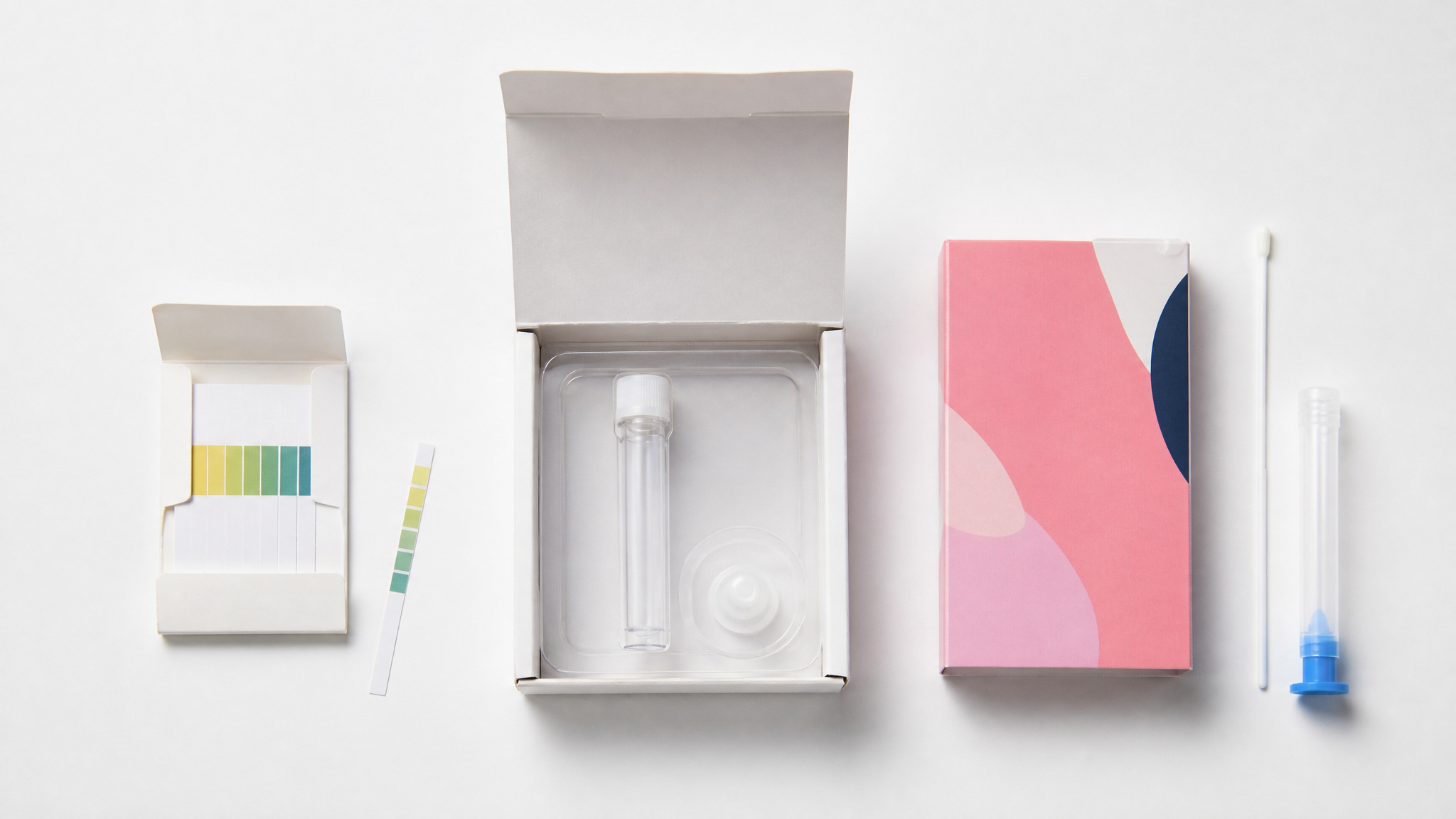
pH strips are the cheap, fast, screening-only option. Named examples include the AZO Vaginal pH Test, the Hygeia Touch Self-Testing Kit, and Natureland’s test kit. They cost $7 to $13, deliver results in about 2 minutes, and detect pH only. The Hygeia Touch is FDA-registered, which is the strongest regulatory claim in this category.
The limitations: they cannot detect yeast, and they cannot specify which infection you have. They’re a first step, not a finish line.
Lab-based mail-in tests are the more accurate, slower option. Wisp offers a Bacterial Vaginosis and Yeast Test, MyLab Box has a V-Box 5-Panel, and Winx sells a Vaginal Health Test & Treat kit that includes a telehealth consultation. These run about $159 for the Wisp or MyLab Box options, with a range of roughly $50 to $200 depending on the panel. Turnaround is 2 to 10 days, with MyLab Box promising results in 2 to 5.
The method is NAAT (nucleic acid amplification testing) or culture, and many use labs with CLIA or CAP certification. Their key advantage: they can detect specific pathogens, including yeast, which pH strips can’t touch.
Microbiome tests are the broadest and most controversial category. Evvy’s Vaginal Microbiome Test screens for over 700 microbes and costs $159. Juno Bio, Tiny Health, Daye, and Beyond BV are also in this space. These use DNA sequencing to map your full microbial community.
The critical caveat: none of them are FDA-approved, and experts actively debate their clinical utility. The potential for harm comes from anxiety over uninterpretable results, unnecessary treatment, and misreading what the scores actually mean.
How to use a pH test kit at home
You’ll collect a sample from the outer third of your vagina, read a color change on the indicator, and interpret the pH value. You do not need to go deep, and the devices are designed to prevent you from over-inserting. The Hygeia Touch kit, for example, has a safety petal stopper and a double-layer structure specifically for that purpose, though some women also explore vaginal tightening options for related intimate wellness concerns.
Insert the swab or applicator just far enough to collect a sample from the outer third of the vagina. The color-changing pH indicator reacts to the sample’s acidity, which is a helpful metric when considering does size matter to a woman. Wait the strip’s specified time, usually around 2 minutes. Then compare the color to the chart.
Interpretation goes like this: pH above 4.5 means a positive screen for bacterial vaginosis or trichomoniasis. pH at or below 4.5 means you’re in the normal-to-yeast zone, and the test can’t distinguish between those, though maintaining a healthy pH balance, as discussed in cotton vs. nylon underwear, plays a key role in supporting that normal vaginal environment.
One practical tip: read the color in good lighting. The difference between pH 4.5 and 5.0 can be genuinely hard to distinguish, and that single point of difference changes your entire interpretation. Squinting at the strip in a dim bathroom is how mistakes happen.
What your result means, and what to do next
The decision tree has two branches.
If your pH reads above 4.5: you’ve screened positive for bacterial vaginosis or trichomoniasis. See a doctor. There are no over-the-counter treatments for either condition, so a drugstore run isn’t going to solve this. You need a prescription.
If your pH reads at or below 4.5 with symptoms: you’re in the ambiguous zone. It could be yeast, or it could be nothing worth treating. You can consider an OTC antifungal if the symptoms match a typical yeast infection, but if you’re unsure or symptoms persist, see a clinician to accurately diagnose what’s going on.
If symptoms persist despite a normal pH reading: yeast is still on the table. The pH doesn’t change with yeast infections, so clinical evaluation is needed. Don’t dismiss your symptoms just because the strip looked fine.
If you’re pregnant: any abnormal result warrants prompt OB care. The Hygeia Touch study included 14 pregnant women with high satisfaction scores, which suggests self-collection is feasible during pregnancy. But abnormal results always trigger a medical follow-up in that situation.
When to put down the test and call a doctor
Home tests have limits, and knowing where they end is as important as knowing what they can do.
The risk list is short: false negatives and false positives, misdiagnosis, delayed treatment, anxiety, and, for microbiome tests specifically, a lack of FDA approval that leaves the clinical meaning of results unclear.
Bacterial vaginosis has a 50 to 80 percent recurrence rate. If you keep getting this infection, you need clinical supervision, not another home test. Recurrent infections can spiral into more serious issues if they’re not managed properly.
Escalate if symptoms persist despite normal-looking results, if you’re pregnant, or if a symptom is new and different from your usual pattern.
Lab-based home tests like Wisp and MyLab Box fill the gap between pH strips and in-person care. They’re more precise, they catch yeast, and some even route you to telehealth treatment. Clinical evaluation remains the standard for complicated or recurring cases.
The microbiome test debate
This is the most interesting and unsettled corner of the home-testing market.
Priyanka Jain, the CEO of Evvy, and co-founder Hana Janebdar argue these tests fill a real gap created by decades of under-researched women’s health. The evidence for that argument includes people finding answers. Farrah, a 29-year-old dancer from Ohio, used the Neueve test to self-diagnose aerobic vaginitis after years of doctors dismissing her symptoms. Kayla Barnes-Lentz used a home test to track her protective bacteria score rising from 97 percent to 100 percent after adding probiotics, documenting a health improvement.
Jacques Ravel, a leading researcher in the vaginal microbiome field, notes that bacterial vaginosis has had no new treatment in 50 years. These tests, he argues, promise more than the science can currently deliver. They’re not FDA-approved, and the scores and rankings they produce lack validated clinical significance. The potential for harm: anxiety from results you can’t interpret, unnecessary treatment prompted by a scary-looking number, and obsessing over metrics without clinical guidance.
Bryan Johnson posted his girlfriend Kate Tolo’s Tiny Health report, which scored 100 out of 100 and placed her in the top 1 percent, on X. That turned a medical diagnostic into a status symbol. Meanwhile, the r/healthyhoohah subreddit has over 100,000 members sharing and interpreting results without any medical supervision.
The honest position: these tests offer empowerment for some people and anxiety for others. The science isn’t settled, and treating them as gospel is a mistake.
Why these tests are everywhere now
It’s a response to a healthcare system that has historically under-served women.
Consider the timeline. Women were not legally required to be included in clinical trials until 1993. That’s not ancient history. That’s within living memory.
Bacterial vaginosis has had no new medication in 50 years, according to Ravel.
Home tests offer autonomy, privacy, and convenience, especially for women like Farrah, whose symptoms were ignored for years. When the system doesn’t listen, people find workarounds.
COVID-19 pushed telemedicine into the mainstream, and home tests provide the objective data point that makes a remote consultation useful: you can’t do a pelvic exam over video, but you can read a pH result.
It’s a patient-led workaround, not a marketing phenomenon.
The bottom line
For most people, a pH strip is the right first screen. It’s under $15, gives you a result in 2 minutes, and in the Hygeia Touch study it flagged elevated pH with over 88 percent accuracy. Bacterial vaginosis and trichomoniasis, which together account for roughly 60 percent of vaginitis cases, both push pH above 4.5, so the test catches what matters most.
Lab-based tests are the more definitive at-home option if you need to identify yeast or specific pathogens. They cost more, typically around $159, and take 2 to 10 days. But they tell you what you’re dealing with.
Microbiome tests are not FDA-approved and should not be the basis for a diagnosis. They’re interesting, potentially empowering, and potentially anxiety-inducing. Treat them as exploration, not medicine.
Here’s the summary: these tests can’t tell you everything, but they can tell you something useful. They reduce guesswork, they prevent wasted OTC antifungal treatments, and they give you a concrete data point to bring to a telehealth visit or a doctor’s appointment.
They can’t reliably diagnose yeast. They can miss co-infections, which occur in 20 to 25 percent of symptomatic cases. And they can’t replace clinical evaluation for persistent or recurrent issues.
If your pH reads above 4.5, see a doctor. If it reads normal but you still feel terrible, trust your body, not the strip. Yeast is invisible to pH, and your symptoms deserve an answer.
Frequently Asked Questions
How do I tell if my pH balance is off female?
Common signs include unusual discharge, itching, burning, or a strong odor. A vaginal pH test can help: a reading above 4.5 may indicate bacterial vaginosis or trichomoniasis, while a normal pH doesn’t rule out a yeast infection, which doesn’t change pH.
How can I check my pH balance at home?
Use a vaginal pH test kit, which includes a swab or applicator to collect a sample from the outer third of the vagina. The color-changing indicator gives a pH reading in about 2 minutes. Compare the color to the chart: above 4.5 is elevated, while 3.8–4.5 is normal.
What does a positive BV test look like?
A positive BV test on a pH strip shows a pH reading above 4.5, often indicated by a color change on the strip. This flags bacterial vaginosis or trichomoniasis, but it’s not a definitive diagnosis—you’ll need a clinical test to confirm which infection you have.
Can a vaginal home test detect yeast infections?
No, standard pH strips cannot detect yeast infections because yeast doesn’t significantly change vaginal pH. A normal pH reading doesn’t rule out a yeast infection. For yeast detection, you’d need a lab-based test that checks for specific pathogens.
What’s the difference between pH strips and mail-in vaginal tests?
pH strips are cheap ($7–$13), give results in 2 minutes, but only measure pH and can’t detect yeast. Mail-in tests cost around $159, take 2–10 days, and use lab analysis to identify specific pathogens, including yeast, offering more detailed and accurate results.
When should I see a doctor instead of using a home test?
See a doctor if your pH reads above 4.5, if symptoms persist despite a normal pH, if you’re pregnant, or if you have recurrent infections. Home tests are screening tools, not replacements for clinical evaluation, especially for persistent or severe symptoms.