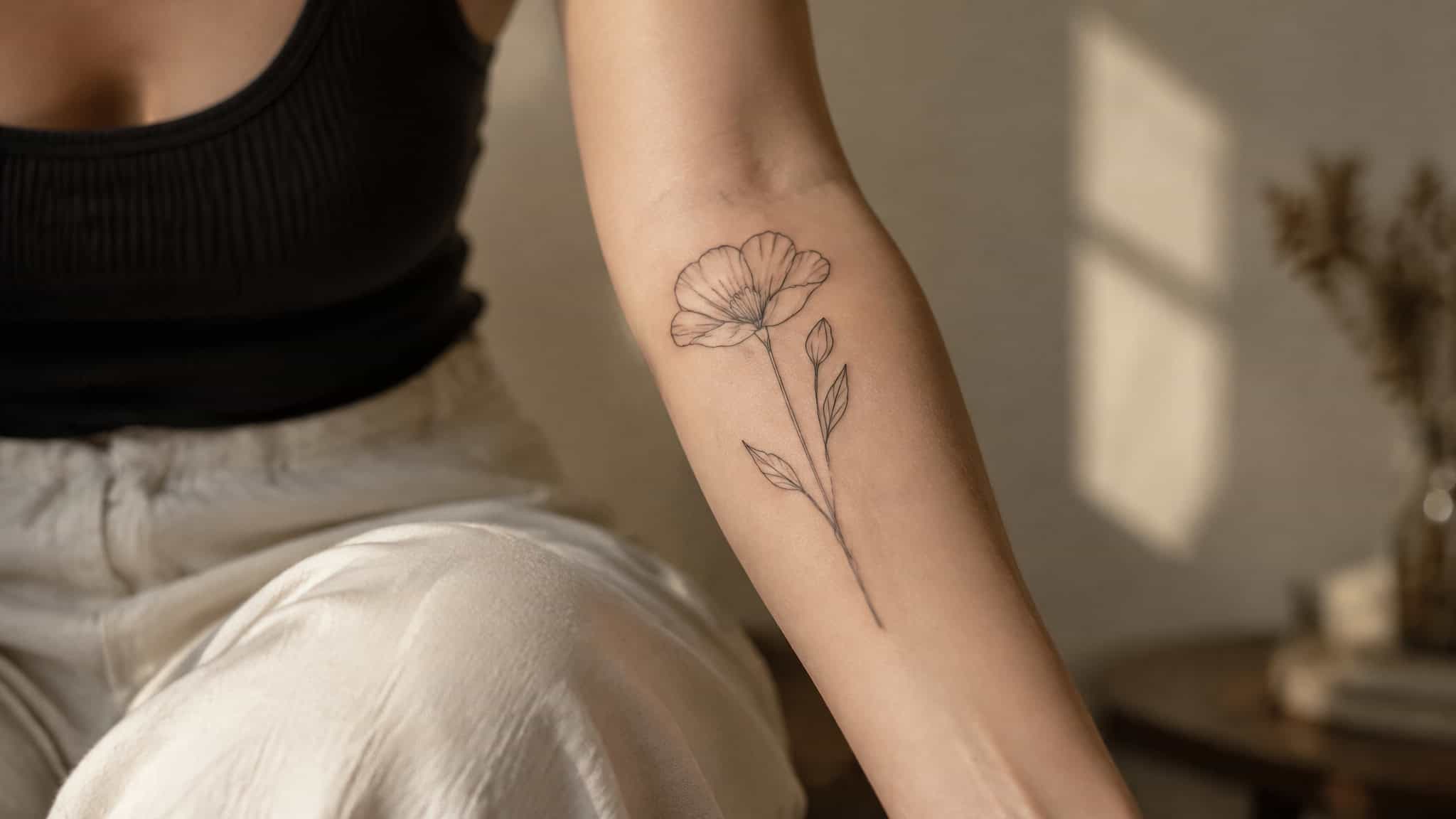
A single word, an inch long, has to carry an entire story. That’s the real constraint with small meaningful tattoos for females, and it’s the one the idea lists never mention: at this size, meaning-per-millimeter is the whole game. Restraint is the design skill here. The style you’re browsing is called a fine line tattoo, done with a single needle or a liner of five needles or fewer, which puts down far less ink than traditional work, where round liners can run 9 or even 14 needles.
Picture a fountain pen sketch next to a graffiti mural. The mural holds its edges longer because more ink went in, deeper. The sketch trades that durability for subtlety, and subtlety is exactly what you’re after. It’s the style Dr. Woo and JonBoy turned into a celebrity signature nearly a decade ago, and it’s genuinely lovely.
It also fades. The fading is mostly fixable, though, because when fine line fails, the cause is almost never you.
Key Takeaways
Fine line means a single needle or liners of five needles or fewer, so less ink goes in than traditional work (traditional liners run up to 9 or even 14 needles), which makes needle depth and artist skill the whole ballgame.
Placement sets your timeline: the upper arm, upper/outer back, and thigh hold for years, while fingers and hands fade to a blur within roughly two years and wrists fade within months.
Touch-ups every 1 to 3 years are normal maintenance for this style, not a sign that anything went wrong.
Table of Contents
Small meaningful tattoo designs that hold their meaning at tiny scale
Small, minimalist fine-line tattoos are the dominant choice for women who want understated ink with personal significance. The pattern separating keepers from heartbreak is consistent: single-line and high-contrast motifs survive miniaturization, while detail-heavy ones lose their symbolism to blur. That’s the filter I’d apply when curating ideas like these, because a design that’s meaningful on day one and unrecognizable in year three isn’t really carrying meaning at all.
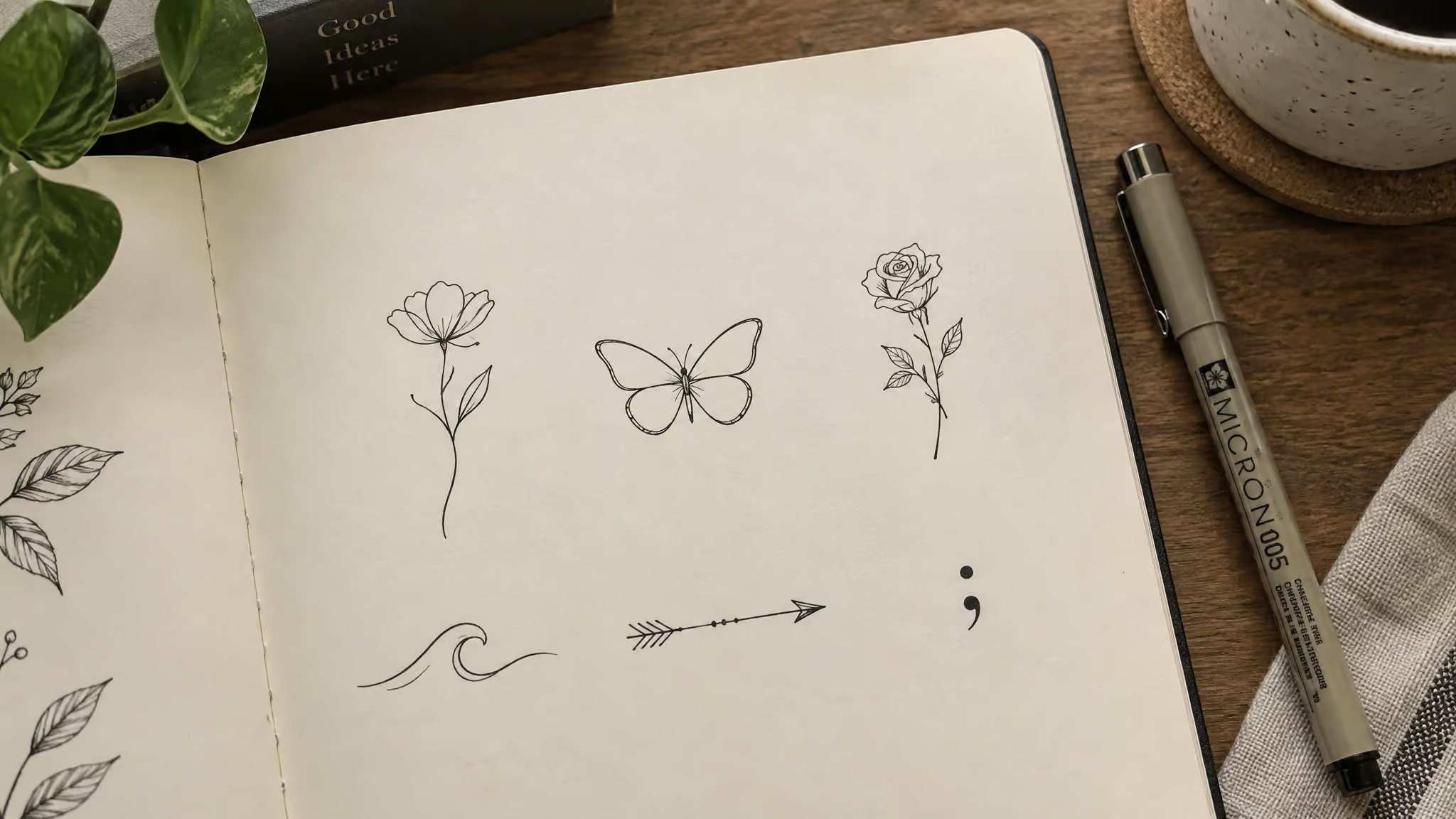
| Ages well at tiny scale | Blurs into an ink cloud |
|---|---|
| One-line flowers with geometric accents like triangles | Dense botanicals with detailed leaves |
| Tiny roses in clean outline | Delicate facial portraits |
| Simple-outline micro animals | Realism packed with tiny details |
| Minimalist symbols and single words | Anything crammed edge to edge |
Fine-line flower tattoos
The most-loved category, and deservedly. A single-line flower with a geometric accent, like a triangle or two, keeps its shape as it softens. A dense botanical with detailed leaves and petals is gorgeous on day one and merges into a green-gray smudge within a few years.
Fine-line butterfly tattoos
The nostalgia pick, and a proper nod to the ’90s: either a lower back homage to Mariah Carey or something tiny hidden behind the ear. Transformation is the meaning people usually attach to it, though that’s shared tradition rather than anything documented. A simple outline butterfly ages fine; a detailed one doesn’t.
Fine-line rose tattoos
The classic. Common for a reason, and especially dainty in fine-line form. Roses can sprawl a whole back or forearm or go tiny, and the tiny ones feel especially romantic. Keep the outline clean and the spacing generous and it stays a rose.
Micro animals and minimalist symbols
Simple-outline creatures, a wave, an arrow, a semicolon. Beyond symbols, the fine-line designs that hold up small are botanicals with detailed leaves, tiny micro animals, elegant script, and minimalist symbols. The semicolon-as-survival and lotus-as-overcoming-hardship meanings are the ones people commonly give them, not verified facts, but they’re widely understood. If you want symbols that carry bigger life-story weight, there’s a deeper dive on tattoo ideas for women with meaning of life. And if you’d rather browse the whole style landscape beyond tiny scale, the feminine tattoo ideas hub covers it.
Delicate portraits and realism: the blur risk
Tiny faces are the riskiest detail work there is, and realism, with its ton of tiny details, was the big trend call back in 2020. Tattooers report saying the same thing in consultations over and over: they talk clients down from detailed micro designs to simplified versions, because fine details merge within a few years. The rule underneath all of it: smaller and more intricate blurs faster, larger pieces with more spacing hold up, and the more you cram in, the higher the odds the piece looks busy or muddled with age.
Single-word script tattoos: legibility at tiny scale
For a unique small tattoo with meaning, single-word script is the most miniaturization-proof way to carry significance without an illustration. A single word stays legible as it softens, where multi-word phrases and thin serifs merge into a pencil line. Script needs a minimum letter size and generous stroke spacing to stay readable after the inevitable softening; roman numerals are a compact alternative if you follow the same spacing rule. Ink choice matters here too: brown ink is actually a blend of blue, red, and yellow pigments, and those bonds are weaker than pure carbon black’s, so sunlight breaks brown down first and your body clears the fragments, leaving patchiness. Black ink heals more solidly and holds up better, so keeping some black in the design is what lasts.
That’s the patchiness you’ve seen on healed fine line. Black heals more solidly and holds up better. All-color pieces with little or no black, or light gray-wash outlines, age poorly regardless of style; some black is what lasts. For elegant, classy wrist options, single-word script and minimalist line art are the fit, with one caveat about the wrist itself that the placement sections below cover.
Where small meaningful tattoos last: the placement guide
The upper arm, upper/outer back, and thigh are where small tattoos last; fingers, hands, wrists, ankles, feet, ribs, and joints fade fast. The reasons are unglamorous: friction, movement, sun, and how quickly that patch of skin renews itself.
The longevity strongholds
Upper arm: less rubbing, fewer folds, moderate sun. Upper/outer back: protected under clothing, away from daily movement and UV, it just lives a quiet life under your shirt. Thigh: skin regenerates more slowly there, with less stretching and rubbing. If the shoulder or shoulder blade is calling you, the shoulder placement guide covers how that canvas handles meaningful designs.
The graveyard zones
Fingers and hands: constant washing, sun, and friction, a blurry faded mess within roughly two years. Feet: tight shoes and skin stretching, faded and warped within about a year. Wrists and ankles: constant motion, UV, friction, fading within months. Ribs and elbows distort fast, and artists generally flag joints too.
Jewelry spots versus fade zones
Here’s the honest tension: the spots where micro tattoos shine as jewelry, the wrist, fingers, by the ears, the neck, are the same high-friction zones that kill them. Match the design to the placement, or accept a touch-up cycle. The cute spot isn’t automatically the safe spot, and pretending otherwise helps nobody.
Field note: Jewelry spots and fade zones overlap. Only pick a high-friction placement if you’re genuinely okay with a regular touch-up cycle.
Wrist and hand tattoos: the honest fade tradeoff
Lots of people want these spots, and that’s their call. The honest version is that the wrist and hand are the two placements where the design matters almost as much as the artist, because the skin there never gets a day off.
Side wrist tattoos
Side wrist tattoos are the most-searched placement for a reason: they read like a bracelet, they’re easy to hide or show, and a single word or tiny symbol sits there beautifully. The tradeoff is real, though. Wrists fade within months from constant motion, UV, and friction, so this is a placement you pick knowing a touch-up cycle comes with it. Artist Pilar Zurita has a specific tip: don’t tattoo too close to the wrist creases, that skin moves and folds constantly.
A couple of inches below the wrist is the smarter spot. And artists describe a pattern worth hearing before you book: clients praise how subtle and elegant these pieces look, then commonly wish they’d chosen a different placement to reduce fading. The design got picked for meaning first and placement second. Nothing shameful in that, just know the trade you’re making.
Small hand and finger tattoos
Yes, small hand tattoos work when you pick a design that tolerates softening: a bold single symbol in black ink fares far better than intricate detail. No, they don’t work if you’re expecting crisp lines for a decade, because constant washing, sun, and friction produce a blurry faded mess within roughly two years. Say the number straight and decide with it in view. If your heart is set on a hand or finger piece, choose something that still reads as itself when the edges go soft.
A simple shape survives becoming a softer version of itself; a detailed one just becomes a smudge. And if you already have a faded finger tattoo, the placement did that, not you.
Why small tattoos vanish: ink depth and technique, not size
A disappearing tattoo is caused by needle depth and technique, not tattoo size and not client age. That’s the attribution from dermatologist Dr. Mona Gohara and artists Pilar Zurita and Sarah Gaugler, and it’s the reframe this whole article rests on.
The vanishing heart tattoo case
Two friends turning 50 booked matching micro-freckle hearts in soft brown ink on their inner wrists at a Soho fine-line boutique, about £100 (roughly $135) each. There was a last-minute artist substitution. It barely hurt, which in hindsight was the red flag: a lack of pain can signal the needle wasn’t going deep enough. One heart vanished exactly one week after the appointment. Both women received full refunds.
What the failure anecdotes have in common
When ink sits only in the epidermis, the outer layer of skin, it flakes away with the scab, and overworked skin forms a heavy scab that takes the ink with it. The depth window is narrow: too shallow and it fades within months or vanishes during healing; too deep and the ink spreads under the skin, the blurry halo called a blowout. A tattoo noticeably lighter within the first year was likely too shallow and may need a touch-up to reinforce it, which is fixable, not a disaster. The follower-submitted failures all rhyme: a 30-year-old ladybug reduced to a black dot, a finger anniversary-date tattoo gone after two weeks, an “I 🍎 NYC” tattoo where the apple fell out because skin rejected the red dye, an inner-ankle cat face that lost its infected heart-shaped nose, one tattoo that floated off in the bath. Technique, every time.
Do fine line tattoos age poorly? Saturation, not the style
One tattooist’s own fine line work makes the counterpoint better than any argument: freehanded in prison with a ballpoint-pen stencil, single needle, black ink only, designs including a grim reaper throwing dice with flames and three wise skulls in bandanas. It’s roughly 17 to 18 years old and looks very similar to when it was done. That’s one story, not proof for every tattoo, but it’s a useful one, because black-only lines blur at about the same rate across styles. What failing fine line pieces actually share is under-saturation: skippy outlines with too much empty skin between punctures.
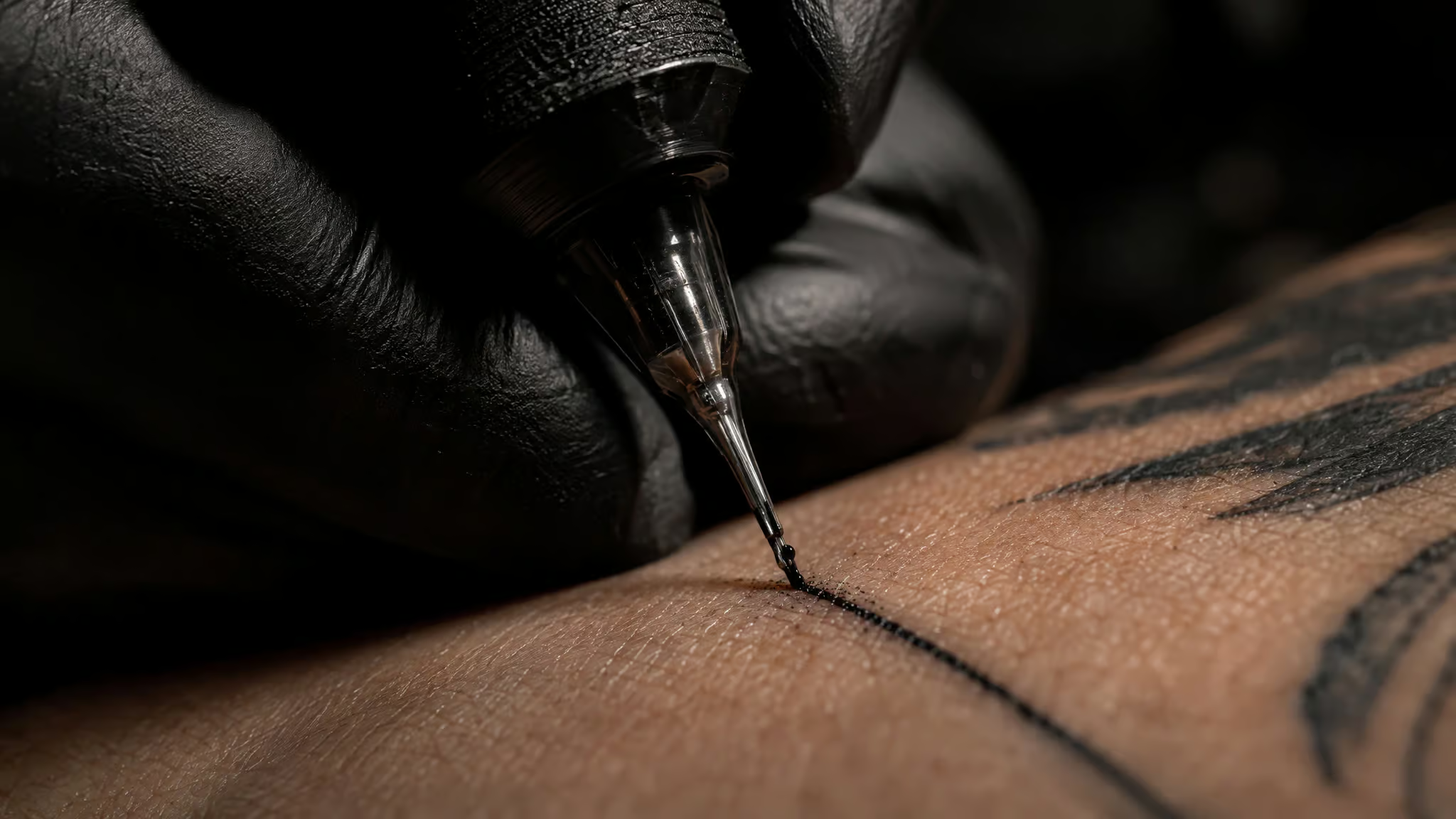
Fully saturated, closely spaced punctures hold up better, which is why the shop-floor saying “bold will hold” is about saturation, not needle count. The shading method is part of the skill gap too: fine line shading uses the liner itself with pepper or whip shading, dots building a gradient like pointillism, rather than the solid color packing of a MAG shader, a needle shaped like broom bristles. The same tattooist, James Withee, who spent six years in prison and twelve working professionally, believes the technique was highly developed in the American prison system, overlapping with West Coast black-and-gray origins, and that single-needle work probably existed as long as tattooing has. That’s what Withee thinks, not settled history.
How to vet an artist for a tiny tattoo
This is the part that actually matters, more than the design, more than the placement. As Pilar Zurita puts it, any artist can make a fresh tattoo look good, but it’s the healed work that reveals their true skill and technical depth.
The healed-portfolio check
- Ask for healed photos from 6 months to a year out. Fresh Instagram work won’t show you how their lines settle.
- Treat blowouts or fuzzy healed lines in a portfolio as a sign the artist works too deep.
- Don’t assume black-and-grey realism skill transfers to fine line; it doesn’t by default.
- Favor an artist who regularly fixes other artists’ fine line work. Quietly excellent sign.
- Choose on fit rather than price. Marina Molist’s advice in real terms: the cheap tattoo you redo costs more than the right one.
Quick test: Fresh portfolio work hides flaws. Healed photos from six months or more out reveal blowouts and fuzzy lines before you book.
Questions to ask before booking
- Needle configuration: single needle, or a 3RL or 5RL (that’s a round liner with three or five needles)?
- Planned ink depth?
- Saturation approach, how do they avoid skippy outlines?
- Black ink presence in the design?
Experienced artists adjust needle speed and ink layering to improve longevity without sacrificing delicacy, and they plan for graceful aging. That’s the mark of a pro. Trusting a non-specialist with delicate work is like letting anyone perform delicate surgery.
Healing a small fine line tattoo week by week
Healing is where the technique fixes above either pay off or fall apart, and it follows a predictable rhythm. Surface healing takes 2 to 4 weeks, while the deeper layers take months longer. Here’s what each week actually looks like, and what’s normal versus worth worrying about.
The week-by-week timeline
Surface healing takes 2 to 4 weeks; deeper layers take months. Week 1 is redness and sunburn-like sensitivity. Week 2 is flaking and itching, and no, you can’t pick. Weeks 3 and 4 look cloudy while deeper layers heal, which is normal, not ruin. Fine line hurts the same as traditional work but scabs much less.
Aftercare: breathable ointment versus second-skin films
Sarah Gaugler’s regimen calls for applying a thin layer of unscented, lanolin-free A&D ointment two to three times daily for the first 1 to 2 weeks. Skip adhesive second-skin films, which can trap bacteria, blister sensitive skin, and pull ink out of delicate work.
Healing mistakes and when to be concerned
Over-moisturizing traps bacteria, so less is more. No sun, no soaking, no tight clothing. Excessive redness past the first few days, pus, or severe itchiness with a rash means it’s time to call your artist or a doctor.
What a small tattoo looks like at 1, 5, and 10 years
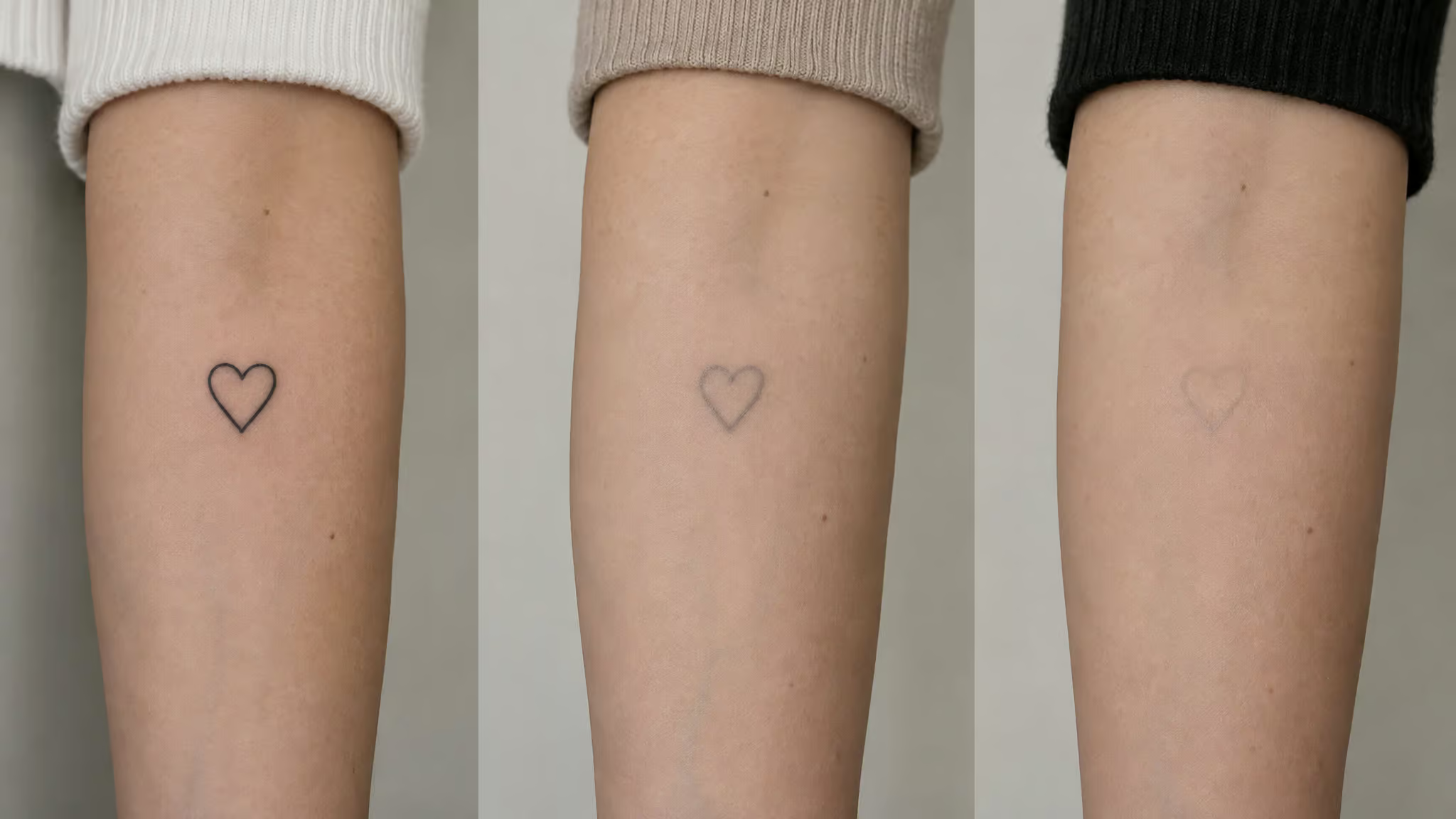
Once the healing weeks are behind you, the long game begins, and it runs on placement, ink depth, skin type, and aftercare. Expect anywhere from 1 to 10 years: decent for a decade, or a shadowy blob within 3. Here’s the honest timeline of how that softening unfolds.
The year-by-year aging timeline
Healed fine line never looks quite as fine and dainty as day one, which is artist Ilia’s honest framing. Depending on placement, ink depth, skin type, and aftercare, you get anywhere from 1 to 10 years: decent for a decade, or a shadowy blob within 3.
Touch-ups, SPF, and long-term skin care
Touch-ups every 1 to 3 years are expected maintenance of the style, not failure. UV is the number one pigment killer, so SPF 50 minimum daily on exposed placements and no tanning beds; without sunscreen, think in terms of a couple of summers doing real damage.
Normal aging versus red flags
Gradual softening is normal. Early heavy blur, patchiness, or a blowout signals poor application. Oily skin spreads ink faster and dry skin fades patchy; dark or oily skin isn’t a disqualifier with saturation and contrast adjustments. Mature skin may hold fine line longer, though that’s a studio claim in tension with the dermatologist view that technique matters more than age, and both get a hearing.
Why fine line tattoos took over women’s ink
Fine line dominates women’s small-tattoo search results because women drove its rise. The style went mainstream over roughly the last 20 years, largely because more women were getting and doing tattoos, and it hit celebrity scale nearly a decade ago when Dr. Woo and JonBoy inked itty-bitty pieces for clients including Hailey Bieber, Zoë Kravitz, Yara Shahidi, and Hilary Duff, with TikTok and Instagram amplifying the minimalist aesthetic. That’s the oh, THAT’s where I kept seeing this moment. It also explains why execution quality varies so widely between practitioners: a style that popular grew faster than specialist hands did, which is exactly why the vetting checklist above exists. In the chair, clients ask for “dainty” and “feminine” line weights, those are the actual words people use, though the style isn’t exclusively feminine; subject matter and shading values decide the read.
Are tiny fine line tattoos a good first tattoo?
Yes, a tiny fine line tattoo works as a first tattoo when ink depth, saturation, and placement pass the checks covered earlier. The risk is execution, not the style. The benefits are genuine: it’s a less intimidating entry point for a nervous first-timer, it stays easy to conceal in conservative workplaces, and faint lines are easy to add onto or modify later. Here’s the reframe worth sitting with: the faintness that makes fine line fragile is the same property that makes it forgiving. It’s the most reversible, concealable, and modifiable entry into body art you can make, provided you vet for depth first. Run the healed-portfolio check, pick your spot with the placement map in mind, and book it.
Matching micro tattoos for couples and friends
A matching micro tattoo needs the same depth, saturation, and placement checks as a solo one. Match on design and meaning, never on a rushed artist, brown ink on an inner wrist, or a graveyard placement. The cautionary tale is the same vanishing-hearts story, now read as a matching-tattoo tale: the meaning was shared, so the failure hurt twice. The hearts vanished, the women got full refunds, and they’re planning second attempts with black ink and a vetted artist.
That second-attempt plan is the template: a single-line or single-word design in black, a low-friction placement, or a couple of inches below the wrist crease if the wrist is non-negotiable, and one vetted fine-line specialist for both of you, never a last-minute substitution. Hearts, coordinates, and complementary symbols are the meanings couples and friends usually reach for, though that’s shared tradition rather than documented rule. The gesture was never the risk. The shortcut was.
Frequently Asked Questions
What are tiny random tattoos called?
The style is called fine line tattooing, done with a single needle or a round liner of five needles or fewer. That puts down far less ink than traditional work, where round liners can run 9 or even 14 needles. It’s the look Dr. Woo and JonBoy turned into a celebrity signature nearly a decade ago.
How do tattoos work?
A tattoo needle deposits ink into the dermis, the deeper layer of skin, where it stays. The depth window is narrow: too shallow and the ink sits in the epidermis and flakes away with the scab; too deep and the ink spreads under the skin, creating a blurry halo called a blowout. When a small tattoo vanishes, the cause is needle depth and technique, not size or age.
cute tattoos with meaning
The cutest meaningful options that actually hold up at tiny scale are single-line flowers with geometric accents, tiny roses in clean outline, simple-outline micro animals, and single-word script. The pattern separating keepers from heartbreak is consistent: single-line and high-contrast motifs survive miniaturization, while detail-heavy designs blur into an ink cloud within a few years.
meaningful shoulder tattoos for females
The shoulder and shoulder blade sit near the longevity strongholds: the upper arm and upper/outer back hold for years because they get less rubbing, fewer folds, and moderate sun. A single-line flower, minimalist symbol, or single word in black works beautifully there. Match the design to the placement and it can stay decent for a decade.
classy wrist tattoos for ladies
Single-word script and minimalist line art are the classy wrist fits, ideally in black ink. Just know the wrist is a high-friction fade zone, so pick it knowing a touch-up cycle every 1 to 3 years comes with the territory. The cute spot isn’t automatically the safe spot.
best female hand tattoos
The best hand and finger tattoos are bold, simple, black-ink designs — a single symbol or clean outline rather than realism packed with tiny details. Hands are a graveyard zone for ink: constant washing, sun, and friction blur the lines within roughly two years. If your heart is set on one, vet the artist’s healed portfolio first, because technique matters more than the design.
Do fine line tattoos age poorly?
Not inherently — under-saturation is what fails, not the style. Skippy outlines with too much empty skin between punctures fade fast, while fully saturated, closely spaced punctures hold up, which is why the shop-floor saying “bold will hold” is about saturation, not needle count. One tattooist’s single-needle, black-ink-only work, roughly 17 to 18 years old, still looks very similar to when it was done.