Here’s a fun exercise: take one design you love, say a single flower, and price it twice. Once as a small ankle piece. Once as a full thigh composition. The first quote lands around $150 and takes about half an hour.
The second can run $2,500 and eat multiple sittings. Same flower. Same leg, even. That’s the decision most people get backwards when they start looking at female tattoos legs: they shop for a design first and a spot second, when the spot is actually the whole decision.
Your leg isn’t one canvas. It’s seven, each with its own pain level, price range, hiding strategy, and shelf life. Delicate, jewelry-like pieces and full blackwork are both on the table, and none of it comes with rules about who’s allowed what. So pick the zone first. The design will follow.
Key Takeaways
The leg has seven genuinely different zones, and the zone decides pain, cost, visibility, and fading before the design does: the same idea can be a $150 ankle piece or a $2,500 thigh composition.
Pain tracks anatomy: the fleshy outer thigh rates 3-5 while the shin, knee, and top of foot hit 8-10, and the calf is the one spot where the charts and lived experience flatly disagree.
Match size to zone or the ink pays for it later: compressing a detailed design into a small spot blurs into a blob over time, so decide the overall plan before the first piece goes in.
Table of Contents
The seven leg zones at a glance
Leg tattoo placements for women are the seven zones of the leg, and each one is a different tradeoff: the thigh gives you the most space and the most seclusion, the calf gives you space but a rounded, very visible surface, the shin puts your design front-and-center at the cost of being one of the most painful spots on the body, the ankle and foot go small and delicate but fade fastest, the knee offers little room but an interesting shape, and the full leg sleeve is the marathon option. Pick the zone and half your other decisions make themselves.
If your decision is anywhere below the knee, here’s the short version. The shin is the most painful placement on the leg, an 8-10 right over the bone, and it’s narrow and asymmetrical, which limits what sits well there. The calf is more forgiving at 4-6, and its muscle curve genuinely flatters wrap designs. The ankle is small and delicate at 7-9, but friction fades it faster than you’d expect for something so tiny. Same criteria every time: pain, visibility, how the ink ages.
| Zone | Pain (1-10) | Cost | Shows day to day? | The tradeoff |
|---|---|---|---|---|
| Thigh (front, outer, inner) | 3-5 outer, 7-9 inner | $800-$2,500+ | No (hides under almost anything) | Most space, easiest to hide |
| Calf | 4-6 | $400-$1,200 | Partial (visible in shorts, hidden by pants) | Rounded shape flatters wraps, very visible |
| Shin | 8-10 | $400-$1,200 | Partial (front-and-center when legs show) | Boldest canvas, near the top of the pain scale |
| Ankle | 7-9 | $100-$300 | Partial (depends on your shoes) | Delicate and cheapest, friction fades it |
| Foot | 8-10 | $100-$300 | Partial (depends on your shoes) | Pretty and personal, highest maintenance |
| Knee | 9-10 | Quoted by size | Partial (visible when legs show) | Little space, interesting shape, hardest to heal |
| Full leg sleeve | Varies by zone | $5,000-$15,000+ | Yes (that’s the point) | One cohesive work, 40-100+ hours |
One note on the knee: the placement guides don’t break out knee pricing separately, because it gets quoted by size like everything else on the leg.
The thigh is the overachiever of the bunch: biggest canvas, least pain on the outer side, and the easiest thing on your leg to keep private. The calf trades a little pain comfort for visibility. The shin is for people who want their tattoo seen and are willing to earn it. Ankle and foot pieces are the entry price point, with the understanding that they’re the most upkeep.
The knee is a specialist move. And the sleeve is a relationship with your artist that lasts a year or more.
Thigh tattoos: front, outer, or inner
Yes, front and outer thigh tattoos are among the least painful placements you can pick, because the outer thigh ranks among the body’s gentlest places to sit through a session, with pain ratings around 3-5 thanks to ample muscle and fat and fewer nerve endings. That same big, forgiving canvas suits large, detailed work, and it’s why thigh pieces run $800-$2,500+. The catch lives on the inner side of the same leg, and we’ll get there.
Outer thigh: the low-pain large canvas
Nervous about your first leg piece? The outer thigh is the good-news spot. Fleshier areas have fewer nerve endings, so it hurts dramatically less than, say, the shin on the same body. And because the thigh is wider than any area on the arm, it takes bigger designs than you might expect. A lotus or a full floral arrangement needs exactly this much surface area; squeezed anywhere smaller, the detail would suffocate.
Inner thigh: the private canvas
The inner thigh is more sensitive, rating 7-9, because the skin is thin and the nerves are concentrated. So the honest tradeoff is: yeah, this part hurts, and nobody sees it anyway. That privacy is a feature, not an apology. It’s the one zone where you can experiment with vivid hues and bolder shapes knowing that day-to-day, it’s entirely yours.
Design logic: orientation, garter bands, and blackwork
One working-artist rule worth stealing: thigh designs should face the viewer, not flow backward toward the buttocks. It sounds small until you see a piece oriented wrong and realize the wearer is the only one who ever sees it right side up.
The garter band is the thigh’s signature move: a wrapping word or phrase band around the upper thigh that plays up the leg’s shape with an intimate, garter-like feel. Florals, snakes, and other long slender shapes also suit wrapping designs around the hip, following the curve instead of ignoring it.
Heavy blackwork works here for a practical reason: negative space counteracts dark pigment, and the thigh has negative space to spare. Popular ideas, scrolling-inspo style: intricate florals, animal portraits, sprawling mandalas, fine-line ornamental work.
The thigh is frequently cited as the best placement for women, and that’s a fair pattern. The caveat matters more: design, not placement, is the number-one factor in whether ink reads bold or delicate. A tiny script thigh piece reads dainty. A dense blackwork calf reads bold. The zone sets the stage; the design delivers.
Calf tattoos: curvature, wraps, and the pain debate
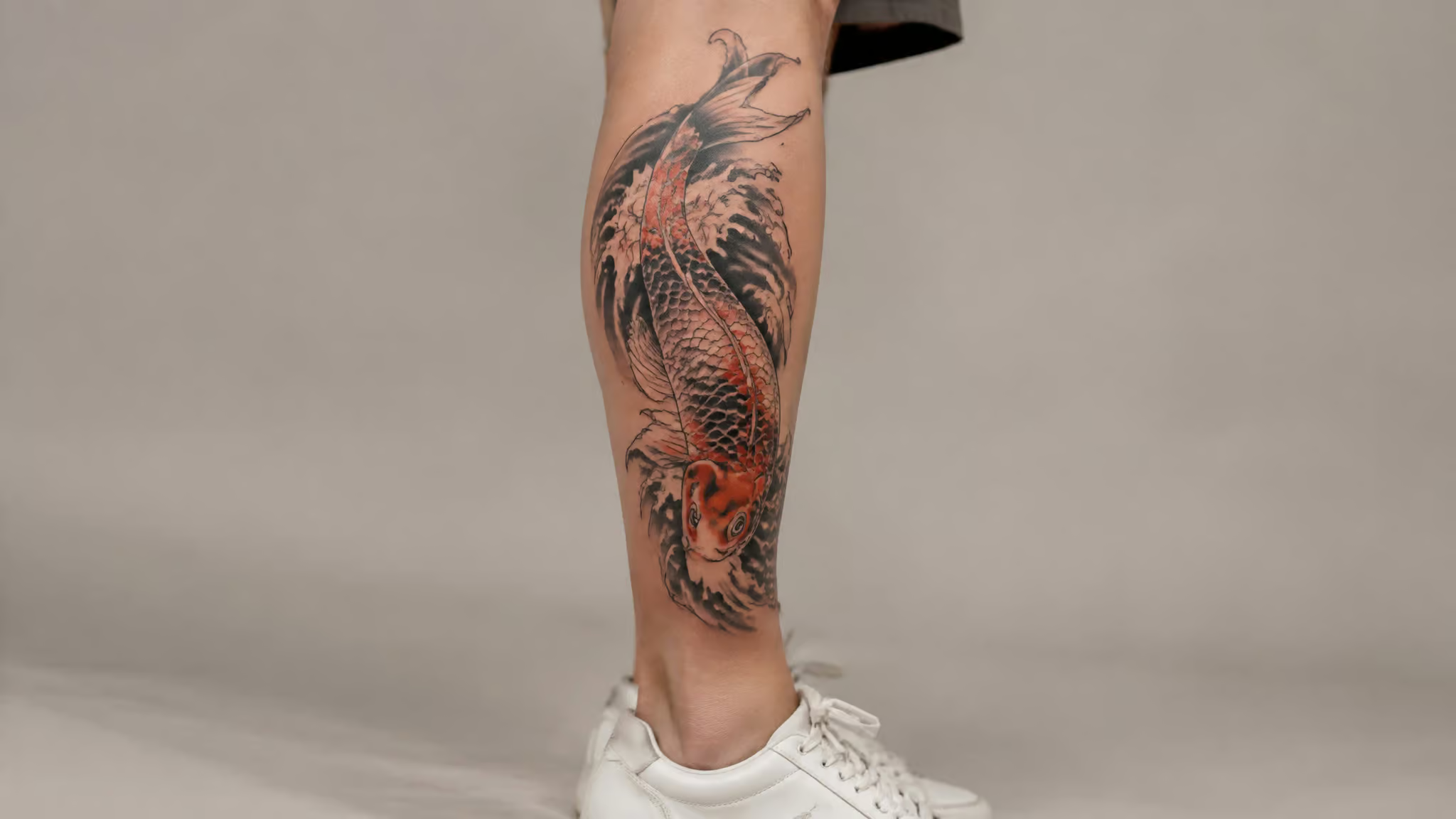
The calf is funnel-shaped, wider at the top and tapering down, so designs should taper with it. One artist demonstrated this by reshaping a koi fish to follow the calf’s narrowing curve instead of forcing a straight-sided drawing onto a tapered muscle. That’s the whole game: the calf’s muscle curve gives artwork a three-dimensional quality, which is why it suits wrapping designs like Japanese pieces, tribal work, and bold geometric bands. Expect $400-$1,200. Ideas that fit: realistic portraits, traditional American or Japanese work, and script on the back of the calf.
Now the pain debate, because it’s genuinely messy. The anatomy-based chart rates the calf 4-6, well-muscled and manageable. But an Instagram poll of tattooed friends ranks the calf among the most painful leg areas, and artist Pixie Robson says the same from her chair. Byrdie’s older article, last updated January 18, 2022, called calves barely painful, and read chronologically it’s the outlier: the newer chart and the lived-experience rankings both disagree with it.
Nobody’s declaring a winner here. The honest takeaway is that plenty of people expect moderate pain from the chart and are surprised by how intense the back of the calf feels, and pain is personal enough that both things can be true.
Shin tattoos: bold canvas, honest pain
The shin is a flat, prominent, front-and-center canvas, and it’s also one of the most painful spots you can pick: thin skin sitting right over the shinbone, pain 8-10. No sugarcoating. You’ll know exactly why it hurts when you’re in the chair, because there’s nothing between the needle and the bone. Cost runs $400-$1,200, and visibility is moderate, meaning your design is on display whenever your legs are.
Here’s the warning most guides skip: the shin is narrow and asymmetrical, so straight, symmetrical designs like script will never sit perfectly straight there. The bone underneath isn’t a ruler, and the tattoo will follow the bone.
What does work is leaning into the shape. Long linear designs like daggers and swords match the bone’s geometry, as do symmetrical patterns and intricate script that accepts a little organic drift. The gallery favorites make the case: mirrored identical tattoos on both shins just above the ankle, moon phases placed using the leg bones themselves as a straight-line guide, and a red snake using the leg’s long narrow space exactly as intended. If you want a bold statement and can rent a tolerance for pain for a few hours, the shin delivers like nowhere else on the leg.
Ankle tattoos: the permanent-anklet zone
Fine-line script, tiny nature-inspired symbols, and delicate floral vines worn like permanent jewelry are what suit the ankle, and this zone fits anyone who wants something subtle, personal, and easy to keep to yourself. The jewelry analogy makes it click instantly: a wrist tattoo is a bracelet, an ankle tattoo is an anklet, a finger tattoo is a ring. Same instinct, permanent version.
The catch is that small doesn’t mean painless. Ankle tattoos run moderately-to-highly painful at 7-9, because there’s little padding between skin and bone there. The upside is price: at $100-$300, it’s the most approachable cost on the entire leg.
The gallery ideas lean into the peekaboo quality. A single letter or number above the ankle bone stays visible even in pants. A dainty floral with thin wispy lines sits hidden under long trousers but stands out the moment the leg’s exposed. Line-art at the back of the ankle works because even when it’s mostly covered, a bit always sticks out.
Two caveats before you book. First, visibility depends entirely on your shoes: high socks and boots hide it, sandals announce it. Second, friction fades this spot faster than most, so the daintiest placement on the leg is also one of the neediest.
Foot tattoos: beautiful, high-maintenance
Pretty, painful, high-maintenance. That’s the foot in three words, and you should hear all three before booking. Pain runs 8-10, thanks to thin skin over many small bones and nerves, and cost runs $100-$300.
The fading is the part people underestimate. The foot is the most fade-prone placement on the leg, and the cause is mechanical: friction from shoes plus sun exposure break the ink down faster than your body can hold it. Foot tattoos notoriously need frequent touch-ups, which means the real price is the sticker price plus maintenance forever.
Aftercare is genuinely awkward, too. Shoes complicate bathing, showering, and daily life in ways nobody warns you about. Picture your actual week: the commute, the gym, the shoes you wear most days. If none of it pairs well with a healing foot, that’s useful information now.
What works design-wise: henna-style ornamental work, quotes arcing across the arch, and small personal symbols. All three suit the foot’s shape and size. If you love the idea of a hidden, intimate piece and don’t mind the upkeep, the foot rewards you. Just walk in knowing exactly what you signed up for.
Knee tattoos: for experienced collectors
Knee and foot pieces are a poor first tattoo; if you’re new, head for the outer thigh instead. Knee pain rates 9-10 because you’re tattooing over bone, ligaments, and lots of nerve endings. The skin there is tough, the joint never stops bending, and the knee is the most difficult area on the leg to heal. It suits almost exclusively experienced collectors, people who already know how their body handles sessions and healing.
If you do have the mileage, the design mechanics make knee pieces work at all: build the tattoo around the kneecap so the ink moves with the joint and the design elongates. Mirrored mandalas, spiderwebs, and fierce animal faces all use the kneecap’s round shape instead of fighting it. The muscle bulge below the back of the knee suits larger designs with lighter shading and thin lines. And a small minimal design, like a laurel branch, can make the whole knee pop.
For solidarity: knees show up on every list of the most peculiar, most painful placements, alongside elbows, toes, inside of the ears, and eyelids. One wince, one shrug. If that’s your lane, you know who you are.
Full leg sleeve: the 100-hour commitment
A full leg sleeve runs 40-100+ hours across multiple day sittings and $5,000-$15,000+, billed per session. Those are the real numbers, and they’re worth sitting with before falling in love with the idea. A sleeve covers thigh to ankle as one cohesive work, which means every zone on this list, with every zone’s pain profile, becomes part of the project.
This is the option for serious, dedicated collectors, and it’s fine to know that’s not your lane yet. A sleeve is a long collaboration with an artist, scheduled session by session, with your leg as the through-line.
The styles that suit it: floral, ornamental, or Japanese work. Traditional Japanese myths, elaborate biomechanical machinery, and sweeping nature scenes are the common themes, and they use the leg’s full length to tell a story from hip to foot.
What makes a thigh-to-ankle sleeve plannable at all is the four-plane method we’ll cover in a bit. Without a plan for how the design moves across the leg’s front, side, back, and inner planes, a sleeve is just a pile of tattoos. With one, it’s a single piece of art wearing you.
Design flow: making ink fit the leg’s shape
A design flows with the leg when it’s planned across the leg’s planes and shaped to its anatomy, and the exceptions are mostly about script and saved-from-the-internet images. This is what separates leg ink from a tattoo that happens to be on a leg. It’s one artist’s working method, shared in a YouTube tutorial by The Artists Room, not a universal industry standard.
The four-plane division
The leg divides into four planes: front, side, back, and inside. The arm has two major planes. The difference is sheer size, and it’s why leg placement needs more planning than you’d assume. The good news: leg and arm placements are nearly interchangeable, and designs usually transfer between them. The exception is the thigh, which is wider than any arm area and allows larger work.
Orientation rules
The checklist: fit the body shape, fill the space, follow the musculature, sit right side up when standing, and face inward or forward. Legs stay vertical while arms rotate, which is why vertical script is hard to read on a leg; put script along straight center lines and never angle it.
The distortion lesson in one line: a hyper-realistic eye looks incredible on the inner bicep but cramped and awkward on the side of the neck. Same art, wrong spot. Any image you saved from the internet will need reworking to flow with your placement. That’s normal, not an insult to your inspo board. The hip-to-toe side-span tattoo is the side-plane’s statement piece when you want the full treatment.
Test before you commit
The zero-tech version: draw the major shapes on arm and leg templates, or tape a printed design onto your own arm or leg and check it in the mirror. Feel how it aligns when you stand, sit, and move. Ten minutes of tape saves years of sideways regret.
Matching design size to placement
Match design size to placement. Everything else in this section is just that rule applied.

The four size tiers
Small spots like the ankle, knee, and top of foot suit simple designs; a small simplistic piece runs roughly two to four inches. Medium areas like the calves, shins, and inner thigh take flash, script, and long-and-skinny work. Large areas like the upper thigh, and extra-large ones like a full sleeve, are where detailed compositions belong.
The inky-blur trap and the canvas rule
Compressing a detailed design to fit a small spot doesn’t give you more options. It gives you fewer. The lines blur and expand over time into an inky blob, because detail needs surface area to survive healing. Think of it as protecting the tattoo you’ll actually want in ten years, not the one you want on delivery day. The classic example: two roses drawn side by side on paper, requested for an inner wrist, needed simplification or relocation because paper doesn’t heal.
The exception, and it’s a kind one for minimalists: a small tattoo on a big canvas can absolutely work if it follows the body’s flow.
The canvas rule is the long-game version: many small tattoos scattered on a large area ruin it. Decide the overall plan before the first piece, because a small tattoo in the center of what could someday be a sleeve complicates that sleeve enormously.
Leg tattoo pain: charts vs. lived experience
The thin-skin-over-bone zones hurt most, which means the shin, knee, and top of foot top the list, while the fleshy outer thigh hurts least. Pain is subjective but predictable, because muscle and fat have fewer nerve endings and thin skin over bone has plenty. Here’s why your leg feels different from your friend’s leg.
Quick test: Press the spot you’re considering. If you can feel bone right under the skin, expect the top of the pain scale.
The anatomy-based chart
The chart’s numbers: outer thigh 3-5, calf 4-6, inner thigh 7-9, ankle 7-9, shin 8-10, knee and knee ditch 9-10, top of foot 8-10. It measures averaged anatomy, and it’s genuinely useful for picking between zones.
The crowdsourced ranking and why they disagree
An Instagram poll of tattooed friends ranked the most painful leg areas as: calf, back of thigh, front of knee, knee ditch, inner thigh. Pixie Robson, working from her own clients, confirms the calf and back of thigh are the two spots people struggle with most. So why does the chart put the calf at a moderate 4-6 while real people put it near the top? Because charts measure averaged anatomy and lived experience captures specific spots, like the back of the calf, where the experience is worse than the average suggests. Byrdie’s older guide, last updated January 18, 2022, called calves barely painful; the newer chart and the lived-experience rankings have both moved past that, so treat it as the outlier it reads as now.
No verdict needed. Both maps are telling you something true.
On coping: it’s personal. Some people talk, some wear headphones, some go completely silent, and artists accommodate whatever you need. Numbing cream doesn’t remove pain entirely, but for some people it makes the session mentally easier, which is a friend’s honest review, not medical advice. First-timers and low-pain-tolerance folks should head for easier areas: outer thigh, forearm, outer bicep. And an hour-or-less session is far easier to endure than eight, which is a scheduling tip disguised as a pain tip.
Visibility, concealment, and fading by zone
Ankle and foot tattoos are the most visible and the fastest to fade, while the thigh hides easily and holds ink longest. Everything else falls between those poles, and both halves of that sentence should shape your decision.
Who sees it
The visibility tiers: the thigh is the easiest spot on the leg to conceal, the calf and shin are moderate, and the ankle and foot depend entirely on your footwear. Picture your real wardrobe, not your aspirational one.
Some context, mentioned once: leg tattoos are among the easiest placements anywhere to hide, unlike hand, face, and neck tattoos, the so-called job-stoppers, which draw attention from police and at customs and can limit careers. That’s a fact about those placements, not a lecture about anyone’s choices. But if you have a dress code or career goals, they belong in the placement decision, framed as protecting your income rather than fearing it.
Then the reframe: concealment is creative license. The hidden upper thigh is exactly where you experiment with vivid color, because almost nobody sees it day to day. Privacy isn’t a limitation here; it’s permission.
What lasts
The fading map is friction and sun. Feet, ankles, and knees take the most friction, so ink breaks down fastest there. Tops of feet and shins catch the most sun. The thigh and calf last longest. Choose the ankle for delicacy and you’re signing up for touch-ups; choose the thigh and the same ink, same artist, same day, lasts decades longer.
Healing and aftercare specific to legs
Wash the tattoo 2-3 times a day with lukewarm water and fragrance-free antibacterial soap, pat dry with a clean paper towel, and apply a thin layer of ointment only, because too much suffocates the tattoo and traps bacteria. No soaking, meaning baths, pools, oceans, or hot tubs, for 3-4 weeks, though showers are fine. No direct sun for a month, then SPF 30+ once it’s healed, to protect the money you’ve already spent. It’s the kind of routine aftercare guides like Stories & Ink walk through step by step.
The daily routine
That’s the whole routine, and it’s doable. The diligence matters more than the products, especially for lower-leg placements.
Leg-specific failure points
The mistakes generic guides skip. Lower-leg tattoos swell, so elevate the leg for the first few days; this is normal, so nobody panics on day two. Tight jeans and leggings rub fresh ink, slow healing, and introduce bacteria, so skip the skinny jeans for a bit. No shaving or waxing the healing leg.
Workouts wait until the “dry and itchy” stage, when there’s no open skin for sweat and dirt to irritate. And foot tattoos make shoes and bathing genuinely awkward, which is worth remembering from the foot section.
What aftercare products actually do
Here’s where the timelines land once you reconcile them: surface healing runs 2-4 weeks, though one guide puts the standard at 2-3 weeks with a fastest of five days and a slowest of about a month, because the sources measure different stages. Full skin regeneration takes 3-6 months, so don’t panic at week three. Healing depends more on the person than the spot.
And the corrective from Pixie Robson: creams don’t heal the tattoo. Your body does. Creams just prevent the drying and cracking that cost you color. Follow your own artist’s tested method over anything you read, including this article; they’ve tested it on their own work, and that’s your investment talking.
What a leg tattoo costs and how long it takes
A small ankle or foot piece runs $100-$300, a medium calf or shin tattoo runs $400-$1,200, a large thigh piece runs $800-$2,500+, and a full leg sleeve runs $5,000-$15,000+, billed per session. Prices may vary by artist and region.
Cost check: Sleeve pricing is billed per session, so the full figure arrives in installments across a year or more of sittings, not one invoice.
| Size tier | Typical zones | Cost |
|---|---|---|
| Small | Ankle, foot | $100-$300 |
| Medium | Calf, shin | $400-$1,200 |
| Large | Thigh | $800-$2,500+ |
| Full leg sleeve | Thigh to ankle | $5,000-$15,000+ |
On time: a small linework piece can take as little as 30 minutes, while a full sleeve takes multiple day sittings. Duration depends on detail, size, and color, and your artist can estimate at booking.
Notice what this table actually says: the leg is the only body part where one decision spans a 100x cost range and a 100-hour spread. That’s why the zone comes first. A $150 decision and a $15,000 decision are made in the same ten seconds of “where on my leg?”
Design ideas by zone: styles that fit the leg
The insight isn’t a list of ideas, it’s a matching rule: use the design’s shape to compliment the leg’s shape. Everything below is that rule applied, with ideas drawn from artists and writers including Rosalie Hurr, Caroline Derwent, Sophie Hill, Swasthik Iyengar, Isabelle Lichtenstein, Mira Mariah, and Michelle Regalado. If you want the broader style gallery beyond legs, the feminine tattoo ideas collection is the natural next scroll.
Mandalas
Usually done in dotwork or thicker lines, and usually without symbolic meaning unless you give them one. Mirrored patterns suit knees beautifully, and ornamental mandala work can cover a shin or grow into a full leg piece over time.
Florals
Classic roses, fluffy peonies, a whole bouquet, color optional. Flowers always make a good tattoo. Wrap-around vines move with the leg like a plant following the sun, and the leg bone’s length allows long-stemmed colored florals that feel painted on.
Animals matched to anatomy
Lions on thighs, dragons up the shin, butterflies below each knee or on the thigh or calf, snakes coiled round the ankle. The trick is using the animal’s shape to compliment the leg’s shape, so the dragon stretches and the snake coils on purpose.
Japanese and tribal
Japanese work has adorned legs for centuries and suits big canvases: koi carp, dragons, whole-leg storytelling with traditional motifs. Modern tribal work uses black ink and geometric shapes, can cover the whole leg and stretch onto the feet, and is individual to the wearer.
Fine-line, script, and patchwork-adjacent looks
The style-to-canvas rules, condensed: portrait and realism need space and flatter areas, and outer thighs qualify. Geometric, floral, tribal, and pattern work fit almost anywhere. Neo-traditional works anywhere depending on size.
Female leg tattoo patterns, not rules
Placement patterns between women and men are real but soft. Women often choose jewelry-like small placements, like the anklet or the garter-like thigh band, or curve-hugging thigh pieces, while men generally go larger on the calf, chest, or sleeves. The caveat still applies: design, not placement, decides whether ink reads bold or delicate. Popular spots skew toward the thigh, upper leg and hip, or ankle, and some ink even makes stretch marks more beautiful. Patterns, never prescriptions.
Patchwork leg tattoos vs. planning a sleeve
Patchwork, sometimes called sticker-style, means different-sized tattoos placed without any placement order, and legs are a great spot for it: a collected gallery of small standalone designs, a sweet spot for matching best-friend tattoos, and a way to collect from different artists. It’s a rising alternative to the cohesive sleeve.
The decision rule the trend posts leave implicit: patchwork works when a collected, gallery-style leg is genuinely the goal. It sabotages a future cohesive sleeve, because scattered small tattoos ruin the large canvas. Decide which leg you want before the first piece, not after the third.
Word tattoos work fine as patchwork units, with one caveat: the best placements for standalone word tattoos trend toward the upper back, spine, forearm, and inner bicep, so a leg word piece should be chosen for the leg, not defaulted to it.
Do leg tattoo placements mean anything?
No, placements carry no inherent meaning; the wearer assigns the meaning, and other people just react to what they can see. That’s permission, not a debunking. Your garter band means what you say it means.
One source floats the idea that a leg tattoo symbolizes a life journey, and it’s a low-confidence claim, so take it as one tradition’s reading, with the right leg representing movement toward the future and the left connected to the past or the inner self. Present it as one tradition’s reading, not consensus, and don’t build a tattoo philosophy on it. Meaningful ink does exist in placement-adjacent ways: a quote on the foot symbolizing one’s path, or a design over the heart.
The liberating part is what follows. The garter band, the anklet, the hip-to-toe span mean whatever you decide. That’s why the same seven zones host both the most intimate work and the most defiant.
Session pacing, endurance, and preparation
Smaller sessions can heal faster and nicer, with one tradeoff: healed lines look fuzzy in photos until fully settled. One artist split a client’s Ariel calf tattoo into three sittings because she couldn’t sit long on the back of her calf, and the result was worth the pacing. Prep that pays off: a week of daily moisturizing before your appointment; artist Pixie Robson says her former “lizard skin” legs were hard to tattoo and are easy now. Ask for breaks, bring snacks, wear comfortable clothing.
Before you book: consult, preview, scar cover-ups
Tattooing over leg scars is a consult-first conversation with an artist experienced in cover-ups, not a standard placement booking. Honest limitation: the placement guides barely address scar tissue, so here’s what’s generally true and no more. Scar tissue takes ink unpredictably, and healed scars typically need to mature before tattooing. This is specialist territory, not DIY placement logic. The one supported adjacent fact is a lovely one: leg tattoos can make stretch marks more beautiful.
Preview tools and the artist consultation
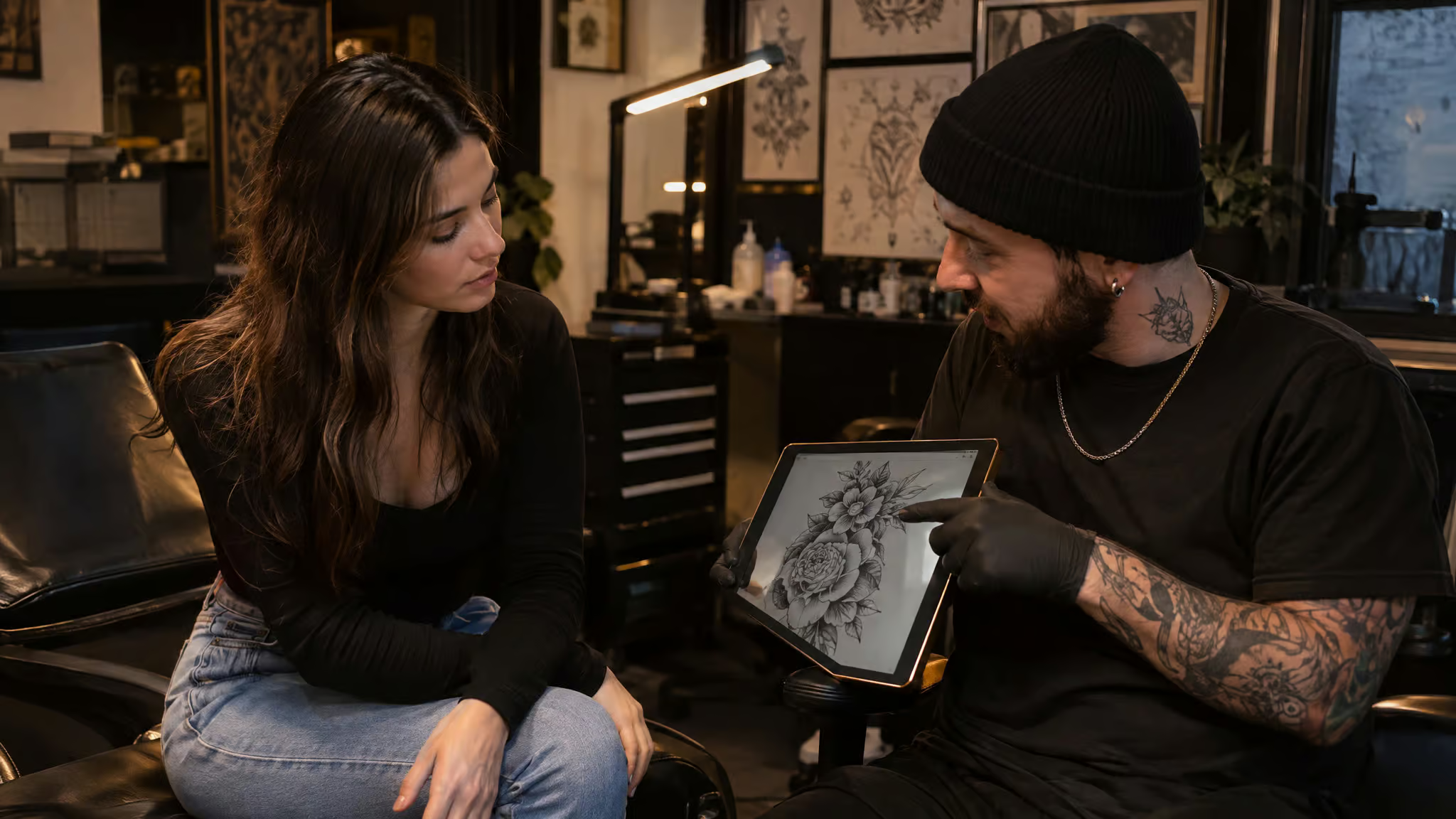
Talk to a tattoo artist before committing to anything. Frame the consult as free insurance for a permanent decision. Artists customize ideas to follow your contours, and they’ll tell you things like super-detailed finger tattoos won’t fit and fade faster, the exact same logic that applies to any cramped leg spot.
For previewing: the InkHunter augmented-reality app shows a tattoo on your body through your phone’s camera, which is exactly as useful as it sounds. The zero-tech alternative is the mirror-and-tape exercise from the design-flow section. Either way, you’ll walk into the consult knowing how the design sits on your actual leg, which makes every conversation after it easier.
Frequently Asked Questions
Tattoos for female legs: which placements and designs work best?
The leg has seven distinct zones, and the zone decides pain, cost, visibility, and fading before the design does. The thigh offers the biggest, least painful (outer side) and most concealable canvas; the calf flatters wrap designs; the shin is bold but painful; the ankle and foot suit delicate, jewelry-like pieces but fade fastest. Pick the zone first, then match the design’s shape to the leg’s shape.
Small tattoos on legs female: what delicate designs suit the ankle or calf?
The ankle suits fine-line script, tiny nature-inspired symbols, and delicate floral vines worn like permanent jewelry, at $100-$300. The calf, at $400-$1,200, takes script on the back, flash, and long-and-skinny work, and its muscle curve flatters wrap designs. Both are moderate-visibility spots, and the ankle fades faster than you’d expect from friction.
Which leg tattoo placements hurt the most and how can I cope with the pain?
Thin-skin-over-bone zones hurt most: the shin, knee, and top of foot rate 8-10, while the fleshy outer thigh is gentlest at 3-5. Coping is personal — some people talk, some wear headphones, some go silent, and artists accommodate all of it. Numbing cream doesn’t remove pain entirely but can make the session mentally easier, and an hour-or-less session is far easier to endure than eight.
Will an ankle or foot tattoo fade or affect my job? Visibility and longevity explained
Ankle and foot tattoos are the most fade-prone placements on the leg because shoe friction and sun exposure break the ink down, so they need frequent touch-ups. Visibility depends on your footwear — boots and high socks hide them, sandals announce them. Leg tattoos overall are among the easiest placements to conceal, unlike hand, face, and neck tattoos that can limit careers, so if you have a dress code, the leg is a low-risk choice.