Let’s start with the thing that makes Ukraine’s surrogacy program so hard to ignore. In Ukraine, the law puts your name on the birth certificate the moment your baby is born. No court order. No adoption of your own child.
No waiting period where the surrogate could change her mind. The surrogate has no legal standing to keep the baby, none at all. For a lot of intended parents, that’s the entire reason Ukraine is on the table.
But here’s what the glossy agency pages don’t tell you: those protections sit inside a war zone, under a draft law that could bar foreigners entirely, and there are gaps where things can fall apart beyond what the law addresses. When readers started asking us about overseas surrogacy, we did the digging. This article is the straight answer on who qualifies under Ukraine surrogacy laws for foreigners, what documents you’ll need, what rights you actually hold, surrogacy cost in Ukraine, and where the protections end. By the end, you’ll know whether Ukraine is a serious option for you, or a hard no.
Key Takeaways
Ukraine’s Family Code names intended parents as legal parents from conception, and a surrogate can never contest maternity, making it the most intended-parent-friendly legal framework in the world.
You must be a married heterosexual couple with a documented medical indication and a genetic link to the child; total costs typically run $35,000, $90,000+, with realistic full programs around $50,000, $65,000.
A baby born to foreign parents does not automatically get Ukrainian citizenship, and war-related risks plus a pending draft law mean legal clarity is not the same as operational certainty.
Table of Contents
Ukraine’s Legal Framework. What the Law Actually Says
Ukraine doesn’t merely permit surrogacy. It writes parental rights directly into statute. Three laws hold the whole thing up, and each one matters for you.
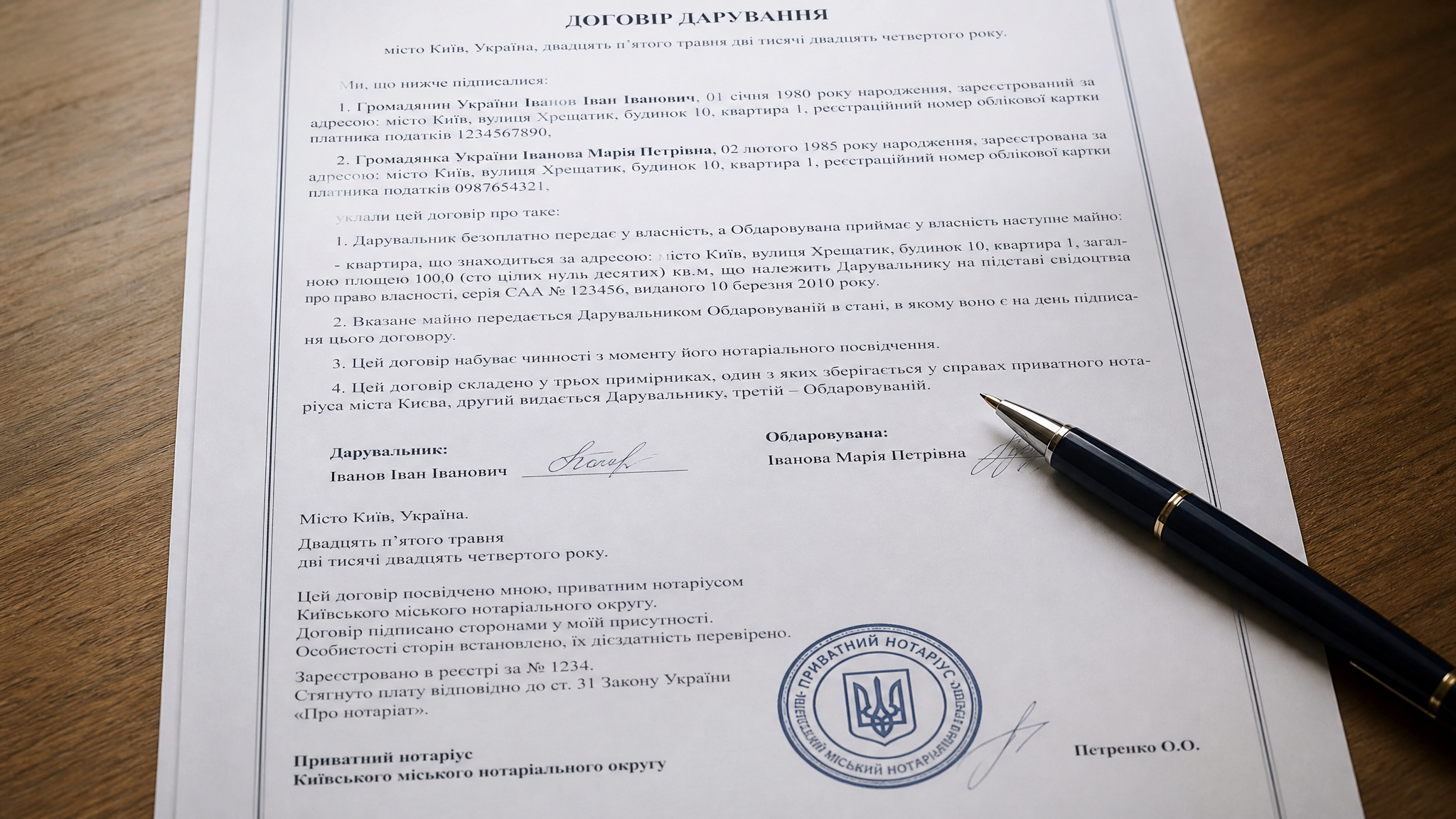
The three pillars
The Fundamentals of Health Legislation (Article 48). This is the law that defines in vitro fertilization and embryo implantation, and it ties them to the Ministry of Health’s rules. It’s the medical-legal base layer: the reason IVF exists as a recognized treatment in Ukraine at all. You don’t need to know more than that. It’s the foundation, not the story.
The Family Code (Articles 123 and 139). These two provisions are the heart of everything. Article 123 says that when an embryo created by a married couple is placed in another woman, the couple are the legal parents, full stop. Article 139 says the surrogate cannot contest maternity if she isn’t the genetic mother. That means the woman who carries the baby has zero legal grounds to keep it, regardless of how she feels at the moment of birth.
Ministry of Health Order No. 787. This is the guide for the medical side. It spells out the conditions that justify surrogacy and the documentation standards clinics must follow. Think of it as the “how” of the medical process.
The key insight here is simple: in Ukraine, you are legal parents from the moment of conception, and the surrogate has no rights to contest. This isn’t a gray-area interpretation or a loophole. It’s codified law.
Why this matters for foreigners
Contrast that with the UK and Canada. In those countries, the surrogate is the legal mother until a court shifts parental rights to you. That means she has a window, sometimes a long one, where she could sue for custody. Ukrainians don’t have that window. The step where you adopt your own child or wait on a parental order doesn’t exist.
But hold that thought, because the same clarity that protects intended parents is also the system’s blind spot. We’ll come back to that in the ethics section.
Who Qualifies for Surrogacy in Ukraine?
Ukraine is open to international patients, but clinics have to follow national rules about who can use surrogacy. There are three non-negotiable criteria, and you need all three. This is a yes/no test, not a negotiation.
The three non-negotiable criteria
1. You must be a married heterosexual couple. Only legally married heterosexual couples qualify. If you live outside Ukraine, your marriage certificate must be apostilled, that’s the official stamp, per the 1961 Hague Convention, that makes your marriage certificate valid in another country, or properly legalized. Same-sex marriages are not recognized, even if your home country recognizes yours.
Here’s the gray area you’ll hear about: some agencies suggest single men “marry their surrogate” as a workaround. Let’s be blunt. That’s a legal fiction with serious risk. The surrogate becomes your legal spouse, with all the rights and obligations that come with it, including inheritance and property claims. We strongly advise against it.
2. You need a documented medical indication. The intended mother must have a medical reason she can’t carry a pregnancy, confirmed by a doctor. The listed conditions are: no womb (inborn or acquired), deformation of the uterus or cervix making pregnancy or delivery impossible, synechia (adhesions or scarring in the uterine cavity), severe somatic diseases that make pregnancy impossible, or more than four implantation failures with high-quality embryos.
The doctor’s letter must state one of these explicitly, on official letterhead, signed, and translated if it’s from abroad. Some clinics accept a more general letter; others demand strict wording. The more clearly you meet the stated criteria, the stronger your case and the better your package options.
3. At least one of you must be genetically linked to the baby. Donor eggs or donor sperm are allowed, but one of you has to be biologically related to the child. Donor egg plus surrogate is a common and well-supported path. This is a hard legal requirement, not a clinic preference.
Who cannot use Ukrainian surrogacy
Singles (with the caveat above), same-sex couples, and couples who can’t establish a genetic link are out. If you don’t meet all three criteria, Ukraine is not your destination. Say it without judgment: this is a legal gate, not a moral one.
The Document Checklist. What You Need, Step by Step
This is the practical gauntlet where foreign couples most often stumble. Here’s what you’ll actually gather, in the order you’d gather it.

Core documents
1. Marriage certificate with apostille. You have two acceptable forms: the original with a single apostille (preferred), or a notarized copy with an apostille on both the copy and the notarization. This is your single most important document. Nothing proceeds without it.
2. Medical reports. Official letterhead, doctor-signed, documenting the medical indication we covered above, translated into Ukrainian by an official translator. Know what this letter is for: it satisfies the Ukrainian government and the clinics. It’s not for your own reassurance.
3. Power of attorney. This lets a representative (an individual or a company) manage the process from afar. It must be notarized and, if issued abroad, apostilled or legalized.
The key advantage: your representative can sign contracts with a new surrogate without additional authorization. That’s genuinely useful when plans have to change fast. Note that if you revoke it, you must inform all parties.
4. Child-carrying contract. Written before a notary, in two copies. For foreign citizens, it must be bilingual: Ukrainian and your native language. Notarization is mandatory.
Supporting legal infrastructure
Beyond these core documents, the system runs on a broader set of statutes: the Civil Code (contracts and representation), the Revenue Code (tax provisions on payments, worth planning for on both sides), and the Law on Vital Statistics Registration plus its implementing rules (which govern the birth certificate). You don’t need to become an expert in any of them. You need to know the framework exists.
Parental Rights and the Birth Certificate Process
Here’s the emotional payoff of the legal framework, and it lands with real force.
The moment of birth
From the moment of conception, the child belongs solely to the intended parents. The surrogate has no standing to keep the baby or claim any rights, even if donor eggs and donor sperm were used. Her husband acquires no parental rights either.
In most of the world, even with a contract, the carrier has at least a window of legal standing. In Ukraine, that window does not exist, this is what makes surrogacy in Ukraine unique.
The birth registration process
When the baby arrives, you’ll need three documents: the surrogate’s notarized consent, a document confirming the birth, and a certificate of genetic relationship. With those, your names go on the birth record from the start. The surrogate’s name appears only in a confidential “Remarks” column. That record is kept with the Vital Statistics Office, and it is confidential, not public.
The timeline is remarkably fast. Registration takes a couple of hours if the paperwork is ready, and the certificate is issued the same day. In practice, plan for the whole thing within about five working days after birth.
The legal consequence is the point: you’re the parents, recorded as such, from the beginning. No adoption. No court case. No extra step.
Citizenship and Passports. The Final Hurdle
Now the hard truth, and it’s a big one. Ukrainian law grants you parentage. It does not grant your child citizenship.
The core rule
A baby born in Ukraine to foreign parents does not automatically get Ukrainian citizenship. The exception exists, but it’s irrelevant for almost every reader: a child can get Ukrainian citizenship only if they haven’t acquired the parents’ citizenship AND the parents live permanently in Ukraine on legal grounds.
What this means for you
Getting a passport or visa for your newborn is the last step of the program, and it’s entirely on you. For US parents, a US passport typically takes up to three weeks, including DNA testing and consulate paperwork.
Some countries have refused citizenship outright. Italy and Switzerland have both declined in documented cases. You must verify your home country’s position before you travel.
Australia has a specific complication: it doesn’t regularly recognize international birth certificates or court orders. Australian parents may need to travel to Poland to collect the child’s passport before returning home, and the Australian government has said it will not evacuate you or the child.
One clarification that trips people up: you generally need a passport and, unless a visa-free agreement applies, a visa to enter Ukraine. Europeans and Americans don’t need a special surrogacy visa. But that’s about your entry, not your baby’s citizenship. Those are two completely separate questions.
What Surrogacy in Ukraine Costs. Numbers That Matter
Let’s talk money. And we’ll start with the honest range so nobody over- or under-plans.
The full range
Total costs typically run $35,000 to $90,000 or more, based on donor egg use and included attempts. A realistic full program lands around $50,000 to $65,000. Guarantee programs, where some clinics offer unlimited IVF cycles and embryo transfers until a healthy pregnancy and birth are achieved, typically cost about $60,000. That’s essentially an insurance policy against failed attempts.
Clinic comparisons
Here’s what actual packages look like:
- Delivering Dreams: Frozen Embryo $45,000 (your own frozen embryos, surrogate search, screening, and legal documents included); Own Eggs $49,000 (IVF with ICSI, one transfer attempt); Donor Eggs $53,000 (donor compensation and procedures included).
- BioTexCom: Standard €39,900 (up to 5 attempts, up to 1-year wait); Standard Plus €49,900 (unlimited attempts, shorter wait up to 6 months); VIP €64,900 (fast matching, unlimited attempts, refund if medical termination occurs). BioTexCom’s IVF-with-own-eggs route runs up to €70,600, with donor egg near €63,800.
The strategic takeaway: the real decision isn’t the sticker price. It’s how many attempts are included, how long you’ll wait, and whether donor costs are covered. The guarantee premium buys certainty. For couples who’ve already had failures, that may be the better value.
Average cost of surrogacy in USA vs Ukraine makes the gap obvious: Ukraine is dramatically cheaper than the US, which can exceed $150,000. And donor costs are far lower than international agencies, which charge $15,000, $20,000 per donation. Ukrainian clinics offer affordable access to Caucasian donors.
Success Rates and Medical Safety. The Evidence
Now the fear most readers actually carry: is surrogacy risky? The evidence is counterintuitive, and it’s reassuring.

What the data shows
A major review of roughly 28,000 surrogate pregnancies found outcomes similar to or better than other IVF pregnancies. The main risk factors were IVF itself and carrying twins, rather than having a surrogate.
The success gap is striking. When donor-egg embryos went to surrogates instead of intended parents, live birth rates rose from about 46% to 57% per transfer, and babies were roughly half as likely to be born at low birth weight, though for those considering this route, surrogacy in ukraine during war raises separate questions about safety, travel, and legal continuity.
The cumulative picture is strong: well-run programs, especially with donor eggs or genetically tested embryos, can reach close to 90% cumulative success across a full package.
On safety, serious complications affect about 2 in 100 surrogates (1.7%) versus about 6 in 100 other IVF patients (5.5%). Cesarean birth was also less common in surrogates.
What drives good outcomes
Surrogate screening, embryo selection, and transfer strategy. A PGT-screened embryo, which is a genetically tested embryo, is preferred in most cycles. Safety comes from clinical excellence and ethical protocols, not from the nature of surrogacy itself.
Here’s the honest caveat: these numbers come from programs that screen carefully and transfer single embryos. Reckless clinics produce worse outcomes. The data reflects the best-run programs. In one study, when surrogates didn’t meet medical guidelines, babies were nearly four times more likely to require special care after birth. Screening isn’t just a formality; it’s the difference between good and bad outcomes.
One more thing worth knowing: gender selection for family balancing is permitted in Ukraine through embryo testing. Clinics can’t guarantee a boy or girl, but they do let you choose which tested embryo to transfer.
Surrogacy in Ukraine During the War. Risks and Realities
This is where legal clarity collides with the real world, and it’s the section where this article earns its credibility. No panic, no doom language, just the facts.
Operational status
When the full-scale invasion began, clinics and agencies in Kyiv closed. Reputable agencies relocated surrogates to western areas. Many clinics in the west have since resumed operations, and much of western and central Ukraine has functioned comparably to other European cities. But the situation can change rapidly.
Current advisories discourage travel. Australia’s Smartraveller advises against travel to Ukraine due to the ongoing invasion, and travel near the Russian border and Crimea is discouraged. The war didn’t kill the industry; it relocated it. But travel safety and clinic stability have to be weighed carefully.
Specific risks
The most acute risk is to your surrogate and your baby. If the situation deteriorates, evacuation may be impossible. Your home government generally won’t come get you. The Australian government has said it will not evacuate you or your child.
On consumer protection: if an international agency fails to deliver, your home country’s consumer laws won’t protect you. This applies to everyone, not just Australians.
There are cross-border complications too. You may need to travel to a neighboring country, such as Poland, to get your child’s passport.
Then there’s the “travelling surrogate” red flag. Some services offer surrogates relocated to Georgia, where surrogacy is illegal, a practice that can be referred to as human trafficking. If a surrogate gives birth in a country where surrogacy isn’t recognized, she can become the legal mother, and your Ukrainian birth certificate loses force across the border. Treat this as a serious warning sign.
The safeguards to demand from any agency
Before you sign anything, an agency should confirm: no ongoing war with another country at the time of the arrangement; the surrogate has proper citizenship, visa, and travel documents; adequate legal protections exist for you, the surrogate, and the child; the surrogate has undergone medical and psychological assessment with ongoing psychological support; she can read and understand the contract, with interpreter help if needed; and she and the child have access to quality healthcare before, during, and after birth. If an agency can’t answer these, walk away.
Ukraine vs. Other Surrogacy Destinations
Ukraine is the reference point for international surrogacy. Here’s how the alternatives stack up.
- Ukraine: Intended parents are legal parents from conception, with no court process after birth and costs far below the US. The catch is war risk and a pending draft law that could restrict foreign access.
- US: The gold standard for medical care and legal certainty, but the most expensive option by far. Laws vary by state and can require a court process. Lower-cost routes exist through independent and assisted surrogacy programs.
- Georgia: Essentially the same legal framework as Ukraine. Available to married heterosexual couples with an infertility diagnosis, and intended parents are named legal parents automatically. The catch is some delays bringing the baby home.
- Mexico: A 2021 Supreme Court ruling made surrogacy a protected medical procedure, and intended parents can be listed on the birth certificate immediately. The catch is a newer legal landscape with less precedent.
- Canada: A legal framework exists in several provinces, and parents can be named on the birth certificate shortly after birth. But only altruistic surrogacy is allowed: you can’t pay the surrogate beyond her expenses.
The comparative takeaway: for couples who qualify, Ukraine offers the strongest legal protection at the lowest cost. The war risk is a risk assessment, not a legal disqualification. And the draft law restricting foreign access is pending but not yet enacted. Factor that into your planning.
Ukraine also has infrastructure advantages worth knowing about. Medical facilities are European-standard, with staff trained in Europe and the US. The WHO rates Ukraine low for low birth weight and infant mortality. Roughly 95% of the population is of European descent, which matters for donor matching. And Europeans and Americans don’t need a special surrogacy visa.
Ethical Considerations. The Framework’s Blind Spots
Here’s the contrarian heart of the piece. Ukrainian law gives intended parents absolute, uncontestable parental rights from conception. That’s the destination’s biggest selling point, and its sharpest ethical edge.
The surrogate’s position on paper
Surrogates in Ukraine are supposed to receive strong protections. Safe housing. Weekly oversight. Full medical, psychological, and contractual support.
Social-worker visits. Housekeeping and childcare as needed. Often direct contact with intended parents. On paper, it’s a serious package.
The documented gaps
The traveling surrogate practice we mentioned evades Ukrainian oversight entirely and can cross into human-trafficking territory. That’s one gap.
Egg donors are generally anonymous in Ukraine. You may only get non-identifying information, which sits uncomfortably against the principle that children have a right to know their genetic heritage.
And because legal parentage transfers so completely and so early, there’s no post-birth window in which a reluctant surrogate could raise concerns. The system assumes she has zero parental interest, and legally, she has none.
The structural gap that matters most
If intended parents abandon a child, it has happened, there’s no legal obligation for clinics to contribute to the child’s care. Children with severe disabilities rarely find adoptive families. There’s a concrete case: a child named Wei, abandoned by intended parents who disappeared after learning of his condition. The clinic had no legal requirement to help fund his care. Health Ministry voices have called for a law change over children left behind.
Some observers argue a system that strips all parental standing from the gestational carrier, regardless of contract terms, borders on a legal fiction that fails to honor her role. That doesn’t change the legal reality. It explains why international observers view the framework with discomfort.
What this means for you
You’re not just buying a service. You’re operating inside a legal structure with a deep power imbalance. Choosing a reputable agency that genuinely respects surrogate welfare isn’t just ethical; it’s risk management. Coerced or exploited surrogates are more likely to become the center of a legal challenge or a scandal.
And here’s our stance, stated plainly: we’re not here to tell you Ukraine is the right call right now. We support readers who choose it, but we don’t promote it. The war risk, not the law, is the primary concern today.
Bottom Line. Who Should Consider Ukraine (and Who Should Not)
Let’s make this a clean decision framework. Place yourself in one column.

Ukraine is probably right for you if:
- You’re a married heterosexual couple (or willing to accept significant legal risk otherwise).
- You have a clear, documented medical indication.
- At least one of you is genetically linked to the child.
- You have a high tolerance for geopolitical risk.
- You want the strongest possible legal protection of your parental rights.
- You want the best chance of bringing your baby home within days of birth.
- You want to spend ~$45,000, $65,000, not $150,000+.
- You’re prepared for the possibility of traveling to a neighboring country (like Poland) for the passport.
Ukraine is probably wrong for you if:
- You’re single or in a same-sex relationship (unless you’ll pursue the “marry your surrogate” workaround, which we strongly advise against, for the legal and ethical reasons above).
- You can’t establish a genetic link.
- You have no medical indication.
- You have a low tolerance for travel risk or operational uncertainty.
- You want the highest-end fertility technology, in which case the US, or for some cases Mexico, may serve you better.
Next steps
- Confirm you and your partner meet the legal and medical criteria. This is a yes/no test, not a negotiation.
- Compare 2-3 clinics or agencies on costs, guarantees, and support level.
- Interview consultants. Ask about programs, waiting lists, matching timeframes, the pool of pre-screened surrogates, hidden fees, and the process from first travel to bringing the baby home.
- Get independent legal counsel. This means a Ukrainian surrogacy attorney NOT affiliated with the clinic you’re considering. A clinic supplying your legal advice is a conflict of interest.
- Verify your home country’s position on international surrogacy before you commit. If your home country doesn’t recognize foreign birth certificates or surrogacy agreements, Ukraine’s law won’t override it.
Quick Reference Table
| Criterion | Requirement | What to Remember |
|---|---|---|
| Marital status | Married heterosexual couple | No exceptions, no recognition of same-sex marriage |
| Medical indication | Documented listed condition | Doctor’s letter on letterhead, signed, translated |
| Genetic link | At least one parent | Required even with donor eggs or sperm |
| Marriage certificate | Apostilled or legalized | Your single most important document |
| Medical reports | Official letterhead, signed, translated | Satisfies the government and clinics |
| Power of attorney | Notarized, apostilled if foreign | Lets a representative sign for you |
| Child-carrying contract | Written, notarized, bilingual | Ukrainian plus your native language |
| Birth certificate | Intended parents named directly | Surrogate only in confidential “Remarks” column |
| Timeline | Same day to ~5 working days | Fast if paperwork is ready |
| Citizenship | Not automatic | Parent-issued passport required |
The Legal Framework Is Strong; the Situation Is Not
Here’s where we land. Ukrainian law gives intended parents the strongest legal foundation in the world. Parental rights from conception. Clean birth certificates.
No post-birth court. The success rates are real, the costs are transparent, and the legal protections are codified. That’s the case for Ukraine, and it’s a strong one.
But the war risk, the pending draft law that could bar foreigners, and the ethical concerns we’ve laid out are not theoretical. They should shape every decision you make. Legal clarity is not operational certainty. The law is on your side; the situation on the ground may not be.
Choose your clinic with care. Choose your legal counsel with rigor. And choose your timing with clear eyes. That’s the honest read on ukraine surrogacy laws for foreigners in 2026, and we hope it helps you decide what’s right for your family.
Frequently Asked Questions
What country is the safest for surrogacy?
Legally, Ukraine is the safest because parental rights are established from conception with no post-birth court process or window for the surrogate to change her mind. However, the ongoing war introduces significant operational risk. The US offers strong legal protections but at a much higher cost, and laws vary by state.
How much does it cost to use a foreign surrogate?
In Ukraine, total costs typically range from $35,000 to $90,000, with realistic full programs landing around $50,000 to $65,000. Guarantee programs with unlimited attempts run about $60,000. This is dramatically cheaper than the US, where costs can exceed $150,000.