
Last fall, I was sitting in my living room when a neighbor from down the street knocked on my door. She’d just inherited some money and was trying to decide whether to buy a house with cash or go the traditional mortgage route. But her first question stopped me: Is it suspicious to buy a house with cash? Because everyone keeps acting like I’m doing something weird.
She wasn’t wrong to wonder. There’s a trust gap here. On one hand, 26% of primary residence buyers paid cash in 2024 — that’s an all-time high since NAR started tracking, according to the National Association of REALTORS 2024 Profile. Cash purchases are common. But here’s the other side: a survey found that 61% of sellers view cash buyer companies as scams. So yeah, there’s tension.
If you’ve been asking yourself the same question — whether paying cash for a house raises red flags, the short answer is: it depends on who you ask. A legitimate cash offer is a seller’s dream. But between real scams and regulatory reporting requirements, it makes sense to wonder. Let me walk you through what’s actually suspicious versus what just feels that way.
Key Takeaways
26% of primary residence buyers paid cash in 2024, an all-time high — paying cash is common and growing, not unusual.
The IRS and FinCEN reporting burden falls on the seller or agent, not you, but you should still keep clear documentation of where your funds came from.
61% of recent sellers view cash buyer companies as scams, which is why having professional proof of funds and avoiding pressure tactics matters.
Table of Contents
The trust gap — what’s common vs. what feels wrong
Here’s the tension: more than a quarter of buyers pay cash, yet a majority of sellers are suspicious of cash buyer companies. How does that work?

Part of it is that “cash buyer” has become a loaded term. When most people say “cash offer,” they mean liquid funds from savings, inheritance, or the proceeds of a previous home sale — not a literal duffel bag of hundred-dollar bills. (Please don’t show up to closing with a duffel bag. That will be suspicious.)
But sellers have gotten burned. The FBI reported over $396 million in losses from real estate and rental scams in 2022 alone. So when someone offers cash, especially from a company you’ve never heard of, it’s rational to be cautious. Your legitimate offer might get side-eyed simply because the person on the other side has heard one too many horror stories.
You can usually tell the difference by how the offer is presented. Real cash buyers come with documentation. Scammers come with pressure.
The reality — cash buying is mainstream, not marginal
In 2024, 26% of people who bought a primary residence paid cash — that’s the highest since NAR started tracking it. A separate survey from July 2025 showed 31% cash purchases. This isn’t some fringe thing wealthy people do. It’s a normal option.

Where does the cash come from? A lot of places. About 7% of first-time buyers used inheritance in 2024 (also an all-time high). Others use savings from years of renting, home equity from a previous sale, or a bonus from work. There’s nothing mysterious about it.
And sellers love cash offers — when they’re legitimate. Cash purchases close at rates above 95% vs 87-90% for financed (NAR). Cash buyers typically close in 1 to 2 weeks vs 30 to 45 days for financed, which is roughly 14 days faster, according to Zillow. That speed and certainty matter.
Maureen McDermut, a Santa Barbara agent with 30-plus years of experience, told sources that 80% of her buyers pay cash. In some markets, it’s not just normal — it’s expected. So if you’re worried that your cash offer will stand out in a bad way, don’t. It’s more likely to stand out in a good one.
What the IRS and regulators actually care about (and why it’s not you)
A lot of people worry that dropping a big chunk of cash on a house will trigger an IRS audit. That concern is understandable, but it’s largely misplaced. The reporting burden falls on the seller or the agent, not on you.
Here’s how it actually works.
Form 8300 — what counts as cash and who files it
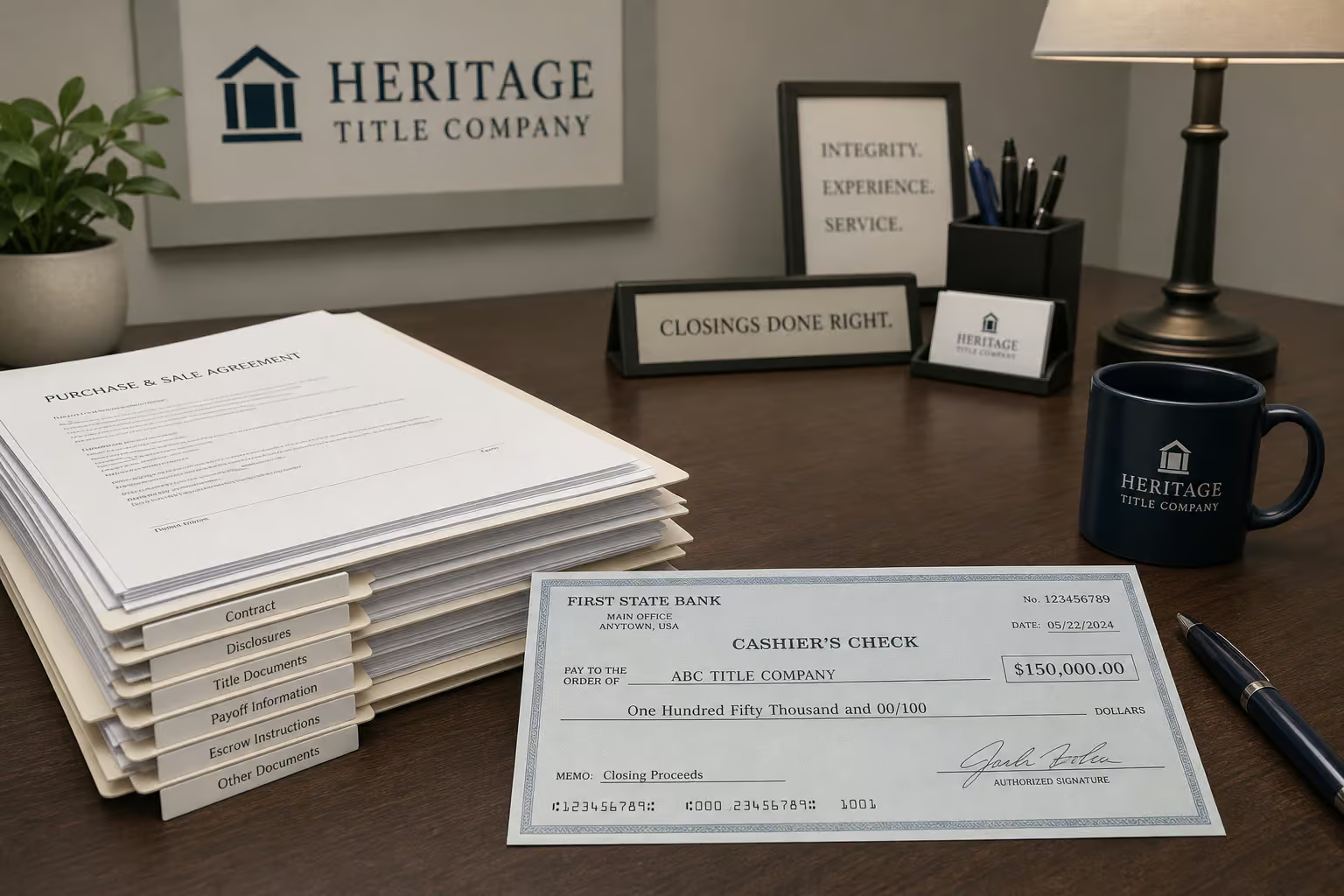
If a business receives more than $10,000 in cash for a single transaction or series of related transactions, they have to file Form 8300 with the IRS. And yes, “cash” for these purposes includes cashier’s checks, bank drafts, and money orders — not just physical bills.
But here’s the thing: in a typical real estate transaction, the buyer isn’t handing the seller $450,000 in cashier’s checks at the closing table. The funds move through escrow or a title company. So the filing obligation usually falls on the settlement agent, not you. And a cashier’s check issued by a bank is generally reported by that bank anyway.
For the purchaser, the only thing that reports to the IRS is the deduction of property taxes paid through escrow — if you itemize, that is. Since the property is bought for cash, there is no debt, therefore no mortgage interest to deduct. That’s a simpler tax situation, not a more complicated one.

When agents file Suspicious Activity Reports with FinCEN
Real estate agents can also file a Suspicious Activity Report with the Financial Crimes Enforcement Network (FinCEN) if they suspect the money is coming from illegal activity. And the Office of Foreign Assets Control (OFAC) screens transactions for money laundering red flags tied to sanctions.
But here’s the key point: these reports are about patterns of suspicious behavior — structuring a payment to avoid reporting thresholds, or funds that clearly don’t add up with the buyer’s known income. If you have a legitimate source of funds and you can document it, you’re not the person these reports are designed to catch.
Why legitimate buyers rarely trigger these requirements
Look, the system is designed to catch money launderers and fraudsters, not someone who saved up for a decade and wants to skip the mortgage payment. If your money comes from a verifiable source — bank account, inheritance paperwork, stock sale records, and you’re not trying to hide where it came from, you’re fine.
The one thing you should do: keep your paperwork in order. Even though you don’t have to file anything yourself, having a clear paper trail for your funds makes the whole process smoother and keeps everyone comfortable.
Why sellers get suspicious — the scam problem is real
Now let’s talk about the other side: why your legitimate offer might get treated like it’s shady. Because while most cash buyers are perfectly aboveboard, the scams are real and they’re growing, so following a clear buying a house with cash process can help you stay legitimate.
Bait-and-switch and overpayment checks
One of the more common tactics is the overpayment scam. Here’s a real example: a seller received a check for $75,000 on a $70,000 agreement. The buyer then asked for the $5,000 difference to be wired back. The check eventually bounced, and the seller was out the $5,000.
Another variation is the bait-and-switch. A buyer makes a generous cash offer upfront, then after the seller is emotionally committed — maybe they’ve already started packing, the buyer lowers the price significantly. At that point, the seller feels stuck.
Assignment clauses and pressure tactics
Some scammers use assignment clauses in the contract, which let them sell the right to buy the property to someone else without ever putting their own money at risk. They essentially flip the contract, pocket the difference, and leave the seller dealing with a buyer they never agreed to work with.
Pressure is another giveaway. Phrases like “this offer won’t last” or “we need an answer by tonight” are designed to prevent you from doing your homework. One Seattle homeowner received a lowball, high-pressure cash offer that a local expert quickly identified as a scam. They declined, and later sold the property at fair market value.

Scam offers also tend to fall 25-35% below market value, which is its own red flag. Legitimate cash buyers usually offer fair market prices — they’re buying because they want the house, not because they think they can steal it.
How legitimate buyers differentiate themselves
So how do you prove you’re the real deal? The biggest difference is simple: legitimate buyers provide verifiable documentation. They don’t make excuses. They don’t ask for upfront fees.
They don’t pressure you to sign before you’ve had time to think. Partnering with a team that prioritizes clear communication and personalized support helps you navigate the process securely and confidently.
If you’re a cash buyer, your goal is to look boring and professional. That means having your paperwork ready, being transparent about where the money came from, and not acting like you’re in a rush, as you can then enjoy the advantages of buying a home with cash. Sellers who see a clean, well-documented offer from a buyer with verifiable funds will relax.
How to present a credible cash offer — documentation that overcomes scrutiny
If you want to make sure your cash offer doesn’t get side-eyed, you need to bring receipts — literally.
Acceptable proof of funds documents and how to prepare them
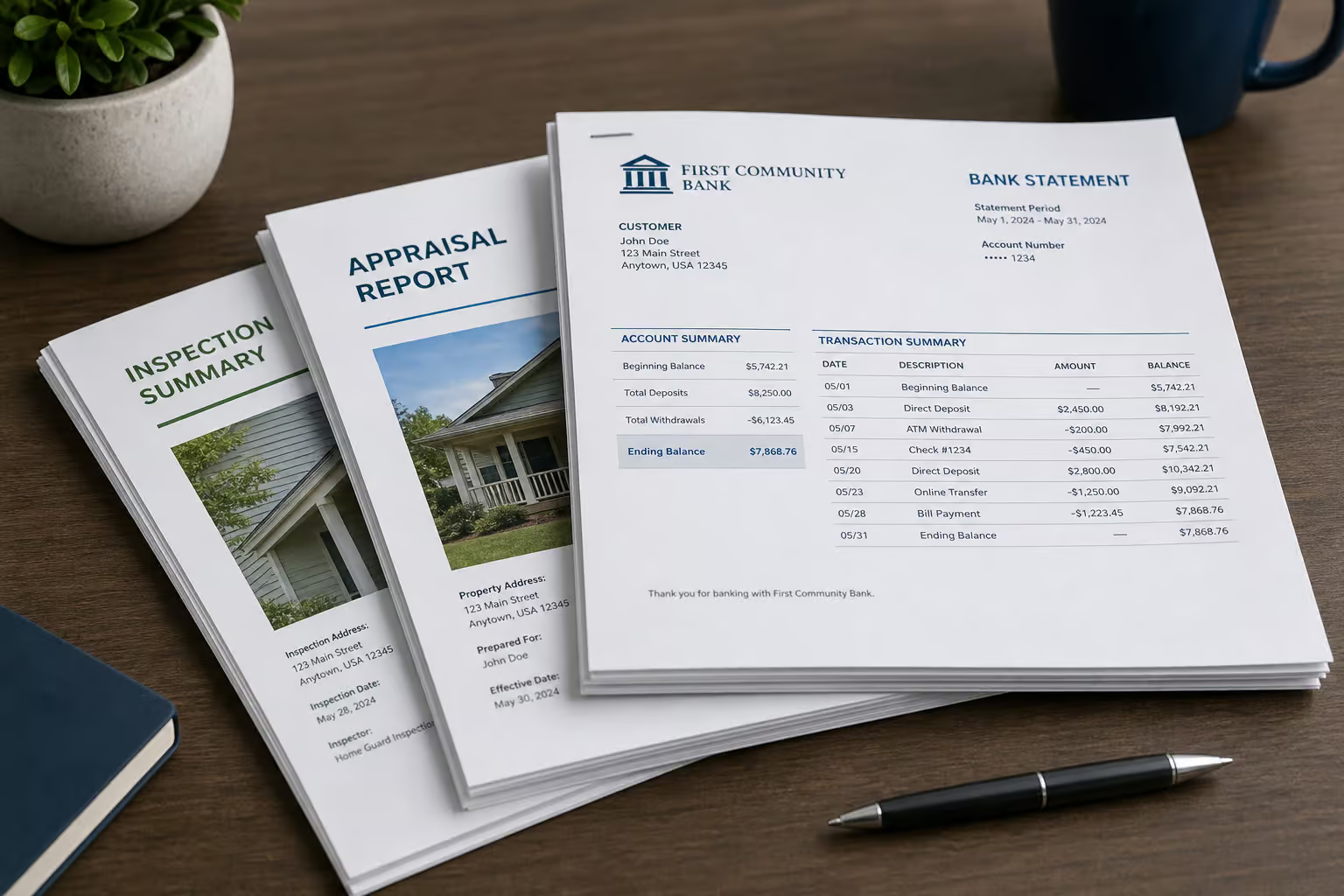
You’ll need to provide proof of funds that shows you actually have the money. Acceptable documents include bank statements, investment account statements, money market records, or an official letter from your bank. Most sellers require proof of funds documents dated within 30-60 days — that’s the 30-day to 60-day validity window. Anything older and the seller will wonder if you spent the money.
If your down payment comes from a gift from family or a personal loan, you’ll need extra documentation to avoid suspicion. Provide a signed gift letter stating the money is a gift and not a loan, plus bank statements showing the transfer from the giver’s account. For family loans, include a signed notarized loan agreement and evidence of the funds leaving the lender’s account — this proves the money is legitimate and not part of a scam.
A few practical tips:
- Redact your account numbers, leaving only the last four digits visible for verification purposes.
- Get multiple certified letters from your bank if you’re looking at houses in different price ranges — that way you can show exactly what you can afford without oversharing.
- Don’t submit screenshots of your banking app. They look unprofessional and can easily be faked. Get the official document.
Why even cash buyers need inspections, appraisals, and contingencies
This is where a lot of cash buyers make their biggest mistake. They figure, I don’t have a lender forcing me to get an inspection, so I’ll skip it. Bad idea. Home inspections are essential to identify costly issues before you commit.
A home inspection typically costs $300-500 and can uncover $5,000-50,000 in needed repairs. One cash buyer discovered $30,000 in foundation problems just two months after closing — exactly the kind of thing a pre-purchase inspection would have caught, but that’s just one of many cash expenses buyers face.
Appraisals work the same way. As a cash buyer, you’re not required to get one. But before you decide, you should ask yourself is it smart to purchase a home in cash? An independent appraisal costs $400-600 and provides fair market value based on recent comparable sales.
Cash buyers who skip appraisals may overpay by $50,000 on a home that appraised at $425,000 but was offered at $475,000. Ouch.
And don’t forget contingencies. Even though you’re paying cash, include an inspection contingency and an appraisal contingency in your contract. If the inspection reveals expensive problems, or the appraisal comes in low, you can renegotiate or walk away. Without contingencies, backing out means losing your earnest money — typically 1-3% of the purchase price. Homeowners insurance is non-negotiable for cash buyers to protect their largest asset.
Wire fraud protection for cash buyers
One risk is wire fraud. Real estate transactions involve big money moving between accounts, and scammers love to intercept wiring instructions. They send fake emails that look like they’re from your title company or attorney, with revised wiring instructions that send your funds straight to their account.
The rule is simple: always verify wiring instructions by phone using a number you found independently — not one from the email itself. And if anything feels off, slow down. Wire transfers are essentially irreversible. Once the money goes to the wrong place, it’s gone.
The real risk — financial exposure, not suspicion
The danger of paying cash for a house isn’t that someone thinks you’re shady. It’s that you might wake up six months later with no liquid savings and a $20,000 roof repair you can’t afford.
The liquidity trap — how being house rich but cash poor happens
“House poor” means having substantial equity in your home but not enough cash to cover everyday life.
A couple sells their starter home for $250,000, adds $200,000 in savings, and buys their dream $450,000 home with cash. Six months later, they face $31,500 in unexpected expenses — medical bills, a car repair, a tree falling on the fence, and they’ve only got $5,000 left in the bank. The equity is there, but they can’t access it without selling the house or taking out a home equity loan, which takes time.
I also have a family member who put nearly all their liquid assets into a cash home purchase. Eighteen months later, they got hit with $35,000 in medical bills. That kind of expense is hard enough when you’ve got savings. Without an emergency fund, it’s devastating.
Opportunity cost — what your cash could earn instead
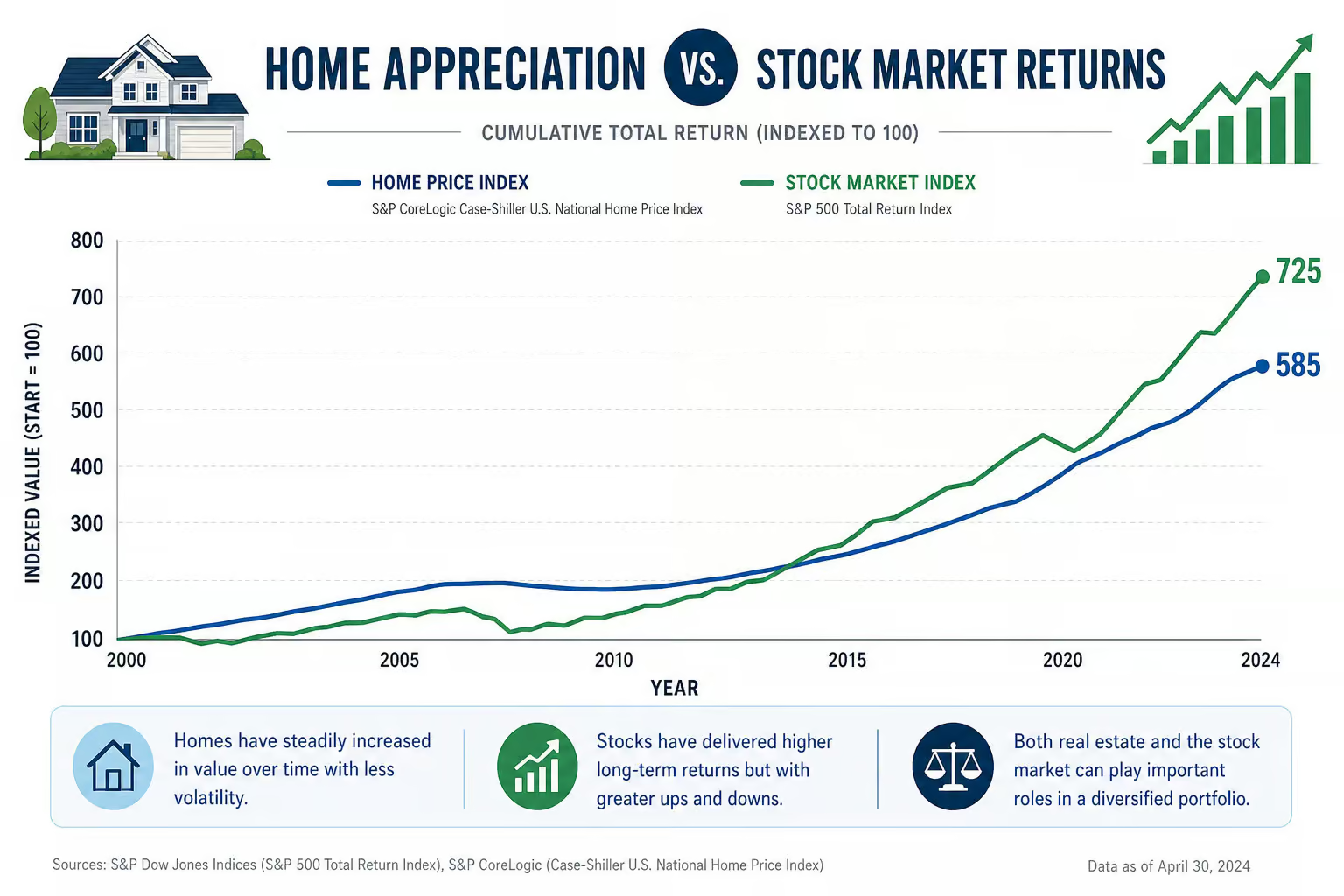
There’s also the question of what else that money could do. Vanguard research shows a balanced stock/bond portfolio returned approximately 8.8% annually from 1926-2023. Meanwhile, home appreciation typically runs 3-5% per year. Annual homeowners insurance typically ranges from $1,500 to $6,000.
That doesn’t mean paying cash is wrong. Cash buyers save roughly $382,000 in interest on a $450,000 home over 30 years at 6.3%. But you’re also giving up potential investment growth on that $450,000. It’s a tradeoff, not a clear winner.
How much cash to keep in reserve before buying
Most financial advisors recommend keeping 6-12 months of living expenses liquid. If draining your accounts to buy a house would leave you with less than that, you probably shouldn’t pay full cash.

Here’s a practical calculation: say you have $450,000 in total liquid assets. Set aside $60,000 as your emergency fund. That leaves $390,000 available for the house. Now you know your actual cash ceiling — and you can proceed without putting yourself at risk.
Strategies to keep liquidity and credibility — hybrid approaches and delayed financing
You don’t have to choose between paying all cash and financing everything. There are middle paths that give you the best of both worlds.
The 40-60% hybrid — keep liquidity, keep credibility
One option is to put 40-60% down and finance the rest. You still look like a strong buyer to the seller. You’re putting down a huge chunk of cash, which signals stability. And you come with financing already approved, which removes the “will this deal fall through?” anxiety.
At the same time, you keep a significant amount of cash available for emergencies or other investments. On a $450,000 home, a $250,000 down payment with $200,000 financed works out to a monthly payment of roughly $1,331 at current rates. Totally manageable for most people, and you’ve still got $200,000 in the bank.
Delayed financing under Fannie Mae guidelines
Another strategy is to buy with cash now and refinance later. Fannie Mae’s delayed financing guidelines actually permit a cash-out refinance as soon as the deed is recorded, as long as you can document the original cash purchase.
Maureen McDermut’s clients do this often. They pay cash to close quickly — often beating out financed offers, then refinance within allowed time limits to pull equity back out. Some use the cash for other investments. Others refinance to recapture tax benefits that come with having a mortgage.
A note on timing: you can refinance immediately, but waiting 6-12 months often gets you better loan terms. Lenders like to see some seasoning on the property.
Bridge loans and portfolio loans for specific situations
If you’re in a situation where you need cash to close but don’t have it yet — say you’re selling your current home and buying a new one, a bridge loan can work. They’re short-term (3-12 months) and expensive (7-10% interest plus 1-2% fees), but they give you the liquidity you need while your previous home sells.
Portfolio loans from local banks or credit unions are another option. These are loans the lender keeps on their own books instead of selling to Fannie Mae or Freddie Mac, which means they can be more flexible with terms. They’re worth exploring if your situation doesn’t fit standard mortgage guidelines.
When to choose cash vs. financing — a decision framework
There’s no single right answer here. The decision depends on your personal financial situation, risk tolerance, and goals. But here’s a simple two-question test to help you think it through.
- Do you have 2 to 3 times the home’s cost in liquid assets? If yes, you’re a good candidate for cash. That cushion means you won’t be left stranded.
- Would paying cash consume 80% or more of your liquid assets? If yes, you should probably finance instead, or use a hybrid approach. Draining your accounts for a house is a recipe for being house poor.
Cash makes more sense if you’re downsizing — selling a larger home and buying a smaller one with the equity. I know several people who did exactly that and report sleeping better without a mortgage. It also works well if you have inheritance money, a large bonus, or if your credit score makes financing difficult. Approximately 16% of Americans have credit scores below 600 (FICO), and another 18% have scores between 600-649 (FICO). Cash bypasses all that.
Financing makes more sense if preserving liquidity matters to you, or if you want to keep your money invested in the market. And yes, there’s the mortgage interest deduction — but only about 10% of taxpayers itemize deductions since standard deduction increased (2023 figures), so it’s not the selling point it used to be.
The bottom line? Your cash offer isn’t suspicious. What matters is how you present it, whether you protect yourself with inspections and appraisals, and whether you leave yourself enough breathing room for life’s inevitable surprises. Get those three things right, and you can buy with confidence.
People Also Ask
Is it a bad idea to pay cash for a home?
Not necessarily, but it depends on your financial situation. Paying cash saves you roughly $382,000 in interest on a $450,000 home over 30 years and gives you a faster, more certain close. The downside is you lose liquidity and potential investment growth — a balanced portfolio historically returned about 8.8% annually, while home appreciation averages 3-5%.
Is buying a house in cash suspicious?
It can feel that way to some sellers — 61% of recent sellers view cash buyer companies as scams — but a legitimate cash offer is actually a seller’s dream. Cash purchases close at rates above 95% versus 87-90% for financed deals, and typically close in 1-2 weeks instead of 30-45 days. The key is providing professional proof of funds and avoiding pressure tactics.
What documentation do I need to prove I’m a legitimate cash buyer?
You’ll need proof of funds like bank statements, investment account statements, or an official letter from your bank, all dated within 30-60 days of your offer. Redact your account numbers except the last four digits, and get multiple certified letters if you’re looking at different price ranges. Don’t submit screenshots of your banking app — they look unprofessional and can be easily faked.