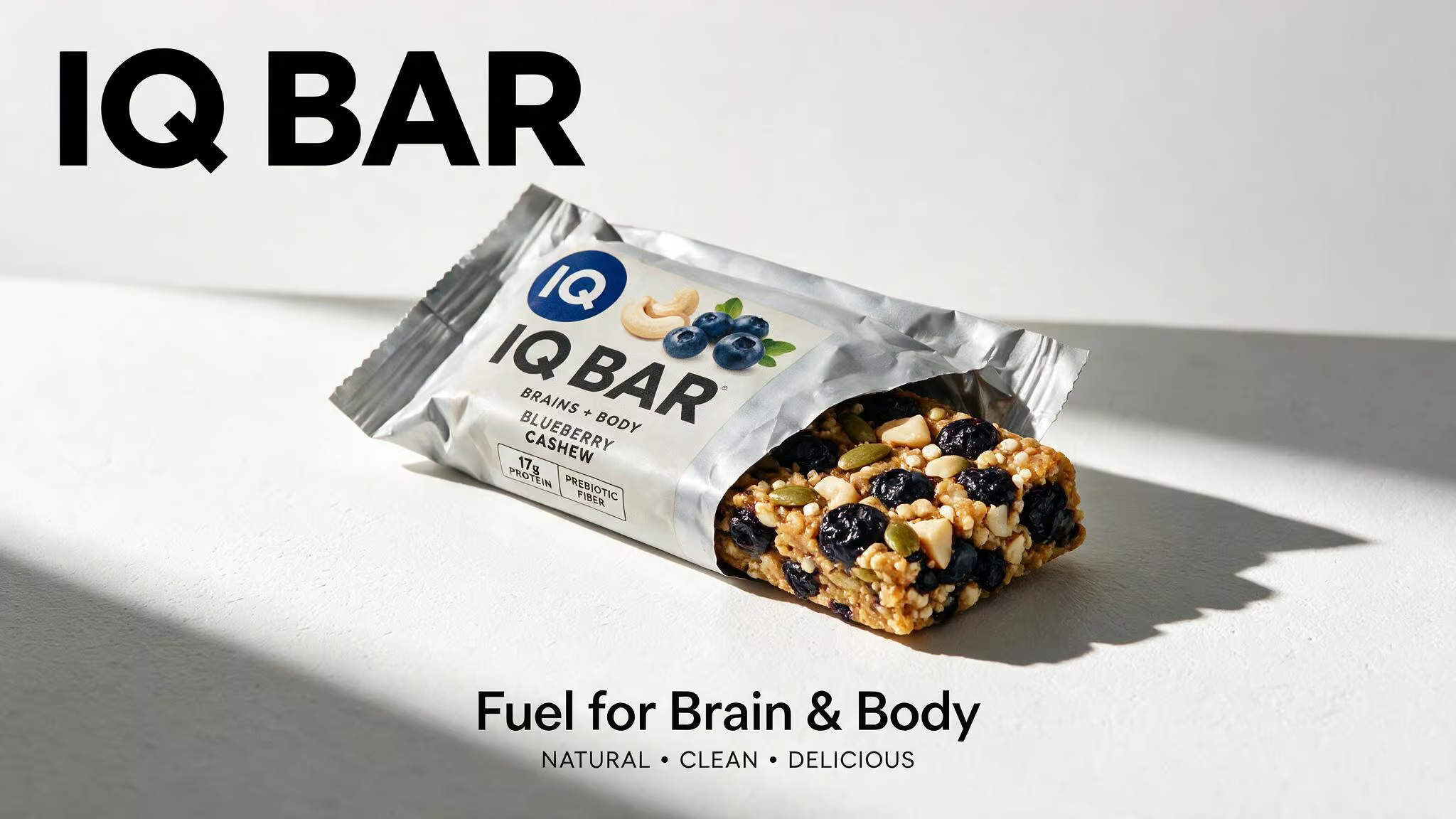
I wanted to believe the brain-boosting hype. Here’s what I found.
I first came across IQ Bars the way a lot of parents do: I was standing in the grocery aisle (well, scrolling online) looking for a low-sugar snack that my kids would eat and that wouldn’t send their blood sugar on a rollercoaster. Then I saw the pitch: keto-friendly, plant-based, and — the kicker, brain-boosting. Six specific ingredients (Lion’s Mane, MCTs, flavonoids, omega-3s, and vitamin E, and choline) all aimed at sharper focus and better memory. I wanted it to be true.
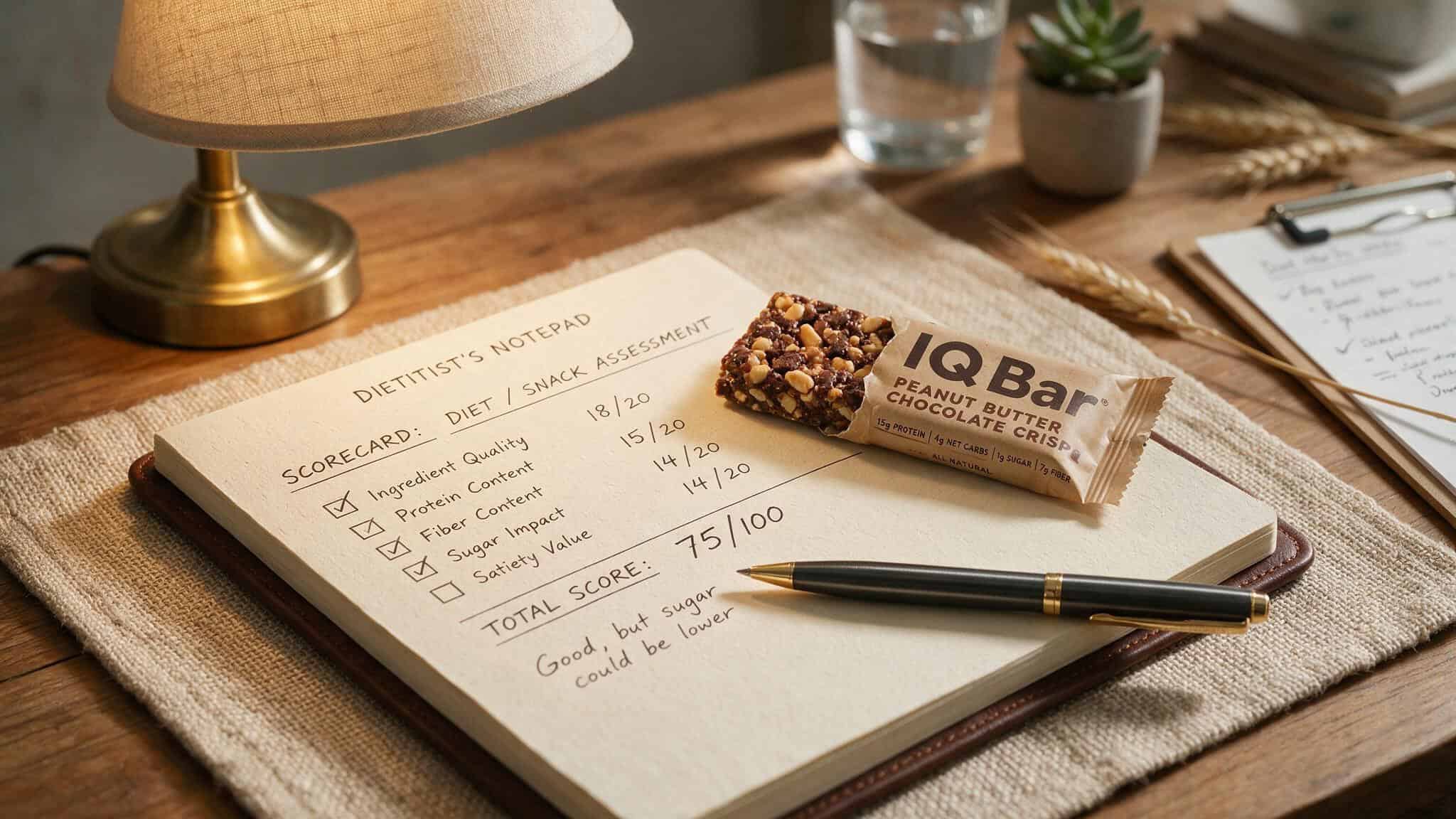
But I’m also a nutritionist-informed reviewer with a skepticism of marketing claims that sound too neat. So I dug into the actual numbers, the ingredient list, and the science behind those brain claims. One dietitian gave IQ Bars a score of 75 out of 100 — a solid B, not an A.
Key Takeaways
IQ Bars deliver 2–3g net carbs, 7–8g fiber, and 1–2g sugar per bar — a macronutrient profile that supports stable blood sugar and appetite control, making them a solid choice for low-carb and keto diets.
The brain-boosting marketing leans heavily on omega-3 studies that used DHA/EPA from fish, but the bar contains ALA from flaxseed — and your body converts only about 5% of ALA into the active forms your brain uses.
The exact dosages of the six brain ingredients (Lion’s Mane, MCTs, flavonoids, omega-3s, vitamin E, and choline) aren’t disclosed, so you can’t verify whether you’re getting a clinically meaningful amount from any one bar.
Table of Contents
What’s actually inside — full nutritional breakdown
Let’s start with the part of IQ Bars that’s impressive: the macros. Depending on the flavor, you’re looking at 160–180 calories, 12–13g total fat (2.5–4g of that saturated, mostly from nuts and coconut oil), and 12g of plant-based protein. But the headline numbers are the carbs.
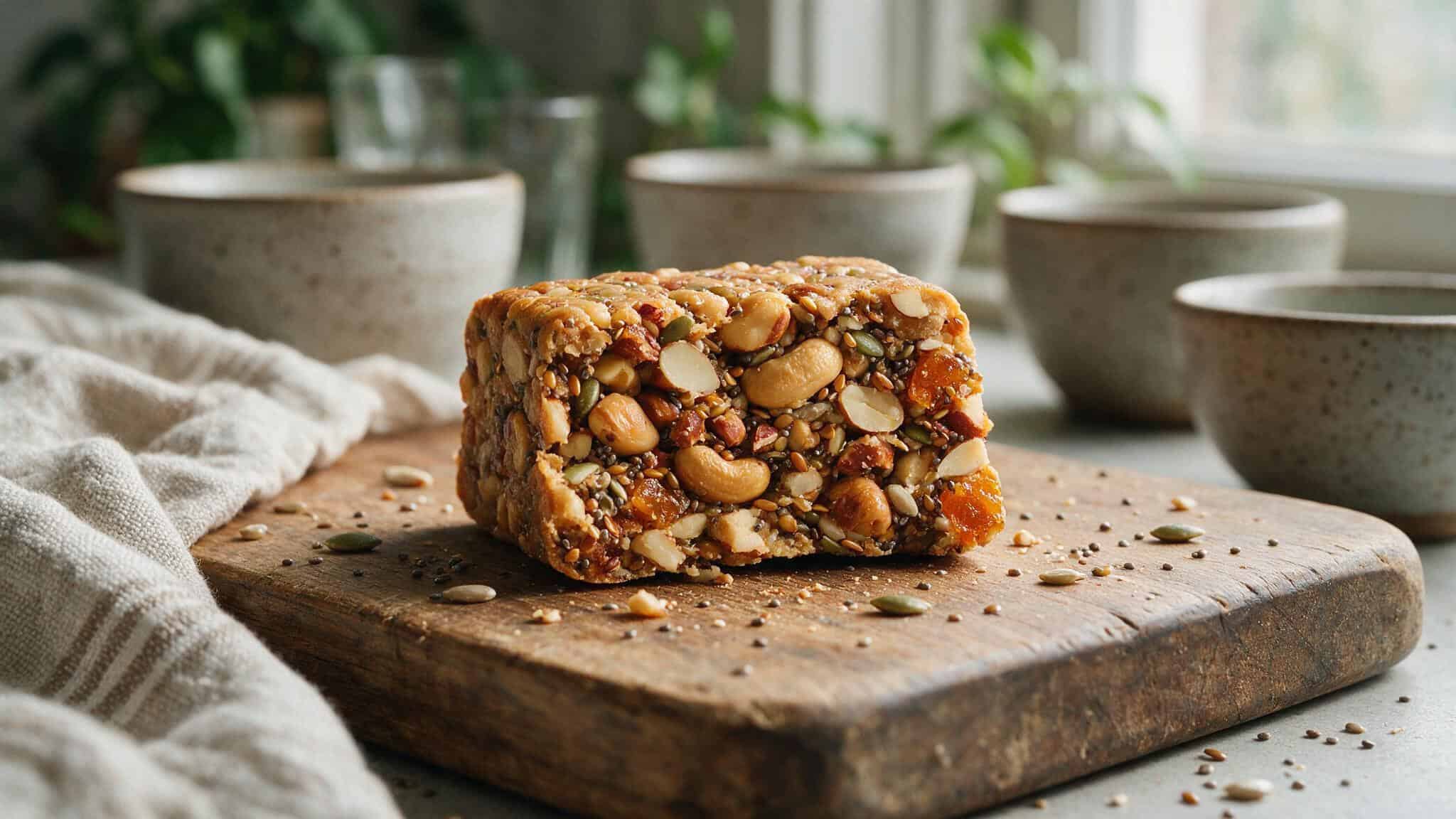
Each bar has 9–10g total carbohydrate, but 7–8g of that is fiber. That leaves just 2–3g net carbs. The sugar? 1–2g, and none of it is added. That fiber-plus-protein combo is a win for anyone trying to control appetite or avoid energy crashes. The high fiber slows digestion, the protein keeps you full, and the near-zero sugar means no blood sugar spike.
The micronutrient profile is decent, not spectacular. You get a modest amount of potassium (120–210mg), calcium (50–80mg), magnesium (55–75mg), and iron (2.4–3.5mg — a hit for a plant-based bar). The standout is vitamin E: 14.3–15.5mg per bar, which is a dose of an antioxidant that also acts as a natural preservative here. One notable omission is vitamin D, 0mcg. Not a dealbreaker, but it’s worth knowing if you rely on bars for micronutrients.
Sodium ranges from 125–190mg depending on the flavor. That’s high for a snack bar — something to flag if you’re on a low-sodium diet or have hypertension. The saturated fat range (2.5–4g) is also something to note if you’re watching that number, but keep in mind it comes from whole food sources like nuts and coconut oil, not processed junk.
Bottom line on the macros: This isn’t just another protein bar that’s secretly candy. The macronutrient balance here is healthy — low sugar, high fiber, moderate protein.
Ingredient deep dive — what’s in (and not in) an IQ Bar
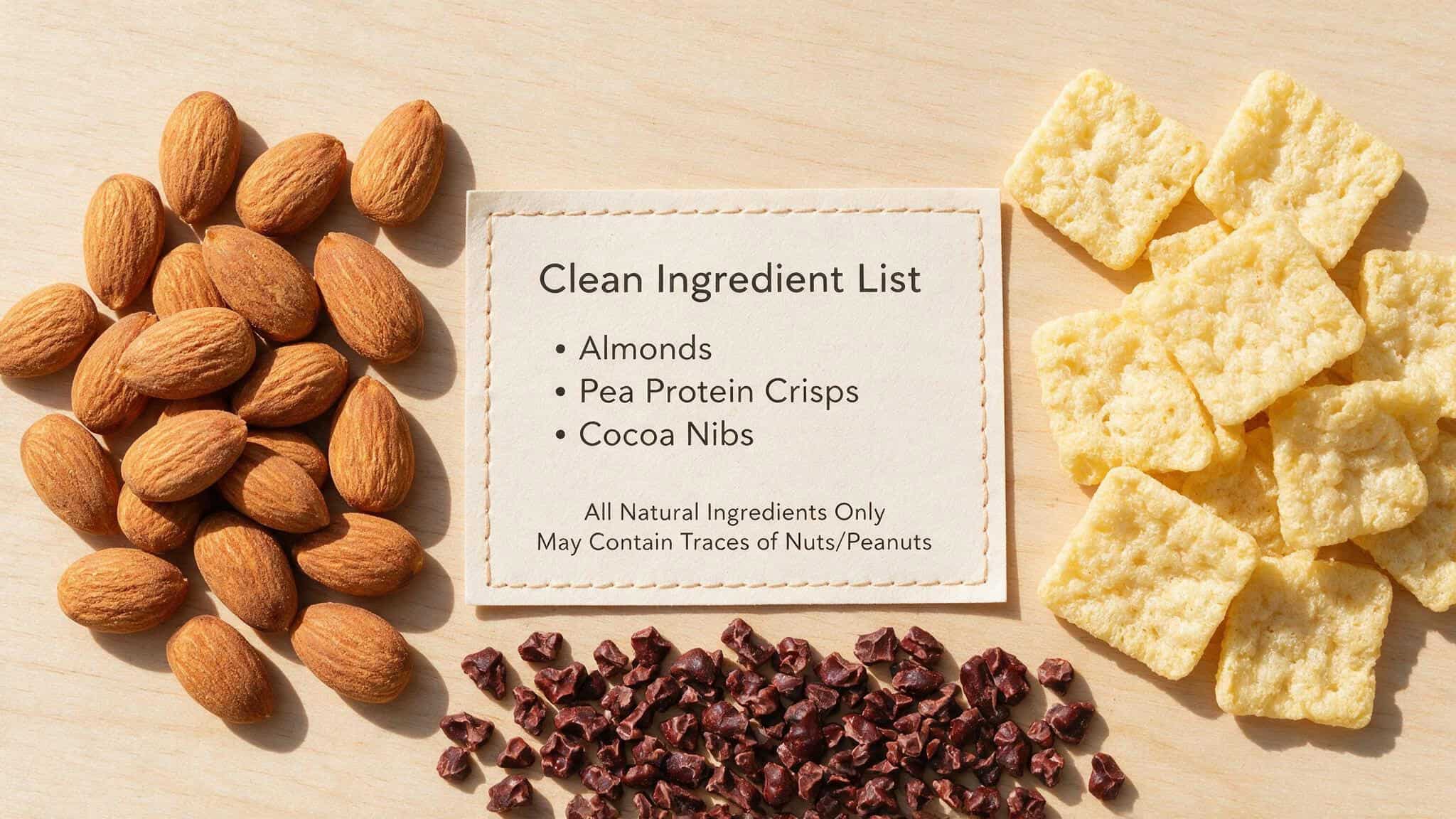
Pull up the ingredient list for Chocolate Sea Salt, and here’s what you see: Almonds, Protein Blend (Pea Protein Crisps, Pea Protein Isolate), natural flavors, a prebiotic blend (tapioca fiber and vegetable fiber), cocoa, and coconut oil, Vitamin E, Sunflower Lecithin, Stevia, Sea Salt. That’s it. No long list of chemical names.
What you won’t find
- Seed oils — IQ Bars avoid them entirely, which is rare in the protein bar market. Most bars rely on sunflower or canola oil for texture. These don’t.
- Artificial sweeteners — The sweetness comes from stevia and monk fruit. No sucralose, aspartame, or sugar alcohols.
- Synthetic preservatives — Vitamin E (tocopherols) does the job naturally.
What you will find
- Pea protein — It qualifies as a complete protein because it provides all nine essential amino acids. A 2019 study showed pea protein works as effectively as whey for post-workout muscle growth. That’s legit.
- Prebiotic fiber — The tapioca and vegetable fiber blend feeds your gut microbiome, not just keeps you regular.
- Flavor-specific variations — The Chocolate Mint Chip adds a hint of natural mint; the Almond Butter Chip is mostly almonds and pea protein; the Peanut Butter Chip includes peanuts and peanut flour. Nearly all flavors share the same clean base.
The brand touts compatibility with vegan, paleo, keto, diets that are gluten-free, dairy-free, soy-free, and non-GMO. If you’re a label-reader who avoids processed additives, this IQ bars review earns points here, offering an honest, mom-tested take on taste, nutrition, and whether they live up to the brain-fuel hype for busy families.
Do the brain ingredients deliver? — Lion’s Mane, omega-3s, and the dosage gap
IQ Bars contain six ingredients tied to cognitive health: Lion’s Mane mushroom, MCTs, flavonoids, omega-3s, vitamin E, and choline. Each has some research behind it, including a closer look at are IQ bars Bobby approved — a measure of whether they meet clean-eating standards. Lion’s Mane, for example, shows promise in small studies for stimulating nerve growth factor and supporting memory.

The bigger issue is dosage. The brand doesn’t disclose how much of any brain ingredient is in each bar. Without that number, you can’t know if you’re getting a clinically meaningful amount or a sprinkling.

The omega-3 bait-and-switch
The disconnect is with the omega-3s. The bar’s marketing cites studies that show omega-3s support memory, learning, and the creation of new brain cells. Those studies used DHA and EPA — the animal-based forms found in fish oil. But IQ Bars contain ALA, a plant-based omega-3 from flaxseed.
The body can convert only about 5% of ALA into DHA and EPA. That means the flaxseed oil in the bar isn’t going to your brain. Dietitians I’ve spoken with describe plant-based omega-3 supplements like flaxseed as “not particularly useful” for brain health compared to fish oil. So the bar’s brain claim rests on a marketing trick: reference the gold-standard research, then use a cheaper, less effective form of the ingredient.

I’ll also share my own note here: after eating one bar, I felt a mental clarity and sustained focus. That’s a personal anecdote, not clinical evidence. It could be the protein and fat stabilizing my blood sugar, or the placebo effect of thinking “this is supposed to make me sharper.”
Dietitian verdict on the brain claims:
The sweetener tradeoff — allulose vs. stevia and the digestive cost
IQ Bars use a blend of allulose and stevia. Allulose is a sugar the body can’t digest well — it contributes almost no calories and has a minimal effect on blood glucose.
For some people, especially those with sensitive digestion, that fermentation causes bloating and gas. This is dose-dependent — not everyone reacts, but if you’re already sensitive to sugar alcohols like xylitol or erythritol, you might find allulose triggers similar issues. The 7–8g of fiber in each bar compounds the digestive load.
Practical advice: start with half a bar to test your tolerance. If you have IBS or a history of bloating from low-calorie sweeteners, you may want to skip IQ Bars entirely or look for bars sweetened only with stevia, which is generally well-tolerated. Perfect Keto bars, for comparison, use stevia alone.
IQ Bar vs. Perfect Keto Bar — which should you choose?
The most direct competitor to IQ Bars is Perfect Keto. Both are low-carb, keto-friendly bars with 2–3g net carbs. But the differences matter depending on your goals.
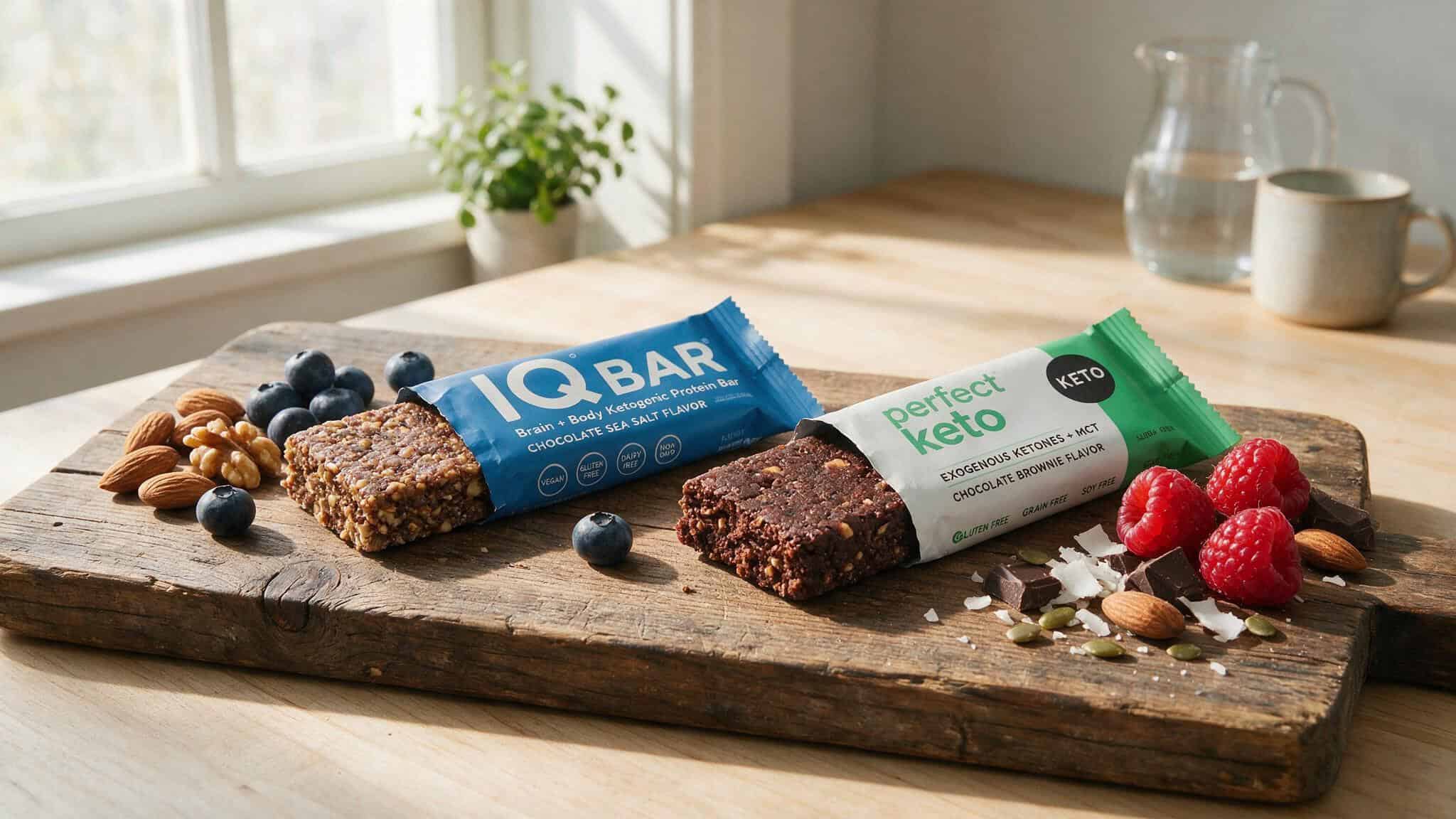
| Factor | IQ Bar | Perfect Keto Bar |
|---|---|---|
| Vegan | Yes | No (collagen protein from animals) |
| Protein type | Pea protein (complete, good for muscle) | Collagen protein (good for skin, hair, gut) |
| Fat source | Coconut oil + flaxseed (ALA omega-3s) | MCT oil (direct ketone source) |
| Sweetener | Allulose + stevia | Stevia only |
| Fiber | 7–8g | 9–10g (2g more) |
| Net carbs | 2–3g | 2–3g |
| Calories | 160–180 | 230 (Birthday Cake example) |
Choose IQ Bars if: you need a vegan bar, you want the complete protein for muscle building, and you tolerate allulose fine. The pea protein is an advantage if you’re plant-based and active, but the key question is is IQ a good protein bar for serious muscle support compared to other options.
Choose Perfect Keto if: you want collagen’s benefits for skin hydration, elasticity, and gut lining support. The MCT oil is a plus for maintaining ketosis and appetite suppression. And if allulose bothers your stomach, Perfect Keto avoids it entirely.
Both bars contain tapioca fiber as a prebiotic, so you get gut microbiome support either way.
Practical takeaways — cost, availability, and everyday use
IQ Bars run about $2 per bar, which is mid-range for a clean-label bar. There’s a promo code 20MINDBODYDAD for 20% off if you want to try them.
The catch: they’re sold online. You won’t find them at most grocery stores or gas stations, which is a friction point if you want a last-minute snack. Ordering in bulk makes sense given the 12-month shelf life (unopened), but once you open a bar, eat it within a few days.
The 12g of protein is decent for a snack but not enough for post-workout recovery compared to whey or higher-protein bars. If you’re using it after a workout, pair it with something else.
The same brand also makes IQMIX (a brain-focused drink mix) and IQJOE (a coffee product), but this review is about the bars.
Who should (and shouldn’t) eat IQ Bars? — kids, diabetics, sodium-sensitive
Different groups need to weigh the bar’s strengths and weaknesses against their specific health needs. Here’s how the numbers stack up for each.
Kids
Most flavors are safe for children, but there are three things to be aware of. First, some chocolate or coffee-inspired flavors may contain small amounts of caffeine from natural ingredients like cocoa or coffee powder — check the label if your child is sensitive. Second, the bars are sweetened with stevia, which some parents prefer to limit in kids. Third, the 7–8g of fiber is a lot for a child’s digestive system if they’re not used to high-fiber foods.
Start with a half bar and watch for bloating. I tested these with my own kids: my 8-year-old loved the Peanut Butter Chip, but my 5-year-old found the texture too chewy and the fiber load gave him a stomachache.
Diabetics
The low net carbs (2–3g), minimal glycemic effect of allulose, and high fiber make IQ Bars a snacking option for blood sugar management. The 1–2g of sugar per bar is negligible. However, the undisclosed dosages of brain ingredients warrant a cautious note — some herbs or extracts could theoretically interact with medications.
Sodium-sensitive individuals
With 125–190mg of sodium per bar, IQ Bars are high for a snack. If you have hypertension or kidney issues, factor that into your daily sodium budget.
The bottom line — are IQ Bars healthy?
Score: 75/100. A dietitian gave that number, and it captures the nuance well. IQ Bars excel as a clean-label, low-sugar, high-fiber snack with a versatile dietary profile. No seed oils, no artificial sweeteners, no synthetic preservatives — that’s rare.
Where they lose points: The brain health claims don’t hold up to scrutiny. The sodium and the allulose digestive risk are secondary weaknesses.
Who should buy them: Keto dieters, vegan eaters, and health-conscious snackers who want a clean-label bar for steady energy and satiety.
Who should skip them: Anyone on a low-sodium diet, people with sensitive digestion who react to allulose, and anyone hoping for a legitimate brain boost. If you want collagen or MCT benefits, look at Perfect Keto instead.
Frequently Asked Questions
Are IQ Bars safe to eat every day?
For most people, yes, but with caveats. The bars are low in sugar and high in fiber, which supports stable blood sugar and appetite control. However, the allulose sweetener can cause bloating and gas in sensitive individuals, especially combined with the 7–8g of fiber. If you have IBS or a history of digestive issues from low-calorie sweeteners, start with half a bar to test your tolerance.
What is the healthiest protein bar to eat?
The healthiest bar depends on your dietary needs, but IQ Bars score well for clean ingredients — no seed oils, artificial sweeteners, or synthetic preservatives. They offer 12g of plant-based protein from pea protein, which is a complete protein, and only 2–3g net carbs. However, they’re not ideal for everyone: the sodium is high for a snack bar (125–190mg), and the brain health claims don’t hold up to scrutiny.
Do IQ bars spike blood sugar?
No, they’re designed not to. With only 2–3g net carbs and 1–2g of sugar (none added), plus 7–8g of fiber and 12g of protein, the macronutrient profile supports stable blood sugar and avoids energy crashes. The allulose sweetener also has a minimal effect on blood glucose, making the bars a solid snacking option for diabetics or anyone managing blood sugar.