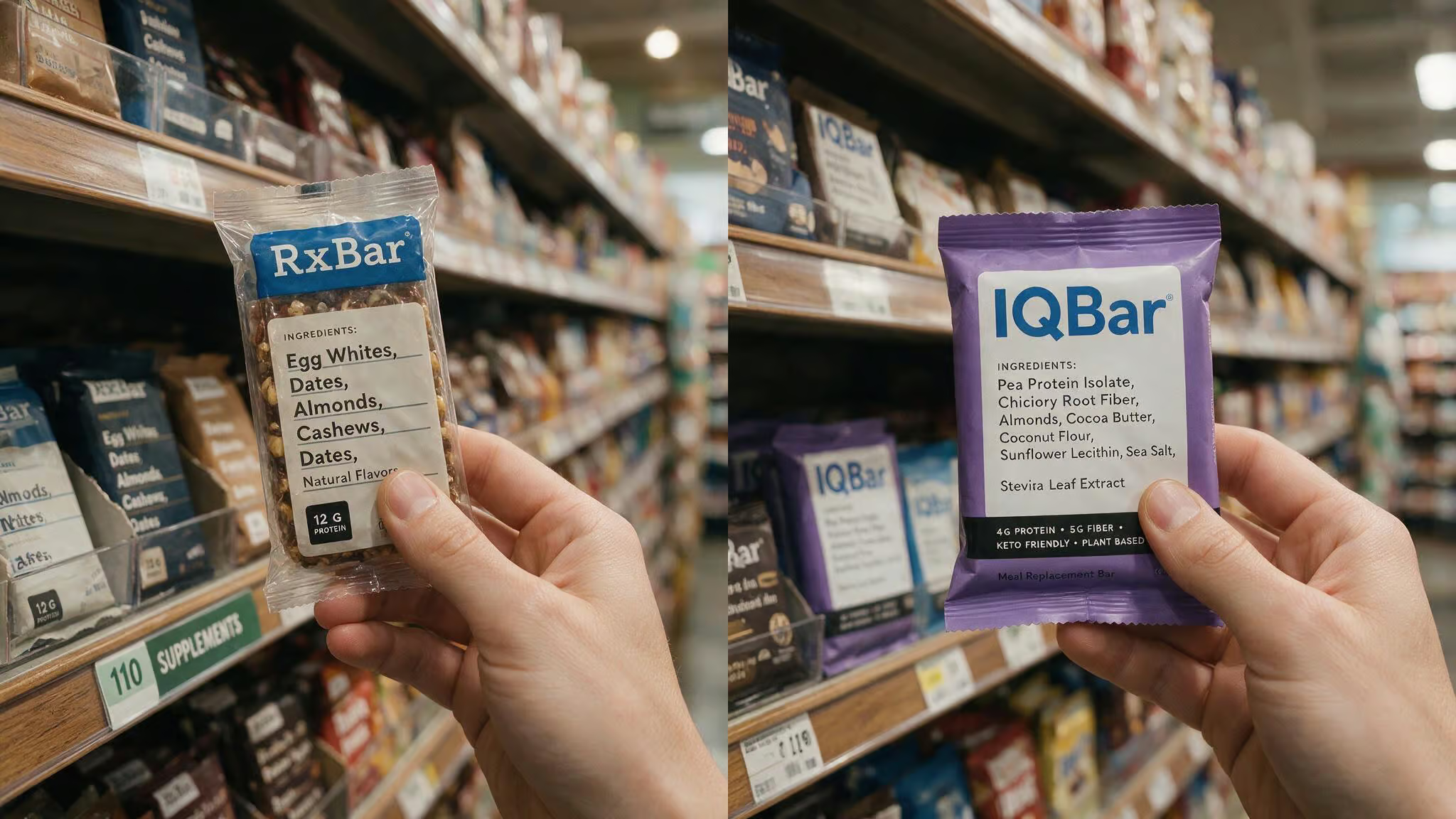
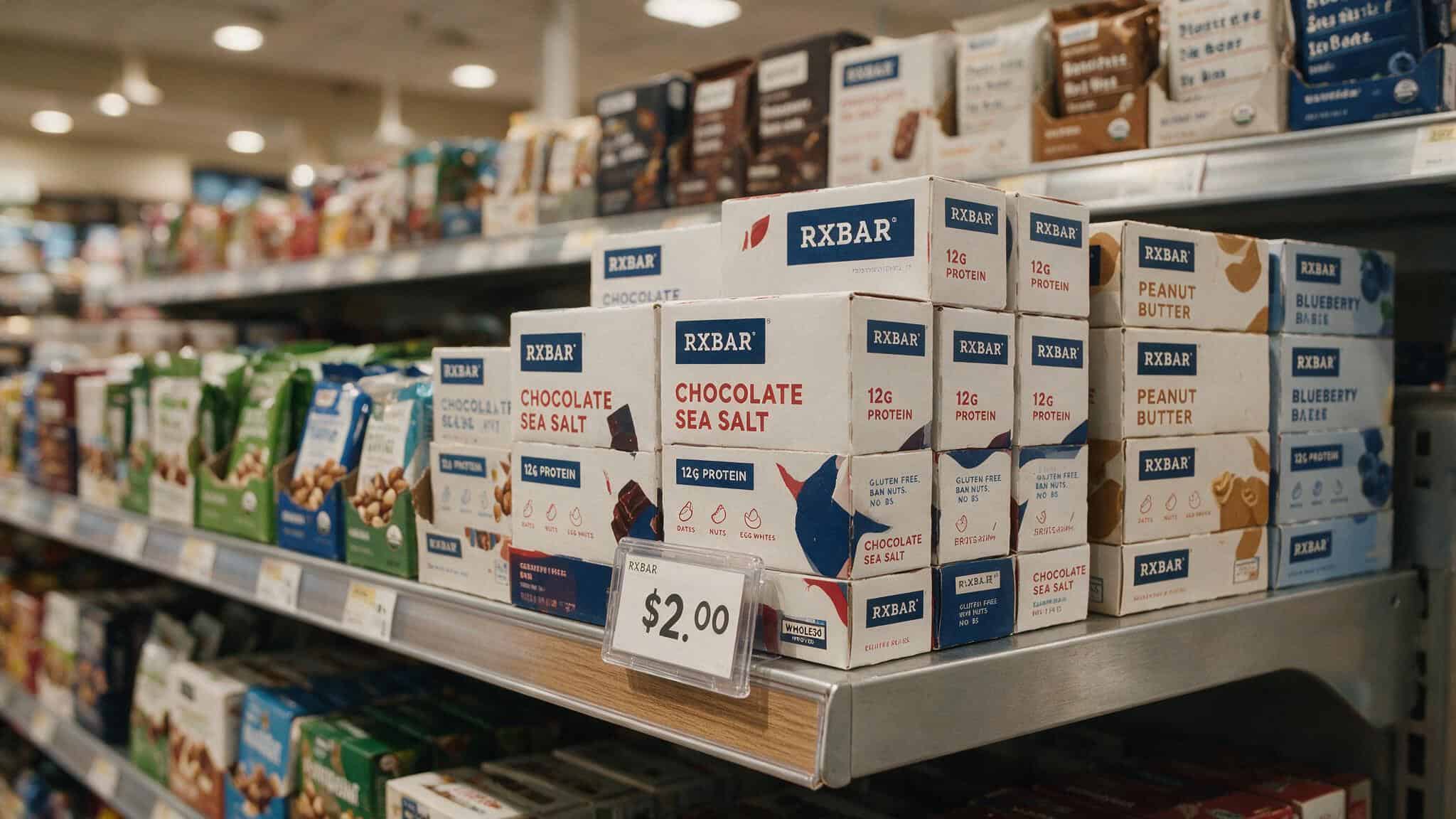
You’re standing in the snack aisle, one hand wrapped around an RXBar with its ingredient list printed right on the wrapper: egg whites, almonds, cashews or peanuts, dates, and sea salt. Plain as day. Five ingredients—egg whites, almonds, cashews or peanuts, dates, and sea salt. That’s the whole bar.
In the other hand, an IQ Bar. The label has a lot more to say—almond butter, pea protein, tapioca fiber, allulose, and stevia. A longer list, but every ingredient has a specific job.
From my spot in the aisle, the question I get most often isn’t “which is healthier?” It’s “which one is good for my family?”
RXBar bets on radical simplicity. The dates provide all the sweetness, with 13–18 grams of sugar per bar coming entirely from fruit. The egg whites and nuts deliver 12 grams of protein per bar. The tradeoff: 13 to 18 grams of sugar per bar, even if it’s entirely from dates.
IQ Bar bets on targeted nutrition. More ingredients, yes, but designed to drive the sugar way down and the fiber way up.
Here’s how I figure out which one belongs in the cart.
Key Takeaways
RXBar’s ingredient transparency is its signature move: exactly five whole foods listed on the wrapper.
The deepest divide between these bars is sugar strategy—RXBar delivers 13–18g from dates, while IQ Bar targets single-digit grams using allulose.
Your decision comes down to picking an end of the tradeoff: extreme ingredient simplicity (RXBar) or a specifically engineered macro profile (IQ Bar).
Table of Contents
Ingredients — What’s Actually Inside Each Bar
Each bar’s ingredient list reflects its core philosophy—RXBar’s radical simplicity versus IQ Bar’s targeted formulation. The choice between them starts here.
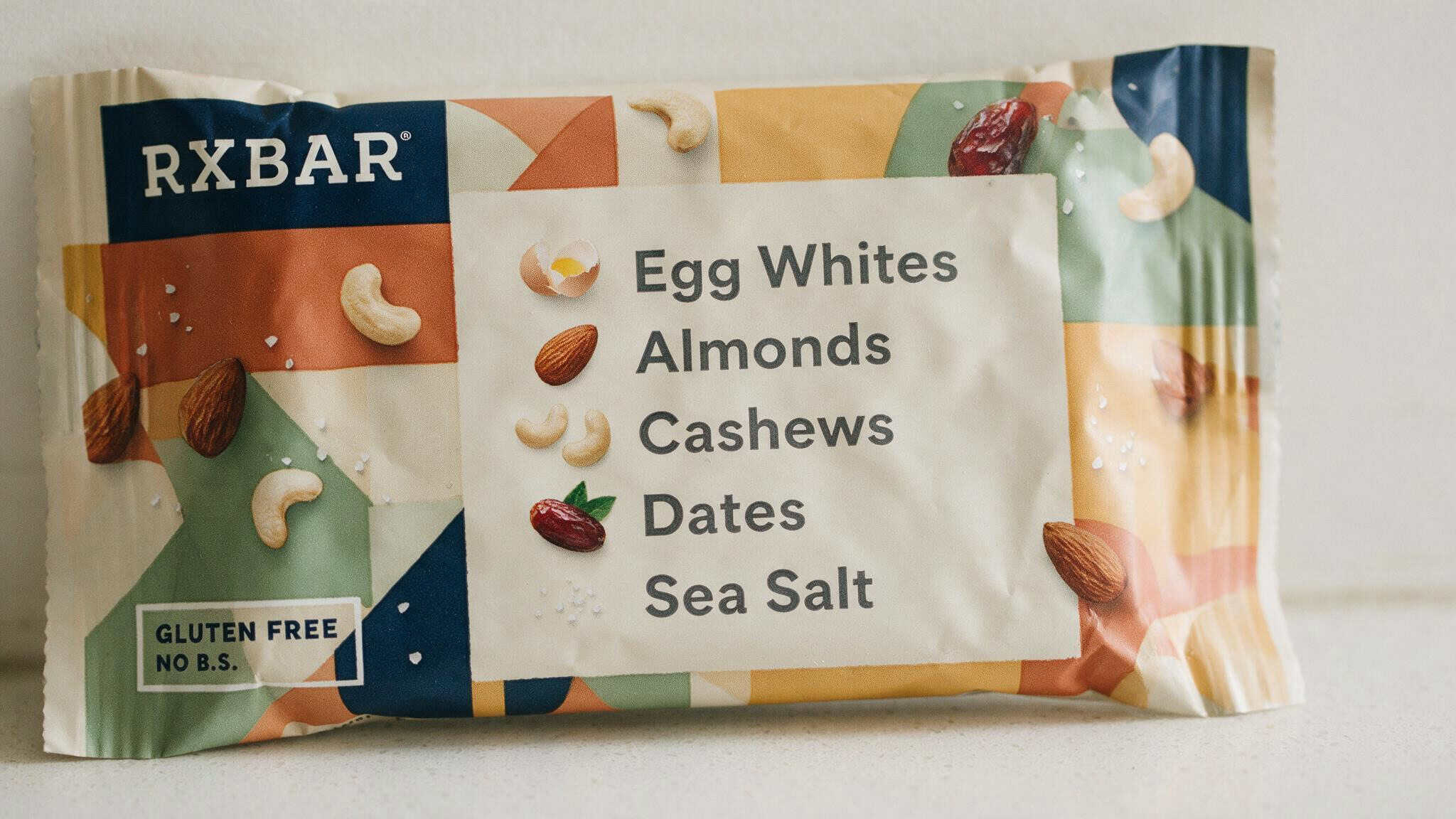
RXBar’s “No B.S.” Ingredient Philosophy
The wrapper says it all. Egg whites for protein. Almonds and cashews for healthy fats and structure. Dates for sweetness and chew.

Sea salt for balance. No soy, no dairy, no added sugar, no artificial anything—and only 8 ingredients total.
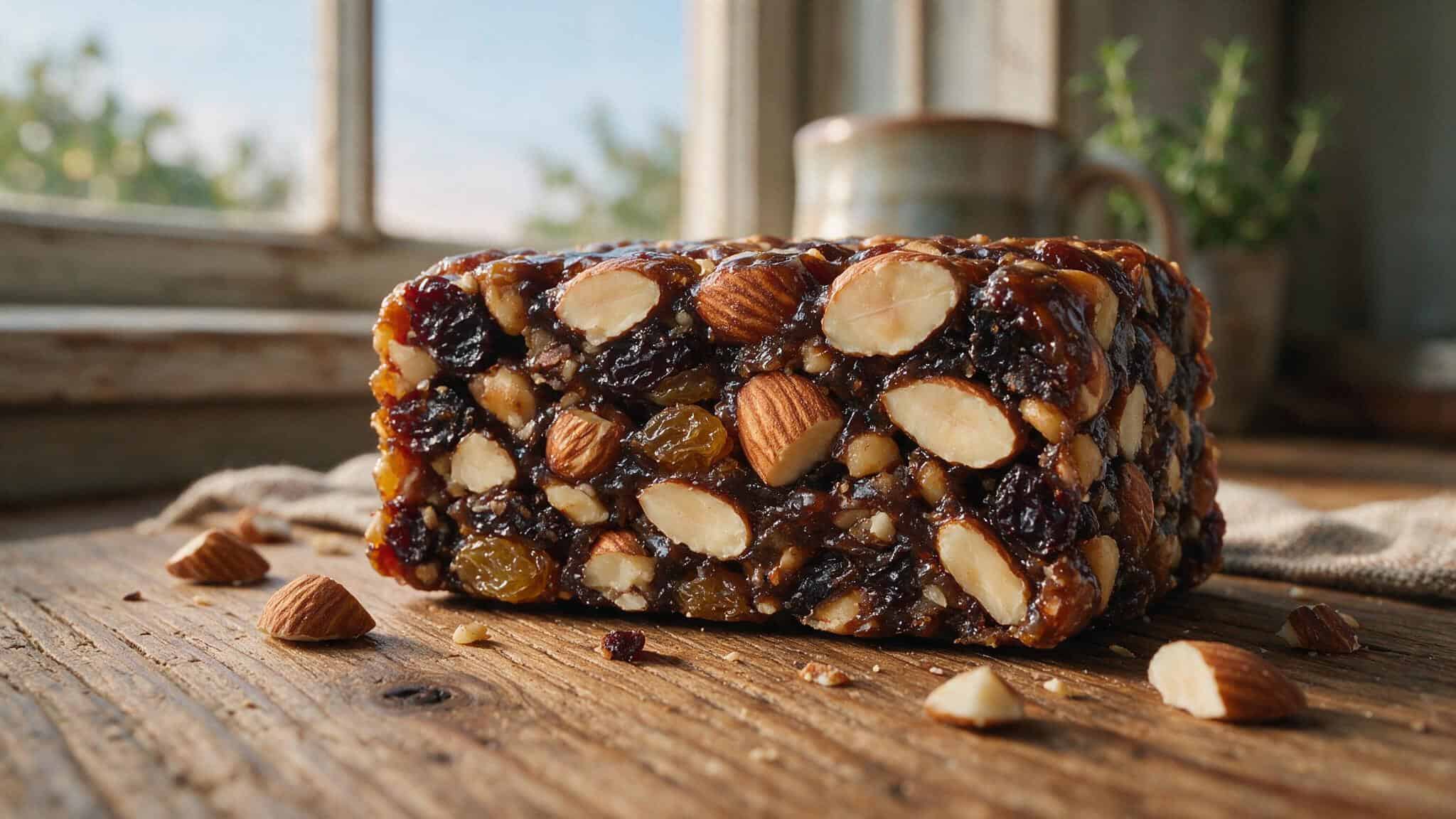
This bar was designed to be explainable in a single sentence. It’s built in a kitchen, not a lab. The whole-food approach means the sweetness comes with the fiber of the dates (3–6 grams per bar), and the protein comes whole from the eggs and nuts rather than being isolated into a powder. For a parent who wants to hand their kid a snack and say “it’s just eggs, nuts, and fruit,” that’s a powerful selling point.
IQ Bar’s Formulated Approach
IQ Bar starts with a different question: “How do we get the protein up, the sugar down, and the fiber up?” The answer requires a longer ingredient list.
Allulose is the key player here. It’s a sugar that provides sweetness without spiking blood glucose—it metabolizes differently than table sugar or fruit sugar. Tapioca fiber boosts the fiber content well above what you’d get from nuts and dates alone. Pea protein adds a plant-based protein punch.
The result is a bar that targets less sugar and more fiber than the RXBar. The tradeoff is that the label reads like a nutritionist’s project rather than a pantry inventory. But if your priority is blood sugar stability or satiety, that project pays off.
Nutritional Showdown — The Sugar Source Is the Real Story
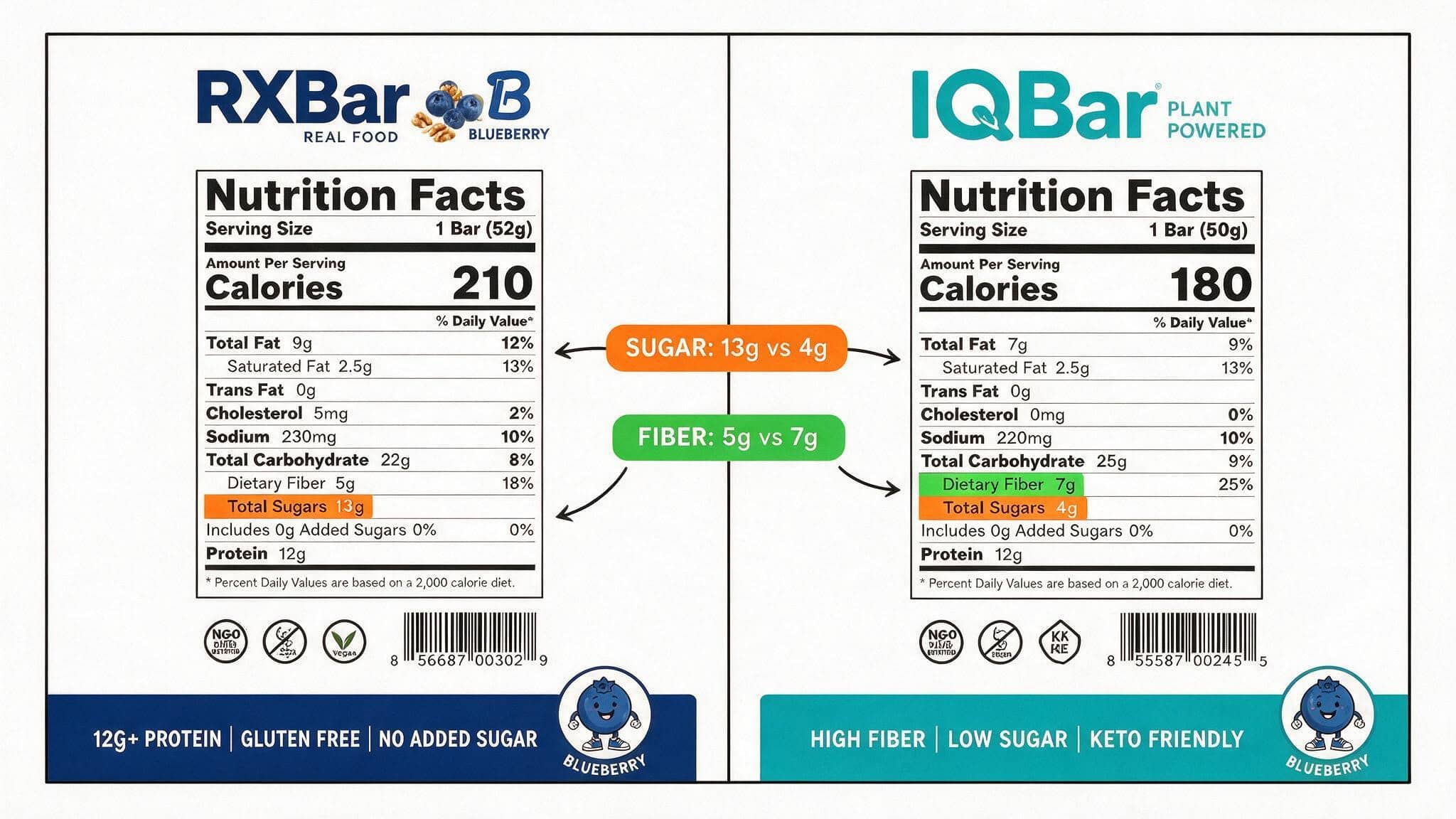
RXBar: 180–210 calories, 12g protein, 22–24g carbs, 3–6g fiber, 13–18g sugar, 6–9g fat. That sugar number—nearly four teaspoons—is the one that stops most parents mid-aisle. But the source is critical. It’s entirely from dates, a whole fruit that comes with fiber and micronutrients.
It’s not added sugar, and it doesn’t hit your system the same way high-fructose corn syrup does. Still, for a child’s snack or someone watching their glucose, 18 grams is a lot.
IQ Bar: IQ Bar takes a different philosophy into the macros. Its sugar count targets single digits. Its fiber count is higher than the RXBar’s. Protein stays in the same ballpark, sourced from a pea and rice blend.
The calorie count is in a similar range. A typical IQ Bar provides 200–260 calories, 12g protein, 3–6g sugar, and about 7g fiber, according to current packaging.
The sugar difference is the headline. Allulose doesn’t register as sugar in the same way, which makes this bar a stronger option for steady energy without a crash. The extra fiber also gives it an edge in the satiety department. For a deeper look at how the macro profile holds up as daily fuel, check my full IQ Bars review.
Taste and Texture — Chewy Dates vs. Crunchy Seeds
RXBar: If you’ve ever bitten into a LaraBar, you know the RXBar experience. Dense, chewy, held together by the sticky glue of mashed dates. It’s satisfying in a “this is a real food” way. No chemical aftertaste, and the sweetness, while forward, isn’t cloying.
The Peanut Butter Chocolate and Chocolate Sea Salt flavors are the standouts among the available varieties. The caveat: that chewy texture isn’t for everyone. Some find it too dense, and kids in particular may find it a chore to eat.
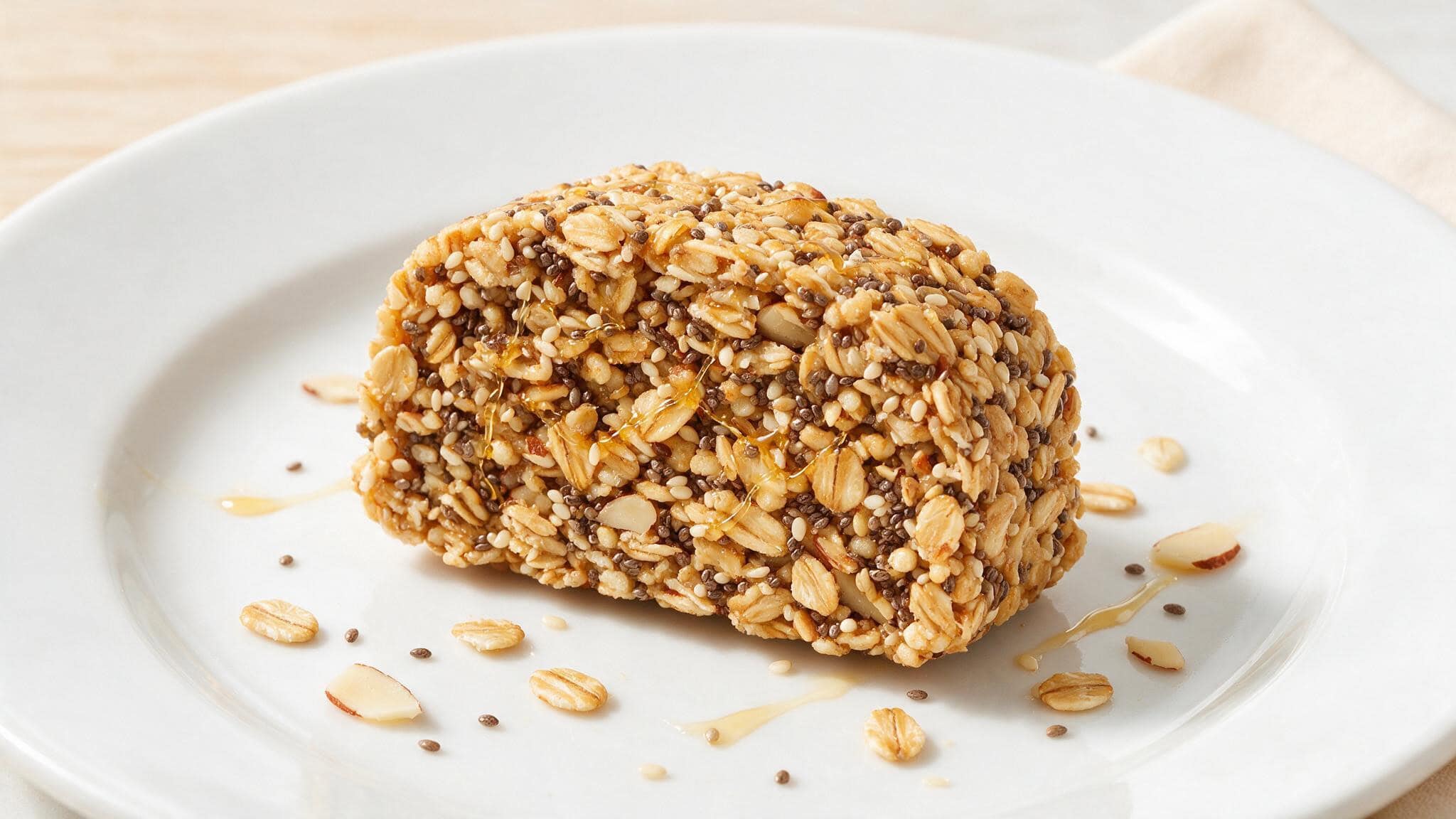
IQ Bar: IQ Bar is a total texture departure. It’s lighter, crunchier, closer to a crisp granola bar. The allulose sweetness is clean, but a consistent note in reader feedback is a mild cooling aftertaste—a known quirk of allulose. Some people don’t notice it.
Others find it distracting. If your family has already rejected the dense, sticky bar format, the crunchy IQ Bar texture might be the deciding factor.
Price and Value — What You’ll Actually Pay
RXBar: Expect to pay about $2.00 per bar. It’s widely available—Amazon, Target, Walmart, and most grocery stores. The find is Target’s Good & Gather Protein Bar, which is a nearly identical dupe at around $1.50 per bar. The only catch is the texture is slightly softer than the original RXBar, but for a third less money, it’s a strong alternative.
IQ Bar: Pricing is similar, usually hovering in the same premium bracket as other high-end protein bars. IQ Bar subscription discounts help bring the cost down, and I’ve mapped out the best retailers in my Where to buy IQ Bars guide. There isn’t a major store-brand equivalent for IQ Bar, so the price is less flexible. The value argument here rests on the fiber content and sugar profile—if those factors improve your family’s energy and satiety, the per-bar value goes up.
Dietary Fit — Paleo, Vegan, Allergens
RXBar: Paleo-friendly (no grains, no dairy). Not vegan (egg whites). Gluten-free, soy-free, dairy-free. No added sugar. Contains tree nuts and eggs.
IQ Bar: Vegan-friendly (pea and rice protein). Not paleo (contains oats). Gluten-free, soy-free, dairy-free. Sweetened with allulose and stevia.
Contains tree nuts and coconut. Note that egg white protein is highly bioavailable, while pea+rice protein may cause bloating in sensitive individuals.
If you’re feeding a household with mixed dietary needs, this is a clean tiebreaker. The paleo eater reaches for the RXBar. The vegan eater reaches for the IQ Bar.
Family Snack Time — Are These Bars Good for Kids?
RXBar for kids: The 13–18 grams of sugar is the primary concern. While it’s natural sugar from fruit, that’s still a massive portion of a child’s daily recommended limit. The chewy texture is also a gamble—many young kids simply refuse it.

IQ Bar for kids: The lower sugar and crunchier texture make it a stronger candidate for school lunches and backpacks. The main caveat: allulose can cause digestive upset in sensitive stomachs. Start with a half bar to gauge tolerance.
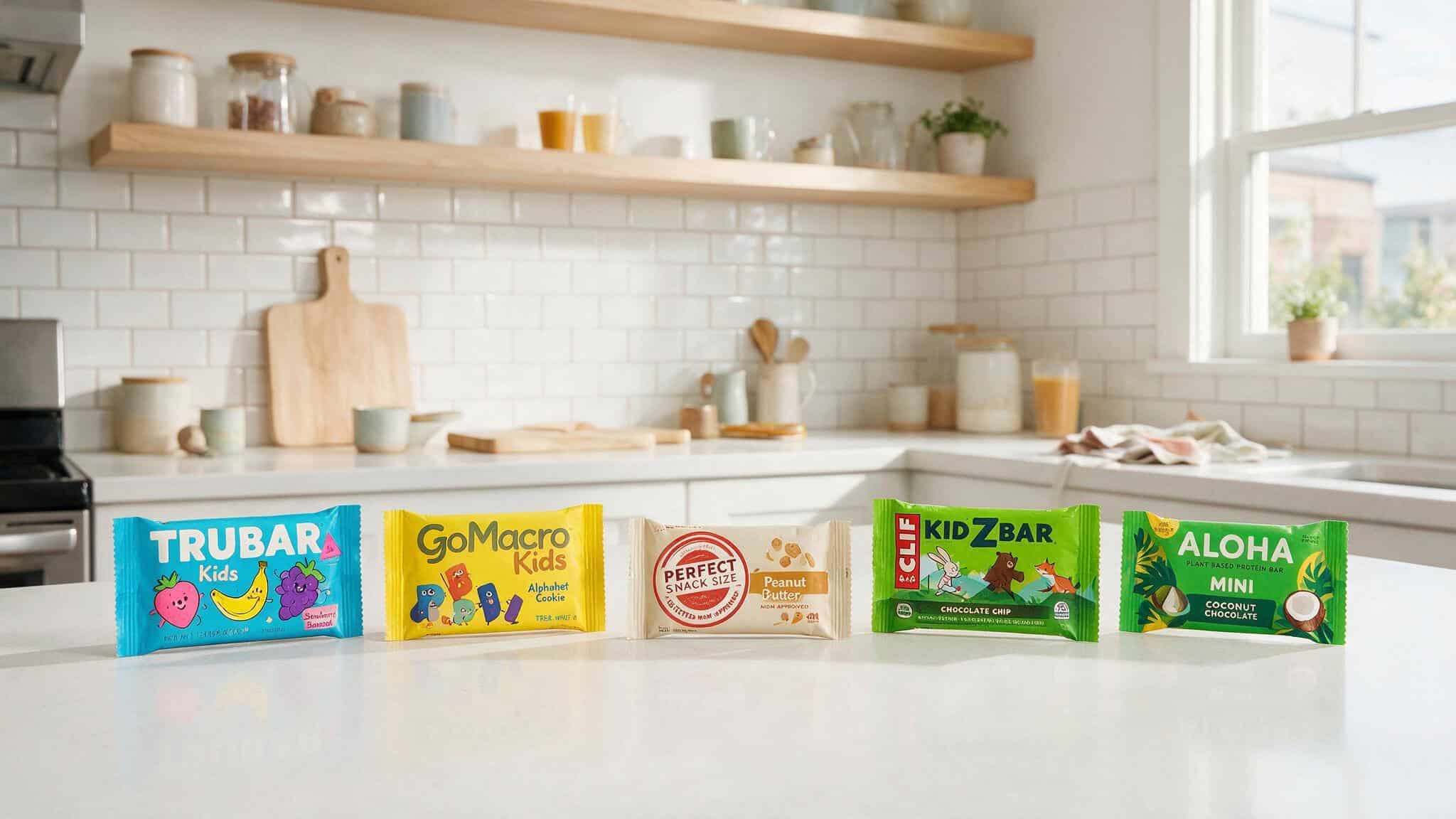
Better options for kids specifically: From my research and comparisons, a few bars stand out as purpose-built for kids: If you do use these bars for kids, consider cutting them in half – a full bar can be too many calories and sugar for a small child.
- TRUBAR Kids: 140 calories, 8g protein, 4–5g sugar, nut-free. A top-tier pick.
- GoMacro Kids MacroBar: 100–110 calories, 4g protein, 6g sugar.
- Perfect Bar Snack Size: 190 calories, 7g protein, 10g sugar.
- Clif Kid ZBar Protein: 130–150 calories, 5–6g protein, 8–10g sugar.
- Aloha Bars Mini: 100–110 calories, 5g protein, 4g sugar.
If the snack aisle’s protein bars are a regular part of your routine, these dedicated kids’ bars offer the best calorie-to-protein-to-sugar ratio for smaller appetites.
How to Choose — A Framework for Any Protein Bar
A registered dietitian’s selection process runs through three quick filters that apply to any bar you pick up:
- Eliminate the automatic no-gos. Any bar with artificial sweeteners, high added sugar, or sugar alcohols like erythritol is out. This knocks out a lot of familiar names: Power Bar, ZonePerfect, Met-RX, Atkins, Muscle Milk, Detour, Myoplex, EAS, Probar, and Balance Bar. (Yes, that’s most of the protein bar aisle.)
- Look for short, recognizable ingredients. This doesn’t mean it has to be five items, but nothing in the list should make you search Google. Aim for 3–5 grams of fiber from real sources.
- Match the macros to your goal. For a between-meal snack: 150–250 calories, 6–10 grams of protein. For a meal replacement: 250+ calories, 14+ grams of protein.
Both RXBar and IQ Bar pass the first two tests easily. The tiebreaker comes down to your specific macro priority—or your family’s texture preference. If weight management is part of your family’s picture, I break this down further in my dedicated post on IQ Bars and weight loss.
Verdict — Which Bar Wins for Your Family?
Choose RXBar if:
- You value ingredient transparency (5 items on the wrapper).
- Paleo or grain-free eating matters in your house.
- A chewy, date-sweetened texture sounds satisfying to you.
- 13–18 grams of sugar (from whole fruit) isn’t a dealbreaker for your family.
Choose IQ Bar if:
- Lower sugar and higher fiber are your top nutritional priorities.
- You need a vegan-friendly, plant-based protein source.
- A crunchy, lighter texture is more likely to get eaten by your kids.
- You’re comfortable with a longer ingredient list if every ingredient serves a purpose.
Frequently Asked Questions
Is RXBAR actually healthy?
RXBARs are healthy in the sense that they contain only whole-food ingredients like egg whites, nuts, and dates with no added sugar or artificial anything. The tradeoff is that each bar has 13–18 grams of sugar from dates, which is a lot for a snack, especially for kids or anyone watching their glucose.
What is the difference between RXBAR and IQ Bar?
The core difference is sugar strategy and ingredient philosophy. RXBAR bets on radical simplicity with five whole ingredients and 13–18g of sugar from dates, while IQ Bar uses a longer ingredient list including allulose and tapioca fiber to keep sugar in single digits and boost fiber. RXBAR is paleo-friendly and chewy; IQ Bar is vegan-friendly and crunchy.
Which protein bar has less sugar, RXBAR or IQ Bar?
IQ Bar has significantly less sugar, targeting single-digit grams per bar thanks to allulose, a sweetener that doesn’t spike blood glucose. RXBAR has 13–18 grams of sugar per bar, all from dates, which is nearly four teaspoons of natural sugar.