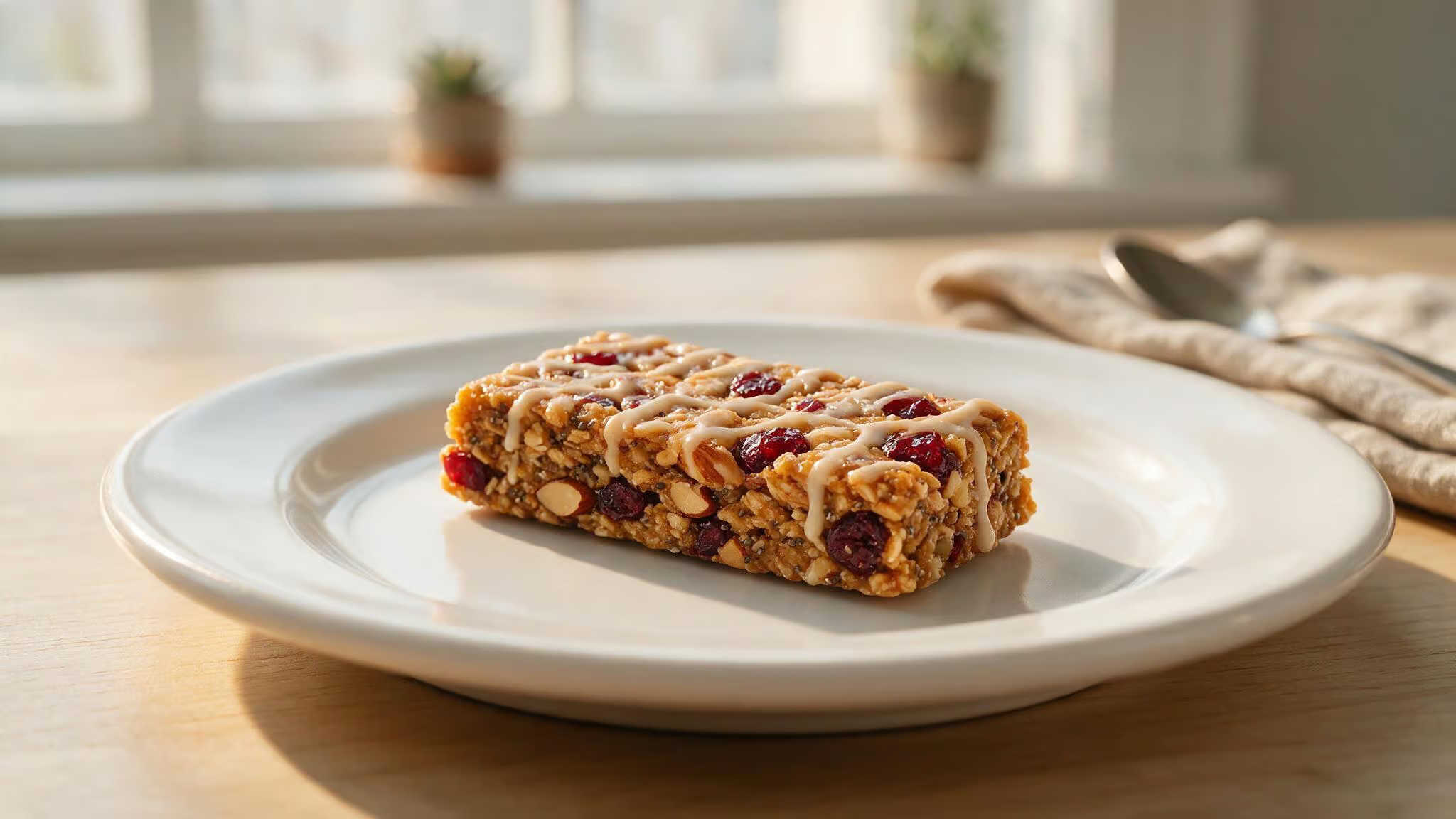
The Real Question: Can a Brain Health Bar Actually Help You Lose Weight?
IQBARs are sold as a cognitive-enhancement snack. Lion’s mane, MCTs, omega-3s — the kind of ingredient list that makes you wonder if you’re supposed to eat it or rub it on your temples. But the more I looked at the nutrition label, the more I realized this bar might work for weight loss for reasons that have nothing to do with brain chemistry.
I tested these bars over a period of weeks as a snack, a pre-workout bite, and a desk-drawer emergency ration. I’ve also read the ingredient lists, checked the dietitian review, and reconciled the nutrition facts against the marketing claims. The verdict: IQBARs work well for weight loss, but not where the brand points its spotlight. The real star is the fiber-to-sugar ratio, not the lion’s mane.
A registered dietitian gave these bars a 75/100 score, noted in the review as solid but not perfect. That’s the benchmark to start from.
Key Takeaways
Each bar delivers 160–180 calories, 12g plant protein, 6–9g fiber, and only 1–2g sugar (0g added) — a macro profile that supports calorie deficit without blood sugar crashes.
The dietitian review calls the “brain ingredient” claims (lion’s mane, etc.) insufficiently supported — more marketing than science, but the bar’s low sugar, high fiber, and clean label make it a strong weight-loss snack regardless.
Wild Blueberry is the best keto option at 3g net carbs; most flavors are vegan, gluten-free, dairy-free, and soy-free, with no seed oils.
Table of Contents
The Macro Profile: What Makes This Bar Work for Weight Loss
The numbers tell the story fast.
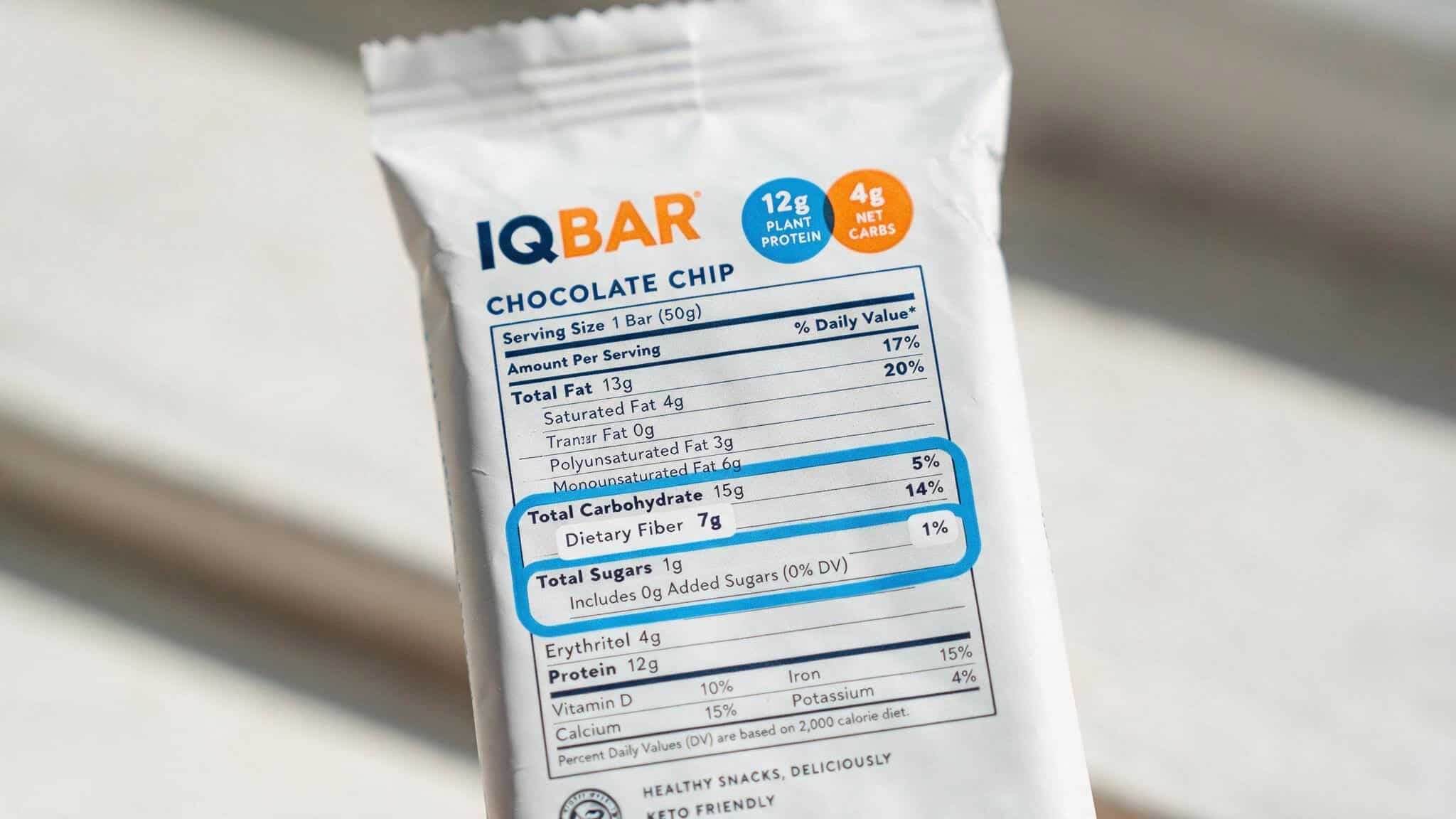
160–180 calories. That’s a modest snack that fits into almost any deficit without blowing your daily budget. But the real magic is the ratio.
6–9g fiber vs. 1–2g sugar. This is the single most important number for weight loss. Most protein bars spike your blood sugar — you get a short energy burst followed by a crash that leaves you ravenous an hour later. IQBARs keep your blood sugar steady because there’s almost no sugar to spike it. The fiber (from tapioca and vegetable sources) slows digestion and keeps you full longer.
The manufacturer states 7–10g prebiotic fiber per bar, which aligns with the label showing 6–9g total fiber. That’s higher than the 1–3g found in most bars.
12g protein from pea protein and almond butter. Pea protein is a complete plant protein, meaning it provides all nine essential amino acids. That’s enough protein to take the edge off hunger and support muscle preservation during weight loss. It’s not the highest protein count on the market, but for a plant-based bar it’s respectable. Each bar also provides notable micronutrients: 55-75mg magnesium, 2.4-3.5mg iron, 50-80mg calcium, and 120-210mg potassium.
3g net carbs (total carbs minus fiber) makes the bar keto-friendly across most flavors. The Wild Blueberry flavor is the lowest at roughly 3g net carbs, which is why it’s the go-to for strict low-carb dieters.
The other macros vary by flavor: 10–13g total fat (2.5–4g saturated), 125–135mg sodium. Those numbers matter — I’ll get to them in a second.
Ingredients: Clean Label Reality Check
Flip the wrapper and read the ingredients for Almond Butter Chip, which I’ll use as the representative bar. Here’s what you find:
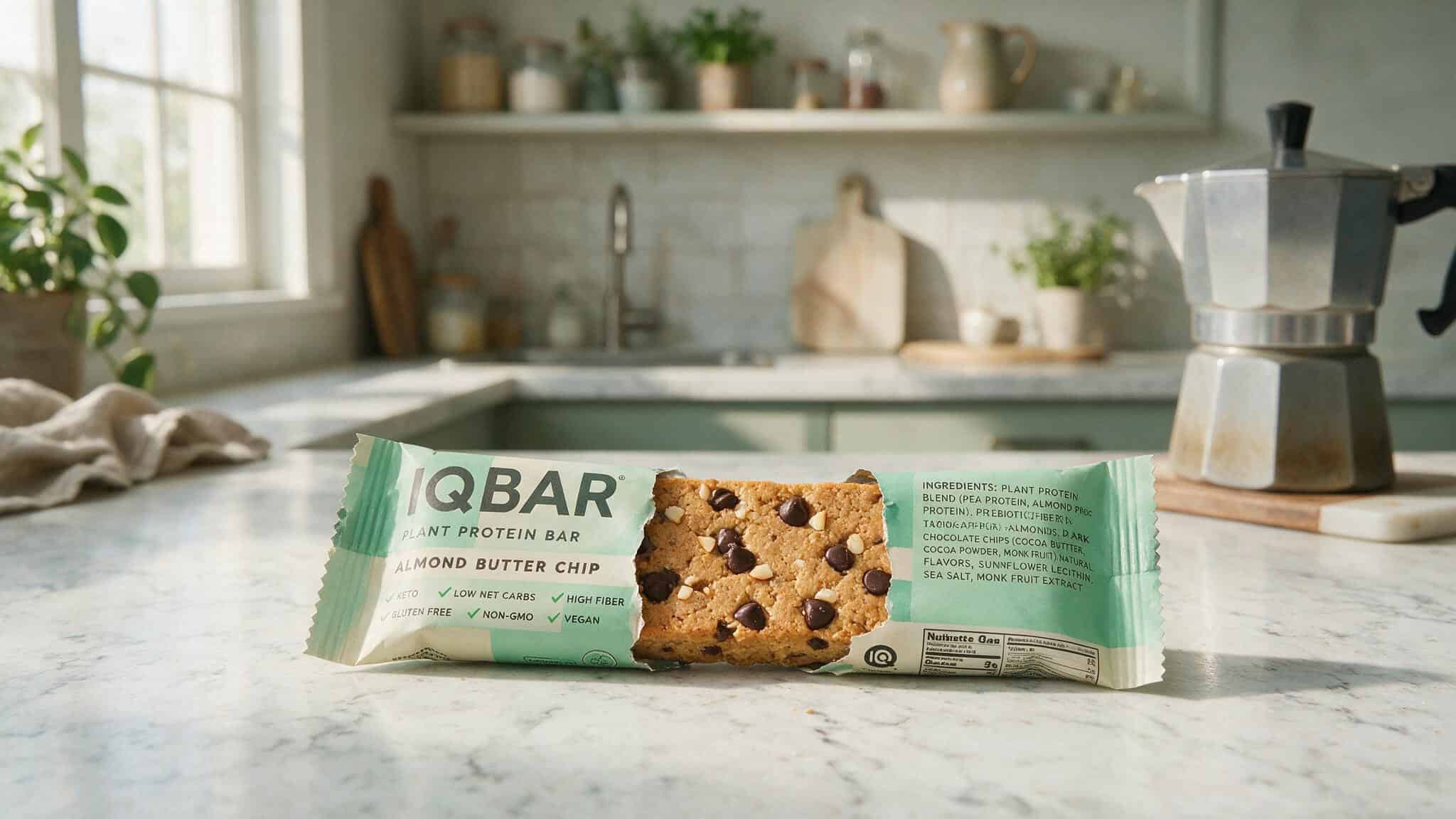
No seed oils. That’s the headline. Most protein bars use canola, sunflower, or soybean oil as cheap fat sources. IQBARs use coconut oil instead.
For anyone who avoids seed oils like canola, sunflower, and soybean, this is a differentiator. The fat also comes from MCT oil and almonds, so the profile is clean.
No added sugar. Sweetness comes from stevia and monk fruit, which are zero-calorie natural sweeteners. No artificial sweeteners, no sugar alcohols that cause GI distress.
Non-GMO, mostly organic. The “mostly” is honest — not every ingredient is certified organic, but the main ones are.
Free of gluten, dairy, soy. That covers the most common allergens and dietary restrictions. The bar is also vegan in most flavors (check labels — some contain whey or honey).
Natural flavors are WONF — “with other natural flavors.” That means the blueberry flavor, for example, contains actual blueberry extract. IQBAR discloses this, which speaks to transparency.
The tradeoffs: 2.5–4g saturated fat from coconut oil is moderately high. The dietitian flagged this, though the source of that saturated fat (nuts and coconut oil) is thought to be less concerning than from processed meats or dairy. Still, if you’re eating two bars a day, that’s 5–8g saturated fat, which adds up.
125–135mg sodium is also moderately high for a snack bar. If you’re salt-sensitive or watching blood pressure, it’s worth noting — though for most people, it’s not a dealbreaker.
Vitamin E appears at about 14–15mg (roughly 100% DV), but it functions primarily as a preservative for the fats. That’s fine — it’s a normal food processing step.
Overall, the ingredient list is honest and clean. No seed oils, no artificial anything, real almond butter and pea protein. That’s a solid foundation.
Taste and Texture: The Compliance Factor
The best weight-loss bar in the world is useless if you won’t eat it. So how do IQBARs actually taste, and where can you find IQ bars Costco deals for bulk stocking as a family?
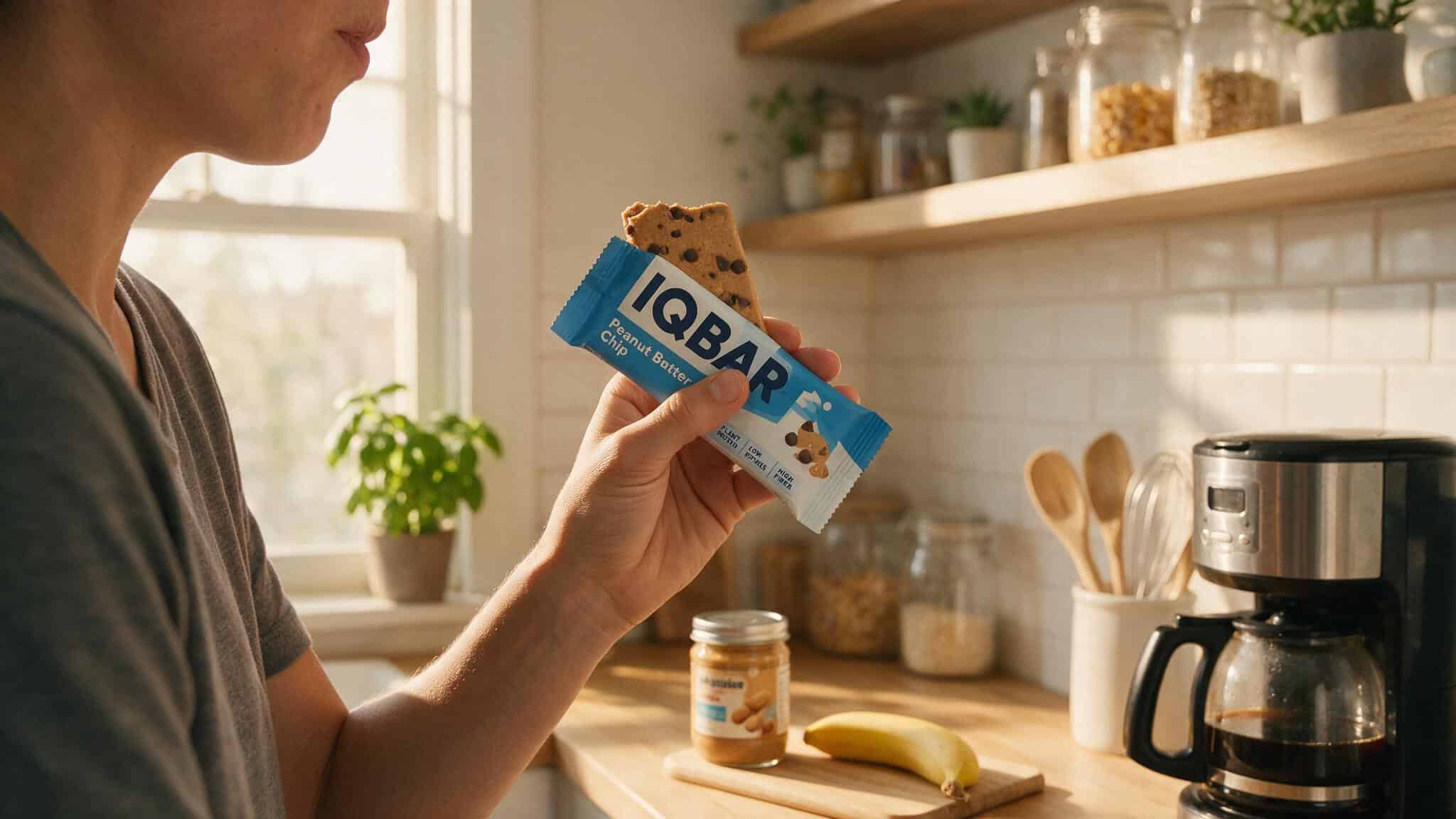
Texture is described as “soft-baked cookie-like,” and that’s accurate. It’s not chalky, not overly chewy — somewhere between a cookie and a protein bar, with a slight softness that makes it easy to eat. My personal favorite is Peanut Butter Chip, which has enough flavor to feel like a treat without being dessert-level sweet.
Here’s the part that matters most to me: I’ve had GI issues with other protein bars. Bloating, cramps, the whole unpleasant routine. IQBARs resolved that completely. I don’t know if it’s the lack of sugar alcohols, the pea protein vs. whey, or the clean fat profile, but my stomach handles these bars without complaint. That alone makes me more likely to actually eat them consistently — and consistency is what makes a diet work.
The brand offers nine flavors. The sampler pack includes seven (Wild Blueberry and Matcha Chai are sold separately). If you’re not sure which you’ll like, start with the sampler.
Practical Strategies: How to Use These for Weight Loss
These bars work best as a strategic snack, not a meal replacement. Here’s what I found effective:
- Kill the 3pm slump. One bar (160–180 calories) staves off hunger without the blood sugar crash that a granola bar or coffee alone would cause.
- Pre- or post-workout fuel. The 12g protein and steady carbs support recovery without weighing you down.
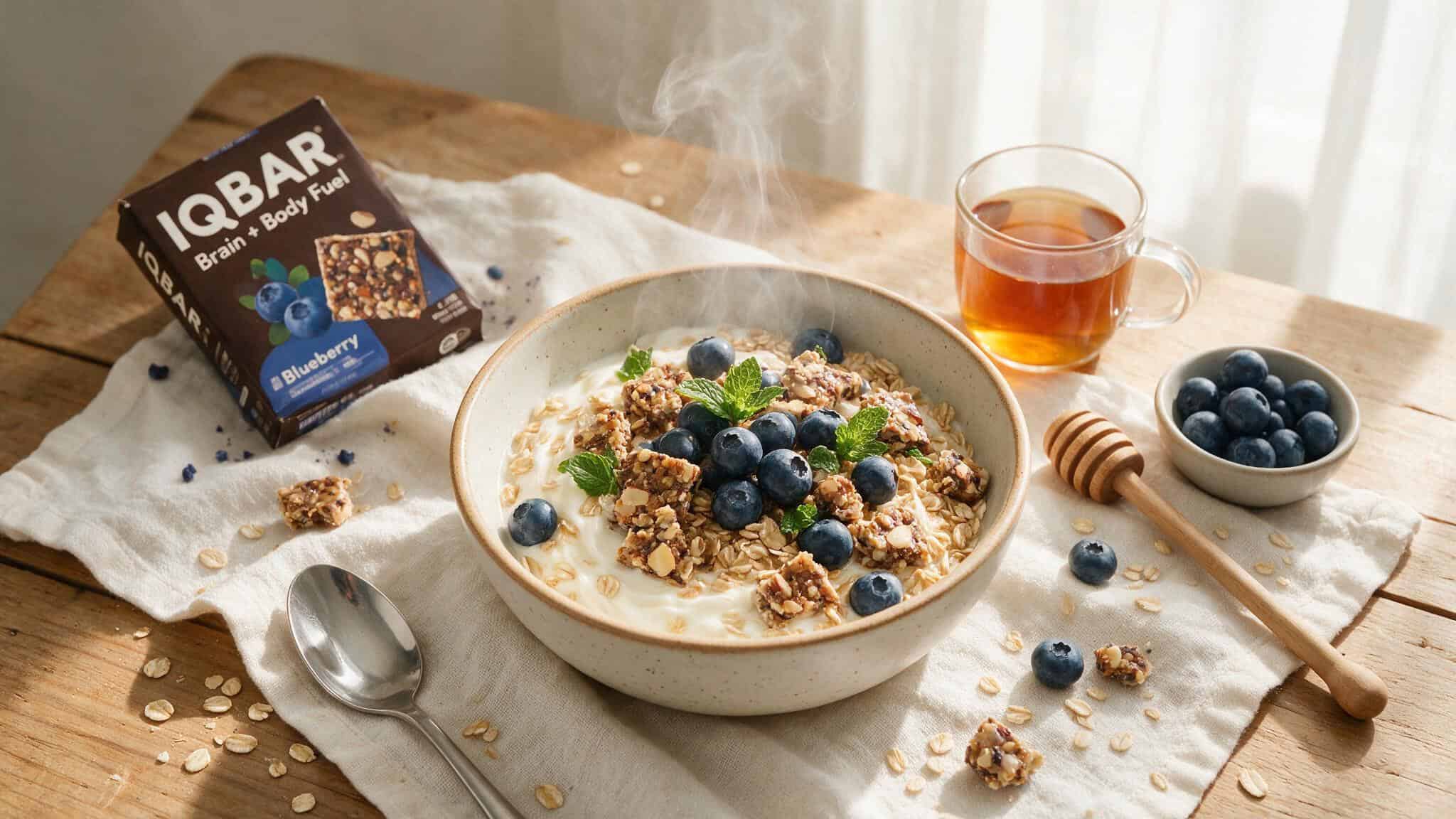
- Crumble over yogurt or oatmeal. It adds texture, flavor, and a fiber bump to a breakfast that might otherwise be carb-heavy.
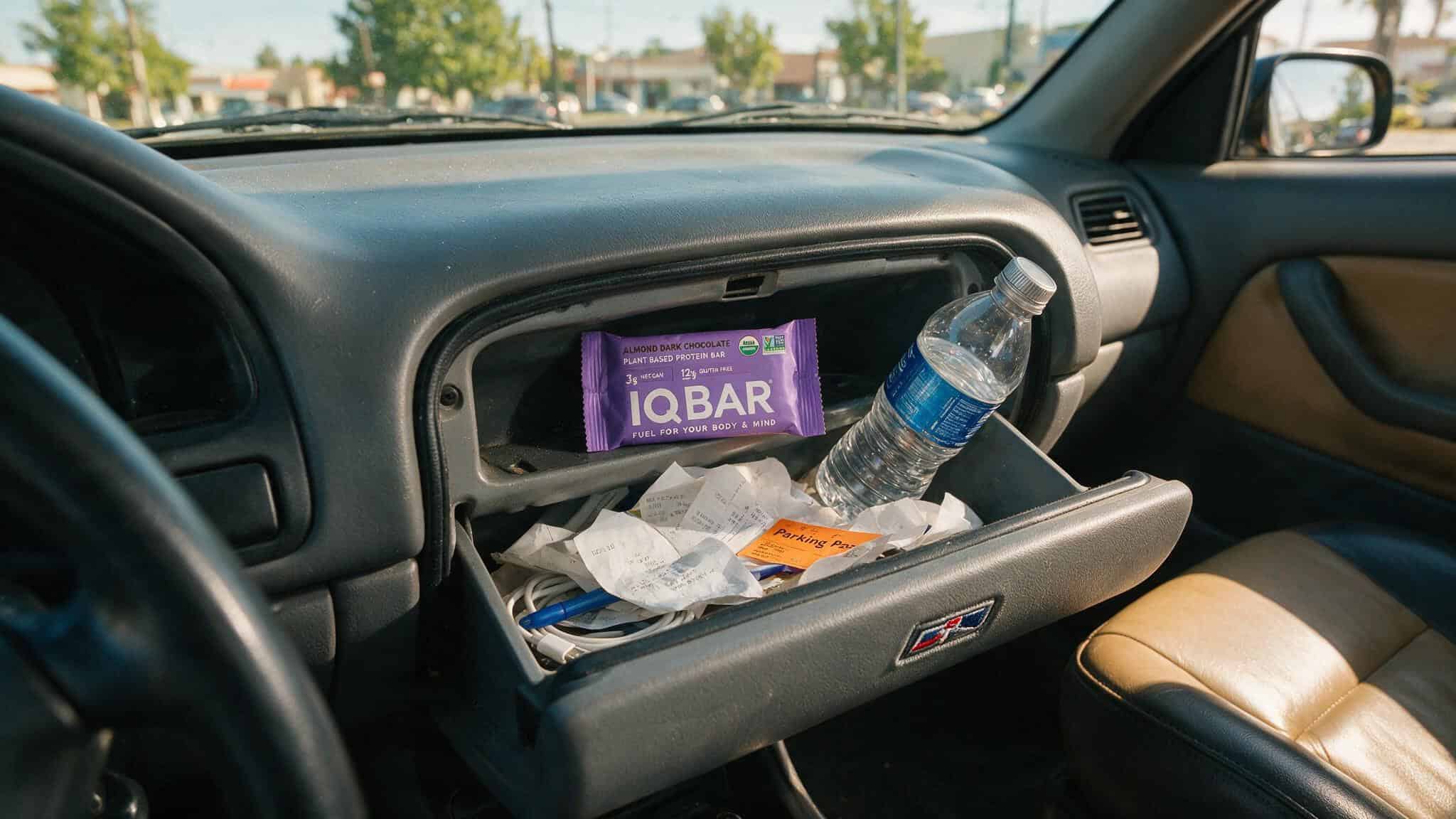
- Stash in your car or desk. When you’re hungry and tempted by a vending machine, having a clean bar within reach changes the decision.
Can you eat these every day? Yes, but variety is smart. Rotate flavors and don’t rely on them as your sole source of nutrition. The Wild Blueberry is your lowest-net-carb option for strict keto days.
For a 1500-calorie diet, use one bar as a 160-calorie afternoon snack to keep total intake on track. For intermittent fasting, the bar’s 12g protein and 6-9g fiber make it a solid first meal to break a fast.
One thing these bars are not: a meal replacement. They’re a 160–180 calorie snack, not a 400-calorie lunch. Use them to support a calorie deficit, not to skip meals.
How IQBARs Compare to Other Bars
The dietitian’s 75/100 score gives us a quick anchor. Here’s how IQBARs stack up in the weight-loss category against typical protein bars:
Where they win:
- Sugar: 1–2g vs. 10–20g in most bars. That is a difference of 8–18g less sugar per bar.
- Fiber: 6–9g vs. 1–3g typical. That higher fiber content supports satiety.
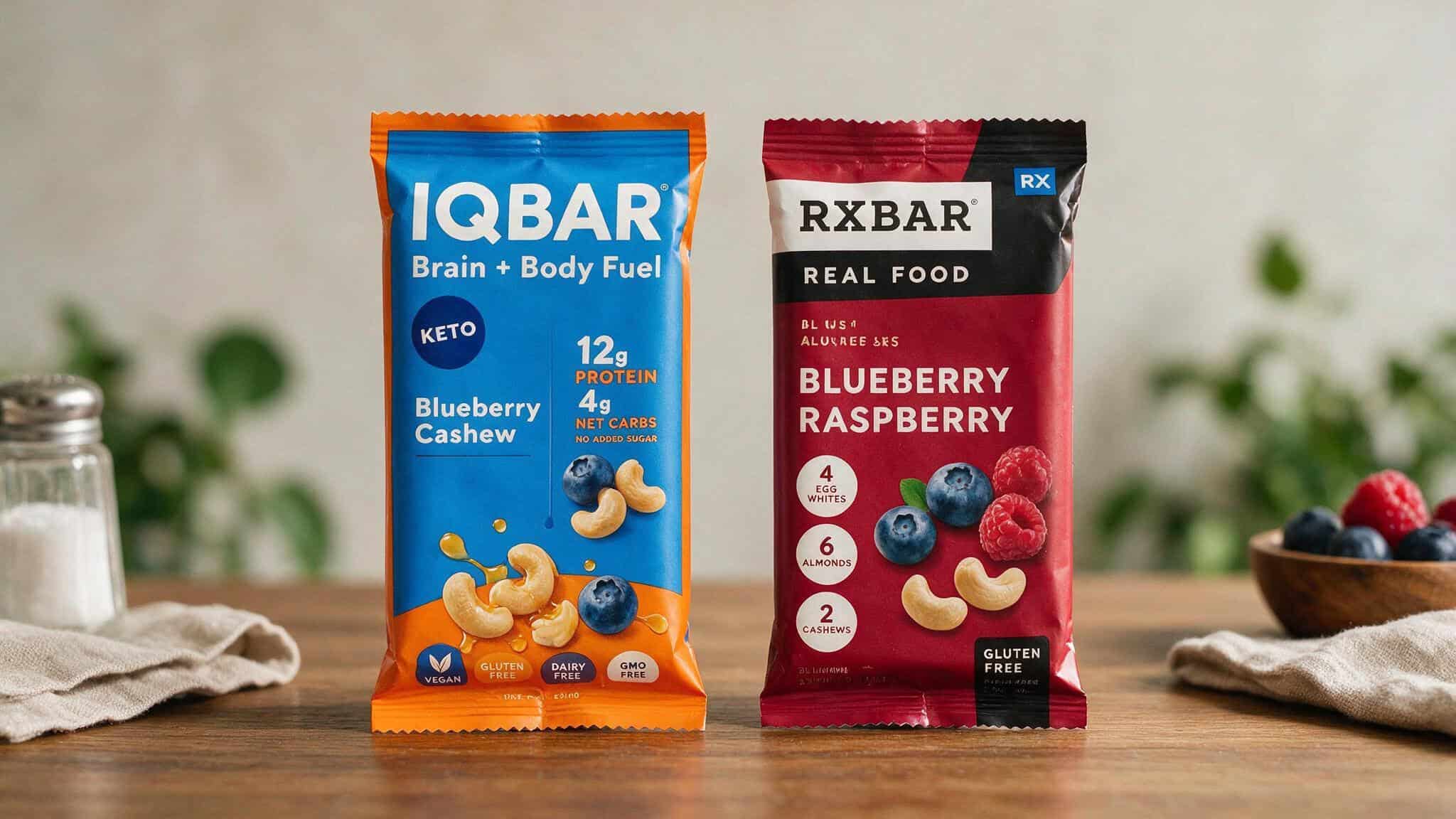
- No seed oils: Differentiator against mainstream bars (RXBAR, KIND, etc.). For a direct IQ bar vs RX bar comparison, the clean label advantage is clear.
- Clean label: No artificial sweeteners, no sugar alcohols, free of top allergens.
Where they trade off:
- Saturated fat: 2.5–4g vs. 1–2g in some bars — though from less concerning sources.
- Sodium: 125–135mg vs. 50–100mg in many competitors.
- Protein: 12g is solid but not the highest; some bars hit 20g.
The takeaway: IQBARs are not the perfect bar for everyone. If your priority is max protein or minimum sodium, there are better options. But for low sugar, high fiber, and clean ingredients in a weight-loss context, they’re hard to beat.
Cost, Availability, and Value
Expect to pay about $2 per bar at retail. That’s competitive for a premium protein bar — similar to RXBAR, a bit less than some keto bars.
The promo code MINDBODYDAD gives you 15% off on the brand’s website, which brings the price down. Bulk purchasing (12-bar boxes) also reduces the per-bar cost.
Availability is the hitch. IQBARs are not readily available in most stores — you’ll primarily find them online. Some Walmart and Sam’s Club locations do stock them, but it’s not universal. Customer reviews on Walmart show limited in-store availability, but don’t count on grabbing one at a gas station or convenience store.
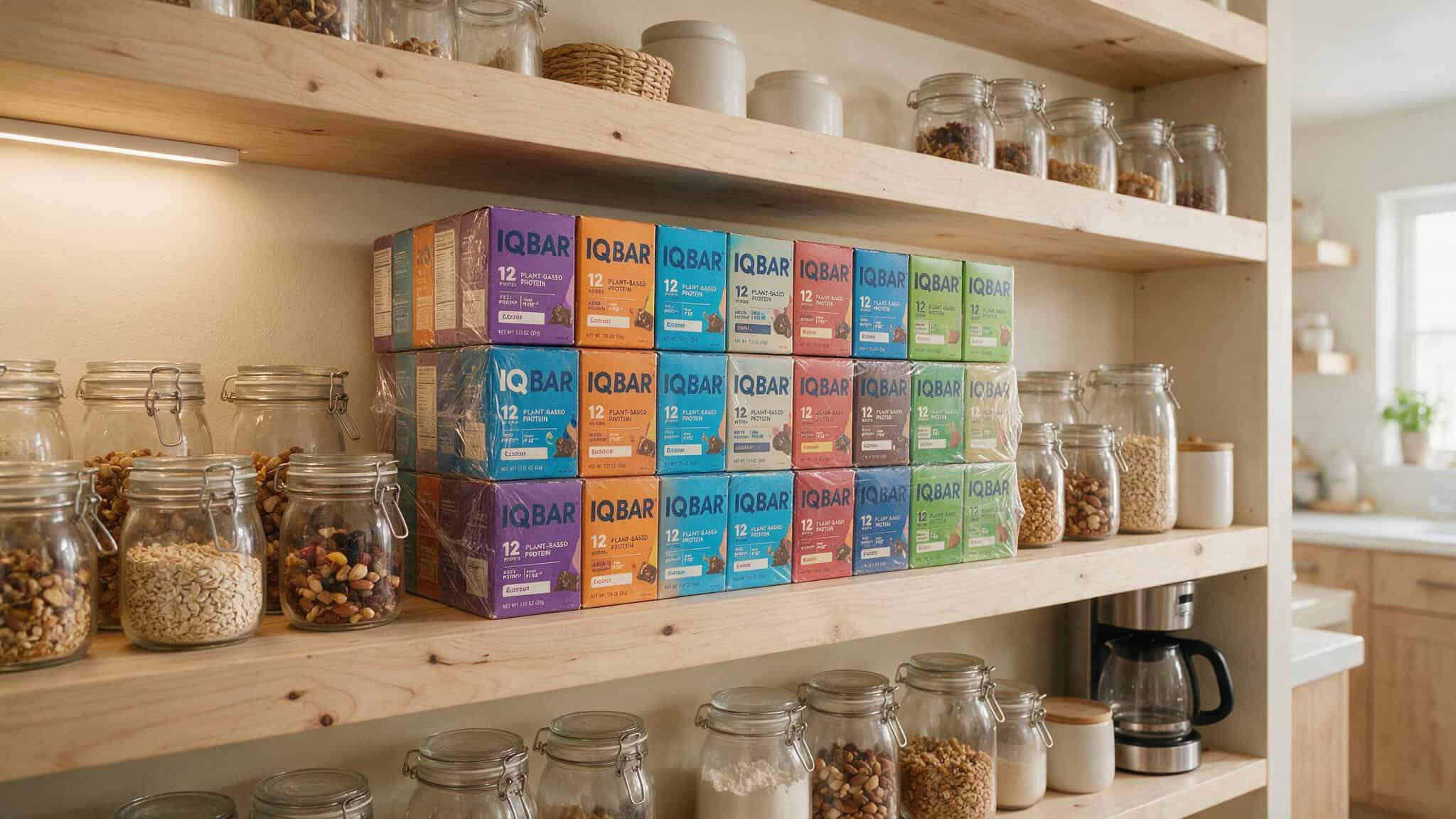
Shelf life: 12 months unopened, a few days after opening. That makes bulk ordering practical — stash a few boxes in the pantry and you’re set for the year.
The Brain Nutrient Question: Marketing vs. Science
IQBARs are named for the six “brain nutrients” they contain: lion’s mane mushroom, MCTs, omega-3s, flavonoids, vitamin E, and choline.

The dietitian’s verdict is blunt: the evidence for lion’s mane and the other cognitive enhancers is insufficient and these claims are more marketing than science. I agree with that assessment. The research on lion’s mane is early and interesting, but it’s not strong enough to justify a “brain health” label on a snack bar.

Here’s the reframe: The sustained energy from MCTs and omega-3s can help with diet adherence — especially on sleep-deprived days or during high-focus work. I noticed a subtle cognitive lift on days when I was running on less sleep. It’s not like coffee; it’s more of a background steadiness. That’s helpful for sticking to a diet, but it’s not a nootropic effect.
The bar works for weight loss despite the brain hype, not because of it. The real benefits are the macros and the clean ingredients.
What Others Are Saying
Customer reviews on Walmart give IQBARs a 4 out of 5 stars average from 163 ratings and 160 reviews. Most are 4- or 5-star ratings, with a few 3-star ones. The sentiment is generally positive — people like the taste, appreciate the clean label, and find them filling.
Important caveat: These reviews are incentivized via Field Agent, meaning reviewers are paid for their feedback. That doesn’t invalidate them — the ratings still reflect real experiences, but it does mean the sample might skew positive. It’s worth reading from multiple sources if you’re on the fence.
My own experience (no GI issues, consistent energy, no sugar crashes) matches the positive sentiment. But I went in skeptical and stayed that way through the brain-ingredient evaluation.
The Bottom Line
IQBARs are a practical tool for weight loss, not a magic bullet. Here’s the short version:
Strengths: Low sugar (1–2g), high fiber (6–9g), clean ingredient list (no seed oils, no artificial sweeteners), good taste and texture for compliance, solid plant protein (12g), keto-friendly options.
Tradeoffs: Moderately high saturated fat (2.5–4g) and sodium (125–135mg), limited store availability, overblown brain health marketing.
Score: The dietitian’s 75/100 is fair. These bars earn points for their macro profile and clean label, lose some for the saturated fat/sodium numbers and the unsubstantiated brain claims.
If you need a low-sugar, high-fiber snack that supports a calorie deficit without the crash, IQBARs deliver. Ignore the lion’s mane hype, focus on the fiber-to-sugar ratio, and treat these as a practical tool in your weight-management kit. They’re solid — not perfect, but nothing is.
Frequently Asked Questions
What is the healthiest bar for weight loss?
There’s no single answer, but IQBARs are a strong contender if you prioritize low sugar and high fiber. Most bars pack 10–20g of sugar and 1–3g of fiber; IQBARs flip that ratio to 1–2g sugar and 6–9g fiber, which directly supports satiety and steady energy. They also skip seed oils and artificial sweeteners, which matters for a clean label.
Is IQ a good protein bar?
Yes, for weight loss and clean eating, but not if you’re maxing for protein — 12g is solid for a plant bar but less than the 20g some competitors offer. Where it wins is the lack of sugar (1–2g), high fiber (6–9g), and ingredients like pea protein and almond butter with no seed oils or artificial sweeteners. It’s a good bar if your priorities are blood sugar control and label transparency over raw protein count.
What’s the difference between IQBAR and most other protein bars for weight loss?
The biggest difference is sugar and fiber: IQBARs have 1–2g sugar and 6–9g fiber, while most bars have 10–20g sugar and 1–3g fiber. IQBARs also use no seed oils, no artificial sweeteners, and no sugar alcohols, which means less GI distress and a cleaner label. The tradeoff is lower protein (12g vs. up to 20g) and slightly higher saturated fat and sodium.