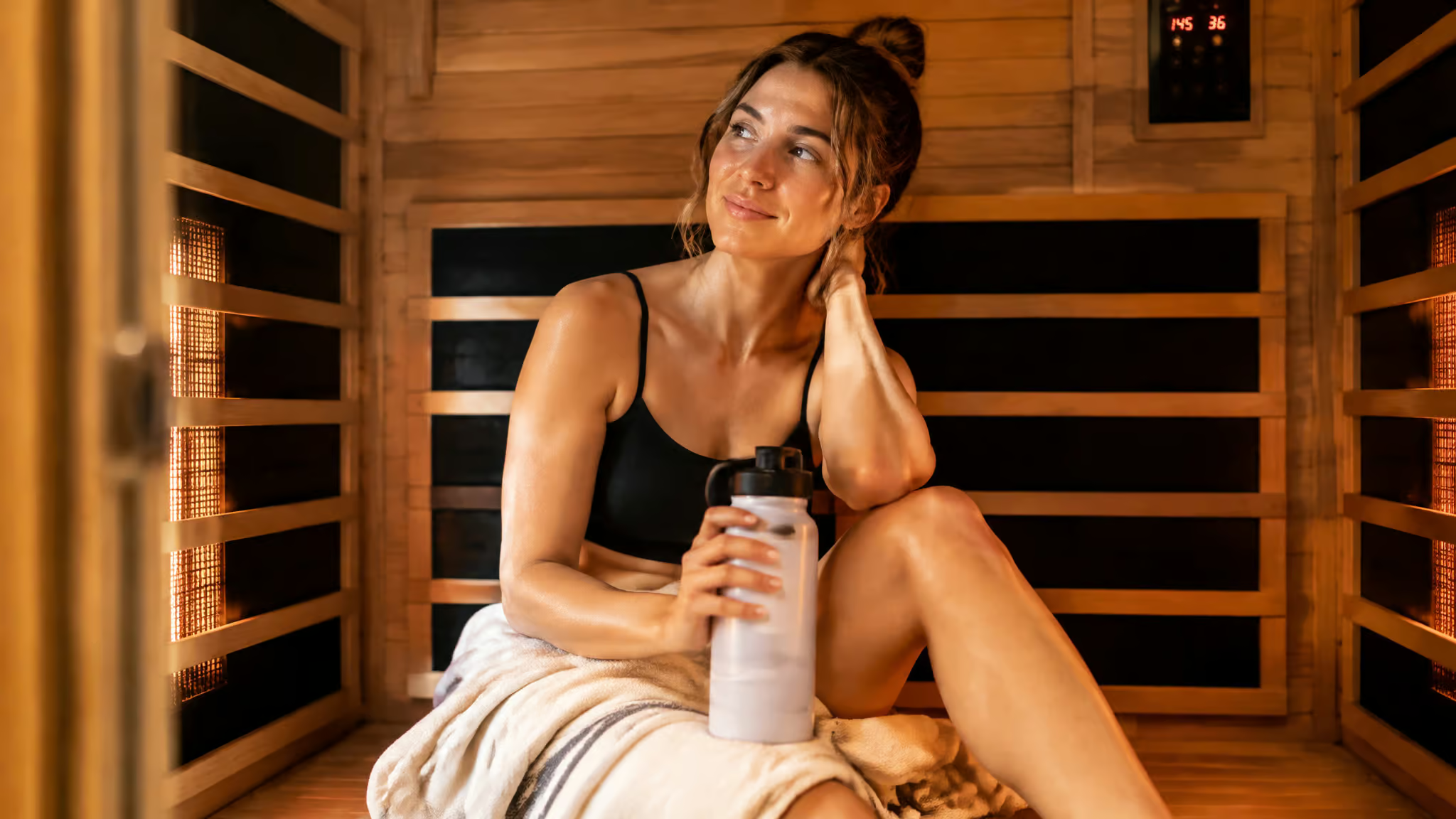
If you’ve been up at 3 a.m. scrolling Reddit threads about whether the sauna will tank your milk supply, here’s what moms actually report: the sauna itself doesn’t dry up your milk. When supply dips show up, they’re almost always dehydration, fixable with water and electrolytes before you touch session length. The scarier fear, that sweating somehow leaks toxins into your milk, is physiologically impossible, and we’ll get to why.
First, the honest part. Almost everything ranking for this question was written by a sauna brand with something to sell, so let’s set expectations up front. No clinical studies exist on sauna use while breastfeeding. No formal breastfeeding guidelines mention infrared saunas at all.
The fair answer is that sauna use while nursing looks likely low-risk, but that’s not the same as proven safe. The two real firsthand accounts available (a blogger who used an infrared sauna for over a year while nursing, and a mom from a podcast) plus the patterns that come up again and again in mom forums are what we’ve got. And a note on those forum patterns: they’re paraphrased here, not quoted. Nobody made up usernames or posts for this article.
Here’s the roadmap: the two real moms’ protocols, the three checkable causes behind a supply dip, the session rules, the timing around nursing, and when to skip it entirely.
Key Takeaways
Sauna use while breastfeeding is likely low-risk but not proven safe; there are no clinical studies, and the only documented risk is dehydration, not toxins in your milk.
Cap sessions at 20-30 minutes while nursing (start at 10-15), hydrate with water and electrolytes for hours after, and track your baby’s diapers for the next 24 hours.
Wait at least 4-6 weeks postpartum (6-8 conservatively, longer after a C-section) and get your provider’s okay before your first session.
Table of Contents
Why nursing moms want the sauna in the first place
Gentle heat may help with postpartum recovery and clogged ducts through improved circulation, though both of those are “may,” not “will.” But the draw is real, and if you know, you know: the neck, shoulder, and back ache from hunching over a baby all day. Add joint tension and general postpartum soreness, and yes, heat sounds amazing. Endorphins from a sauna can take the edge off stress too. Those are the widely-talked-about claims, but here’s what I personally noticed: less tension and soreness after wearing a baby all day, deeper sleep on sauna nights, and a genuine mental reset in 15-20 minutes.
And then there’s the sleep thing: after you get out, your body temperature drops, and that drop signals your brain that it’s rest time. Parents report falling asleep faster and sleeping longer after sessions. With a newborn in the house, that alone is tempting.
One thing worth killing early: the sauna will not increase your milk supply. Don’t let anyone sell you that. But there’s a real distinction worth knowing. High cortisol (your stress hormone) can interfere with oxytocin, the hormone that drives let-down.
So while the sauna won’t make more milk, the stress relief might indirectly un-block let-down. That’s a welcome bonus, not a treatment.
And here’s the sentence that unlocks everything else: unlike pregnancy, the baby isn’t inside you anymore. Heat doesn’t reach them directly. Plenty of cultures use saunas through pregnancy, postpartum, and nursing without a second thought. That’s perspective, not a prescription, but it should shrink the dread a little.
What moms actually report about supply, and what really caused it
The sauna probably won’t dry up your milk. But heavy sweating without replacing fluids can cause a temporary dip, and that’s fixable. When a forum poster says the sauna killed their supply, it almost always traces back to one of three checkable things.
It’s usually dehydration
This is the big one. Breast milk is roughly 87-90% water, so even mild dehydration can dip your supply and change your milk’s consistency. The fix is boring and it works: fluids and electrolytes. It really only takes serious dehydration for your body to prioritize survival over milk production, and nobody’s getting there from a 20-minute session with a water bottle nearby.
The prolactin blip
There’s some early research (keyword: early) suggesting that heavy heat stress could briefly shift prolactin, the milk-making hormone. It seems short-term and bounces back with rest and fluids. This is preliminary stuff, so file it under “keep sessions moderate,” not “the sauna is coming for your milk.”
The lactic acid taste thing
Intense heat stress can temporarily bump lactic acid in your milk, the same reason post-workout milk tastes different. Some babies notice and feed less enthusiastically, which looks like a supply drop but isn’t. It’s temporary and not harmful. Your baby might just give you a look.
The scenario that comes up repeatedly in mom forums goes like this: session runs longer than planned, next morning the breasts feel softer, panic post gets typed. And the resolution is almost always water, not quitting saunas forever. No strong evidence shows sauna heat itself messes with milk production, so if your supply dips after a session, check your water intake first.
The toxin-transfer fear is physiologically impossible
No, toxins from sweat don’t pass into breast milk. There’s no evidence for it, and the anatomy says it can’t happen. Sweat glands and milk ducts are separate plumbing; your sweat isn’t leaking into your milk. Milk is made from your blood, and your liver and kidneys are the cleanup crew, not your sweat glands. Waste leaves through sweat, pee, and poop (and crying, honestly, though that’s you, not the milk).
This is the single most common fear in forum threads, so it deserves a kind dismissal: so many moms carry this one, and it’s the risk that doesn’t exist. The risk that does exist is the boring one. It’s fluid loss, and it’s preventable with a water bottle.
What the experts actually say, and what they don’t
The major organizations haven’t addressed saunas directly. No formal breastfeeding guidelines mention infrared saunas, and nobody’s funded a clinical study on it, so everything here is built from general heat, hydration, and lactation principles. Here’s the closest thing to solid ground:
- The CDC says stay hydrated, especially with heat or illness, because dehydration can dip your supply. For you: drink water, especially on sauna days.
- The Academy of Breastfeeding Medicine points to paying attention to how you’re feeling and your hydration. Common-sense check-ins, not directives.
- La Leche League emphasizes comfort and rest when adding anything new to your routine. Which is permission to take care of yourself, not a rulebook.
None of that is a sauna endorsement. It’s the nearest solid ground while nobody funds the actual study. One thing to name while we’re being honest: brand pages have a commercial reason to say infrared is “automatically safer,” and that isn’t proven. Likely low-risk is not proven safe. There’s also no evidence the infrared light itself harms your milk or your baby, which is the specific fear worth addressing.
The reassuring part: the community’s informal rules (hydrate, start short, watch the diapers) actually map onto the physiology. Moms figured out the right things before anyone wrote them down.
When to start: the postpartum timeline and clearance
Wait at least 4-6 weeks after an uncomplicated vaginal birth, 6-8 weeks to be conservative, and longer in practice after a C-section, and get your provider’s all-clear first. The range exists for a reason: some guidance says 6-8 weeks, especially post-C-section, because the early weeks bring hormonal shifts and higher infection risk while your uterus heals, and sauna heat and moisture can irritate a healing incision. If you had a C-section, that heat-and-moisture point is the one to take seriously.
Red flag: A great-feeling body isn’t a green light — get the provider all-clear first, especially after a C-section with a healing incision.
Feeling fine is not the same as being cleared. You feel great, your incision disagrees, that kind of thing. Your provider knows your actual delivery and recovery; a blog post doesn’t, including this one.
Also worth knowing: brand-new moms handle heat worse. Hormones, broken sleep, and nursing demands all crank up heat intolerance, which explains the why am I so hot all the time feeling nobody warned you about. So for early sessions, have someone nearby. Not because something will happen, but because it’s smart.
Two real moms, two protocols
These are the only two firsthand accounts we have, and neither is evidence. Both are one person’s experience, said plainly.

The Latching with Grace blogger
She used an infrared sauna regularly for over a year while nursing her second child. Started at 10-15 minutes, worked up to 30, never went past it. She tracked diaper counts, weight gain, and supply the whole time and saw no negative changes. She promised herself she’d exit if she got lightheaded, nauseous, or just felt off, and some days she simply skipped it. No streak-keeping.
Her mental checklist before each decision: risk to her body, risk to her breastmilk, risk to her baby. Her analogies, attributed to her: infrared heats you from inside like a fever (and it’s considered safe to nurse while you have one); balancing self-care with nursing is like Jenga, one wrong move and it wobbles; and your first visit is like your first spicy taco, don’t go all in. She also treats sweating within the first 10 minutes as a sign the session is doing its job.
Chelsea, on the Dr. Josh Axe podcast
Chelsea started about a month postpartum, 10 minutes at a time, and reports her best sleep after infrared use. Worth flagging clearly: her start predates the 4-8 week guidance, so don’t copy that part from her.
The reusable takeaway is the blogger’s three-risk framework (body, milk, baby) and her monitoring method. That’s what “cautious” actually looks like in practice: a cap, a self-promise, and data.
The nursing-parent protocol: how long, how often, and how much water
Start at 10-15 minutes, cap at 20-30 while breastfeeding, once or twice a week to start, and stop immediately if you’re lightheaded, nauseous, or your heart is racing. That’s the whole protocol in one breath. Now the details.

Duration and frequency
The 20-30 minute cap is nursing-specific. General wellness protocols (Dr. Chris Motley recommends 40-minute sessions, 4-5 days a week) don’t apply to you right now. Ignore the internet’s 45-minute advice, and if you’re an experienced sauna user, yes, you too: shorten your usual sessions postpartum. The common failure pattern looks like this: mom resumes her pre-pregnancy duration because she “used to do it all the time,” feels lightheaded, and decides saunas and breastfeeding don’t mix. The actual issue was skipping the re-entry.
Once or twice a week is a trial run. If your supply’s steady and you feel good, build gradually. Your own data is the green light.
Hydration
- Start drinking a few hours ahead of your session instead of downing a bottle right at the door.
- Have 16-20 ounces of water or an electrolyte drink just before you go in.
- Keep water in reach during, and keep drinking for hours after. The “after” is the part everyone skips.
- Add electrolytes. Sweat takes minerals your nerves and muscles need, and electrolytes help your body put that water to use. A sports drink or electrolyte water works just as well.
Buyer rule: Electrolytes count as hydration — a sports drink or electrolyte water does the job if plain water feels endless.
The CDC’s hydration guidance for breastfeeding moms points the same way: keep fluids up, especially with heat exposure, since dehydration can dip your supply. One common rule of thumb built on that: double your usual fluids on sauna days, or 500ml in the hour before and 500ml to 1 litre after. Steady fluids keep supply steady as an everyday habit, not just a sauna-day rule. And eat enough. Breastfeeding plus a sauna burns real calories, and your body’s already working overtime.
Consider this permission to snack. If you want ready-made support, products like Milky Mama’s hydration drink, herbal option, cookies, and brownies exist, plus their educational stuff (a Breastfeeding 101 course, a pumping guide, hydration and low-supply guides, and lactation consultant support). Descriptive, not an endorsement.
Warning signs and aftercare
Lightheaded, nauseous, racing heart, or just “off”: leave immediately. Feeling off counts. Moms second-guess themselves constantly, so here’s your permission slip. This is not the place to be a hero, and if you’re cooking, that’s your exit signal, not something to push through.
No freezing cold shower afterward. Cool down naturally at room temperature instead; postpartum bodies don’t need the shock. And don’t fall asleep in the sauna. Exhausted parents, this means you. Mean it anyway.
Afterward: dry off, cool down, drink water, shower. That’s the whole ritual. Minimal clothing inside; wrap up after if it’s cold or windy out, especially for garage or backyard setups.
Nursing after a session: the cool-down, the let-down problem, and the baby check
Wait 30-60 minutes after the session before nursing, or express beforehand if timing’s tight. Here’s how to make that work.

Before and after
The single most useful scheduling tip: time your session right after a feed or a pump. High heat can trigger spontaneous let-down, so going in “empty” saves you from leaking through your towel. If you can’t swing the timing, expressing beforehand gives you a buffer bottle.
Afterward, the 30-60 minute cool-down lets your temperature normalize. That means comfortable skin-to-skin, no dizziness while you’re holding the baby, and the temporary lactic acid changes get a chance to settle. A quick rinse before nursing is for the baby’s comfort, salty skin, not because the milk changed. Your milk temperature itself isn’t affected by sauna use.
And the situational beat every discussion of this topic eventually hits: the session ends, the baby’s immediately hungry, and you hesitate. That timing dilemma is a shared one, which is exactly why the express-beforehand workaround exists.
The baby check
The diaper count doesn’t lie. Watch wet and dirty diapers for 24 hours after a session, and note any unusual fussiness at the breast. A sudden drop means more water or less sauna time, plain cause and effect. Keep watching weight gain and supply as you already do; the sauna doesn’t change what you’re already tracking. Twenty-four hours of normal output means you’re fine. That’s “listen to your body” turned into an actual checklist.
Infrared vs traditional vs blankets for nursing parents
Infrared runs cooler, 120-150°F warming your body directly, compared with 150-190°F air in a traditional sauna, and that gentler heat load makes it easier to tolerate. But easier to tolerate is not proof of safety. Neither type gets an unconditional green light while breastfeeding.
What each one is like in practice: a traditional sauna is the hot wooden room, a stove or stones heating the air, fast intense sweating that hits harder and faster. Infrared keeps the air cooler while warming you, so you can sit in it longer with heat reaching deeper at lower temperatures. Some practitioners are more comfortable recommending infrared for exactly that reason. Plenty of moms also find it easier to sit in than steam and humidity, and that’s a valid reason to prefer it.
Blankets: generally fine with the same precautions, but direct skin contact heats you faster, so shorter sessions and more water. The detail blanket brands skip: if you’re engorged or sensitive, keep your breasts away from direct blanket contact.
If you’re buying instead of visiting, one honest line from the GHS folks: cheap isn’t always the best deal. Figure out what you need (and which accessories you’ll want) before you start comparing prices. For readers without a home unit, studios like SweatHouz offer private suites with Clearlight full-spectrum saunas, chromotherapy, and vitamin-C showers. And if a full home unit feels like a lot, GHS makes 1-, 2-, and 3-person models, with the 2-person popular with moms.
When to skip the sauna entirely, and what to do instead
Skip it entirely if any of these apply: you’re under 6-8 weeks postpartum, your supply is low, you’re dehydrated, you’re running on almost no sleep, you’re fighting an active infection, mastitis, or a blocked duct, or you have a heart condition, uncontrolled blood sugar, or heat-sensitive medications. Treat this as a pre-session self-check for the exact moment you’re tempted to push through while exhausted. Some postnatal medications and supplements don’t love heat and sweating either, so it’s worth a quick ask at your checkup.
The mastitis nuance cuts both ways: active infection means skip, full stop. But when you’re well, gentle warmth may actually help circulation and clogged ducts.
And for the reader who decides it’s simply not worth it: a warm Epsom-salt bath delivers similar muscle relief without the big core-temperature shift. Genuinely, that’s a real alternative, not a consolation prize. Either way, skip the cold plunge trend and the ice-cold showers; cool down naturally.
There’s more depth on the general safety picture in this judgment-free guide to infrared saunas while breastfeeding, and if you want the official-authority angle, what the NHS and health authorities say is a good companion read.
The honest version of the benefits story, without the miracle claims, lives in our rundown of sauna benefits for postpartum and breastfeeding moms.
One last thing worth knowing about the wellness internet: the big sauna numbers you’ll hear on podcasts (longevity, immunity, heart health) come from studies of middle-aged men, like that 2,315-person Finnish study linking frequent sessions to lower heart disease risk over 20 years. Interesting, sure. Transferable to a nursing mom? No.
And the unverified promo numbers floating around, the ATP boosts and inflammation drops, are marketing figures, not research. You can safely scroll past them.
So here it is, one more time, short: likely low-risk, not proven safe. The feared risk is a myth, and the real risk is preventable. The Latching with Grace blogger closed her own account with something like this: safety remains a personal decision, and for her, the benefits outweighed the risks. That tradeoff is yours to make, and either answer is legitimate.
The compact version: provider clearance, 4-8 weeks, 10-15 minutes building to 20-30, water plus electrolytes, nurse or express first, 30-60 minute cool-down, and a 24-hour diaper count after each session. Run the checklist, watch the baby, and treat any supply dip as a hydration problem first.
Frequently Asked Questions
Is it safe to sweat out toxins in a sauna when nursing, or could toxins pass into breast milk?
No — toxin transfer from sweat into breast milk is physiologically impossible. Sweat glands and milk ducts are separate plumbing, and milk is made from your blood, with your liver and kidneys doing the cleanup, not your sweat glands. Waste leaves through sweat, pee, and poop. The real risk is the boring one: fluid loss, which a water bottle prevents.
How long should I wait after giving birth before using a sauna while breastfeeding?
Wait at least 4-6 weeks after an uncomplicated vaginal birth, 6-8 weeks to be conservative, and longer in practice after a C-section — sauna heat and moisture can irritate a healing incision. Get your provider’s all-clear first, because feeling fine is not the same as being cleared. Note that one podcast mom started about a month postpartum, which predates this guidance, so don’t copy that part.
Is an infrared sauna safer than a traditional sauna while breastfeeding?
Infrared runs cooler — 120-150°F warming your body directly, versus 150-190°F air in a traditional sauna — so the gentler heat load is easier to tolerate, and some practitioners are more comfortable recommending it for that reason. But easier to tolerate is not proof of safety, and neither type gets an unconditional green light while breastfeeding. Brand claims that infrared is ‘automatically safer’ aren’t proven; likely low-risk is not the same as proven safe.