If you’ve ever stood in the barware aisle thinking, wait, they thought a shot was 1.5 oz?, congratulations: you’ve hit the first confusing thing about buying shot glasses, and it’s not even your fault. The number on the label, the legal pour size, and what’s actually sitting in the glass are three different numbers, and almost nobody tells you that before checkout.
Quick basics so we’re on the same page: a shot glass is just a small glass for spirits, either drunk straight (that’s “a shot”) or poured into a cocktail (that’s “a drink”). A drink you swallow in one go is casually called a “shooter.” That’s the whole vocabulary lesson.
Here’s the spine of this whole guide: how you’ll use the glasses, what the sizes actually mean, what they’re made of, which shape fits which drink, and whether you need a jigger too. In that order.
Key Takeaways
A US shot is generally 1.25-1.5 fl oz (37-44 ml), and there’s no federal definition anywhere except Utah, which legally fixes it at 1.5 fl oz (44.4 ml).
A glass labeled 2 oz is often designed for a 1.5 oz pour plus headspace, so a measured shot sitting three-quarters full means the glass is working as intended, not defective.
For most people, heavy-base glass is the home-bar default, plastic suits poolside and parties, stainless steel handles travel, and the bar’s core trio (1 oz, 1.5 oz, 2 oz) covers every size you actually need.
Table of Contents
Start with how you’ll actually use them
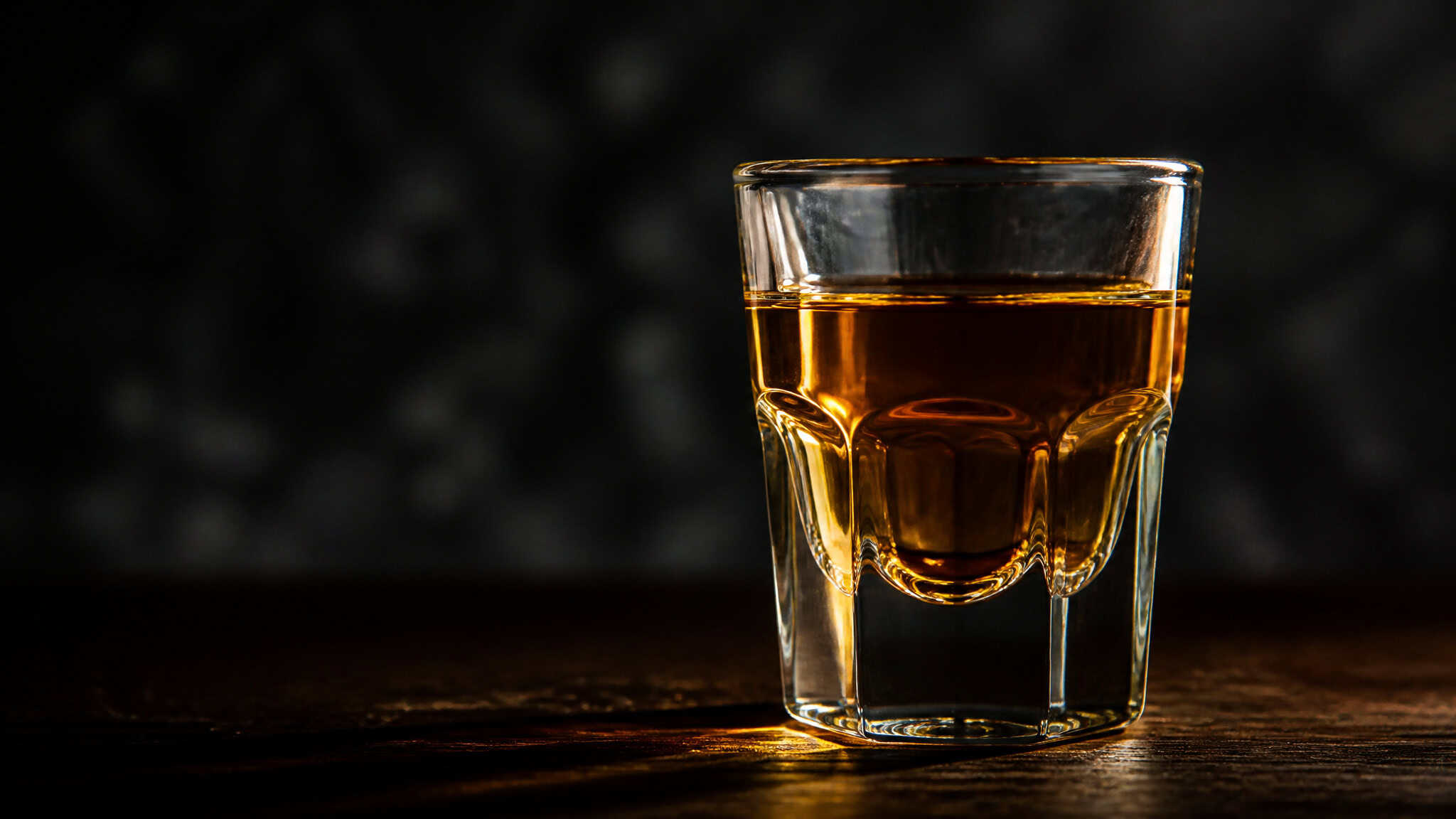
First, the question people actually Google at 10pm: yes, shot glasses work great for desserts and candles, and if that’s your plan, the sizing logic flips entirely. You’ll want to size up, not down, and favor glasses with wide, stable bases so a tray of mousse doesn’t become a cleanup project. More on that in a second.
If the glasses are for actual drinks, your use case splits pretty cleanly. Home bar service wants classic 1.5 oz glasses. Parties want volume and durability. Tasting flights want little 1 oz glasses.
Camping and travel want unbreakable. Gifting wants something engraved or decorated. Collecting, well, that’s its own wonderful rabbit hole.
But the branch almost every buying guide skips: if these glasses will hold parfaits, mousse, mini trifles, shrimp cocktail, gazpacho, or become votive candle holders, ignore the standard-pour logic. You want bigger capacity and stability, not bar-standard sizing. And honestly, these things multiply in your cabinet anyway. Somewhere in your house right now there’s a souvenir shot glass from a trip nobody remembers taking. Might as well put a tea light in it.
If you’re buying for a collection
Here’s where history becomes a useful skill. The earliest American whiskey glasses, from the late 1700s and early 1800s, were hand-blown, thick, and you can spot them by their pontil marks (that’s the scarred or polished spot on the bottom left over from hand-blowing) or ground, polished cupped bottoms. Molds arrived in the early-to-mid 1800s and left rough pontiled bottoms behind, and by the 1870s through 1890s better glassmaking meant those rough bottoms mostly disappeared. So a pontil mark is a dating cue, not a guarantee of anything.
The beloved collectible tier is the decorated souvenir glasses: toasts, ads, funny pictures, brewery merch. Everyone knows someone with a shelf of these. There’s even an encyclopedia of them, Mark Pickvet’s The Encyclopedia of Shot Glasses, and it’s exactly what it sounds like.
Shot glass sizes: what the numbers actually mean
Size is where shot glasses get confusing, so this section untangles the three numbers in play: what a shot actually measures in the US, what the label on the glass claims, and what’s really sitting in there after you pour. Get those straight and the 2 oz glass that looks three-quarters full stops looking broken, and the rest of the world’s pours make a lot more sense.
How many oz is a shot?
The US standard is 1.25 to 1.5 fluid ounces (37 to 44 ml), and most traditional shot glasses hold 1.25 to 1.5 oz. So the classic little glass you’re picturing is probably fine.
Now the fun part: there’s no federal definition of a shot anywhere in the US. None. Except Utah, which legally defines a shot as 1.5 fl oz (44.4 ml). Just Utah, out there with opinions.
Quick etymology while you’re pouring: “shot” has meant a drink of alcohol since at least the 17th century, from the Old English “sceot.” The word predates any standard glass by centuries, which is why no single size ever got locked in. In practice, singles run 30 to 44 ml, doubles run 59 to 89 ml, and 2 oz is the standard double.
Why a 2-oz glass doesn’t hold a 2-oz pour
This is the thing that confuses everyone, so let’s say it plainly. If you’ve poured a careful, measured 1.5 oz into a glass labeled 2 oz and watched it sit there looking about three-quarters full, you’ve probably wondered if the glass is defective or mislabeled. It’s not. It’s working exactly as designed.
A lot of 2 oz glasses are built for a 1.5 oz pour with intentional headspace, meaning room at the top. That headspace means fewer spills, steadier carrying, and room for a guest to actually hold the glass without their fingers swimming in whiskey. Anyone who’s watched a friend walk four full-to-the-brim shots across a living room knows exactly why this exists.
Buyer rule: A 1.5 oz pour should look three-quarters full in a 2 oz glass. That empty space is headspace — fewer spills, steadier carrying, room to actually hold it.
One little international wrinkle: Canadian glasses made to US fluid ounces run about 4% larger than imperial-based ones. Not a conversion crisis, just a “huh, Canada” detail if you ever compare glasses side by side.
Quick size chart
- Single: 1 to 1.5 oz
- Double: 2 oz
- Shooter: 2 to 3 oz, for layered shots and mini cocktails
- Tasting: about 1 oz, for flights
Shot sizes by country
Yes, shot sizes differ by country: the range runs from Denmark’s 20 ml to India’s roughly 120 ml Patiala peg. Worldwide measures run roughly 20 to 120 ml, which means the same glass that’s a legal single in the UK is about half a pour in Russia.
| Country | Typical sizes |
|---|---|
| United Kingdom | 25 or 35 ml singles under the Weights and Measures Act 1985; 70 ml doubles allowed since a 2001 amendment; singles generally 35 ml in Scotland and Northern Ireland, 25 ml in England and Wales |
| Australia | 30 ml (called a “nip”); a 30 ml pour at 40% ABV is about one Australian standard drink |
| Germany | 20 or 40 ml |
| Japan | 30 or 60 ml |
| Canada | about 44 ml; official standard drink 42.6 ml |
| Ireland | 35.5 ml (a quarter-gill) |
| Russia | 50 or 100 ml |
| India | 30 or 60 ml, and then the Patiala peg |
Two stories worth knowing before you travel. India’s Patiala peg is a shot of roughly 120 ml, described by the writer Kirin Narayan as tall as the distance between your pinky and index finger. Read that again. That’s the size of the pour.
And in Greece there’s the hypovrychio, the “submarine”: a 3 oz glass dropped bottoms-up into a half-filled lager, sometimes with a shot of vodka or whiskey added too. I have no follow-up questions and also many follow-up questions.
(Table footnote for the trivia-inclined: Sweden names its measures fyra and sexa for 40 and 60 ml, and Poland uses pięćdziesiątka and setka for 50 and 100 ml, which is just the numbers said out loud, which I find charming.)
How to tell what size an unlabeled glass is
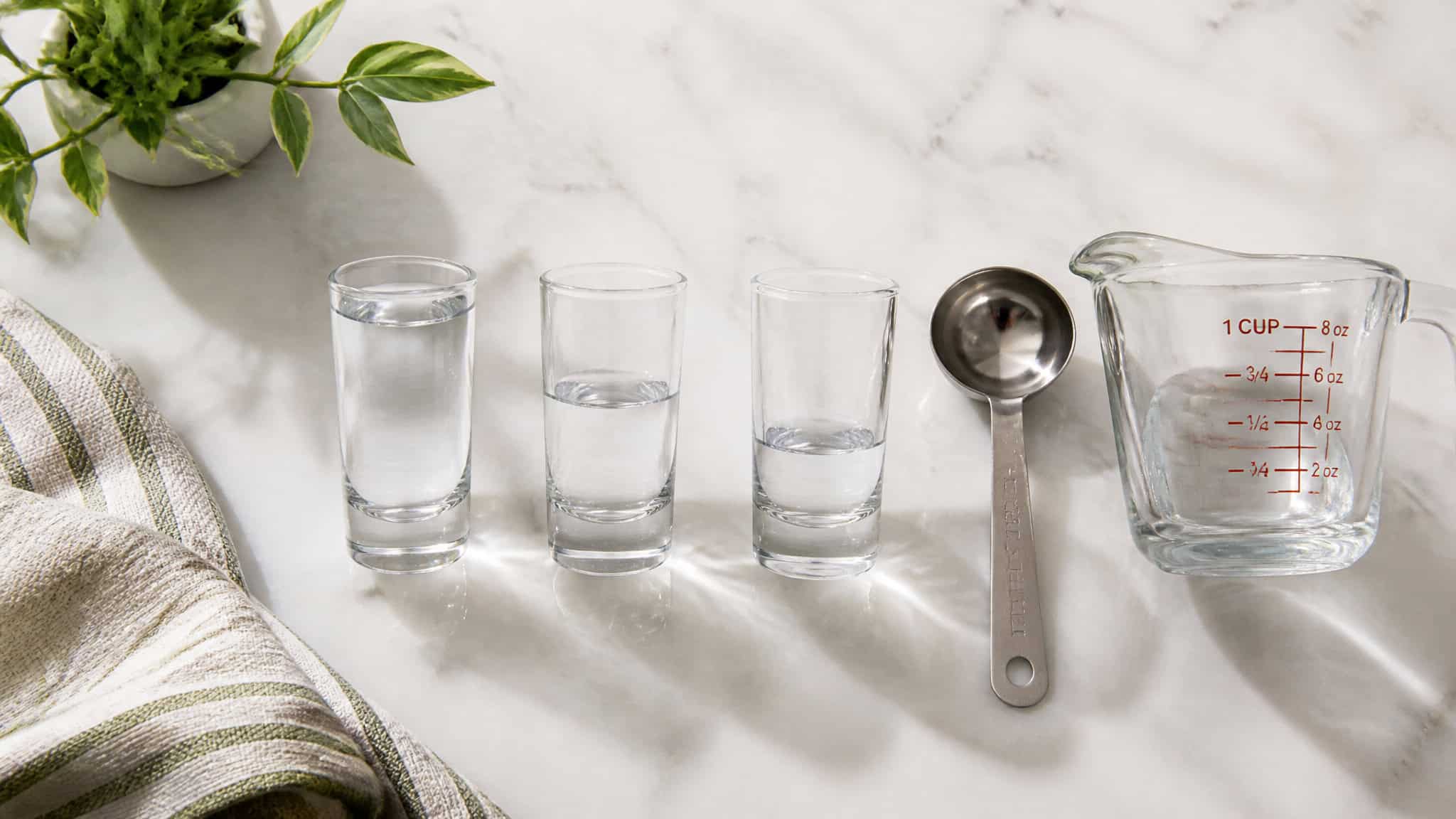
You can check this at home with stuff already in your kitchen. A standard shot equals 3 tablespoons, so pour that much water into the mystery glass and see where it lands. A bottle cap holds roughly 0.5 oz, so three caps gets you close to a shot. Measuring cup markings work too.
The honest caveat: this is approximation, not lab accuracy. And it verifies the vessel, it doesn’t turn the glass into a measuring tool. More on that in a bit. But the reassurance stands: no dedicated shot glass, no crisis.
Glass, plastic, or stainless steel?
Glass is the classic choice for most people. Plastic wins wherever things get knocked over. Stainless steel owns travel and the outdoors. And the price gap between them tells you exactly what you’re paying for.
When plastic or stainless beats glass
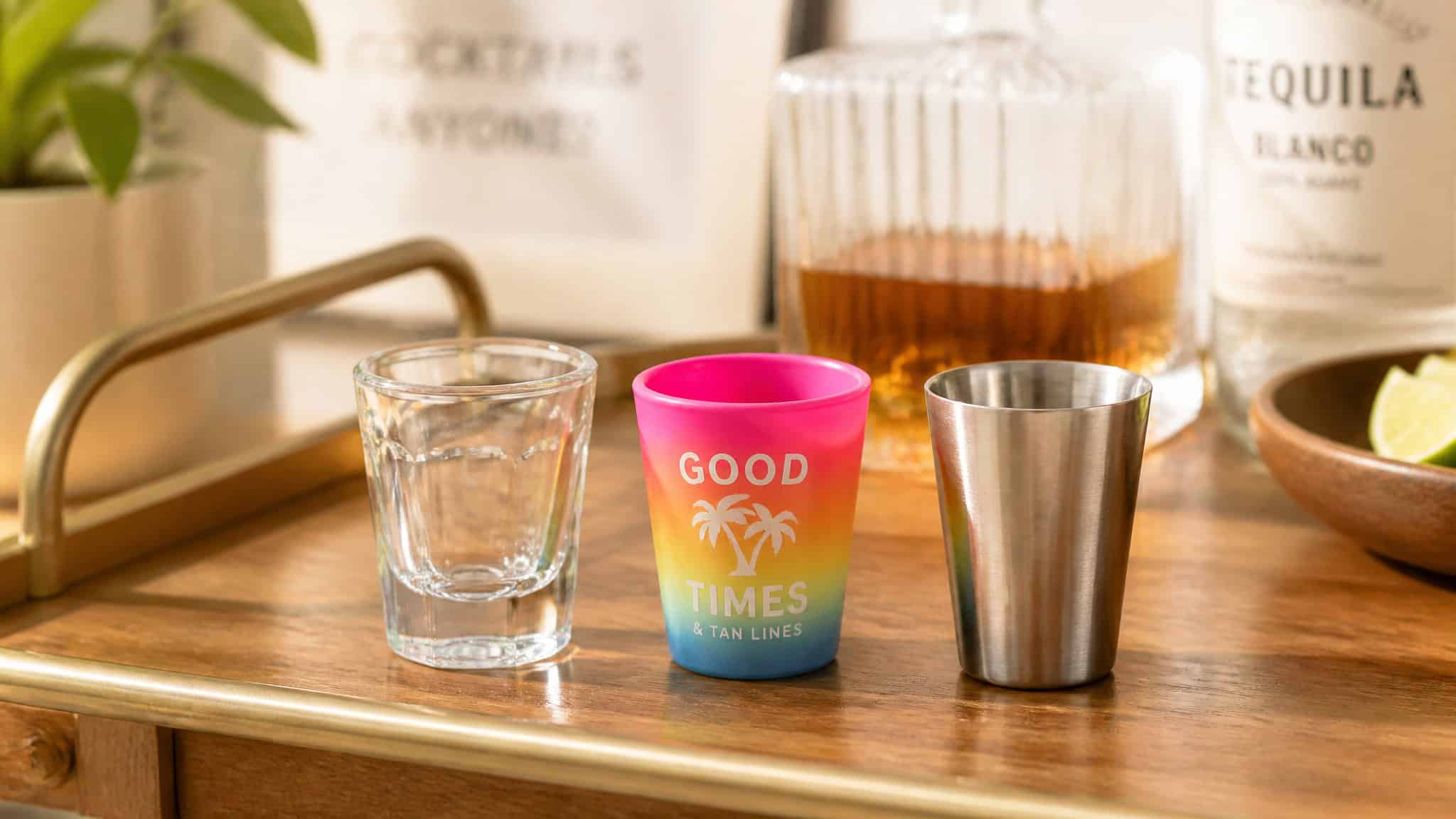
Heavy-base glass is the home-bar default, full stop. It feels right, it’s dishwasher-friendly, and it’s cheap enough to replace. Plastic shot glasses make sense for poolside and big parties, anywhere bare feet and tile floors are involved. Stainless steel is the camping-and-travel answer, and if you want a set that’s unmistakably yours, custom shot glasses cover that base too, which is why most households quietly end up owning all three kinds. There are also lidded sets with carrying holders if your glasses live in a cabinet that gets slammed, which is a real purchase reason.
The premium unbreakable tier: YETI vs Stanley
Per GearJunkie‘s review, YETI’s set is $50 for four 4-oz double-wall stainless shot glasses with a DuraCoat finish, dishwasher safe, in a carrying case. They look like shrunken tumblers, and the “okay, that’s actually clever” detail is that the rubber-topped storage sleeve doubles as a mixing glass. Pair it with YETI’s first 7 oz (207 ml) stainless flask and the full package runs $100, sold through YETI’s site and Amazon.
Stanley’s Adventure Flask Set runs $40, and the Stanley Master Unbreakable Hip Flask is $41. So the YETI package costs more, but it sits in the same premium-competitor territory.
Per review coverage (not personal testing), cheap glass sets tend to chip at the rim long before they shatter. That rim-chip failure is the thing premium stainless is priced to solve. Worth looking for measured fill lines too, whatever material you buy.
There’s no quality data below that $40 Stanley benchmark, so I can’t tell you whether the cheapest sets are fine or terrible. The failure mode to watch for is rim chipping.
Matching the glass to the drink
Shape is functional, not decorative. Buy the glass your actual drinks require and skip the ones that don’t fit anything you make.
Shooter glasses and layered shots
Shooter glasses are the taller 2 to 3 oz vessels, and the difference from a shot glass is drink construction, not branding. Layered shots work because different liqueurs have different densities, so heavier ones stay put under lighter ones. The narrow pousse-cafe glass (a slim glass made for stacked drinks) is what lets a B-52, with its coffee liqueur, Irish cream, and orange liqueur layers, actually stack instead of becoming a beige swirl. It’s a fun party skill, and you can try it at home.
Tequila, schnapps, and ritual shapes
Flared tequila glasses exist specifically for the salt-and-lime ritual, and there’s zero judgment here on how anyone takes theirs. Small schnapps glasses come out of European tradition, where a tiny glass and a toast are doing more work than the volume suggests. One warm line each is all they need.
Tasting glasses for flights
Little 1 oz glasses are what make flights work, like an “Around the World” sampling of tequila, whiskey, and vodka. And if you’re serving dessert-style drinks, size up: the Chocolate Cake Shot (hazelnut liqueur plus vodka with a sugared lemon slice) and the Pineapple Upside-Down Cake Shot (vanilla vodka, pineapple juice, grenadine) both want the mixer room of a 2 to 3 oz shooter. Custom-engraved and decorated glasses are the gifting branch here, and they’re an easy win.
Do you also need a jigger?
Here’s the reframe nobody hands you at the register: a shot glass is a serving vessel pretending to be a measuring tool. It’s not designed for accuracy, and treating it like a measuring cup is where home pours go sideways.
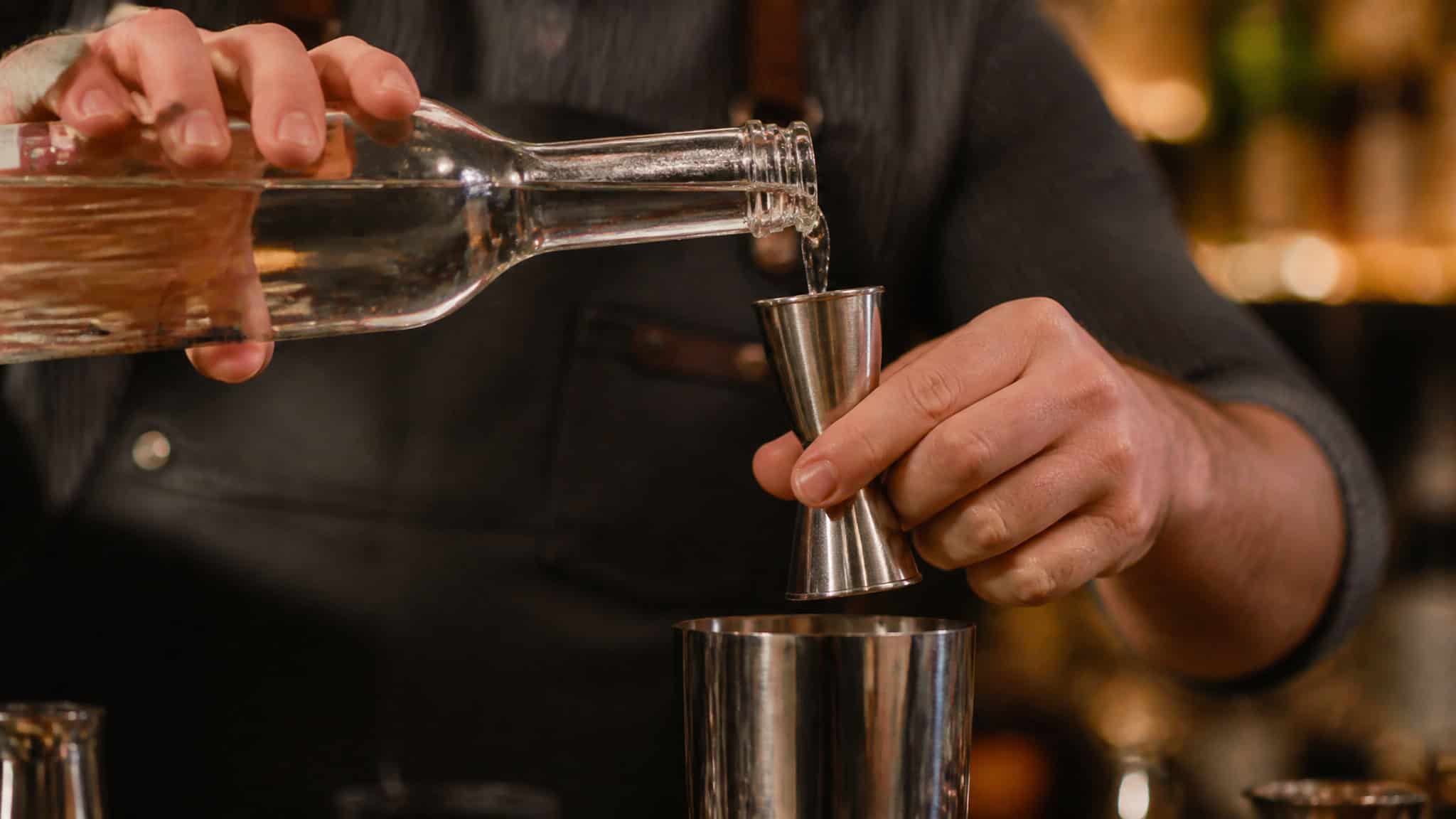
The math is simple. A 0.25 oz overpour on a 1.5 oz shot is roughly a 16.7% increase in spirits per pour. That same quiet drift is what inflates a bar’s liquor budget, and it works on your bottle at home too.
A jigger, meanwhile, is just the little two-sided measuring cup bartenders actually use, typically holding 1.5 oz in its larger measure and 1 oz in the smaller. Trivia beat: the double-ended hourglass design received an 1893 patent from Cornelius Dungan, an inventor in Chicago, and jiggers held about 2 oz pre-Prohibition before settling at 1.5. There are even 1800s references to a “jigger boss” doling out whiskey jiggers to Irish immigrant canal workers in the US Northeast. Great job title.
Bottom line: A 0.25 oz overpour is roughly a 16.7% increase in spirits per pour — the same quiet drift that inflates a bar’s budget works on your bottle at home.
The common mistakes, offered as learn-from-my-chaos rather than a scolding list:
- Using oversized glasses for standard pours (your eyes lie to you)
- Mixing glass sizes, so every pour looks different
- Treating shot glasses as measuring tools when the jigger exists for that
- Ignoring headspace, because full to the brim is not a flex
If pour consistency matters to you at all, the jigger is the more important purchase.
How many glasses to buy: borrow the bar’s core trio
Three sizes cover everything, and they’re the same core set bars stock, because standardization works. Bars pour the same 1.5 oz shot every time so the strength is predictable, costs stay controlled, training is simpler, and recipes repeat. Do the same at home and your drinks taste the same every time, and your bottle lasts as long as it should.
The trio: 1 oz for tastings and flights, 1.5 oz for the standard shot, 2 oz for doubles and shooters. That’s it. You don’t need twelve.
Beyond size, think about your actual pour size, what you actually serve, your storage space (compact glasses rack efficiently, and one consistent style means fewer headaches), and honestly, how it feels to hand someone the glass. Note what I’m not giving you: a guest-count formula. The sources don’t support “one glass per two guests” style math, so I won’t invent it. Size-mix logic is the reliable part.
Shot glass capacity and drinking awareness
One honest beat, zero preaching: capacity is an intake decision. Per NIAAA, 1.5 fl oz of 40% spirits carries the same alcohol as 12 oz of 5% beer or 5 oz of 12% wine. So a 3 oz double in hand equals a full glass of wine, and oversized glasses quietly multiply intake without anyone noticing. Australia’s 30 ml standard drink and India’s Patiala peg put how wide the cultural range is. Yeah, this part just is what it is.
Start with your use case. Size to the pour, not the label (1.5 oz is standard, and now you know why the “2 oz” glass looks short of full). Check any mystery glass with 3 tablespoons of water. Pick material by setting: glass for the home bar, stainless for travel, with YETI and Stanley as the premium unbreakable anchors. Add a jigger if pour accuracy matters.
And when you build the set, borrow the bar’s trio: 1 oz, 1.5 oz, 2 oz. If you only buy one size, buy the 1.5 oz glasses and measure your pours. Your bottle will thank you.