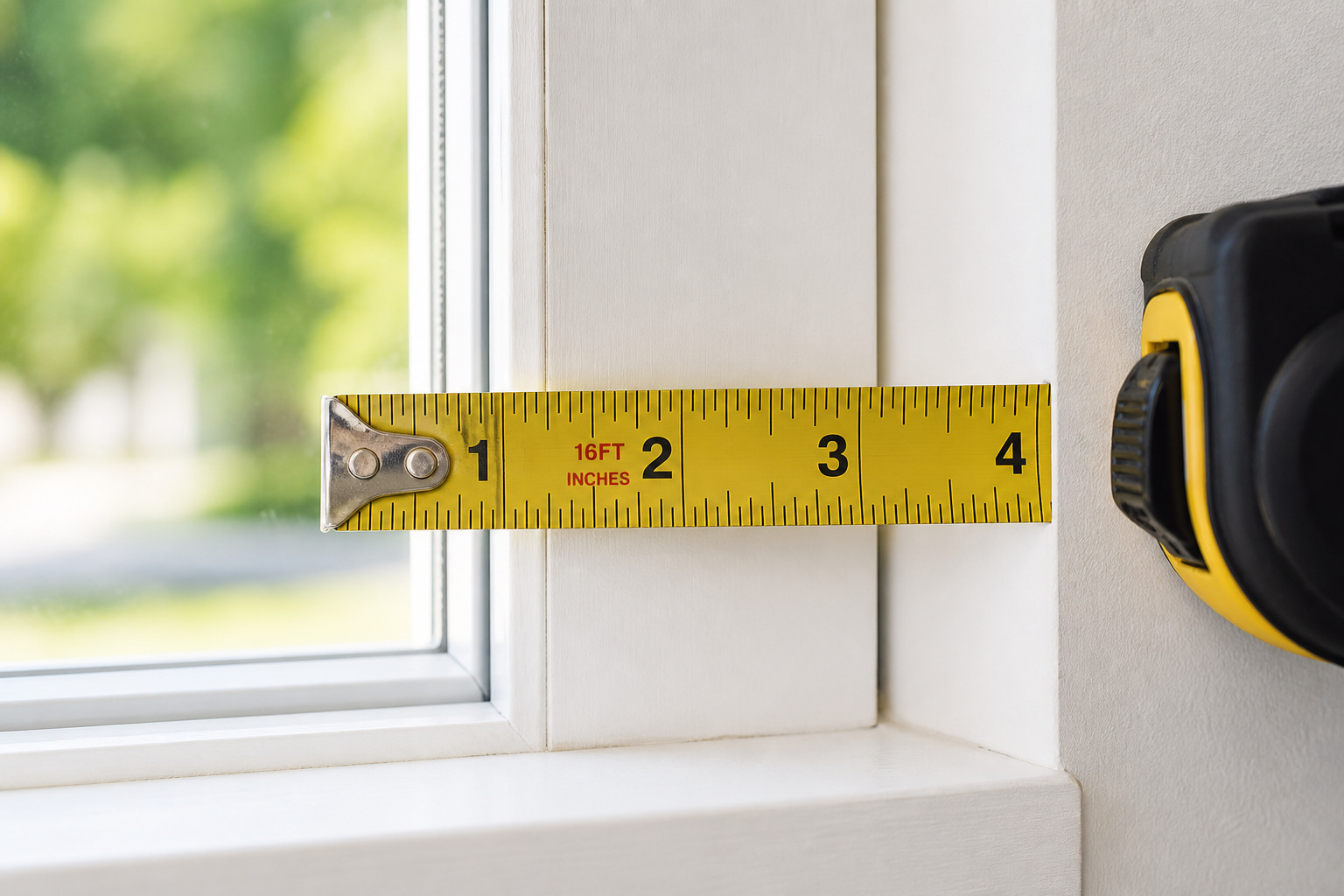
At Tidbits of Experience, our parent collective balances everyday household sanity and the joy of a fresh breeze with keeping our kids safe. Toddlers have a unique physical mismatch—their heads are heavier than their bodies, which throws off their center of gravity and makes top-heavy falls easy.
If you’ve ever felt that sudden, icy spike of adrenaline watching your two-year-old try to smash a play-dough roller into a flimsy screen, you know why we need a plan. The golden rule of window safety: keep every open gap under 4 inches. Make it happen without turning your home into a dark fortress.
Key Takeaways
A standard insect screen is designed solely for bug exclusion and provides zero structural support to prevent a child from falling.
The universal safety standard for any window opening or guard gap is 4 inches, which prevents a child’s head from passing through.
Window guards must feature an emergency quick-release mechanism to comply with fire safety egress standards established by the AAP and CPSC.
Table of Contents
The science of window falls: Why insect screens are a visual illusion
Many parents assume that if a window is closed with its screen in place, it is safe. Unfortunately, these screens provide a false sense of security that can lead to hazardous neglect.
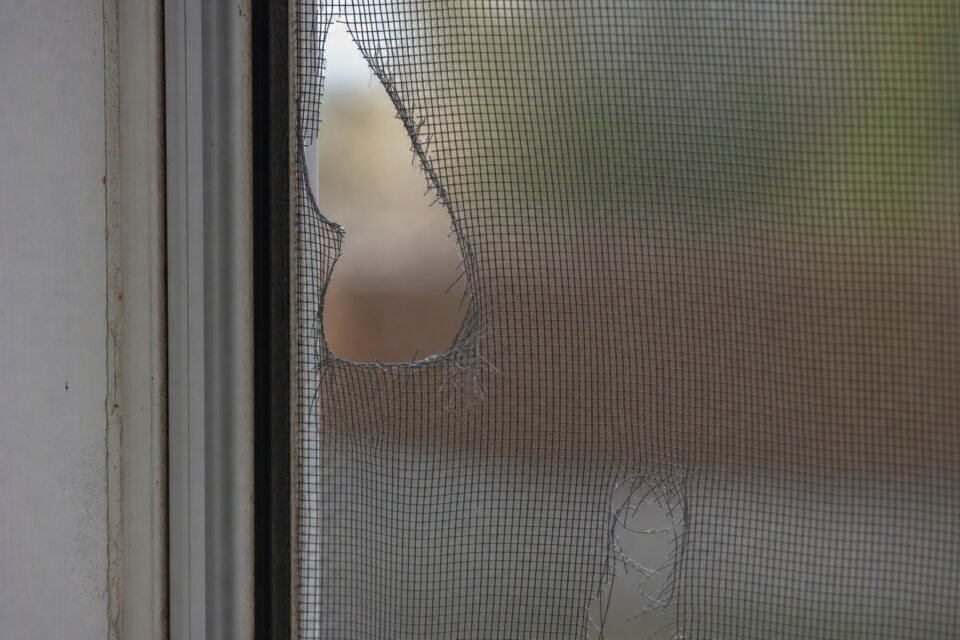
Why screens offer zero protection
Let’s get one dangerous myth out of the way immediately: a standard insect screen is not a safety device and has absolutely nothing to do with fall prevention. Typical insect screens are constructed of flexible fiberglass or thin wire, held in place by a basic rubber spline. They are engineered to keep flies and mosquitoes out, not to keep a heavy toddler inside. It takes very little force for a 30-pound child moving at full momentum to push that screen clean out of its frame. My partner and I check that the glass and screens are secure because a screen is a dangerous visual illusion.
The ages with the highest fall risk
A landmark 2011 pediatric trauma study published in Pediatrics analyzed accident data between 1990 and 2008, showing there were over 98,400 emergency room visits due to window falls. About 65% of those window-fall injuries happened to children under five—the age bracket where physical mobility outruns cognitive risk assessment. Tragically, roughly 8 children die each year in the United States from these accidents.
High-profile stories have pushed these hazards into the public eye over the years. The death of Conor Clapton in the early 1990s shifted public awareness around high-rise window environment risks. On the engineering side, the infamous Garry Hoy incident—where a structural engineer threw himself against a high-rise window to prove its strength, only to pop the window frame entirely out of the building—remains a sobering reminder that window frames and glass are not built to withstand continuous lateral pressure.
Step 1 — Lock your closed windows and check your latches
If you have windows you don’t need to open for daily ventilation, the easiest, zero-cost trick is to keep them locked shut.
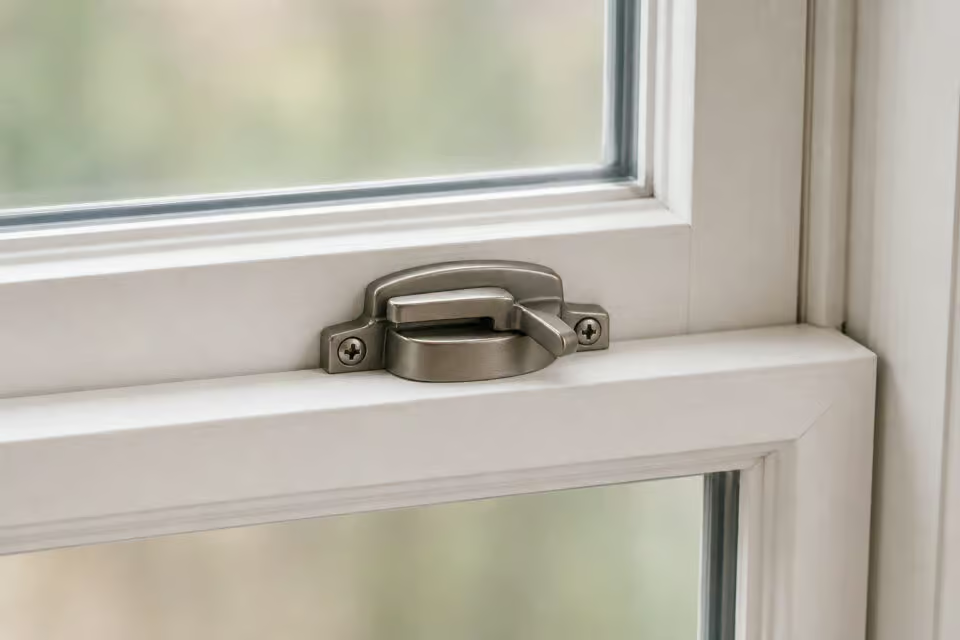
Installing locks on older double-hung windows
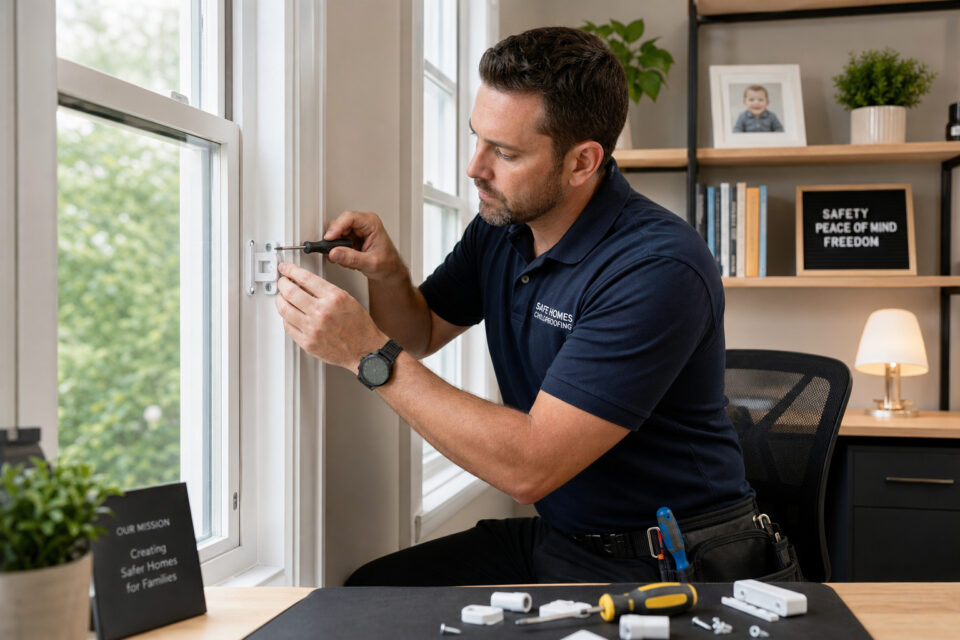
If you have a historic home or rental with classic double-hung window frames, you can use their layout to your advantage. For natural ventilation, try unlocking the frame and opening only the top sash while keeping the bottom sash completely lowered and locked. This moves the open gap high out of your child’s physical reach.
However, if you live in an aging rental or a historic Victorian where the original latches are painted over, drafty, or broken, you will need secondary security. You can find simple, budget-friendly sash locks from brands like Dreambaby for around $10, or look for heavy-duty metal latch guards from Truth Hardware. Just stay away from flimsy adhesive latch options on older, structurally compromised timber frames; authentic wood requires a real, screwed-in mechanical lock to hold up under pressure.
Step 2 — Put up professional-grade window guards
When you must open windows from the bottom or have low-set glass panes, physical guards are your primary, high-effectiveness tool.
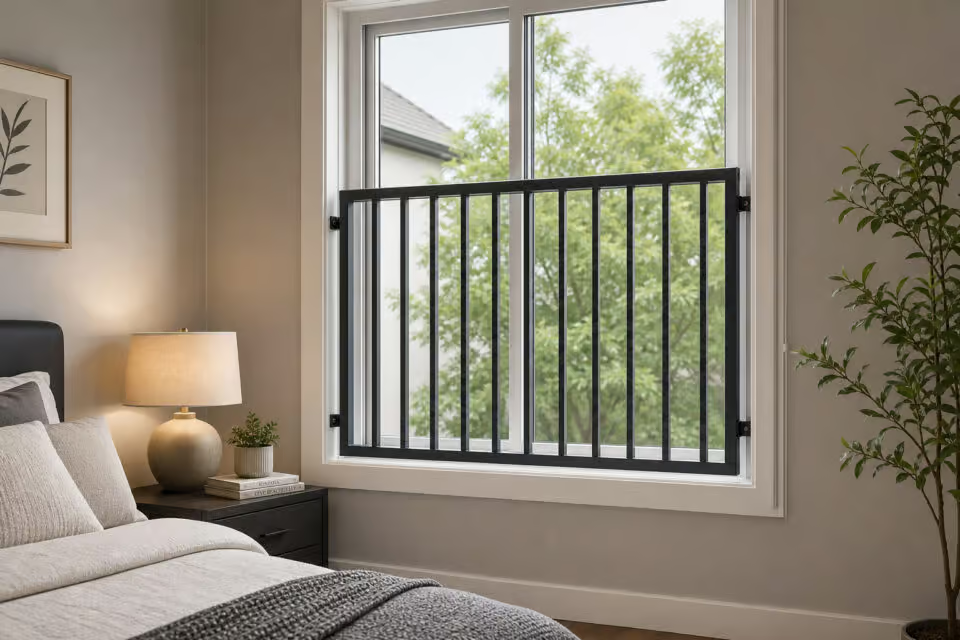
Choosing the right type of window guard
Historically, people hear “window guards” and picture black, industrial-looking jail bars. Modern options are friendlier. You can choose heavy-duty steel bar systems like Guardian Angel Window Guards, or pick a soft, less institutional option like the KidCo Mesh Guard, which uses a strong, tight nylon mesh similar to a pack-n-play.
Much like home updates designed to prevent child garage door access, proper window guard installation is crucial for keeping kids safe; whichever you choose, ensure they are mounted in a vertical orientation. Horizontal bars cause a dangerous ladder effect, turning the guard into a climbing wall for a determined child. Most importantly, any guard you install on a bedroom window must feature a built-in, easy-to-use emergency release mechanism to ensure quick fire egress. The American Academy of Pediatrics (AAP) and the U. S. Consumer Product Safety Commission (CPSC) both emphasize that adults and firefighters must be able to pop the guards open from the inside in an emergency.
Step 3 — Install mechanical window stoppers
If you don’t want to block the view with mesh or bars, window restrictors or limiters are an alternative. They physically prevent the window from sliding open more than a set distance.
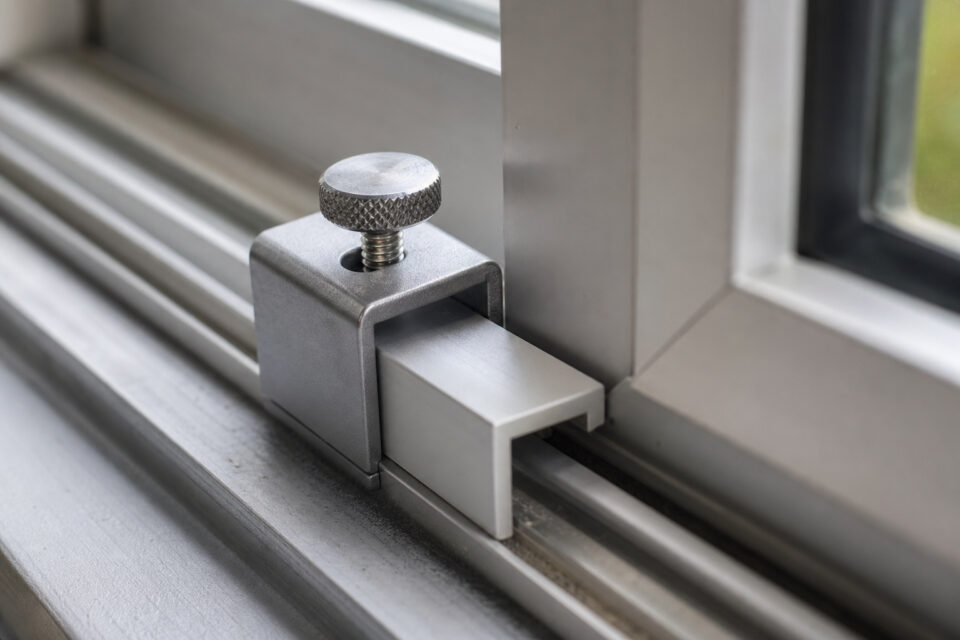
Choosing and installing track-clamp limiters
To meet safety baselines, you must adjust your window opening limiters to keep the window gap at a strict maximum of 4 inches—plenty of space for a cool breeze, but physically too narrow for a child’s head to slip through. When shopping, you will encounter track-clamping stop devices like the Cardinal Gates Window Warden as well as simple wedges like the adhesive-backed Cresci Window Wedge.
While stick-on rubber or velcro wedges are cheap and easy to install, they can be frustrating. On older wood frames, the timber naturally swells during humid summer months, causing adhesive wedges to jam the sash and force you to wrestle with the window. A metal track-clamp like the Window Warden avoids this, locking with a thumb screw or hex key on vinyl or metal window tracks for performance.
Step 4 — Secure specialized windows and rental frames
Not all windows slide vertically. Modern apartments, newer high-rises, and suburban residences, including those that use weather-resistant windows for White Mountains homes, often feature crank systems or non-standard vinyl frames that pose a headache for parents who aren’t allowed to drill.
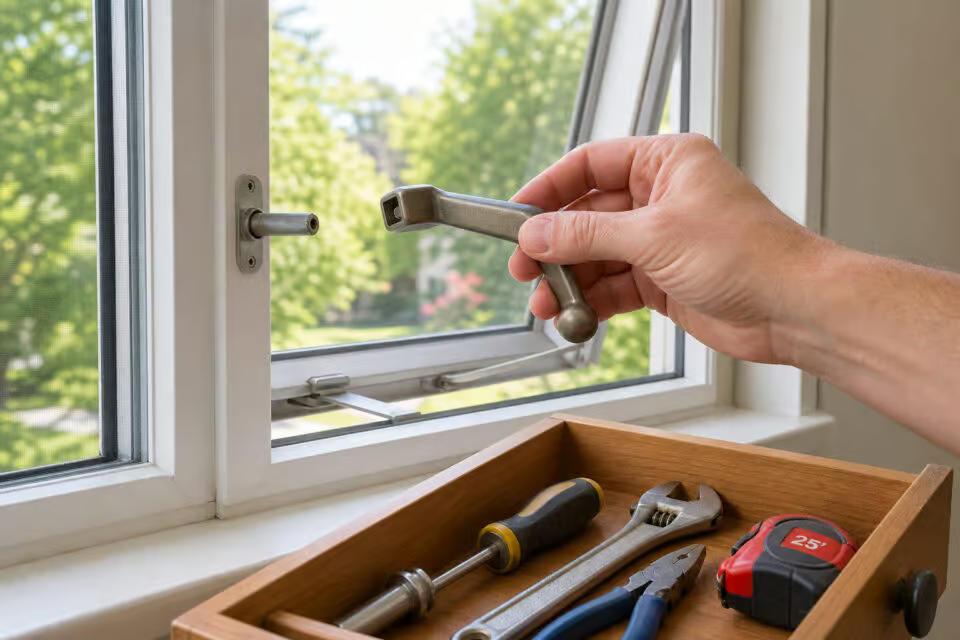
Dealing with crank-out casement windows as a renter
If you have an out-swinging casement window, you don’t need a complex DIY setup. The easiest, zero-cost trick is to simply unscrew and temporarily detach the manual operator crank handle, sliding it into a nearby drawer. If a child can’t turn the crank, they can’t open the glass. For times when you do want a breeze, you can install specialized, screw-in restrictor arms from Truth Hardware or Dreambaby that physically limit how far the arm can swing.
If you are renting and your lease contractually bans you from drilling screws into vinyl or metal window frames, do not panic. You can find high-strength, no-drill options like pressure-mounted track clamps and rubber-coated jaw locks that tighten with a hex wrench, providing rock-solid safety without risking your security deposit.
Step 5 — Get rid of dangerous blind cords
Beyond the glass itself, the area immediately surrounding a window often hides a silent danger for curious toddlers. Loose cords present a unique, high-risk situation that demands immediate household intervention.
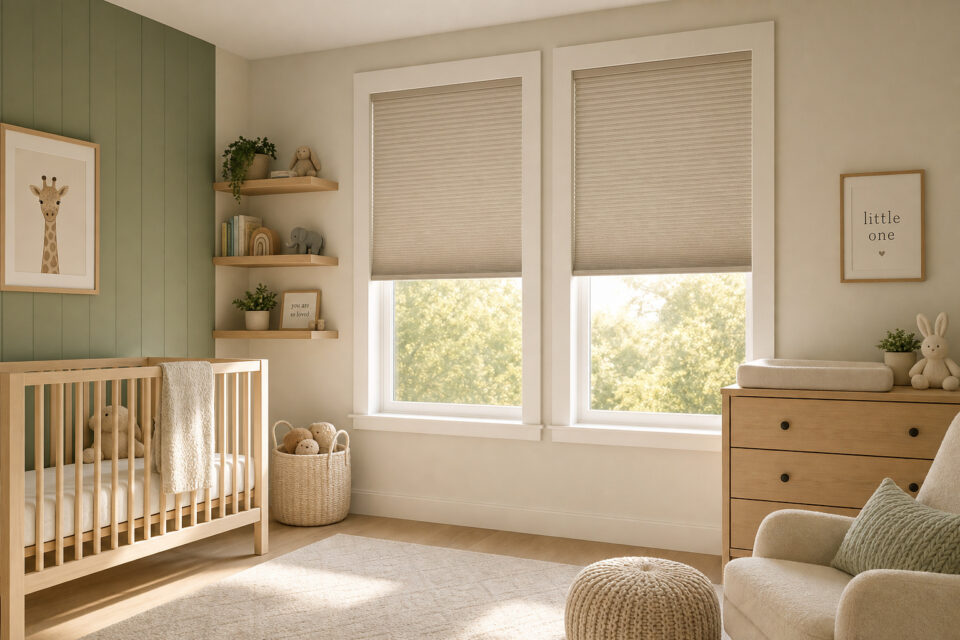
Why cheap cord wraps fail
Window cords are a major, active hazard. According to the CPSC, blind cords contributed to over 17,000 emergency department injuries between 1990 and 2015, and the majority of these cord-related accidents are lethal. Because of this, the industry has pushed hard toward cordless window coverings, but older, corded window treatments still linger in millions of rental units and older homes.
While you can buy cheap blind cord wraps or plastic wind-ups ($10 to $11 for a multi-pack), parents are rarely impressed with them. An active toddler can easily unravel a long, loose cord if they gain climbing elevation, turning standard tie-backs into psychological security blankets. Replacing older treatments with true cordless coverings is the only way to completely eliminate this life-threatening strangulation risk. For a quick and immediate fix, the Window Covering Safety Council (WCSC) offers certified, free retrofitting safety kits to keep loose pull-strings completely out of reach.
Step 6 — Clear the climbing zones around your windows
Even with locks and guards in place, you must address how a child accesses the window. Removing items that act as steps or platforms is the final, essential layer of physical defense.
Managing the room layout and local tenant rights
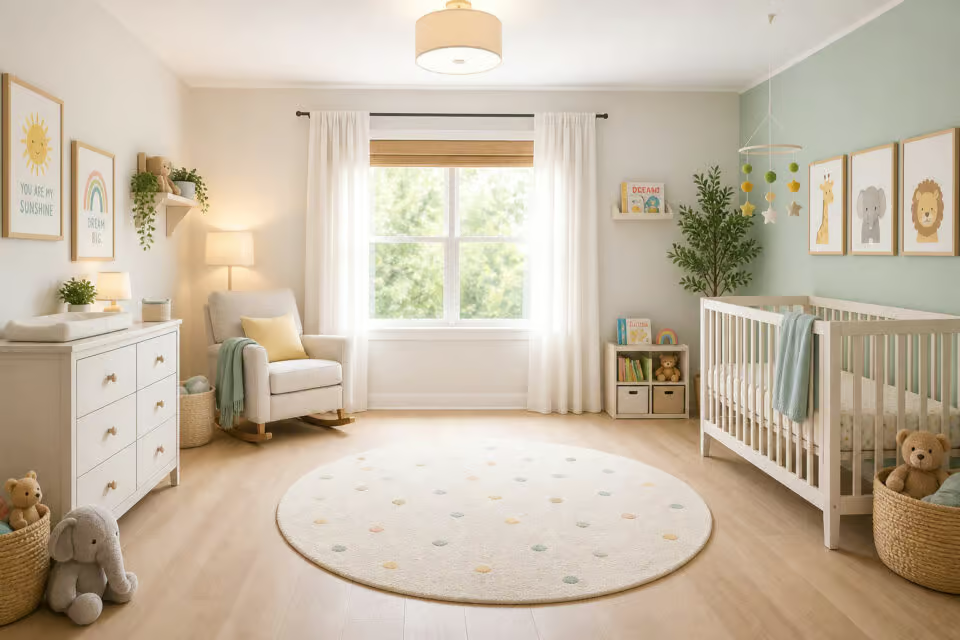
Toddlers are naturally adventurous climbers. If you place a nursery glider, a changing table, a toy chest, or a toddler bed anywhere near a window, you have built a stairs-like launchpad to the sill. Keep a strict rule in your house to pull all climbable furniture several feet away from window glass.
For an extra layer of protection, consider backup electronic warnings like the Doberman Security Window Alarm Kit. These simple, peel-and-stick sensors will trigger a loud chime or siren the moment a window sash is slid open, though you should never rely on them as your primary physical barrier (thanks to warning fatigue from occasional false alarms). Finally, if you rent an apartment, check your local city ordinances. In major metropolitan areas like New York or Boston, landlords are legally obligated to provide and professionally install approved physical window guards at no cost to tenants living with young children.
Budgeting and professional installation costs
If you plan to tackle this project yourself, expect to spend roughly $50 per window for mid-tier track clamps, sash locks, or high-quality wedges.
However, if your home features specialized crank systems, hard-to-reach high-rise panels, or historic timber frames that require custom drilling, bringing in a certified professional childproofing service is often worth the expense. A professional team generally runs between $150 and $400 for a whole-house setup, but they provide peace of mind by bringing the hardware and doing the drilling for you.
Before you wrap up your childproofing project, run down this quick safety checklist:
- Every open window in the house is capped to limit opening gaps to a maximum of 4 inches.
- All installed window guards have a fully functional, easy-to-reach fire egress emergency release.
- All cribs, nursery gliders, and toy boxes are pulled far away from the window frame to eliminate toddler launchpads.
- Every single window cord has been converted—either upgraded to cordless blinds, outfitted with free WCSC safety kits, or completely tied up out of physical reach.
Frequently Asked Questions
How to lock a window for kids?
For sliding windows, use mechanical track-clamp limiters that physically prevent the sash from opening more than 4 inches. If you have older double-hung windows, install screw-in sash locks to prevent the window from being forced open, as adhesive-backed options often fail on aged or swollen timber frames.
How to make windows kid friendly?
Start by removing all furniture like chairs, toy chests, or beds from near windows to eliminate climbing platforms. Additionally, replace standard insect screens—which offer no fall protection—with professional-grade window guards that feature an emergency quick-release mechanism for fire safety.
How to protect a window from an autistic child?
Because child safety requires preventing access to the window itself, consider installing non-permanent, high-strength window restrictors or clamps that require a tool like a hex key to adjust. Since visual deterrents alone are insufficient, keep all window cords tied high out of reach or replace older blinds with cordless versions to remove strangulation hazards entirely.
Can you put a child lock on windows?
Yes, but you should prioritize mechanical locks that physically restrict how far a window can open to 4 inches or less. Avoid flimsy adhesive locks, as they often lack the structural integrity to withstand a toddler’s weight; instead, choose screw-in hardware for wood frames or high-tension, rubber-coated jaw locks for metal or vinyl tracks.
Are insect screens effective for child safety?
No, they provide a dangerous false sense of security. Standard screens are designed only to block insects and are held in place by easily dislodged rubber splines, meaning they offer zero structural support against the weight and momentum of a child.
How do I secure casement windows that don’t slide?
The most effective method is to unscrew and remove the manual operator crank handles when the window is not in use, storing them in a safe place. For ventilation, you can install metal restrictor arms that limit the window’s swing distance to the 4-inch safety baseline.
Why shouldn’t I use horizontal window guards?
Horizontal window guards create a ladder-like effect that makes windows easy for children to climb, which is the opposite of the intended safety goal. Always choose guards with vertical bars or high-strength nylon mesh to ensure they cannot be used as a climbing wall.