
You typed “how to be a strong woman” into a search bar, and the internet handed you a list of signs. Signs she’s strong. Signs of a strong woman. Seven signs, ten qualities, sixteen traits, take your pick.
None of them told you how to become one, because every list was written about other women, not to you, though the characteristics of a muscle mommy at least frame strength as something you build, not something you’re born with. So here’s the deal this article makes instead: every sign on those lists is actually a skill, and skills can be built. We’re not going to grade you against a checklist. We’re going to show you the practice behind the trait, and back it up with women whose strength was visibly built, not handed out at birth. A pro cyclist who rebuilt herself. A 50-year-old strongwoman who pulls trucks. A practitioner who’s spent 15 years watching women make the same turn.
Key Takeaways
Every “sign of a strong woman” on those lists is a skill you can build. Boundaries, asking for help directly, all of it.
Mental strength is character and self-care. Not looks, not followers, not your salary. The trainable basics (meals, sleep, movement, gratitude) do real work.
Physical strength is trainable at any age: cyclist Clara Koppenburg got faster by getting stronger rather than lighter, and 50-year-old Sherrie Williams learned Olympic lifting at 40.
Table of Contents
What “strong woman” actually means (and the labels we can drop)
Before we build anything, let’s clear the room. The cultural “strong woman” comes in two flavors and both are exhausting. There’s the tough one, stamped as aggressive, manipulative, or a “ruthless manager” the second she speaks up. And there’s the martyr, sacrificing everything and calling it her destiny, quietly carrying everyone else’s load.
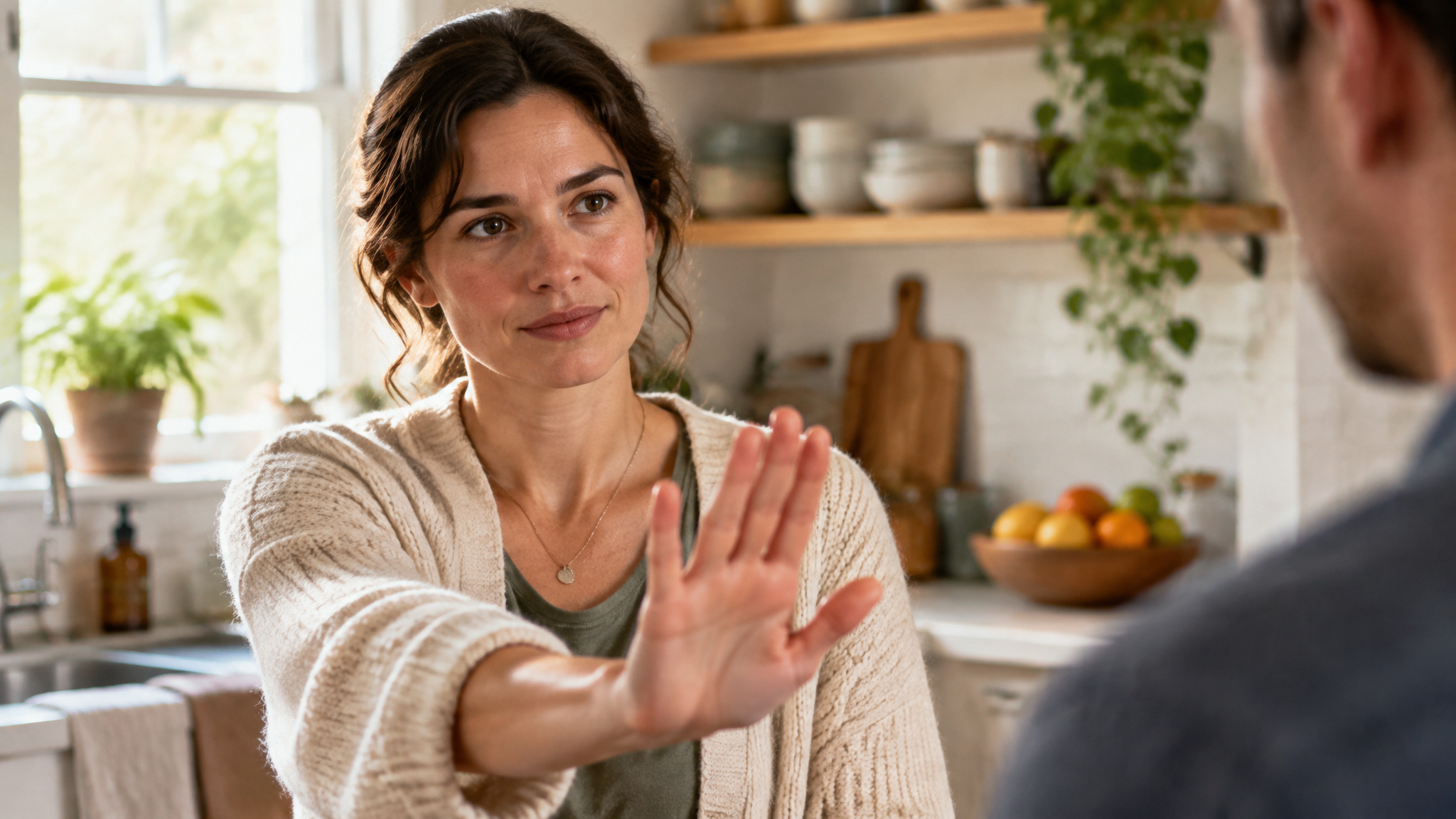
Plenty of us have tried on both. Neither is strength.
Lucia Hoxha, who’s spent 15 years working with hundreds of women, argues that this self-shrinking runs deep: women have historically been punished for being “uncomfortable”, by burning, persecution, sexism, and misogyny, so making yourself small became a survival habit. That’s her read, not settled science, but it explains why the pressure feels old even when it’s showing up in your marriage this week.
The reframe that actually helps comes from Discovery Mood & Anxiety: mental strength is about character and self-care. Not looks, not followers, not your salary. That’s why Malala Yousafzai, Michelle Obama, and Simone Biles keep showing up in these conversations. And no, strong isn’t the same as tough or cold. The strength we’re talking about here is internal and warm, not armor.
From signs to skills: what every list agrees on
Three lists run through this article, and they don’t get merged. Hoxha’s framework has 16 signs. Discovery’s has 10 qualities of mentally strong women. A third list, from the SlightlyBetter channel, covers 11 behaviors of confident strong women.
Cross-check them and a consensus core shows up: self-worth that doesn’t depend on other people’s votes, boundaries, less complaining-and-blaming in favor of owning your side, and self-care as a foundation rather than a reward. Different lists, same shortlist.
And here’s the conversion rule for the rest of this piece: every “she is X” becomes “here’s how you build X.” That’s the whole difference between a description and a how-to.
The 16 signs of a strong woman, and how to build each one
Hoxha’s list is the spine here, all 16 signs, each one reframed as something you can practice.
She knows what she wants and doesn’t wait for permission
Most of us were trained to wait to be picked. The practice is deciding what you actually want, in life and in love, and moving before anyone co-signs it. She won’t settle for less than joy and real peace of mind. Guilt trips and emotional blackmail stop landing the moment you can spot them, which is a skill you can practice on the small stuff first.
She’s steady
Stability isn’t perfection. It’s the calm-in-the-chaos friend who doesn’t make big decisions in a panic but is still up for spontaneous fun. Failure doesn’t flatten her and success doesn’t inflate her, because she treats every state as temporary. You build this by letting hard weeks be hard without treating them as permanent.
She skips the victim seat
Bad things happen to strong women too. They just don’t live there. Less complaining and blaming, more owning, and yes, everyone vents. This is about not building a home in vent-mode.
Owning your own behavior, full stop, turns out to be freeing, not punishing. And she doesn’t manipulate to earn love, because she already likes herself.
She knows her mental programming is editable
This is the one most lists skip. She notices that her thoughts shape her world, and she spots the default settings she inherited from family, the mental blueprints nobody ever showed her. Those scripts run unrecognized until you catch one mid-thought and ask: whose script is this, actually? Noticing the script is the skill.
Not silencing your feelings. That’s the counter to all the willpower-based advice out there.
She’s not scared to show feelings
She cries, admits fear, and says “I’m not okay” without playing hero. She lets go of guilt and shame, drops the pride, and owns her mistakes out loud. If you want one habit to start with, that’s it: the next time you mess up, say so in one breath and move on.
She doesn’t manipulate, she asks
No games, no hints, no hoping he notices. She asks. Radically simple. She also respects her own “no” and other people’s, which is a two-way street worth modeling for your kids.
She’s confident, quietly
Grounded, not loud. Her worth isn’t a poll; other people’s opinions are data, not verdicts. She can admit her flaws without a guilt parade, mines them for a lesson, and invests her energy in relationships where she’s actually valued.
She knows her boundaries
Warm heart, firm lines. She’s sensitive and empathetic and she’ll stand up when someone crosses a line, both at once. She also watches for the trap of staying nice and above-it-all while quietly absorbing mistreatment, until the suppressed hurt costs more than the confrontation ever would have. We’ve seen that pattern often enough to name it: keeping a pleasant posture is not the same as having a boundary.
She knows where she’s going
Even if the route changes. She can tell what’s actually good for her, she’s got passion, and she’s after something bigger than surface stuff. She doesn’t fight people; she quietly keeps making progress. And when someone’s projecting fear or bad vibes, she steps back. Not cold, just protective of her headspace.
She loves and values herself
Said plainly, without the affirmation-poster voice. She doesn’t fish for compliments because she supplies her own approval. She can smell a hidden agenda behind sweet talk, and that filter tends to attract more grown-up partners.
She’s faithful to her values
Even when it’s inconvenient. She knows what she believes and can’t be bought. She’ll hear advice out, but the final call is hers. She doesn’t do things just because they’re expected, and if you felt a small wave of relief reading that, that’s the permission landing.
She trusts her intuition
She knows her female gifts and uses them: reading emotional dynamics, leading with feelings rather than manipulation, knowing when to steer and when to let things ride. That judgment call is a skill, not luck.
She respects men
Strength and respect aren’t opposites. One of the rarely-listed signs is letting a partner be vulnerable without losing respect for him, supporting him instead of quietly scoring it. With her, people can take the mask off without getting judged for what’s underneath. That’s a gift, and it’s a practiced one.
She knows herself and skips the guilt spiral
Including the messy parts. She knows her own shadow, the grumpy, jealous, sometimes-petty parts, and makes peace with them instead of stuffing them down. That full self-acceptance is exactly why she’s strong: no guilt, no shame dragging her around.
She doesn’t stay in relationships that are breaking her
Handle this one gently, and zero judgment if you’re still in one. She listens to her internal voice over the peanut gallery, doesn’t stick around just to dodge loneliness or relatives’ side-eye, and every relationship teaches her something so the same lesson doesn’t repeat. If kids are in the picture, showing them how to leave a bad situation is one of the most protective things a parent can model. When you’re ready. Not before.
She says what she needs out loud
Revolutionary, honestly. No “good girl” act, no pretending to need nothing. Many of us were raised on the opposite script, and unlearning it is the practice. She asks clearly, without apologizing her way into the request.
One pattern worth naming here, because it shows up constantly: complaint as a placeholder for a request. The frustration gets voiced on a loop, but the actual need never gets stated to the person who could meet it. That shift, from complaint to an actual ask, is usually the first visible sign of strength showing up. Try it this week with something small.
How to become a strong woman mentally
The answer up front: the practice is noticing, not overpowering your emotions.
Catch one inherited script this week
You don’t have to audit your whole psyche. Catch one thought mid-stream, the “I should handle this alone” kind, and ask whose script it actually is. That noticing is the skill.
Build stability in both directions
Not knocked down by failure, not inflated by success. Every state is temporary, and that’s honest comfort for the hard weeks, not a reason to skip the feeling.
Do the trainable basics
The National Institute of Mental Health‘s foundation is boring and effective: regular meals, real sleep, some movement, a gratitude habit. Then Discovery’s qualities as practices, not mood boards: face fears head-on with no rush (slow and steady wins here), choose optimism as a strive, not a daily guarantee, take go-getter action, build thick skin, redirect complaint energy into fixing the actual thing you’re complaining about, and keep a new challenge on the shelf, a book, a skill, a recipe, a side project.
Quick test: This week, catch one complaint before it loops and turn it into a direct ask to the one person who can fix it.
How to be emotionally strong: vulnerability and boundaries are one skill
Emotional strength in women means showing fear and pain fully while holding firm boundaries, because openness and limits are one skill, not two. That’s the answer, and it runs against how this stuff usually gets packaged, where vulnerability lives in one article and boundaries in another, as if they were separate virtues to collect. In practice it looks like letting go of fear, guilt, and shame, giving up pride enough to admit your mistakes, while staying open-hearted and sensitive but able to stand up and set a clear boundary the moment someone attacks.
They’re not. The open heart is why the boundary matters, and the boundary is what keeps the openness from turning into self-harm. A woman who feels everything and sets no lines gets chewed up. A woman with walls and no openness is just armored, not strong.
The combination is the actual skill: you can be sensitive, empathetic, and open-hearted, and still stand up the moment someone crosses a line. Both, together, always.
The failure mode has a familiar shape. It looks like staying nice, pleasant, and above-it-all while someone consistently treats you poorly, absorbing it quietly because “being strong” got translated in your head as “never making a fuss.” The hurt doesn’t disappear; it just moves somewhere more expensive, exhaustion, resentment, your health. We’ve seen this pattern described over and over by women in exactly that spot.
If you’re looking for one place to locate it in your own life, find where you’re absorbing mistreatment behind a “nice” posture. Then try the reframe that changes the math: the boundary protects the relationship, not just you. A relationship where you can say “that’s not okay with me” is more honest than one where you’re silently keeping score.
The supporting practices from Hoxha’s framework all live in this same room. Admitting mistakes without a guilt parade. Letting go of guilt and shame instead of carrying them as identity. And refusing the victim seat, which doesn’t mean bad things don’t happen to you.
It means you take full responsibility for your own behavior, even the parts where you got hurt while also making it worse. That ownership stings for about a day and then it’s freeing, because it means your side of the street is yours to change.
Feelings, in this frame, are information. Not weaknesses, not weapons. You feel them fully without weaponizing them on other people or building your whole identity out of them. That’s the trainable middle path between suppression and drama, and it’s closer than it sounds.
How to be a strong woman in a relationship
Strength in a relationship is measured by the quality of the dialogue you can sustain, not by how little you need anyone. Hoxha’s take, and it’s her framing rather than a rule of nature: real power means retiring from the “little girl requesting rescue” role into mutual exchange. The stance underneath it is warm, not defiant: I don’t need you as I am whole and perfect just the way I am and I will meet you with pleasure, so we can mutually share who we are and learn one from another. And letting a partner be vulnerable without losing respect for him, in her view, is part of the same skill.
How to become a strong woman physically (without the body-image trap)
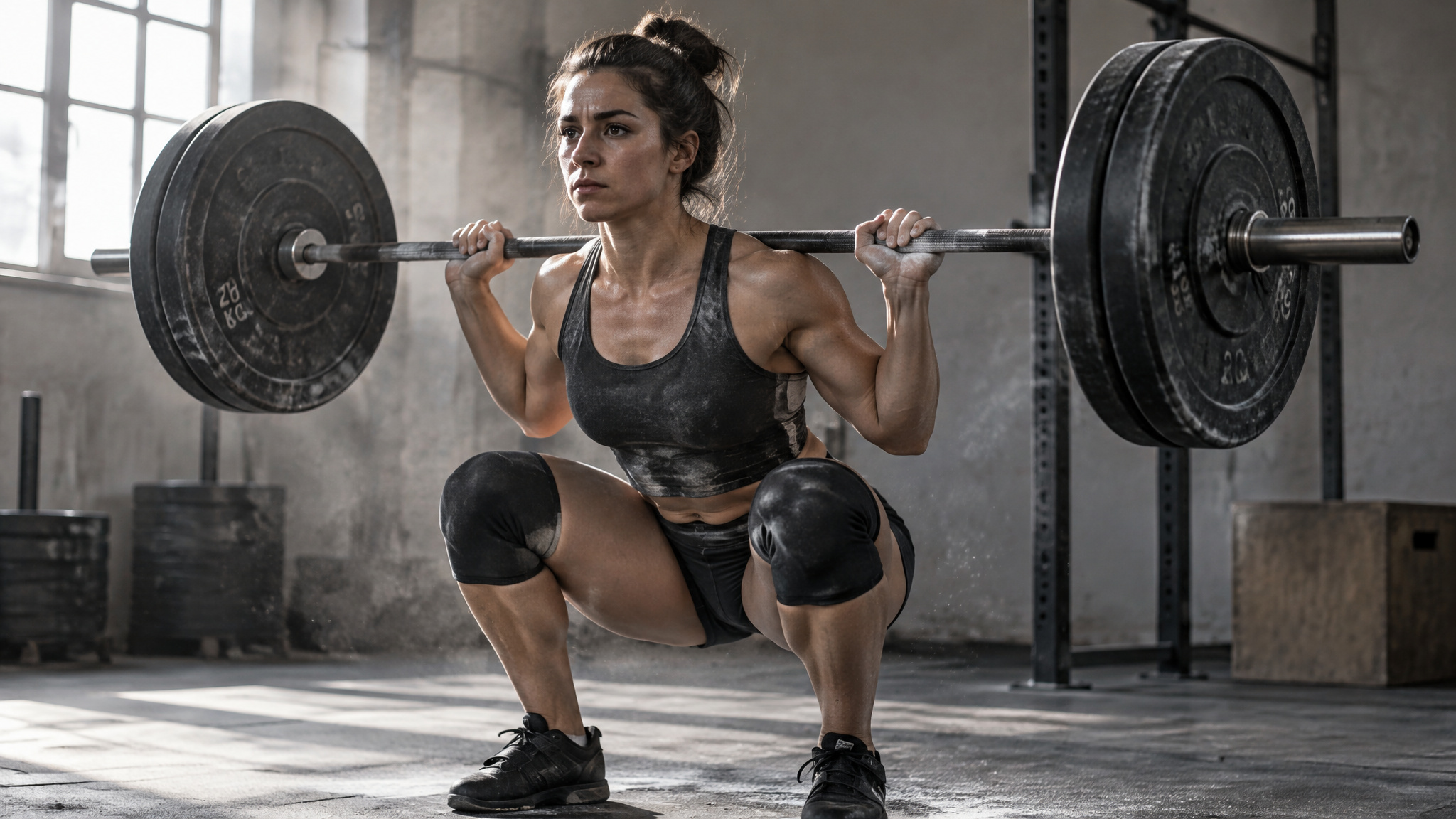
Physical strength in women is trainable, and chasing a strong-looking body can be the enemy of actually having one. That’s the trap worth naming before anything else, and two real women’s stories prove the reframe better than any argument: Clara Koppenburg, who left road racing after an eating disorder and got faster on gravel by getting stronger rather than lighter, and Sherrie Williams, the 50-year-old strongwoman who learned Olympic lifting at 40 and now pulls a 10-tonne truck. Building a strong foundation starts with mastering basic moves like squats and push-ups, and your muscles grow faster as you add more weight.
Clara Koppenburg got faster by getting stronger, not lighter
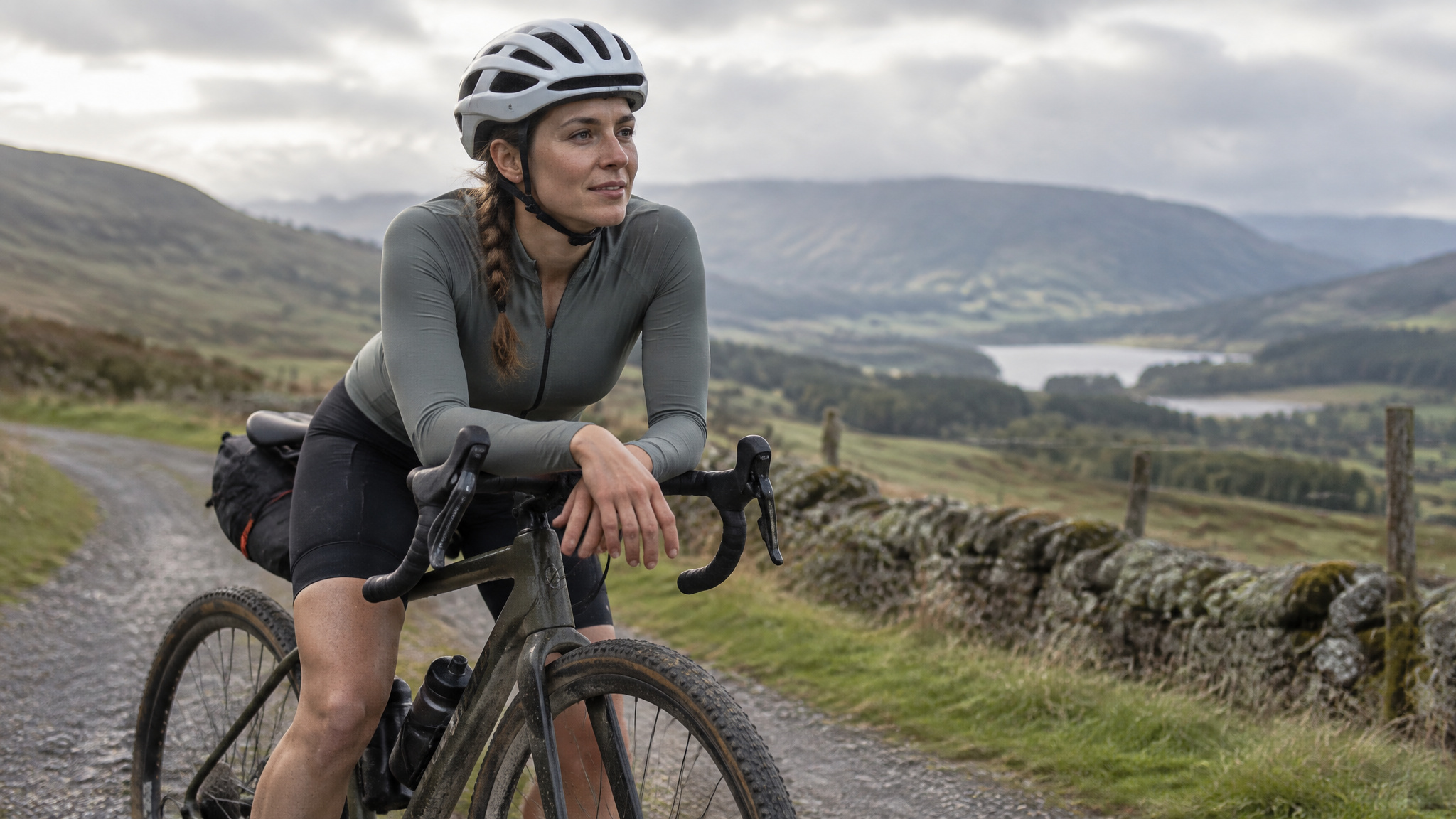
Koppenburg is 31 and spent a decade as a pro on the road, riding for teams including Bigla, WNT-Rotor, Rally Cycling, EF-Oatly-Cannondale, and Cofidis. Per Cycling Weekly, being labeled “a climber” nudged her toward losing weight, and the pursuit of the lean-climber ideal drove an eating disorder and six years without a period. That condition has a name, RED-S, and the plain-English version is that the body runs on less energy than it needs, which disrupts hormones and health.
In 2025 she entered a clinic and publicly called on teams and the sport to give athletes real time and support to recover. Her period returned. Recovery, she’s said, meant allowing her weight, hormone health, and power-to-weight numbers to move around, none of which is glamorous. At a race in Emporia, Kansas, she said she’d gone from what she described as very thin and fragile to genuinely strong.
She now races gravel for Tudor Pro Cycling, a discipline that rewards strength, durability, and steady seated power, and she’s talked about getting faster by getting stronger rather than lighter. The results back the theme: a top-20 finish at the muddiest Unbound Gravel in recent memory, a top-ten result at the Hegau Gravel Race plus third place at The Majestics, both UCI Gravel World Series events. She’s expected to race the UCI Gravel World Championships in Nannup, Western Australia. One note in fairness: her comeback temporarily looked like losing ground athletically before it looked like power.
That’s not a detour. That’s the path.
If any of her story hits close to home, talk to a professional. That’s what it’s for.
Sherrie Williams started late and adapted
Williams is 50, from Tullamore in Central West New South Wales, and she pulls a 10-tonne flatbed truck. She started gym training 10 years ago, ran marathons, learned Olympic lifting at 40, and found strongman. The truck pull, for the record, is more technique than raw power, which is a good demystifier for the whole sport.
Then a car accident temporarily took the use of one arm. Her response was to take up one-arm deadlifting, and she exceeded the 20,000 kg Guinness hour record by 3,950 kg. That mark is still pending confirmation, so treat it as an attempt awaiting an official stamp, not a verified record. She joined the Tullamore show committee and added strongman to the local program, where the “human pull” is now a highlight of the show. She’s planning a max one-arm deadlift attempt next.
To women who’ve never tried anything like it, her message, as she shared it with ABC News, was essentially: give it a try, you just might surprise yourself and open a door.
The frame for both stories: strength is what your body can sustainably do, not what it looks like. Koppenburg chased strong-looking and lost her health; she built strong and got faster, the real marker of a healthy muscular woman is what her body can sustain, not how it photographs. Williams started at 40 and adapted around an injury. There’s no age, decade, or body type in these stories that disqualifies you.
Strength in action: advocacy, everyday habits, and asking for help
Strength is often public, modeled, and organized, not just felt. In 1988, in Sandy, Utah, a sixth grader was barred from the accelerated junior-high math test because only boys could take it. Her mother marched into the principal’s office in white shorts over a leopard bikini to demand her daughter get the test. Nineteen eighty-eight. Not the 1950s. And in 2017, a club required a husband’s signature before a woman could be sponsored for membership; a friend didn’t argue, she gathered signatures from the women who were already members, and her daughter watched it happen.
It’s no surprise that feminist tattoos so often honor strong women like these, portraits of activists, lotus flowers rising, because the impulse to mark that strength is ancient. It’s the same instinct in a quieter key: strong women know when to ask for help, because self-care comes first, you can’t show up for anyone if you’re running on empty. One more line, and it matters: asking for help with a treatable mental health struggle is itself brave, full of resilience, courage, and determination.
The healing arc: strength after low self-esteem, and why progress can feel like regression
A woman becomes strong from a low baseline through a long process, and getting healthier can temporarily feel like moving backwards. Hoxha’s practice has seen hundreds of clients over 15 years working through low self-esteem, addictions, and fear of loneliness, and her view is that healing childhood and societal wounds is a long-term process that starts with a quiet internal choice: accepting nothing less than deep, real love, the unconditional kind that doesn’t have to be earned. Her view, worth saying, not a clinical formula.
Koppenburg makes the regression part real. Regaining her health temporarily felt like losing ground athletically before it felt like power. If getting better is currently making your numbers worse, that’s not proof it’s not working.
Which brings the whole thing back to shadow acceptance: making peace with your own grumpy, jealous, messy parts, no guilt, no shame. Women who’ve done that work tend to spread more connection around them. That’s the honest version of the ending.
Frequently Asked Questions
What are 7 characteristics of a strong woman?
The consensus core across popular lists boils down to a short few: self-worth that doesn’t depend on other people’s votes, firm boundaries, owning your side instead of complaining and blaming, self-care as a foundation rather than a reward, emotional openness paired with limits, asking directly for what you need, and steady calm that treats both failure and success as temporary. The key reframe: every one of these is a skill you can build, not a trait you’re born with.
How does a woman become strong?
By converting every ‘sign’ of strength into a practice. That means catching one inherited mental script this week and asking whose it is, turning a looping complaint into a direct ask to the person who can fix it, doing the boring trainable basics (regular meals, real sleep, movement, gratitude), and holding warmth and boundaries at the same time. It’s a long process, and getting healthier can temporarily feel like moving backwards before it feels like power.
What’s the difference between complaining and asking for what you need?
Complaint is a placeholder for a request: the frustration gets voiced on a loop, but the actual need never gets stated to the person who could meet it. Strong women skip the hinting and games and ask clearly, without apologizing their way into the request. That shift — from complaint to an actual ask, even about something small — is usually the first visible sign of strength showing up.