Most providers clear heat therapy once postpartum bleeding has stopped and healing is confirmed, which usually happens around the 6-week checkup. That’s roughly 4-6 weeks after an uncomplicated vaginal birth, and generally longer, more like 6-8 weeks or until your incision is fully healed, after a C-section. But here’s the part we keep telling friends: the real answer isn’t a day count. It’s a gate, and the gate is made of things you can actually read on your own body.
Bleeding that’s stopped and staying stopped. An incision or tear that’s closed. A provider who looks you in the eye and says go.
If you used saunas before pregnancy, you already know the exact scene you’re in right now. You’re staring at the timer. There’s no clear signal for when it’s your turn again. Everyone hands you a vague “listen to your body,” and your body keeps saying things like “you haven’t slept” and there’s a wound inside you the size of a dinner plate, which is not the kind of signal a calendar can interpret for you.
Yeah, we said dinner plate. After the placenta detaches, an open wound roughly that size stays inside your uterus and has to close. Almost nobody mentions this, and it’s the single fact that makes the whole wait make sense. Once you know it, the “when can I sit in 174 degrees” question answers itself a little differently.
One honest line about where this comes from: this article draws on postpartum nurses and educators, an OB-GYN comparison of recovery by delivery type, and one mother’s two-baby recovery account. None of that replaces the actual call. Your provider, who can see your specific healing, owns the go/no-go. We’re just here to translate what you’re waiting on and why.
Key Takeaways
Most providers clear sauna use once lochia (postpartum bleeding) has fully stopped and healing is confirmed, commonly at the 6-week checkup: about 4-6 weeks after an uncomplicated vaginal birth, longer after a C-section.
A sauna raises your heart rate to around 120 bpm, so your body treats it like moderate cardio; that’s why the same return-to-exercise caution applies to a body that’s still healing a dinner-plate-sized wound.
Once you’re cleared, ease back in cool and short: a 104°F bath, shorter infrared sessions, then traditional heat around 174°F for up to 20 minutes, with hydration as a non-negotiable and any bleeding change as your stop signal.
Table of Contents
What’s actually healing inside after birth
The reason for the wait is a wound, and not a small one. After the placenta detaches, it leaves an open area inside your uterus roughly the size of a dinner plate, and that whole surface has to close. This is the thing almost no one says out loud, and once you picture it, the wait stops feeling like arbitrary gatekeeping and starts feeling like obvious physics.
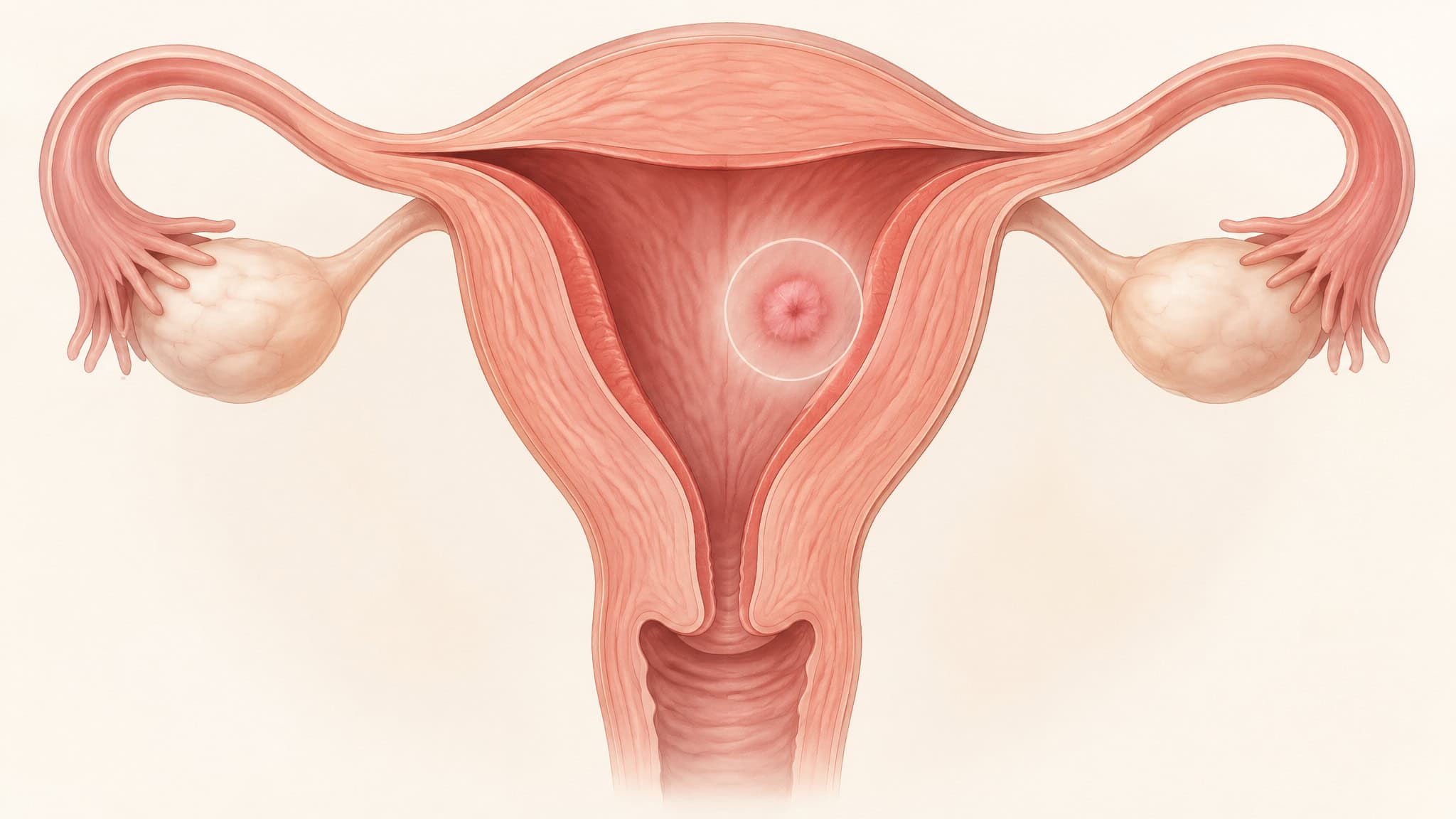
Here’s the size math, because it does the teaching better than any diagram. Your uterus started out fist-sized. Over about 40 weeks of pregnancy it grew to roughly 25 times that. After delivery it’s about the size of an orange, and it has to shrink all the way back.
That shrinking has a name, involution, and it averages about six weeks. It’s also what drives the bleeding and the afterpains.
The afterpains deserve their own moment, because no one warns you about these either. They’re the cramping contractions that come as the uterus shrinks back, and they hit harder while you’re breastfeeding, which is your body’s weird built-in helper: the same hormone surge that lets down milk also squeezes the uterus smaller and cuts down bleeding. Helpful, yes. Comfortable, absolutely not.
And they get worse with each baby, which is the part that gets laughed about at every mom group ever. One mother we drew on for this piece said that after her second baby the afterpains were brutal enough that she needed a nurse, a heating pad, and real pain meds, and she’s not being dramatic. That’s a normal Tuesday of postpartum.
Now the tension we promised to resolve. Local warmth, like a heating pad or a warm shower, is standard afterpain relief. So why can’t you just sauna your way through it? Because a heating pad warms one spot.
A sauna is whole-body heat stress, it pulls blood toward your skin, it dehydrates you, and it asks a healing system to do cardiovascular work it hasn’t signed up for yet. Your body will tell you when you’ve crossed that line, and the way it tells you is bleeding. Nurses and postpartum educators describe the same pattern over and over: someone feels great, pushes it, and the bleeding picks right back up. That’s not scolding. That’s just the feedback loop.
The mother in that recovery account had her own trick for this. When she felt ready to resume workouts at two weeks, she pictured the dinner-plate wound to remind herself why she wasn’t ready. We love this as a mental hack, not a prescription: it’s one mom’s way of making an invisible thing visible. If it helps you stay in the newborn bubble instead of sneaking back into your old routine, steal it.
Why a sauna is really moderate cardio in a hot room
Sauna use pushes your heart rate up to around 120 bpm. Your heart thinks it’s on a jog while you’re sitting perfectly still. Head-to-head studies have found the cardiovascular effects look a lot like moderate-intensity aerobic exercise.
That’s the whole reason the wait applies. Nobody hands a two-week-postpartum woman a green light for a hard workout, and physiologically, a sauna is closer to a hard workout than to resting. The “treat yourself” wellness framing hides this, but heat is a real cardiovascular stressor, and your cardiovascular system just spent forty weeks building a human and is currently mid-repair. Give it the same respect you’d give a return-to-exercise clearance.
Quick test: If your heart would treat it like a workout, gate it like a workout — same clearance, same caution.
Your lochia is the readiness signal you can check yourself
Lochia, that’s the postpartum bleeding, is the one readiness gate you can check yourself, every day, no appointment required.
Let’s reassure before we inform, because bleeding right after birth can be alarming if no one prepared you. Normal looks like this: the heaviest red bleeding in the first few days, with clots ranging from dime-sized to golf-ball-sized, tapering to lighter spotting that trails off over about 4 to 6 weeks. That’s the normal arc. Lots of it, up front, is expected.
The three phases, and the tell that matters most
Lochia comes in phases. The first, heaviest phase, called lochia rubra, is that bright red heavy bleeding in roughly days 1 through 4. Then it lightens and becomes spotting that can continue for 4 to 6 weeks. The phases are the useful part, because the pattern is the signal.
Here’s the tell. If your bleeding lightens and then goes back to bright red after you do something, a long walk, a stretch of errands, yes, a hot session of anything, that’s your placental wound site telling you it isn’t closed yet. It’s the same signal that should delay using infrared saunas while breastfeeding. And it stays the stop signal later, too: if bleeding picks back up during any heat session once you’re cleared, that’s you, done for the day.
Call your provider if: you’re soaking a pad in an hour, for a couple of hours straight, or you’re passing egg-sized clots repeatedly or hourly. Not scary-checklist energy, just the moment where you pick up the phone.
Sauna at 2 weeks postpartum: why the early window is the riskiest
No. At two weeks, the placental wound is typically still healing and lochia is usually still active. Too early, full stop, even if you feel fantastic. Especially if you feel fantastic, and we’ll get to that.
Here’s what your body is already doing with heat at two weeks. Estrogen and progesterone drop sharply after birth, and one very visible result is night sweats, the drench-through-your-sheets 2 a.m. kind. Breastfeeding prolongs them, which is also the phase where the official guidance on saunas while breastfeeding starts to matter. That’s not a side note; that’s direct evidence that your heat-dumping system is already running overloaded.
A body that’s sweating through its pajamas does not need a 174-degree room added to its workload. It’s already doing heat management overtime for free.
And the “feeling good” part deserves the gentlest possible truth: feeling good is the worst readiness signal there is. The mother in the recovery account we mentioned felt ready to resume her workouts at two weeks. She wasn’t. She only understood why once she started picturing the internal wound doing its work regardless of how she felt on the outside.
That’s not a shame story, it’s the most relatable postpartum story there is. Feeling fine doesn’t mean you’re healed. There’s a dinner plate’s worth of healing happening in there whether or not you have energy for it.
Timeline by delivery type: vaginal, C-section, and complicated tears
If you had a C-section: yes, eventually, but plan on waiting longer than the standard 4-6 weeks, until the incision is fully closed and healed. Your body is doing everything every postpartum body does, plus closing a surgical incision, and heat touches that second healing surface differently than it touches unbroken skin.
After an uncomplicated vaginal birth
Vaginal recovery is famously mobile. With an uncomplicated delivery you can often be moving around the same night, and there are few external restrictions. But few restrictions doesn’t mean sauna-ready, because the internal healing, the wound site and the shrinking, still takes weeks. The external green light and the internal one arrive on different schedules.
After a C-section
A C-section adds an incision, which is a second healing surface that heat reaches in a way it doesn’t reach ordinary skin. Per a Cleveland Clinic OB, recovery typically means no heavy lifting for about six weeks, and the heaviest thing you should carry is the baby in the car seat. Expect a hospital stay about 1 to 2 days longer than a vaginal birth. None of this is a ranking; it’s just a longer list of things healing at once.
After large tears or complications
A significant tear or a complicated birth is more healing stacked on top of the standard postpartum load, and significant blood loss means waiting longer and getting advice tailored specifically to you. Same warmth, different timeline.
The overall arc, so you know what you’re walking through: early postpartum is the heavy rubra bleeding and night sweats peaking. Weeks 2 through 6 are the spotting tapering and the shrinking finishing. Then comes clearance, and with it the graduated re-entry we’ll walk through below.
Sauna and breastfeeding: what actually matters
Yes, you can use a sauna while breastfeeding, with provider clearance, and with hydration as the priority. The milk-supply worry runs through dehydration and heat exposure, not a proven direct effect of heat on milk, and we’d rather tell you that honestly than hand you a scary blanket rule. The catch is that nursing thirst is already legendary. Postpartum hunger and thirst while breastfeeding are intense enough that you’re basically eating for two again, and if you under-drink on a regular day it shows up in supply and stress. Add a hot room and the fluid math gets real fast.
The practical friction is what nursing parents commonly describe: engorgement discomfort in a hot room, and needing to nurse or pump soon after a session. So plan sessions around feeds. Go right after a feed rather than right before one, and have water with you the way you’d have a phone.
On infrared specifically, since that’s the question everyone asks: it runs cooler, which may feel gentler. But cooler sessions run longer to get a comparable effect, so the total fluid tradeoff isn’t automatically smaller. We’ll do that math in the next section. And the core message here doesn’t change whether you’re nursing or not; the wait applies to everyone. Nursing adds its own wrinkle: postpartum hunger is intense, and not eating enough can affect milk supply, so a long hot session on an empty stomach works against you, and some parents find their thermoregulation stays off, with night sweats and trouble keeping cool, until they’re done breastfeeding. If breastfeeding questions come up along the way, a lactation consultant, doula, or midwife team is the friend-with-a-good-contact to pass along.
Easing back in: bath, infrared, then traditional sauna
Infrared is the gentler temperature, topping out around 145°F, but it needs much longer sessions, 45 to 60 minutes, to approximate what a traditional sauna does in 20. A traditional sauna runs around 174°F, and the studied sweet spot for cardiovascular benefits sits at roughly 174-180°F for 20-plus minutes. Infrared’s 20 minutes gets you weaker cardiovascular effects than traditional heat; that’s the tradeoff, cooler and longer versus hotter and shorter, not a downgrade versus an upgrade.
Once you’re cleared, here’s the ladder, with real numbers:
The staged comeback
- Warm bath at 104°F for 20 minutes, shoulders submerged. This raises some of the same biomarkers, including heat shock proteins, which are the repair crews heat flips on in your cells.
- Shorter, cooler infrared sessions.
- Traditional sauna around 174°F, building toward 20 minutes.
One honest flag: this ladder is a cautious synthesis, not a clinically validated postpartum protocol. It’s the reasonable reading of the temperature and duration data, and it’s still gated by your provider’s clearance.
And a caveat we’d give you over coffee: more heat is not better. One Finnish and Polish study found the dementia-risk benefit of sauna use only below about 200°F, and above that threshold it actually reversed. Animal research also hints that extreme heat can stress the blood-brain barrier. So resist the tough-guy thermostat setting. The sauna equivalent of “I carried a watermelon” energy is cranking the dial to prove something.
The common mistake, and this is a pattern nurses and educators describe rather than one person’s story: treating “cleared” as a green light for a full-length, full-temperature session, then feeling lightheaded partway through because blood volume and hydration are still recovering. The tell that it happened is cutting the first session short. Plan for the short session on purpose. Make session one the graduation lap, not the championship.
Cleared at 6 weeks isn’t the same as ready
The 6-week checkup assesses bleeding, incision healing, and medical safety. It doesn’t assess core strength, pelvic floor coordination, fatigue, or exercise readiness. That’s why “cleared” can feel weirdly hollow. You got the green light, but nobody actually checked the stuff that matters day to day.
A person can be medically cleared and still feel disconnected, heavy, or exhausted. That gap is exactly what pelvic floor physical therapy fills, and one mother we drew on saw a pelvic floor PT during pregnancy and again around the 6-week mark. Without trashing anyone’s doctor: many routine checkups skip a thorough internal check, and that’s a gap, not a villain.
Quick translation while we’re here, because it reframes a lot: your pelvic floor is the muscle group a baby literally comes through. It needs time and rebuilding. When it’s weak, leaking or prolapse can show up, which sounds alarming but is exactly why PT exists and why it helps.
Heat tolerance is its own variable, separate from healing. Hydration status, blood volume recovery, and sleep deprivation all shift how you handle heat, independently of whether your incision looks great. The scale-back signals you’d watch with exercise apply to heat too: pelvic heaviness, increased bleeding, pain. Your body’s check-engine light, not a report card.
What to do (and not do) before you’re cleared
Heating pads and warm, not hot, showers are the safe early stand-ins. Local warmth is already standard afterpain relief, so you’re not missing out on heat, you’re just using the kind that stays where you put it. Add gentle walking, and yes, 3 to 5 minutes at a time counts, cumulatively, all of it. And rest, which is permission, not a to-do.
You’re allowed to do nothing. If you need a justification, borrow the one mom’s dinner-plate image and let the newborn bubble be the whole assignment.
The adjacent questions deserve a straight answer too. Hot tubs and steam rooms carry the same gating logic while bleeding is active. The heat load is the same problem, and immersion adds its own concern when tissue is still healing, so the wait applies there too.
Here’s the part nobody frames right: pregnancy gets nine months of appointments, and postpartum gets one checkup. Heat-therapy timing ends up living in forum threads because the system’s attention drops off a cliff at week six. Meanwhile, medical healing runs about 6 to 8 weeks, but feeling like yourself can take much longer. It took the mother in the recovery account a full year after each of her babies. Recovery is rebuilding, not bouncing back, and it deserves at least as much planning attention as pregnancy got.
The sauna will be there. It’s not going anywhere. This healing phase is the part worth scheduling around.
One more quiet piece, because this article goes out to new moms and it would be dishonest to skip it: the estrogen and progesterone crash can bring mood swings, anxiety, and low feelings, and that’s chemistry, not you failing. Baby blues, the crying-for-no-reason kind, hit a large share of new moms and ease within a week or two; postpartum depression is different, it sticks around and takes over, and it touches about 1 in 8, often starting in the first few weeks. If that’s you, tell someone. That’s not part of the sauna timeline, it’s just the thing we’d say to you across the table.
Frequently Asked Questions
Can I go in a sauna 2 weeks postpartum?
No. At two weeks the placental wound site is still healing and lochia is usually still active, so sauna of any kind is too early. Feeling great is the worst readiness signal there is — energy doesn’t tell you whether the internal wound has closed, and pushing it often shows up as bleeding picking back up.
Is it safe to use a sauna after a C-section, and how long should I wait?
Yes, eventually — but plan on longer than the standard 4-6 weeks, typically 6-8 weeks or until your incision is fully closed and healed. A C-section adds a second healing surface, and heat reaches a surgical incision differently than it reaches unbroken skin. Your provider’s confirmation that the incision has healed is the actual clearance, not the calendar.
How do I know when my body is ready for a sauna after birth if my bleeding has stopped?
Bleeding that’s stopped and staying stopped, an incision or tear that’s closed, and a provider who confirms healing at your checkup — usually around 6 weeks. Even then, plan the first session short and cooler than usual, since blood volume and hydration are still recovering. If bleeding picks back up during a session, that’s your stop signal for the day.
What are the risks of using a sauna too soon after having a baby?
The main risk is restarting bleeding, since the placental wound site isn’t closed yet and whole-body heat stress asks it to do cardiovascular work it hasn’t signed up for. You’re also adding dehydration and heat load on top of a heat-dumping system that’s already overloaded — the postpartum hormone crash causes night sweats for a reason. Feeling fine beforehand doesn’t mean you’re healed.