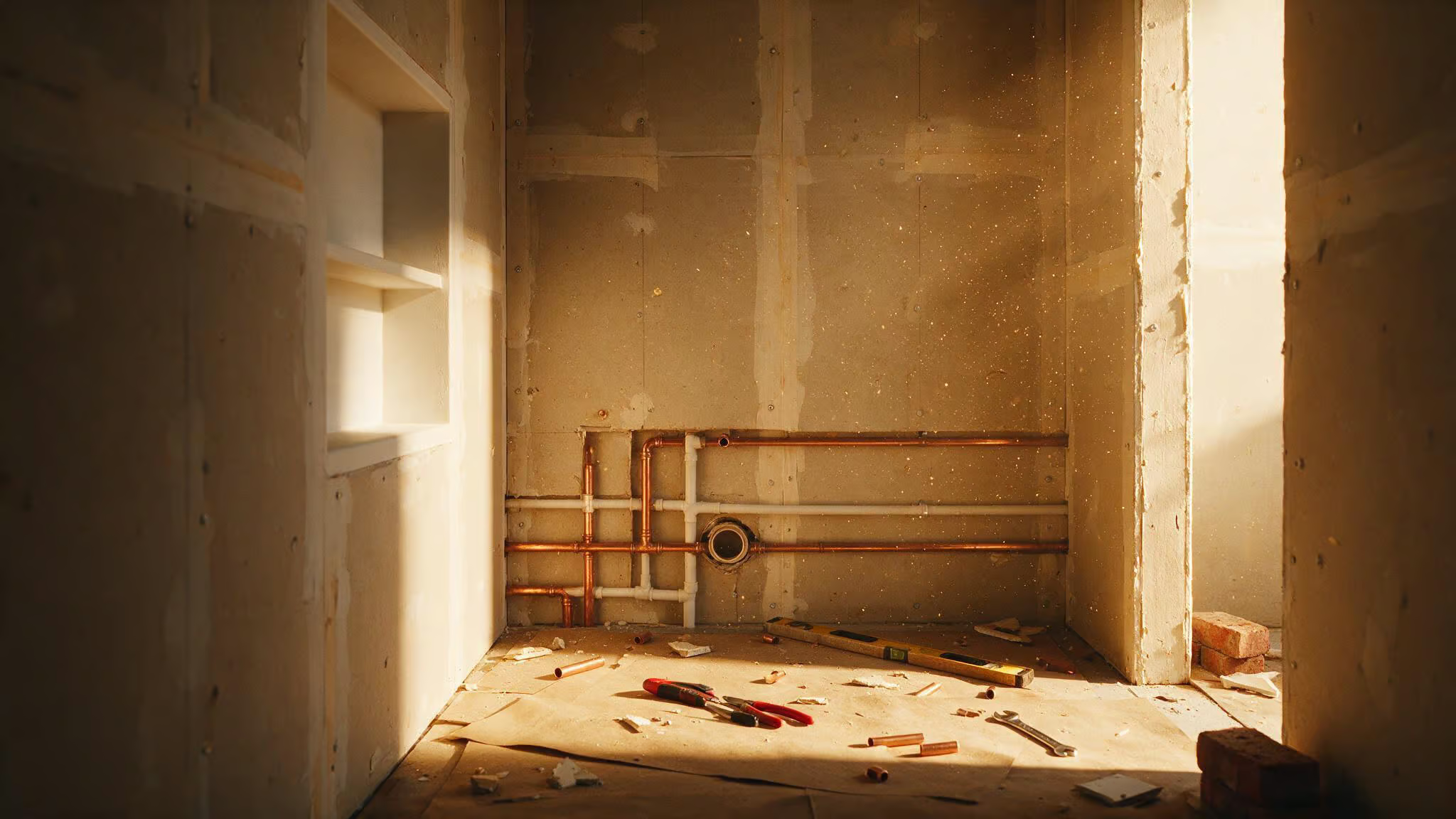
So you signed the contract. You picked out the tile. You’re ready to stop using the guest bathroom and have a shower that doesn’t squeak. And then… nothing.
The contractor says they’ll start “soon,” but soon doesn’t show up on your calendar. You start wondering if you made a mistake. Is this normal? Should you be worried?
I’m right there with you. Our family signed a contract for a master bath remodel a few weeks ago, and I’ve been living in that silence ever since. Here’s what I’ve learned: that four-week gap before demo starts isn’t a red flag. It’s standard. And there’s a lot happening behind the scenes.
The short answer: You’ll wait at least four weeks after signing before the crew shows up. That’s from RWS, RWS Home Remodeling. The wait isn’t because your contractor is sitting around. It’s because three things have to align first: when your materials arrive, when the company’s schedule frees up, and when the plumber, electrician, and other trades can all get on site at the same time.
Key Takeaways
Expect at least four weeks after signing the contract before construction begins — that’s normal, not a sign of a bad contractor.
The preconstruction walkthrough happens 2–3 weeks before your scheduled start date, and that’s when the crew figures out logistics like dumpster placement, material access, and parking.
You can shorten the wait by ordering materials once the design is finalized, responding quickly to your contractor, and avoiding last-minute changes.
Table of Contents
What happens in those four weeks
About two to three weeks before your scheduled start date, someone from RWS will come over for a preconstruction walkthrough. This isn’t a quick “looks good, see you Monday.” It’s a planning session where they figure out the boring but crucial stuff.
They’ll walk through your house and ask questions you haven’t thought of: Where does the dumpster go? They’ll figure out if there’s a clear path from the driveway to the bathroom. Where should the crew park? What’s going to be a pain? The answers to those questions determine the actual schedule — which trades show up when, and when that tile you ordered gets delivered.
If there are unresolved issues — no easy spot for the dumpster, a narrow hallway that makes material delivery a nightmare, it can push the start date back. This walkthrough is the moment where your abstract plans turn into concrete logistics. It’s also your best chance to ask any last questions before the real work begins.
The three factors that control your start date
Your specific start date depends on three things coming together. One of them is often the bottleneck.
Factor 1: Material lead times
If you chose a custom marble tile that takes eight weeks to arrive, there’s no way around it — the crew can’t start until that tile is on site. Same for a special-order vanity or a faucet that’s backordered. In-stock items from a home improvement store might be available tomorrow, but anything custom or specialty adds weeks or months. The whole start date revolves around when your stuff shows up.
Factor 2: The contractor’s schedule
Good remodeling companies like RWS are busy. They’re juggling multiple projects, and they can’t start yours until the previous job is finished. If your contractor is wrapping up another bathroom, you’ll be slotted in after that. A busy contractor is a good sign — it means they’re in demand. But it also means you’ll wait.
Factor 3: Trade partner schedules
The plumber, electrician, and HVAC person all need to be available at the same time. Even if your contractor is free and your tile is in the garage, you can’t demo until the electrician can get there. Coordinating three separate schedules takes time. The start date is where all three calendars line up.
The permit wildcard
Permits are the most unpredictable part of the pre-construction timeline. Nobody can give you a straight answer on timing, because it depends entirely on where you live and what you’re doing. Sometimes permits take two weeks. Sometimes they take six months. That range is real, and it’s the most unpredictable part of the pre-construction timeline.
You’ll need a permit if you’re moving walls, changing plumbing or electrical layouts, or modifying windows. If you’re just swapping fixtures in the same spots, you might not need one. Moving plumbing or gas lines is a bigger deal — that requires an architect and additional permits. Even for a stand-alone house, city permits are still required for electrical or plumbing work, and you may be wondering how long does a small bathroom remodel take — even small bathrooms can hide surprises that slow things down.
The inspection itself is only about an hour. The delay is in scheduling the inspector, which can take days or weeks. Electrical inspections are scheduled at the very end and may get rescheduled two or three times. (A master plumber can approve water lines if the inspector doesn’t show, but gas lines always need the city inspector.)
Skipping permits is a bad idea. You risk fines, problems selling the house, having to redo work, and insurance complications. Better to build the worst-case permit timeline into your expectations from the start.
How to speed up the wait (homeowner checklist)
You can’t control everything, but you can remove obstacles. Here are the actions that help:
- Order materials as soon as the design is final. Don’t wait. Lead times are real, and the crew can’t start if the tile isn’t there.
- Respond to your contractor’s calls, texts, and emails promptly. A single day’s delay in your answer can push the timeline back.
- Limit last-minute changes after the contract is signed. Changes mean reordering materials and rescheduling trades — that costs time.
- Prepare the workspace in advance. Clear the bathroom of personal items, create an accessible path, and make sure the crew can get in and out.
- Warn your neighbors about the renovation and how long it’ll take. A noise or parking complaint can cause a work stoppage.
None of these guarantee a faster start, but they remove reasons for the start date to slip. And they help you feel like you’re doing something while you wait.
What to expect during construction (the full timeline)
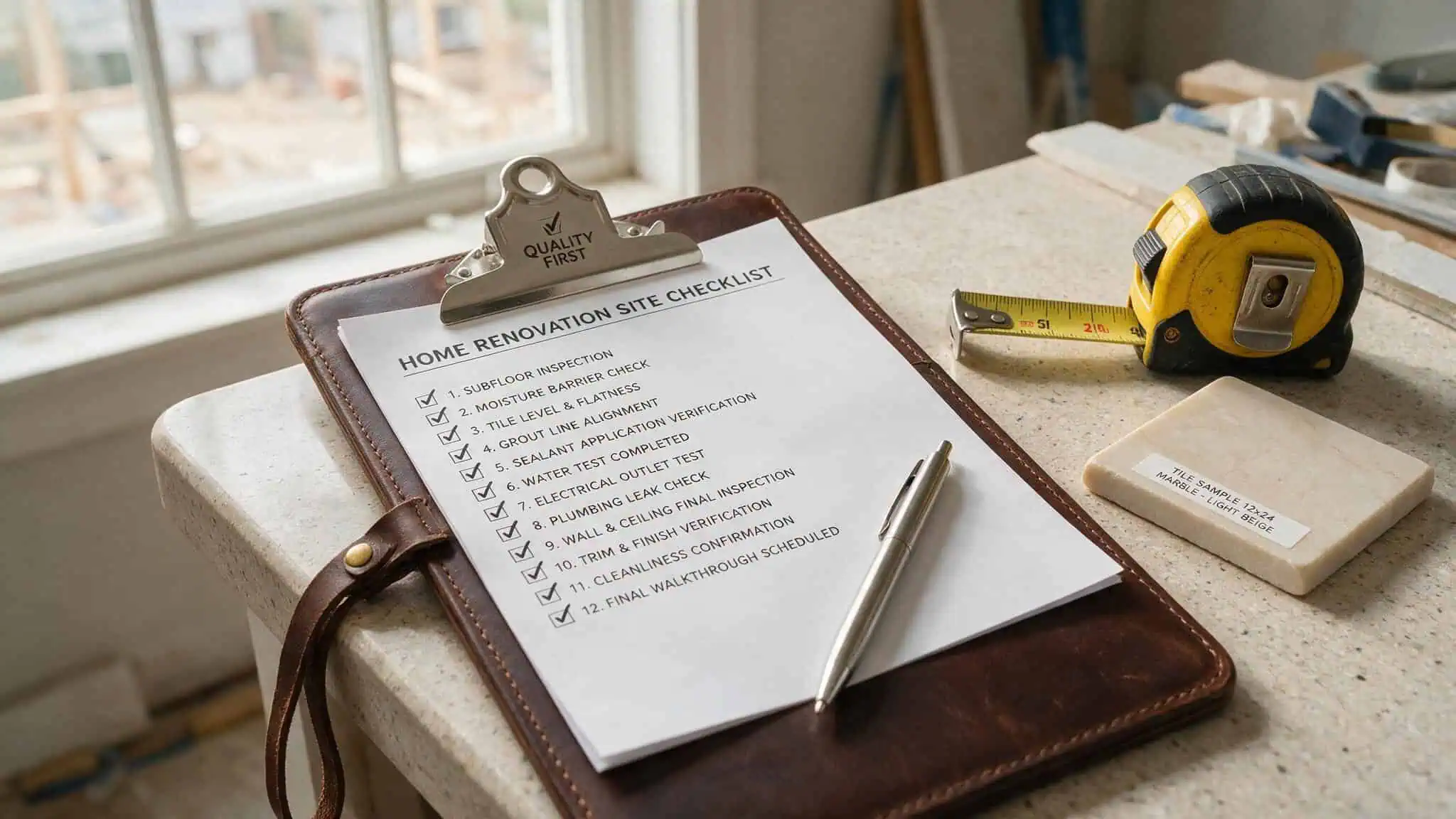
The pre-construction wait is a fraction of the whole project, which typically takes 8-10 weeks from demo to finish. Most master bathroom remodels take 8-10 weeks from demo to finish. Here’s roughly how those weeks break down:
- Prep and Demo (2–3 working days): Site protection goes up, then they tear everything out. It’s loud, dusty, and fast.
- Layout to Rough-in (10–12 working days): The new layout gets marked on the floor. Plumbers, electricians, and HVAC install their lines. Nail guards and fire-blocking foam go in.
- Rough-in inspection (~2 weeks after start): The city checks that the plumbing, electrical, and HVAC work is up to code.
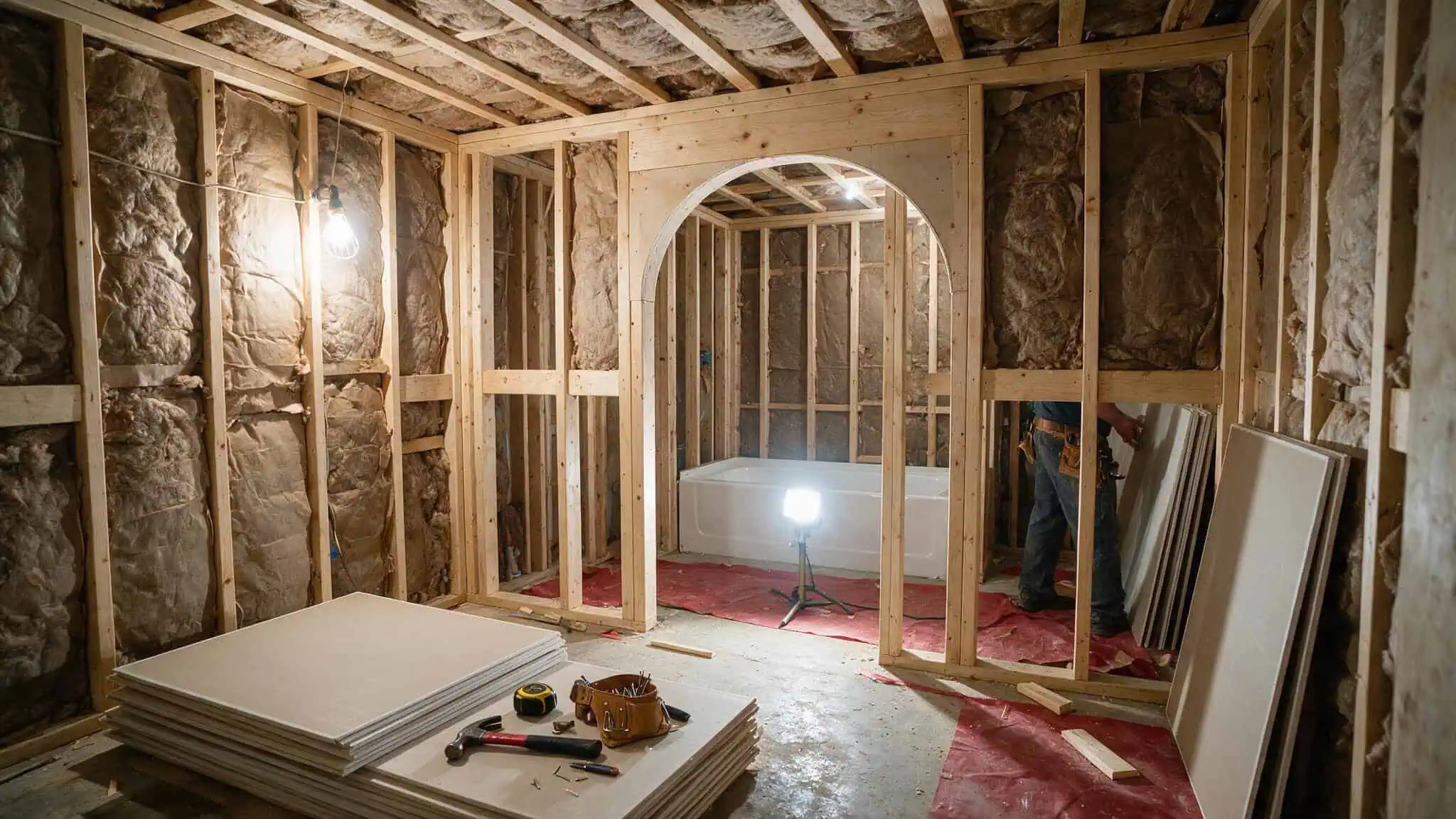
- Insulation through Drywall (10–12 working days): Insulation goes in fast, then drywall hangs, gets mudded, and sanded. Cleanup and priming follow.
- Trim and Paint (10–12 working days): Baseboards, door casings, cabinets, and paint. The order can flip depending on who’s available.
- Tile (7–12 working days): This takes the most time. Marble herringbone takes way longer than standard ceramic subway tile. The more tile, the longer it takes.
- Finishing (5–7 days): Countertops, fixtures, final inspection, punch list, and cleaning.
The schedule includes buffer days for surprises. Things behind walls can be unexpected, and the crew builds in time for that. Also, the schedule is fluid — the order of some tasks might shift based on material delivery and trade availability. That’s normal.
After the remodel (warranty, follow-up, and the final walkthrough)
The relationship doesn’t end when the last screw is tightened. RWS offers a one-year warranty on all projects, typically covering repainting, recaulking, and tightening fixtures as things settle. RWS contacts clients 10-11 months after project completion to check for issues.
The final walkthrough takes about 30 minutes. You inspect the finished bathroom and note any issues. Punch list items (things that need fixing) usually take 1–5 days to address. If something is backordered, it can take longer. Final payment happens after the last punch list item is done — about 10 minutes.
A tip from Jean Brownhill, founder of Sweeten: keep notepads in each room, and don’t talk to your contractor for two weeks after completion. Let things settle. You’ll notice small issues in that time — a caulk line that cracked, a door that doesn’t close quite right. Write them down, then address them all at once.
Seasonal timing (bonus if you haven’t signed yet)
If you’re reading this before signing a contract, timing matters. Summer is peak season for kitchen and bath remodels. High demand can push start dates out — some projects get delayed until the following year. Spring (especially April) is ideal for booking.
Contractors are more available, and you might even get slightly lower prices. In high-demand areas like Silicon Valley, the summer surge is for primary bathrooms and kitchens.
The bottom line
The pre-construction wait of at least four weeks is normal. It’s not a sign of a bad contractor. It’s the result of material lead times, contractor scheduling, and permit processing — all of which are real constraints.
You have agency: order materials early, respond quickly, and avoid last-minute changes. But mostly, you need patience. The wait is a fraction of the total project. Once demo starts, you’ll be looking at 8 to 10 weeks of construction, and then you’ll have a new bathroom.
You’ve got this.
Frequently Asked Questions
Is $10,000 enough for a bathroom remodel?
It depends on the scope. A $10,000 budget can cover a basic refresh — swapping fixtures, painting, and maybe new tile — but it won’t stretch to moving walls, relocating plumbing, or custom materials. Master bathroom remodels typically run higher, especially when you factor in labor, permits, and specialty tile.
Why is there a four-week wait after signing a bathroom remodel contract?
That wait is standard, not a red flag. Three things have to align: your materials need to arrive (especially custom tile or special-order fixtures), the contractor’s schedule needs to open up from their previous project, and the plumber, electrician, and other trades all need to be available on the same day. Permits can add even more unpredictable time.
How can I speed up my bathroom remodel start date?
Order materials as soon as the design is finalized — don’t wait. Respond to your contractor’s calls and texts promptly, because a single day’s delay in your answer can push the timeline. Avoid last-minute changes after signing, since those mean reordering materials and rescheduling trades. Also clear the workspace and warn neighbors about noise and parking.