The answer is 2 to 4 weeks with a professional crew, as noted by Cottrell Plumbing, Heating & Air in West Columbia.
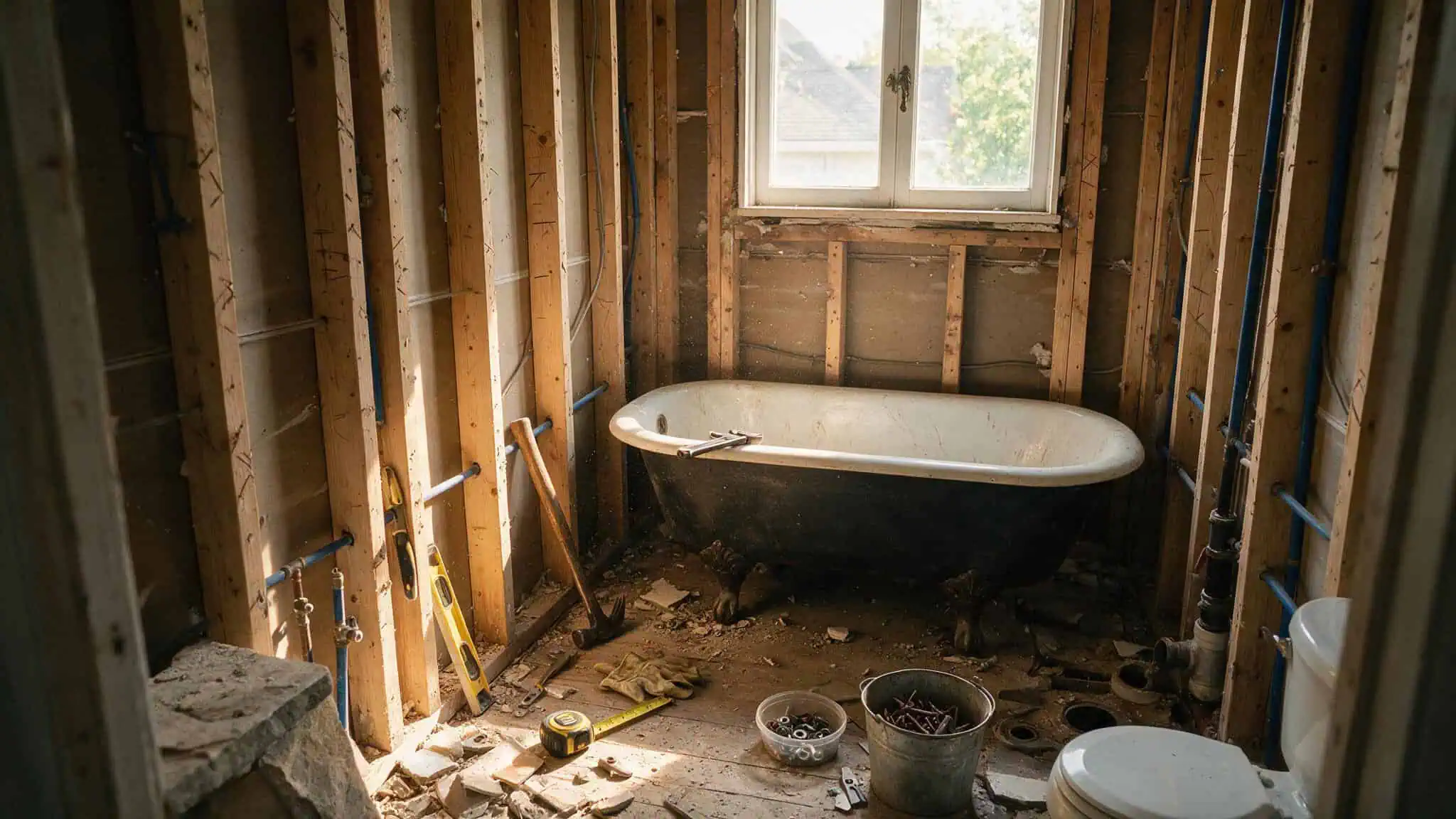
Our own bathroom is a classic 40-square-foot NYC apartment setup — 5×8, claw-foot tub that looked cute in photos and impossible in real life, green walls that screamed 1980s, and a sliding barn door we installed because a regular door wouldn’t have cleared the toilet.
Key Takeaways
57% of homeowners underestimate their bathroom remodel timeline by at least one week (Houzz 2024).
A cosmetic refresh (paint, fixtures, flooring, same layout) takes 3–7 days. A full standard remodel with new tile, vanity, and shower runs 14–21 days. Moving plumbing or walls pushes you to 4–6 weeks.
Hidden damage like mold or rotted subfloor adds 2–5 days and extra cost. Set aside 10% of your budget for surprises and don’t schedule guests for the first month.
Table of Contents
Timeline by scope: what you’re actually doing
Cosmetic refresh (3–7 days) — This is your only shot at a one-week job. You’re painting, swapping out the vanity and toilet, putting in new flooring, maybe changing the light fixture. No plumbing moves, no electrical rerouting. If you keep everything in the same spot, you can get in and out fast.
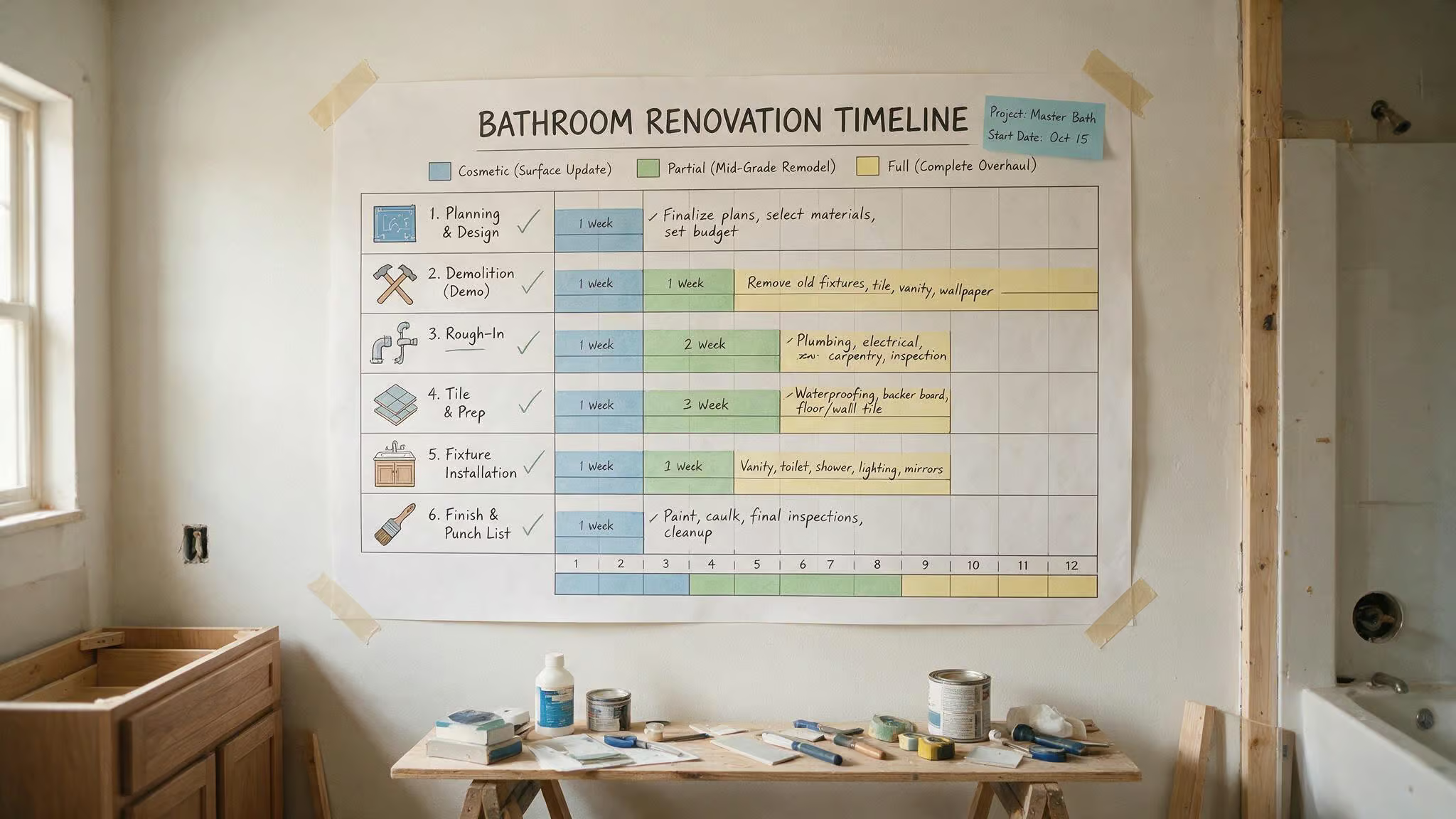
Standard full remodel (14–21 days) — This is the most common scope. New tile floor and shower walls, new vanity, new toilet, new tub or shower. Everything comes out, everything goes back in the same layout. Most homeowners I know end up here whether they planned to or not.
Complex renovation (4–6 weeks) — You’re moving walls, shifting the toilet location, doing custom cabinetry, or installing imported tile that takes two months to arrive. This is where timelines stretch.
Cottrell Plumbing in West Columbia has a few real examples that match what I’ve seen: a basic remodel with new fixtures, retiled floor, and fresh paint took 12 days. A mid-range job — removing an old tub, putting in a walk-in shower featuring new tile and lighting took 3 weeks. A full remodel for a growing family that added storage, rerouted plumbing, and used custom tile took 4.5 weeks. The delay? A custom cabinet that took six weeks to arrive.
Week-by-week: what actually happens
This is the part where you build a mental calendar so you can plan your life around the chaos. Expect overlap between weeks — some phases run faster, some slower, but this is the general flow.
Week 1 — Demolition and rough-in (3–7 days)
Demolition takes 1–2 days. It’s loud, dusty, and oddly satisfying. Then the rough-in starts — plumbing and electrical work in the open walls. If you’re keeping fixtures in the same spots, this takes 2–3 days. If you’re moving the toilet or shower, it’s 4–5 days.
This is also when you find out if there’s mold behind the old tile, rotted subfloor under the toilet, or wiring that hasn’t been updated since the 1970s. Our NYC bathroom had old tiles laid on top of older tiles, and a half-wall between the sink and tub that had to go.
Week 2 — Inspections, drywall, tile starts (5–8 days)
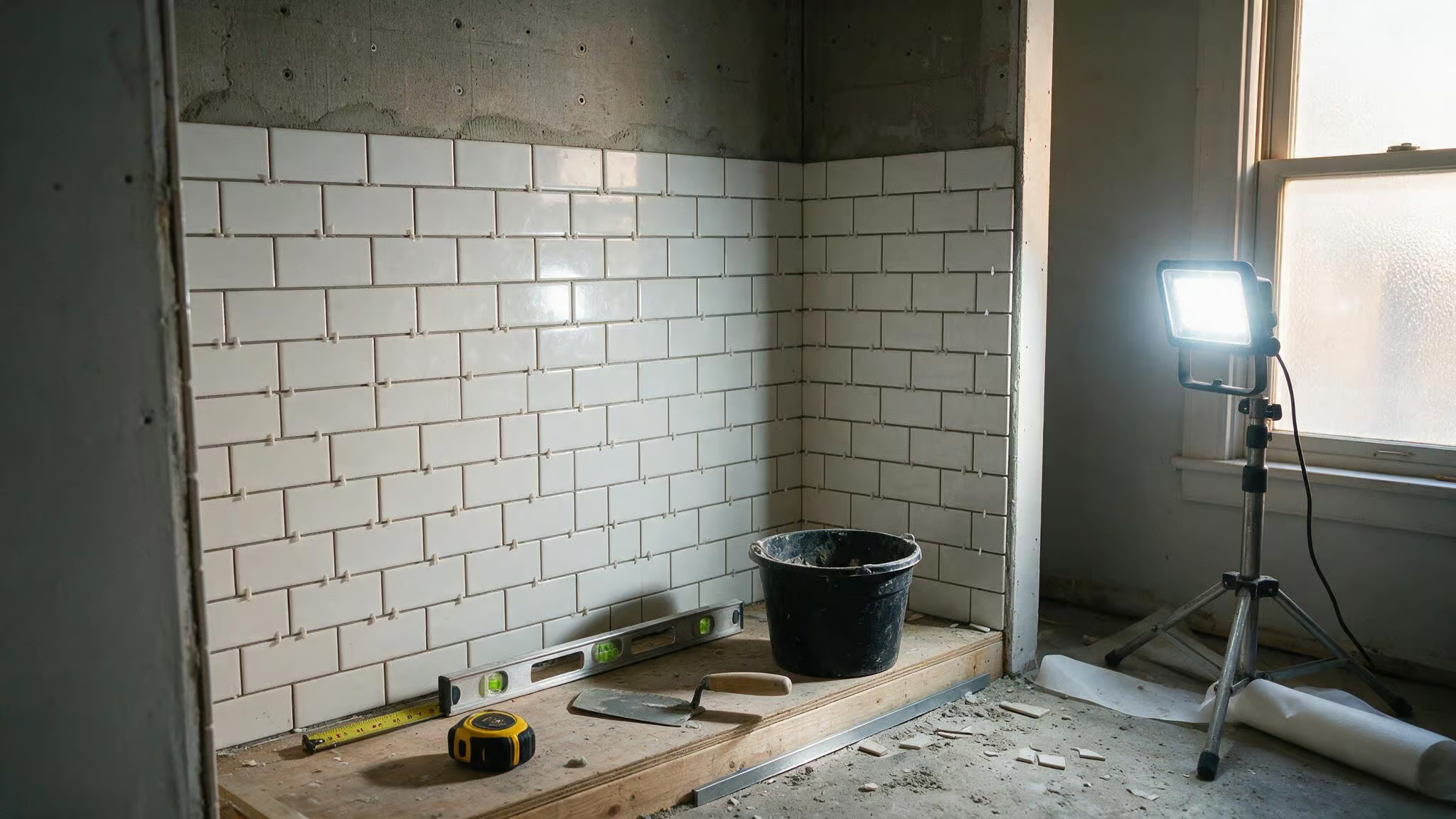
Inspections can eat 1–3 days just waiting for someone to show up. Then drywall goes up — 2–3 days. Then the tile installer starts. Tile takes 3–5 days, and it’s the longest single phase of the whole project.
Complex patterns add another 1–2 days. Large-format tiles install faster, so if you’re on a tight timeline, that’s worth knowing.
Rushing tile leads to cracks. Don’t push the contractor on this.
Week 3 — Fixtures, tile completion, lighting (3–5 days)
The vanity goes in. The toilet gets set. The tub or shower gets hooked up. Lighting and the exhaust fan get wired.
Plumbing and electrical hookups take 2–4 days. Tile should finish this week. For us, this was the week we started to believe the overall project might actually look good — and we had already learned the hard way that how long does a bathroom remodel take always takes longer than you expect.
Week 4 — Final connections, touch-ups, final inspection (2–3 days)
Final plumbing connections, paint touch-ups, caulking, sealing, and a thorough cleaning. Then you wait for the final inspection — another 1–2 days if you’re lucky.
Silicone and grout require at least 24 hours of curing time. You can’t use the shower the day it’s installed.
Material lead times: the hidden schedule killer
Your timeline starts when your materials arrive, not when demo begins.
Here’s the lead time difference:
- Standard white subway tile – 2–5 days
- Imported Italian tile – 4–8 weeks
- Stock vanity from a home center – same day
- Custom-built vanity – 4–6 weeks
- Standard shower door – 1–2 weeks
- Custom frameless glass enclosure – 3–4 weeks
I’ve seen homeowners fall in love with a custom tile online, order it without checking lead time, and then wait 4–8 weeks while the contractor’s schedule sits idle. The phrase “but it said in stock” usually means it’s made to order. If you want a quick timeline, stick with off-the-shelf materials. If you want that Italian tile, order it before you even pick a contractor.
Permits and inspections: the bureaucratic clock
Permits and inspections can add 1–2 weeks even on a smooth project. Here’s the breakdown:
- Permit approval: 3–10 days (varies wildly by city)
- Rough-in inspection wait: 1–3 days
- Final inspection wait: 1–2 days
- If you fail inspection: add 3–7 days for corrections and reinspection
Never skip inspections to save time. It’s not worth the headache, and a failed inspection later costs way more than waiting the first time. One local company in Waukesha, T And J Remodeling, averages 18 days from demo to final walkthrough on small bathrooms — and that includes inspections, though the question remains: can you really gut and redo a bathroom remodel in 5 days? We break down the ‘5-day remodel’ myth, what it actually covers, and when it works.
What can go wrong: hidden surprises
The 57% stat from the Houzz 2024 U.S. Bathroom Trends Study means more than half of us underestimated by at least a week.
Here’s what usually causes the delay:
- Hidden damage (mold, rotted subfloor, outdated wiring) — 2–5 days and extra cost. Almost guaranteed in homes built before 1990.
- Permit issues — 1–2 weeks if something was filed wrong.
- Material backorders — can add weeks if you need to pick replacement items.
- Change orders mid-project — every change adds at least 2–3 days because work stops until the new material arrives.
- Contractor scheduling gaps — normal. Active work days don’t always line up with calendar days.
How layout choices affect your timeline
Moving things costs days, not just dollars.
The five common small bathroom layouts are: standard linear (toilet, sink, shower/tub in a row), shower-priority (larger shower, smaller vanity), wider toilet layout (extra clearance for comfort), corner-sink layout (maximizes floor space), and dual-vanity layout (for shared use). The 36-30-30 linear arrangement — 36 inches for the shower, 30 inches for the toilet, 30 inches for the vanity, serves as the baseline for most standard remodels. Choosing one of these layouts early helps you decide whether to move the toilet or shower, which directly affects your timeline.
- Moving a toilet adds 3–5 days because plumbers have to reroute drain lines through the floor.
- Relocating the shower entrance adds 2–3 days for reframing.
- Curbless or zero-entry shower needs careful planning for proper slope and waterproofing — adds time.
- Keeping all plumbing in the same locations saves 3–5 days and a chunk of money.
If you’re replacing a tub with a walk-in shower but leaving the drain in the same spot, that’s fine. If you’re shifting the toilet even 6 inches, you’re adding nearly a week. A Kohler tub allows for deep soaks, making it a popular choice for relaxation.
DIY vs. professional: the real time cost
The timelines are not comparable.
A professional crew can finish a standard small bathroom remodel in about 3 weeks. The same project takes a DIYer 2–3 months. That’s 2–3 times longer, and that’s if you don’t hit setbacks.
Why? DIYers work evenings and weekends. They learn as they go. They might fail inspections and have to redo work.
I’ve seen projects turn into the bathroom that’s been half-torn-apart for six months — the kind that ends up on the contractor’s rescue list in New Berlin. Those homeowners often end up paying more than if they’d hired professionals from the start.
If you want a quick turnaround, rush jobs with a professional cost 20–30% more but can finish in 1–2 weeks for a cosmetic refresh. That’s the tradeoff.
How to build a realistic timeline for your project
Here’s the formula I use now (learned the hard way): For a standard remodel, start with 3 weeks, add 5 days for moving the toilet, and add 4 weeks for the custom vanity. That gives you a 10-week calendar. The Martins from Denver could have used this formula.
Here’s the formula I use now (learned the hard way):
- Start with your base scope: cosmetic 3–7 days, standard 14–21 days, complex 4–6 weeks.
- Add days for each specific choice: moving toilet (+3–5), relocating shower (+2–3), custom tile (+lead time 4–8 weeks), custom vanity (+4–6 weeks).
- Add a buffer: plan for 3 weeks, but don’t schedule any major events for 4 weeks.
- Set aside 10% of your budget for unexpected costs — that’s for the mold you hoped wasn’t there.
- Finalize every decision before demolition starts — every change mid-project adds at least 2–3 days.
- Remember the curing time: silicone and grout need 24 hours. Don’t rush the final step.
Real projects, real timelines: what homeowners experienced
The Martins from Denver planned for 10 days — new tile, new vanity, fresh paint, same layout. Then the tile got delayed, they decided to upgrade the vanity at the last minute, and the whole thing stretched to 21 days. They ended up with a spa-like bathroom, but they also ended up cooking Thanksgiving dinner in a kitchen that had become the backup bathroom station.
Our 5×8 NYC remodel with a family of five took longer than we wanted. Old tiles laid on top of old tiles meant extra demo work. The sliding barn door saved floor space but added a framing day. The compact vanity we chose over a pedestal sink required an extra plumbing trip. It all added up.
And then there are the budget-friendly DIY jobs that worked — like the $1,500 remodel that used paint, limewash, peel-and-stick tiles, and repurposed furniture. That one took about two weekends, but it was a cosmetic refresh, not a full gut. Or the woman who replaced her 1948 pink bathtub with a new one and called it a day.
Plan for it, don’t fear it, and for heaven’s sake, order that tile before you break ground.
Frequently Asked Questions
Can a bathroom remodel be done in a week?
Only if you’re doing a cosmetic refresh — painting, swapping fixtures, new flooring, and keeping everything in the same spot. That takes 3–7 days with a professional crew. A full remodel with new tile, vanity, and shower runs 2–3 weeks minimum, and moving plumbing or walls pushes it to 4–6 weeks.
How long does a small bathroom remodel take with a professional crew?
A cosmetic refresh takes 3–7 days, a standard full remodel runs 14–21 days, and a complex renovation with moved walls or plumbing takes 4–6 weeks. Most homeowners underestimate the timeline by at least a week, so plan for the longer end and don’t schedule guests for the first month.
What’s the biggest hidden delay in a bathroom remodel?
Material lead times are the hidden schedule killer. Stock items like a home center vanity are available same day, but custom tile can take 4–8 weeks and a custom vanity 4–6 weeks. If you order materials after demo starts, your contractor’s schedule sits idle. Order everything before you pick a contractor.