
I’ve been homeschooling for eight years, with three kids spanning 7th grade, 5th grade, and 1st grade. That means I’ve cycled through a lot of curriculum — some of it great, some of it a waste of money. And I want to be upfront: before we get into any of this: I have no affiliate relationships with any of these programs. Nobody is paying me to endorse them. I’m writing this because I wish someone had handed me a list before I started buying, along with a guide to organizing it all.
Every kid is different. What worked for my oldest flopped for my middle child, and what my youngest loves would have bored my oldest to tears. So take this as one mom’s experience, not a universal ranking.
Key Takeaways
Rod and Staff preschool is a five-star curriculum, but the illustrations are so outdated (flour mills, old well pumps) that your kids might not recognize what they’re looking at
Saxon Math kindergarten is useless — I start all my kids with first grade and skip it entirely
I have no affiliate ties to any curriculum listed here; these are opinions based on actual use.
Table of Contents
Preschool and Kindergarten: What I Wish Someone Had Told Me
The early years are where you can waste the most money, because everything looks good in the catalog.
Rod and Staff Preschool: The Five-Star Pick With Quirks
Jessica Smartt gives Rod and Staff a five-star rating. I used every book from A through N or O with each of my kids. The scope is solid — letters, numbers, pre-reading skills, and I loved it. Like, I loved it so much that when I realized I wasn’t going to have another kid to use the second set with, I bought a spare copy anyway because I was sad about it. That’s real.
But here’s what nobody tells you: the pictures are straight out of another century. There’s a flour mill and an old-fashioned well pump, and my kids had no idea what either of those things were. You’ll spend time explaining, That’s where people used to get water before we had faucets. It’s not a dealbreaker, but it’s worth knowing.
Homegrown Preschoolers: Great If You’re Crafty
A Year of Playing Skillfully is a beautiful resource. I recommend it. But I am not a crafty person, and I didn’t do enough of the activities. If you’re the type who loves setting up sensory bins and cutting out laminated pieces, this will be fantastic. If you’re like me and the thought of another Pinterest project makes you tired, you might struggle to get through it.
Sonlight Preschool: The Overwhelmed Mom’s Friend
Jessica Smartt used Sonlight for three years, and I get why people love it. Sonlight Preschool is an open-and-go curriculum using literature and hands-on learning. If you’re in survival mode and need someone to tell you what to do each day, this is your thing. My recommendation: buy their reading lists for book ideas without getting the full curriculum. You’ll save money.
The Good and the Beautiful: My Pick for Kindergarten
Jessica Smartt would use The Good and the Beautiful for kindergarten if starting over. I started using it for a child struggling with handwriting after a Facebook group recommendation, and it helped. The spelling is intuitive and doesn’t pile on busywork. I’ve only used the language arts portion, so I can’t speak to their other subjects, but for kindergarten reading and writing, it’s solid.
All About Reading: Scripted and Effective
We chose All About Reading for kindergarten, and the scripted teacher manual was a lifesaver. You don’t have to figure out what to say — it tells you. One mom I know wishes she’d found it earlier. It works.
Horizons Phonics and Reading: The More Advanced Option
Horizons goes through level K through 3, with kindergarten having four student books and four readers. The teacher’s manual is available but not necessary. It’s more advanced than some other options, which means you can move at your child’s pace. The student workbooks are consumable, but the readers can be reused for the next kid.
Math Curriculum: The Favorites, the Duds, and the Honest Truth
After years of trial and error, here’s the breakdown of what worked and what didn’t in our math journey.
Saxon Math: Five Stars, But Skip Kindergarten
Jessica Smartt is a Saxon math family and used it through Calculus. She gives it a five-star rating. Saxon Math kindergarten is considered useless; she starts all kids with first grade for kindergarten. Uses a spiral approach.
Homeschool sets contain textbook, solutions manual, and tests and worksheets book. Used from Saxon 54 up to Algebra I.
Field note: Skip Saxon kindergarten entirely — start all kids with the first-grade book. You’ll save money and frustration.
Beast Academy: The Logic Supplement Kids Actually Enjoy
Beast Academy is a challenging math course leaning toward logic and reasoning. Covers conventional math skills like dividing and fractions. Used as a supplement; kids enjoy it. It’s good for the kind of thinking you need for standardized tests, and it’s fun.
Life of Fred: Story-Based Math for Reluctant Learners
Life of Fred is a unique math approach using cute stories with humor. The elementary series begins with Apples and ends with Jelly Beans. The books extend through high school. Many homeschoolers use as a complete curriculum; one source uses as a supplement during morning time.
One chapter is read per week; ‘Your Turn to Play’ section with a few problems. It’s low pressure. My kids liked it better than Saxon but not as much as Beast Academy.
Horizons Math: Not Recommended
Jessica Smartt did not like Horizons Math; thinks it does not cover everything. Used for first, second, and kindergarten. There were gaps that showed up later, and I wouldn’t use it again.
Abeka Math: Gaps in Kindergarten
Abeka math was tried in kindergarten and not recommended due to gaps and insufficient difficulty. I wanted to slow down on place value and telling time, but the curriculum didn’t let me. Be cautious with this one for foundational years.
Other Options Worth Knowing
- Teaching Textbooks — Online, spiral, self-grading. Completely hands-off for you.
- MCP Mathematics — Traditional, one concept per day, very straightforward.
- CTCMath — Online, lets you bounce between grade levels to customize difficulty.
- All About Math — From the same company as All About Reading and Spelling, so if you like those, it’s worth a look.
History Curriculum: Story of the World vs. Mystery of History
Both of these popular options have strong points, but they serve different needs and teaching styles.
Story of the World
Jessica Smartt loved the first volume but lost interest in later volumes. Books are written from a Christian perspective. All four volumes were used. Your mileage may vary — some people love the whole series.
Mystery of History
Mystery of History is a strongly Christian curriculum with many Bible character chapters. Jessica Smartt’s kids retained more from it than from Story of the World. Used Volume I and switching to Volume II. The timeline and index card method helped with retention in a way that Story of the World didn’t.
The One to Skip
Jessica Smartt and her kids did not like Evan-Moor workbooks; retention was low. Used for history and spelling. I tried them for history and spelling, and nothing stuck. Save your money.
Other Options
- The Story of Civilization — Catholic alternative, similar to Story of the World but presented from a Catholic perspective.
- Homeschool History (Notgrass) — Searchable database with a free trial available.
Science Curriculum: Apologia, Abeka, and the Alternatives
Science was one of the harder subjects to settle on, but here’s what we found after testing several programs.
Apologia: My Favorite, With Caveats
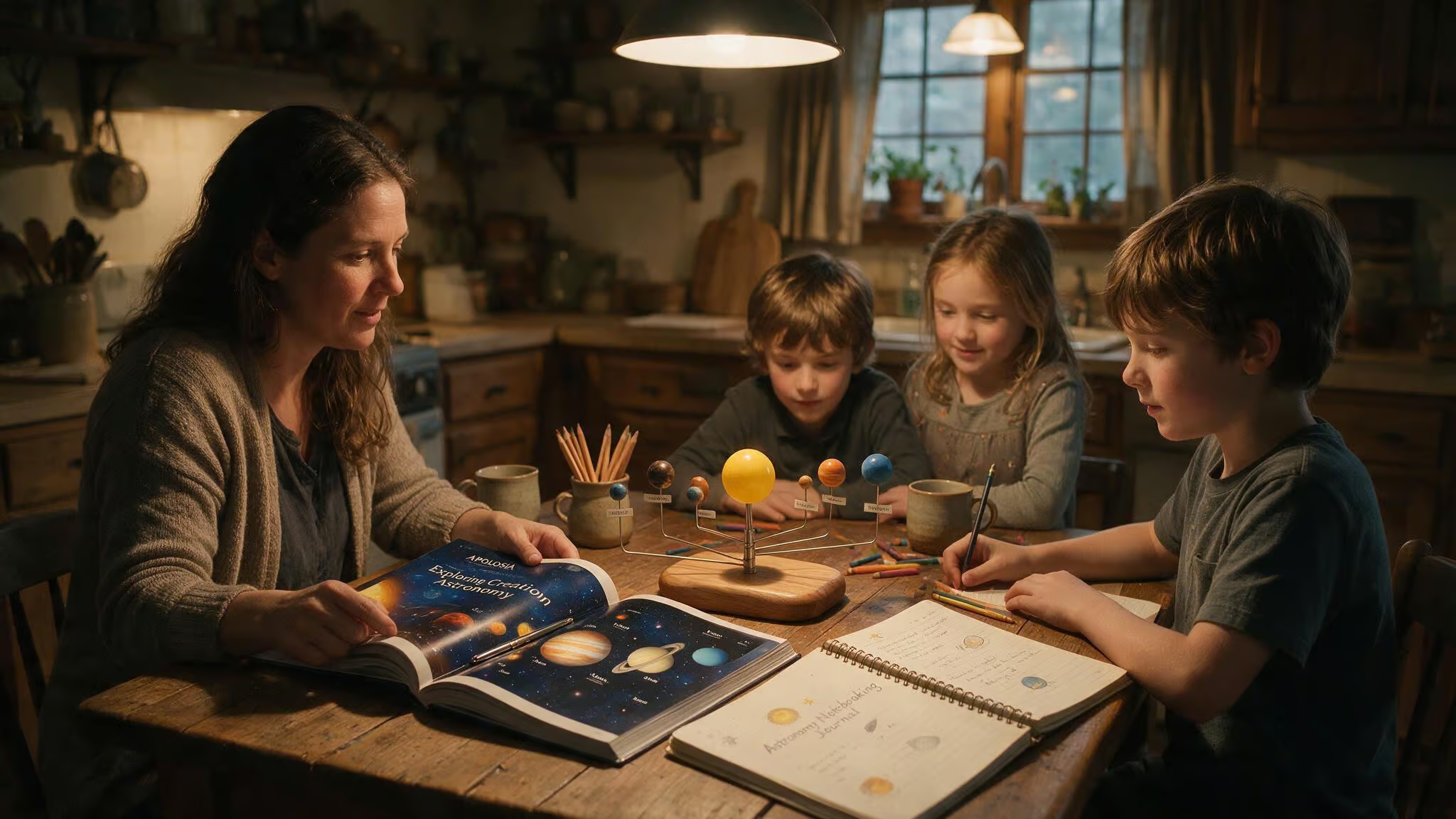
Apologia is Jessica Smartt’s favorite science curriculum. Kids were not fans of the notebooking journals. Least favorite elementary unit was Astronomy. Used in co-op for General Science. You can combine children for elementary units, which is nice for multiple ages, and for more on blending curricula and resources, check out the Homeschool Potpourri guide.
Abeka Science: Useful but Not Fun
Abeka science taught reading comprehension and is like a conventional school curriculum. Fifth-grade Abeka curriculum used; obtained used at a local store with tests. Abeka science will not be continued next year for that child. It’s structured and familiar, but not exciting.
Evan-Moor Workbooks: Skip These Too
Same problem as history — low retention. Not worth it.
Other Science Options
- Berean Builders — Each lesson starts with a scientist and ends with an experiment using household materials. No special shopping trips.
- Memoria Press Mammals — A full year focused on mammals. Deep dive, not broad survey.
- Sonlight Science K — Literature-based, hands-on, comes with a supply kit so you’re not scrambling.
- College Prep Science — Online classes and interactive labs. Greg Landry now offers physical textbooks for Biology and Chemistry. One of my sons loved the Biology/Anatomy & Physiology lab.
- Beautiful Feet Books Far Afield — Fourth grade science, can stretch to two years.
- Nature study resources — Julia Rothman collection (gorgeous and informative), Exploring Nature with Children (inexpensive and reusable), Burgess Books (The Burgess Bird Book is great for morning time).
Language Arts: What Actually Stuck
Language arts covers a lot of ground, and we found some resources that truly delivered results.
IEW: Best in a Co-op
IEW was was taught by Jessica Smartt to seventh and eighth graders in a traditional school setting, and students showed improvement. But it’s best done in a group or co-op, not solo. Writing units correspond with history units being studied. IEW Speech Boot Camp uses DVDs and a workbook to structure speeches. Their History-Based Writing counts for high school language arts credit.
All About Spelling: Reveals Gaps
I started my older boys at Level 1 and found gaps from previous spelling programs they’d been through. The scripted lessons explain why words are spelled the way they are, so it’s not memorization. It’s beneficial even for catching up, not just starting out.
Fix It! Grammar: Quick and Manageable
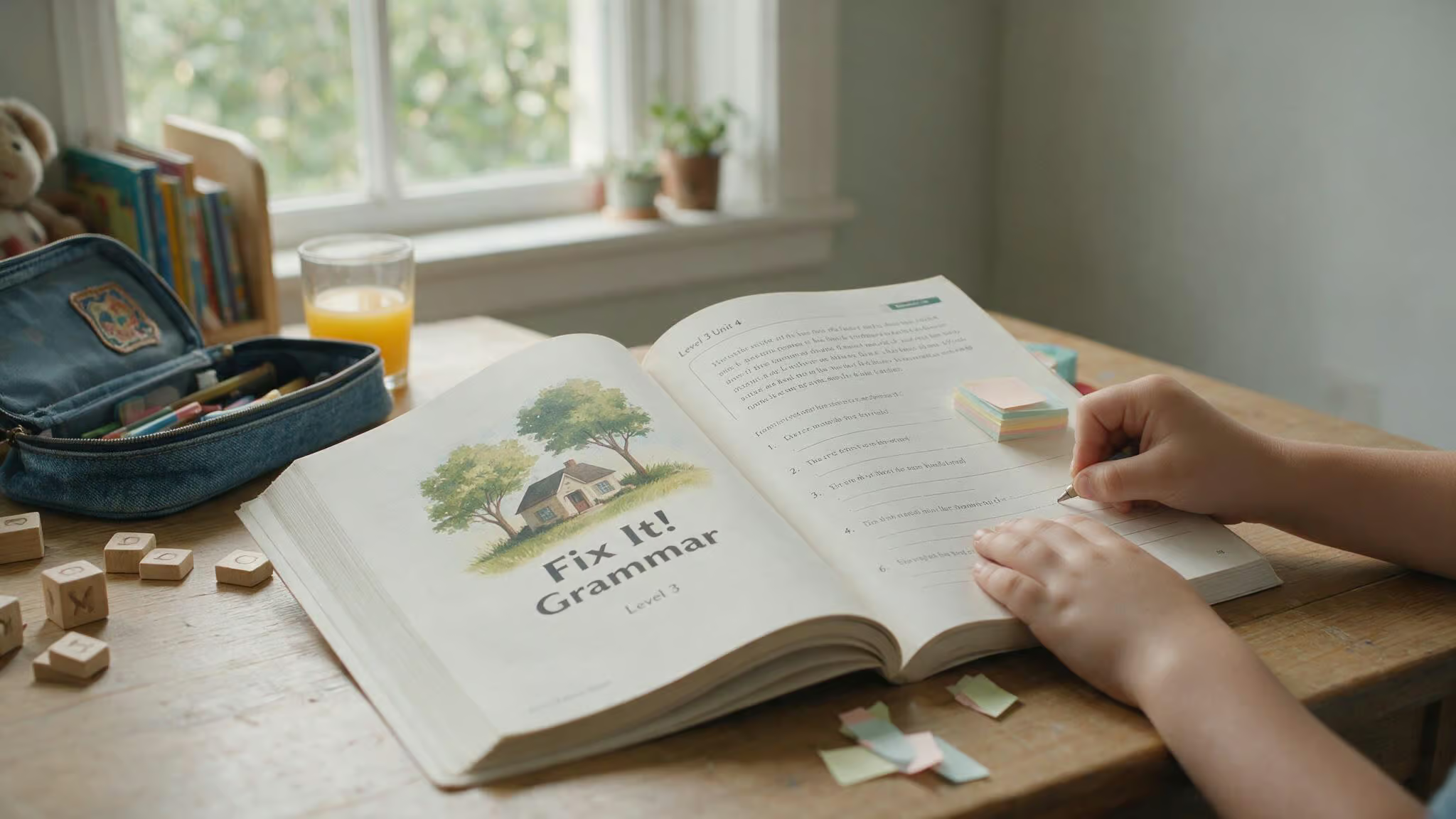
We do Fix It! Grammar together — about 15-20 minutes, four days a week. The updated books let students write directly in the book instead of a separate notebook. My boys liked it, which I wasn’t expecting.
WriteShop: Step-by-Step K-12
WriteShop gives clear instructions in the teacher’s manual and the student workbook alike. It’s a full writing program that covers all the grades.
Other Language Arts Options
- 180 Days of Grammar — Daily, self-checking, works for high school. Low prep.
- Vocabulary Word of the Day — Simple supplement with quizzes every 10 words. Works for third grade and up.
- Treasure Trove of Literature (CHC) — Catholic, five books for 4th-6th grades, each with 20-30 lessons covering vocabulary, reading review, literary devices, and parts of speech.
- Learning Literature Through Language Arts — High school, covers World, American, and British Literature. My sons have done all three.
Bible and Devotional Curriculum: What’s Engaging vs. What’s Not
Finding a Bible curriculum that keeps kids engaged is harder than it sounds, and we tried several before landing on what worked.
Egermeier’s Story Bible: Not Recommended
Jessica Smartt found Egermeier’s Story Bible lifeless. Used for Bible history. Split into four years instead of two. There are better options.
Long Story Short / Old Story New: Highly Recommended
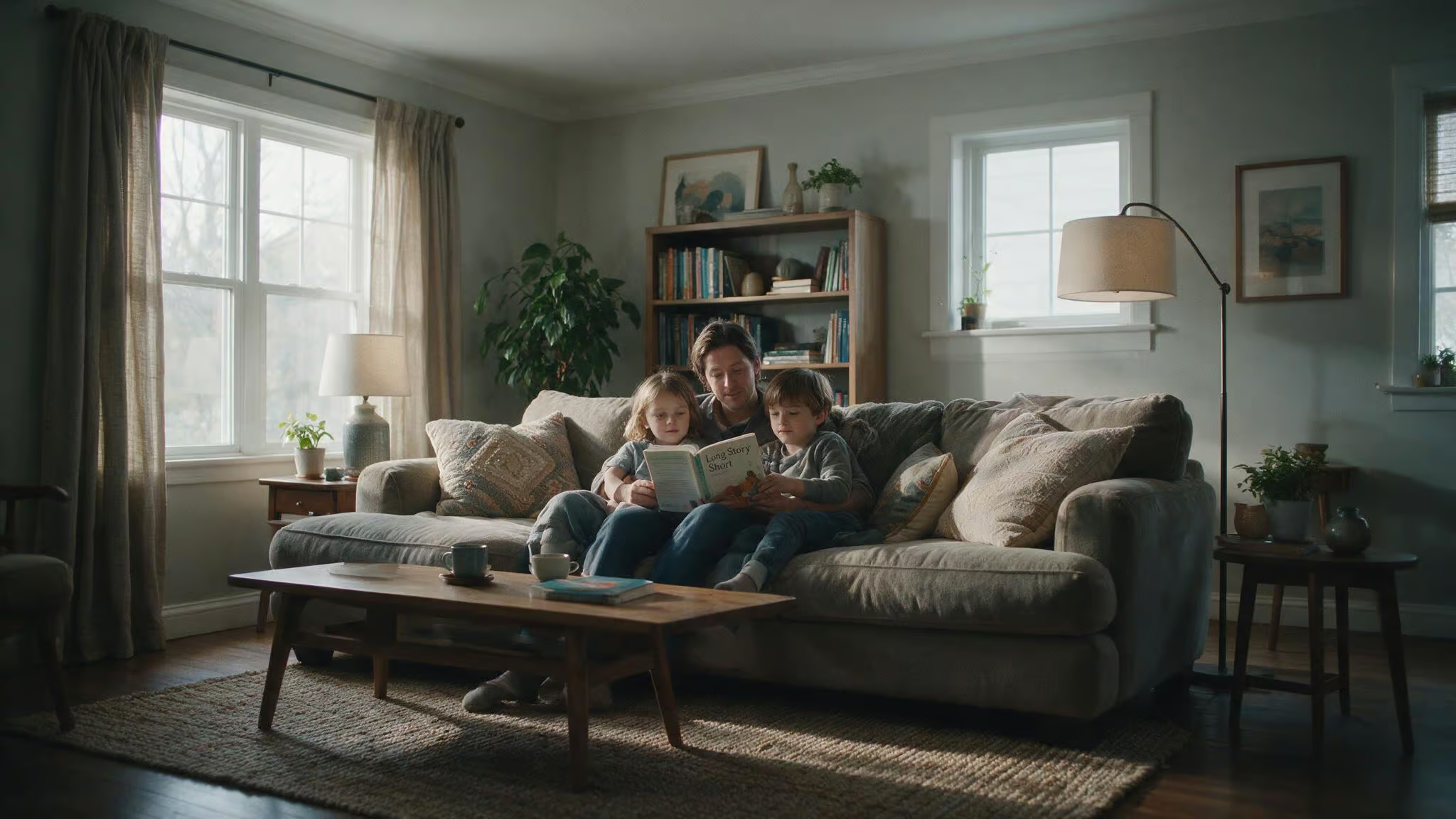
Long Story Short is weekly devotions on the Old Testament; Old Story New is weekly devotions on the New Testament. Five-day-a-week lessons; Jessica Smartt schools four days a week and skips the middle one. It adapts well.
More Than Words (Masterbooks): Works for a Four-Day Week
This devotional has a weekly pattern: Day 1 journal, Day 2 copy work, Day 3 art/poem/hymn, Day 4 character trait, Day 5 reflection. We do Day 1 and 2 together and bump everything up, which fits our four-day schedule. We use it as a morning devotional after breakfast.
Seton’s Religion Book: Solid Catholic Option
This is the main religion curriculum for Catholic families. It’s solid.
Other Options
- Baltimore Catechism — For Catholic catechism study.
- Formed in Christ Series — High school religion.
Electives and Enrichment: The Extras That Round Out Your Day
These are the subjects that add variety and real-world connection to our homeschool routine.
Current Events
- WORLD Watch — Ten-minute daily news episodes for kids from the World News Institute. Short enough to fit into morning time.
- CNN 10 — Free alternative, hosted by a homeschool dad. Good for a budget.
Vocabulary
We use Latin and Greek roots flashcards from Amazon instead of a full Latin curriculum. Works for upper elementary and middle school.
Planning
The Ultimate Homeschool Planner by Debra Bell is my favorite. It includes sections for brainstorming, praying through goals for each child, and reading lists, and it’s just one of many homeschooling books for parents that provide crucial guidance and practical strategies. It’s more than a calendar.
Music
- Clap for Classics! — Ages 0-5, with live Zoom classes and courses like Peter and the Wolf. Use code CHRISTY for 20% off.
- SQUILT (Super Quiet UnInterrupted Listening Time) — Music appreciation packs on orchestra instruments, composers, and musical eras.
Art
- You Are an Artist chalk pastels — Clubhouse membership gives you access to 600+ lessons. Complements history, science, and religion.
- Art History Kids — Monthly themes with weekly PDFs.
- Simply Charlotte Mason portfolios — We use these for artist study during tea time.
Blended Learning and Real-World Adaptation Tips
Here’s how to make all this work when real life gets in the way.
Use Sonlight reading lists without buying the full curriculum. You get the book recommendations without the cost.
Adapt to a four-day week. Skip the middle day of Long Story Short and Old Story New. Combine Days 1 and 2 of More Than Words.
Blank map technique for geography. When I had a newborn, I had the kids fill in what they knew on a blank map, then check against a completed map. It bought me time.
Audiobooks for Apologia science. The kids color or play with Play-Doh while listening. They still absorb the material.
Combine children for subjects. Apologia elementary science and Memoria Press Mammals work well for teaching multiple ages at once.
Life of Fred as a morning time supplement. One chapter per week, low pressure, no stress.
Homeschool Potpourri Store Review
The store itself offers $5 flat shipping no matter how much you order, which is unusual. They sell used curriculum from Abeka, BJU, Sonlight, Christian Liberty Press, and Apologia. It’s a consignment model, so you can buy and sell used materials. They have a physical location in Kirkland, Washington. I don’t have personal experience with their bundles, so I can’t speak to those specifically, but the consignment model is worth knowing about if you’re trying to save money.
Final Caveats and What to Actually Do
Mixing methods — going eclectic, is common and effective, and finding a Homeschool potpourri near me can help connect you with local groups and co-ops that embrace this approach.
I’m not an affiliate. I’m not getting paid to tell you any of this. I’m sharing what I’ve learned because I remember how overwhelming it was to pick curriculum for the first time, and I wasted money on stuff that looked good in the catalog but didn’t work in real life.
If you want to dig deeper into any of these, Cathy Duffy Reviews is a great resource for more detailed comparisons.
Frequently Asked Questions
Is Apologia science good for multiple ages?
Yes, Apologia elementary science units can be combined for multiple children, which is convenient for families teaching different grade levels. The author’s kids weren’t huge fans of the notebooking journals, but she recommends using audiobooks so kids can color or play while listening.