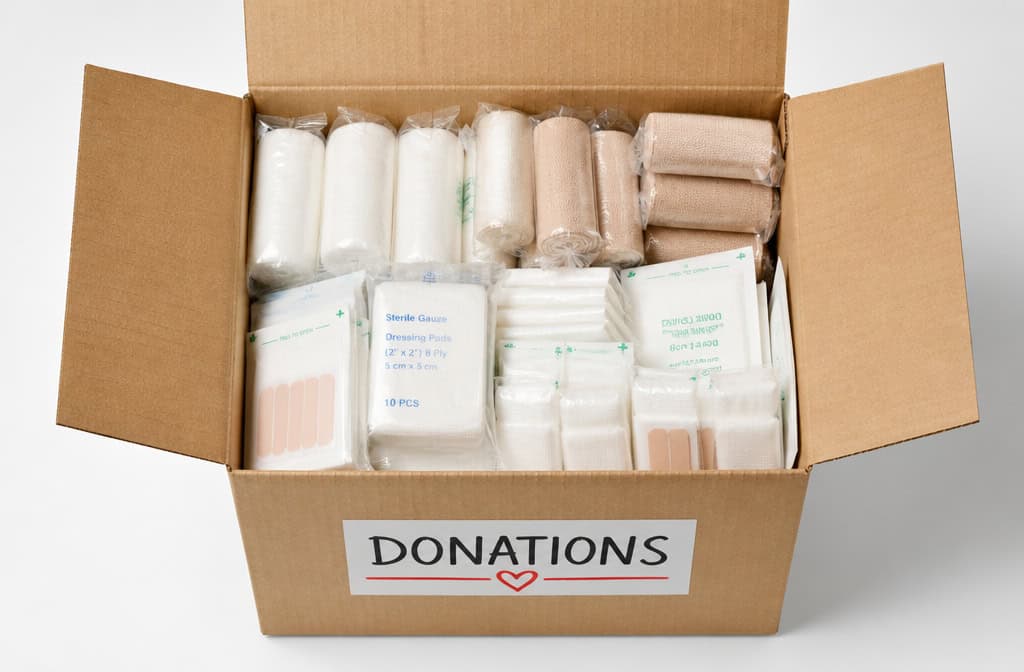
If you’re staring at a box of unopened bandages from that surgery last year, or a stack of sealed syringes left over from a NICU stay, you’re probably thinking the same thing I did: I’ll just drop these off at the Red Cross and they’ll go straight to someone who needs them.
Turns out, that’s not how it works. I found that out the hard way after loading up my car, driving to the donation center, and getting turned away because nothing I had was “donatable” in the way I assumed. So I did the digging so you don’t have to. Here’s what matters most:
Key Takeaways
The Red Cross doesn’t give your donated medical supplies directly to disaster victims. Instead, they sell them through a vendor and use the money to fund their Disaster Relief Fund.
Items must be unopened, unexpired, and in original packaging to be accepted; opened boxes or expired supplies are almost always rejected.
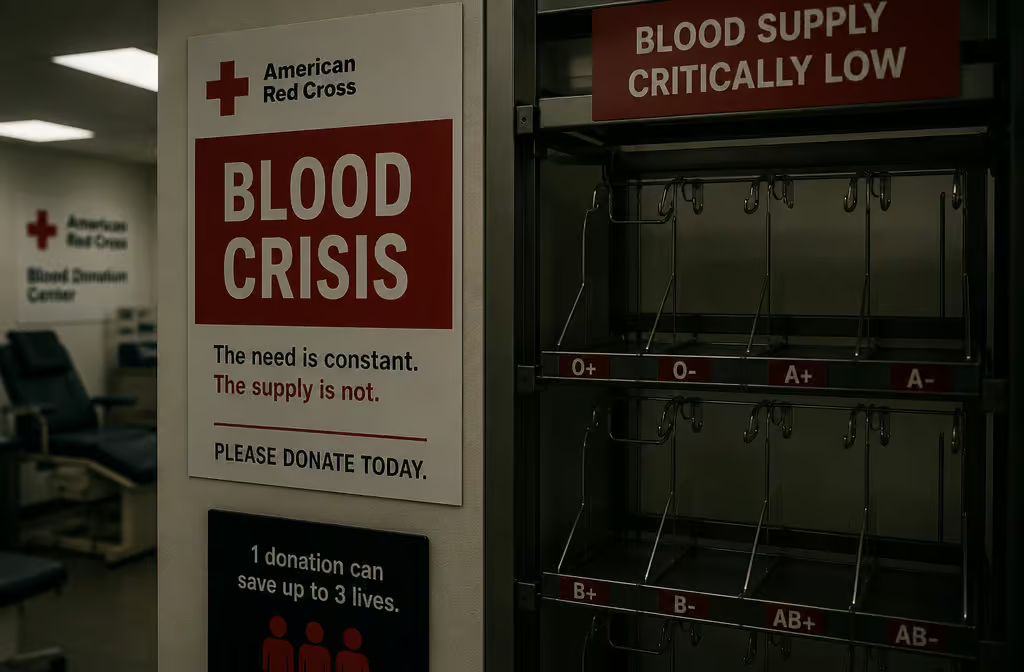
The Red Cross is currently in its second-ever national blood supply crisis, with under half a day’s supply of blood on hand — so every donation that generates funds helps.
Table of Contents
Donate medical supplies to Red Cross near me: what they actually accept (and how to find a drop-off)
You probably think donating medical supplies to the Red Cross means they’ll hand them to someone in need. That’s the logical assumption, right? But here’s the reality that nobody tells you: the Red Cross uses a vendor model. They sell donated goods, and some of the proceeds go to their Disaster Relief Fund. It’s the same setup they use for clothing donations — as the Red Cross of Massachusetts puts it,
That changes everything. It means your supplies need to be in resalable condition — the kind of thing you’d actually buy at a store. If it’s not something a vendor could sell, the Red Cross can’t use it.
This also explains why they’re picky about condition, and why understanding the model saves you a wasted trip. The Massachusetts chapter, for example, doesn’t accept clothing at its Dedham headquarters at all — they use bins across the state managed by a third party. Medical supplies likely follow a similar decentralized setup. So the first thing to know: if it can’t be resold, they probably won’t take it.
What medical supplies the Red Cross actually accepts (and rejects)
There’s no single national list — each local chapter decides what they’ll take. But the vendor model creates a universal rule: if you wouldn’t buy it at a pharmacy, they won’t accept it.
Commonly accepted supplies
- Unopened, unexpired bandages, gauze, and wound care supplies — still in their original boxes
- Unopened gloves (still sealed in the original box)
- Unopened syringes (still in factory-sealed packaging)
- Any item in its original, sealed packaging with a visible, unexpired date
Think of it as a quick mental test: could a pharmacy still sell this? If yes, you’re in good shape.
What is almost always rejected
- Opened packages of any kind — even if the items inside look unused. Once it’s opened, sterility is a question mark, and a vendor can’t guarantee it.
- Expired items, even if they’re still sealed. The expiration date matters for resale.
- Used medical equipment like crutches, walkers, or hospital beds — liability says no.
- Prescription medications or controlled substances (these require special disposal, not donation)
- Anything with torn or missing packaging
This is the “save yourself a trip” section. I once had a box of catheters that were individually sealed but the outer box had a small tear. Turned away. It’s frustrating, but it makes sense once you understand the vendor model: if a vendor can’t guarantee sterility or safety, they can’t sell it.
Why condition matters more than the item type
The vendor model drives everything. The deciding factors are liability and resale value, not whether the item is “still good.” A common failure pattern I see (and fell into myself) is showing up with opened or expired supplies, genuinely confused about why they’re being turned down. The frustration is real, but it’s completely avoidable once you understand why they’re saying no.
How to find a local Red Cross chapter drop-off for medical supplies
The national Red Cross website won’t give you a single “donate medical supplies here” tool. Each chapter runs its own program. Here’s the fastest path:
- Use the chapter locator at redcross.org/find-your-local-chapter to find your local chapter’s website.
- Look for a “Ways to Donate” or “In-Kind Donations” section on that local site.
- Call your chapter directly and ask specifically: “Do you accept medical supply donations? What items? Where do I bring them?”
That phone call is the most important step. Don’t rely on the national site — it won’t tell you what your local chapter actually takes.
Note: Most Red Cross chapters do not offer pickup services for medical supplies, so plan to drop them off yourself.
The Massachusetts example shows how decentralized it can be: that chapter doesn’t accept clothing at its Dedham HQ. Instead, they use a network of bins across the state, managed by a third-party vendor. You can find those bins through donateyourclothing.us. For families wondering where to donate home health care equipment, medical supplies likely follow a similar separate process in many chapters.
So when you search where can I donate medical supplies to Red Cross near me, don’t expect a single locator tool. The decentralized structure means each region handles donations differently. Call first, always.
Tax deductions for medical supply donations
Good news: you can deduct the fair market value of your donated medical supplies on your taxes, as recognized by the Internal Revenue Service. But there are a couple of rules to know.
- Under $250: You don’t need a written receipt, but keep a record (a photo, a note with the date and items).
- $250 or more: You need a written receipt from the Red Cross to claim the deduction.
- Fair market value is what the items would sell for, not what you paid.
The Red Cross Massachusetts page has a downloadable tax receipt form ready to go. Check your local chapter’s site for something similar. This isn’t tax advice — just a heads-up so you don’t miss out on the deduction.
Why your medical supply donation matters right now
Here’s the thing about timing: the Red Cross is under enormous pressure right now. They’ve declared their second-ever national blood supply crisis — that’s how rare and serious this is. According to America’s Blood Centers, only 3% of the US population donates blood each year, though 62% (212 million) is eligible.
- The blood supply fell nearly 25% in June.
- They have under half a day’s supply of blood on hand.
- Type O blood is especially dire — less than a day’s supply left. (Type O positive is the most common blood type, found in 38% of people, and makes up about 60% of what the Red Cross distributes.)
- Summer is “trauma season” — more accidents and emergencies mean higher demand.
- Extreme heat, poor air quality, and a cyclosporiasis outbreak affecting over 11,500 people have kept donors away.
- Scheduled donations (which make up 90% of donations) dropped, cutting supply by thousands of units in a single week.
A Red Cross official put it bluntly:
Your medical supply donation — even if it’s “just” a box of bandages, generates cash that funds disaster response and blood collection operations. At a time when the Red Cross is stretched thin, every bit helps. And the good news? If just three more people donated at each blood drive this summer, the crisis could end. UC Davis Health, as reported by the Sacramento Bee, is testing patients’ blood types early to reduce reliance on type O blood and reaching out to other blood providers like Vitalant to shore up supplies.
(Already thinking about donating blood too? You can schedule at RedCrossBlood.org or call 1-800-RED CROSS. The RapidPass tool lets you do the health screening online beforehand — saves time.)
Alternatives if the Red Cross can’t take your medical supplies
So you’ve called your chapter, and they said no, or you’ve got items like opened boxes or used equipment that they won’t touch. Don’t give up — there are other places that may take them.
Project C.U.R.E.: the best bet for wider acceptance
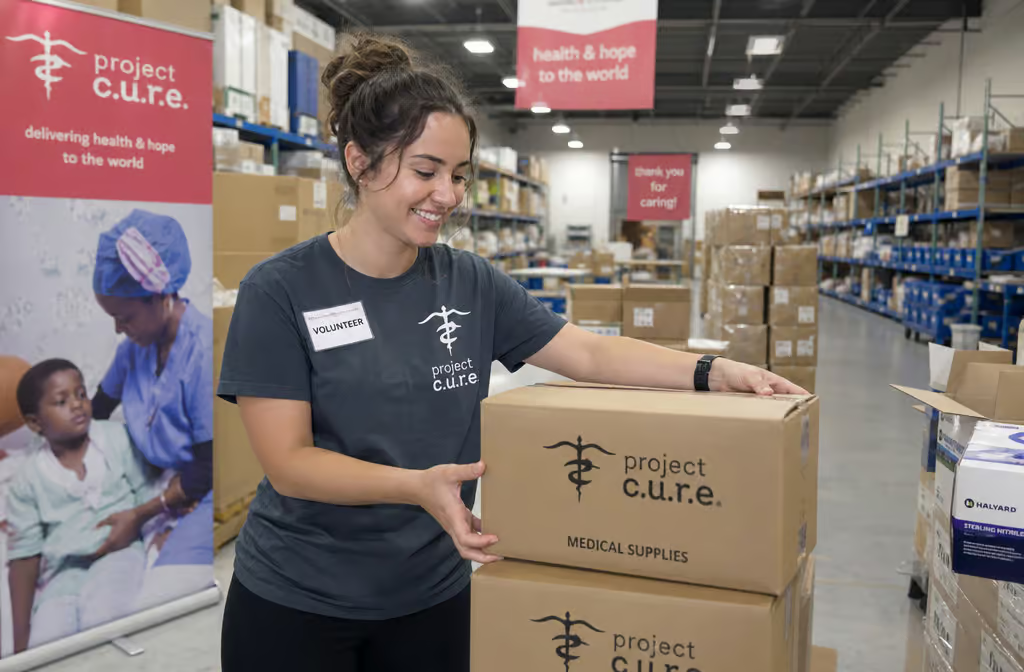
Project C.U.R.E. ships medical supplies to developing countries. They accept a wider range of items, including some that the Red Cross would reject. Their model is different — they’re not selling through a vendor, so condition requirements are sometimes more flexible. Email them through their website to ask about drop-off locations and accepted items.
Other local options
- Local hospitals may accept specific items for training or clinic use — call the volunteer services department.
- Veterans organizations (like the VA or American Legion posts) often accept durable medical equipment like walkers and crutches. Check out our guide on donating medical equipment to Veterans near me for details.
- Goodwill and Salvation Army accept some medical equipment (like wheelchairs in good condition) but typically not opened medical supplies. We have more on what Goodwill takes.
- Religious and community health centers may accept supplies for medical missions.
The key: call first, every time. Don’t load the car until you’ve confirmed what they’ll accept.
I know it’s more work than just dropping a box off. But having been through it — cleaning out the medicine cabinet after a kid’s procedure, wondering where those perfectly good items should go. I can tell you it’s worth the extra step. The goal is to keep usable supplies out of the landfill and put them to work, even if the path isn’t as straight as we’d like.
People Also Ask
What can I do with spare medical supplies?
You can donate them to organizations like the Red Cross, Project C.U.R.E., local hospitals, veterans organizations, or religious health centers. The Red Cross sells accepted items through a vendor and uses the proceeds for disaster relief, while other groups may ship supplies directly to developing countries or use them for local clinics.
Can unopened medical supplies be donated?
Yes, but only if they are unopened, unexpired, and still in their original sealed packaging. The Red Cross and most other organizations require this because opened items raise sterility and liability concerns, making them unsellable or unsafe to distribute.
What items does Red Cross accept?
The Red Cross typically accepts unopened, unexpired bandages, gauze, wound care supplies, gloves, and syringes — anything still in its original sealed packaging with a visible expiration date. They reject opened packages, expired items, used equipment like crutches or walkers, and prescription medications.