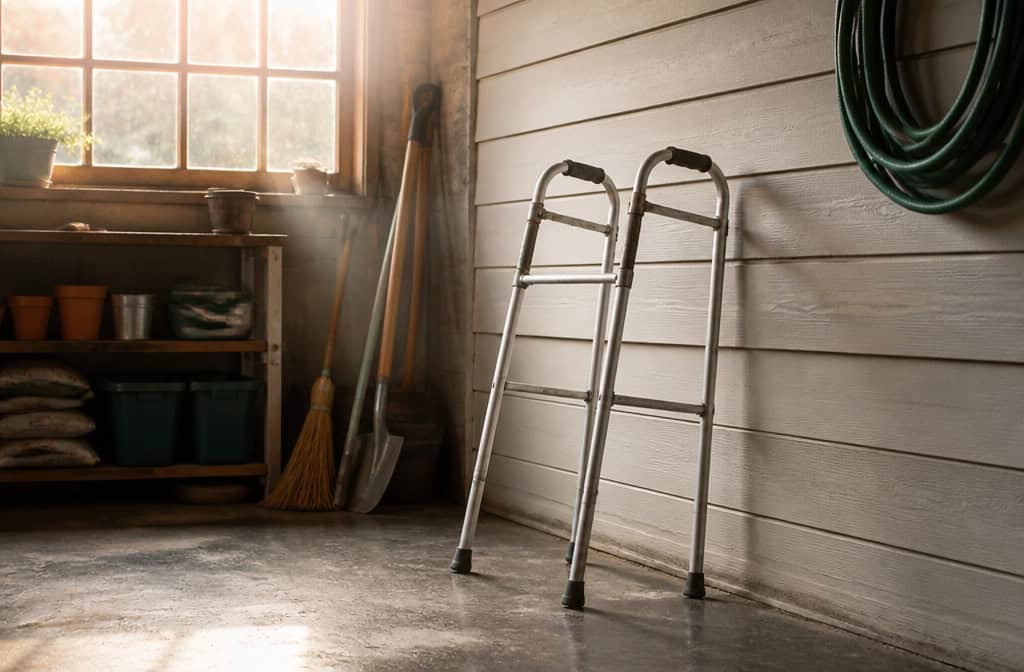
There’s a walker collecting dust in your hallway, a hospital bed folded up in the garage, or a set of crutches you keep meaning to drop off somewhere. The equipment has been sitting there since your dad’s knee replacement, or your aunt’s hip surgery, or — and this one hits harder, since your mom passed and you had to clear her house.
I’ve been there. The chair sat in my garage for 14 months. Every time I pulled in, I’d think “I should do something with that.” But where?
And how? And is it even the right kind of equipment?
That stuff is valuable to veterans who need it but can’t afford it. And getting it to them is easier than you think — once you know where to look.
Key Takeaways
San Antonio International Airport partners with Project MEND to donate unclaimed medical equipment from lost and found — wheelchairs, walkers, crutches get refurbished for veterans. Between 2024 and 2025, Project MEND distributed 6,200 pieces valued at $923,000 and kept 74 tons out of landfills.
VFW Post 1760 in San Antonio accepts donated equipment and loans it to veterans, but for motorized scooters they require a deposit and/or VFW membership because of the high cost.
To donate directly through the VA, contact the local Center for Development and Civic Engagement (CDCE) office — bring the equipment, fill out a form, and expect a response in over two business days.
Table of Contents
Why your old equipment matters more than you think
That walker that’s been leaning against your garage wall for two years? It’s not junk. It’s a lifeline for a veteran who just got out of the hospital and can’t afford a new one. Donations to the VA are 100% tax deductible because Congress already covers the VA’s administrative costs — every dollar goes directly to veteran services. VA medical center directors have specific legal authority to accept gifts under 38 USC 8301 and VHA Handbook 4721.
Project MEND is a great example. They work with San Antonio International Airport to collect unclaimed medical equipment from lost and found.
Between 2024 and 2025 alone, Project MEND distributed 6,200 pieces of durable medical equipment — that’s the official term for wheelchairs, walkers, hospital beds, the stuff that takes up space in your garage. The total value: $923,000. And they kept 74 tons of equipment out of landfills — if you need similar resources, find out how to find free beds for adults through charitable groups and online platforms.
That’s helping veterans and the planet too. Two birds, one slightly used hospital bed.
Where to donate in San Antonio
You have options. The best one depends on what you have and how fast you want to get rid of it.
The airport’s hidden donation pipeline
San Antonio International Airport has a partnership with Project MEND that most people don’t know about. When unclaimed medical equipment shows up in lost and found, it goes straight to them instead of getting tossed — but if you want to know where to donate medical supplies to Red Cross near me, note that the Red Cross has specific rules about what it will and won’t accept. The airport’s official line: Through this partnership, unclaimed medical equipment can be given a second life, helping the organization’s mission to improve mobility and independence for people in need while also cutting down on unnecessary waste.
You can donate directly to Project MEND too. They take most types of equipment — walkers, wheelchairs, crutches, hospital beds, shower chairs, you name it. For a compassionate guide on where to donate home health care equipment, check their website for drop-off locations and accepted items.
VFW Post 1760 — but read the fine print
VFW Post 1760 in San Antonio accepts donated equipment and loans it out to veterans and their families. It’s a solid option, but here’s the catch: they currently have a good supply of most equipment, so they’re not urgently needing basic items. And if you’re donating a motorized scooter, they require a deposit and/or VFW membership because those things are expensive.
Still worth a call. They can tell you exactly what they need right now. Sometimes they’re desperate for certain items — other times they’re stacked.
Quick test: Call the VFW first and ask what they’re short on. A five-minute phone call can save you a wasted trip.
The VA: direct but slow
State-level programs like the Maryland Department of Aging Durable Medical Equipment Re-Use Program (240-230-8000) accept donations and provide equipment at no cost to residents regardless of age. All equipment is sanitized, repaired, and redistributed. Search for your state’s equivalent using terms like “state durable medical equipment re-use program.”
The VA has a program called the Center for Development and Civic Engagement (CDCE). Yes, it’s a mouthful. Think of it as the department that coordinates donations.
The process isn’t complicated, but it’s not instant either:
- Find your local CDCE office. For San Antonio, it’s the Audie L. Murphy Memorial VA Hospital. Call ahead to confirm they’re accepting donations.
- Bring the equipment. Clean it up first. They won’t take anything that’s rusty, broken, or dirty.
- Fill out the paperwork. You’ll need to provide your contact info and list what you’re donating.
- Wait. They said they’d respond within two business days. In my experience, “government for ‘we got your message'” is about right. Plan on a few days.
One important thing: if you’re a veteran looking to receive equipment through Project MEND, you’ll need a prescription or letter of medical necessity, proof of Texas address, proof of veteran status, and your Social Security number. They’re thorough — which makes sense, because they want to make sure the equipment goes to people who actually qualify.
What to do before you drop it off
Don’t just toss a dusty walker in your trunk and roll up. A little prep goes a long way.
- Clean everything. Wipe down handles, check for rust, make sure wheels roll smoothly. Would you want to use it? If not, clean it more.
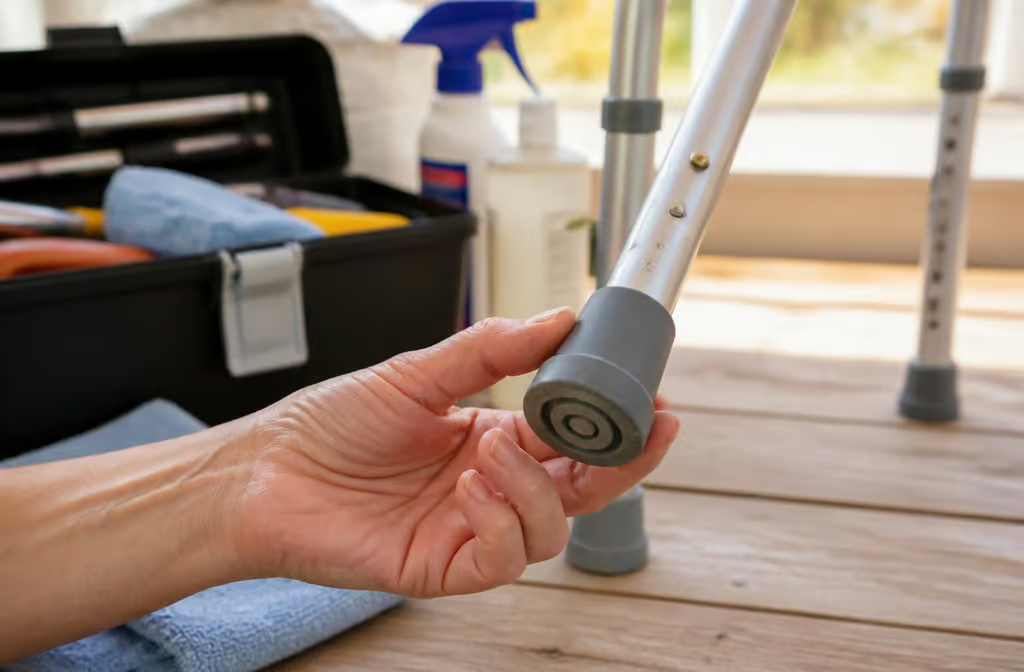
- Check for missing parts. Hospital beds need their remote. Walkers need their rubber tips. Crutches need their pads. If it’s missing something, either find the part or don’t donate it.
- Call first. Inventory changes fast. What they desperately needed last week might be overflowing now. A five-minute phone call saves everyone a headache.
A quick note on the “free medical equipment for veterans” question
If you’re a veteran reading this thinking “Wait, I could get equipment this way?” — yes, you can. But it’s not like walking into a store and grabbing a walker off the shelf. You’ll need to go through the proper channels.
For Project MEND specifically, that means gathering those documents I mentioned: prescription or Letter of Medical Necessity, Texas address proof, veteran status proof, and Social Security number. Then contact them to see what’s available.
Importantly, Project MEND’s Veterans Program is designed to assist any person discharged from the armed forces… regardless of discharge status, and do not require a service connected disability. This means even if you were not injured in service or received a discharge other than honorable, you may still qualify for equipment.
For the VA CDCE process, it’s similar — but slower. The upside is that it’s free and the equipment is usually in good shape because it’s been refurbished.
One last thing
That equipment taking up space in your garage? It’s not doing anyone any good there. But it could change someone’s week — or their recovery.
I finally dropped off that walker I’d been holding onto for over a year. The woman at the donation center said they’d have it out to a veteran within 24 hours. Two days later, I got a thank-you note from the VA saying a retired Army sergeant was using it while he recovered from hip surgery.
That note is still on my fridge.
So go ahead. Give that equipment a second life. You’ll free up your garage, help a veteran, and keep a few more pounds out of the landfill. Not bad for a Saturday morning errand.
People Also Ask
Where is the best place to donate medical equipment?
The best place depends on your location and the equipment type. Organizations like Project MEND accept walkers, wheelchairs, crutches, hospital beds, and shower chairs, and they refurbish items for veterans. VFW posts also accept donations, but call first to check current needs, as inventory changes quickly.
What kind of medical equipment do veterans need most?
Veterans commonly need walkers, wheelchairs, crutches, hospital beds, and shower chairs. However, needs fluctuate, so it’s best to call the donation center first to see what they’re currently short on. Motorized scooters are also valuable but may require special handling.